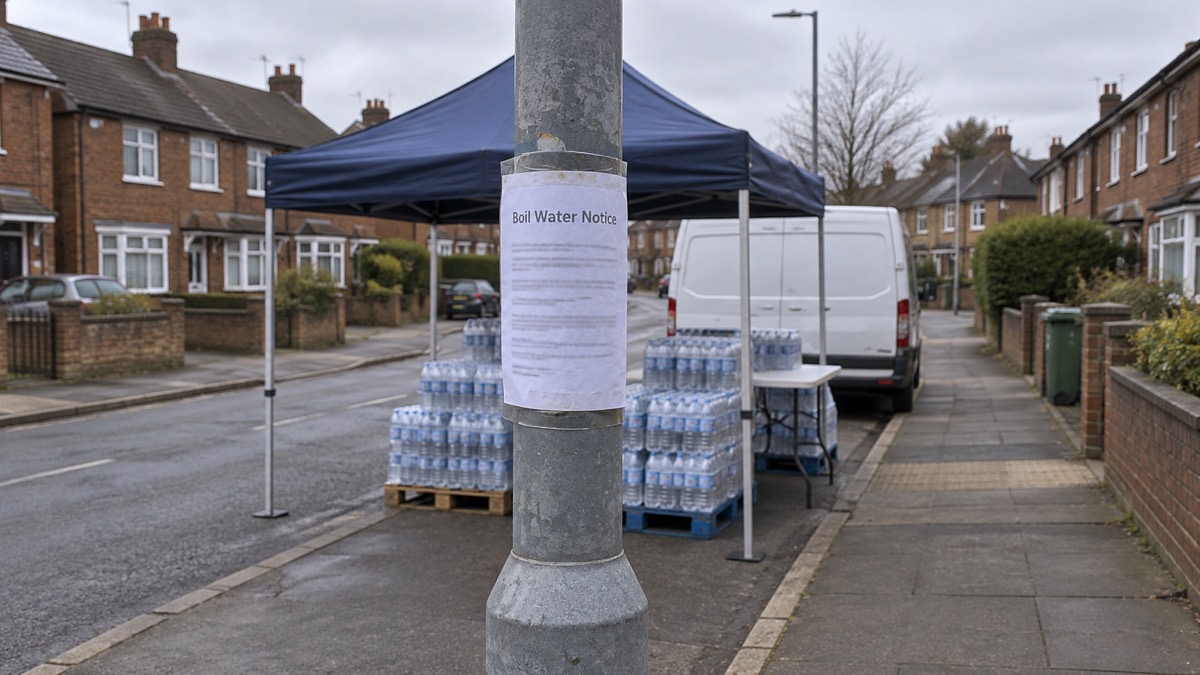
A boil water notice means the water in your tap might contain bacteria, viruses or parasites which could be harmful to your health1. It is not a sign that the supply has failed: the water still runs, and you can still wash in it. What changes is that anything going into your mouth, or into a pet's, a baby's or a cooking pot, needs to have been boiled first.
The core instruction is short. Boil the water before you drink it, use it to brush your teeth, make ice cubes, prepare food, clean feeding equipment or give it to pets1. Public Health Wales puts the same list plainly: use only boiled water for drinking, brushing teeth and preparing food2. Boil it, then let it cool covered before use.
Most notices are precautionary and are lifted once sampling shows the supply is clear. A private supply case in 2017 shows how that works: after shock chlorination, further samples were taken which were free from microbiological parameters and the local authority subsequently revoked the Notice which stipulated the boil water advice3. Until you are told otherwise, treat every drop from the tap as unboiled.
The boil notice checklist
Work through this list once, then keep the boiled supply topped up for as long as the notice lasts. Each item says why it matters.
What to boil, and what can stay unboiled
The dividing line is simple: water that goes into a mouth, or into food that will not be cooked, gets boiled. Water that goes down the drain, into the washing machine or onto your body does not.
| Use | Boil first? | Notes |
|---|---|---|
| Drinking and cold drinks | Yes | Includes ice made for drinks2 |
| Brushing teeth | Yes | Keep a jug by the basin1 |
| Making ice cubes | Yes | Empty the old tray first1 |
| Preparing food, especially uncooked | Yes | Salads and fruit especially2 |
| Cleaning feeding equipment | Yes | On the official list1 |
| Pets | Yes | Pet bowls count1 |
| Food that will be cooked | No | Unboiled water may be used if the water is boiled during cooking2 |
| Washing hands and body | No | Avoid swallowing the water |
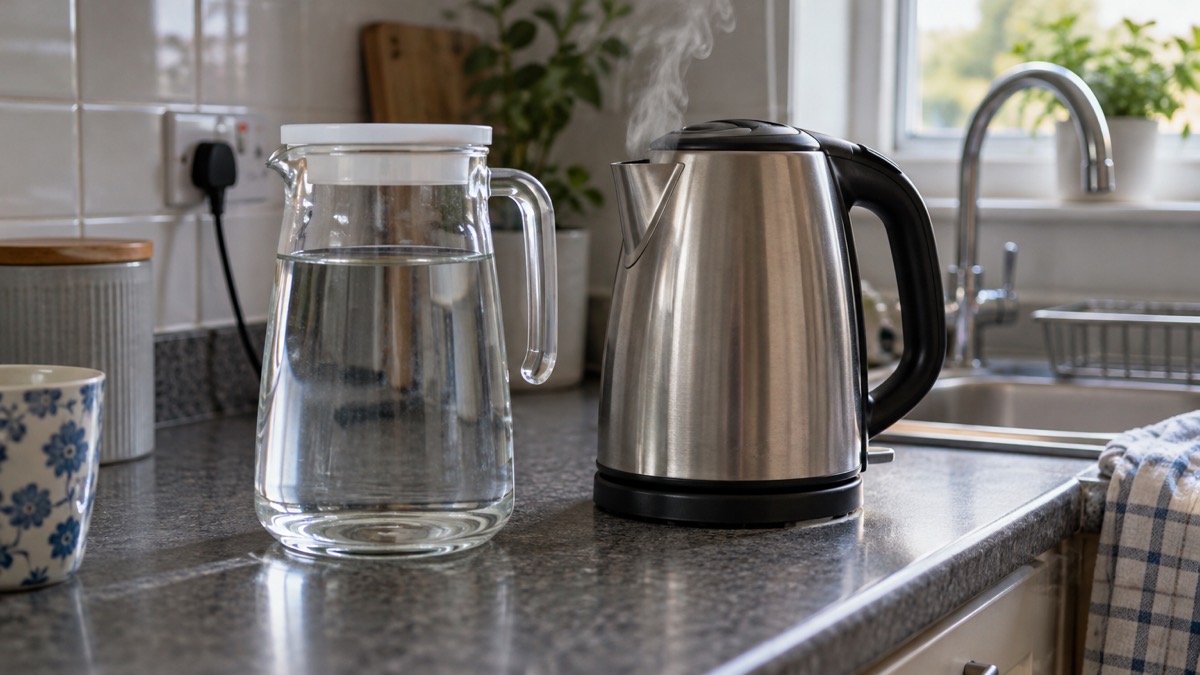
If you are ever unsure, the fallback is generous: if in doubt, boil all water intended for drinking, brushing teeth, washing food and cooking9. Several councils repeat that line because it is the safest default when a notice is unclear or your supply looks or tastes odd.
Drinking, teeth, ice and pets
Drinking is the obvious one, but the habits that catch households out are the small ones: a mouthful while taking a pill, a rinse after brushing, a handful of ice in a glass. The Drinking Water Inspectorate lists all of them among the uses that need boiled water1.
Boil more than you think you need. A family that normally drinks several litres a day will get through a kettle's worth quickly, and having cooled water ready means nobody improvises. Keep the boiled water covered while it cools and store it in the fridge once cool. If you want to know how long boiled water keeps once chilled, see How long can you keep boiled water in the fridge?.
For pets, the same rule applies: boil water before giving it to them1. The government's Be Ready checklist includes pet food and bottled water for pets in a household's supplies, which is worth having in before a notice arrives11. If you keep animals, our guide to pets and animals in an emergency covers the wider planning.
For the mechanics of boiling itself, including how long to boil and how to cool and store it, see Boiling to kill germs: how to do it properly. If you have no power to boil with, bottled supplies from your water company are the next step; see Bottled supplies, tankers and bowsers.
Baby feeds and formula during a notice
This is the part of a boil notice that worries households most, and the official advice is clear. You need to boil water to prepare infant formula safely; if you can't boil water, use ready-to-use infant formula4.
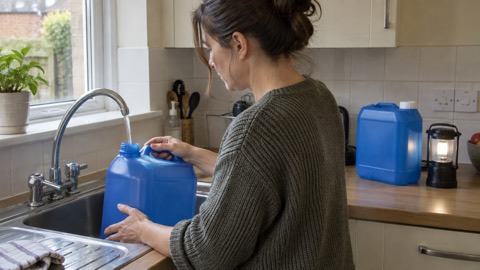
Where boiling is not possible and ready-to-feed liquid formula is not available, bottled water (table, spring or mineral) can be used without boiling, but the prepared feed should then be used immediately5. Northern Ireland guidance adds the same condition for households without gas or electricity: use unboiled bottled water to make a baby feed, but you must give the feed to the baby immediately8.
"They should not, under any circumstance, give unboiled tap or tank water as these sources might be contaminated"
If you are boiling bottled water for a feed, boil it, then cover it and leave it to cool for up to half an hour, follow the manufacturer's instructions to make up the feed, and use the prepared feed immediately2. Where tap water is not available at all, boil the water (1 minute recommended) before use to ensure that it is sterile and let it cool down to room temperature13.
Two further points for households with a baby. Do not use tap water with an odour or discolouration to prepare baby formula12. And if a power cut comes with the notice, prepare a flask of hot water to heat bottles and baby food; it is always safer to make up a fresh feed, and when this is not possible, feeds should never be stored for longer than 24 hours8. Our page on babies and formula feeds when the supply is off or unsafe goes further.
Washing food, cooking and cleaning up
Cooking is where the rules loosen slightly, and it is worth knowing exactly where. Unboiled water may be used to prepare food that will be cooked or if the water is boiled during cooking2. So pasta, rice, potatoes and boiled vegetables are fine from the tap. A salad, a fruit platter or a sandwich filling is not: use boiled, cooled water to wash anything that will be eaten raw2.
Surfaces and utensils need care too. After flooding, the Food Standards Scotland advice is to thoroughly clean all surfaces, equipment, crockery, cutlery and utensils in hot, soapy water, or antibacterial spray or surface wipes if there is no access to clean water14. It also advises discarding any wooden boards and utensils if contaminated by floodwater15. A boil notice is not a flood, but the same principle holds: clean surfaces and tools before food touches them, and do not let unboiled water sit on a chopping board that will then take raw food.
If your water looks or tastes different, do not wait for a notice to find you. If you notice a change in water quality, like discolouration or a change in taste or smell, contact your local water company; if in doubt, boil all water intended for drinking16. Our pages on brown or discoloured tap water and why your tap water tastes or smells different explain what those changes can mean.
When a notice is issued, and how you know it is lifted
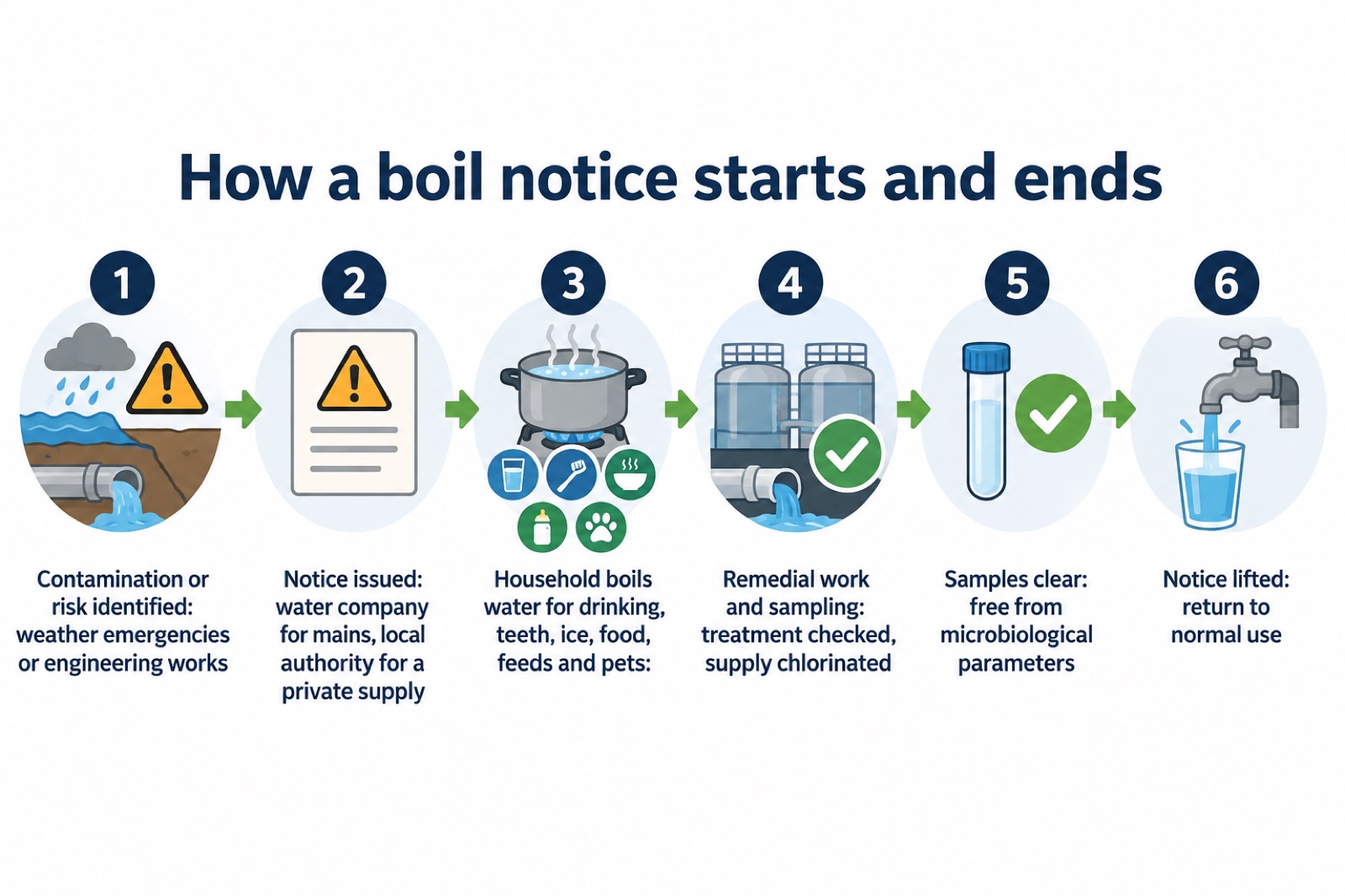
Boil notices usually come from weather emergencies or engineering works1. For a mains supply, the water company will issue a notice to the consumers in the affected area, instructing them to boil their water before use; for a private water supply the notice comes from your local authority1.
Private supplies are worth understanding because the rules differ. If your water fails a test you'll be told what went wrong, you may need to boil water or stop using it, you'll get advice on how to fix the issue, and you may receive a legal notice to make improvements17. Local authorities have discretionary powers under section 80 of the Water Industry Act 1991 to serve a notice when a private supply is failing, has failed or is likely to fail to provide a sufficient supply of wholesome water18.
The 2017 case shows the full cycle. A sample indicated faecal contamination, the local authority served a Regulation 18 Notice which instructed users of the supply to boil water before consumption, and after shock chlorination further samples were free from microbiological parameters and the Notice was revoked3. An earlier case in 2012 began when slurry spread on the opposite hill slope contaminated one spring within hours; the owner of the supply issued boil water advice to all the properties and commenced an investigation19.
If you are on a private supply, register it with your local authority if you have not already: users of private water supplies are required to register these with their local authority20. Buyers of properties served by a private supply should anticipate and plan for risks the supply might pose, including insufficiency, water quality risks and being cut off at short notice21. Our guide to private supplies: wells, boreholes and springs sets out what else to check.
Sources (21)
- Receiving a boil water notice, Drinking Water Inspectorate, 2024
- Weather and health, Public Health Wales, 2026
- Faecal contamination of a supply, Drinking Water Inspectorate, 2022
- Power cuts, Food Standards Scotland, 2026
- Flooding, Runnymede Borough Council, 2026
- Types of private water supply | Cumberland Council, Cumberland Council
- Loss of essential services, Greater Manchester Combined Authority, 2026
- Strong winds weather warning information and advice, nidirect, 2026
- Staying healthy and safe after flooding, Surrey County Council, 2026
- Staying safe in a flood, Herefordshire Council, 2026
- Be ready for emergencies, UK Government, 2026
- How to recover from flooding, UK Government, 2023
- Public health impact of drought: advice for the public - GOV.UK, GOV.UK (UK Health Security Agency)
- Flooding and health advice for the public, UK Government, 2024
- Flooding food safety advice, Food Standards Scotland, 2026
- Cleaning up after a flood: health advice, North Warwickshire Borough Council, 2024
- Private water supplies, Argyll and Bute Council, 2026
- Managing insufficiency of private water supplies, Drinking Water Inspectorate, 2025
- Water safety plan approach to improving the safety of a private supply, Drinking Water Inspectorate, 2022
- What to do in a chemical emergency, UK Government, 2024
- Purchasing a property served by a private supply, Drinking Water Inspectorate, 2025
 Supply Interruption Checklist
 Drinking Supply Checklist
 30-Day Household Checklist