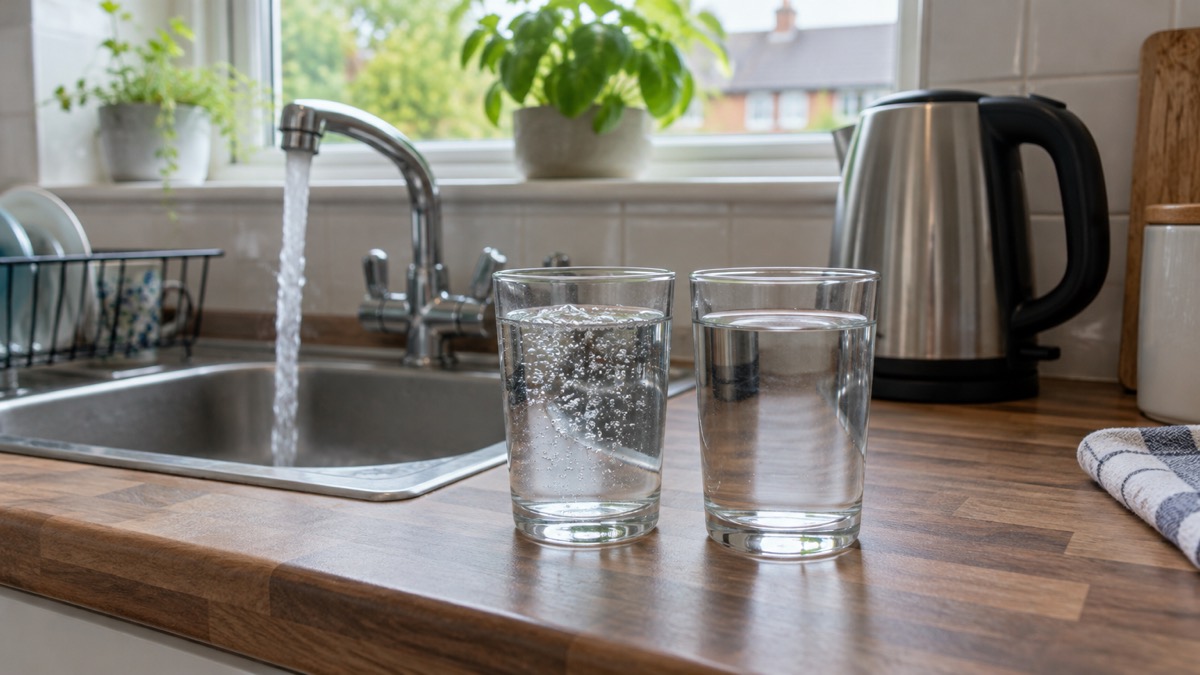
If your tap water suddenly tastes or smells different, the first thing to know is that it is usually nothing to worry about. Water companies and the drinking water regulators say most changes are completely harmless and do not make the water unsafe to drink1. In general, tap water should have no noticeable taste or smell to it, with the exception of chlorine, and most unusual tastes and smells are caused by plumbing problems in the home rather than the supply itself2.
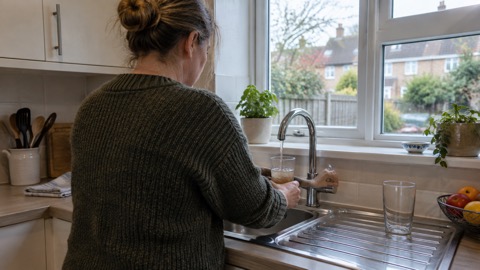
The usual fix is simple: run the tap for a few minutes. Water sitting in your own pipes is behind many odd tastes, and flushing it through often clears the problem3. Before you do anything else, work out whether the smell is really in the water or coming from the sink, drain or an appliance. Fill a glass, carry it into another room and smell it there. If the smell has gone, it is coming from your plumbing or drain, not the water4.
There are exceptions that need action, not patience. A petrol, diesel or oil taste or smell means you should not drink the water and should contact your water company straight away, because fuel contamination can be dangerous to health5. After a flood, do not use tap water if you notice a change in colour, taste or smell, and contact your water company6.
Most changes in taste or smell are nothing to worry about
Tap water is treated to be safe, and the treatments and the natural water itself can leave a faint taste or smell that is entirely normal. The drinking water quality regulator for Scotland lists the everyday causes: the use of chlorine as a disinfectant, seasonal changes, a change in your water supply, moving from one area to another, and your own plumbing7. Any one of these can make a slight smell or taste noticeable.
The source of your water matters too. Each source has its own characteristic taste depending on the type and concentration of its natural mineral composition8, and the source of your water can affect its taste9. So if you move house, or your supplier switches which source feeds your area, the water can taste different without anything being wrong. The regulator is clear that most of these changes are completely harmless and do not make the water unsafe to drink1.
What you should not do is assume every change is harmless. The guidance splits into two kinds. Faint, familiar tastes (chlorine, earth, mustiness) are usually a plumbing or seasonal matter you can deal with at home. A strong chemical, fuel or solvent smell is different, and the next sections set out how to tell them apart and what to do.
Check whether the smell comes from the water or the sink
Before you blame the supply, rule out your own kitchen. The regulator's advice is to try another tap in the house, such as the bathroom sink, to see if the taste or smell is present there too10. If the bathroom tap is fine and only the kitchen tap is affected, the problem is local to that tap, its fittings or the drain beneath it.

The glass test is the quickest way to settle it. Fill a glass with water from the tap where you have noticed the smell, take it into another room and smell it again. If the smell clears, it is coming from a sink or drain rather than the water itself4. Water companies give the same instruction for stagnant or sewerage smells: fill a glass, take it away from the kitchen sink and smell it to work out whether the odour is genuinely from the water11.
If the smell stays with the glass, it is in the water and you should read on. If it disappears, the source is your sink, waste trap or drain, and cleaning the waste trap under the sink is the usual remedy9. A blocked or dirty waste trap, an overflow, or old dishcloths and sponges can all hold smells that seem to come from the tap when you run it.
Chlorine taste and smell
Chlorine is the one taste you should expect. Tap water should have no noticeable taste or smell except chlorine2, because chlorine is added as a disinfectant to kill harmful bugs7. A swimming pool or bleach taste is the disinfectant doing its job, not a fault.
Several things make chlorine more noticeable. It may taste or smell stronger in cold weather, because seasonal changes affect taste12. You may notice a stronger chlorine smell during peak times when people are using more water, or if you live near one of the supplier's water supply sites13. It can also seem stronger if you live far away from the treatment works, or if the water has been in the pipes for a while14.
A related taste is the medicinal, antiseptic or mouthwash flavour sometimes called TCP. This is a common problem caused by chlorine in tap water reacting with plumbing fittings such as flexible hoses and tap washers9. The chlorine used to kill bugs can react with plastic and rubber in your plumbing, and that reaction causes the taste or smell12. It is not a sign of contamination.
If you have a TCP or chemical taste, check whether a flexible hose is the cause. Turn off the water to your appliances at the little blue isolation valve where the hose connects to the water supply, usually under the kitchen sink, then run the tap for a few minutes and taste the water9. If the taste goes, the hose is the culprit. If a tap washer is the cause, changing it for a BS approved one will cure a medicinal or metallic taste7.
Chemical, petrol or diesel tastes: kettles, tap washers and leaked fuel
A chemical or petrol taste is the one to take seriously, but not every chemical taste is contamination. If the taste only appears in hot drinks, it is likely to be from a new kettle or the breakdown of an older one, and it could also be your tap washer4. A common problem in new kettles is a chemical taste that improves with regular use9. Use fresh water in a new kettle, and replace an older worn one12.
The serious case is a fuel or solvent taste or smell, particularly after a known spillage. This might mean your water supply has been contaminated9. Fuel can leak or spill into the ground near plastic pipes and seep into the supply, and this is more common in rural areas, caused by car fuel spills on driveways or leaks from oil tanks14. Chemical or fuel spills on the ground near water pipes can soak through a driveway or soil and permeate plastic water pipes15.
The official position is firm. If you notice a fuel or petrol type taste or odour to your drinking water, contact your water company immediately, as these can be dangerous to your health5. One supplier's instruction is blunt: if your tap water tastes or smells like petrol, diesel or oil, do not drink it and call straight away14. Possible causes include spillages of petrol or hydrocarbons that have made their way through the soil and penetrated the plastic main; the usual cause is a petrol or diesel spill on a driveway, and sometimes more than one property is affected7.
If you have had a heating oil spill near your pipes, treat any change in your water as a possible contamination until your supplier confirms otherwise. A petroleum, diesel or solvent taste can be associated with spills of heating oils, petrol or diesel on the ground near your water pipes16. Our page on what to do if your water smells of petrol or oil sets out the steps in more detail.
Musty, earthy or stale water usually comes from your pipework
An earthy, musty or stale taste is almost always about water sitting still in pipes. Water can develop a musty, earthy taste or smell if it is left standing in pipework for long periods, especially in dead end pipes with no or low turnover9. Long lengths of pipework in large buildings, or pipes feeding infrequently used taps, let water become stagnant17. Musty and earthy tastes can also come from the growth of harmless bacteria in domestic pipework, in sections with low usage or subject to local warming, or water left to stagnate15.
There is a seasonal version too. Very occasionally, an earthy or musty taste may be noticeable in the warmer months, caused by harmless natural changes in the source water9. In summer, water taken from rivers and reservoirs sometimes has a musty or earthy smell or taste before it is treated; treatment removes most of these, but less so in hot and dry weather7.
Two plumbing faults make it worse. First, standing water: if your home has stood empty for a while, or a tap is rarely used, the water in the pipe takes on tastes or smells from the pipe materials17. Second, hot and cold pipes running too close. Cold water pipes too close to hot water pipes or radiators can warm the water and give it a musty or earthy smell14. Hot and cold water pipes that run close together must be properly lagged and insulated so the hot supply cannot heat the cold supply12. Check that hot and cold pipes are not touching or too close together, and insulate or lag them if they are18.
Older pipework can add its own flavour. A woody taste is associated with older black plastic supply pipes laid in the 1960s and 1970s, from compounds released over time, especially when water has been standing in the pipe for long periods9. Musty or earthy smells can also come from water sitting in your pipes without being used, or from cold water pipes too close to hot water pipes or radiators14, and from the growth of harmless bacteria in domestic pipework, in sections with low usage or subject to local warming16. In summer, water taken from rivers and reservoirs can sometimes have a musty or earthy smell or taste before it is treated, and treatment removes most of these, though less so in hot and dry weather15.
When to contact your water supplier
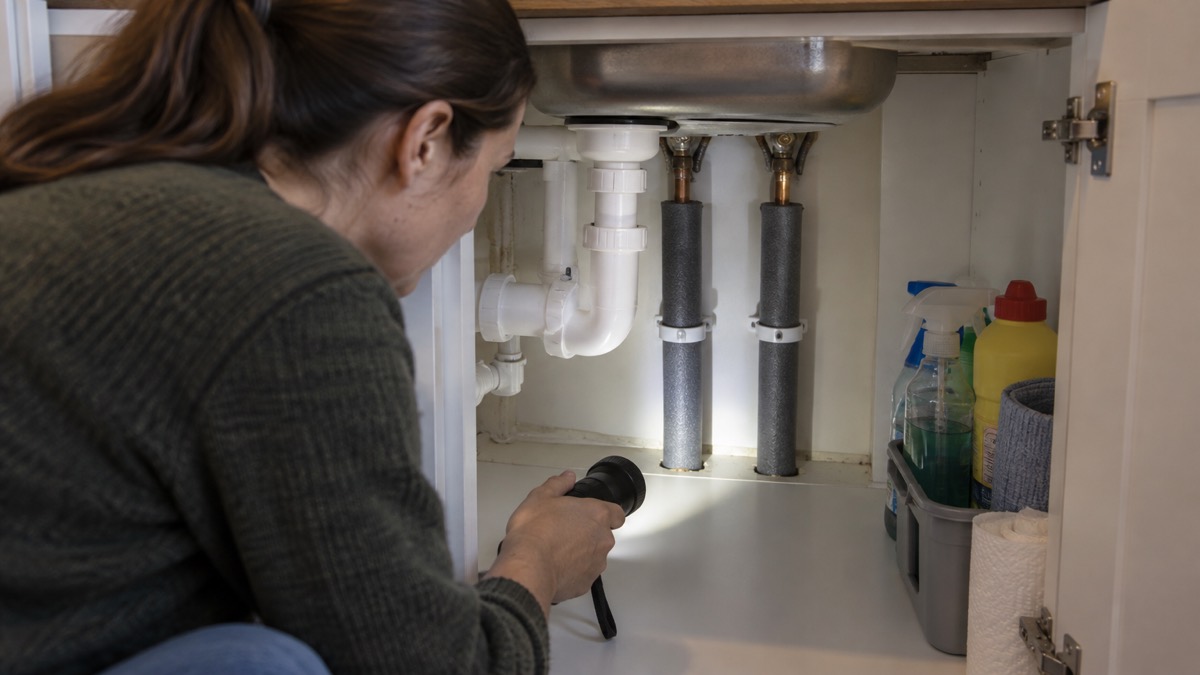
Most odd tastes settle with a flush of the tap, but some need a call. The Drinking Water Inspectorate says that if you notice a particularly bad or strong smell or taste which means you cannot drink the water, or you notice a smell or taste for the first time, you should contact your water company immediately10. The general rule from government is that your tap water should not smell and should be clear; if it is not, contact your water company, or your local council if you have a private water supply19.
There are specific triggers to ring. After a flood, contact your water company if you notice a change in the colour, taste or smell of tap water6. If you are returning home before cleaning is complete, contact your local water company if you notice a change in drinking water quality such as colour, taste or smell6. If your water is cloudy and does not clear, or you notice an unusual smell or taste at the same time, contact your water supplier20. If you have tried the home checks and the taste is still there, ring your supplier for advice13.
| Situation | What to do | Who advises |
|---|---|---|
| Faint chlorine, earthy or musty taste | Run the tap for a few minutes, then retest | Water company3 |
| Smell clears in another room | Clean the waste trap and overflow | Water company9 |
| Strong or first-time smell or taste | Contact your water company immediately | Water company7 |
| Petrol, diesel or oil taste | Do not drink it; contact your water company | Water company19 |
| Change after a flood | Contact your water company | Government guidance6 |
| Private water supply affected | Contact your local authority for advice | Public Health Wales20 |
If you have a private water supply, such as a well, borehole or spring, the route is different: if your water has changed colour or has a taste or smell, contact your local authority for advice21. Our guide to private supplies explains how these are checked. For a persistent plumbing fault, find a WaterSafe approved plumber4, and for a metallic taste, try running the hot water for a few minutes first, then get the system checked by an approved plumber if that does not help12.
If you are dealing with a wider supply problem, our guides to do not drink notices and what to do when your supply comes back on cover the next steps, and the water section has the full household picture.
Sources (21)
- Drinking water quality FAQs, Drinking Water Quality Regulator for Scotland, 2026
- Water appearance, Bristol Water, 2026
- Water quality, Severn Trent Water, 2026
- My water tastes or smells unusual, Severn Trent Water, 2026
- Oil fuel and other hydrocarbons, Drinking Water Inspectorate, 2026
- After a flood, GOV.UK, 2026
- Taste and smell, Drinking Water Quality Regulator for Scotland, 2026
- Problems with my water, Bristol Water, 2026
- Taste and smell, Bristol Water, 2026
- TCP or medicinal taste and odour, Drinking Water Inspectorate, 2026
- Why does my water smell stagnant or like sewerage?, Water Regs UK, 2026
- Taste and smells, Northumbrian Water, 2026
- My water looks, smells or tastes unusual, Southern Water, 2026
- My water smells strange, South East Water, 2026
- Tastes and smells, Wessex Water, 2026
- Dealing with drinking water problems, nidirect, 2026
- Earthy or musty, United Utilities, 2026
- Bitter or metallic, United Utilities, 2026
- Check drinking water quality, GOV.UK, 2026
- White or cloudy water, Drinking Water Inspectorate, 2026
- Weather and health, Public Health Wales, 2026
 Supply Interruption Checklist
 Boil Notice Checklist
 Drinking Supply Checklist
 Boil Water Notice Advice
 When Supply Is Restored
 Check for an Outage
 Report No Water or Burst Pipe
 Bottled Water Stations
 Bottled Water Delivery Help
 Flushing the Toilet in an Outage
 Washing Without Running Water
 Combi Boiler When Water Is Off
 Water Company Incident Alerts
 Checking a Water Company Caller
 Brown or Discoloured Tap Water