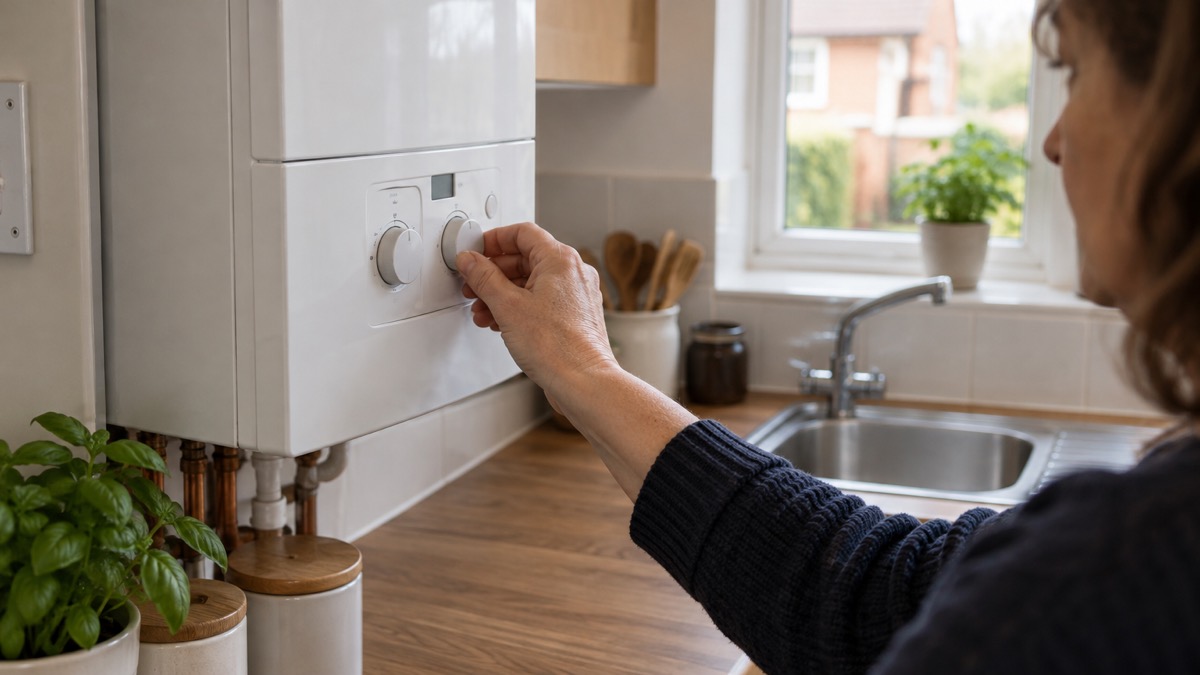
If the water supply to your home stops, switch your combi boiler off rather than leaving it running. WaterSafe advises that if a pipe bursts you should turn off the water supply coming in to your property at the stop tap and switch off your boiler1. A combi boiler heats water on demand straight from the mains, so with no supply there is nothing for it to heat, and running it dry serves no purpose.
The good news is that this is usually a short, manageable interruption. When the water comes back, low pressure or slow flow is normal while the network refills, and your supplier may say it takes time to settle2. Your boiler may need a glance at its pressure gauge, and in cold weather a frozen condensate pipe is a common reason for a boiler to stop, quite separately from the water supply4.
This page sets out what to do while the water is off, how to bring the boiler back safely, how to keep warm and wash, and the point at which you should call a Gas Safe registered engineer rather than keep trying yourself.
Turn the boiler off if the water supply stops
The instruction is short and it comes from more than one direction. WaterSafe advises that if a pipe bursts you should turn off the water supply coming in to your property at the stop tap and switch off your boiler1. The Met Office gives the same advice for a burst pipe: turn off the water supply coming into your property at the stop tap and switch off your boiler6. Turning off at the stop tap limits the water escaping into your home; switching off the boiler stops it trying to run when there is nothing to draw.
If your home is flooded, the advice goes further. The Chartered Institute of Plumbing and Heating Engineering states that the electricity to the property should be isolated immediately, which would turn off the boiler10. The London Fire Brigade's flooding advice is to be ready to turn off your gas supply, your water supply and your electricity supply, if possible11. The government's Prepare campaign makes the same point: know how to turn off your gas, electricity and water, because you will need to turn these off if you have to leave your home due to flooding or a leak12.
Find your stop tap before you need it. It is often under the kitchen sink, and knowing where it is means you can turn the water off quickly when a pipe bursts. WaterSafe advises turning off the water supply coming in to your property at the stop tap and switching off your boiler1. The same applies to your gas meter and consumer unit: the Be Ready campaign says to know how to turn off your gas, electricity and water, which you will need to do if you have to leave your home due to flooding or a leak12.
Why a combi boiler cannot heat without mains water
A combi boiler provides on-demand hot water, needs no hot water cylinder, supplies hot water at mains pressure, is often more compact, and can be more cost effective to install than other boiler types4. That convenience has a direct consequence in an outage: the boiler's hot water function is fed by the mains, so when the mains stops, so does the hot water.
There is a second dependency that catches people out during power cuts. Gas ovens, boilers, heat pumps and home internet will not work without power13. Gas and oil central heating boilers generally will not work without electricity to power their pumps14. Most boilers use electricity for things like pumps, fans and electronic controls, so even with gas flowing, a boiler may not work during a power cut15. When the electricity supply returns, your boiler should work without any intervention16.
The practical rule for a combi during a water outage is therefore simple: switch it off, and do not keep opening hot taps hoping for a response. A boiler breakdown means no hot water or gas central heating17.
Homes with a different set-up behave differently. A system with a cold water storage tank and a hot water cylinder may give a limited amount of hot water after the supply is cut off, but you risk running the storage tank dry18. On that kind of system you can use your heating, but you must not use any hot water from the taps18. Some houses have a cold water tank in the loft, which allows some water for a short period in an outage; use it only for critical purposes19.
| System | Hot water during an outage | Heating | What to do |
|---|---|---|---|
| Combi boiler | None, because it needs mains pressure4 | Off if the boiler is switched off | Switch off at the boiler and the stop tap1 |
| Cold water tank and hot water cylinder | A limited amount, but the tank can run dry18 | Can be used18 | Do not draw hot water from the taps18 |
| Loft cold water tank | Some water for a short period19 | Depends on the boiler | Use only for critical purposes19 |
Low pressure after the water comes back
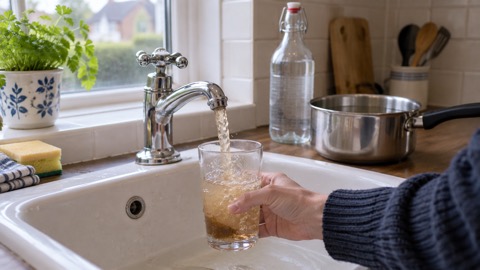
When your supply returns, do not expect everything to be instantly normal. Southern Water advises that if your water is back on you may notice it is slow to come out of the tap or you have low pressure, and that this is normal as the network fills up2. Welsh Water says that as water starts to return to normal you can expect to experience low water pressure or discoloured water7. Affinity Water notes that routine work on the mains network or a burst water main can temporarily reduce pressure, but this should return to normal20.
Give it time. Welsh Water states that any low water pressure will return to normal once the system has been re-filled, which could take at least 48 hours7. That is a useful expectation to hold: a slow tap the morning after an outage is not necessarily a fault in your home.
Low pressure can have other causes too. The Consumer Council for Water lists a valve having been shut down among the reasons for low water pressure21. If your neighbours have normal pressure and you do not, that is worth reporting to your supplier.
Once the supply is back and running properly, check your boiler. The Gas Safe Register advises checking the central heating system water pressure where applicable, checking the pressure gauge and topping it up if too low, because boilers can lose system pressure as they age4. If you are not confident doing this on your own boiler, ask an engineer.
Restarting a combi boiler safely
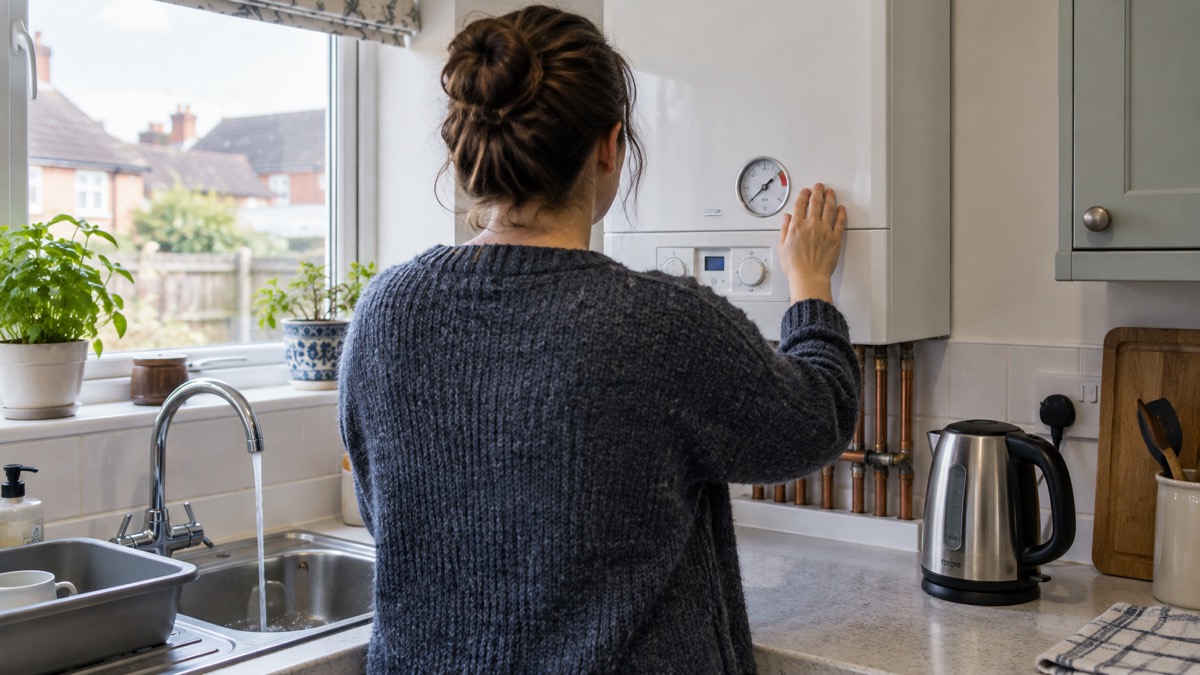
Most of the time, restarting is uneventful. If the interruption was a power cut, the boiler should work without any intervention when the electricity returns16. If the boiler has locked out, a reset is the usual first step.
Cold weather brings its own cause. If your boiler has stopped working in the cold, the chances are you have frozen boiler condensate pipes22. Water inside an external condensate pipe can freeze and cause a blockage, and the boiler may automatically switch off to protect itself8. You might hear a gurgling noise from the boiler or the condensate pipe outside8. Condensate pipes are commonly found in properties with a combi boiler, as well as other modern boilers5.
Then reset your boiler: if the pipe has defrosted, it should start to work8. If that does not work, contact a Gas Safe registered engineer8. To stop it recurring, insulate the pipe with foam insulation5.
If your gas supply itself has been off, the sequence matters. Northern Gas Networks advises making sure all the gas appliances in the property, including the boiler, cooker and gas fires, are turned off before you try to turn the gas supply back on23.
Keeping warm and washing while the water is off
With the boiler off, warmth comes from elsewhere. Layer clothing, use blankets, and keep one room warm rather than trying to heat the whole house. If you have a gas fire or another appliance that does not depend on water, it may still work, but check it is safe and follow the maker's instructions. For a wider look at options, see Heating and Cooking Without Mains Power or Gas.
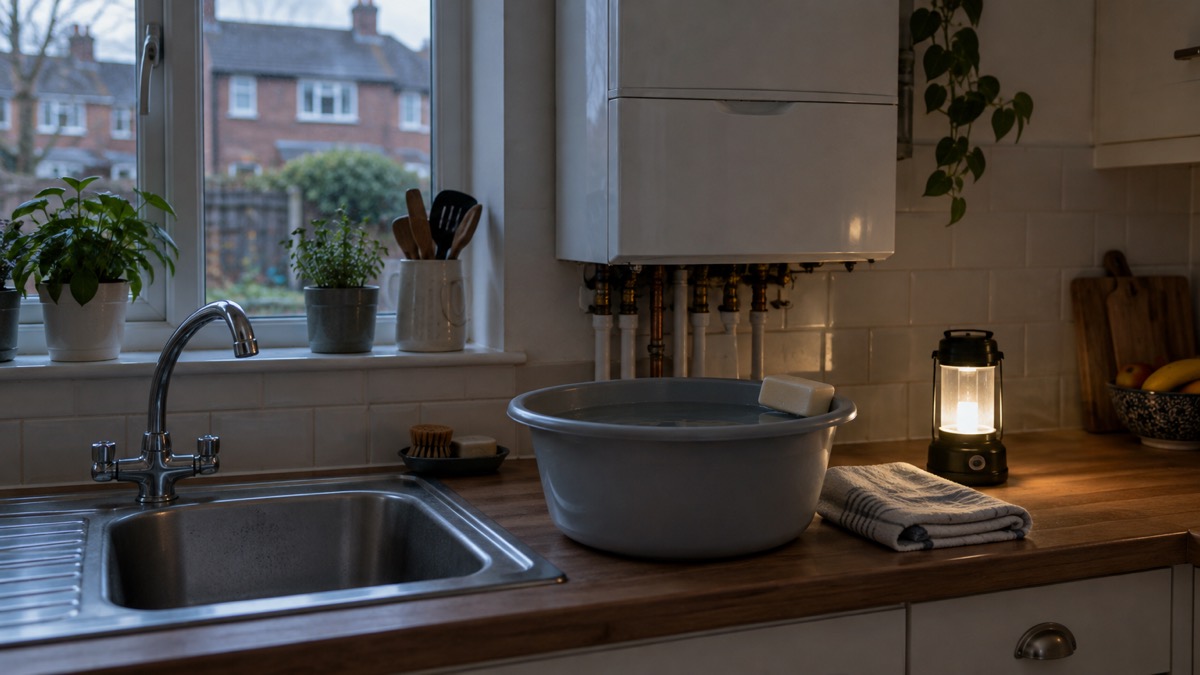
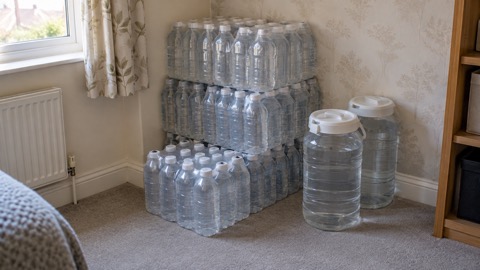
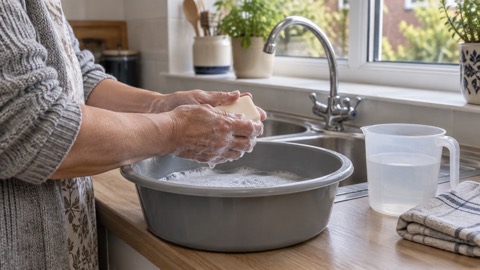
Washing is where a little planning goes a long way. The government's Be Ready campaign advises that while there is no mains water supply you should use alternative water supplies such as bottled water solely for drinking, washing your hands and food preparation24. To wash your hands, fill a large clean bowl like a washing up bowl with water and add some soap or a household disinfectant; keeping water usage to a minimum will prolong alternative sources of water such as water tanks24.
- Drinking and food: bottled water is the safest way to prepare for water outages24.
- Hand washing: a bowl, water and soap or household disinfectant, kept to a minimum24.
- Flushing and cleaning: use stored or alternative water, not your drinking supply.
- Medical devices: if you or a member of your household relies on a medical device that needs water to function, talk to your care team and make a plan for what to do if there is a water outage15.
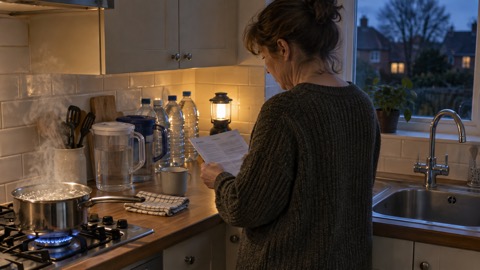
If you have a camping stove and can use it outside, it may be worth boiling some water to keep in a flask so that hot soup or a hot drink can be made25. Never use a camping stove indoors.
When to call a Gas Safe engineer
Some jobs are yours; some belong to a registered engineer. If your boiler is not working but the problem is unrelated to a power cut, you will need to contact a Gas Safe registered engineer to come out and take a look17. You can find one through the Gas Safe Register website or by calling 0800 408 550017. If you have an issue with your gas boiler or any other gas appliance, call a Gas Safe registered engineer or your gas supplier22.
After a flood, the rules tighten. The Gas Safe Register advises getting in touch with a Gas Safe registered engineer before turning on the gas supply; they will make sure the installation pipework is not filled with water, and if it is, the water must be removed before appliances are re-checked, confirmed as safe and used as normal26. Depending on the extent of any damage, it may be possible to recommission a gas appliance such as a boiler or gas fire, but this depends on a variety of factors, and a competent Gas Safe registered engineer should complete a full safety check to identify any faults26.
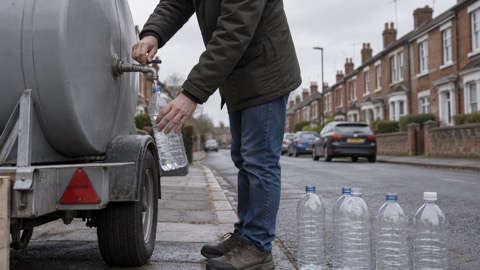
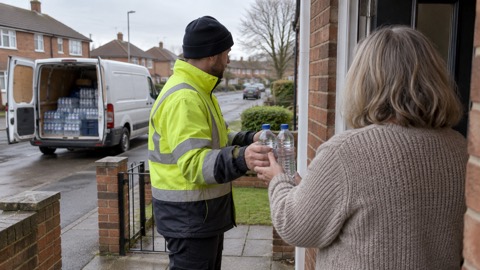
If you are on your water company's Priority Services Register, your water company will arrange alternative supplies for you during an outage24. Support can include access to bottled water during a water supply interruption, priority assistance, and tailored support if there is a power or gas outage27. Ask your supplier to add you if anyone in the household is older, disabled, medically dependent or otherwise vulnerable. For more on planning around medical needs, see Extra Help in an Emergency and How to Wash Without Running Water.
Sources (27)
- What should I do if a pipe bursts?, WaterSafe
- What happens when there's an incident, Southern Water
- What to expect when your water returns, Southern Water
- Boiler appliance guide, Gas Safe Register
- Winter advice, WaterSafe
- Frozen or burst pipes, Met Office
- After an incident, Dwr Cymru Welsh Water
- My boiler isn't working, SGN
- Safe home heating, Warwickshire County Council
- Flooding, Chartered Institute of Plumbing and Heating Engineering
- My street is flooding, London Fire Brigade
- Get prepared for emergencies, Prepare campaign
- Power cuts, Prepare campaign
- Is there any action I should take when power is disrupted?, NIE Networks
- Loss of essential services, Greater Manchester Combined Authority
- Incident hub, SGN
- Boiler not working, Northern Gas Networks
- Protecting your heating systems if your supply fails, Dwr Cymru Welsh Water
- Failure of water infrastructure or loss of drinking water, Wiltshire and Swindon Prepared
- Our responsibilities, Affinity Water
- Low water pressure, Consumer Council for Water
- Winter safety, Wessex Water
- Gas on, Northern Gas Networks
- Water supply interruptions or outages, Be Ready campaign
- What you might need in a gas outage, Wiltshire and Swindon Prepared
- Gas safety flood risk, Gas Safe Register
- Wellbeing and safety, Surrey County Council
 Supply Interruption Checklist
 Boil Notice Checklist
 Drinking Supply Checklist
 Boil Water Notice Advice
 When Supply Is Restored
 Check for an Outage
 Report No Water or Burst Pipe
 Bottled Water Stations
 Bottled Water Delivery Help
 Flushing the Toilet in an Outage
 Washing Without Running Water
 Water Company Incident Alerts
 Checking a Water Company Caller
 Brown or Discoloured Tap Water
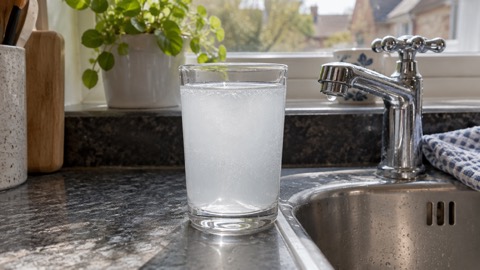 Cloudy or Milky Tap Water