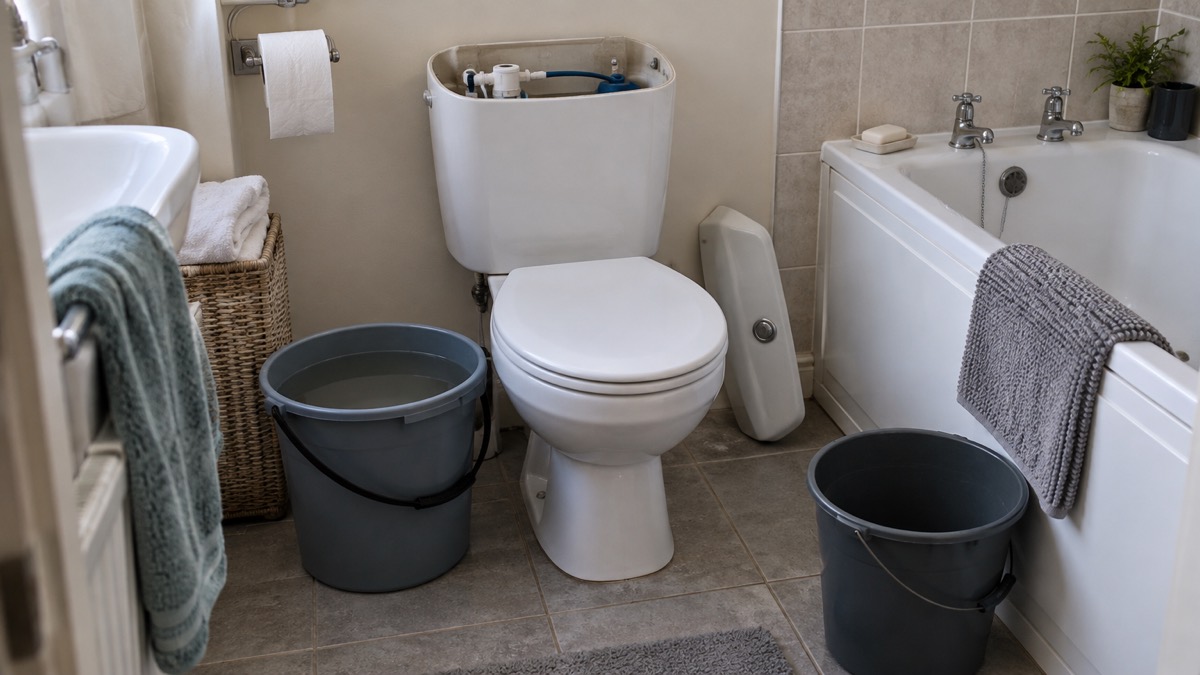
When the taps run dry, the toilet is usually the first thing a household worries about. You can still flush it by hand: fill a bucket with stored water, rainwater from a water butt or water saved from washing up, and pour it straight into the bowl. South West Water's advice for a supply interruption is to use a water butt or stored water to flush the toilet by filling a bucket and pouring it into the bowl1.
How much you need depends on the cistern. Older cisterns use as much as 13 litres per flush, while current modern models use 6 litres per flush or less2. A bucket of roughly that size, poured briskly, will clear the bowl. You do not need drinking quality water for this job, so keep your bottled and treated supplies for drinking, hand washing and food, and use the rougher water for the loo.
The main risks are simple ones. Do not flush if your drains or sewers may be blocked or flooded, and do not put anything except pee, poo and toilet paper down the loo at the best of times. If you are on your water company's Priority Services Register, tell them now rather than during an incident, so help reaches you when it matters.
Flushing by hand: pour water straight into the bowl
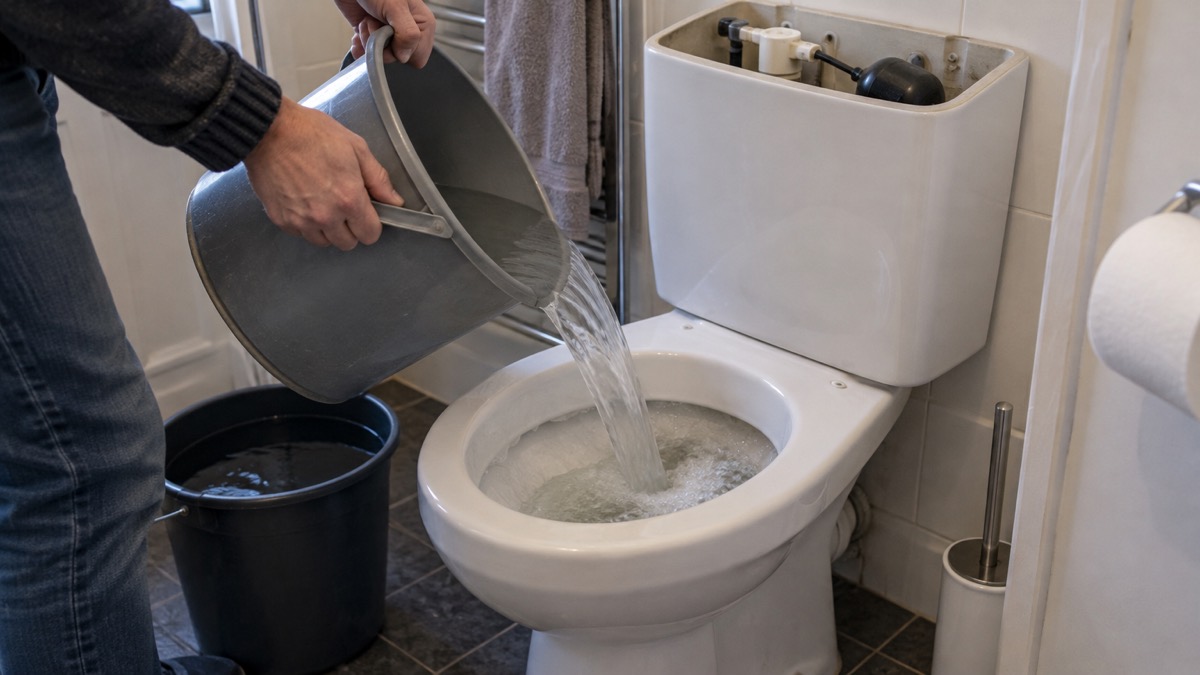
You do not need any special equipment to flush a toilet without mains water. A bucket, a bowl or a large jug will do. Fill it with water from your store, your water butt or a container you have saved from washing up, and pour it into the bowl in one steady motion. The weight and flow of the water pushes the contents through the trap and away, in the same way a cistern flush does.
A few practical points make it work better. Pour from waist height rather than dribbling the water in from just above the rim, so the water arrives with some force. Aim at the sides of the bowl rather than straight down the middle. If the first pour does not clear the bowl, wait a moment and repeat with a second bucketful rather than pouring continuously.
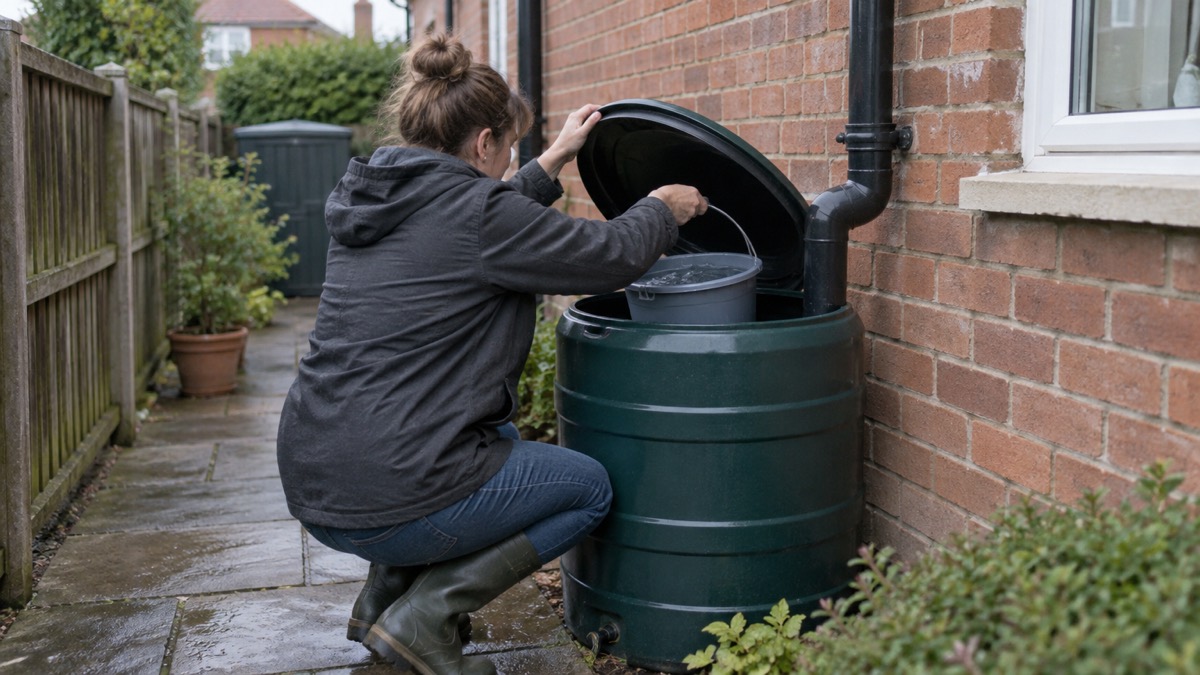
Keep the bucket you use for this purpose separate from anything used for drinking water, and mark it clearly. If you are collecting rainwater, a water butt connected to a downpipe gives you a steady supply; official guidance notes that this water can be used for flushing toilets or watering plants3, and that a water butt can be connected to greywater systems such as toilet flushing and garden watering5.
How much water a flush takes, and where to find it
The volume you need is set by your cistern, not by the bowl. Older cisterns use as much as 13 litres per flush, while current modern models use 6 litres per flush or less2. If you are not sure which you have, look at the cistern or the manufacturer's marking, or simply start with a bucket of about six litres and add more if the bowl does not clear.
That difference matters when you are rationing. A household of four flushing, say, four times a day each would use a lot of water at 13 litres a flush. Pouring by hand lets you use less than a full cistern if the bowl is only lightly used, and lets you choose the roughest water you have for the job.
Where to find water for flushing, in rough order of convenience:
- A water butt. Rainwater collected from your downpipes, usable for flushing and watering plants3.
- Saved washing and cooking water. Guidance for a water shortage suggests saving the water used for cooking and washing up for flushing6.
- Water captured before the supply stops. If you can, capture some tap water for drinking and flushing while your water supply is switched off7.
Water to keep for flushing, kept apart from drinking water
The single most important rule during an interruption is to keep the water you flush with apart from the water you drink. Official guidance is clear that while there is no mains water supply, you should use alternative supplies such as bottled water solely for drinking, washing your hands and food preparation3. Flushing, cleaning the outside of the toilet and watering plants can all use lesser water.
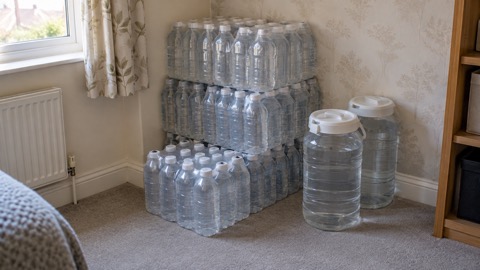
That means two stores, kept in different places and labelled. Your drinking store should be bottled water or tap water you captured and stored safely; our guide to how much drinking water to store per person sets out the quantities, and storing tap water safely at home explains how to keep it clean. Your flushing store can be a lidded bucket or a water butt, and does not need treating.
A water butt earns its place here. Wessex Water notes that in the event of a water supply interruption you can use the water it stores to flush your toilet, and that a water butt can save around 1,000 litres of water every year9. That is a large reserve sitting outside your back door, available without opening a single bottle.
When not to flush: blocked drains, sewer flooding and long supply cuts
Pouring water into a toilet is only safe if the waste has somewhere to go. After a flood, check your drains and sewers are clear before flushing toilets and running taps10. If the sewer network is overwhelmed, flushing adds to the problem and can send dirty water back into your home.
Sewer flooding has a common cause that households can control. Blockages can be caused by flushing wipes down the toilet, and only the three Ps, pee, poo and (toilet) paper, should go down the loo4. Water companies list what must never be flushed: all wipes, nappies, period products including tampons and applicators, cotton buds, condoms, incontinence pads, razor blades, medicines and tablets, syringes and needles, dental floss, kitchen roll and toilet roll liners11. During an interruption, when every flush is a bucket you carried, the temptation to send things down the loo to be rid of them is stronger. Resist it.
Long supply cuts bring their own problems. If water tables are high from heavy rainfall and rivers overflowing, households may find it difficult to flush their toilets at all13. In that situation, follow your water company's advice, use bottled water stations if they are set up, and consider the alternatives below.
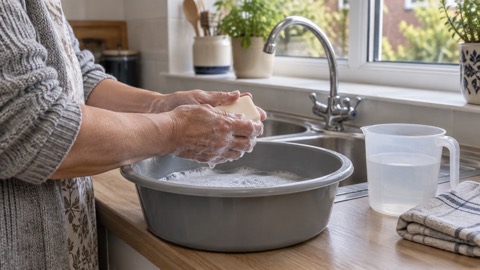
If you genuinely cannot flush, double bag used toilet paper and sanitary waste and put it in your general rubbish bin. Keep hands clean with soap and water, or an alcohol gel or wet wipes if no running water is available14. Only the three Ps, pee, poo and (toilet) paper, should go down the loo, and wipes, nappies, period products, cotton buds, condoms, incontinence pads, razor blades, medicines, syringes and needles, dental floss, kitchen roll and toilet roll liners should never be flushed15.
Toilets with electric macerators, and keeping the cistern working
Some homes, particularly flats and basement conversions, have a macerator: a mechanical WC that grinds waste before it reaches the drain. These need electricity to run and are far less forgiving than an ordinary toilet. The Chartered Institute of Plumbing and Heating Engineering advises that macerators only take toilet paper, and that anything else will block the motor and cause it to fail; if it does block, call a professional plumber as soon as possible16.
During a power cut a macerator will not run at all, so plan ahead. Know where your nearest conventional toilet is, whether that is a neighbour's or a public facility, and keep a bucket ready in case you need to clear the bowl by hand once power returns. Do not pour water into a macerator bowl in the hope it will flush; without power the mechanism will not clear it.
For an ordinary toilet, the cistern itself is worth a little attention before winter. WaterSafe advises insulating toilet cisterns, water tanks and pipes in exposed places or unheated outbuildings, or draining them for the winter if not in use17. A frozen or burst pipe is one of the commonest reasons a household loses water in cold weather, and it takes the toilet out with it.
Homes fed directly from the mains have no reserve once the supply stops. Either way, a bucket and a store of non drinking water is the reliable answer.
Help from your water company during a supply interruption
Your water company is the best source of information during an interruption3. Check their website for service in your area and whether you can pick up alternative sources of water3. They can re-route water in their network to restore supplies18, and they will tell you if they are going to turn off your water19.
If you are not sure whether the problem is yours or the network's, speak to a neighbour: if they also have no water or low water pressure, it is likely an issue with your water company's network20. If you continue to have problems after an outage, contact your water provider3. Ofwat provides information on what communication you should expect from your water company in the case of an interruption3.
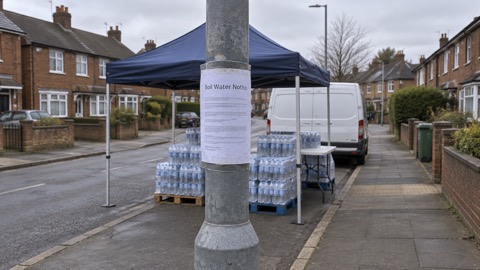
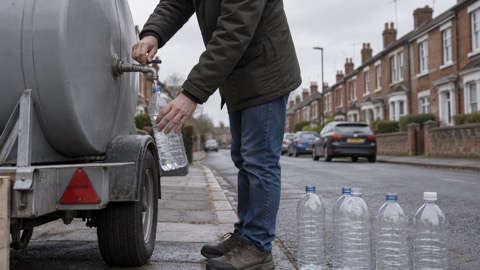
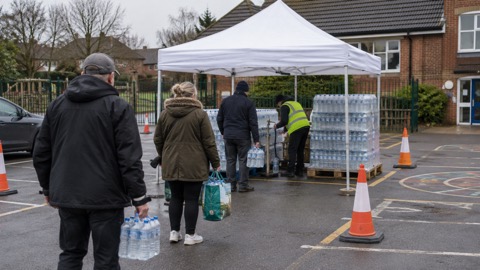
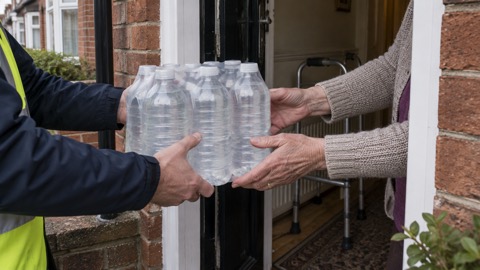
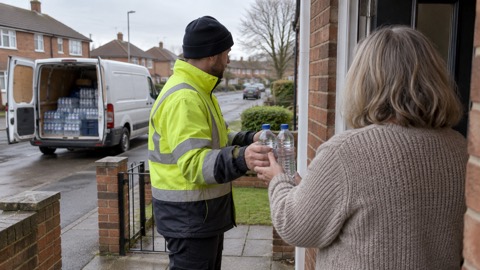
If you have no water, or have been asked not to use your water for an extended period, your company may provide bottled water collection points at various locations, notified by text, call, social media and local press21. Our guide to bottled supplies, tankers and bowsers from your water company explains what to expect, and where bottled water stations are set up covers finding your nearest.
Some households need more help than others. The Priority Services Register is a free list your water company keeps of customers who may need extra support. Ask your water company to add you, or see our guide to extra help in an emergency. Water companies should tell you if they are going to turn off your water19, and your water company is the best source of information during an interruption: check their website for service in your area and whether you can pick up alternative sources of water3.
Sources (22)
- Preparing for an incident, South West Water, 2026
- Droughts, Prepare (UK Government), 2026
- Water supply interruptions or outages, Prepare (UK Government), 2026
- Sewer flooding, Yorkshire Water, 2026
- Advice and support: drought, Westminster City Council, 2026
- Weather and health - Public Health Wales, Public Health Wales
- Water Supply FAQs - Scottish Water, Scottish Water
- Draft drought plan 2027: customer and stakeholder summary, Anglian Water, 2026
- Guidance for incidents, Wessex Water, 2026
- Flooding advice, Belfast City Council, 2026
- What is sewer flooding, Northumbrian Water, 2026
- What is sewer flooding, Northumbrian Water, 2026
- Failure of water infrastructure or loss of drinking water, Wiltshire and Swindon Prepared, 2026
- Flooding food safety advice, Food Standards Scotland, 2026
- Bonfires and burning waste, Cheshire Fire and Rescue Service, 2026
- Plumbing emergencies, Chartered Institute of Plumbing and Heating Engineering, 2026
- WeatherReady weather hacks, WaterSafe, 2026
- Supply interruptions, Severn Trent Water, 2026
- Priority Services Register, Derbyshire County Council, 2026
- Interruptions to water supply, Water UK, 2026
- Emergency guide, Cambridge Water, 2026
- Preparing for a flood, Natural Resources Wales, 2026
 Supply Interruption Checklist
 Boil Notice Checklist
 Drinking Supply Checklist
 Boil Water Notice Advice
 When Supply Is Restored
 Check for an Outage
 Report No Water or Burst Pipe
 Bottled Water Stations
 Bottled Water Delivery Help
 Washing Without Running Water
 Combi Boiler When Water Is Off
 Water Company Incident Alerts
 Checking a Water Company Caller
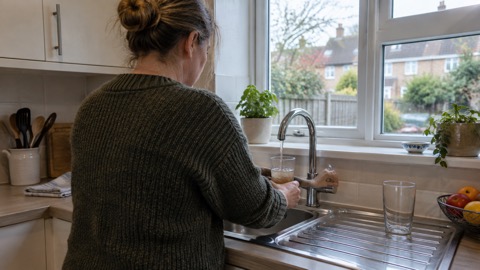 Brown or Discoloured Tap Water
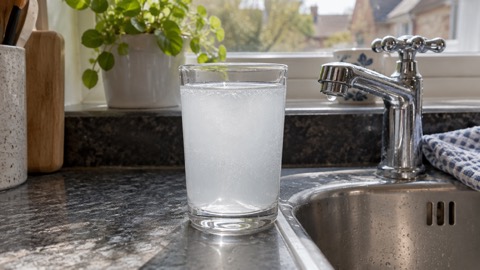 Cloudy or Milky Tap Water