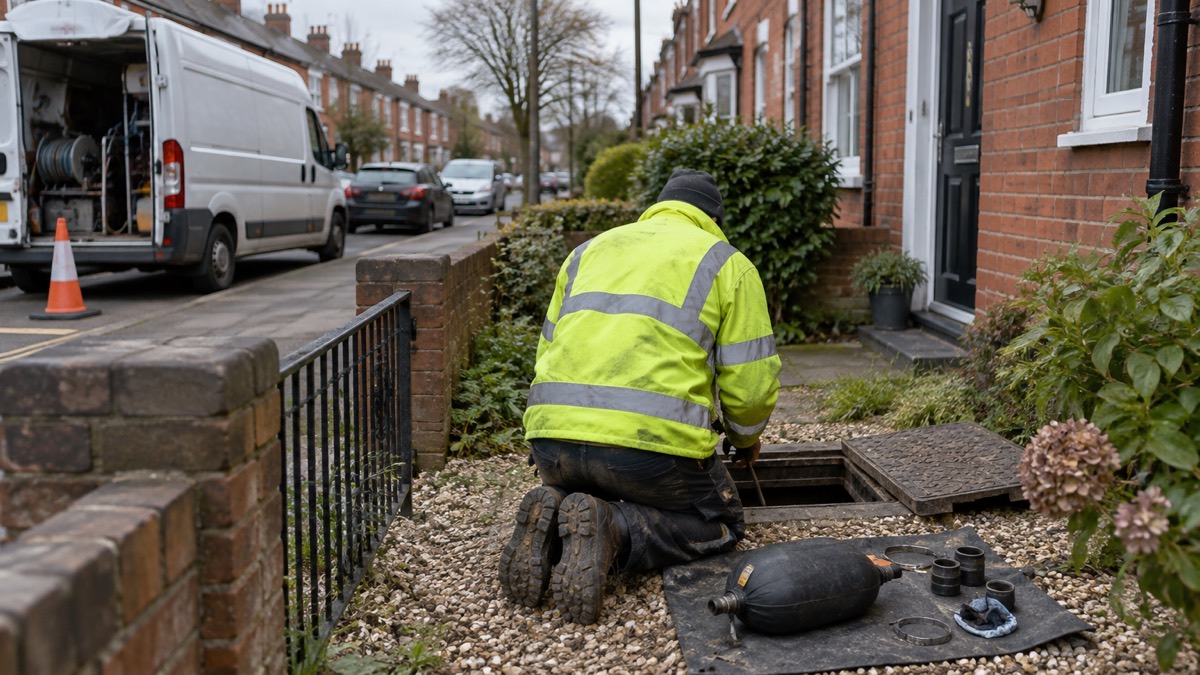
When a flood overwhelms the drains, the water does not only come through the front door. It can rise up through the sewer system and into your home through the toilet, the sinks, the bath and the washing machine drain, and it can carry sewage with it. London Fire Brigade warns that flood water can come in through toilets, and advises households to be ready to block the toilet or sandbag the bathroom door1. The two main ways to stop this are an inflatable toilet bung, which you push into the U-bend yourself when a warning is issued, and a non-return valve, which a plumber fits into a pipe so that water can only flow one way. Official guidance describes these valves as closing under pressure to stop sewage and dirty water flooding into your home or business2.
Neither is a complete answer. A bung can be forced out by water pressure, as one York householder found when her toilet bung failed and she had a non-return valve fitted to the ground floor toilet outlet instead3. And no valve or bung should be relied on to hold back deep water: Derbyshire County Council warns it is unsafe to hold back more than around 0.9 metres of flood water, because the pressure on the walls can damage the main structure of the building4. This page explains how backflow happens, what bungs and valves do, how to fit and maintain them, and where their limits lie.
Why water comes up through the toilet
Your toilet, sinks and drains all connect to the sewer or drainage system outside. In normal conditions everything flows away downhill. In a flood the system can run the other way: drains fill, the water level in the pipes rises above the level of your fittings, and the water finds the nearest way out, which may be your ground floor toilet. The highest flooding risk in many areas is surface water flooding, where drainage systems are unable to cope with the volume of rainfall8. When that happens the drains are full and under pressure, and anything connected to them can start flowing backwards.
High water tables make it worse. When water tables are high from heavy rainfall and overflowing rivers, households may find they have difficulty flushing toilets at all9. Groundwater flooding behaves differently from river or surface water flooding: government guidance explains that with groundwater, water comes up through the ground or the floor rather than through doors, and that underground rooms such as cellars and basements are particularly at risk10.
The water that comes up is not clean. Natural Resources Wales warns that flood water can be contaminated with sewage, chemicals and animal waste7, and public health guidance for flood recovery says floodwater can contain sewage, harmful pollutants or contaminants harmful to humans and animals11. That is the reason for treating backflow as a health issue and not just a mess issue: whatever comes up through the toilet may need professional cleaning afterwards, and you should avoid contact with it.
If you want to understand which kind of flooding threatens your home, see Types of Flooding and Checking Your Home's Flood Risk by Postcode. For who is responsible for the drains and sewers themselves, see Sewer Flooding: Causes and Who Is Responsible.
Ground floor toilets and basements are most at risk
Backflow follows gravity and pressure. The lowest connection to the drainage system is the first to flood, which in most homes is the ground floor toilet, the shower tray in a ground floor bathroom, the kitchen sink and the washing machine standpipe. Anything below that level, a basement or cellar, is at even greater risk, and government guidance singles out underground rooms as particularly at risk from groundwater flooding10.
Being upstairs does not make you immune to the consequences, though. A blocked or flooded drainage system affects the whole building, and a ground floor neighbour's sewage problem can become a building-wide one.
There is also a hard physical limit to how much water you should try to hold back, wherever your toilet is. Somerset Council advises that where there is a risk of flooding to a depth of more than 0.9 metres, keeping water out can sometimes do more harm than good12, and Derbyshire County Council explains why: the pressure on walls from that much water can damage the main structure of the building4. Dover District Council's guidance puts the same point at one metre, warning that hydrostatic pressures can cause long-term structural damage and undermine foundations, so you should not aim to prevent water entering above that level13. A bung or valve is a measure for shallow flooding, not for deep water. If deep flooding is forecast, official advice is to move yourself, your family and your possessions to safety rather than to try to seal the building13.
An inflatable toilet bung goes in the U-bend
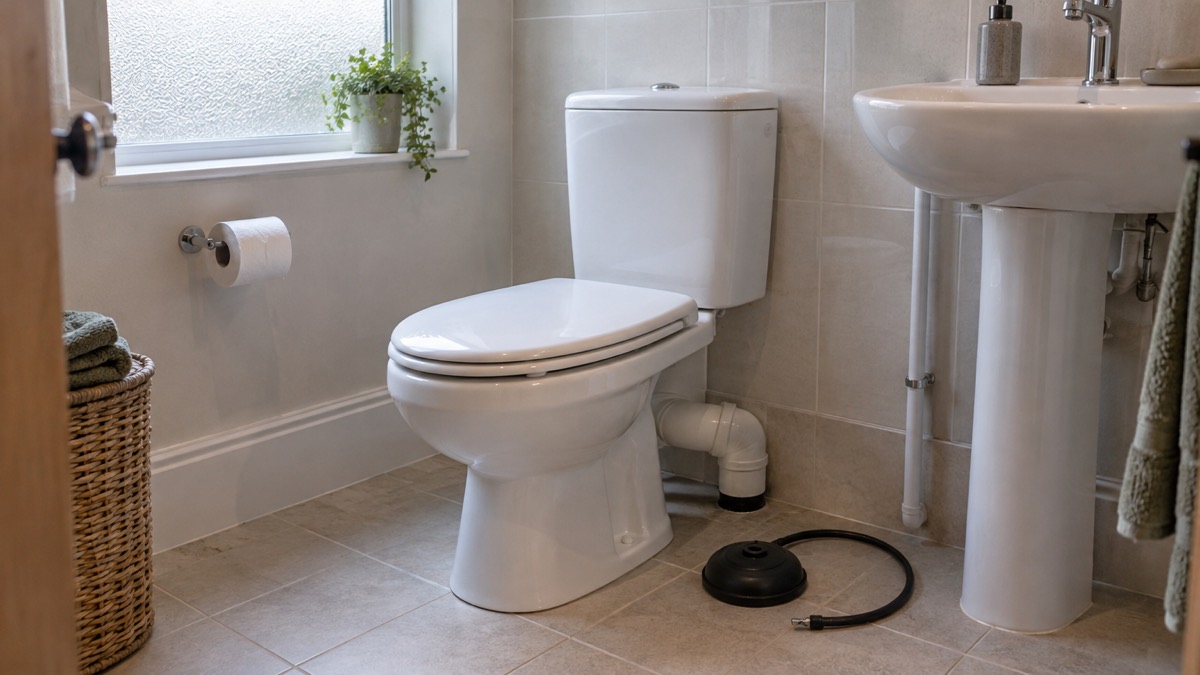
A toilet bung is a simple device: an inflatable plug, usually rubber or similar, on a small inflation tube. Government guidance on preparing property for flooding describes exactly what it does: "You can place an inflatable bung in the u-bend of your toilet. This stops flood water coming up through the toilet and into your property"2. The same advice appears in the government's guidance on adapting your home or business to flood risk14. You push the deflated bung into the U-bend of the pan, inflate it until it seals against the sides of the bend, and it forms a physical barrier that rising water in the pipe cannot get past.
A bung is cheap, needs no plumbing work, and can be stored in a cupboard with the rest of your flood kit. Because it takes seconds to fit, it is something you can deploy when a flood warning arrives rather than something you have to plan months ahead for.
Its weakness is pressure. A bung seals by pressing against the ceramic of the U-bend, and enough pressure from below can push it out. That is not a theoretical worry: in one published case study from York, a householder had used a toilet bung, it was forced out by water pressure, and a non-return valve was fitted to the ground floor toilet outlet instead3. If your flood risk is more than occasional shallow flooding, a bung is best treated as a first line of defence to be backed up by something more permanent.
If you cannot get a bung, official guidance offers improvised alternatives. Mid and West Wales Fire and Rescue Service advises lowering toilet lids and placing weights on them during a flood15, and the Northern Ireland Direct service advises blocking toilets with towels or bed sheets and weighing down the lids16. Dover District Council's guidance suggests placing a sandbag in the toilet bowl itself13. These are last-resort measures and less reliable than a proper bung, but they are better than an open pan.
How to fit a toilet bung
Fit the bung when a flood warning is issued, before any water starts rising in the pan. The steps are simple, but doing them dry and in daylight is far safer than doing them when contaminated water is already in the bathroom.
- Check the flood warning and confirm it applies to your area. Sign up for flood warnings in advance so you receive them5, and see Flood Alerts, Flood Warnings and Severe Flood Warnings.
- Turn off the water supply at the inside stop valve if it is safe to do so. Your inside stop valve, also known as the stopcock or stop tap, is normally located just after the water pipe enters the house, often under the kitchen sink, and is the easiest way to turn your water on and off17. Do not touch an electrical switch if you are standing in water18.
- Place the deflated bung into the U-bend of the toilet pan.
- Inflate the bung using its tube until it feels firm and sealed against the sides of the bend. Do not over-inflate: follow the maker's instructions for the bung you have.
- Lower the toilet lid and place a weight on it, as Mid and West Wales Fire and Rescue Service advises15. This supports the bung if pressure builds.
- Do not use the toilet while the bung is in place. Anything flushed has nowhere to go and will come back up.
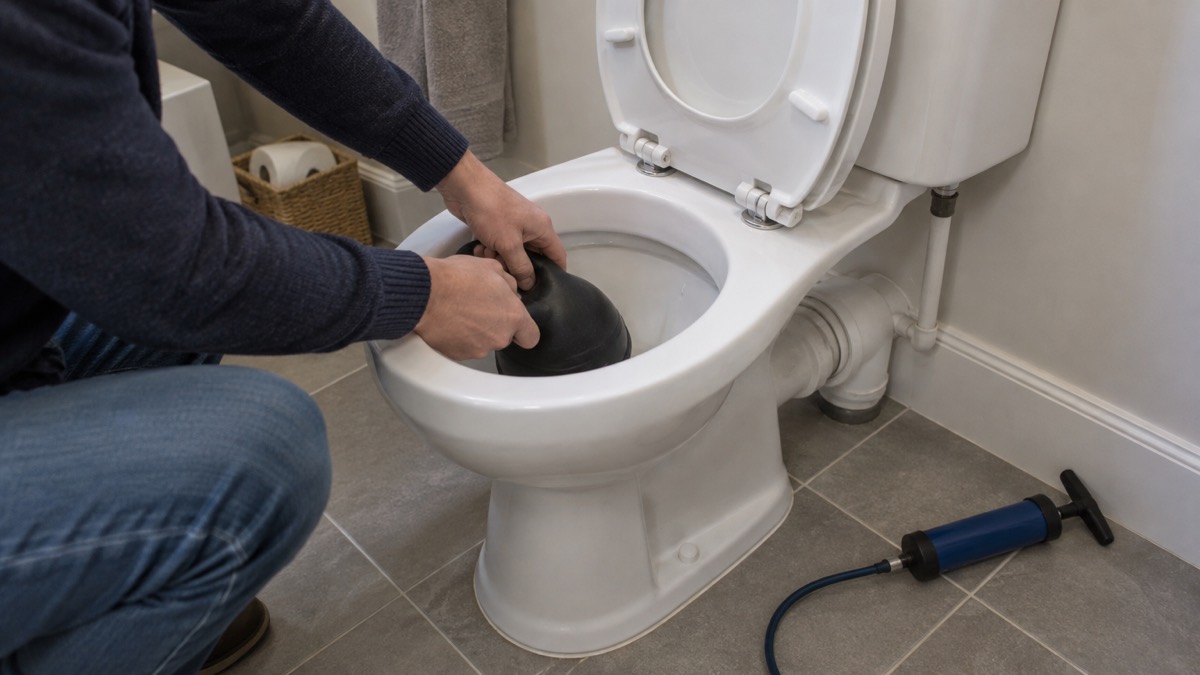
Practise fitting the bung before you need it. Every pan shape is slightly different, and knowing how yours seals, and how firmly it inflates, removes guesswork on the night. Keep it in the flood kit with the other items you would grab on a warning, and check it periodically for perishing. While the bung is in and the flood is in progress, plan for the fact that the toilet cannot be used: public health guidance notes that where toilets cannot be used during flooding, people can use the facilities of unaffected family, friends, neighbours, public toilets, rest centres, local shops, supermarkets and hotels, that chemical toilets may be provided, and that portable bag-in-a-bag products designed for solid and urine waste may be provided11. Somerset Council adds a caution from past incidents: temporary toilets have caused people to delay leaving their homes when they should have evacuated, and they are not suitable for people with limited mobility19. A bung is not a reason to stay.
Non-return valves: the permanent answer to sewage backflow
A non-return valve, sometimes called a backwater valve or anti-backflow valve, is a one-way valve fitted inside a pipe. Water can flow out of your property in the normal direction, but when water tries to flow back the other way, the valve closes. Government guidance describes how they work: "These valves close under pressure and stop sewage and dirty water flooding into your home or business"2. Because the flood itself operates the valve, there is nothing to fit on the night and nothing to forget.
Official guidance across the UK points householders towards them. Northern Ireland Direct advises fitting a sump and pump to remove water and fitting non-return valves to all drains and water inlet pipes, which only let water flow one way20. Cotswold District Council's flood preparation guide gives the same advice: fit non-return valves to all drains and water inlet pipes21. Natural Resources Wales includes non-return valves on all drains and water inlet pipes among the property changes that make a home easier to clean up after a flood22. Dover District Council's damage limitation guide recommends installing anti-backflow valves to drains and sewers precisely because floodwater can back up and enter your property through sinks, washing machines and toilets, and may contain sewage13.
Case studies show them working in real homes. In Lancashire, a bungalow was fitted with a non-return valve in the pipework to prevent backflow, with a second valve on the sewer pipe, alongside flood resilient doors and waterproofed external brickwork3. In Warwickshire, a householder whose property flooded through a culvert pipe inserted two non-return valves at the river end of the pipe, together with sump pumps and floodgates3. In York, a valve replaced a failed toilet bung on the ground floor toilet outlet3.
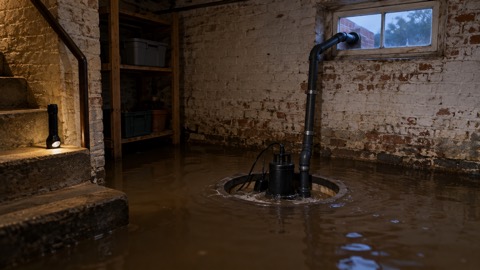
Fitting a valve is plumbing work on the drainage system, so use a qualified plumber and, for anything beyond a simple fitting, consider a specialist survey first. See Property Resilience Surveys and Professional Installation and Sump Pumps and Submersible Water Pumps. A valve also needs maintenance: it has moving parts, and debris in the pipe can stop it closing cleanly. Ask the installer how to check and clean it, and put a reminder in your calendar each year before the flood season.
Where valves can be fitted
Suffolk's flood booklet sets out the range plainly: non-return valves can be fitted on drains, and on water inlet and outlet pipes6. In practice that covers three separate jobs.
| Location | What it protects against | Notes |
|---|---|---|
| Toilet outlet pipe | Sewage rising up the soil pipe into the pan | The permanent alternative to a toilet bung3 |
| Sink, bath and shower wastes | Water backing up through the drain into ground floor fittings | Plug sinks and baths and weigh the plugs down as an immediate measure21 |
| Washing machine and dishwasher outlets | Floodwater backing up through the standpipe into the appliance | Block the drain with a suitable plug during a flood13 |
| Water inlet pipes | Affected water being drawn back into the supply | Advised by drinking water quality guidance23 |
| Main drain or sewer connection | Backflow affecting the whole property | Consider a valve in the sewage pipe24 |
On water inlet pipes the valve does a different job from the drain valves. The Drinking Water Quality Regulator for Scotland explains that fitting a non-return valve will prevent affected water being sucked back into the supply, whether the concern is a washing machine or dishwasher hose or a non-approved outside tap kit23. This is about protecting the water inside your pipes, not the water coming up them.
If you have no valves fitted and a flood warning arrives, Northern Ireland Direct advises plugging water inlet pipes with towels or cloths and turning off any equipment that uses water, such as washing machines and dishwashers16. Cotswold District Council gives the fuller immediate routine: put plugs in sinks and baths and weigh them down with a sandbag, a pillowcase or plastic bag filled with garden soil, or a heavy object21. Northern Ireland Direct also advises unplugging washing machines and dishwashers and disconnecting them from the water supply16.
Bung or valve: which one, and when
Neither measure suits every household or every flood. The choice comes down to how often you expect to flood, how deep the water gets, and how much work you can have done on the plumbing.
| Toilet bung | Non-return valve | |
|---|---|---|
| What it is | Inflatable plug placed into the toilet U-bend and inflated | One-way valve installed directly to the pipe |
| Who fits it | You, when a warning is issued | A plumber, in advance |
| Cost and work | No plumbing work; stored in the flood kit | Installation work on drains or pipework |
| How it operates | Manually, before water rises | Automatically, a passive measure that closes with rising water |
| Coverage | One toilet | All drains and water inlet pipes20 |
| Best suited to | Occasional, shallow flood risk; renters; immediate use | Repeated or deeper flood risk; owners who can alter the plumbing |
The two work well together. A bung in the kit covers you from tonight's warning; a valve fitted in the drain covers you for every flood after that, including ones that arrive while you are out. The York case study is the clearest illustration of the progression: a bung first, then, when it was forced out by pressure, a valve on the outlet3.
Whatever you choose, remember the depth limit. Somerset Council and Derbyshire County Council both warn against holding back more than around 0.9 metres of water12, and Dover's guidance says the same at one metre, explaining that hydrostatic pressure can cause long-term structural damage and undermine foundations13. If flooding deeper than that is expected, the official advice is to move possessions to safety rather than to wrap the home13. See What to Do During a Flood at Home and Checklist When a Flood Warning Is Issued.
What a valve or bung cannot stop
A one-way valve stops water coming up the pipes. It does nothing about water coming through the door, the airbricks, the meter box or the floor, and it does not make a flooded home safe to stay in.
- Water through doors, windows and airbricks. Natural Resources Wales advises blocking water entering through doors and windows with pillowcases or plastic bags filled with soil or heavy objects, and covering airbricks and vents25. See Door Flood Barriers and Airbrick Covers.
- Groundwater rising through the floor. With groundwater flooding, water comes up through the ground or the floor rather than through doors10, so no drain valve will keep it out. See Groundwater Flooding.
- Deep water. Holding back more than around 0.9 metres can damage the structure of the building4.
- Contamination already in the home. If flood water has entered, it may contain sewage, chemicals and animal waste7. Natural Resources Wales says never to walk in floodwater7, and clean-up guidance advises rubber gloves when cleaning up22. See Cleaning Up Safely After Floodwater and Floodwater and Your Health.
- A septic tank under floodwater. Public health guidance advises that if the tank becomes covered with water, do not use the tank at all if possible, avoid contact with standing water that may contain sewage, eliminate all non-essential water use, and flush toilets as little as possible while a flood is in progress11. See Toilets and Septic Tanks After a Flood.
- The need to leave. Government guidance on adapting property is clear that you cannot completely protect your home or business against flooding, but you can reduce the amount of flood water that gets in, the damage it does, and the cost and time of cleaning up14.
Two further cautions from official guidance. Do not pump water out of a property until levels outside are lower than inside, as doing so risks structural damage6. And if you have a private sewage treatment system, the Southwold case study shows one approach: the pub there relies on its own sewage treatment system being emptied at short notice by a local company, as part of a plan that lets water flow in and out rather than holding it back3.
Businesses and frequently flooded properties
The same measures apply to business premises, and the case studies show both strategies in use. The Glenridding Hotel in the Lake District fitted non-return valves as part of a robust scheme: a flood wall around the front and river side with demountable flood barriers protecting the entrances, a strengthened gable end, internal tanking, and a detailed emergency plan familiar to all staff, with barriers put in place every November and left for the winter3. The Harbour Inn at Southwold took the opposite approach: it does not try to keep the water out at all, but prepares the inn and lets the water flow in and then out, with tiled floors, washable furniture, kitchen equipment on wheels, and supplies high up and easily turned off3.
Both are legitimate answers, and both were chosen with knowledge of the building and the flood. Government guidance frames the choice honestly: you cannot completely protect your home or business against flooding, but you can reduce the water that gets in, the damage, and the cost and time of cleaning up14. For a business, a valve on the drains is one part of that, alongside an emergency plan that staff actually know. See Making a Household Flood Plan for the household equivalent.
Getting help and staying warned
Backflow protection only works if you have warning to deploy it or a valve already in place. Sign up for flood warnings, as the personal flood plan guidance advises5, and know how to check them in your nation: How to Sign Up for Free Flood Warnings and Floodline Numbers for England, Scotland and Wales. When a warning arrives, the personal flood plan routine is: turn off electricity, water and gas supplies, use door guards or air brick covers, move important items to safety, lift rugs and smaller furniture upstairs or onto tables and worktops, get your flood kit together, move pets and vehicles away from flood areas, and make sure mobile phones or devices are charged5. Government flood help guidance adds: turn off your gas, electricity and water supplies if it is safe to do so, and do not touch an electrical switch if you are standing in water18.
If flooding has already begun, West Midlands Ambulance Service advises avoiding flood water at all costs because it is dangerous and can be contaminated26, Nottinghamshire County Council advises moving vehicles to higher ground22, and Scottish readiness guidance advises moving to higher ground or upper floors if it is safe, and staying away from shorelines27. For the aftermath, see After a Flood: Returning Home Safely and Repairing a Home So It Recovers Faster Next Time.
Sources (27)
- Preparing for a flood, London Fire Brigade, 2026-10-25
- Prepare your property for flooding, HM Government, 2009-10-01
- Property flood resilience case studies, Derbyshire County Council, 2024
- Personal flood resilience, Derbyshire County Council, 2026-10-29
- Personal flood plan, HM Government, 2023
- Before, during and after a flood, Suffolk County Council, 2021-05
- What to do after a flood, Natural Resources Wales, 2026-10-29
- Community Risk Register 2025, North Yorkshire Local Resilience Forum, 2025-02
- Failure of water infrastructure or loss of drinking water, Wiltshire and Swindon Prepared, 2026-10-25
- Groundwater flooding, HM Government, 2023-09-20
- How to recover from flooding, HM Government, 2023-12-19
- Preparing for flooding, Somerset Council, 2026-10-28
- Damage limitation guide, Dover District Council, 2001-09
- Adapting your home or business to the risk of flooding, HM Government, 2009-10-01
- Flooding advice, Mid and West Wales Fire and Rescue Service, 2026-10-29
- What to do if a flood happens, nidirect (Northern Ireland government), 2025-10-24
- Know your water supply, Wiltshire and Swindon Prepared, 2026-10-25
- Help during a flood, HM Government, 2026-10-25
- During flooding, Somerset Council, 2026-10-01
- How to protect your home from flooding, nidirect (Northern Ireland government), 2025-12-18
- Preparing your home for flooding, Cotswold District Council, 2020
- Preparing for a flood, Natural Resources Wales, 2026-10-29
- Drinking water quality FAQs: taste and smell, Drinking Water Quality Regulator for Scotland, 2026-10-28
- Getting back into your home following flooding, Surrey County Council, 2026-10-28
- Natural Resources Wales / What to do in a flood, Natural Resources Wales
- During a flood, Nottinghamshire County Council, 2026-10-29
- Flooding, Readiness campaign (Scottish Government), 2026-03-24
 Flood Warning Checklist
 First Steps After a Flood
 Insurance Claim Records
 Checking Flood Risk by Postcode
 Types of Flooding
 Flood Alerts and Flood Warnings
 Flood Guidance Statement
 Wales Flood Warnings and Maps
 Making a Household Flood Plan
 Protecting Your Home
 Door Flood Barriers
 Sandbags and Alternatives
 Flood Doors and Windows
 Airbrick Covers
 Sump and Submersible Pumps