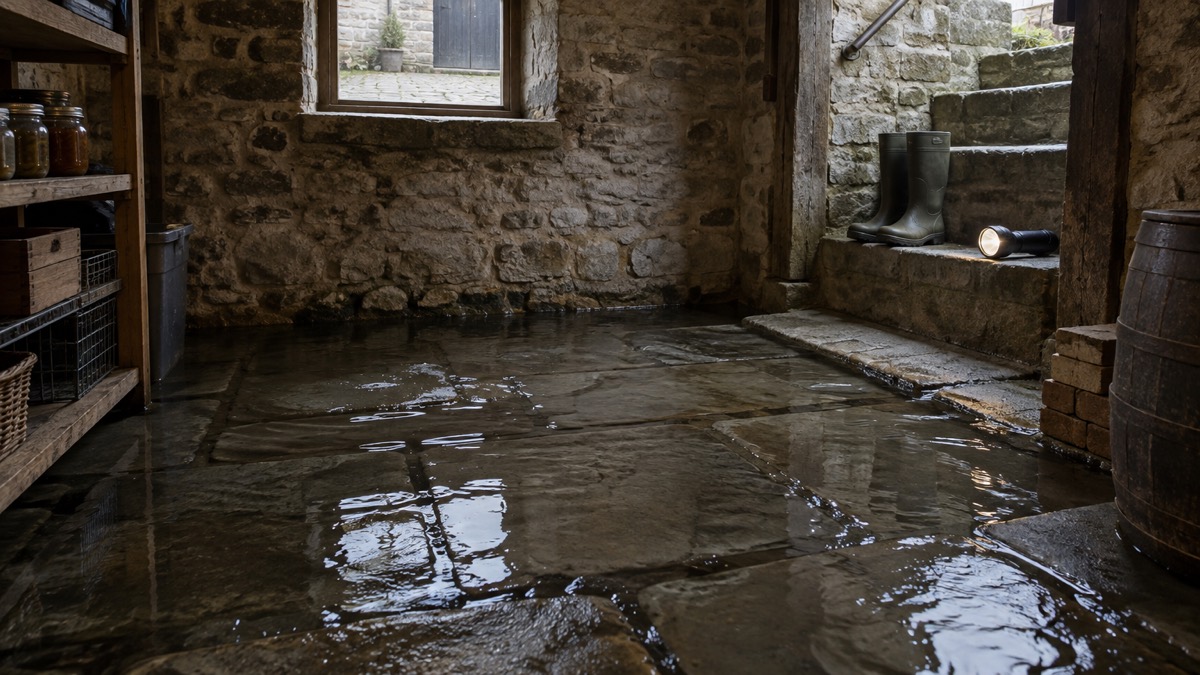
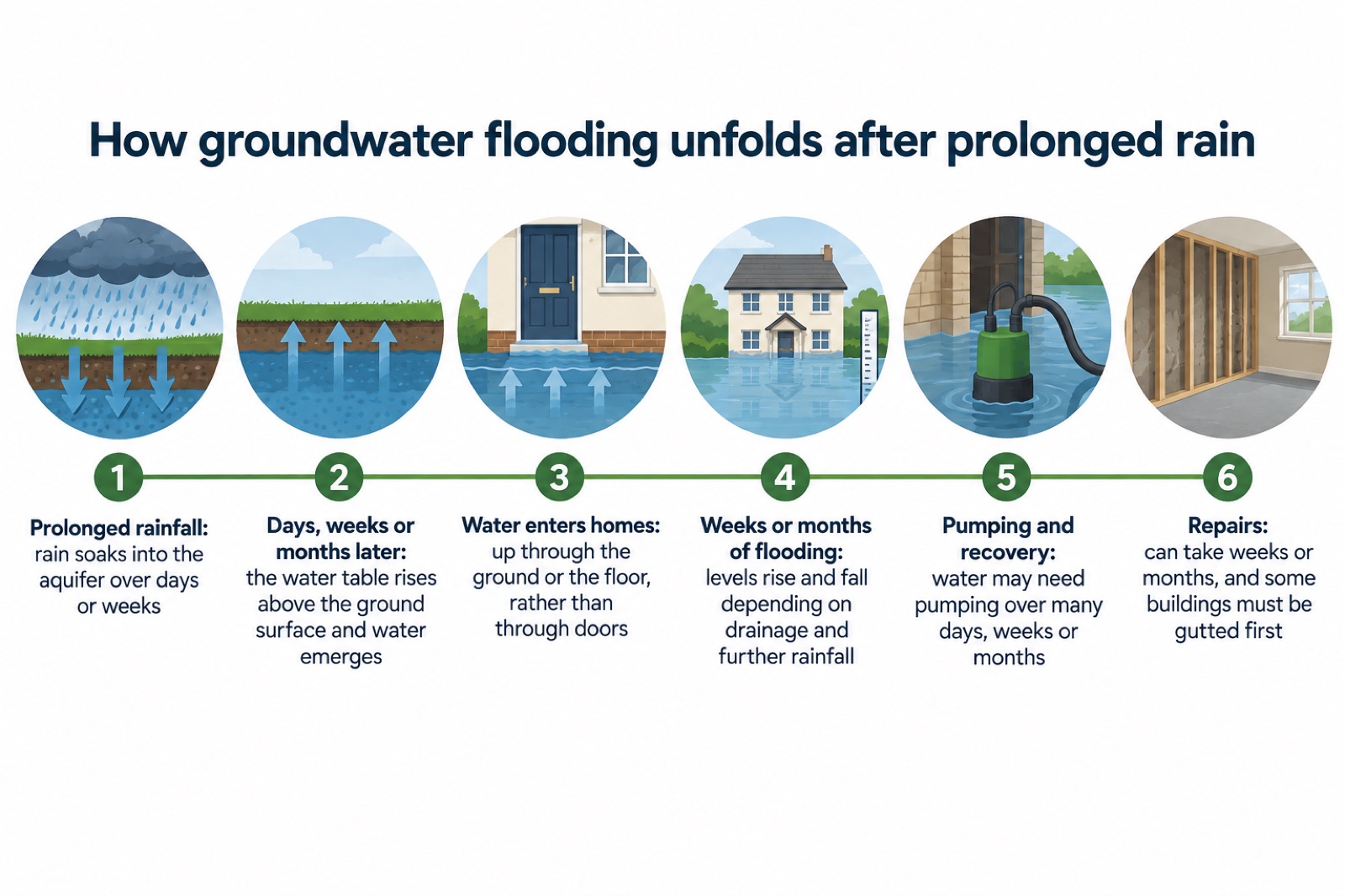
Groundwater flooding is when water under the ground, known as the water table, rises to the surface1. Instead of pouring in through a door or a window, the water comes up through the ground or through the floor of your home1. It usually happens days, weeks or even months after a long period of rain, and once it starts it can last for weeks or months1. That slow arrival and long duration are what make it different from every other kind of flooding, and they change what you can usefully do about it.
The flooding happens because the ground beneath some areas holds water in permeable rock, called aquifers, and after prolonged rainfall the water level in that rock rises above ground level, so water emerges at the surface2. Underground rooms such as cellars and basements are particularly at risk1. This page explains how to recognise groundwater flooding, how to check whether your home is at risk, how to get warnings, and what helps when the water arrives, including why barriers at the door do little and what to do instead.
What groundwater flooding is: the water table rising above the ground
Beneath most of the ground there is a level below which the rock and soil are saturated with water. That level is the water table. Groundwater flooding occurs when the water table, the water level below ground, rises above the ground surface2. When that happens, water has nowhere else to go and it emerges: it may pool on the surface, flow over land, or rise into buildings from below5.
The trigger is prolonged rainfall. This type of flooding occurs when the groundwater table rises above ground level after prolonged periods of rainfall, resulting in water emerging at the surface6. A single heavy downpour is usually not enough, because the aquifer below can absorb it. It is the accumulation of rain over weeks or a whole season that fills the rock until it overflows.
Two features follow from this that shape everything else on this page. First, groundwater flooding is usually slower than river flooding1. Rivers respond to rain within hours; aquifers respond over weeks. Second, it is difficult to predict groundwater flooding1. Because the water moves slowly through rock and emerges where the geology allows, the water does not always appear where you would expect it to, for example on the side of a hill1. The official guidance on groundwater flooding applies to England1, but the same physical process affects homes in Wales, Scotland and Northern Ireland, and each nation provides its own risk information and warnings, covered later on this page.
Groundwater or surface water: how to tell them apart
Most people who experience flooding at home first want to know which kind it is, because the answer changes what helps. Surface water flooding happens when rainfall exceeds the drainage or infiltration limits of the surface it falls on7. In other words, rain that cannot drain away through normal drainage systems or soak into the ground lies on or flows over the ground instead8. It happens more in urban and paved areas where impermeable surfaces allow little or no infiltration and local drainage systems cannot cope with the amount of rainfall7.
Groundwater flooding is different in kind, not just in speed. It is not the gathering of water on paved surfaces or the runoff of surface water down slopes, and it is not always linked to a location's distance from a watercourse2. The water comes from below, not from above.
| Surface water flooding | Groundwater flooding | |
|---|---|---|
| Where the water comes from | Rain that cannot drain away or soak in8 | The water table rising above the ground surface2 |
| Typical setting | Urban and paved areas where drainage cannot cope7 | Areas over permeable rock such as chalk or sandstone2 |
| How fast it arrives | During or soon after the rainfall; also called flash flooding9 | Days, weeks or months after lots of rain1 |
| How it enters a home | Through doorways, windows and air bricks, or as groundwater through floors10 | Up through the ground or the floor, rather than through doors1 |
| How long it lasts | Hours to days, depending on drainage | Weeks or months3 |
The names can confuse. Surface water flooding is also known as flash flooding and the terms can be used interchangeably9, and it is sometimes referred to as pluvial flooding11. If water arrived within hours of a storm, ran down a road or collected in a low spot, and drained away within a day or two, it was almost certainly surface water flooding. If water appeared with no rain falling, seeped up through a floor or a garden, and stayed for weeks, that points to groundwater.
The signs: water coming up through the floor, not in through the door
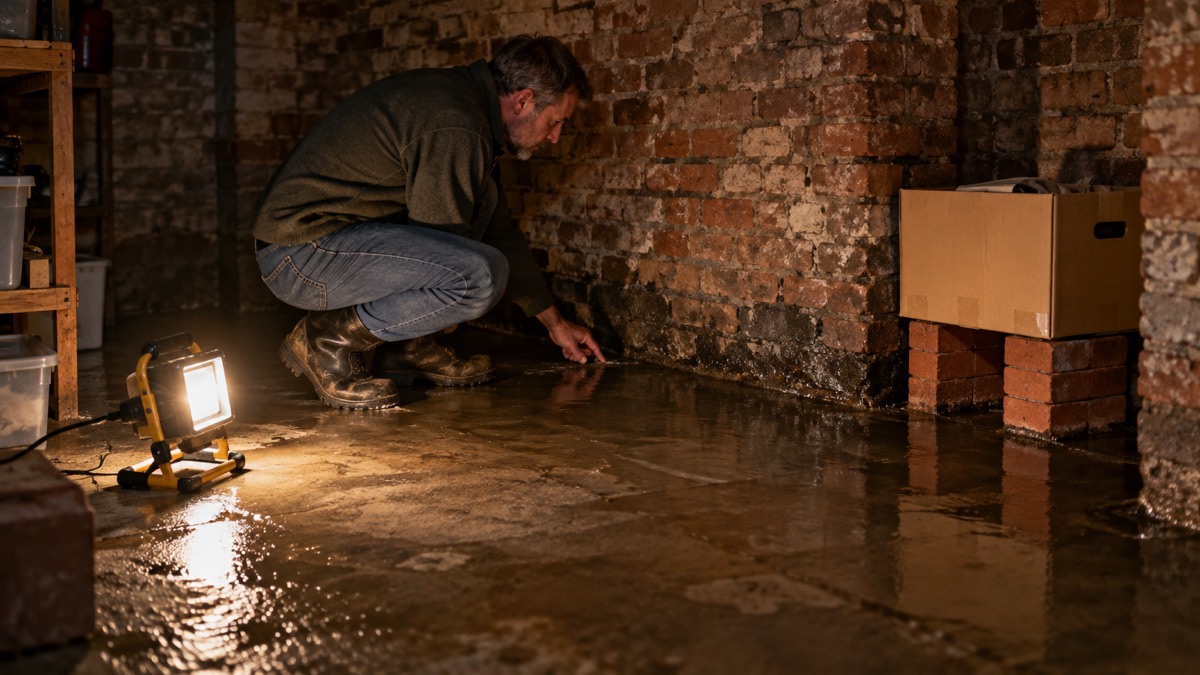
The clearest sign of groundwater flooding is where the water appears. With groundwater flooding, water will come up through the ground or the floor, rather than through doors1. If your cellar floor is wet, or water is seeping between flagstones or up through a concrete slab while the ground outside the door is comparatively dry, that is water from below.
Water can enter a property via doorways, windows, air bricks or as groundwater through floors10. In very severe flooding, water may enter through doors, windows, airbricks, vents, drains, walls and even through the ground floor12. So the entry route does not always settle the question on its own. What does help is the pattern over time: groundwater flooding is much slower to occur than river or surface water flooding and takes days or weeks to occur after heavy rainfall3. Water that starts seeping days after the rain stopped, and keeps coming, is behaving like groundwater.
During heavy rainfall, the water level in the ground may rise to a point at which it floods basements, or groundwater emerging at the surface may damage properties and infrastructure2. Watch for:
- Water on the floor of a cellar or basement with no water coming through the door1
- Springs or standing water appearing in gardens, fields or on hillsides where there is usually none1
- Water seeping through or between floor slabs, or through low walls12
- Levels that rise and fall slowly over weeks rather than hours4
- Flooding that continues or returns long after local rivers have dropped3
If you see these signs, move vehicles to higher ground13 and move possessions you cannot afford to lose off the ground floor and out of the cellar, since with groundwater the water may keep arriving for a long time.
Why it lasts so long: days to arrive, weeks or months to leave
Groundwater flooding usually happens days, weeks or months after lots of rain1. The delay is the aquifer doing what aquifers do: holding an enormous amount of water and releasing it slowly. By the time the water table is high enough to flood, the rain that caused it may be long gone, which is why groundwater flooding can begin on a dry, calm day.
The same storage that delays the flooding also prolongs it. Groundwater flooding may last for a long time, weeks or months1, and it may also last for several weeks or months3. Water levels may rise and fall for several weeks depending on drainage and any further rainfall4. A dry fortnight will not empty an aquifer; it only stops refilling it. Expect the situation to change slowly, and expect further rain during a groundwater flood to push levels up again.
That long duration changes what recovery looks like. You may need to pump water over many days, weeks or months14. Flood repairs can take weeks or months to complete, especially if there has been widespread flooding and builders are scarce, and some buildings may have to be gutted before repairs can start15. Plan for a marathon rather than a sprint: a household that treats week one as the whole event will run out of patience, supplies and dry storage long before the water goes.
Where groundwater flooding is most likely: chalk, aquifers, valleys and basements
Groundwater flooding is most likely to happen in areas with underlying permeable rocks, called aquifers. These can be regional in scale, such as large areas of chalk or sandstone, or more local scale aquifers2. In practice, that means parts of southern and eastern England over chalk, and other districts over sandstone, plus smaller local aquifers elsewhere. Groundwater flooding is more likely where there is chalk under the ground, the bedrock1.
Certain low-lying areas with shallow water tables are at particular risk, especially after persistent heavy rains6. Homes built on flood plains are at greater risk generally, and basement flats may be more at risk than other flats within the same building16. Underground rooms, such as cellars and basements, are particularly at risk1, because they sit below the level the water table has to reach to flood them, which is far lower than the level needed to flood a ground floor.
The geology matters more than the map. If the soil is porous, for example chalk, and a water table lies immediately below the ground, it is very likely that in times of flood water will rise up directly into your property through the ground floor12. In that situation the official advice is blunt: it is better to spend your time removing possessions to a safe place rather than wrapping your home12. The water is not coming through a gap you can block; it is coming through the floor itself.
Is my home at risk of groundwater flooding?
Start with an honest statement of the limits: there are no free groundwater flood risk maps2. The free national flood maps are useful, but they do not answer this question directly. The national flood risk assessment for England covers rivers, the sea and surface water, and it does not include groundwater flooding, because there are too many gaps in the understanding and evidence for it17. Surface water maps show areas that may be likely to have surface water flooding in a 1-in-200-year flood risk18, which is a different question.
What you can do instead:
- Check the free national maps anyway. They show river, sea and surface water risk, and being at risk from those is often a clue that the ground is low and wet19
- Read the map's limits. The Flood Risk Assessment Wales map shows your risk of flooding from rivers, the sea, surface water and small watercourses, and reservoirs, but flooding from overwhelmed or blocked sewers and drains, groundwater from underground aquifers, and underground mine systems is not shown on it19
- Do not treat a clear map as all-clear. If the SEPA flood maps do not show any risk of flooding for your site, this does not confirm there is no risk, because the maps do not always represent flooding in detail locally23
- Ask about the British Geological Survey dataset. The British Geological Survey has recently produced the first national hazard data set for groundwater flooding24
- Pay for a professional assessment. You can pay a consulting engineer or chartered surveyor to do a flood risk assessment of your home1
- Ask your council about past events. Councils hold records of previous flood events they have been informed about, including groundwater flooding2
| Nation | Free map | What it shows | Groundwater shown? |
|---|---|---|---|
| England | Environment Agency flood risk maps | Rivers, the sea and surface water17 | No; the national assessment excludes groundwater17 |
| Wales | Flood Risk Assessment Wales map | Rivers, the sea, surface water, small watercourses and reservoirs19 | No; groundwater from aquifers is not shown22 |
| Scotland | SEPA flood maps | River, coastal and surface water flood extent, depth and velocity25 | Groundwater appears in flood risk management maps for responsible authorities25 |
| Northern Ireland | Flood Maps NI | Flood risk areas and an area's flood risk history20 | Check the map and your local authority |
In Scotland, SEPA's flood maps showing the risk of flooding from river, the sea and surface water are available under Open Government Licence, free to re-use without permission, including for commercial purposes23. Use the flood maps to find out the level of flood risk in your area26, and check whether your property is in a flood risk area and sign up for flood warnings by text, phone or email27.
Getting warnings: Floodline, local radio and your council
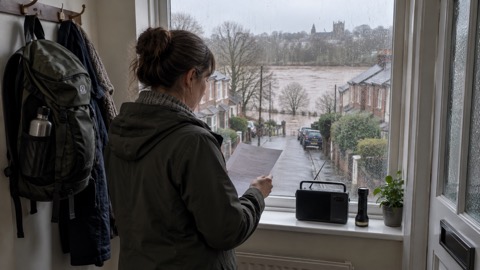
During groundwater flooding, you can get information from Floodline, local radio and the local council1. Floodline is a free service that provides flood warnings directly to you by phone, text or email, whichever you select28. Sign up and get notified when the area you live, work or travel through is at risk of flooding29. The warnings service covers flooding from rivers, the sea and groundwater4, so groundwater is explicitly included, which matters if you have assumed warnings were only about rivers.
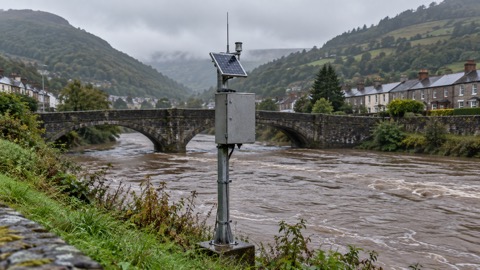
In Scotland, Floodline works with quick dial codes for local areas29, and SEPA's guidance directs you to use its flood maps to find out the level of flood risk in your area26. In Wales, you can see all the areas covered for free flood warnings and alerts on the Flood Risk Assessment Wales map19. In London, the City of Corporation states that when the situation becomes a cause of concern for ground, property and life, flood alerts and warnings will be broadcast on local media30, and Floodline Warning Direct is a free 24 hour flood warning service, provided by the Environment Agency, where individuals can register their properties and opt to receive a warning by telephone, text or email30.
Beyond formal warnings, national forecasting gives a heads-up at area level, and local media broadcast flood alerts and warnings when the situation becomes a cause for concern for ground, property and life31. If your area is at risk, a warning like that is your cue to check the cellar and move possessions before any water appears. For flash flooding from surface water, sign up to Met Office weather warnings32. Our pages on flood warnings and how to sign up for free flood warnings walk through registration.
Why barriers do little, and what helps instead
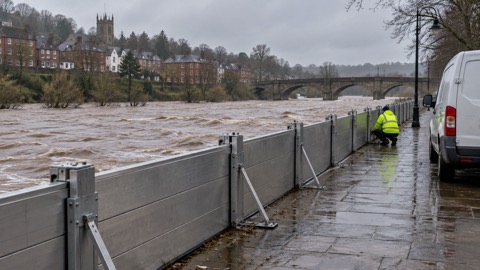
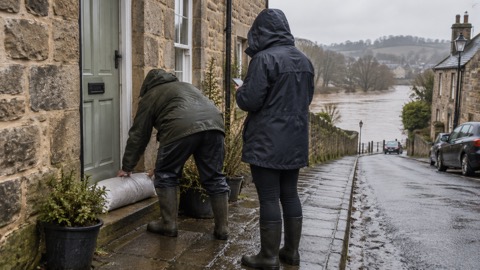
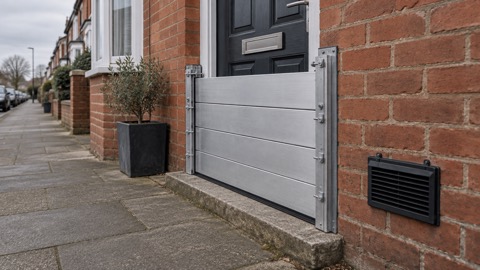
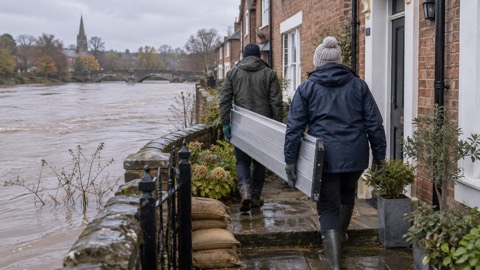
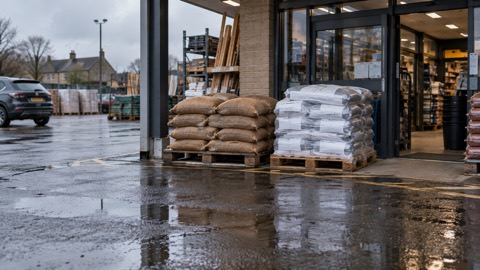
Flood boards, door barriers and sandbags are built to stop water coming through an opening. Groundwater does not use an opening. It rises through the floor, so a perfectly sealed door simply moves the problem to the slab, the walls or the cellar. Where the ground is porous chalk with a water table immediately below, the official advice is that it is very likely water will rise up directly into your property through the ground floor, and it is better to spend your time removing possessions to a safe place rather than wrapping your home12.
That does not mean nothing can be done. It means the useful measures are different:
- Floors that survive water. If your home or business is at risk from groundwater flooding there are different floors that can reduce the damage: a dampproof reinforced concrete floor, a suspended floor or a raised floor14
- Moving possessions. With a slow flood you have time on your side, so use it to lift or remove what matters most, especially from cellars and basements12
- Pumping. You may need to pump water out after groundwater flooding1, and to keep pumping over many days, weeks or months14
- Resilient repairs. After a flood, repairs can be done so the building recovers faster next time; some buildings may have to be gutted before repairs can start15
If you are considering resistance and resilience measures, a property resilience survey by a professional will tell you which measures suit a groundwater problem, as opposed to a river or surface water one. For homes at genuine risk, home insurance in a flood risk area and Flood Re matters too: Flood Re offers affordable insurance to homes identified as at risk of flooding26.
Pumping out and recovering after groundwater flooding
You may need to pump water out after groundwater flooding1. Because the water table stays high, pumping is often not a one-off job: you may need to pump water over many days, weeks or months14. A sump pump or submersible pump run into a sump or low point is the usual approach for a cellar that keeps refilling. Our page on pumping water out of a home or cellar covers the practicalities.
Before you pump anywhere other than your own ground, check who owns what you are pumping into. The official guidance is specific:
- Pumping into public sewers: check with your water company33
- Pumping into street drains, highways or highway ditches: check with the local highways authority or National Highways33
- Pumping into rivers, ditches or watercourses, for example a brook or mill stream: check with your local Environment Agency office33
Only pump out water when flood levels outside your property are lower than inside, to reduce the risk of structural damage14.
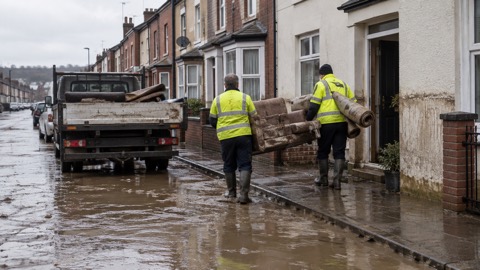
Recovery takes longer than the water does. Flood repairs can take weeks or months to complete, especially if there has been widespread flooding and builders are scarce15. Follow the standard sequence: first steps after your home floods, then returning home safely, cleaning up safely, and drying out. In Scotland, contact the Scottish Flood Forum for support and advice on how to recover from flooding26. Move vehicles to higher ground while levels are still uncertain13, and remember that even in a second floor flat, flooding could prevent getting in or out, catch your car, flood a garden or driveway, or interrupt power, gas or water supplies22.
Who to contact: your local flood authority
In England and Wales, the day-to-day authority for groundwater flooding is your local flood authority. Contact your local authority, who will direct you to their relevant department8. Your local authority or the Environment Agency can tell you about the risks of flooding where you live16. In Wales, contact the local authority for any historic flood information for surface water and small watercourses22.
Reporting what has happened matters, both for your own record and for your neighbours:
- Report the flood. Report a flood captures information on localised flooding and informs others29. Contact your county council to report surface water, groundwater or ordinary watercourse flooding; Oxfordshire County Council is one example34
- Report highway flooding through the council's online reporting tool, Fixmystreet, including blocked drains and gullies on roads34
- Email specific teams. The City of London asks residents to report groundwater flooding to its Flood Risk team by email30; Derbyshire holds records of previous flood events it has been informed about, including groundwater flooding, and answers queries for specific areas2
- Check older records. Records of previous local flood events may be held by your Parish Council, the Lead Local Flood Authority or the Environment Agency18
Some councils are running dedicated groundwater work. Lincolnshire County Council's Project Groundwater aims to develop a greater understanding of groundwater and its impact on greater Lincolnshire and to develop solutions to help manage some of the groundwater flooding issues in the county35. It works with several organisations, including the University of Lincoln, Middlesex University and the NHS, and participates in collaborative works alongside Buckinghamshire Council35. Its trial communities include Grimsby Saltings Allotment, Grimsby Kingston Gardens, Scopwick, Barton-upon-Humber, Barrow-upon-Humber, Bourne, Heighington, Hillside Avenue in Lincoln and Washingborough35. If you live in one of those places, contact the project by email at Innovative.resilience@lincolnshire.gov.uk35.
Area risk assessments also feed this work. The London Risk Register scores groundwater flooding with an impact of 3 and a likelihood of 3, giving a HIGH rating for the review period from October 2024 to October 202536. Those scores are why authorities plan for groundwater as a genuine, ongoing hazard rather than a rare curiosity, and why reporting your flood adds a real piece to the picture.
For a wider view of who does what, see who manages flood risk, and for the broader subject, our flooding guide and page on the types of flooding.
Sources (36)
- Groundwater flooding guidance, GOV.UK, 2023-09-20
- Groundwater flooding in Derbyshire, Derbyshire County Council, 2026-10-29
- Flooding risks in Wiltshire and Swindon, Wiltshire and Swindon Prepared, 2026-10-25
- Flooding and how to prepare, Prepare Campaign, 2026-10-12
- Identifying flood risk, Derbyshire County Council, 2026-10-29
- Ongoing risks: flooding, Essex Prepared, 2026-10-29
- Surface water flooding, Derbyshire County Council, 2026-10-29
- Different types of flood risk, Natural Resources Wales, 2026-10-29
- Surface water flooding and climate adaptation, Greater London Authority, 2026-10-25
- Personal flood resilience, Derbyshire County Council, 2026-10-29
- Suffolk Local Flood Risk Management Strategy, Suffolk County Council, 2023-02
- Damage limitation guide, Dover District Council, 2001-09
- What to do during a flood, Nottinghamshire County Council, 2026-10-29
- Prepare your property for flooding, GOV.UK, 2009-10-01
- Before, during and after a flood booklet, Suffolk County Council, 2021-05
- How to prepare for flooding: advice for frontline responders, GOV.UK, 2023-12-19
- National assessment of flood and coastal erosion risk in England 2024, Environment Agency, 2026-08-05
- Preparing for flooding, Somerset Council, 2026-10-28
- Flood Risk Assessment Wales map, Natural Resources Wales, 2026-10-29
- Flood Maps NI, nidirect, 2024-05-23
- SEPA flood maps, Scottish Environment Protection Agency, 2026-10-29
- Understanding your flood risk results, Natural Resources Wales, 2026-10-29
- SEPA flood maps FAQs, Scottish Environment Protection Agency, 2026-10-29
- Groundwater flooding: Derbyshire, Derbyshire County Council, 2026-10-29
- SEPA flood risk management maps, Scottish Environment Protection Agency, 2026-10-29
- Before, during and after a flood, Scottish Environment Protection Agency, 2026-10-29
- Staying safe in flooding, West Midlands Ambulance Service NHS Foundation Trust, 2026-05-20
- Preparing for a flood, Nottinghamshire County Council, 2026-10-29
- Floodline live flood information and quick dial codes, Floodline, 2026-10-29
- City flooding: emergency information and preparedness, City of London Corporation, 2026-02-03
- Flood Guidance Statement, 8 February 2026, Flood Forecasting Centre, 2026-02-08
- How to prepare for flash flooding, Greater London Authority, 2026-10-25
- Help during a flood, GOV.UK, 2026-10-25
- Flooding and street maintenance, Oxfordshire County Council, 2026
- Project Groundwater, Lincolnshire County Council, 2026-10-29
- London Risk Register v14, Greater London Authority, 2025-01
 Flood Warning Checklist
 First Steps After a Flood
 Insurance Claim Records
 Checking Flood Risk by Postcode
 Types of Flooding
 Flood Alerts and Flood Warnings
 Flood Guidance Statement
 Wales Flood Warnings and Maps
 Making a Household Flood Plan
 Protecting Your Home
 Door Flood Barriers
 Sandbags and Alternatives
 Flood Doors and Windows
 Airbrick Covers
 Non-Return Valves and Bungs