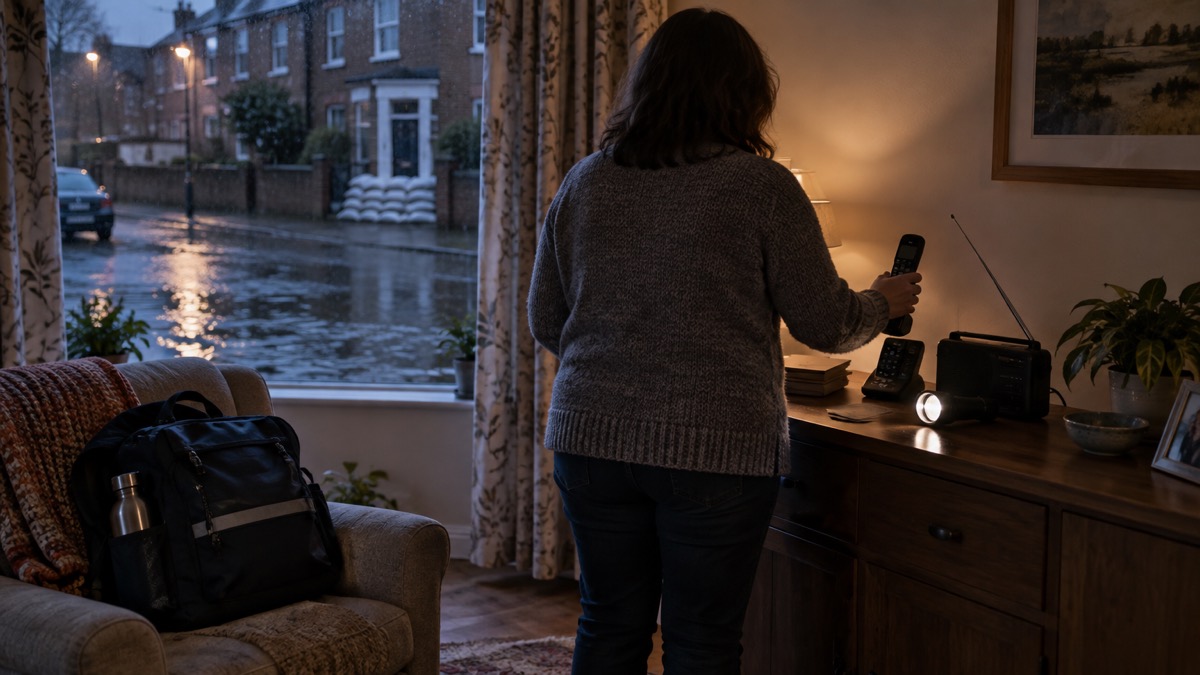
Flood warnings are free, and signing up takes a few minutes. In England you can register online at gov.uk/sign-up-for-flood-warnings or by phoning Floodline on 0345 988 1188, and warnings arrive by phone, text or email, whichever you choose1. Anyone can sign up, for free3.
The point of registering is time. A warning gives you the hours you need to move a car, put a barrier in a doorway, lift things off the floor and check on a neighbour, rather than finding out when water is already at the door. Official advice is to check your long-term flood risk for your area and sign up for flood warnings by text, phone or email to stay informed during severe weather4. You can find out if your home is at risk, sign up for warnings and be ready to take action5.
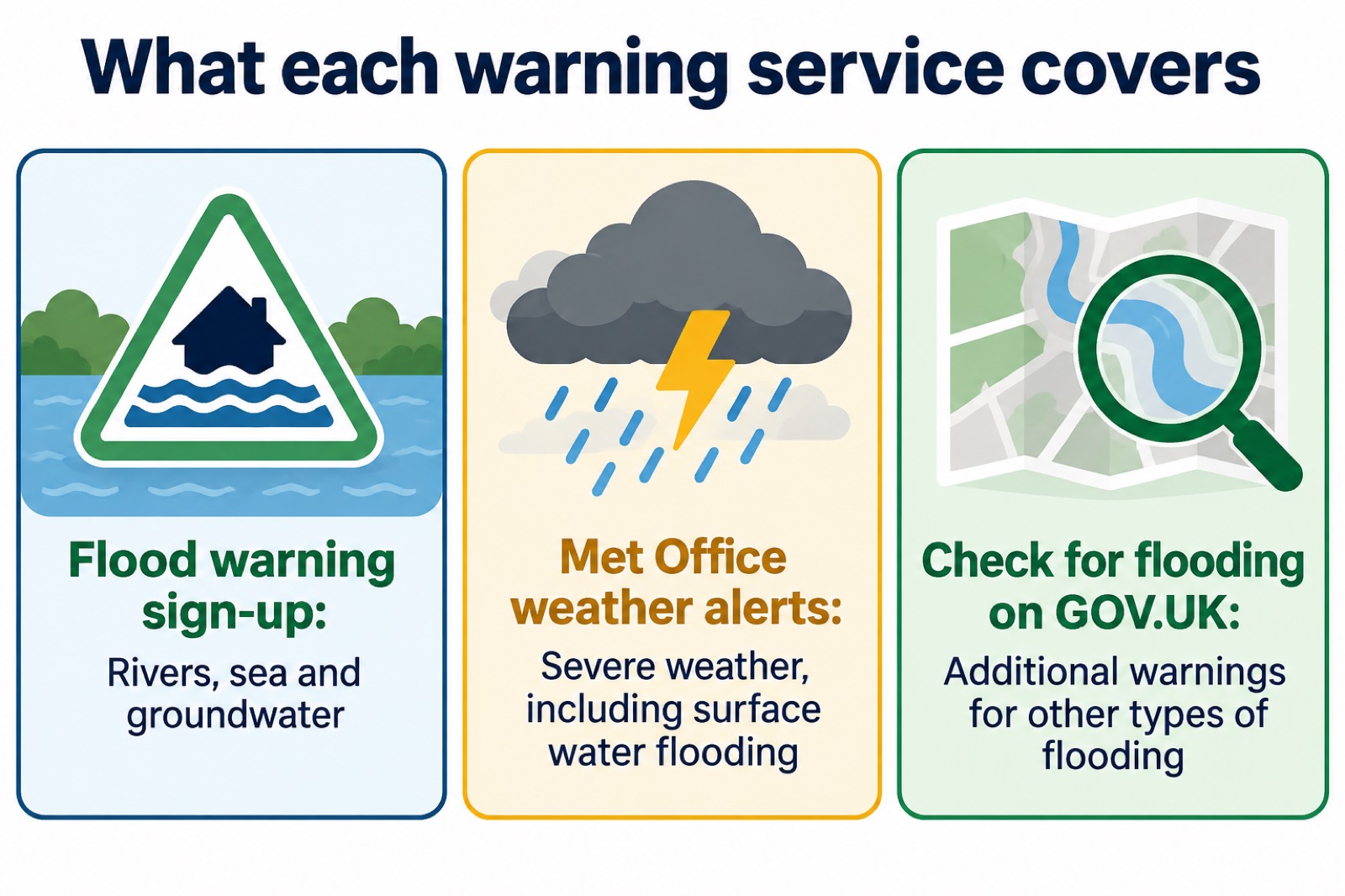
What the warnings do not do is cover every kind of flooding. The standard service covers flooding from rivers, the sea and groundwater6. Surface water flooding, the kind that comes from sudden heavy rain overwhelming drains, is often better flagged by Met Office weather warnings, which is why official guidance suggests having both7. This page sets out how to register in each nation, who should bother, and how to fold the sign-up into a household flood plan.
Signing up in England: online or by phone
There are two routes, and they lead to the same service. Online, the address to use is gov.uk/sign-up-for-flood-warnings, which is the Environment Agency's Floodline sign-up1. By phone, call Floodline on 0345 988 1188, which is a 24 hour service9. One council guide notes that if you would rather speak to someone, you can call Floodline on that number5.
When you register you choose how warnings reach you. The service delivers them by phone, text or email, whichever you select2. The Met Office describes the same offer as free flood warnings direct to your mobile, home phone or email12. You can register for the area you live, work or travel through, so a commute or a workplace can be covered as well as home13.
A few practical points make the registration more useful:
- Use a number you will answer. A mobile you keep charged and with you is more use than a landline in a room you rarely enter.
- Add email as a backup. If one channel fails during a storm, another may still get through.
- Register every property you care about. The service is not limited to your own front door.
- Re-register if you move. The warning is tied to the area you selected, not to you.
If you are not sure whether you are in a warning area, register anyway. In Wales, where a property falls outside a warning area, you can sign up for the nearest relevant area by searching by town or city and selecting from the list11. The same habit of registering for the nearest covered area is sensible elsewhere.
Who should sign up, and for which properties
The official line is simple: sign up for flood warnings if your home or business is at risk of flooding14. That includes households that have never flooded but sit in a flood risk area, and businesses whose premises or stock could be damaged. One NHS trust's public safety advice is to check if your property is in a flood risk area and sign up for flood warnings by text, phone or email to stay informed4.
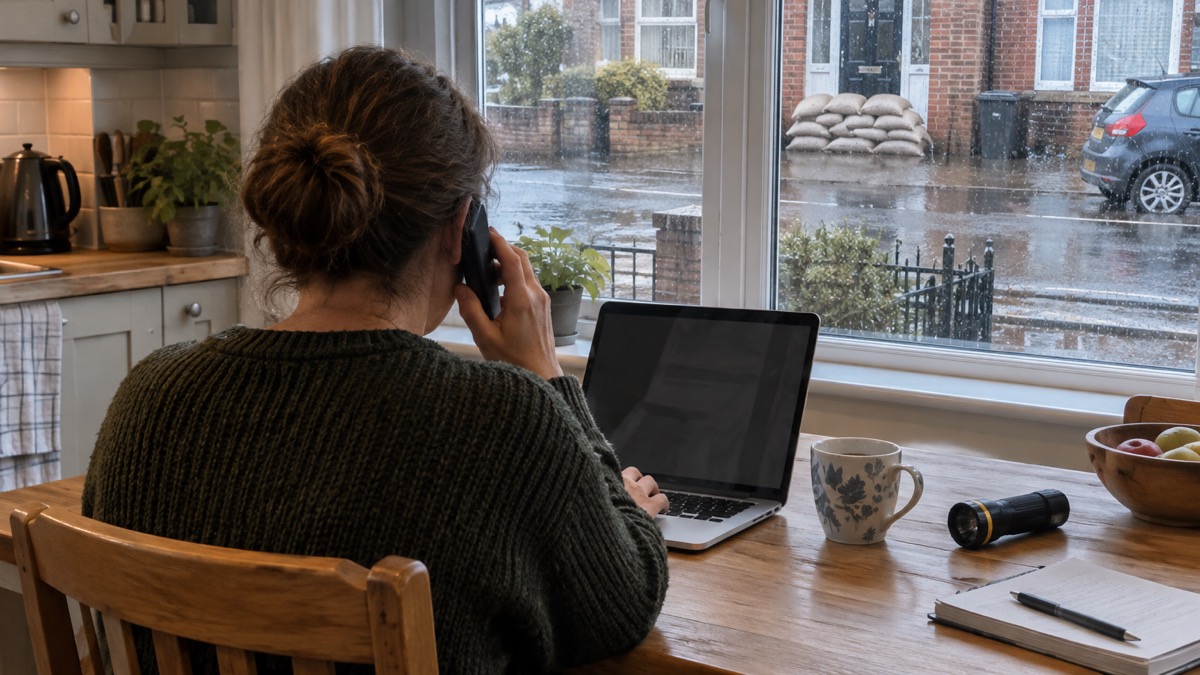
Businesses with more than one site should register each one. Guidance suggests that those with more than one property at risk of flooding, such as businesses with more than one site, consider registering them15. Larger estates have a separate route: businesses with more than 10 properties at risk of flooding can register for the professional alert system16.
You can also register on someone else's behalf. In Wales, Natural Resources Wales lets you sign up for more than one location, such as your home address, a business, other property you own, or other locations of interest, for example a relative's house11. That is useful for an older relative who would not manage the online form, or a second home you cannot check daily.
| Who | What to register | Why it helps |
|---|---|---|
| Household in a flood risk area | Home address, by phone, text or email14 | Advance notice to act before water arrives |
| Business with one premises | The business address14 | Time to move stock and protect equipment |
| Business with several sites | Each property at risk15 | One warning per location, not one for the group |
| Large property portfolio | Professional alert system if more than 10 properties at risk16 | A route built for volume |
| Carer or relative | The other property as an additional location11 | You can act for someone who cannot |
Scotland and Wales: where to register
Arrangements differ by nation, and it matters which service you use.
In Scotland, you sign up to receive alerts and flood warnings from SEPA. These can be set up for where you live, a business premises or other property you own10. SEPA's service sends free flood messages direct to your mobile phone or landline when problems are predicted in local areas17. SEPA also publishes live flood information, and its forecasting pages explain how predictions are made13.
In Wales, you sign up to receive flood warnings through Natural Resources Wales18. The Welsh Government's flood warnings page points to the same service18, and local authority winter readiness advice repeats that you can sign up for free flood warnings19. Natural Resources Wales also allows registration for more than one location and for the nearest relevant area if your property is outside a warning area11.
In Northern Ireland, the sources here do not describe a separate sign-up service, so check with your local council or the agency responsible for flooding where you live before relying on any single number.
What the warnings cover, and why weather alerts matter too
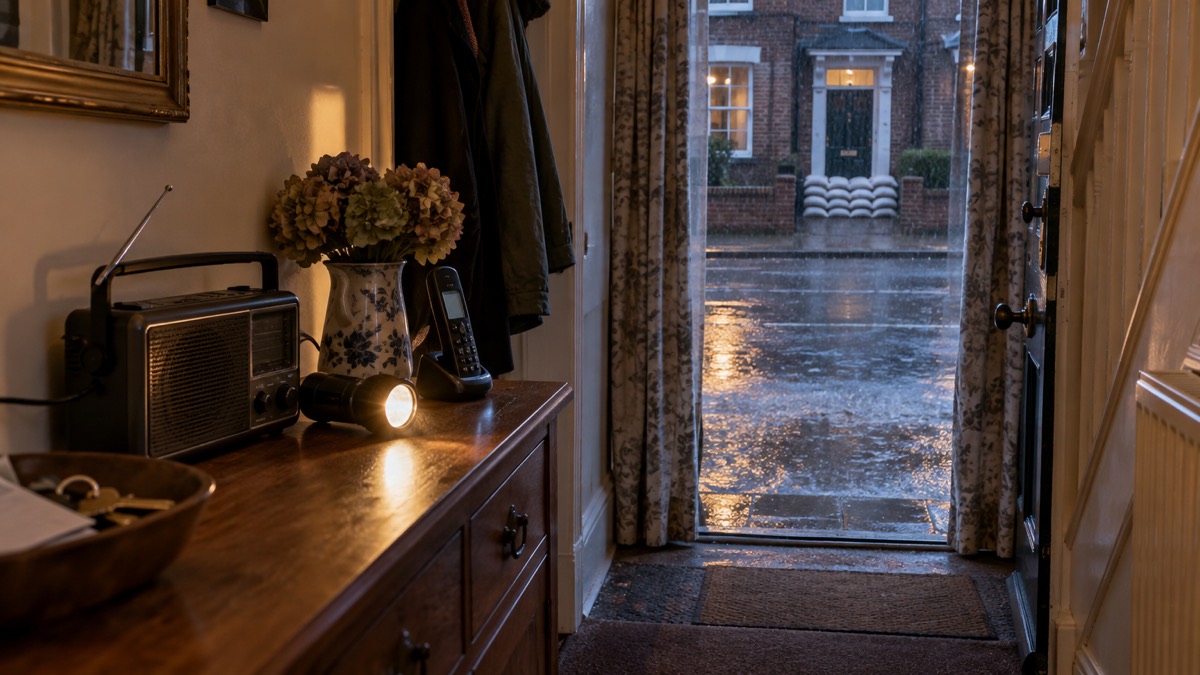
Flood warnings are not a single, all-purpose alert. The sign-up service covers flooding from rivers, the sea and groundwater6. One council guide is blunt about its own local service: these are only for river flood warnings, and it suggests also signing up for additional flood warnings covering different types of flooding through Check for flooding on GOV.UK20.
That gap matters most for surface water flooding, which happens when heavy rain overwhelms drains and runs over ground before any river rises. For that, Met Office weather warnings are the tool. One preparedness site advises enabling Met Office alerts on your phone and describes having them switched on as just as important as flood warnings8. The London Assembly has urged residents to sign up for severe weather alerts from the Met Office21, and a Welsh community council notes that the Met Office provides an email alert system for severe weather warnings, and that all residents and business owners, regardless of whether their property is in the flood risk area, should be encouraged to sign up22.
So the practical combination is:
- Register for flood warnings for your property, and for any other property you care about14.
- Switch on Met Office weather alerts on your phone8.
- Check the current situation on the Environment Agency's flood pages during severe weather14.
- Know the difference between an alert and a warning, so you act at the right level.
Before you sign up: check your risk and know your warning levels
Registration is more useful if you know what you are registering for. Start with your long-term flood risk, which official advice says to check alongside signing up4. Knowing whether your risk comes from a river, the sea, groundwater or surface water tells you which warnings will reach you and which will not6.
Then learn the levels. A flood alert means flooding is possible and you should be prepared; a flood warning means flooding is expected and you should act; a severe flood warning means there is a danger to life. The differences are set out in full on our page on flood alerts, flood warnings and severe flood warnings. If you want to understand the forecast behind them, the Flood Guidance Statement and five-day forecasts explain how the agencies decide what to issue.
It also helps to know which type of flooding you face. A home near a river will usually get river warnings; a home on a hill with no watercourse nearby may get none, even when surface water floods the road. Our guide to types of flooding sets out the four main kinds and what each means for a household.
Adding the sign-up to your household flood plan
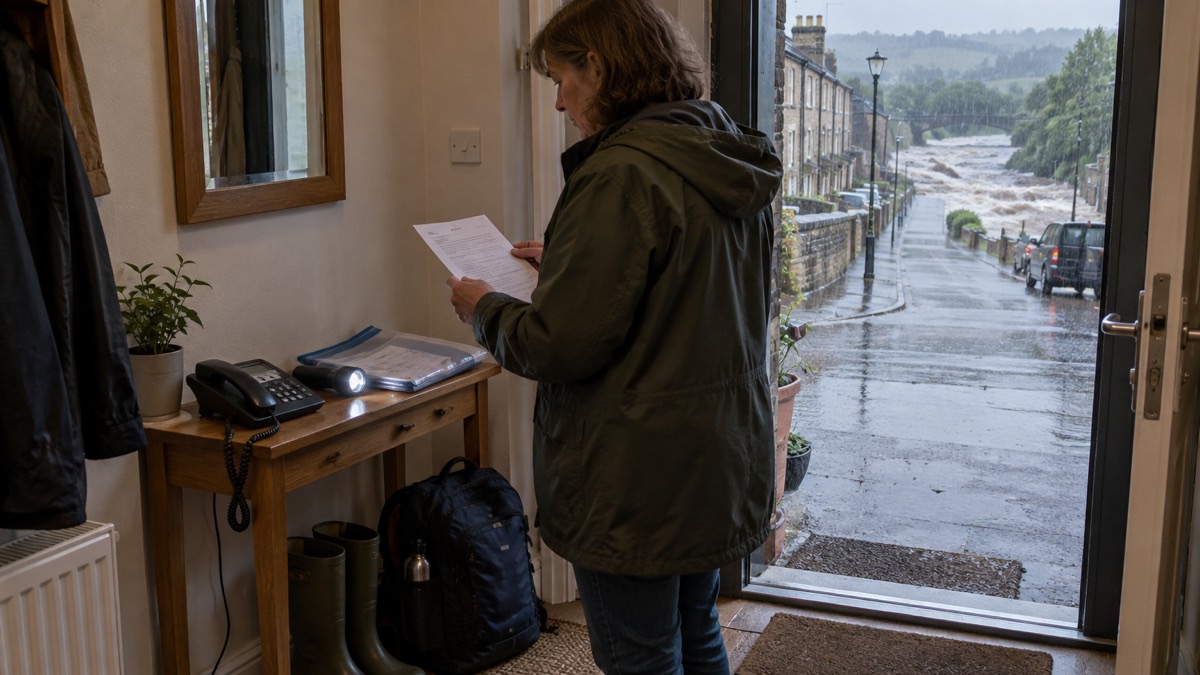
Signing up is one line in a larger plan, and it works best when the plan says what you will do when a warning arrives. The government's personal flood plan lists signing up for flood warnings among its steps23. One council recovery leaflet advises creating a household flood plan and signing up for flood warnings if you have them in your area24. Another preparedness guide suggests a trigger for your plan might be a river flood warning, which you can sign up for online20.
A workable plan does four things:
- Names who checks the warnings. One person, with a backup, so a message is not missed.
- Sets the trigger. A flood warning for your area means you start your checklist, not when water appears20.
- Lists the actions in order. Move the car, fit the barrier, lift valuables, check neighbours.
- Records the registration details. Which number and email you used, and which properties are covered.
Our guide to making a household flood plan walks through the rest, and the checklist for when a flood warning is issued turns the warning into a sequence of jobs. If you want warnings without email, or for several addresses at once, our page on getting warnings without email or for several addresses covers the options.
Sources (23)
- Sign up for flood warnings, GOV.UK, 2026
- Flooding help and advice: preparing, Nottinghamshire County Council, 2026
- Be prepared, West Midlands Ambulance Service, 2026
- Storm Babet, Suffolk County Council, 2026
- Flooding, Prepare campaign, GOV.UK, 2026
- How to prepare for flash flooding, London Assembly, 2026
- Prepare for potential flooding, Wiltshire and Swindon Prepared, 2026
- Preparing for flooding, Surrey County Council, 2026
- Prepared personal resilience, Scottish Borders Council, 2026
- Sign up to receive flood warnings, Natural Resources Wales, 2026
- Protecting your property from flooding, Met Office, 2026
- Forecasting flooding, SEPA, 2026
- Safety during Storm Eunice: how you can stay safe, Devon and Somerset Fire and Rescue Service, 2022
- Preparing, Nottinghamshire County Council, 2026
- Flooding: preparing for a flood (easy read), Nottinghamshire County Council, 2025
- Flood advice, Argyll and Bute Council, 2026
- Flood warnings and help before and after a flood, Welsh Government, 2026
- Winter ready, Isle of Anglesey County Council, 2026
- Preparing for a flood, Wiltshire and Swindon Prepared, 2026
- London Flood Awareness Week: how prepared are you for flooding, London Assembly, 2019
- Adverse weather events, Llangattock Community Council, 2026
- Personal flood plan, GOV.UK, 2023
- Flood recovery information, Devon County Council, 2026
 Flood Warning Checklist
 First Steps After a Flood
 Insurance Claim Records
 Flood Warnings Without Email
 Who to Report Flooding To
 Reporting a Blocked Gully
 Garden Safety After Sewage
 Council Sandbag Duties
 Filling and Laying Sandbags
 Makeshift Sandbags
 Disposing of Used Sandbags
 Turning Off Utilities
 Walking or Driving in Floodwater
 Turning Electricity Back On
 Appliances After Water Damage