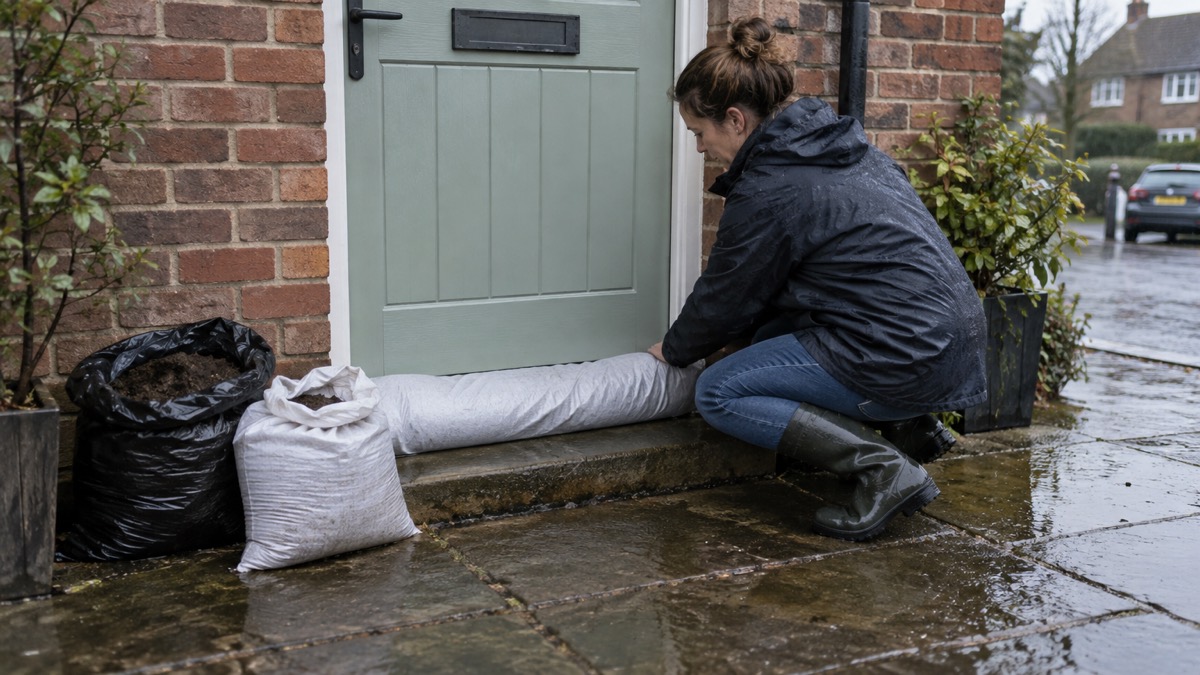
If floodwater is heading for your door and you have no sandbags, you can still act. Fire and rescue service guidance is direct: if you have left it too late, pillowcases filled with soil can be used as makeshift sandbags1. Somerset Council gives the same advice in wider terms, suggesting compost bags, carrier bags or pillowcases filled with sand or earth, and bags of garden compost as they are2. Devon and Somerset Fire and Rescue Service adds that you can buy your own sand and bags, or fill pillowcases and plastic bags with soil3.
What you are building is a stopgap, not a flood defence. Official guidance is clear that sandbags are relatively ineffective compared with purpose-designed flood protection measures, and of no use at all if the property is already flooded4. The Scottish Flood Forum, an independent body, goes further: sand bags are not water proof and should only be used as a last resort if there is nothing else to use5. Used well, a row of filled bags at a doorway can hold back shallow water for a short time. Used badly, it wastes the effort you have.
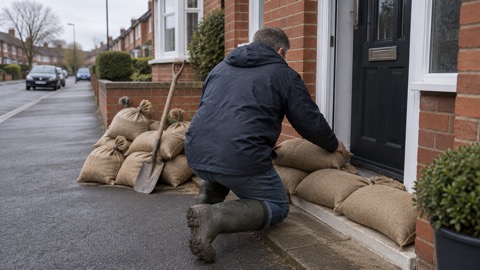
The method matters more than the material. Fill bags no more than half full, work with two people, and lay them lengthways with the open end tucked under the filled half and pointing into the flow of water6. Six bags is the official minimum for keeping 20cm of water out of a standard door opening6. Below is how to do it in the time you have, and what to do with the bags afterwards.
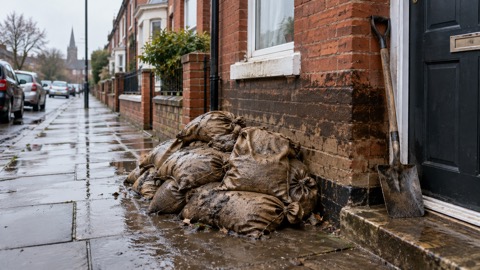
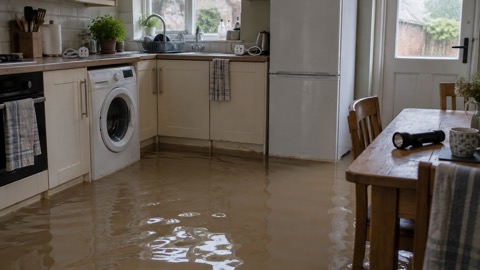
Pillowcases and bin bags can stand in for sandbags when filled with garden soil
The principle is simple: a bag of dense material, stacked and overlapped, slows water at a gap. What you fill it with decides how well it works and how easy it is to handle.
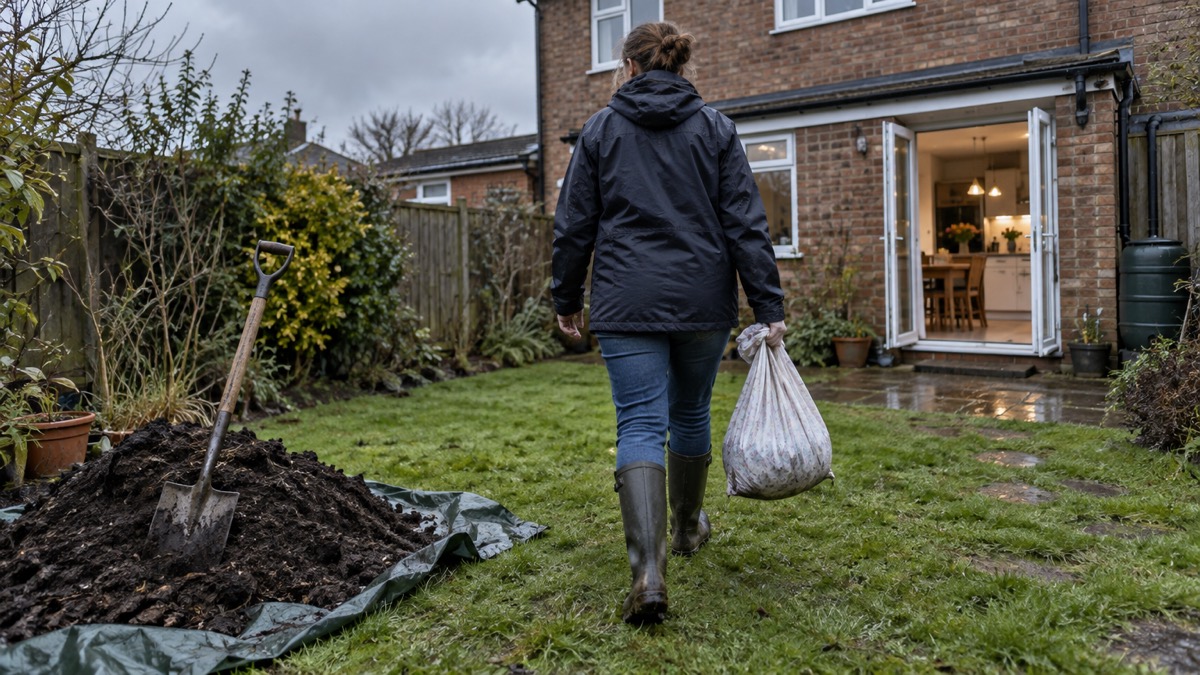
Garden soil is the usual choice because it is already there. Sand is heavier and packs more firmly, but digging and moving it takes time you may not have. Bags of garden compost work as they are, and Somerset Council lists them alongside homemade bags2. Compost bags and heavy-duty carrier bags are stronger than thin bin liners, which tear under the weight of wet soil. Whichever you use, the official filling rules apply: this is a two-person job, one to hold the bag open and one to fill, and you do not need to tie the end6.
Weight is the limiting factor. Official guidance notes that bags get heavy quickly, so do not overfill them, and do not fill them far from where you want to position them6. A half-filled pillowcase can be carried by one adult; a full one cannot be lifted safely. The same guidance gives a sense of scale for proper sandbags: 50 sandbags will require 1,000kg of sand or soil8. Another official figure puts it at 10 sandbags requiring 200kg8. The two documents disagree on the total, but both make the same point: the material is heavy, and it has to be moved twice, once into the bag and once into place.
If you have time to prepare rather than react, the better answer is to have the materials ready. Official guidance says sandbags can be used most effectively if you already have them filled and stored at your property in readiness for worsening conditions9. Empty sacks kept dry, with sand stored in the garden or yard, are easier to manage than filled bags, which are heavy and awkward to move in a hurry10.
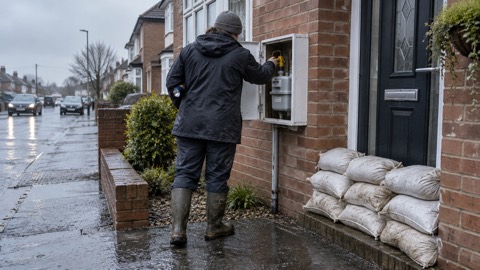
Laying improvised bags across doorways and airbricks
Water gets in at the lowest points and the smallest gaps. A doorway is the obvious one, but airbricks are just as important: official guidance advises keeping sandbags to block doorways and short wooden boards to nail over airbricks10. Northern Ireland's guidance says the same, listing sandbags, floodboards or plastic covers prepared to block doorways and airbricks11. If you block the door and leave the airbricks open, water finds its way in behind your wall of bags.
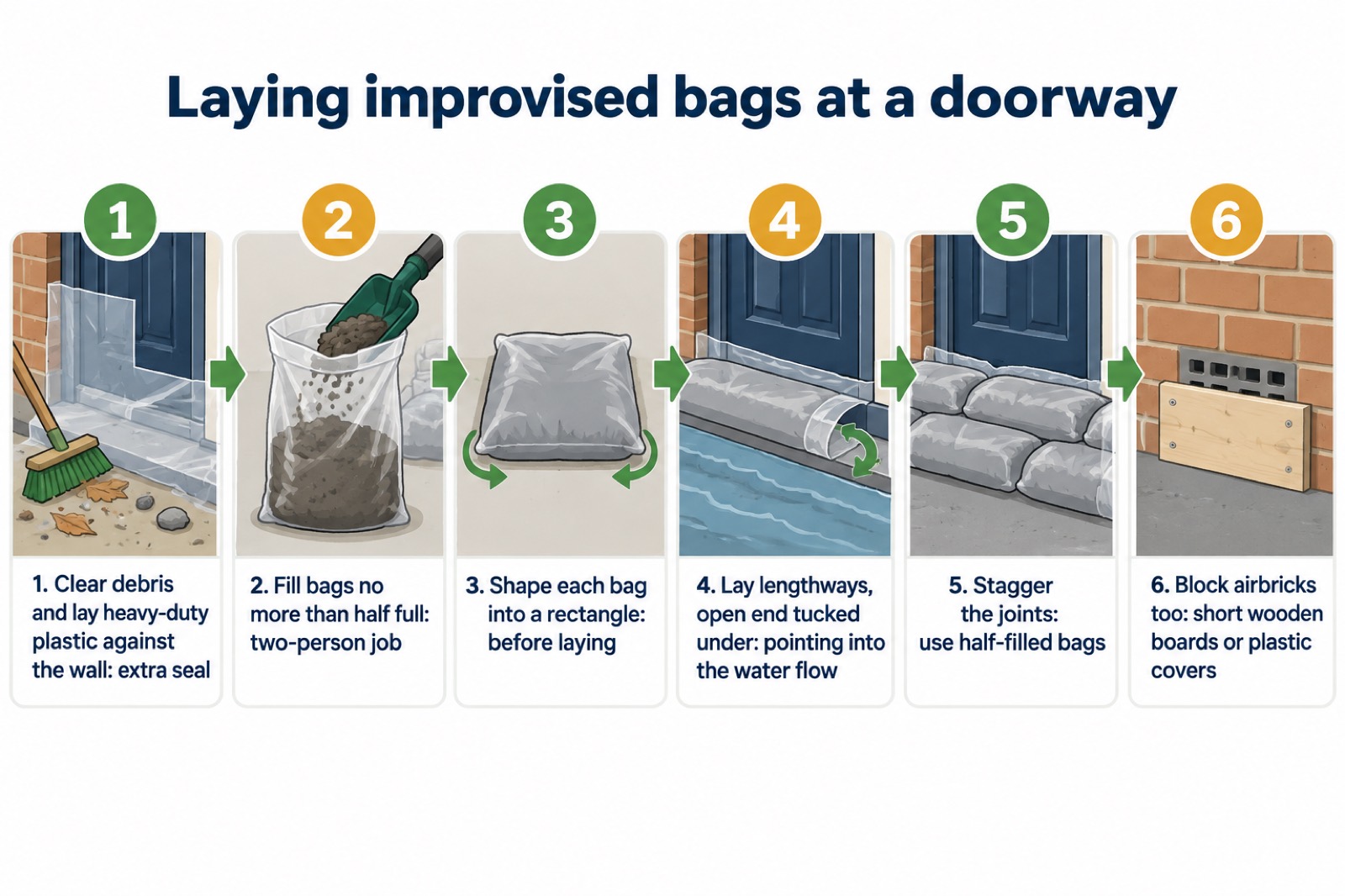
Prepare the surface before you lay anything. Official guidance says to clear any debris from the area and, if you can, put a large sheet of heavy-duty plastic between the sandbags and the wall of your house6. Somerset Council's advice to put down a plastic sheet first, as an extra seal, points the same way2. The plastic does the sealing; the bags hold the plastic in place and add weight.
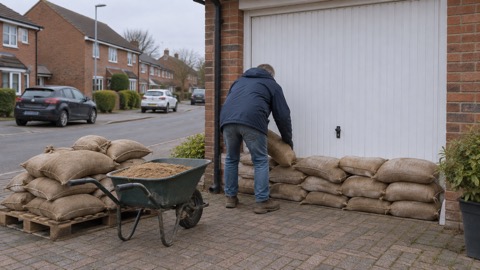
Then lay the bags to these rules6:
- Place bags lengthways, tucking the open end under the filled half.
- Point the bag into the direction of the water flow.
- Lay them with seams and bag mouths facing inwards, as this is where moisture enters.
- Shape each bag into a rectangle before laying it.
- Stagger the joints, using half-filled bags to do so.
- Keep the neck of every bag facing the same direction.
For a standard door opening, at least 6 sandbags will keep out 20cm of water6. Treat that as the floor, not the target: a wider opening, a deeper flow or a longer event needs more, and the bags need to overlap at the corners where water turns. If you have a choice between improvising at the door and using a purpose-made product, the official position is that purpose-designed measures are more effective12. The page on sandbags and sandless alternatives sets out what else is available, and how to fill and lay sandbags at a door covers the proper article in detail.
Where improvised bags fall short
Improvised bags are a last resort, and it helps to know exactly where the limits are before you rely on them.
- They are not waterproof. The Scottish Flood Forum states plainly that sand bags are not water proof and should only be used as a last resort if there is nothing else to use5.
- They are relatively ineffective. Official guidance compares sandbags unfavourably with purpose-designed flood protection measures12.
- They do nothing once water is in. Sandbags are of no use if the property is already flooded4.
- They are for emergencies only. Self-help sandbag stores are described as for emergency use only and not to be relied upon routinely as flood protection13.
- They hold back shallow water for a short time. Official health guidance describes sandbags as a cheap measure that helps keep water out for short periods and works better with plastic sheeting7.
"sand bags are not water proof. They should only be used as a last resort and if there is nothing else to use."
The practical consequence is a question of timing. If a flood warning has been issued and you have hours, a purpose-made barrier or a properly planned defence is the better use of that time. If water is already at the end of the street, a pillowcase of soil at the door is better than nothing, provided you have blocked the airbricks and laid a plastic sheet. The page on door flood barriers explains what a purpose-made product does that a bag cannot, and protecting your home sets out the wider measures worth having in place before the next event.
Getting the bags: councils, shops and what you can ask for
Councils in England have no duty to provide sandbags to individual homes. The Derby and Derbyshire Flood Warden Handbook states that the county, district or borough council do not have a duty to provide sandbags, though they may have limited supplies for vulnerable residents unable to provide their own14. Devon County Council says the same, adding that some districts may still provide limited quantities, empty bags, or make them available via town or parish councils15.
What is on offer varies widely, so check your own council's position before you need it:
| Council | What it says it provides |
|---|---|
| Carmarthenshire | Will endeavour to deploy sandbags to properties deemed at risk of floodwater16 |
| Nottinghamshire | May have limited supplies for vulnerable residents who cannot provide for their own17 |
| Oxfordshire | Sandbags only in response to emergencies where public highway flooding occurs18 |
| Ashford | Does not supply bags for garages, sheds, outbuildings or gardens19 |
| West Devon | Does not provide sandbags to residents; buy from a builders' merchant, DIY store or garden centre20 |
Some councils go further. Derbyshire County Council says some of its libraries hold packs of empty sandbags for collection by residents who want to protect their property, and welcomes working with parish councils or local flood groups willing to store a supply near vulnerable areas9. The fire service does not provide sandbags, but your local council might, in limited amounts3. You can also buy sand and bags from builders' merchants and DIY stores3. The page on whether the council has to provide sandbags explains the rules in more detail.
Filling and storing bags before you need them
The best time to fill a bag is not during a flood warning. Official guidance is that sandbags work best when they are already filled and stored at your property in readiness for worsening conditions9. But filled bags are heavy, take up space and degrade, so most households are better off storing the components.
Keep unused sandbags in a dry, shady place so they can be used again, because the bag material normally breaks down over time; empty sacks can be kept dry with the sand stored in the garden or yard10. Plastic sandbags will not rot, but they become brittle and disintegrate if left in the sun8. That is the argument for shade and dryness over neatness.
If you do keep filled bags, check them before each flood season. A bag that has gone brittle will split as you lift it, and a split bag at the doorway is worse than no bag, because it puts loose soil where you need weight. The checklist on storing and checking flood barriers covers the routine.
After the water: handling and disposing of used bags
Bags that have been in floodwater are contaminated, and official guidance treats them accordingly. Wear gloves when disposing of used sandbags, because they may be contaminated22. When moving sandbags contaminated by flood water, wear gloves and wash your hands thoroughly afterwards, and make sure children do not play with sand which has been contaminated by flood water4.
Disposal routes differ between councils, and the official advice is not identical everywhere. The options set out in official guidance include taking bags to your local recycling site, or emptying the sand and keeping it for garden use while putting the bags in normal waste23. Somerset Council says you can split the bag and distribute or bury the contents in your garden, then put the sacks in your refuse bin24. The UK Health Security Agency's guidance is stricter: do not place used sandbags or their components in household waste, and take contaminated sandbags to the local household waste recycling centre7. SEPA, Scotland's environment agency, says used sandbags require proper environmental disposal25.
Where the advice conflicts, the safe course is the stricter one: gloves on, bags and sand kept out of the household bin, and a call to your council to confirm the local route7. If you are keeping sand for the garden, wear protective gloves and dig it in, and do not spread it across lawns or use it in children's sandpits25. If bags need to be stored temporarily while awaiting disposal, lay them out so they can dry rather than stacking them7. The page on how to dispose of used sandbags goes through the options council by council, and cleaning up safely after floodwater covers the wider job.
Sources (26)
- Flooding advice, Mid and West Wales Fire and Rescue Service, 2026
- Preparing for flooding, Somerset Council, 2026
- Flooding safety, Devon and Somerset Fire and Rescue Service, 2026
- Flooding before, during and after: frequently asked questions, Nottinghamshire County Council, 2026
- Flood Protection Guide, Scottish Flood Forum, 2016
- Sandbags and how to use them properly for flood protection, official guidance, March 2009
- How to recover from flooding, UK Health Security Agency, 19 December 2023
- Sandbags, Derbyshire County Council, 2026
- Resilience and sandbags, Derbyshire County Council, 2026
- Flooding advice, Belfast City Council, 2026
- Thunderstorms weather warning: advice and information, nidirect, 2026
- Further support after a flood, Nottinghamshire County Council, 2026
- Sandbag stores, Scottish Borders Council, 2026
- Derby and Derbyshire Flood Warden Handbook, Parwich Parish Council, November 2019
- Flooding and drainage, Devon County Council, 29 July 2026
- Get prepared, Carmarthenshire County Council, 2026
- Preparing for flooding, Nottinghamshire County Council, 2026
- Our policy on sandbags, Oxfordshire County Council, 2026
- Flood support, Ashford Borough Council, 2026
- Who to contact about flooding, Devon County Council, 16 June 2026
- How to dry your home out after a leak or flood, Which?, 1 December 2025
- Sandbags, Derbyshire County Council, 2026
- After a flood - clearing up | nidirect, nidirect.gov.uk
- After flooding, Somerset Council, 2026
- Flooding FAQs, Scottish Environment Protection Agency, 2026
- Clearing up after a flood, Oxford City Council, 2026
 Flood Warning Checklist
 First Steps After a Flood
 Insurance Claim Records
 Signing Up for Flood Warnings
 Flood Warnings Without Email
 Who to Report Flooding To
 Reporting a Blocked Gully
 Garden Safety After Sewage
 Council Sandbag Duties
 Filling and Laying Sandbags
 Disposing of Used Sandbags
 Turning Off Utilities
 Walking or Driving in Floodwater
 Turning Electricity Back On
 Appliances After Water Damage