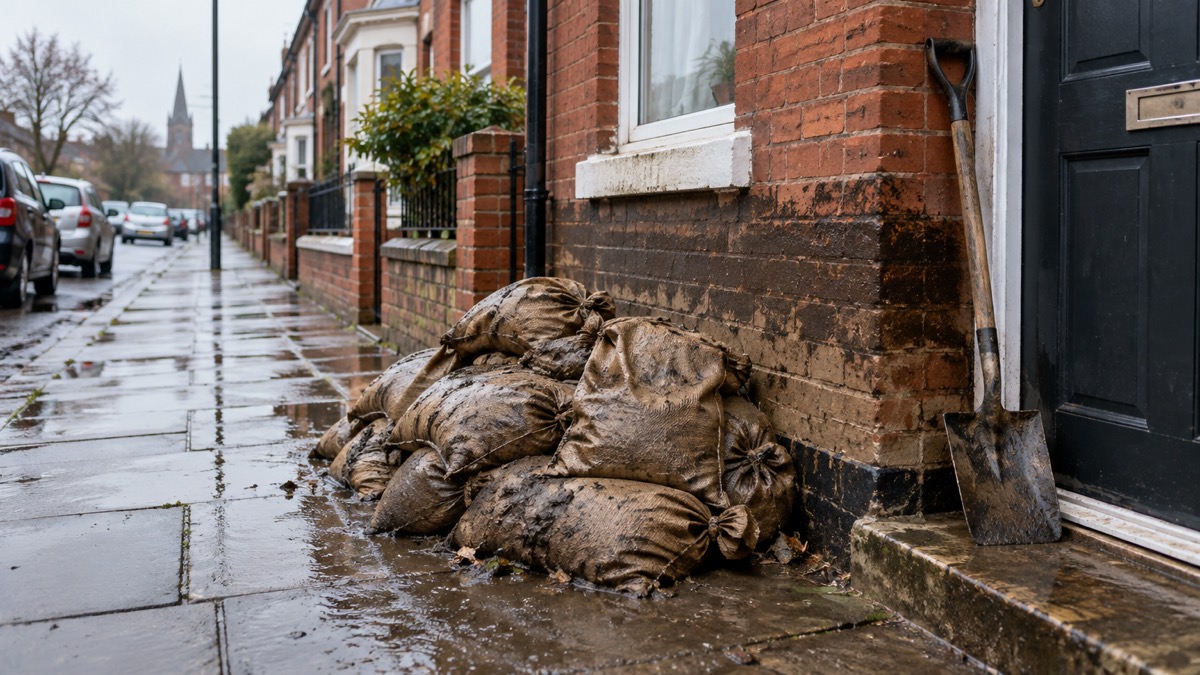
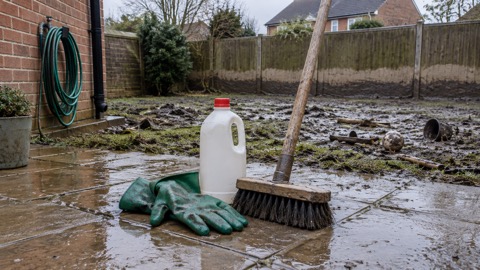
Once floodwater has dropped, the sandbags at your door become a waste problem rather than a defence. Treat any bag that met floodwater as contaminated: Belfast City Council warns that sandbags may contain sewage and oils once they have met floodwater, and says you should wear gloves and wash your hands thoroughly when handling them1. The main route for used bags is your local household waste recycling centre, where they go in the landfill or non-recyclable container2.
Before you move anything, put on gloves and keep children and pets away from the bags and the ground around them. If the bags were touched by sewage-contaminated water, double wrap them in bin liners before they go in the car3. Unused bags that stayed dry can be kept for next time, stored out of sun and rain, where plastic bags should last between 2 and 5 years4.
This page sets out how to handle used sandbags, where they can and cannot go, what to do with the sand, and how to store the bags you are keeping. For the wider clean-up, see After a Flood: Returning Home Safely and Cleaning Up Safely After Floodwater.
Treat sandbags that touched floodwater as contaminated
Floodwater is not clean water. Northumberland County Council warns that floodwater will often be contaminated by untreated sewage, which remains after the floodwater has gone, and advises wearing rubber boots and gloves in and around the affected property6. A parish emergency booklet makes the same point plainly: flood water is likely to be contaminated with sewage, and used sandbags should be disposed of and the sand not used afterwards7.
That is why the bags need handling rules rather than a quick toss into the wheelie bin. Nottinghamshire County Council asks anyone moving sandbags contaminated by flood water to wear gloves and wash their hands thoroughly afterwards, and to make sure children do not play with sand which has been contaminated by flood water8. Kingston Council's flooding advice is simpler still: wash your hands after handling sandbags, as they may be contaminated by the flood water9.
Contamination is not only biological. Oxford City Council notes that if floodwater contained oil or diesel, you should clean remaining contamination with a hot detergent solution2. A bag that sat in oily water is a different problem from one that sat in clean rainwater, and both are different from a bag that never got wet at all.
Take used sandbags to your household waste recycling centre
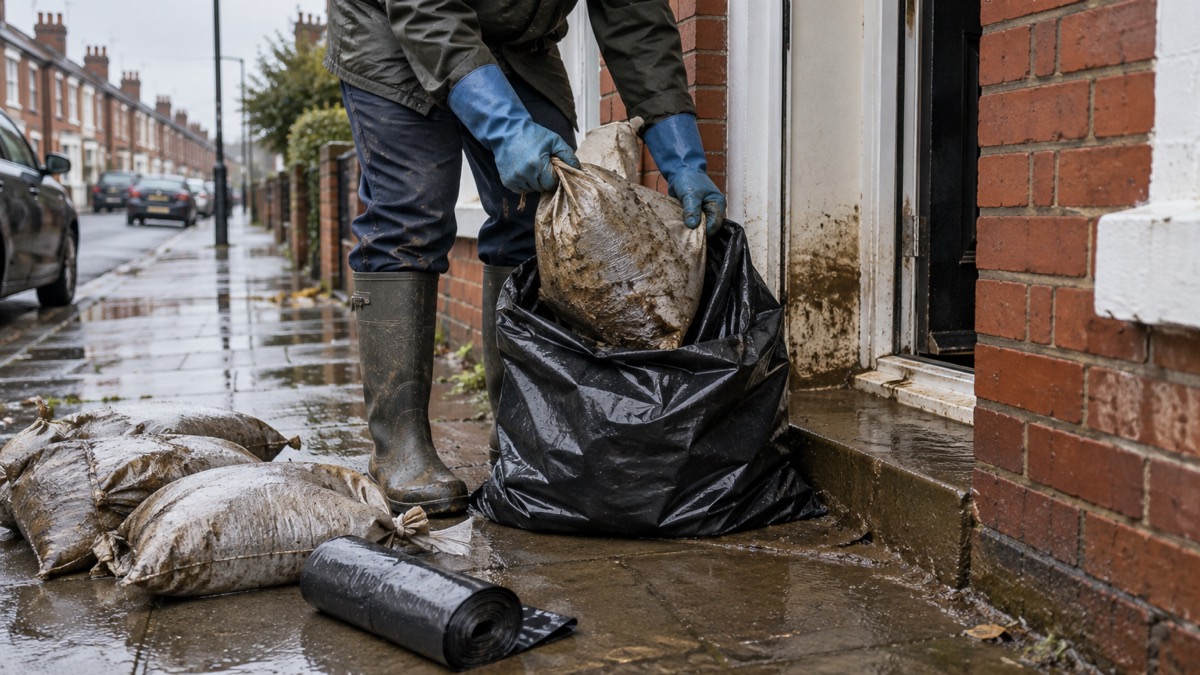
The standard route for used bags is the tip. Oxford City Council says to discard floodwater-exposed sandbags as they may be contaminated, and to dispose of used sandbags in the landfill containers at your nearest waste recycling centre2. Somerset Council gives the same instruction for sacks contaminated with raw sewage: handle them with care, wearing gloves and washing your hands thoroughly afterwards, double-bag them in black bags and take them to your local recycling site for the landfill or non-recyclable skip10.
There is more than one accepted method, and they differ in what happens to the sand:
| Option | What you do | Where the sand goes |
|---|---|---|
| Take whole bags to the tip | Load the bags and drive them to the household waste recycling centre, placing them in the landfill or non-recyclable container2 | Stays in the bag, disposed of with it |
| Empty the bag and keep the sand | Empty the sand out, keep it for garden or other uses, and put the empty bags in your normal waste bin11 | Kept at home |
| Empty the bag at the tip | Empty the sand, take it to the local reuse and recycling centre, and place the bags in your normal waste bin11 | Taken to the centre |
Whichever you choose, tell the staff if the bags are contaminated. Government guidance says contaminated sandbags should be taken to the local household waste recycling centre and the staff informed of their contamination5. If you cannot get to a centre, ask your council what it offers: Oxford City Council points households to its bulky waste collection service for contaminated or flood-damaged property2, and Northern Ireland's guidance lists collection, retention and disposal of damaged household contents among the help a local council can give after a flood12.
Sewage-contaminated sandbags: double wrap before you move them
If you know or suspect the bags met sewage, they need an extra layer before they travel. Harborough District Council's flood warden guidance says sandbags contaminated with sewage flood water should be double wrapped and taken to the nearest household waste recycling centre, wearing suitable gloves3. Somerset Council's version is the same: double-bag them in black bags and take them to the local recycling site for the landfill or non-recyclable skip10.
The principle of double bagging runs through official clean-up advice. Government guidance on recovering from flooding says contaminated items should be double bagged for disposal where possible, and that bags containing contaminated food should not be left out in open areas as they will attract pests5. Wiltshire and Swindon's flood health advice adds that any items discarded during the cleaning and drying process should be placed in rubbish bags and within hard bins13.
If you cannot get to the tip straight away, do not stack wet bags in a heap. Government guidance says that if sandbags need to be stored temporarily while awaiting disposal, it is best to lay them out so they can dry rather than stacking them5.
Where used sandbags must never go
Some destinations are ruled out outright. Government guidance on recovering from flooding is explicit that you should not place any used sandbags or their components, sand or sack, in household waste, and should not allow children or pets to come into contact with the sand as it may be contaminated5. Nottinghamshire County Council draws the same line in household terms: do not place full sandbags in your wheelie bin, though the sacks can be placed in bins once empty8.
The sand itself carries a specific warning. Ashford Borough Council says never allow children to play with the sand from sandbags, or place it in sand pits, because the sand is not suitable and may be contaminated14. Oxford City Council's garden advice is narrower but in the same spirit: if you dispose of sand in your garden, wear protective gloves and dig it in, and do not spread it across lawns or use it for children's sandpits2.
Keep the same distance around the ground the bags stood on. Belfast City Council says not to let children or pets play on grass or paved areas which have been flooded until the areas have been cleaned1, and the Northern Ireland government advises keeping children and pets out of the affected area until the clean-up is complete15. Natural Resources Wales puts it in three words: never let children play in floodwater16.
Unused sandbags: keep them dry for next time
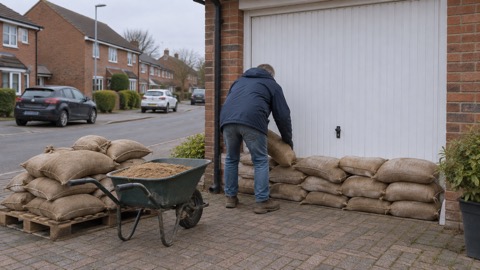
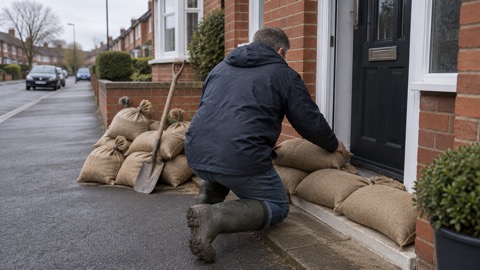
Not every bag at your door is waste. Oxford City Council says that if the floodwater did not reach the sandbags, they can be stored for future use2. Belfast City Council advises keeping unused sandbags in a dry shady place so they can be used again if needed, and notes that the bag material normally breaks down over time and will perish if left in place for a long time1.
Drying matters as much as storage. Somerset Council says that where possible, sandbags and gel bags should be dried out for reuse, and that the best way to do this is to raise them off the ground while they dry to help prevent mould forming10. Derbyshire County Council gives the working life: if stored out of sun and rain, plastic sandbags should last for between 2 and 5 years4.
For loose sand and empty sacks, Belfast City Council's advice is to keep the empty sacks dry and store the sand in the garden or yard1. If you are building a stock before the next flood season, Merseyside Fire and Rescue Service suggests keeping a small stock of empty sandbags and sand, available from builders' merchants and hardware shops, which can be used to protect doorways and air vents17. Natural Resources Wales says to contact your local authority if you need sandbags, and that if they do not supply them you can buy your own from DIY stores and builder's merchants18.
A few practical points on storage:
- Keep bags out of direct sun and rain, where plastic bags last between 2 and 5 years4.
- Dry bags raised off the ground before storing them, to limit mould10.
- Check stored bags before each flood season, since the material perishes over time1.
- Remember that sandbags are of no use if a property is already flooded, so they need to be out before the water arrives19.
For how to fill and lay them when the time comes, see How to Fill and Lay Sandbags at a Door and Sandbags and Sandless Alternatives.
Check your council's rules before you clear up
Arrangements for sandbags and for flood waste vary by council, so a quick check saves a wasted trip. Government guidance says that if you have used sandbags, you should check with your local council about how to dispose of them20. Northern Ireland's guidance says to contact Environmental Health in the local council for information about cleaning up and disposing of waste11.
Councils also differ in what they supply and how. Carmarthenshire County Council publishes a policy for the distribution of sandbags during flooding incidents21. Derbyshire County Council distributes empty sandbags out to district, town and parish councils for them to give to residents who are at flood risk4. In the Scottish Borders, self help sandbag stores are described as for emergency use only and should not be relied upon routinely as flood protection22. National guidance is clear that a council's priority is to protect the public at large, so check with your local authority in advance rather than assuming bags will arrive23.
Help with the wider clear-up may also come from your council. Nottinghamshire County Council says district councils may provide skips and extra rubbish collections after a flood24, and its easy read version repeats that borough and district councils might provide skips and extra rubbish collections after a flood25. For the clean-up itself, follow public health advice on cleaning up after a flood26, and see Disposing of Damaged Furniture and Carpets for the rest of the waste.
Sources (26)
- Flooding advice, Belfast City Council, 2026-10-29
- Clearing up after a flood, Oxford City Council, 2026-10-29
- Be flood ready: guidance for flood wardens, Harborough District Council, 2026-10-29
- Sandbags, Derbyshire County Council, 2026-10-29
- How to recover from flooding, GOV.UK, 2023-12-19
- Information about specific safety concerns, Northumberland County Council, 2026-05-21
- Are You Ready booklet, Culham Parish Council, 2025-09
- Flooding before, during and after: frequently asked questions, Nottinghamshire County Council, 2026-10-29
- Advice on flooding: during a flood, Kingston Council, 2026
- After flooding, Somerset Council, 2026-10-28
- After a flood: clearing up, nidirect, 2026-05-06
- What to do if a flood happens, nidirect, 2025-10-24
- Flooding and health: safely cleaning your home, Wiltshire and Swindon Prepared, 2026-10-25
- Flood support, Ashford Borough Council, 2026-10-29
- Keeping children safe during a flood, nidirect, 2025-12-09
- What to do after a flood, Natural Resources Wales, 2026-10-29
- Flooding advice, Merseyside Fire and Rescue Service, 2026-10-29
- Preparing for a flood, Natural Resources Wales, 2026-10-29
- Preparing for flooding, Nottinghamshire County Council, 2026-10-29
- After a flood, GOV.UK, 2026-10-25
- Flood preparedness and awareness, Carmarthenshire County Council, 2025-11-05
- Sandbag stores, Scottish Borders Council, 2026-10-29
- Sandbags and how to use them properly for flood protection, GOV.UK, 2009-03
- After a flood, Nottinghamshire County Council, 2026-10-29
- Flooding after a flood: easy read, Nottinghamshire County Council, 2025-11-02
- Flooding FAQs, Scottish Environment Protection Agency, 2026-10-29
 Flood Warning Checklist
 First Steps After a Flood
 Insurance Claim Records
 Signing Up for Flood Warnings
 Flood Warnings Without Email
 Who to Report Flooding To
 Reporting a Blocked Gully
 Garden Safety After Sewage
 Council Sandbag Duties
 Filling and Laying Sandbags
 Makeshift Sandbags
 Turning Off Utilities
 Walking or Driving in Floodwater
 Turning Electricity Back On
 Appliances After Water Damage