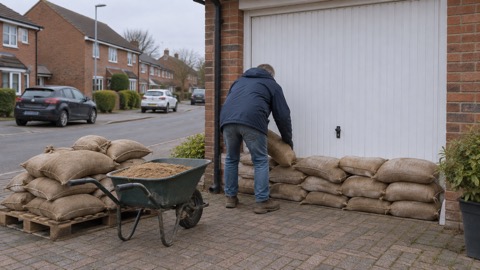
At least 6 sandbags will keep out 20cm of water at a standard door opening, according to official guidance1. That is a shallow depth, and it is the figure to plan from rather than a target: a wall up to 60cm high and 1 metre long takes approximately 80 filled sandbags1. Decide the height you need before you start filling anything.
Fill each bag no more than half full, or about two thirds full, and fill it close to where you will lay it, because each bag needs approximately 15kg of sand and gets heavier when wet1. Lay them like a brick wall, overlapping each bag by half over the one below, and stamp each one firmly into place to close the gaps1. Lift each bag by the neck and bed it in against the door and frame4.
Sandbags are a stopgap, not a flood defence. Official guidance is clear that they do not provide enough protection during a flood, because water gets into properties through many routes, not just doorways, and that purpose-made flood boards are more successful at keeping water out5. Use them when water is coming and nothing better is to hand, and know what they cannot do.
How many sandbags you need for a door
The number depends on the depth of water you expect and the width you are defending, not on the door alone. Official guidance gives at least 6 sandbags to keep out 20cm of water for a standard door opening1. That covers a shallow spill across a threshold. For anything deeper, or for a longer frontage, the count climbs steeply: a wall up to 60cm high by 1 metre in length requires approximately 80 filled sandbags1.
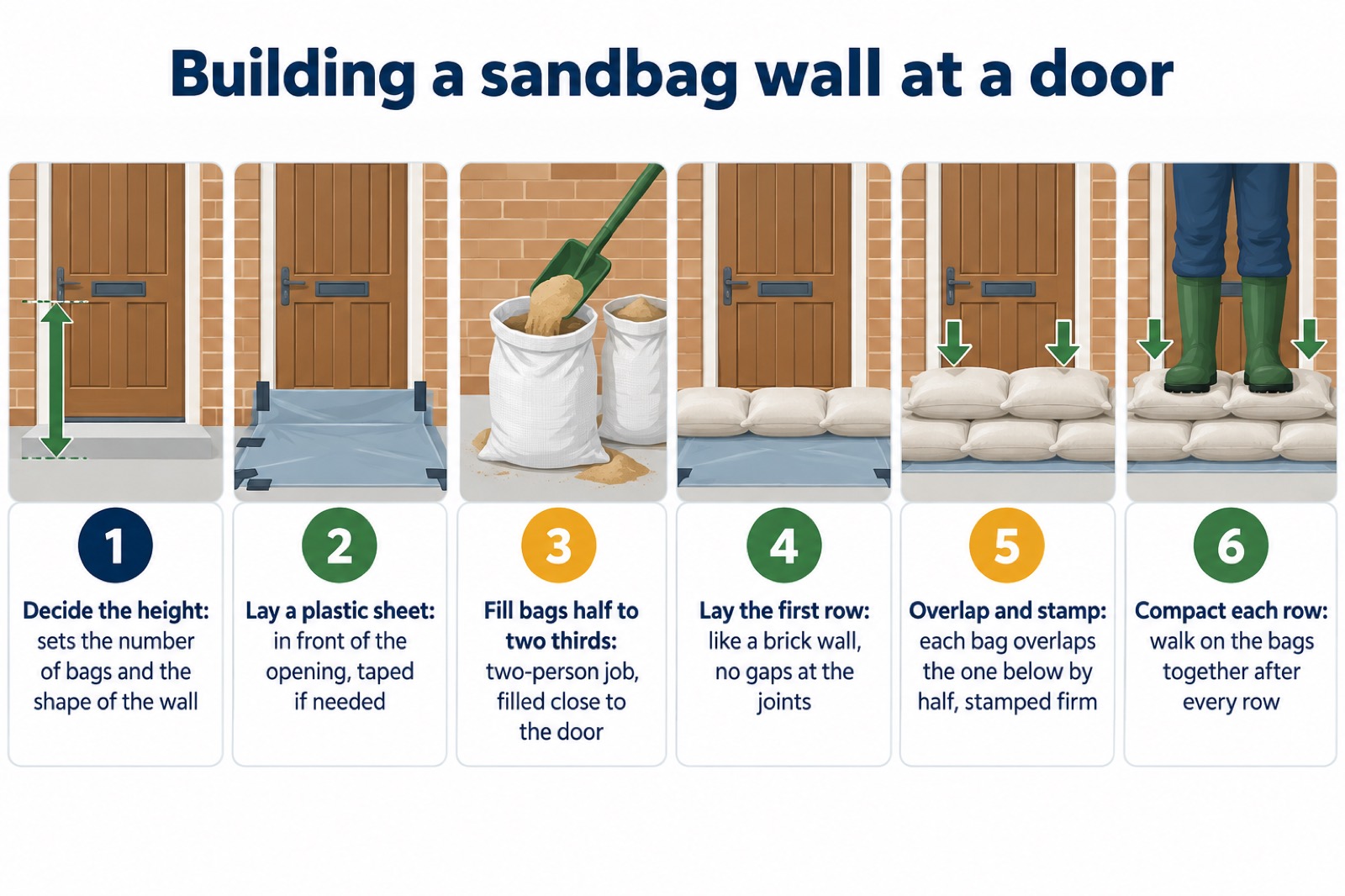
Work out the height first. Decide how high the wall or dam will be before you fill a single bag, because the height sets both the number of bags and the shape of the wall. Then measure the width you are blocking, including any low openings beside the door.
| What you are defending | Sandbags needed |
|---|---|
| Standard door opening, 20cm water depth | At least 61 |
| Wall up to 60cm high, 1 metre long | Approximately 801 |
Two figures for sand quantity are in circulation and they do not agree. One official source states that 10 sandbags will require 200kg of sand or soil2; another states that each sandbag will need approximately 15kg of sand1. Both are official guidance, and the two figures conflict, so buy on the higher figure if you are stocking up in advance.
Sandbags are not the only option at a doorway. Purpose-made door flood barriers and absorbent bags are alternatives worth weighing before you commit to filling 80 bags in the rain. Our guide to sandbags and sandless alternatives sets the types side by side.
Filling the bags
Filling is a two-person job: one person holds the bag open while the other fills it1. Do not fill bags more than half full, and you do not need to tie the end of the bag1. Other official guidance puts the fill level at about two thirds full3. Either way, a part-filled bag lies flatter and seals better than a bulging one.
- Fill close to where you will lay them. Bags get heavy quickly, so do not overfill, or fill them too far away from where you want to position them1.
- Keep the sand dry if you can. Filled sandbags are heavy, and even heavier when wet9.
- Have enough material. Ten sandbags will require 200kg of sand or soil2.
- Check your own fitness. Filling sandbags and building a wall is a physically demanding activity, so it is important that all those involved are fit enough to carry out the work1.
Lifting, placing and bedding in each bag
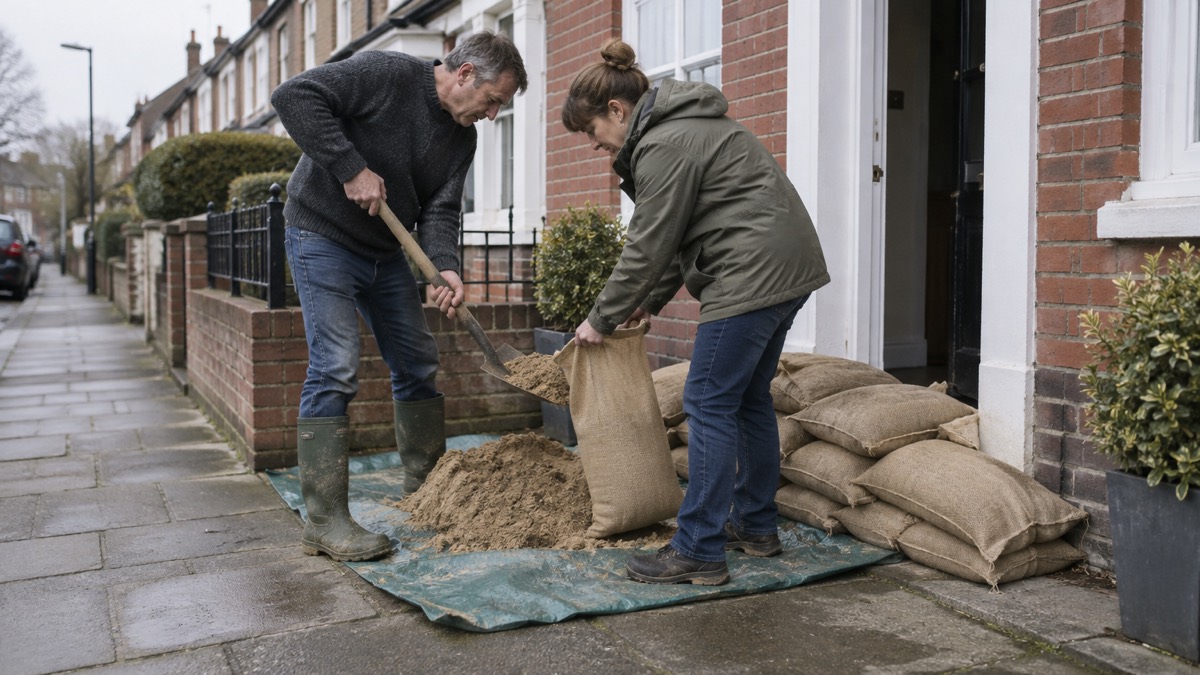
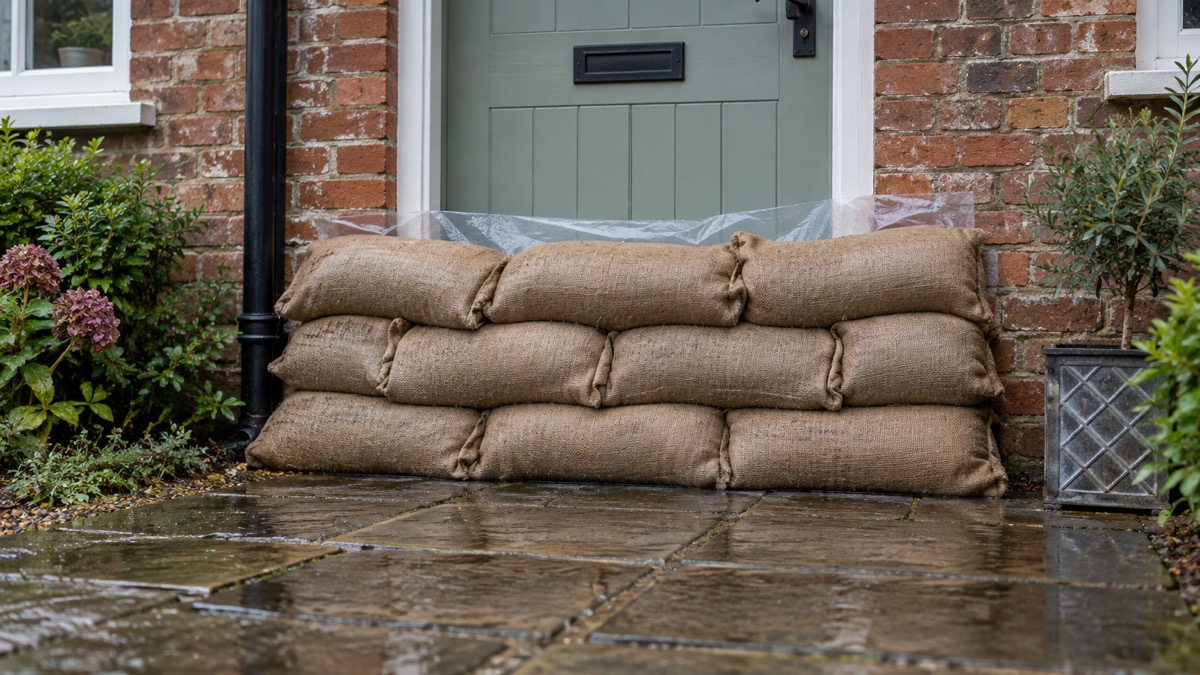
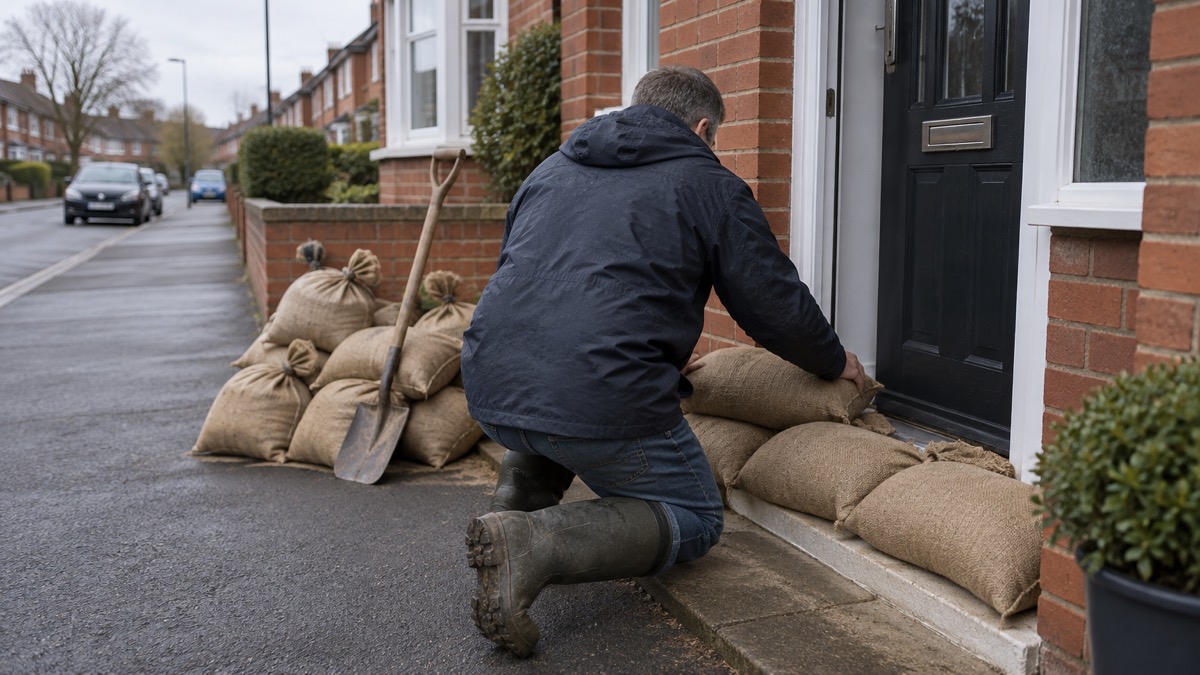
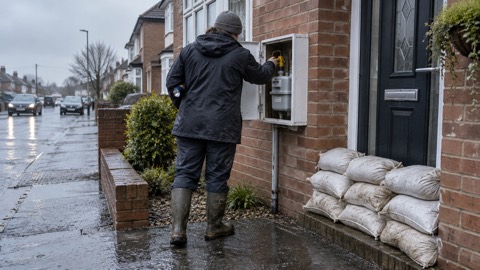
Lift the sandbag by the neck and place it across the doorway, bedded in against the door and frame with the neck pulled back across the top of the bag4. That single instruction covers the whole technique: the bag is carried by its strongest point, laid tight to the surfaces it is sealing against, and the loose neck is folded back so it does not create a channel for water.
Then build the wall properly:
- Put down a plastic sheet first in front of the opening, taping it in position if required, as an extra seal9.
- Lay the first row like a brick wall, so there is no gap at the joints, using a half-filled or three-quarter filled sandbag at the start of a row9.
- Overlap each bag by half over the one below in the next layer, and stamp bags firmly into place to eliminate gaps and create a tight seal1.
- Face seams and bag mouths inwards, as this is where moisture enters the bags, and have the neck of each bag facing the same direction1.
- Shape each bag into a rectangle before laying it, and tuck the loose end firmly under the filled portion1.
- Compact every row by walking on the sandbags together using your feet after laying it9.
For a wall more than three layers high, build in a pyramid style, with the wall three times as wide as you need it to be high, and use the header and stretcher method for alternate layers1. A tall, narrow wall of bags is unstable and will fail.
Where sandbags fall short in a flood
Sandbags do not provide enough protection during a flood, because water can get into properties through many routes, not just doorways5. They are relatively ineffective when compared to purpose-designed flood protection measures12. Purpose-made flood boards for doors, windows and air bricks will be more successful than sandbags for minimising floodwater entering a property6.
That does not make them useless. It means they belong to a plan, not instead of one. Block doors, with floodboards if available, and air vents with plastic sheeting and sandbags3. Remember that flood water can come in through toilets, so be prepared to sandbag your bathroom doors or block your toilet13. A wall across the front door does nothing about the airbrick beside it or the soil pipe behind it.
The other limit is supply. Councils do not have a duty to provide sandbags to individuals, although some districts may still provide limited quantities, empty bags, or make them available through town or parish councils7. Where councils do provide them, they are often reserved for vulnerable residents who are unable to provide for their own14. Nottinghamshire County Council states plainly that sandbags are not guaranteed, and that the County Council has no legal obligation to provide sandbags8. It will not provide them to properties at negligible risk of flooding or already flooded, to sheds, garages, gardens and outbuildings, to residents able to buy their own or with access to a Community Resilience Store, or to businesses15.
The practical answer is to keep your own small stock of empty sandbags and sand, available from builders' merchants and hardware shops, which can be used to protect doorways and air vents3. If water is likely to enter your property, obtain sandbags from a local supplier for faster support16.
Flood warnings and where to get help
Sandbags are something you deploy when a warning comes, so the warning is the trigger. Sign up for flood warnings and check the flood alerts, flood warnings and severe flood warnings for your area, and understand the types of flooding that can affect you, because surface water can arrive with little notice. Our guide to signing up for free flood warnings walks through it.
Where to get bags and sand:
- Builders' merchants and hardware shops. Sandbags are available from most local builders' merchants, and Highland Council recommends taking early action if your home or business may be at risk17. Keep a stock in a dry place18.
- Your local council. The fire service does not provide sandbags, but your local council might, in limited amounts7. Each district, town and parish council has its own policy on giving sandbags to residents and businesses4. Some, such as Exeter City Council, do not provide sandbags to householders at all, and direct people to local builders' merchants19.
- Community resilience stores and sandbag stores. Some areas keep self-help sandbag stores in flood risk areas, such as around the Borders20. In others, flood wardens can advise where you can get sandbags and deliver them if not busy elsewhere21.
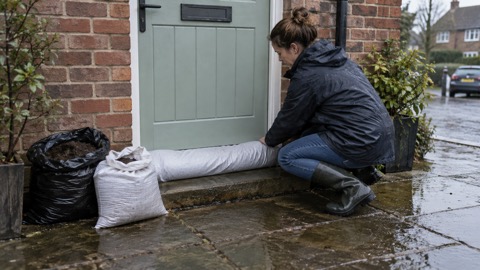
- Make your own. You can make your own using compost bags, carrier bags or pillowcases filled with sand or earth, or use bags of garden compost, rolled-up mats or carpets, or timber boards screwed to door frames and sealed with mastic10. Our guide to using pillowcases or bin bags as sandbags covers this in more detail.
If you are unsure who to contact about flooding, our guide to who to report flooding to sets out the routes. For the wider picture, see protecting your home and making a household flood plan.
After the water: disposing of used sandbags
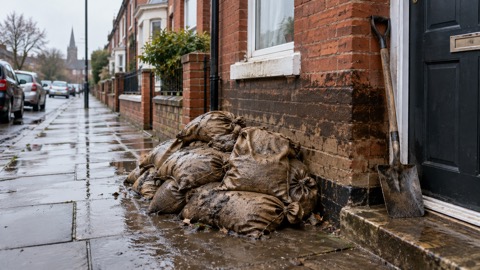
Check with your local council about how to dispose of used sandbags22. There are several accepted routes:
- Take them to a household recycling centre23.
- Empty the sand and keep it for garden or other uses, and place the bags in your normal waste bin23.
- Empty the sand, take it to your local reuse and recycling centre, and place the bags in your normal waste bin23.
- Dig the sand into your garden, or take the bags to a household recycling centre9.
Do not place full sandbags in your wheelie bin, though the sacks can be placed in bins once empty9. Used sandbags require proper environmental disposal24. Our guide to how to dispose of used sandbags covers the options in full, and after a flood: returning home safely covers the wider clean-up.
Sources (24)
- Sandbags and how to use them properly for flood protection, GOV.UK, 2009
- Sandbags, Derbyshire County Council, 2026
- Flooding advice, Mid and West Wales Fire and Rescue Service, 2026
- Sandbags, Derbyshire County Council, 2026
- Flood management in Suffolk, Suffolk County Council, 2026
- Damage limitation guide, Dover District Council, 2001
- Safety in severe weather conditions, Devon and Somerset Fire and Rescue Service, 2026
- Bassetlaw district flood risk information page, Environment Agency, 2026
- Flooding before, during and after: frequently asked questions, Nottinghamshire County Council, 2026
- Preparing for flooding, Somerset Council, 2026
- RCRG Household flood plan dec 2018, nidirect.gov.uk / Regional Community Resilience Group
- Further support after a flood, Nottinghamshire County Council, 2026
- My street is flooding, London Fire Brigade, 2026
- Preparing, Nottinghamshire County Council, 2026
- Preparing, Nottinghamshire County Council, 2026
- Report a flood, Lincolnshire County Council, 2026
- Flooding, Highland Council, 2026
- What to do if a flood happens, nidirect, 2025
- Who to contact about flooding, Devon County Council, 2026
- Sandbag stores, Scottish Borders Council, 2026
- Adverse weather events, Llangattock Community Council, 2026
- After a flood, GOV.UK, 2026
- After flood: clearing, nidirect, 2026
- Flooding FAQs, Scottish Environment Protection Agency, 2026
 Flood Warning Checklist
 First Steps After a Flood
 Insurance Claim Records
 Signing Up for Flood Warnings
 Flood Warnings Without Email
 Who to Report Flooding To
 Reporting a Blocked Gully
 Garden Safety After Sewage
 Council Sandbag Duties
 Makeshift Sandbags
 Disposing of Used Sandbags
 Turning Off Utilities
 Walking or Driving in Floodwater
 Turning Electricity Back On
 Appliances After Water Damage