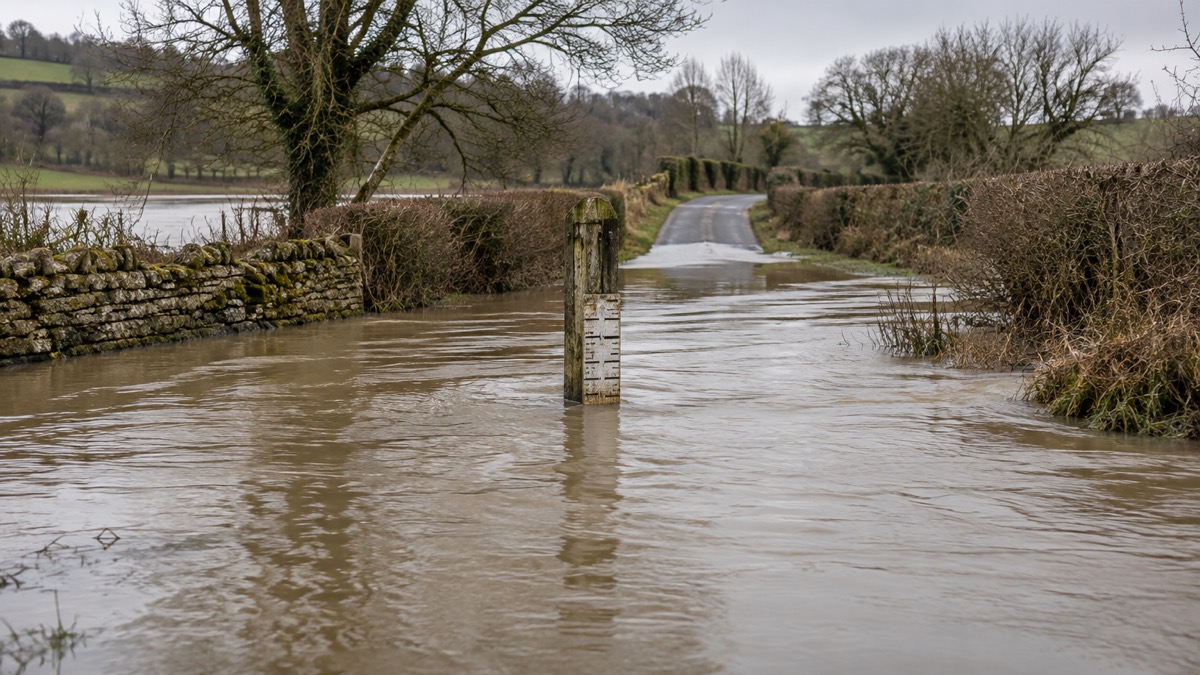
No. The answer from every fire and rescue service, council and government body that has published on this is the same: never drive through floodwater, and never walk through it either. The water is usually deeper and faster than it looks, and it can hide hazards you cannot see. A car can float in just 30cm of moving water, and a foot of water moving at only 6 miles per hour is enough to take it1.
If you meet a flooded road, turn around and find another route. That is the whole of the advice, and it holds whether you are in a car, on foot or on a bicycle. The risks are not theoretical: driving through water incorrectly can cause serious damage to your car and could put your life at risk3.
This page explains why the water is more dangerous than it appears, what to do if you have no alternative, and what to check afterwards. It also covers the questions people ask most often, from fords on country roads to the waves thrown up by larger vehicles.
Never drive through floodwater: find another route
The instruction is repeated across official guidance in every part of the UK. Never drive through floodwater, because it can be deeper or faster flowing than it looks6. Always find an alternative route2. If you encounter unexpected and sudden flooding while driving, do not proceed: turn around and find another route7.
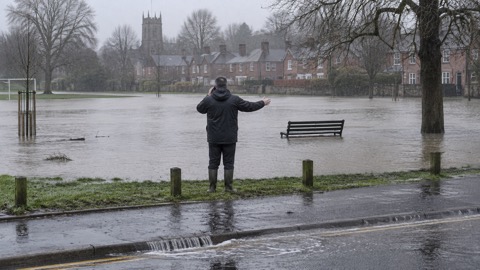
The same applies on foot. It is not safe to drive, walk or swim through floodwater8. Do not walk, drive or swim through flood water9. Even flood wardens, who are trained volunteers, are told not to drive or walk through flood water10. If the people who know the local area best will not enter it, that tells you something.
Why is the advice so absolute? Because the consequences of getting it wrong are severe. Driving through water incorrectly could cause serious damage to your car and could put your life at risk11. Beneath the surface there may be hidden hazards: open drains, debris, kerbs that have been washed away, or a road surface that has collapsed12. You cannot see any of this from the driver's seat.
There is also a practical point about travel. Official advice during a flood is to travel only if your journey is essential, to drive to the conditions and not to drive through floodwater5. If you are at home and a flood warning is in force, you should only evacuate yourself if it is safe to do so, and you should only travel if you really have to13. Staying put is often the safest choice.
Just 30cm of water can move a car
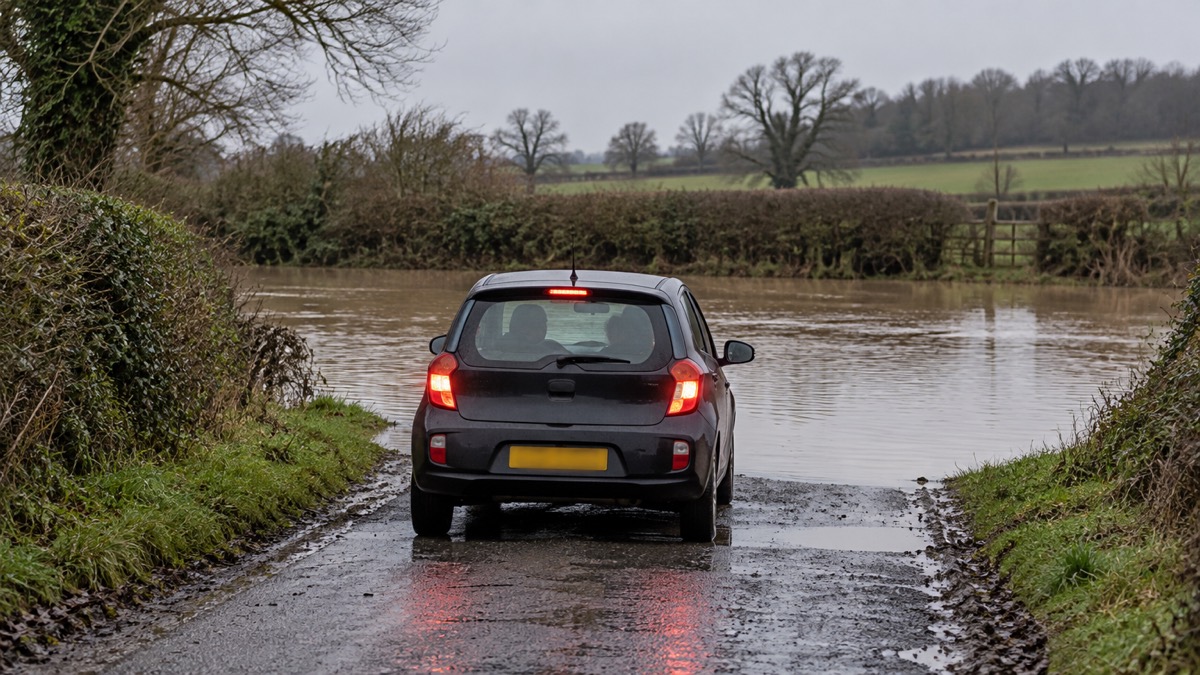
The figure that surprises people most is how little water it takes. A car can float in just 60cm of standing water or 30cm of moving water4. As little as 30cm of water can float a car5. The government's own national flood risk assessment puts it plainly: a depth of just 30cm of flood water can be enough to move a car during a heavy rainfall event14.
Moving water is the more dangerous of the two. A foot of moving water, moving at just 6 miles per hour, is enough to float a car1. The Met Office gives the same warning: although the water may seem shallow, just 12 inches (30cm) of moving water can float your car, potentially taking it to deeper water from which you may need rescuing2.
| Water condition | Depth that can float a car | Source |
|---|---|---|
| Standing water | 60cm | West Yorkshire Prepared4 |
| Moving water | 30cm (about one foot) | West Yorkshire Prepared, London Resilience4 |
Once a car floats, the driver is no longer in control. The vehicle can be carried sideways into deeper water, and the occupants may then need rescuing by the fire and rescue service. That is a risk to the rescuers as well as to you.
Why floodwater is deeper and more dangerous than it looks
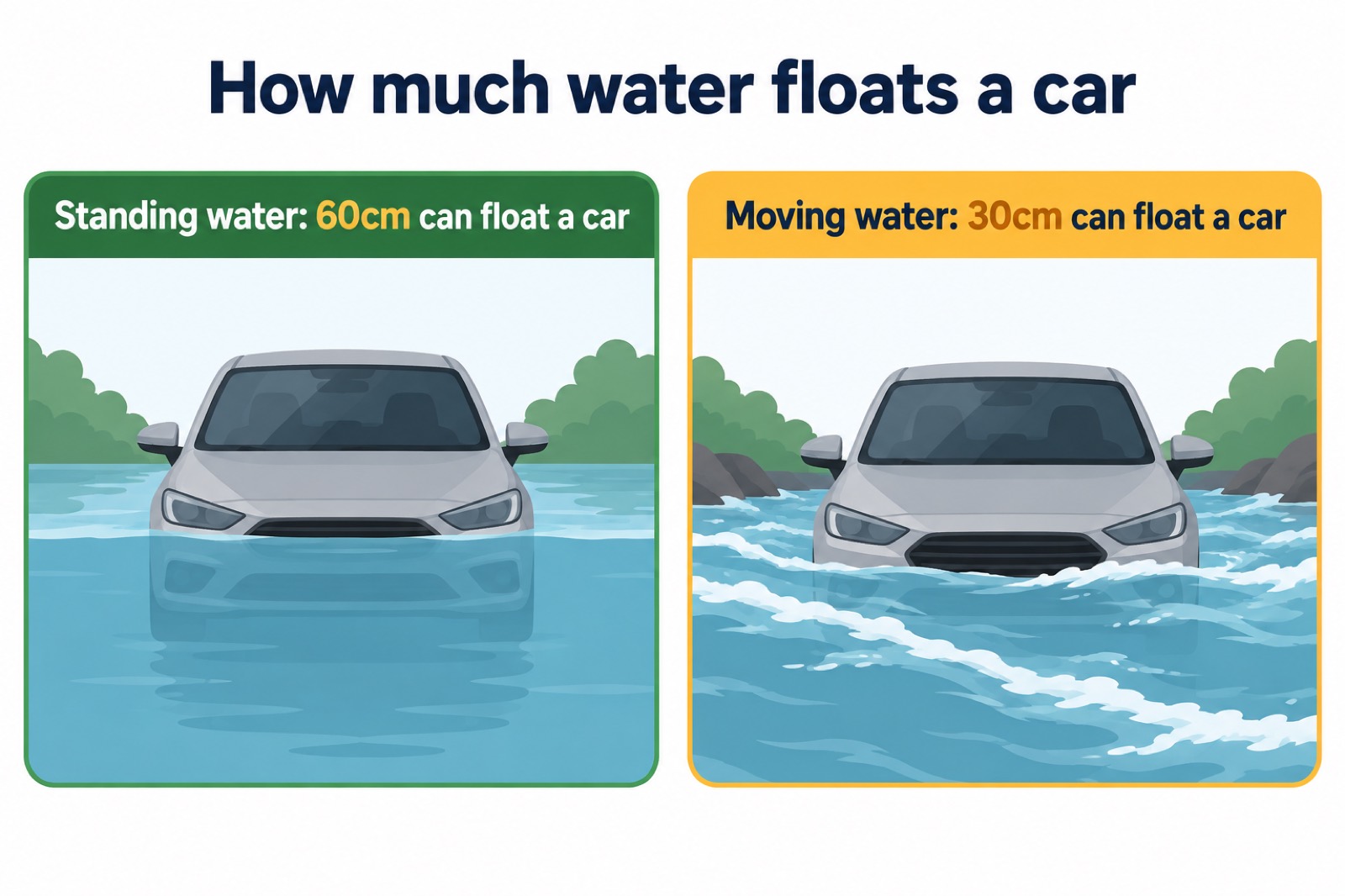
Floodwater is not like a puddle. It can be much deeper than it appears and can hide dangers such as open drains, debris and damaged road surfaces12. When faced with a flooded road, you cannot always tell how deep the water is15. That uncertainty is the reason the advice is to avoid it altogether rather than to judge each crossing on its merits.
The guidance from councils and fire services is consistent. Only drive through water if you know that it is not too deep16. Never drive through water if you are not sure how deep it is, as this could result in your car becoming stranded11. Do not attempt to cross if the water seems too deep: look for an alternative route17. Do not drive through flood water, because there could be hidden hazards and it may be deeper than it looks18.
There is a further danger that catches people out: the road itself may no longer be there. Floodwater can wash away the surface, undermine the edges and leave holes that are invisible from above. The guidance to avoid walking, swimming or driving through floodwater exists because there may be hidden dangers16.
If you are on foot, the same rules apply. Do not enter flood water unless it is absolutely necessary. If you must enter flood water, move slowly and carefully, avoiding fast-moving water12. But the better answer is not to enter it at all: find another route, or wait.
If there is no alternative: drive slowly in a low gear and keep moving
The official position is that you should not drive through floodwater at all. But guidance does exist for the rare case where a driver has no alternative, and it is worth knowing what it says, because it explains why a casual crossing goes wrong.
If you have to drive through floods, drive slowly using first gear and keep the engine revving at a high rate, moving forward continuously to avoid stalling19. In an automatic, engage and hold in a low gear19. Drive slowly and steadily so you do not make a bow wave, and test your brakes as soon as you can afterwards20. If you decide to proceed, drive slowly in first gear but keep the engine speed high by slipping the clutch17.
Why the low gear and high revs? Because water in the exhaust could otherwise damage the catalytic convertor21. Going slowly and using a low gear also means you do not make waves or get water in your engine22. The aim is a steady, continuous movement that keeps the exhaust gases pushing water out and avoids the stop-start that stalls an engine.
| Step | What to do | Why |
|---|---|---|
| 1 | Use first gear, or a low gear in an automatic | Keeps engine revs high and water out of the exhaust19 |
| 2 | Keep the engine revving at a high rate | Helps prevent stalling19 |
| 3 | Move forward continuously | Avoids stopping in the water19 |
| 4 | Drive slowly and steadily | Avoids making a bow wave20 |
| 5 | Test your brakes as soon as you can afterwards | Water affects braking20 |
If you are driving a larger vehicle, do not go through flood water at speed, because this creates a bow wave that can cause flooding to adjacent properties. A bow wave is the wave pushed ahead of a moving vehicle; in a narrow street it can send water over doorsteps and into homes that would otherwise have stayed dry.
After driving through water, check your brakes
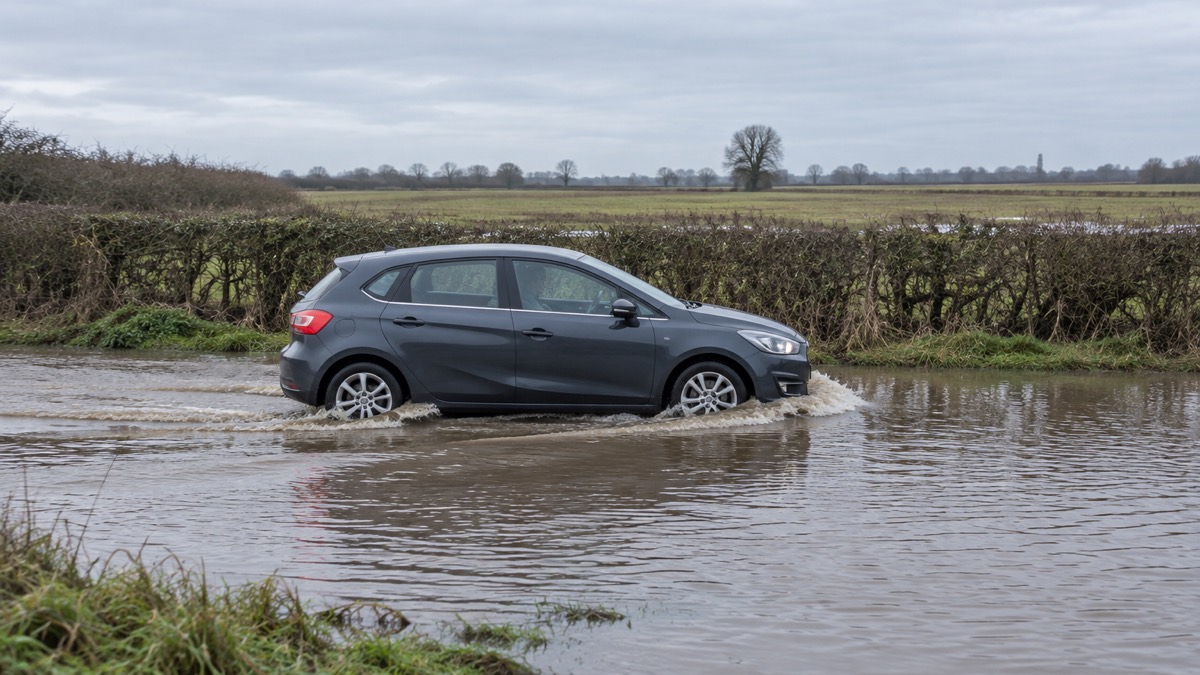
Always check your brakes after driving through water3. Test them as soon as you can afterwards, once you are back on dry road and it is safe to do so20. Brakes that have been submerged can behave differently for a while, and you need to know how they are responding before you rely on them at speed.
If your vehicle has been damaged by floodwater, get it checked by a professional mechanic. Do not attempt to drive your car without having it checked23. Water can get into places you cannot see, and a car that seems fine immediately after a crossing may develop problems later.
Look out for standing water and adjust your driving before and after encountering any18. That means slowing down before you reach it, and being cautious for a while after you have passed through it, because your brakes and steering may not feel normal straight away.
Moving your car to higher ground, and other questions
Should I move my car before the water arrives? Yes, if it is safe to do so. During a flood, move vehicles to higher ground22. But do not drive through flood water to do it: only move your vehicle to higher ground if it is safe to do so24. If the road is already under water, leave the car and protect yourself instead.
What about fords on country roads? Do not drive through flooded roads or fords. Water is often deeper than it looks and may be moving fast, and vehicles may be swept away or stranded25. A ford that is passable in dry weather can become dangerous within minutes of heavy rain.
What if I am on foot and the water is only shallow? The advice does not change with depth. It is not safe to drive, walk or swim through floodwater8. Do not walk, drive or swim through flood water9. Avoid walking, swimming or driving through floodwater26. If you need to get somewhere, find another route.
What about fast-moving water across a road? Do not try driving through fast-moving water, such as at a flooded bridge approach, because your car could easily be swept away27. Moving water is the most dangerous kind, and a bridge approach is exactly where it can be deepest and fastest.
Should I travel at all? Only if your journey is essential5. During a flood you should only travel if you really have to13. If you are at home, staying put is usually the safest option. If you need to leave, do it before the water arrives, not through it.
For what to do if water is coming into your home, see What to Do During a Flood at Home. For the warning stages and what they mean, see Flood Alerts, Flood Warnings and Severe Flood Warnings. If you are in Wales, Natural Resources Wales Warnings and Risk Maps sets out how warnings work there. For help during a flood, see Help During a Flood24.
Sources (27)
- Preparing yourself for flooding incidents, London.gov.uk, 2026
- Travelling in storms, rain and strong wind, Met Office, 2026
- Safe driving in winter, Nottinghamshire County Council, 2026
- Flooding, West Yorkshire Prepared, 2026
- Flooding, Derbyshire County Council, 2026
- Flooding, Derbyshire County Council, 2026
- Driving in heavy rain, Mid and West Wales Fire and Rescue Service, 2026
- Staying safe in flooding, West Midlands Ambulance Service, 2026
- Before, during and after a flood, Scottish Environment Protection Agency, 2026
- Flood wardens, Cheltenham Borough Council, 2026
- Travel advice, Prepare campaign, 2026
- Be informed about hazards: flooding, Prepare campaign, 2026
- Flood water is coming into my home, London Fire Brigade, 2026
- National assessment of flood and coastal erosion risk in England 2024, GOV.UK, 2024
- Driving in rain and floods, Department for Transport, 2014
- During a flood, Nottinghamshire County Council, 2026
- Winter preparedness, South East Coast Ambulance Service, 2026
- Travelling when it's raining, National Highways, 2026
- Driving in bad weather, Transport Scotland, 2026
- Winter, summer and wet weather driving tips, North Yorkshire Council, 2026
- Driving in adverse weather, Cheshire Fire and Rescue Service, 2026
- Flooding during a flood (easy read), Nottinghamshire County Council, 2026
- What to do after a flood, Natural Resources Wales, 2026
- Help during a flood, GOV.UK, 2026
- Flooding, Cornwall Council, 2026
- Water safety campaign, North Yorkshire Fire and Rescue Service, 2026
- Adverse driving conditions, South Wales Fire and Rescue Service, 2026
 Flood Warning Checklist
 First Steps After a Flood
 Insurance Claim Records
 Signing Up for Flood Warnings
 Flood Warnings Without Email
 Who to Report Flooding To
 Reporting a Blocked Gully
 Garden Safety After Sewage
 Council Sandbag Duties
 Filling and Laying Sandbags
 Makeshift Sandbags
 Disposing of Used Sandbags
 Turning Off Utilities
 Turning Electricity Back On
 Appliances After Water Damage