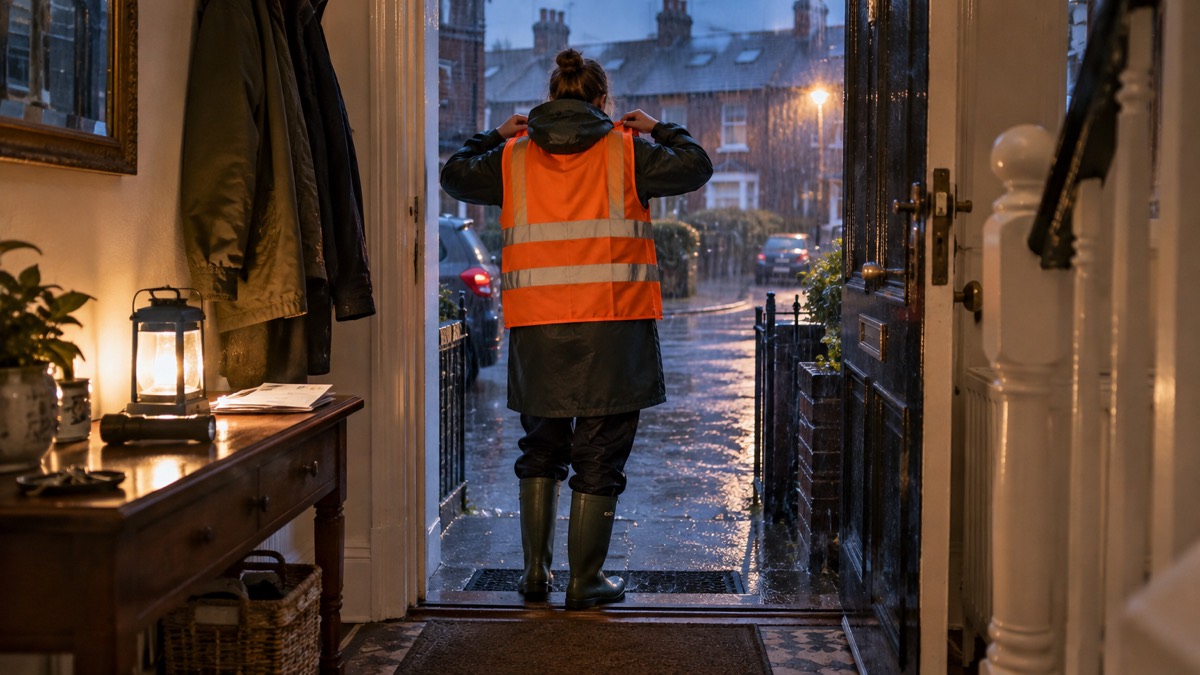
A flood warden is a local volunteer who keeps an eye on the streams, culverts and low-lying streets where you live, passes on official flood warnings to neighbours, and helps people who would struggle on their own when the water rises. Councils and the Environment Agency co-ordinate these schemes, supply the training, and rely on wardens to be their "eyes and ears" on the ground1. In the Wessex area alone there are approximately 500 flood wardens, and the wider network across Dorset, Wiltshire and Swindon counts over 1,600 actively involved1.
If you are thinking of volunteering, the commitment is smaller than you might expect. Cheltenham Borough Council describes the hours as "ad-hoc, minimal during normal times but more during flooding incidents"3. You do not need previous experience for every scheme: Nottinghamshire's Flood Signage Warden role asks only for an initial one-day training session and a refresher every three years5. What you must never do is just as clear: flood wardens do not enter flood water, do not rescue people in danger, and do not lift heavy objects. If life is at risk, anyone, warden or not, should call 9996.
Your community's eyes and ears during flooding
Flood wardens exist because official warnings are only useful if they reach people, and because the authorities cannot watch every culvert and cul-de-sac. Wiltshire and Swindon Prepared describes wardens as "the local response co-ordinators during times of flooding" who act as "a conduit for dispensing information from the Environment Agency and emergency services to local residents, and vice-versa"1. The UK government's flooding preparation guidance puts it more simply: community flood wardens are "volunteers who monitor a specific local area and tell residents when flooding is likely to happen"2.
Cheltenham Borough Council defines the purpose of its wardens as acting "as eyes and ears in monitoring local water courses and areas at risk of flooding and act as a communication channel between the authorities and local residents both in normal times and during and after any flooding"3. That two-way channel matters. Information flows down to residents as warnings and advice, and back up to the authorities as reports of blocked drains, rising water or people in difficulty.
An essential part of the role is producing the community flood plan, which sets out what the community will do in the event of a flood, with full support offered in its creation1. If your community has volunteer flood wardens, a community flood plan template used in London treats them as "responsible for leading the community response", with a single overall lead co-ordinating wardens for specific neighbourhoods8. Wardens should also be signed up for flood warnings themselves so they can cascade those warnings to the community8.
The division of labour is worth understanding. The Environment Agency and local authorities act as co-ordinators of the scheme, advising and supplying the flood warden with information1. The warden's job is to turn that information into action on their own street: knocking on doors, checking water levels, and reporting back. If you want to go further and set up a whole group rather than join one, see community flood plans and starting a flood action group.
How wardens help residents who need extra support
Much of a flood warden's value is in the help given to neighbours who cannot easily help themselves. Cheltenham's scheme asks wardens to "help support vulnerable residents who may need extra support, for example those who have disabilities, are elderly, pregnant or have young children, may be visiting the area or who may be cut off and unable to access supplies"3.
The Crickhowell and surrounding villages scheme in Powys lists concretely what its flood wardens can do:
- Help keep streams and culverts near your home clear if you are unable to do so, provided they are not running fast or deep
- Contact you if there is a flood risk, and keep in touch during a flood
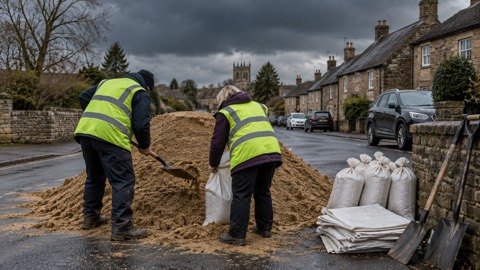
- Advise where you can get sandbags, and deliver sandbags if not busy elsewhere
- Advise about flood planning
- Work with you to keep an eye on streams, culverts and drains
- Support the local authority if they close roads or open a rest centre9
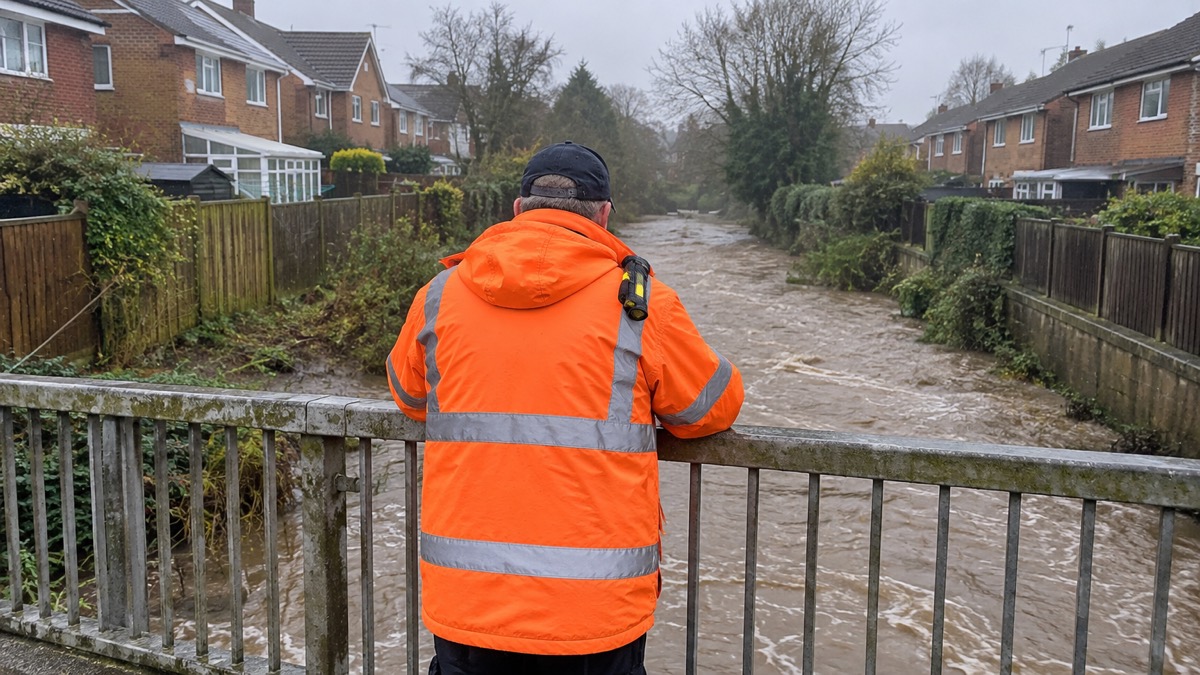
That last point shows how wardens slot into the wider response. District councils may help during floods, especially with vulnerable people, might give out sandbags depending on their policy, and set up rest centres if needed10. In Crickhowell the rest centres are at the High School, and in Llangattock at St Catwg's church, with wardens supporting the local authority when those open9. Perth and Kinross Council's checklist for residents notes that council officers will carry out welfare checks to offer assistance and support where necessary to places that have been flooded, in the days after the flooding as well11.
Wardens also help after the water has gone. Wiltshire and Swindon Prepared advises residents recovering from a flood to "get in contact with your local flood warden to liaise around any issues and concerns"12. The mental health side is recognised too: when helping someone affected by flooding, the advised steps include assessing the situation and ensuring a person's circumstances are safe, checking there are no immediate physical health needs, identifying whether basic needs such as access to food, water, shelter and medication are met, helping people contact their loved ones, and listening and helping them make plans for next steps13.
In Scotland, the ready.scot flooding guidance sets out the same neighbourly tasks: check in on people who need extra help during flooding, if it is safe to do so, by helping prepare their home, picking up extra food, water, toiletries or medications they need, making sure they have important phone numbers written down, keeping in contact by phone or visiting, and telling emergency services where they are14. West Midlands Ambulance Service likewise advises helping vulnerable relatives or neighbours with support, as they may need help with food and supplies during flooding15. For more on this side of community work, see checking on vulnerable neighbours in an emergency.
What a flood warden cannot do: call 999 if you are in danger
This is the most important section on the page, for wardens and residents alike. Harborough District Council's flood warden guidance states plainly: "Flood Wardens are not first responders. Personal safety comes first; escalate to authorities if there is danger to life"6. The same guidance instructs wardens not to enter flood water, because of its depth, contamination and hidden hazards, and not to lift heavy objects alone6.
The emergency services are unanimous on what residents should do. If life is at risk, call 99916. Nottinghamshire's flooding FAQ says: "Ring 999. Do not take any chances with your own safety, or that of your family or neighbours"17. The London Flood Aware campaign gives the same number for immediate danger18, and Carmarthenshire Council says to call 999 in an emergency when immediate assistance is needed to prevent flood water entering property or if there is a danger to life19. Northern Ireland's nidirect advice notes that its Flooding Incident Line is a non-emergency number, so if you are in danger, call the emergency services on 99920.
Never enter the water to rescue anyone, or an animal in difficulty in the water. Derbyshire's guidance is to telephone 999 immediately and tell the person to float on their back21. The Met Office adds that it is not safe to drive, walk or swim through floodwater, and if you are affected by fast flowing or deep water you should call 999 and wait for help22. Natural Resources Wales goes further for the aftermath: "Never walk in floodwater", because floodwater can lift cars, manhole covers and other heavy objects7.
For wardens, the practical rule is escalation, not heroics. A warden who sees someone stranded reports it and directs the emergency services to them rather than wading in. A warden who finds a culvert running full reports it rather than clearing it. If you are weighing up any volunteering role against your own limits, what volunteers can safely do, and where to stop covers the same line-drawing for other roles.
Who makes a good flood warden
You do not need to be unusually brave or fit. Cheltenham Borough Council says that ideally flood wardens "will be good communicators, able to liaise with local residents and authorities both verbally and electronically"3. Much of the job is passing information accurately in both directions, by phone, message or in person, so being known on your street and comfortable talking to people matters more than anything physical.
Nottinghamshire County Council, describing its Flood Signage Warden role, says you don't need any previous experience or a huge amount of commitment5. That role involves closing pre-designated roads with official signage when flooding makes them dangerous, and the training covers water safety, risk control, road safety and sign set up5.
The Derby and Derbyshire flood warden handbook adds one requirement that is easy to overlook: personal preparedness. If you are yourself at risk of flooding, it is recommended that you ensure you are personally well prepared, so that you can quickly implement your own flood plan before helping others, and the Environment Agency provides a personal flood plan template for this12. A warden whose own house is taking on water cannot help anyone else. The handbook also advises on recruitment structure: Head Flood Wardens should recruit Deputies who are activated on receiving a Flood Alert or Flood Warning, and standby Flood Wardens should also be recruited to cover holidays or prolonged incidents12.
Good wardens also keep their local knowledge current. The handbook suggests new residents can be contacted soon after moving in to encourage sign-up to free Flood Warnings, while temporary visitors, for example those staying at a holiday cottage, should not be approached, though their properties may be noted for attention during flooding12. If you are drawn to this kind of organised neighbourly work generally, see volunteering in emergencies.
Time commitment: quiet most of the year, busy during floods
The honest answer on hours is Cheltenham's: "Ad-hoc, minimal during normal times but more during flooding incidents"3. For most of the year a warden's work is occasional: attending a refresher, updating the community flood plan, checking that new neighbours are signed up for warnings. When a flood alert or warning arrives, the role switches on.
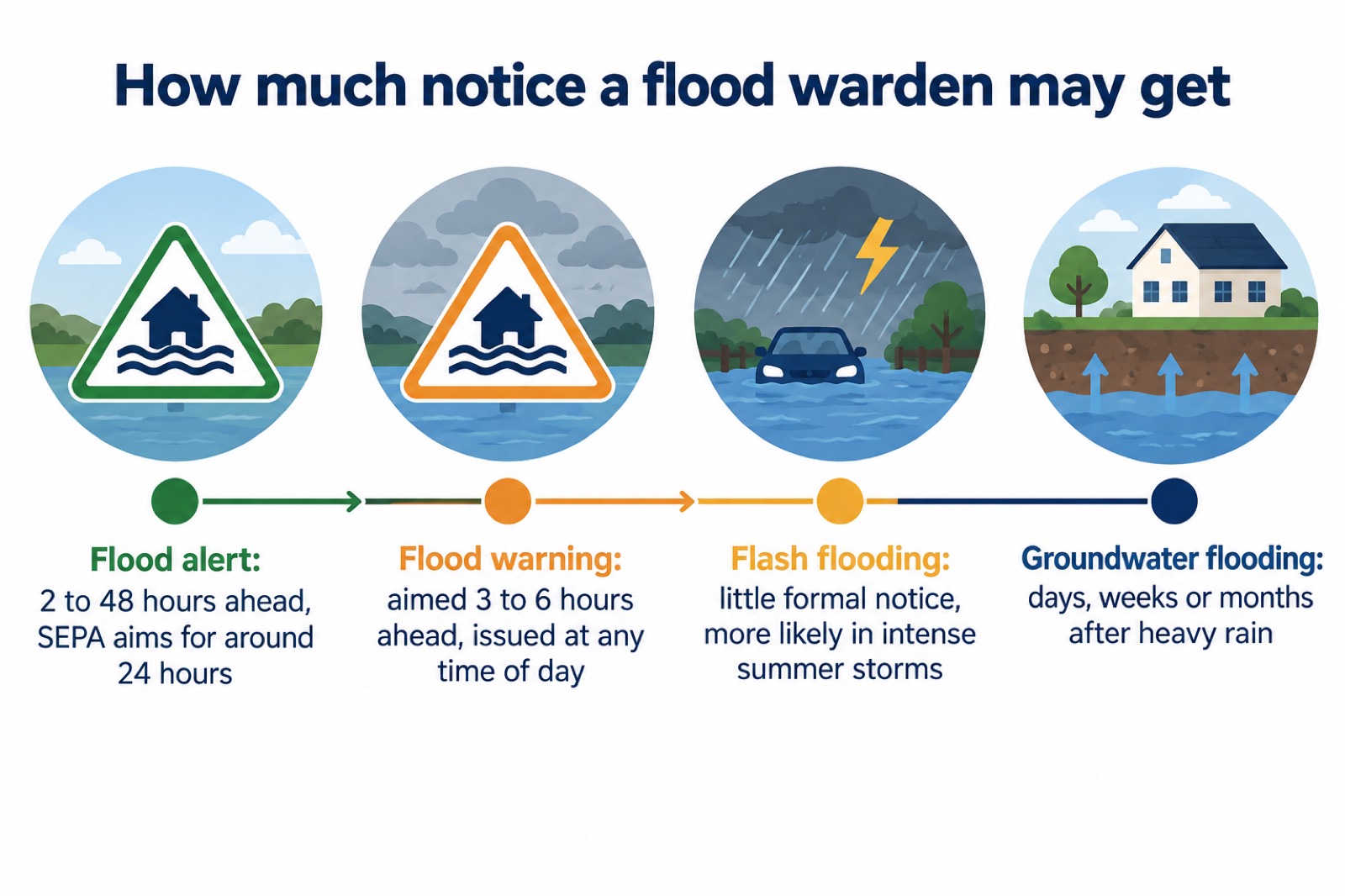
How much notice you get shapes how busy that becomes. The Scottish Environment Protection Agency explains the two levels: a flood alert can be 2 to 48 hours in advance, though SEPA aims to issue around 24 hours in advance of expected flooding, while a flood warning aims to be issued 3 to 6 hours in advance of expected flooding, and can be issued at any time of the day23. A community plan from Aberaeron in Wales describes the flood warning as giving half an hour to one day in advance of flooding24. So a warden may have a day to knock on doors, or half an hour, or a warning that arrives in the middle of the night.
Not every flood gives even that much. Surface water and flash flooding is more likely during intense summer storms but can happen all year round25, and the London guidance on flash flooding advises signing up to Met Office weather warnings because these events can arrive with little formal flood warning26. Groundwater flooding behaves differently again: it usually happens days, weeks or even months after lots of rain, which means wardens in groundwater areas may face a long, slow incident rather than a sudden one27.
Because incidents can be prolonged, the Derby and Derbyshire handbook's advice on recruiting standby wardens exists precisely so that no one person carries a multi-day flood alone12. Wardens are also told to spend as little time as possible in contact with flood water when they must be near it28, which in practice limits the length of any single shift outdoors.
Training, handbook and kit you are given as a volunteer
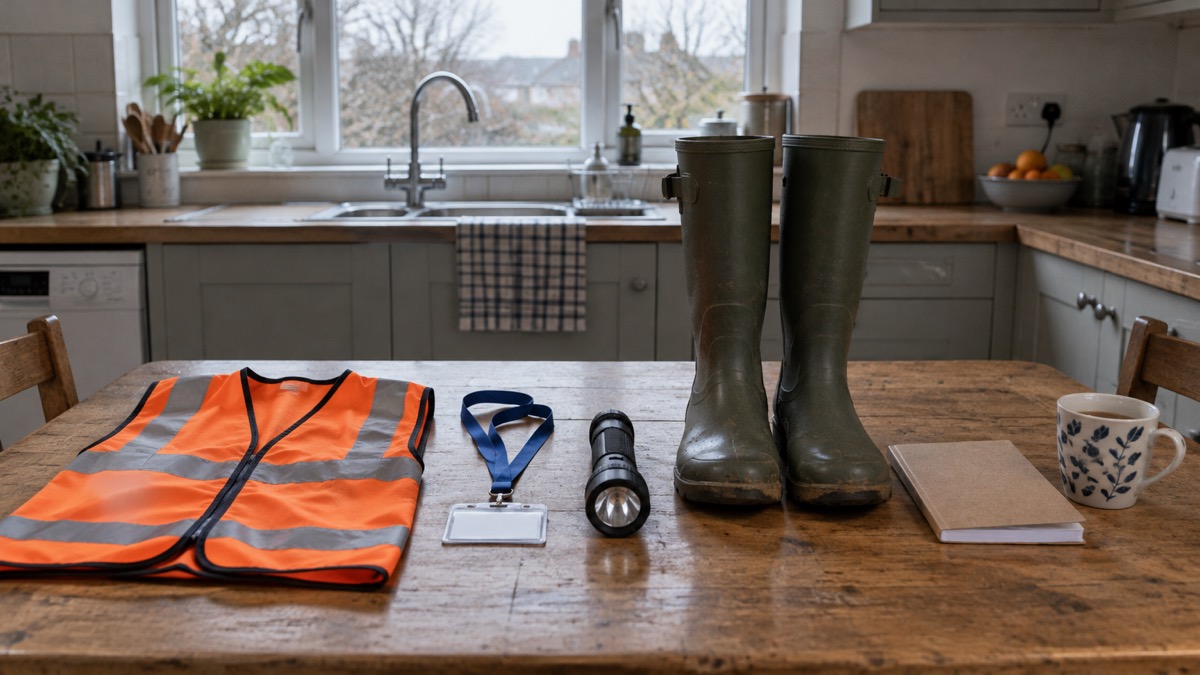
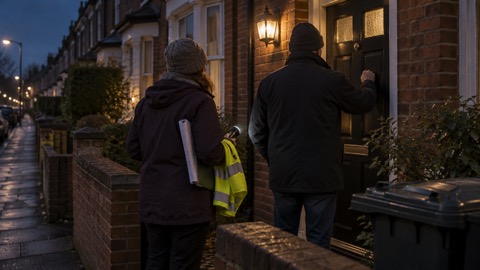
What you receive varies by scheme, but the pattern is consistent: training, a handbook, and identification. Cheltenham Borough Council states that "a full training session, flood warden handbook, high-vis jacket, volunteer lanyard and ID card will be provided"3. The ID matters in practice: a warden knocking on doors at night during a flood needs to be recognisable.
In Wiltshire, the Environment Agency's Flood Resilience Team assists prospective flood wardens with information, training, guides, templates and a quarterly flood warden newsletter1. Nottinghamshire's Flood Signage Warden training covers water safety, risk control, road safety and sign set up, delivered as an initial one-day session with a refresher every three years5.
The most detailed published account of warden training comes from the Devon Pathfinder project report of September 2020. The training contained 6 modules covering: an introduction to flood risk issues, the role of emergency services, the use of sandbags, the role of a flood group, health and safety risks awareness, and Personal Protective Equipment29. The same report found communities were planning to take action following the flood warden training, with 96% of feedback respondents saying that they would take action29. That project also tracked scheme growth: 63% of parish and town councils in the area had a flood warden scheme by the end, compared to 20% originally29.
| What you may be given | Example scheme |
|---|---|
| Full training session | Cheltenham3 |
| Flood warden handbook | Cheltenham3 |
| High-vis jacket, lanyard and ID card | Cheltenham3 |
| Guides, templates and quarterly newsletter | Wiltshire, via the Environment Agency's Flood Resilience Team1 |
| One-day training | Nottinghamshire Flood Signage Wardens5 |
| 6-module training including sandbag use and PPE | Devon Pathfinder project29 |
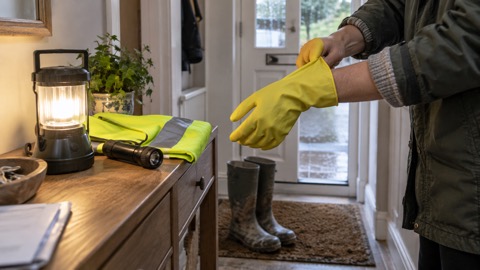
Wardens are volunteers, not equipped rescue workers, so your own household flood kit is still your responsibility. Mid and West Wales Fire and Rescue Service advises every household to make up a flood kit, including a torch, blankets, waterproof clothing, wellingtons, a portable battery-powered radio, first-aid kit, rubber gloves and key personal documents, kept upstairs if possible16. Our emergency kit and flooding guides cover that in full.
How to become a flood warden through your council
There is no single national sign-up. Schemes are run or co-ordinated by councils and the Environment Agency at local level, so the route is to contact whoever runs the scheme where you live. The contacts published by schemes in the pack are listed below; if your area is not covered, your district or county council's flood risk management team, or the Environment Agency's regional flood resilience team, is the place to ask.
| Area | How to apply |
|---|---|
| Cheltenham | Complete the online application form, or email or call 01242 264376 or 01242 2642973 |
| Wiltshire | Contact the Environment Agency at floodwessex@environment-agency.gov.uk1 |
| Swindon | Contact wiltshireandswindonprepared@wiltshire.gov.uk1 |
| Harborough, Leicestershire and Rutland | Email volunteers@harborough.gov.uk or visit the LLR website volunteering page6 |
| Crickhowell and surrounding villages | Contact the CRiC volunteer bureau on 01873 812177, or crickresponse@gmail.com at any time9 |
| Dorset and the wider Wessex network | Contact the Environment Agency via the Send Us A Message box on the Dorset Prepared flooding page4 |
| Nottinghamshire (Flood Signage Warden) | Email the county council to express your interest5 |
A few practical notes on specific areas. Harborough District Council takes general flooding queries at flooding@harborough.gov.uk or through its online general enquiries form, and out of hours you can call 01858 828282 and hold on to the call after the announcement to be transferred6. In Nottinghamshire, Flood Signage Wardens work directly with the Flood Risk Management team at Nottinghamshire County Council and receive a quarterly newsletter5.
Before you apply, it is worth signing up for flood warnings yourself, since wardens are expected to be registered so they can cascade warnings8. If your street has no scheme at all, the Devon Pathfinder experience shows how quickly they can grow once a parish council takes the lead29, and parish and town councils in an emergency explains what those councils can do.
Safety rules every flood warden follows
The safety rules for wardens are the same rules the authorities give to everyone, applied more strictly because wardens are tempted to bend them for others. Cheltenham Borough Council lists among the things a flood warden should not do: place themselves in situations where personal safety is at risk3. Harborough's guidance repeats the principle: personal safety comes first, and wardens should escalate to authorities if there is danger to life6.
The specific rules, drawn from the warden handbooks and official guidance:
- Never enter flood water. Depth, contamination and hidden hazards make it dangerous, and Natural Resources Wales advises never walking in floodwater at all6.
- Never enter the water to rescue anyone, or an animal in difficulty. Telephone 999 immediately and tell them to float on their back21.
- Do not clear gulleys and streams whilst they are in full flow; this is dangerous9.
- Do not lift heavy objects alone. Wardens are there to provide advice and co-ordinate the response effort, not to get physically involved, and should refuse to lift anything too large, awkward or heavy6.
- Be careful when moving or lifting anything brought in by flood water: things may be sharp, heavier or more problematic than you first thought28.
- Treat flood water as contaminated. It is likely to be contaminated, so wash your hands and follow good hygiene principles, and wash children's hands regularly30.
- Spend as little time as possible in contact with flood water28.
The manual handling rule deserves emphasis because it is the one most often tested in a real flood. The Derby and Derbyshire handbook is blunt: "A Flood Warden needs to remember that they are there to provide advice and co-ordinate the response effort, not to get physically involved"12. Sandbags, furniture and debris moved by water are all heavier than they look, and flood water can lift cars, manhole covers and other heavy objects7. The same physics that moves a manhole cover will overwhelm a person.
On insurance, the position depends on the scheme and the task. The Derby and Derbyshire handbook states that under Community Flood Signage Schemes, flood wardens are covered by the County Council's insurance policy when closing pre-designated roads on behalf of the Authority12. That cover is task-specific: it does not extend to everything a warden might do. Ask your own scheme what cover applies before your first activation, and see do emergency volunteers need insurance? for the wider picture.
Support from your council throughout the year
A good scheme does not leave its wardens alone between floods. Cheltenham Borough Council tells new wardens: "You will also be allocated a member of staff who will check in with you throughout the year and you can contact if you have any questions or reports"3. That named contact is the channel for reporting blocked culverts in dry weather as well as during incidents.
In Nottinghamshire, Flood Signage Wardens work directly with the Flood Risk Management team at the county council and receive a quarterly newsletter5. In Wiltshire, the Environment Agency's Flood Resilience Team supplies information, training, guides, templates and a quarterly flood warden newsletter1. The Dorset Prepared network likewise invites communities to contact the Environment Agency to set up a Personal Flood Plan for their community4.
The year-round work is what makes the flood-time work effective. Support continues between floods: Cheltenham Borough Council allocates each flood warden a member of staff who checks in with them throughout the year and can be contacted with questions or reports3, and Nottinghamshire's Flood Signage Wardens work directly with the council's Flood Risk Management team and receive a quarterly newsletter26. When a flood alert arrives, the warden's job is to switch on an existing plan rather than improvise one. If your community wants to test whether its plan would actually work, how to test and review a community emergency plan and when to activate a community emergency plan cover the next steps, and our flood warden checklist sets out the before, during and after tasks in order.
Sources (30)
- Flood Wardens, Wiltshire and Swindon Prepared, Wiltshire and Swindon Prepared, 2026
- Prepare for flooding, GOV.UK
- Flood wardens, Cheltenham Borough Council, 2026
- Flooding, Dorset Prepared, Dorset Prepared, 11 August 2025
- Schemes to help reduce flooding, Nottinghamshire County Council, 2026
- Be Flood Ready: guidance for flood wardens, Harborough District Council, 2026
- What to do after a flood, Natural Resources Wales, 2026
- Community flood plan template, Appendix B, London Borough of Merton, 2026
- Adverse weather events, flood wardens, Llangattock Community Council, 2026
- Flood risk management: preparing for emergencies, Staffordshire County Council, 2026
- Flooding checklist for residents, Perth and Kinross Council, 1 August 2024
- Derby and Derbyshire flood warden handbook, Derbyshire County Council, November 2019
- Flooding and health: mental health, Wiltshire and Swindon Prepared, 2026
- Flooding, Readiness Scotland, Scottish Government, 24 March 2026
- Staying safe in flooding, West Midlands Ambulance Service NHS Foundation Trust, 20 May 2026
- Flooding advice, Mid and West Wales Fire and Rescue Service, 2026
- Flooding before, during and after: frequently asked questions, Nottinghamshire County Council, 2026
- Be flood aware, Greater London Authority, 2026
- Flooding information, Carmarthenshire County Council, 5 November 2025
- Thunderstorms weather warning advice and information, nidirect, 30 August 2026
- Communities affected by flooding, Derbyshire County Council, 2026
- Stay safe in heavy rain, Met Office, 28 October 2026
- About flood alerts and warnings, Scottish Environment Protection Agency, 2026
- Aberaeron Community Emergency Plan, Aberaeron Town Council, 8 May 2024
- Surface water flooding, Greater London Authority, 2026
- How to prepare for flash flooding, Greater London Authority, 2026
- Groundwater flooding, GOV.UK, 20 September 2023
- What to do in a flood, Wiltshire and Swindon Prepared, 2026
- Devon Pathfinder community resilience flood report, Devon County Council, 16 September 2020
- During a flood, Nottinghamshire County Council, 2026
 Emergency Hub Kit Checklist
 Severe Weather Tasks for Groups
 Flood Warden Checklist
 Setting Up an Emergency Group
 Volunteering in Emergencies
 What Volunteers Can Safely Do
 Community Flood Plans
 Starting a Flood Action Group
 Clearing Snow and Ice
 Community Emergency Hubs
 Checking Vulnerable Neighbours
 Neighbourhood Phone Trees
 Registering and Looking After a Village Defibrillator on The Circuit
 Funding Resilience Groups
 Voluntary Organisations