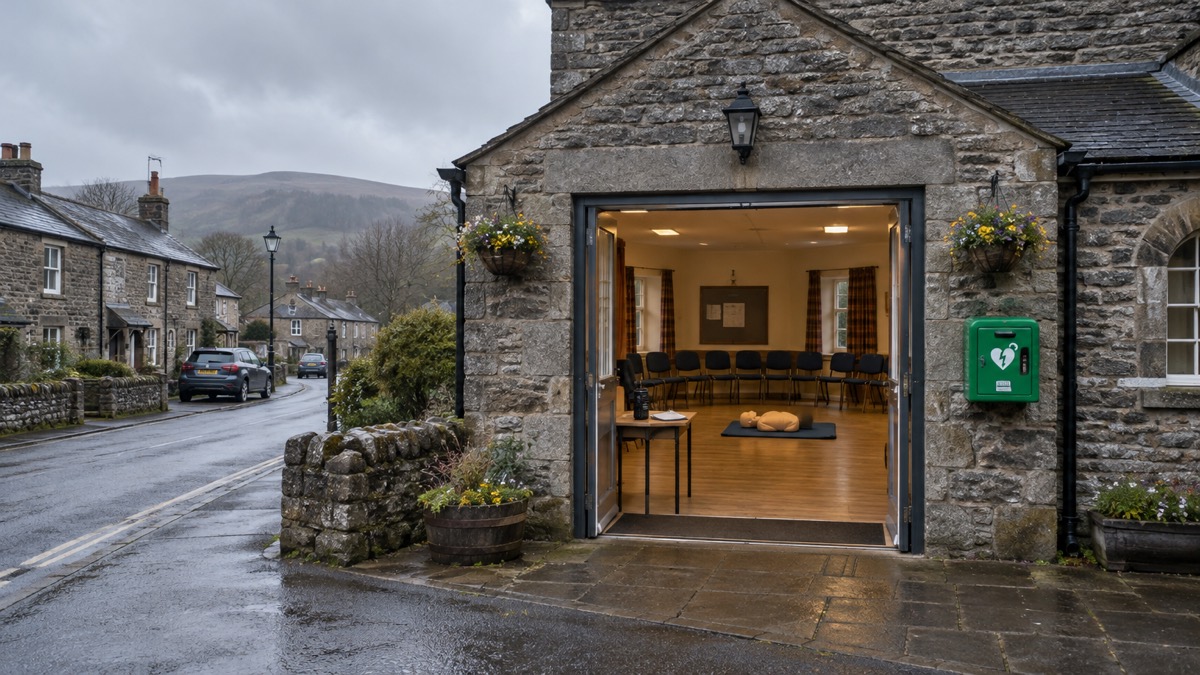
When an emergency hits your area, the instinct to help is one of the most useful things a community has. But the single most important thing to know about emergency volunteering in the UK is this: do not just turn up at the scene. Untrained, unaccounted-for volunteers create work for the emergency services at exactly the moment they have the least to spare. Instead, join a structure before the emergency: a warden scheme, a responder scheme, a voluntary organisation or a local community group. If you would like to help, look out for calls for support from local community groups and your local councils; in some emergencies calls for support may come from national government or national voluntary organisations1.
The good news is that the structures are extensive and open to ordinary people. You can train as a Community First Responder and reach cardiac arrest patients in the minutes before an ambulance. You can become a flood warden and help your street prepare, respond and recover. You can join a snow warden scheme and receive free kit, salt and grit from your council. Or you can volunteer with the British Red Cross, which responds to an emergency in the UK approximately every four hours2. Most of the training for these roles is free, and much of it takes only a weekend.
This page sets out the main roles, what each involves, what training you will get, what you must never do, and how to sign up. For the wider picture of how neighbours can organise, see our guide to community resilience.
Don't just turn up: volunteer through local emergency structures
Every part of the UK has local emergency planning structures, and they are the right door to knock on. In England, each area has a Local Resilience Forum: partnerships made up of representatives from local public services, including the emergency services, local authorities, the NHS, the Environment Agency and other organisations involved in emergency preparedness, such as utilities providers7. Community groups can contact their local council or a Local Infrastructure Organisation for advice and connections; Local Infrastructure Organisations support other groups in their local voluntary and community sector8.
If you turn up at a rest centre unannounced, be aware that you may not be needed at the time you present yourself and may be asked to come back later or to do another task. Details should be taken and contact information noted when you present yourself, and unknown volunteers are always supervised and supported9. This is not a brush-off: it is how the system keeps everyone safe and accounted for. The practical steps to take now are:
- Join or support a local volunteering or community group before an emergency happens, such as a local charity, a flood action group or a Neighbourhood Watch8
- Join local voluntary sector organisations working in your community8
- In Wales, visit Third Sector Support Wales to contact Community Voluntary Councils for volunteering opportunities10
- In Northern Ireland, NI Direct's Be ready as a community page has information and resources on how communities can plan for emergencies10
- In an emergency, pay attention to official sources of information such as the websites and social media accounts of local authorities, government agencies or emergency services, or messages to your mobile phone from the UK Government Emergency Alerts Service1
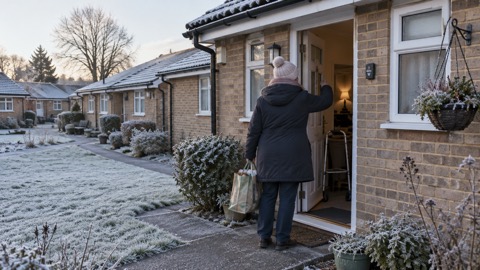
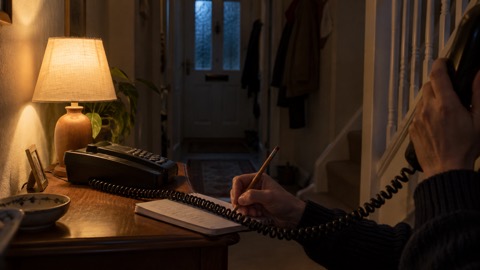
You do not need to wait for a formal role to help neighbours. You can help them by preparing their home before an emergency, picking up extra food, water, toiletries or medications, making sure they have important numbers written down, and keeping in contact by phone or visiting them if it is safe to do so11. Our pages on checking on vulnerable neighbours and good neighbour schemes cover this in detail.
Scotland's community emergency planning guide is written for exactly this situation: groups that want to help their communities cope better in an emergency and become more resilient by making a Community Emergency Plan together12. It notes that simple activities, like getting together to clear snow and ice from paths or offering a helping hand to neighbours who might become vulnerable in an emergency, are the core of community response12. If your street has no group yet, our guide to setting up a local emergency group is the place to start.
Community First Responders: help in the minutes before an ambulance
A Community First Responder (CFR) is a volunteer trained by an ambulance service to attend certain types of emergency calls in the area where they live or work13. Their aim is to reach a potential life-threatening emergency in the first vital minutes before the ambulance crew arrives, and their role is to help stabilise the patient and provide the appropriate care until the more highly skilled ambulance crew arrives on scene to take over the treatment13. Travelling in their own vehicles, volunteer CFRs provide essential lifesaving treatment and support in those crucial minutes14.
The reason this role exists is timing. In cardiac arrest, survival chances drop by about 10% for every minute without CPR and defibrillation3. Ambulance services across the UK describe the same arrangement from the caller's side: if an ambulance is required, they may also send a volunteer community first responder who can get to the scene before the ambulance to provide immediate care15, and if they are able to send a community first responder, the responder may arrive before ambulances do16. CFRs are usually based in rural communities where crews have longer to travel to the patient13, so the role suits people in villages and scattered parishes especially well.
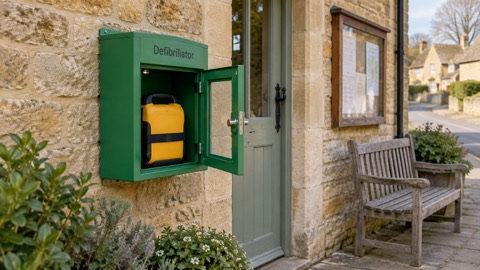
You can also build related skills without the on-call commitment. You can register as ResusReady through the Resuscitation Council UK website and add yourself to a growing network of people prepared to act in a cardiac arrest17. Our page on Community First Responders goes deeper on the day-to-day reality of the role, and our guide to registering and looking after a village defibrillator covers the equipment side.
Training: a two-day course and a yearly refresher
The Northern Ireland Ambulance Service describes the training pathway in detail, and it is representative of schemes across the UK. Initial training is a two-day course held over a weekend, covering essential skills3. Refresher training follows every 12 months, held at your local scheme, plus non-clinical courses such as moving and handling3. New CFRs are recommended to work alongside an experienced CFR to build confidence before going on call alone18.
CFRs are trained to3:
- Provide Basic Life Support (BLS)
- Use an Automated External Defibrillator (AED)
- Place unconscious casualties into the recovery position
- Provide life-saving interventions to the choking casualty
- Update the Emergency Operations Centre (EOC) as required
The training is grounded in the first three links of the Chain of Survival: early recognition of cardiac arrest, early CPR and early defibrillation3.
What a CFR is sent to, and what they are not
Ambulance services do not send CFRs to everything. In Northern Ireland, CFRs are currently alerted to attend cardiac arrest, chest pain, choking, unconscious casualties and seizures3. They are not knowingly alerted to patients under 12 years old, trauma incidents, situations involving possible hazards such as alcohol, drugs or potential violence, or mental health crises3. If you become a CFR, expect a tightly defined role: high-value minutes on a short list of call types, not a general ambulance auxiliary.
Flood wardens: preparing, responding and recovering
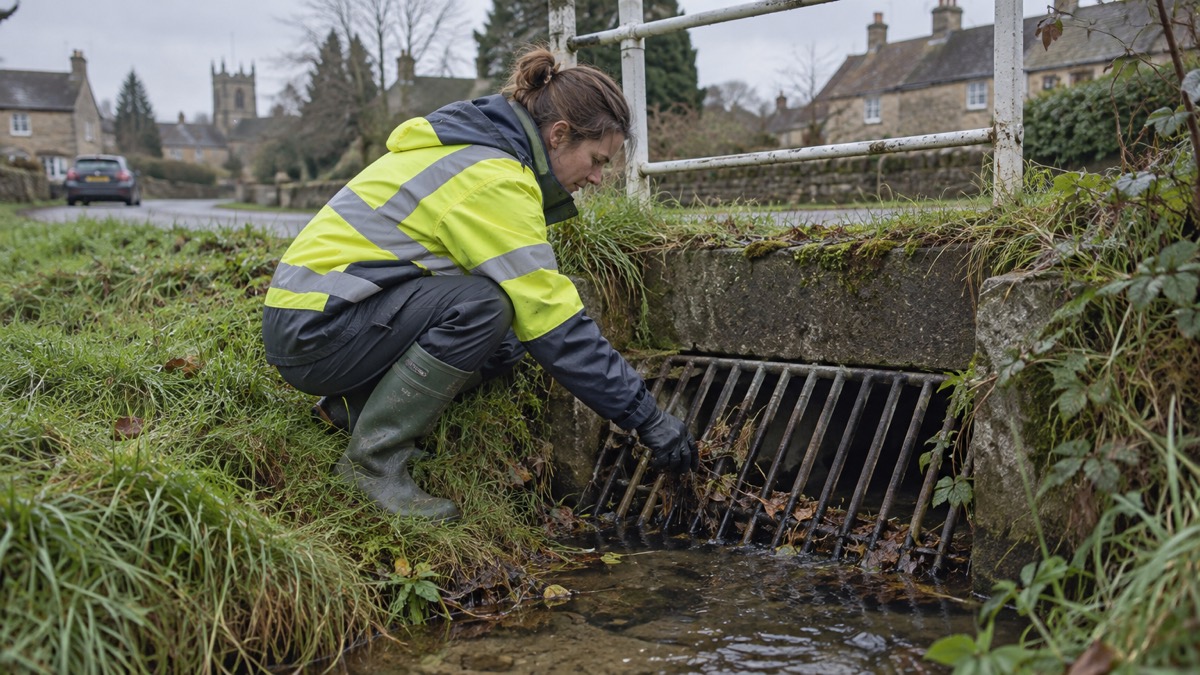
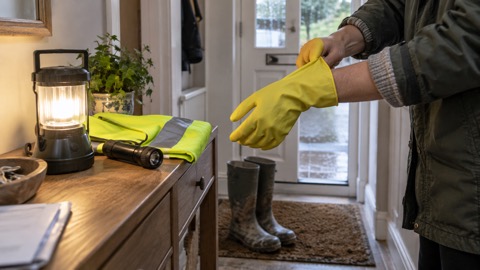
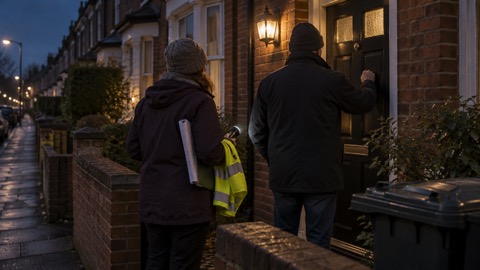
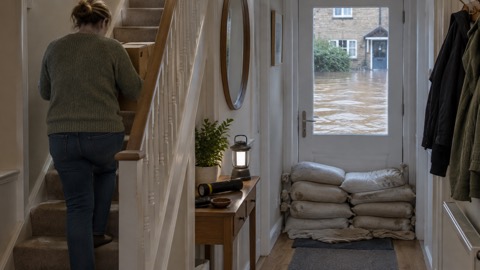
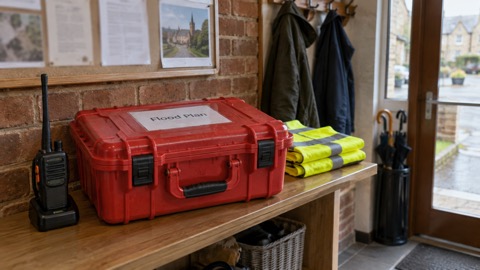
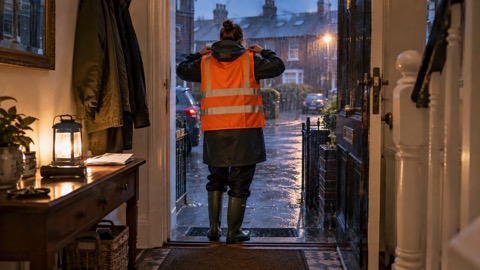
Flood wardens are local volunteers who help their communities prepare for, respond to, and recover from flooding4. The role is organised locally, and schemes describe it in similar terms across England and Wales: wardens are available to support residents to prepare for flooding, respond to an imminent flood, act during a flood and recover from one19, and they help prepare communities to deal with emergencies, especially during the first critical hours of any community emergency20. Where a community has volunteer flood wardens, they are responsible for leading the community response, with a single overall lead co-ordinating wardens for specific neighbourhoods21.
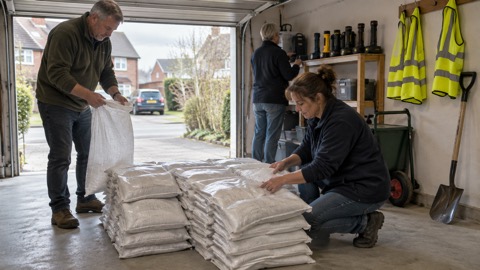
Day to day, the work is practical and varied. In the Crickhowell area of Powys, flood wardens can help keep streams and culverts near your home clear if you are unable to do so (provided they are not running fast or deep), contact you if there is a flood risk, keep in touch during a flood, advise where you can get sandbags, deliver sandbags if not busy elsewhere, advise about flood planning, work with you to keep an eye on streams, culverts and drains, and support the local authority if they close roads or open a rest centre19. In Cheltenham, wardens help give information to those at risk of flooding, including about personal flood plans, household flood kits, the National Flood Forum Blue Pages Directory and any grants available for flood protection22. A community flood plan may also hold contacts of local volunteers who can be called on in an incident for specific tasks, such as installing property flood resilience measures or looking after vulnerable people21.
Wardens should be signed up for flood warnings themselves so they can cascade those warnings to the community21. In Wales, you can sign up for the nearest relevant flood warning area by searching by town or city and selecting from the list23. Our pages on flood wardens, the flood warden checklist and community flood plans cover the role in more depth.
How to sign up
Registration routes differ by area, so start with your local council or the Environment Agency:
| Area | How to register |
|---|---|
| Cheltenham | Complete the online application form, or email or call the council22 |
| Harborough | Email volunteers@harborough.gov.uk, or visit the LLR website volunteering page4 |
| Wiltshire and Swindon | Email wiltshireandswindonprepared@wiltshire.gov.uk; the Environment Agency's Flood Resilience Team can assist with information, training, guides, templates and a quarterly flood warden newsletter20 |
| Nottinghamshire (Flood Signage Warden) | Email the council to express your interest; training is an initial one-day session plus a refresher every three years24 |
If your area has no scheme, ask your parish, town or district council whether one could be started, and see our guide to starting a flood action group.
What a flood warden must never do
This is the part of the role to take most seriously. Flood wardens are not first responders; personal safety comes first, and wardens should escalate to the authorities if there is danger to life4. The limits are stated plainly by the schemes themselves:
- Flood wardens cannot stop flooding, rescue you if you are in danger (you should call 999), clear gullies and streams whilst they are in full flow as this is dangerous, or go into flood water19
- Flood wardens should not rescue residents from flood water; leave this to the emergency services22
- Do not enter flood water, because of depth, contamination and hidden hazards, and do not lift heavy objects alone; escalate to the appropriate authority4
- A Flood Warden is there to provide advice and co-ordinate the response effort, not to get physically involved; refuse to lift anything too large, awkward or heavy25
Our page on what volunteers can safely do, and where to stop covers these boundaries across all roles.
Snow wardens: free kit, salt and grit to clear local paths
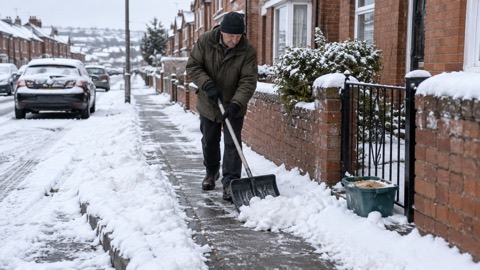
Snow warden schemes allow an individual or a group of community volunteers to sign up to help clear snow and ice from public footpaths in their local areas5. By carrying out voluntary snow warden duties you will be helping to keep your community safer during severe winter conditions5. The role is genuinely supported with equipment and materials, not just a title.
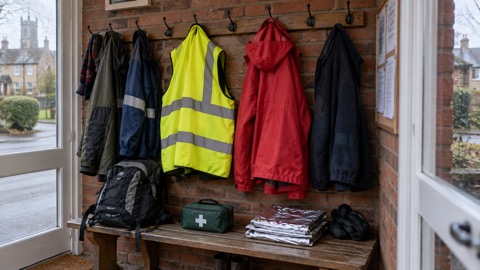
In Northumberland, the council provides a snow warden kit comprising a snow shovel, a bag of salt or grit, a thermal hat with a head torch, a pair of thermal gloves and a hi-vis vest5. In Devon, volunteers may spread grit, clear snow, and refill grit bins and bags, and duties may include ordering grit and salt supplies, keeping a register of trained volunteers, receiving and responding to local weather alerts, organising volunteers to clear snow, organising volunteers to spread grit when icy weather is forecast, and encouraging responsible and appropriate use of salt27. Devon County Council will also deliver a comprehensive winter service as described in its Winter Service and Emergencies Plan, refill county-owned grit bins when notified that they are empty, train Snow Wardens and provide ongoing advice and guidance27.
The salt and grit itself is supplied at scale. Derbyshire provides between half to 1 tonne of salt free of charge per town or parish council or community group, and between half to 1 tonne of grit, free of charge, delivered directly to a designated storage area in 10kg and 25kg bags per participant28. Devon provides local councils and community organisations with up to five tonnes of salt free of charge, usually delivered in one-tonne dumpy bags to one agreed location before winter, along with a small number of bagged salt supplies; salt can be requested using the online salt ordering form, and there is a route for purchasing additional salt through contracted suppliers27. Salt quantities for town councils are agreed separately and depend on the services they plan to deliver27.
In Warwickshire, the county council works in partnership with parish and town councils and residents' associations to run a network of voluntary snow wardens; when conditions warrant it, area teams will sanction the treatment of agreed village or town footways using salt from existing grit bins or at agreed locations as highway resources allow29. If you would like to participate there, speak to your parish or town council, residents' association, housing association or district or borough council29. Our snow warden schemes page covers the role in full, and if you just want to clear the pavement outside your own home, see clearing snow and ice from pavements; Northumberland asks snow wardarden volunteers to follow the government's guidelines on clearing snow safely if they want to clear snow themselves5.
Registration and the risk assessment
Each council runs registration its own way, but the pattern is similar: a form, a fitness or risk declaration, and training before kit is issued.
| Area | How to register |
|---|---|
| Northumberland | Return a completed registration form and fitness declaration by freepost (Freepost NCC LOCAL SERVICES) or by email to the highways team; complete the Risk Assessment Form before the council can issue your equipment5 |
| Devon | Email communityselfhelp@devon.gov.uk to register for access to the online training, then register or update your details via the online form; local councils and community organisations contact the same address to join the scheme27 |
| Warwickshire | Speak to your parish or town council, residents' association, housing association or district or borough council29 |
| Derbyshire | Email snow@derbyshire.gov.uk for either of the county's schemes28 |
Insurance: what the council covers and what it does not
Devon County Council provides Public Liability Insurance for voluntary work completed under the approved Snow Warden Scheme, provided it is carried out safely and in accordance with guidance, covering third-party claims arising from authorised Snow Warden activities27. That is the core protection, and it is conditional: follow the training and the guidance, or the cover does not apply.
The exclusions matter just as much. No other insurance cover is provided: volunteers are responsible for their own personal safety and property, damage to personal equipment or vehicles is not covered, and the Public Liability cover does not apply to work by contractors employed by a council or community organisation27. Snow Wardens work on behalf of their local council or community organisation, not Devon County Council27, so check who you are actually volunteering for and whose insurance sits behind your activities. For comparison, flood wardens operating under community flood signage schemes are covered by the county council's insurance policy when closing pre-designated roads on behalf of the authority25. Our page on whether emergency volunteers need insurance goes through the detail.
British Red Cross volunteering: rest centres, welfare and food
The British Red Cross is the largest voluntary organisation in UK emergency response, and it offers several ways in. It responds to an emergency in the UK approximately every four hours, supports rest centres and provides safe spaces offering emotional and practical support, and helps around half a million people in the UK every year to prepare for, respond to and recover from a crisis such as house fires, floods and evacuations2. During flooding and its aftermath, the Red Cross can also help with transport, welfare and food parcels26.
One accessible route is Community Reserve Volunteers: no specialist skills are required, and when an emergency strikes in your area you can choose whether to volunteer or not. The role is designed for people who want to do their bit but do not wish to commit to regular volunteering2. If you want something more structured, the fire and emergency support service is run in partnership with the British Red Cross by trained volunteers who offer practical and emotional support; voluntary donations to the British Red Cross cover the cost30. As a volunteer you will receive all the necessary training to perform the required tasks, including working with the fire service at the scene of an incident, first aid and assisting people with disabilities, and completing all essential training may take about 40 hours in total30.
The Red Cross also offers a number of free online or face-to-face educational workshops to help you tackle problems you and your community may come up against in everyday life31. These are a sensible first step if you want to build confidence before taking on an on-call role.
During power cuts, the immediate number to know is 105: call it for help, or visit the UK Power Networks page for power cuts6. Red Cross involvement is more likely where an outage has led to evacuation or a rest centre opening. Community and voluntary organisations, including faith groups, community councils and resident groups, may also provide hot food or shelter during emergencies32, and during flooding they may mobilise volunteers to assist vulnerable individuals with evacuation or staying safe in place, and provide shelter and essential supplies32. Our page on voluntary organisations that help in UK emergencies lists the wider field, including specialist national organisations that work with volunteers to respond to local and national emergencies, such as Communities Prepared, British Red Cross, REACT, 4X4 Response UK and RAYNET-UK8.
Getting started: choosing a role and finding support
Match the role to what you can realistically commit. The table below sets them side by side.
| Role | What you do | Training | Commitment |
|---|---|---|---|
| Community First Responder | Attend life-threatening calls in your own vehicle before the ambulance | Two-day weekend course, refresher every 12 months3 | On-call in your local area |
| Flood warden | Help the community prepare, respond and recover from flooding | Local scheme training, guides and templates20 | Seasonal and incident-based |
| Flood Signage Warden | Close pre-designated roads under a signage scheme | One-day initial session, refresher every three years24 | Incident-based |
| Snow warden | Clear snow and spread grit on agreed local footways | Council training, plus a risk assessment before kit is issued5 | Winter weather only |
| Red Cross Community Reserve Volunteer | Support the Red Cross when an emergency strikes your area | No specialist skills required2 | You choose whether to respond each time |
| Red Cross fire and emergency support service | Practical and emotional support at incidents, with the fire service | All necessary training provided, about 40 hours in total30 | Regular volunteering |
Whichever you choose, the sequence is the same: join before the emergency, get the training, work within the boundaries, and answer the call when it comes rather than turning up unasked. If you want to go further with your whole street, our guides to community emergency hubs, neighbourhood phone trees and how councils and emergency services work with local groups pick up from here.
Sources (32)
- Be informed about hazards, UK Government Prepare campaign, 2026
- Community involvement, Dorset Prepared, 2026
- First responders, Northern Ireland Ambulance Service, 2026
- Be flood ready: guidance for flood wardens, Harborough District Council, 2026
- Snow wardens, Northumberland County Council, 2026
- Storm Ciaran, Suffolk County Council, 2026
- Check the risks where you are, UK Government Prepare campaign, 2026
- Prepare your community, Greater Manchester Combined Authority, 2026
- Northumbria Local Resilience Forum, Northumberland County Council, 2026
- Information for communities and community groups, UK Government Prepare campaign, 2026
- Make an emergency plan for your home - Ready Scotland, Ready Scotland
- Community emergency planning guide: why, Ready Scotland, March 2026
- Community First Responders, Scottish Ambulance Service, 2026
- How we respond to 999, Welsh Ambulance Service, 2026
- What happens when you call 999, Yorkshire Ambulance Service, 2026
- Using 999, East of England Ambulance Service, 2026
- Cardiac arrest, East of England Ambulance Service, 2026
- Who will treat you: first responders, Northern Ireland Ambulance Service, 2026
- Adverse weather events, Llangattock Community Council, 2026
- Flood wardens, Wiltshire and Swindon Prepared, 2026
- Community Flood Plan Template, London Borough of Merton, 2026
- Flood wardens, Cheltenham Borough Council, 2026
- Natural Resources Wales / Sign up to receive flood warnings, Natural Resources Wales
- Schemes to help reduce flooding, Nottinghamshire County Council, 2026
- Derby and Derbyshire flood warden handbook, Derbyshire County Council, November 2019
- What to do after a flood, Natural Resources Wales, 2026
- Snow Warden Scheme, Devon County Council, March 2026
- Winter service, Derbyshire County Council, 2026
- Snow wardens, Warwickshire County Council, 2026
- Fire emergency support service, Warwickshire County Council, 2026
- Protect your community, Lancashire Prepared, 2026
- Partnership working in emergency management, Ready Scotland, March 2026
 Emergency Hub Kit Checklist
 Severe Weather Tasks for Groups
 Flood Warden Checklist
 Setting Up an Emergency Group
 What Volunteers Can Safely Do
 Community Flood Plans
 Flood Wardens
 Starting a Flood Action Group
 Clearing Snow and Ice
 Community Emergency Hubs
 Checking Vulnerable Neighbours
 Neighbourhood Phone Trees
 Registering and Looking After a Village Defibrillator on The Circuit
 Funding Resilience Groups
 Voluntary Organisations