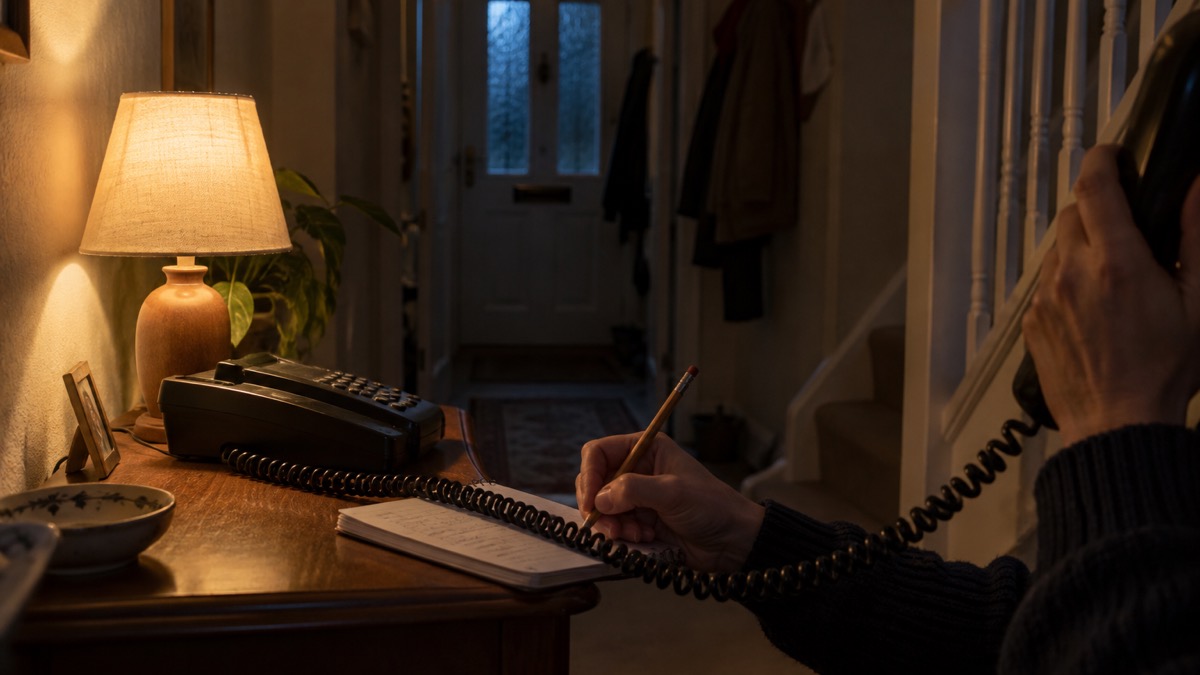
A phone tree is the simplest way to warn a street, close or village fast: one person makes a few calls, each person called then calls the next few, and within a short time everyone on the list knows what is happening and what to do. No app, no internet connection and no committee are needed, just an agreed list of names and numbers and neighbours willing to pick up the phone.
It matters because the official systems do not reach everyone. Emergency alerts go to compatible mobile phones1, and some households, particularly older ones, are not online at all. During Storm Eowyn in January 2025 the Northern Ireland Fire and Rescue Service received 58 calls about fallen trees between midnight and 2pm on a single Friday, and publicly asked people to check on vulnerable family, friends and neighbours by telephone2. That is exactly the job a phone tree does in an organised way.
This page covers how to set a calling list up, how to get your community behind it, what to do when the phones themselves fail, and how to test and review the list so it works when it is needed.
How a phone tree works
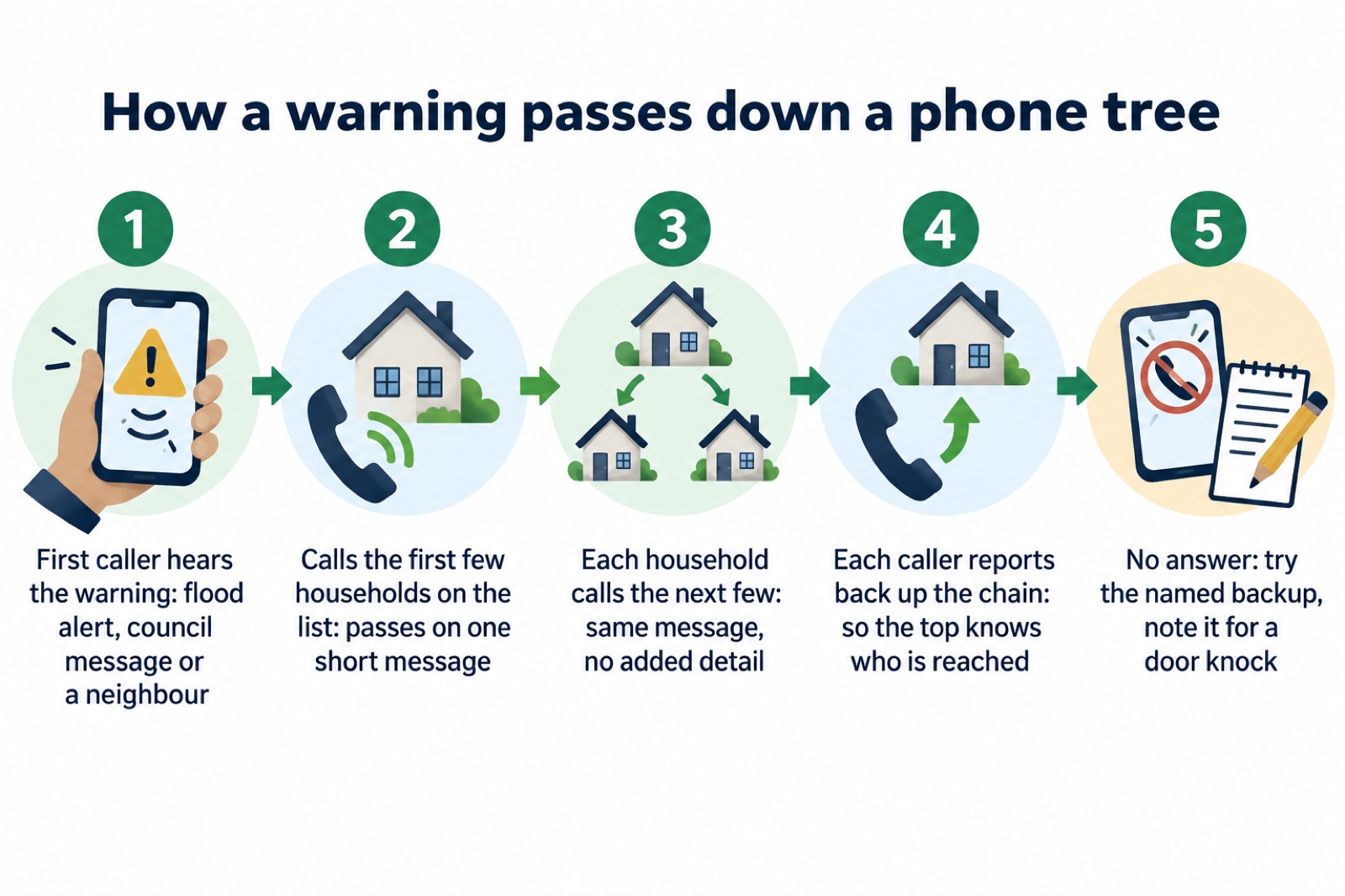
The idea is a cascade. The person who first hears a warning, whether from a flood alert, a neighbour, a council message or their own eyes, calls the first few households on the list. Each of those households then calls the next few, passing on the same short message, until the whole list has been reached. Everyone who makes a call reports back up the chain that their calls went through, so the person at the top knows within minutes who has been reached and who has not.
Keep the message short and identical each time it is passed on: what is happening, what to do, and who to call back. A message that grows details as it travels down a chain soon becomes unreliable. Write the standard message format into the plan itself so nobody has to invent one at two in the morning.
Two practical rules make the tree work. First, each caller should only be responsible for a small number of households, so no one is on the phone for an hour while the warning goes stale. Second, every branch needs a named backup: if someone does not answer, the caller moves to the backup rather than stopping, and notes the non-answer for a follow-up visit.
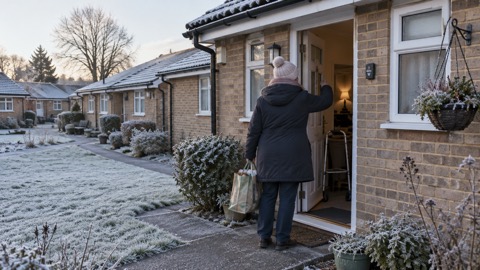
A phone tree is not only for warnings. The same list works for check-ins: during severe weather, official advice is to identify family or neighbours who may need an extra helping hand and have their phone numbers to hand8, and the fire and rescue service in Northern Ireland asked people to check on vulnerable neighbours by telephone during Storm Eowyn2. A calling list is simply that good practice, shared across a whole street.
Why a calling list helps neighbours who are not online
Most official warning systems assume you have a smartphone and an internet connection. Emergency alerts are broadcast from mobile phone masts to every compatible phone or tablet in range1, which covers a lot of people, but not those without a compatible device. Around sites with specific hazards, councils run automated telephone warning systems, and for people without internet access the advice is to ask a friend or neighbour to assist them in signing up for the service9.
A phone tree closes that gap from the other direction. Instead of the offline neighbour needing to sign up to anything, the online neighbours bring the warning to them by voice. For someone who never uses email or social media, a phone call from a named neighbour they recognise is also more likely to be believed and acted on than an automated message.
The list should flag who needs calling first. Official preparedness advice is to agree a backup plan with anyone who might need extra support, particularly if they live alone, for example that if an outage happens and you cannot call, you or another trusted person will visit them in person10. Build that arrangement into the tree: the people who most need the warning get called first, and if they do not answer, someone walks round.
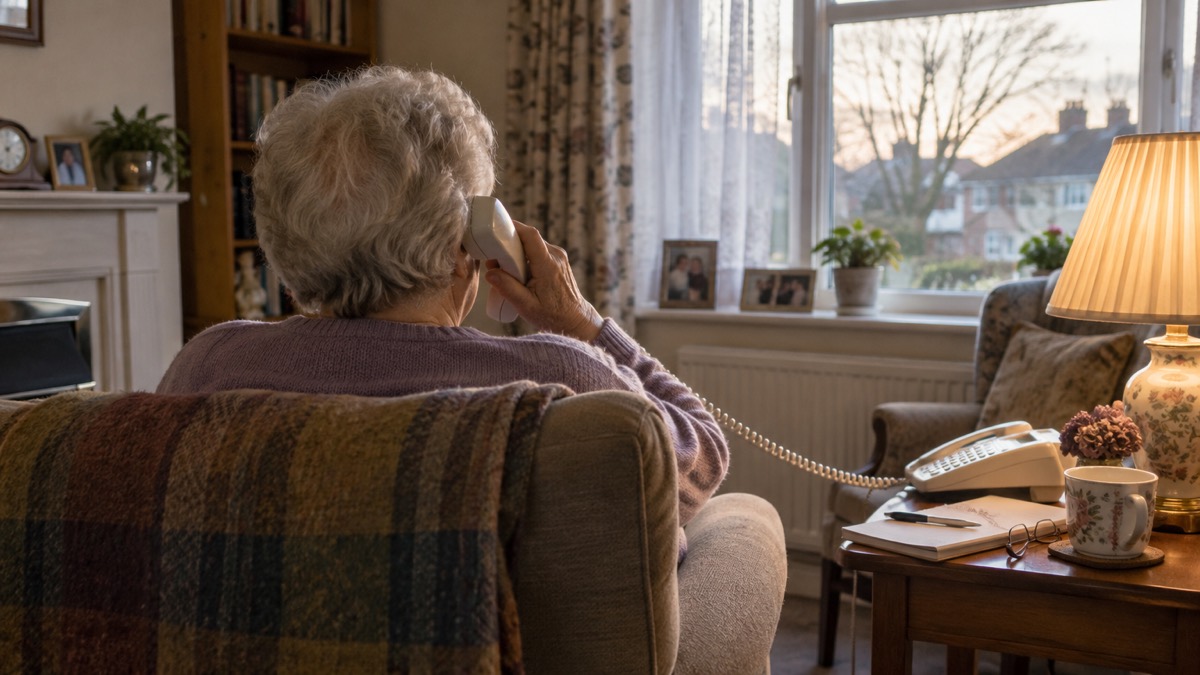
*A corded phone answering a call from the street's calling list.
Personal alarm and telecare users deserve a place on the list too. Telecare systems are usually made up of an alarm base unit and a worn device that connect to an alarm receiving centre through a phone connection11, so a household whose alarm depends on the phone line is vulnerable in exactly the situations a phone tree covers. Ask the alarm provider how the device works if the network is down12, and note the answer on the list.
What still works when phones and the internet go down
A phone tree assumes phones work, and often they do not, so the plan needs a fallback. The good news is that not everything fails at once, and knowing the order of fallbacks keeps your tree functioning.
| Situation | What may still work | What to do |
|---|---|---|
| Power cut at home | A corded landline phone might still work5 | Keep one corded phone in the house |
| Power cut, no landline | The mobile network may still temporarily work in regions with backup power13 | Try the mobile before assuming the network is down |
| Mobile network down | If you have working Wi-Fi, you may still make calls by enabling Wi-Fi Calling12 | Set up Wi-Fi Calling in advance |
| No signal on your network | Calling 999 will automatically connect through another mobile network if one is available14 | Use 999 only for emergencies |
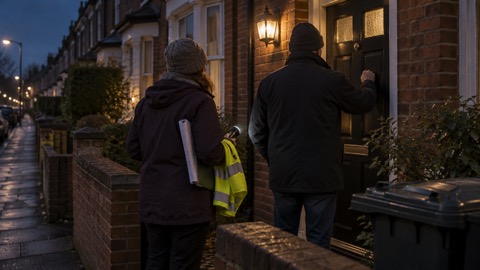
| Everything down | Door knocking | Your group could consider door knocking to communicate with local people and get emergency responders' messages across7 |
Two changes to the phone network are worth knowing because they change what your list should say. First, as landlines move to digital services, Ofcom advises anyone buying a new device that uses the phone line, such as a care alarm, to ask the supplier or manufacturer whether it will work with the digital landline14. Second, a non-mains powered landline telephone will help you stay in touch during disruptions to your power supply15, which is why the old corded phone is still worth keeping in a drawer.
The most important fallback is paper. Official NHS advice is to write down important phone numbers on paper, including the number to report a power cut, 105, and the numbers of anyone you might want to contact in an emergency3. Wiltshire and Swindon Prepared makes the same point from the other direction: if you cannot access the numbers on your phone or online, how would you find the important numbers for family or your insurance?6 Every household on the tree should hold a paper copy of the list, and the tree itself should live on paper as well as in any shared document, because a shared online document is no use in a power cut or a broadband outage. Our page on staying informed covers the wider ways to receive warnings.
Get your community on board before you start
A phone tree with five names on it is a gesture; one with fifty is a community asset. The difference is legwork before anything goes wrong. Scottish Government guidance is blunt about the prerequisite: you need support from your community for a plan to work, and people need to be prepared to sign up and offer to help if an emergency happens17.
The same guidance lists the ways to spread the word, and they are worth using in combination17:
- Talk about the idea at meetings of your community groups, and with other community groups in the area
- Deliver leaflets to local households
- Put leaflets in local shops, pubs or other services
- Use community websites, newsletters, papers and social networking
- Include information in letters sent home with school children
- Make use of social contacts to spread the word
Greater Manchester's resilience team adds a longer-term route: join or support a local volunteering or community group before an emergency happens, whether a local charity, a flood action group or a Neighbourhood Watch18. An existing group gives you a ready-made membership, a way of reaching people who are not online, and credibility when you ask for phone numbers. If you are starting from nothing, our pages on setting up a local emergency group and good neighbour schemes set out the first steps.
Collecting numbers needs a light touch. People are rightly careful about handing over personal details, so say exactly what the list is for, who holds it, and that they can come off it at any time. A simple sign-up sheet at a community meeting, followed by a leaflet drop to the households that were not there, is usually enough for a street at a time.
Build the phone tree into a community emergency plan
A calling list on its own is useful, but it works best as one part of a written community emergency plan. Councils and the Scottish Government publish templates you can take and adapt. Argyll and Bute Council's guidance walks through deciding who the plan is for, getting advice, thinking about the risks to your community and your local skills, knowledge and resources, involving people who can help, and writing and testing the plan19. The same guidance covers how and when to activate the plan and manage communications, how to practise and check it, and what to do after the plan is used in a real emergency19.
The templates are explicitly there to be changed. Argyll and Bute says its emergency plan templates can be changed in whatever way suits your community, including adding your community name and logo19, and the Scottish Government's 2026 community emergency planning guide says you can use or adapt the guide and templates to suit your community best20. A plan is specific to your community council area but can be split into local areas if required19, which is how a large village ends up with several street-level calling lists under one plan.
The Scottish guide explains why the effort is worth it: a plan helps communities prepare for, respond to and recover from emergencies using their own strengths, skills, knowledge and resources, while complementing official efforts, and such plans can make a big difference in reducing harm and speeding recovery20. Every community's plan will be unique, because different communities face different issues and have different strengths19.
| Part of the plan | What it holds | Where the phone tree fits |
|---|---|---|
| Risks and resources | What could happen locally, who has what skills | Tells you which households need warning first |
| Activation | How and when the plan is triggered | Names who makes the first calls |
| Communications | How messages pass around | The calling list itself, plus door knocking |
| Testing | How to practise and check | A timed test of the tree |
| Review | Learning after real use | What worked and what did not |
Households can plan at their own level too. A street where several households have developed their own household emergency plans is a street your phone tree can work with, not just warn.
Who to talk to: councils, councillors and local groups
Do not build the list in isolation. The Scottish Government guidance suggests that as well as your local authority, you may want to talk to your community council or local councillors, and to local organisations including the police, fire and rescue service, ambulance service and voluntary organisations active in your area, such as mountain rescue teams, St Andrews First Aid, the Royal Voluntary Service or the British Red Cross17. In England the equivalent first call is your local council, and Greater Manchester's resilience team advises contacting your local council or Local Infrastructure Organisation for advice and connections, since Local Infrastructure Organisations support other groups in the local voluntary and community sector18.
Talking to the council also tells you what already exists. Many councils run their own reporting lines that your tree's message can point people to, and knowing them in advance saves a scramble. Tree emergencies are a good example, because they are the classic storm problem:
| Council | When to call | Number |
|---|---|---|
| Leeds | A tree or branch causing immediate danger to the public highway, a person or property | 0113 378 185521 |
| Liverpool | Dangerous or fallen trees, Monday to Friday, 8am to 6pm | 0151 233 300122 |
| Suffolk | A fallen tree posing an immediate danger to public safety | 0345 606 617123 |
| Suffolk, trunk roads | Tree on a trunk road, National Highways Information Line | 0300 123 500023 |
| Gloucester | Extremely dangerous tree on private land, immediate risk to safety, or weekend or bank holiday | 01452 396 39624 |
Leeds City Council asks callers to provide the exact location of the tree or branch and a contact name and telephone number21, which is a good format for any message your tree passes on: where, what, and who is reporting. If a tree is causing immediate danger to highway users, Leeds says to call the police on 99921. For trees on private property, contact the owner of the tree; if the owner is not known, a Land Registry search may be required25.
Liverpool City Council adds a note of discipline that applies to every reporting line your tree mentions: be patient and only log a report once, because attempting to log repeated calls is not helpful and will result in unnecessary delays22. Build that into your standard message so thirty neighbours do not all call the council about the same tree.
Deciding when to activate the list and who calls first
A phone tree that everyone can trigger whenever they like will be set off by rumours. The Scottish Government's guidance for community emergency groups is to develop a series of triggers you can use to decide whether to take action, agreed in advance with your local authority, in case emergency responders cannot contact you7. In other words: decide before the storm what conditions start the calls, and write them down.
Typical triggers are the arrival of a named weather warning, a flood alert for your area, a power cut that lasts beyond an agreed time, or a specific local event such as a road blocked by a fallen tree. The trigger list should say who is authorised to start the cascade, usually two or three named people so the tree is not paralysed if one is away, and each of them should hold a current paper copy of the list.
Who calls first within the list is a matter of priority, not geography. Call the households that most need the warning first: people who live alone, people with medical or personal alarm devices that depend on phone or internet connections, for which the official advice is to check with the provider or manufacturer how they work if the network is down12, and anyone who has agreed a backup visiting arrangement with you10. Then work outward through the rest of the list.
Keep the emergency numbers straight in the standard message. Call 999 or 112 when life is threatened4. For urgent medical help that is not an emergency, NHS 111 online helps people with an urgent medical need get assessed and directed to the right care, especially if they cannot contact their GP or the GP is closed26. And note one quirk of the 111 phone service: if a nurse calls you back and cannot reach you, they will try up to 3 times and leave a message, but you cannot call them back, you have to use 111 online or call 111 again and start from the beginning27. A household waiting on a callback should keep their line free.
Test the phone tree before you need it

An untested calling list is a hope, not a plan. Argyll and Bute's guidance includes advice on how to practise and check your plan, and who to keep in touch with when you are doing this19. Run a timed test: the first caller starts the cascade, and you note the time when the last confirmation comes back. Then look at where it stalled.
A test tells you the things a quiet afternoon cannot: whose number has changed, who has moved, who never answers unknown numbers, and which branch of the tree has no working backup. Fix the list the same week, because a list corrected six months later is a list that was wrong for six months. Our page on how to test and review a community emergency plan goes into this in detail, and the page on when to activate a community emergency plan covers testing your triggers.
Testing is also the moment to check the household-level arrangements the tree depends on:
- Important numbers are written down on paper, including 105 for power cuts3
- ICE contacts are set up on each phone, so they can be seen and called from the lock screen by selecting Emergency call if someone is injured16
The ICE habit is worth promoting street-wide. The scheme is simple: store the word ICE in your mobile phone address book before the name and number of the person to contact, use ICETEXT if your ICE contact is deaf, and save additional contacts as ICE1, ICE2 and so on27. Programme ICE contacts into your phone so anyone can reach your loved ones without needing to unlock the phone16. Keep extra batteries to charge your phone as well16.
Keeping the plan safe for volunteers
The people who make the calls and knock the doors are neighbours giving their time, and the plan should protect them. The first protection is that a phone tree is mostly low risk: its work is telephoning, which anyone can do from a safe place. Where the tree escalates to visiting in person, that should follow the arrangements agreed in advance with the people being visited10, and volunteers should not put themselves at risk to reach someone: if the way is flooded or blocked, that is a matter for the emergency services.
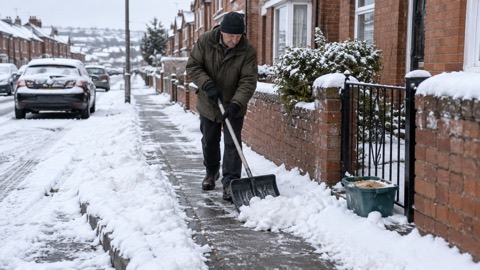
Some tasks sit clearly outside what a caller should take on. Argyll and Bute's plan guidance carries an explicit safety warning that no-one should clear ice and snow wearing inappropriate clothes or shoes, and no-one should clear snow in an area overhung by large icicles28. The same principle applies across the tree's work: passing on a warning is safe, and physical tasks need the right equipment and judgement. Our pages on what volunteers can safely do and volunteer insurance cover the boundaries and the paperwork.
Privacy is the other protection. The calling list contains personal data given in trust. Hold it in as few places as possible, say in the plan who holds the master copy, use it only for the purposes it was collected for, and take people off it promptly when they ask. When you share the plan with the council or responders, share what they need to know, not the whole list of numbers.
After an emergency: review what worked
When the tree has been used in a real event, review it while the memory is fresh. Argyll and Bute's guidance assists groups in deciding on actions after the plan is used in an emergency situation, and how to learn from the experience19. Sit down with the callers within a few weeks and ask three questions: did the warning reach everyone, how long did it take, and what went wrong on the way?
The answers usually produce a short list of fixes: numbers to update, a branch that needs a second backup, a trigger that fired too late or one that was argued about while the water rose. Feed those back into the plan and the paper copies, and tell the community what changed, because seeing the list improve is what keeps people willing to be on it.
The review is also the moment to check the household arrangements again. Emergency contacts written on paper proved their worth or did not6; extra batteries kept phones alive or ran out16; the corded landline worked or turned out to be a digital handset that needs mains power5. Each of those is a small, cheap fix that makes the next activation faster.
Finally, keep the tree alive between emergencies. A list that is only ever mentioned in storms goes stale within a couple of house moves. Tie its updates to something regular, an annual test, a yearly leaflet drop, or a standing item at the community group's meetings, and the calling list will still be worth the paper it is printed on the day it is needed.
Sources (28)
- How alerts work, GOV.UK, 2026
- NIFRS statement on Storm Eowyn, operational update 2pm, Northern Ireland Fire and Rescue Service, 24 January 2025
- How would you prepare for an emergency?, NHS Cheshire and Merseyside, 10 July 2024
- 999 and 112: the UK's national emergency numbers, GOV.UK, 2024
- Power cuts: be prepared, UK government Prepare campaign, 21 October 2026
- Prepare yourself, Wiltshire and Swindon Prepared, 25 October 2026
- Respond and recover, Ready Scotland, March 2026
- Winter weather: ready and be prepared, Argyll and Bute Council, 2026
- Chemical and nuclear sites, Cumberland Council
- Be ready for emergencies, UK government Prepare campaign
- Telecare, NHS inform, 13 August 2024
- Phone and broadband outages, UK government Prepare campaign, 12 October 2026
- Power cuts, UK government Prepare campaign, 21 October 2026
- Future of landline calls, Ofcom, 26 August 2026
- Get prepared, Carmarthenshire Council, 28 October 2026
- Personal resilience: yourself, Wiltshire and Swindon Prepared, 25 October 2026
- Who to work with, Ready Scotland, March 2026
- Prepare your community, Greater Manchester Combined Authority, 29 October 2026
- How to make a community emergency plan, Argyll and Bute Council, 2026
- Why make a community emergency plan, Ready Scotland, March 2026
- Tree emergencies, Leeds City Council, 29 October 2026
- Dangerous or fallen trees, Liverpool City Council, 29 October 2026
- Weather warning, Suffolk County Council, 29 October 2026
- Dangerous tree on private land | Gloucester City Council, Gloucester City Council
- Tree safety and how to report safety concerns or a potentially dangerous tree | Oxfordshire County Council, Oxfordshire County Council
- When to use 111, NHS
- Are You Ready booklet, Culham Parish Council, September 2025
- Making your plan, Argyll and Bute Council, 2026
 Emergency Hub Kit Checklist
 Severe Weather Tasks for Groups
 Flood Warden Checklist
 Setting Up an Emergency Group
 Volunteering in Emergencies
 What Volunteers Can Safely Do
 Community Flood Plans
 Flood Wardens
 Starting a Flood Action Group
 Clearing Snow and Ice
 Community Emergency Hubs
 Checking Vulnerable Neighbours
 Registering and Looking After a Village Defibrillator on The Circuit
 Funding Resilience Groups
 Voluntary Organisations