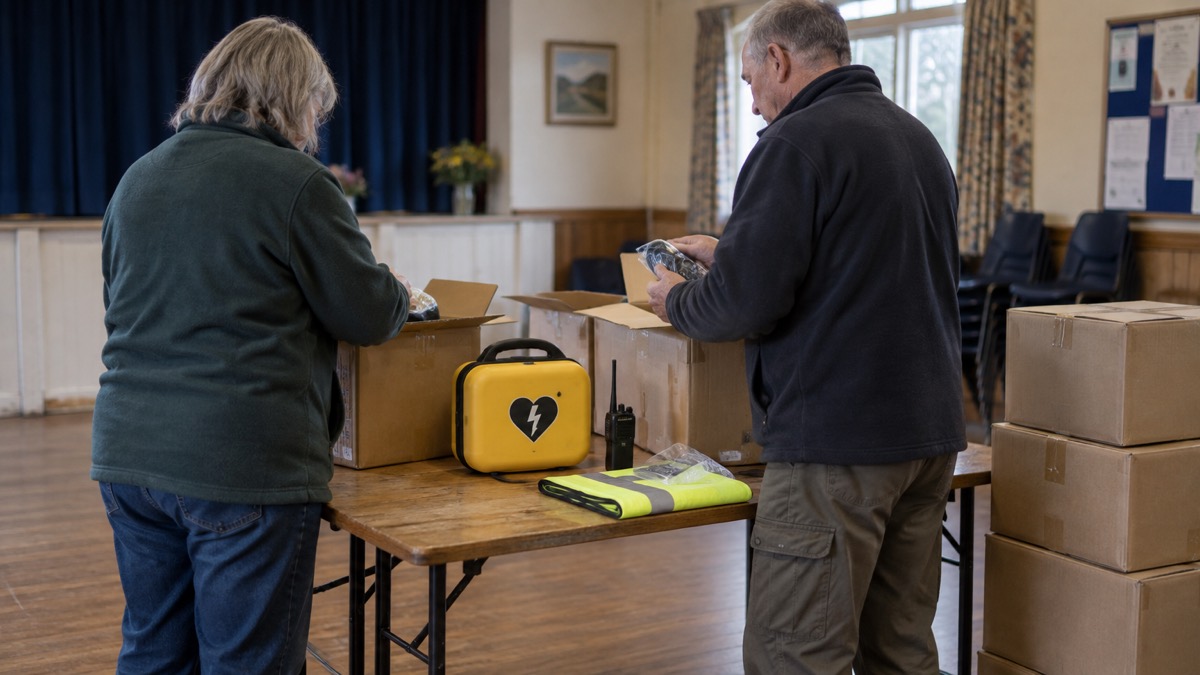
Money for a community resilience group usually comes from three places: your local council and the voluntary sector bodies around it, grant rounds aimed at community emergency planning, and charitable funds for specific kit such as defibrillators. The amounts are modest but real. Devon Communities Together, for example, offers up to £1,500 for equipment to groups with a complete or almost complete community emergency plan1, and the Devon Community Resilience Forum offers grants of up to £250 for community engagement and up to £1,500 for equipment to communities preparing or implementing plans2. The British Heart Foundation has offered free, funded public defibrillators to eligible community groups3.
Before you apply for any of it, do two things. First, speak to your local council: Greater Manchester's resilience team advises community groups to contact their local council or Local Infrastructure Organisation for advice and connections4, and your local County Voluntary Council can help with training, guidance about funding and how to formalise your group5. Second, get a plan on paper, because most funders ask for one. A group with a written community emergency plan, a defined area and a way of identifying vulnerable neighbours is a much stronger applicant than a group with an idea alone.
Start with your local council before you apply for funding
The first conversation to have is not with a funder but with your local council and the voluntary sector support bodies around it. Council emergency planning teams know which grant rounds are open in your area, which groups have funded projects before, and what a successful application looks like locally. Greater Manchester Combined Authority's guidance for communities preparing for emergencies is typical: contact your local council or Local Infrastructure Organisation for advice and connections, because Local Infrastructure Organisations exist specifically to support other groups in the local voluntary and community sector4. In Wales, your local County Voluntary Council can help with training, guidance about funding and how to formalise groups5.
Councils also want to know you exist before an emergency, not just during one. Essex Prepared's guidance on developing community resilience asks groups to support work happening in their area by speaking to their local council9, and the national Prepare campaign guidance says that a community group experiencing or responding to an emergency should contact its local council, which may be able to provide advice and assistance10. Lincolnshire County Council points people to Gov.uk or the Lincolnshire Resilience Forum for further advice11. Building that relationship early means that when a grant round opens, your group is already known.
Before any of that, be clear about who your community is. Carmarthenshire County Council's emergency planning guidance makes considering who your community is the first step of getting started with community resilience: people living close to you are the obvious choice, and other communities, such as those sharing an interest in a particular topic or sport, are valid groups to prepare with12. If you began as a small group, Orkney's guidance on starting a community resilience group suggests arranging a public meeting to test wider support for your ideas7. Funders notice groups that can show genuine local backing.
One principle from the national Prepare campaign is worth holding onto throughout: first ensure that you, your family and neighbours are safe and well, then consider helping your community10. Funding applications work the same way round. A group that has sorted its own foundations, its members, its area and its council relationship, is applying from strength. Our guide to setting up a local emergency group covers the members, roles and first steps in detail.
Grant rounds for community emergency planning
Community emergency planning grant rounds tend to be small, local and time-limited, so it pays to know where they appear. The clearest current example is in Devon. The Devon Community Resilience Forum offers grants of up to £250 for community engagement and up to £1,500 for equipment to communities preparing or implementing community emergency plans, with applications open for 2026/72. Devon Communities Together separately offers up to £1,500 for equipment if you have a complete or almost complete community emergency plan and need practical help to implement it1.
| Grant | Amount | Who it suits | What you need |
|---|---|---|---|
| Devon Community Resilience Forum, community engagement | up to £250 | Groups building support for a plan | Preparing or implementing a community emergency plan2 |
| Devon Community Resilience Forum, equipment | up to £1,500 | Groups ready to buy kit | Preparing or implementing a community emergency plan2 |
| Devon Communities Together, equipment | up to £1,500 | Groups with a finished plan needing practical help | A complete or almost complete community emergency plan1 |
The pattern in Devon, a plan first, money for equipment second, is the pattern most funders follow. That is why the sections below on writing a plan and choosing your area matter as much as the grant lists. Flood groups have been funded through similar routes: Devon's Flood Resilience Community Pathfinder Project, a partnership between Devon County Council, Plymouth City Council, Torbay Council and the Environment Agency, used DEFRA funding for a package of measures to improve local community resilience so communities were better prepared against the risk of flooding13. In Scotland, the Scottish Flood Forum provides a wide range of independent support to start, sustain and develop community resilience groups in flood risk areas, with practical support, advice and information7.
To find rounds in your own area, ask three places in this order: your council's emergency planning or civil contingencies team, your Local Infrastructure Organisation or County Voluntary Council4, and any existing local resilience network. Scottish Borders Council, for example, publishes a Resilient Communities map and advises people to check it to see if there is an active community resilience group in their area14, and its Emergency Planning team supports a network of Resilient Community groups across the Scottish Borders15. Groups already on that map will know which funds have paid out locally.
Defibrillator funding for community groups
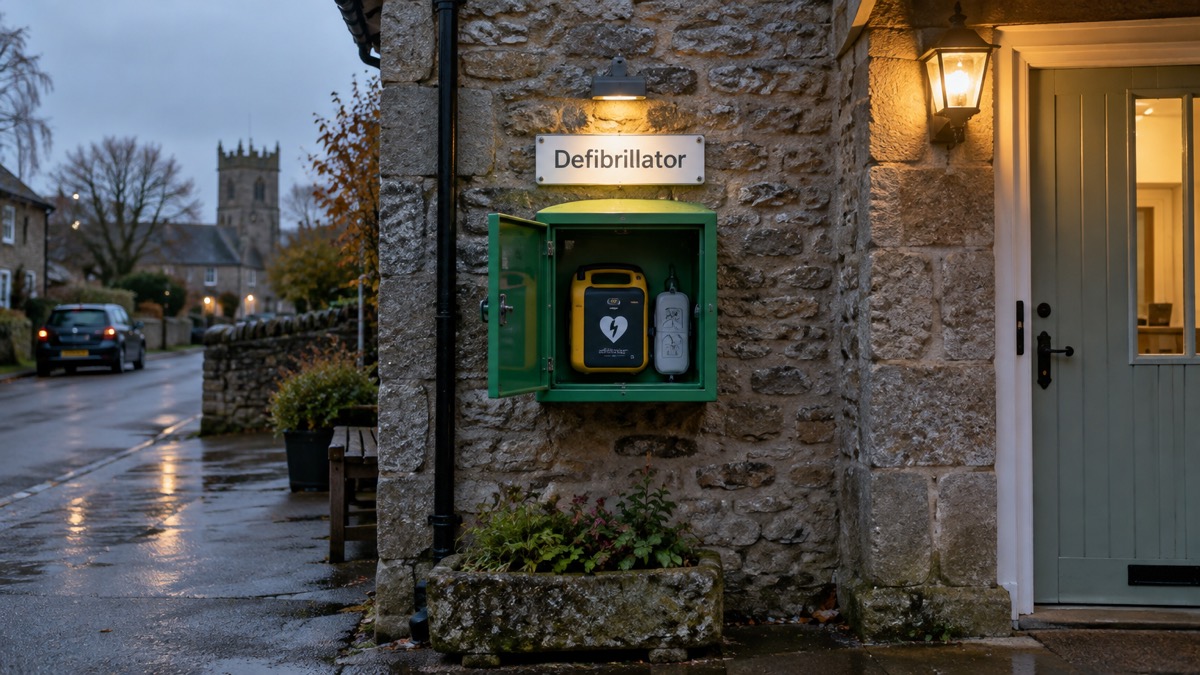
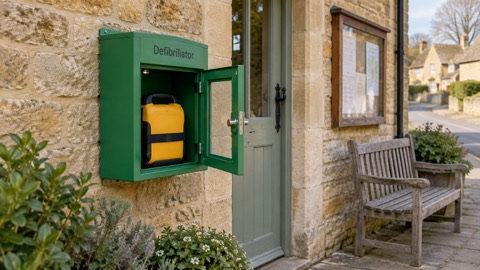
A public access defibrillator is one of the most common things community groups seek funding for, and there are dedicated routes for it. The British Heart Foundation has offered free, BHF-funded public defibrillators to eligible community groups, with applications reopening in summer 20253. Resuscitation Council UK published version one of its guide for communities, Public access defibrillators, in October 2025, which sets out what communities need to know before installing one16.
Before applying, check whether one already exists near you. South Central Ambulance Service directs people to www.defibfinder.uk to find defibrillators nearby17. If your area has a gap, its guidance on location is specific: a good site has large footfall, for example a public telephone box, outside a pub, village hall or community centre, has 24/7 access to the public, uses an unlocked cabinet, and has clear signage and lighting17. Hope Community Council in Wales lists its defibrillator at Heulwen Close Community Centre, Heulwen Close, Hope, LL12 9PR, a community centre location of exactly this kind18.
For the practicalities of cabinets and registration, see our comparisons of locked or unlocked defibrillator cabinets and our guide to registering and looking after a village defibrillator on The Circuit. To contact an ambulance charity about placing one, South Central Ambulance Service asks businesses to email its charity team and local community groups to use its online form or email scas.defib@nhs.net17.
Protecting vulnerable residents: what the SSEN fund backs
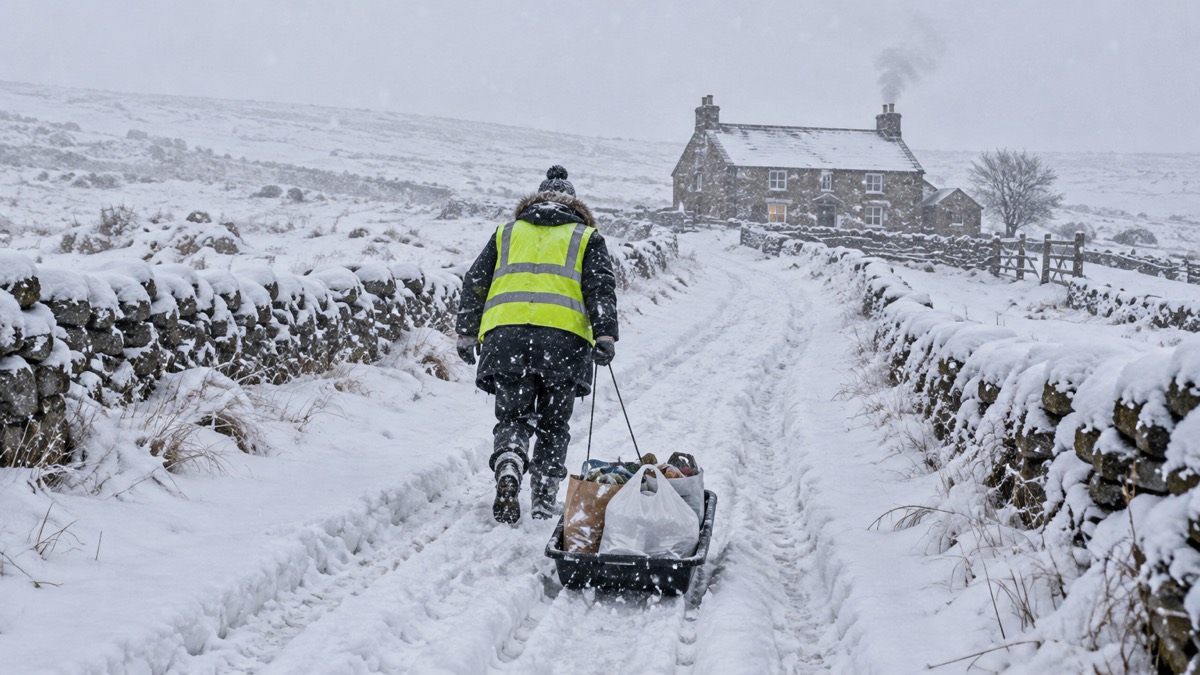
Funders back projects that protect vulnerable residents, and the clearest illustration is the electricity network operator SSEN. Following the review into the networks' response to Storm Arwen, SSEN agreed to spend £1.2m on network resilience through shareholder funded activity19. SSEN also works through Local Resilience Forums: before severe weather it informs LRFs of what is expected and how SSEN is gearing up to respond, amplified on social media and sometimes in proactive media communications20. A community group applying for funding to support power-cut-vulnerable neighbours can point to this framework of network operator, resilience forum and community working together.
The Storm Arwen review shows what that support looks like on the ground. Durham County Council's review records that its Civil Contingencies Unit responded to 31 requests to develop local community resilience plans after the incident, and that some community groups provided support to upwards of 293 homes, with numbers varying greatly from area to area21. Those figures are worth remembering when a funder asks what difference a grant could make: a single organised group reached hundreds of households after one storm.
Identifying who needs that support is itself fundable work. Official guidance for Local Resilience Forums in England, updated on 28 April 2025, says LRFs should identify local organisations that engage with vulnerable persons, including voluntary and community sector organisations, faith groups, advocacy groups, residents' interest groups and community resilience groups22. The Scottish Government's community emergency planning guide gives examples of people who may need extra help: people who have recently had an operation, people without access to transport, people with limited mobility, and people reliant on regular medication or health visits23. Our guide to checking on vulnerable neighbours in an emergency covers the practical side.
Writing the community emergency plan funders expect
Most funding for community resilience follows a plan, so the plan is where to put your effort first. Ceredigion Council's community resilience guidance lists having a community emergency plan as a defining feature of a resilient community, alongside the benefit that the community will have structured communication networks24. Orkney's guidance puts the same point from the group's side: your group may want to develop a community resilience plan that details the actions it can take in an emergency incident such as flooding, supporting your community to prepare, respond and recover7.
A plan that satisfies funders usually contains a fixed set of parts. The Gavinton, Fogo and Polwarth Community Council Resilient Community Plan in the Scottish Borders is a working example: it contains a community profile, community area maps, flood maps, a risk assessment, an asset register, insurance information, and general guidance for individuals and the community25. Herefordshire Council offers a template to develop a plan for dealing with flooding emergencies in your community, and advises that a plan should identify vulnerable people or groups that may require additional assistance26. Our guide to community flood plans walks through what to include.
- Community profile: who lives in the area and how the community is organised25
- Maps: community area maps and, where relevant, flood maps25
- Risk assessment: what could plausibly happen, drawn from the local Community Risk Register and local knowledge25
- Asset register: what the community already has that could help25
- Vulnerable residents: people or groups that may need additional assistance26
- Insurance information: what cover exists for volunteers and activities25
- Contacts and communication: how the group reaches people and how the community reaches the group24
Two official action cards give your plan content that funders recognise. The Heat-Health Alert action card for the voluntary and community sector, published on 19 December 2024 and applying to England, sets out suggested actions around hot weather28. The flood-health action card for the voluntary and community sector, published on 27 March 2025, summarises suggested health-related actions for VCS organisations, including broad-based providers, emergency response organisations, campaigning organisations, representative groups, community centres, parish councils and neighbourhood forums, and asks them to support local community networks such as Community Flood Action Groups so people at most risk from the health impacts of flooding can access aid quickly29. Naming both cards in your plan shows a funder that your proposed actions follow official guidance.
Once the plan exists, test it before you spend the grant. Our guides on how to test and review a community emergency plan and when to activate a community emergency plan cover that stage.
Choosing the area your group will cover
Funders ask what area a group covers, and the answer should come from the community itself. Carmarthenshire's guidance starts here: begin by considering who your community is and which communities you belong to12. Orkney's guidance describes community resilience groups as usually made up of local people acting in a voluntary capacity to promote and represent the interests of a particular flood risk community7. In the Scottish Borders, communities are self-selecting, and the council advises checking its Resilient Communities map to see if there is an active group in your area before starting a new one14.
The national Community Resilience Development Framework, published by the UK Government in 2019 as a reference tool for delivering strategic approaches to community resilience development at the local level in collaboration with non-statutory partners such as voluntary, community and faith organisations and businesses30, sets out a sequence that maps neatly onto a funding application: identify community networks, characteristics, risks and prioritise support; align responder and community networks' understanding of risk and capabilities; enable resilient behaviours; enable community led social action; partner with voluntary capabilities; and review community preparedness and the impact of activities30. A group that can describe its area, its networks and its risks in those terms is answering a funder's questions before they are asked.
Boundaries matter for another reason: official guidance on emergency planning zones notes that local authorities determining detailed emergency planning zones should avoid bisection of communities22. Do not split a village in half to match a council ward if the natural community is the whole village. And if your area already has a hub or venue, build around it: Surrey's Community Emergency Information Hubs sit in community venues such as village halls, faith group meeting places, sports clubs or parish halls31.
What a volunteer resilience group is not required to do
A common worry for new groups is that funding brings obligations the volunteers cannot meet. The official position is reassuring. Buckinghamshire Council's community resilience guidance states plainly: "There is no statutory responsibility for these groups to plan for, respond to, or recover from emergencies."8 The same guidance adds that its material can be used by any network or group, especially if you don't have a resilience plan8. Orkney's guidance describes the informal end of the spectrum as a group of interested residents working in their community to prevent or reduce flood risks or increase resilience, normally with no structure, aims or committee, but able to be a subgroup of an existing community body7.
On the constitution question specifically, Orkney's guidance is direct: "It is not necessary to adopt a constitution to be identified as a legitimate community body but it does help and can have many benefits."7 So the honest answer to whether a community group needs a constitution for funding is: not to be recognised, but many funders prefer it, and it can unlock funds that require a bank account in the group's name. Our narrow guide on whether a local group needs a constitution goes through the trade-offs.
Two related points of reassurance. First, a Local Resilience Forum is not a legal entity; its duties fall on Category 1 and 2 responders individually22, so a community group working with its LRF is not taking on statutory duties. Second, the official guidance on identifying vulnerable people in an emergency does not introduce new standards or regulations22. For hubs, Surrey County Council specifies no required list of facilities, allowing a hub to be as accessible as possible to the community31. For volunteer cover, the Gavinton, Fogo and Polwarth plan records that the insurance in place for both Scottish Borders Council and the Community Council provides cover for volunteers and extends to the assigned volunteers identified in the plan25; our guide on whether emergency volunteers need insurance covers the question, and our page on what volunteers can safely do, and where to stop sets the limits.
Training, webinars and workshops for new groups
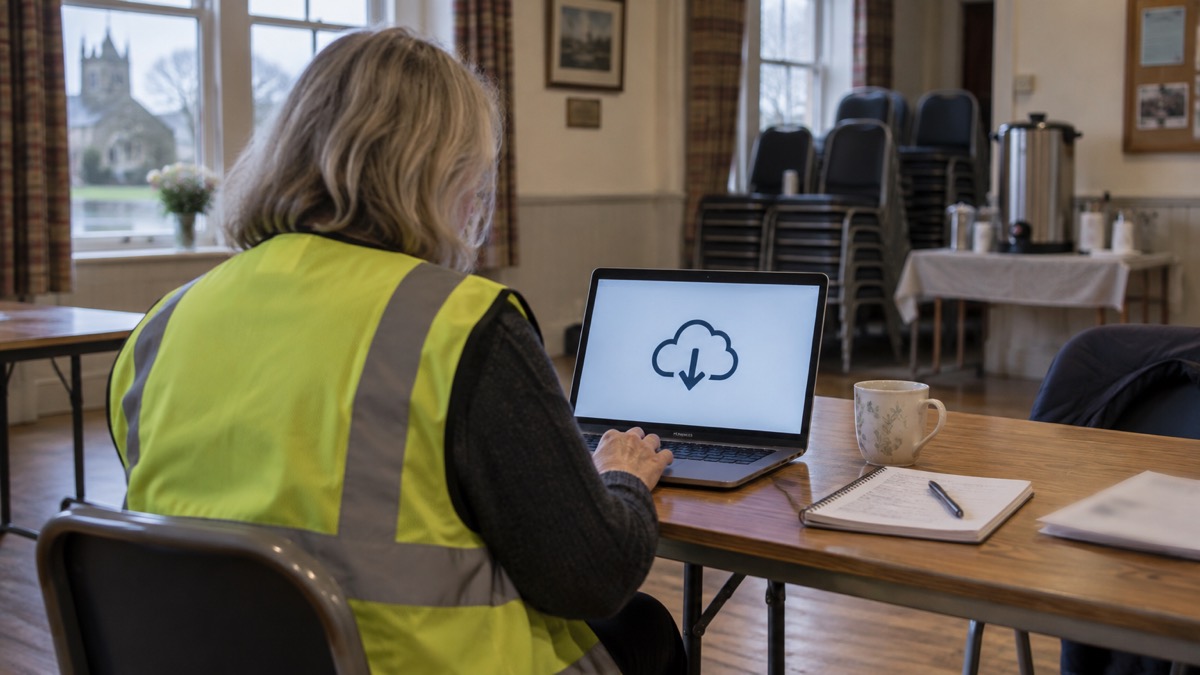
Training is often free, and funders look favourably on trained groups. The Met Office's online community resilience training prospectus is aimed at those who work or volunteer in local communities to make them more resilient to severe weather events6, and the courses provide an opportunity for community responders and the voluntary sector who work closely with local responders to increase their knowledge and find sources of information to assist them as they respond to severe weather32. There is no fee to attend a course, but it is necessary to register so that you can receive joining instructions and handouts6.
Alongside the Met Office courses, local webinar series cover the plan-writing stage. Cambridgeshire County Council's community flood group resources include a webinar on preparing a community flood plan, covering what to include, GDPR implications and testing the plan, published in September 2026, and an earlier webinar on individual and community resilience covering flood warning triggers, flood planning, insurance and property flood resilience33. Devon Communities Together runs a one-hour online workshop on Community Emergency Hubs34. Your local County Voluntary Council can help with training directly5.
For the strategic picture, the Community Resilience Development Framework remains the reference tool for how councils and their partners develop community resilience30, and the Met Office's community resilience pages under its environmental hazard resilience work explain how the weather service supports community-level preparedness32. Training also connects your group into the responder world: our guide to how councils and emergency services work with local groups explains those relationships.
Risk registers and action cards: the evidence base for your application
Every good funding application names the risks it addresses, and the official evidence for those risks is the Community Risk Register. Local resilience partners produce Community Risk Registers, which focus on the highest priority risks in each local area35. The structure differs across the four nations: there are 38 Local Resilience Forums in England, four in Wales, three Regional Resilience Partnerships in Scotland, and Emergency Preparedness Groups in Northern Ireland35. The London Resilience Partnership alone brings together over 170 organisations with specific responsibilities for preparing for and responding to emergencies36, and Belfast City Council reports over 40 community resilience groups now dealing with the impact of severe weather and climate change in their areas37.
A Community Risk Register is the result of risk assessments carried out by the multi-agency resilience partnership to identify the likely risks in the area and rate them in terms of their potential impact and likelihood of occurring38. It is based on a combination of the UK Government's National Risk Register, professional judgement, historical evidence, scientific input and expert analysis27, and the National Risk Register should be read in conjunction with the Community Risk Register for the relevant local area39. Gloucestershire's register page, last reviewed on 19 May 2026, describes what a register does for you: it informs you about the highest risks in the county and their consequences, details steps to become better prepared and more resilient, and provides links to organisations and websites to find out more27.
Two cautions from the registers themselves. Inclusion does not mean a risk will happen, only that there is a possibility of it happening and that Local Resilience Forum agencies have plans in place to respond if needed27. And the Scottish Fire and Rescue Service advises using register information in conjunction with local knowledge and advice from the emergency services agencies, local health boards and your local authority38. In your application, quote the register for the strategic risk and your own local knowledge for the street-level detail.
Parish and community councils: a funding route in themselves
If your area has a parish, town or community council, it is often the simplest funding route of all, because it can hold funds, insure volunteers and adopt a plan without your group needing its own legal structure. In the Scottish Borders, local community councils and individuals who are prepared and able to respond effectively are the backbone of the Resilient Communities network14, supported by the council's Emergency Planning team15. The Gavinton, Fogo and Polwarth plan shows the model in full: a community council plan with maps, risk assessment, asset register and insurance information, with volunteer cover extending from the council's existing policies25.
In England, parish councils are named in official guidance as part of the voluntary and community sector audience for flood-health action cards29, and Devon's flood resilience work shows county-level partners, Devon County Council, Plymouth City Council, Torbay Council and the Environment Agency, funding community-level measures through the DEFRA-backed pathfinder project13. Our guide to parish and town councils in an emergency covers their plans and duties, and the main community resilience guide pulls together the neighbouring topics, from community emergency hubs to flood action groups.
Sources (39)
- Safety in severe weather conditions, Devon and Somerset Fire and Rescue Service, 2026
- Devon Community Resilience Forum grants, Devon Communities Together, 2026
- Defibrillators for community groups, British Heart Foundation, 2025
- Prepare your community, Greater Manchester Combined Authority, 2026
- Community flood plan guidance, Natural Resources Wales, 2026
- Online Community Resilience Training prospectus, Met Office, 2026
- Starting a community resilience group, Orkney Islands Council, 2026
- Community resilience, Buckinghamshire Council, 2026
- Developing community resilience, Essex Prepared, 2026
- Information for communities and community groups, Prepare Campaign, 2026
- Get help and advice in an emergency, Lincolnshire County Council, 2026
- Emergency planning guidance, Carmarthenshire County Council, 2026
- Flood resilience, Devon County Council
- Resilient Communities, Scottish Borders Council, 2026
- Emergency planning, Scottish Borders Council, 2026
- Public access defibrillators: A guide for communities, Resuscitation Council UK, 2025
- Public Access Defibrillators, South Central Ambulance Service NHS Foundation Trust, 2026
- Defibrillators, Hope Community Council, 2026
- Review into the networks' response to Storm Arwen, Ofgem, 2022
- Spotlight on SSEN, Storm Bert, Wiltshire and Swindon Prepared, 2026
- Storm Arwen review, Durham County Council, 2022
- Identifying and supporting persons who are vulnerable in an emergency, UK Government, 2025
- Community emergency planning guide: risks, Ready Scotland, 2026
- Community resilience, Ceredigion County Council, 2026
- Gavinton, Fogo and Polwarth Resilient Community Plan, Gavinton, Fogo and Polwarth Community Council, 2018
- Community resilience and emergency planning, Herefordshire Council, 2026
- Community Risk Register, Gloucestershire County Council, 2026
- Heat-Health Alert action card for the voluntary and community sector, UK Health Security Agency, 2024
- Flood-health action card for the voluntary and community sector, UK Health Security Agency, 2025
- Community Resilience Development Framework, UK Government, 2019
- Set up a Community Emergency Information Hub, Surrey County Council, 2026
- Community resilience, Met Office, 2026
- Community flood group resources, Cambridgeshire County Council, 2026
- Community Emergency Hubs workshop, Devon Communities Together, 2026
- What is a Local Resilience Forum?, Essex Prepared, 2026
- London Resilience Partnership, Greater London Authority, 2026
- Emergency planning, Belfast City Council, 2026
- Community Risk Register, Scottish Fire and Rescue Service, 2024
- National Risk Register 2023, UK Government, 2023
 Emergency Hub Kit Checklist
 Severe Weather Tasks for Groups
 Flood Warden Checklist
 Setting Up an Emergency Group
 Volunteering in Emergencies
 What Volunteers Can Safely Do
 Community Flood Plans
 Flood Wardens
 Starting a Flood Action Group
 Clearing Snow and Ice
 Community Emergency Hubs
 Checking Vulnerable Neighbours
 Neighbourhood Phone Trees
 Registering and Looking After a Village Defibrillator on The Circuit
 Voluntary Organisations