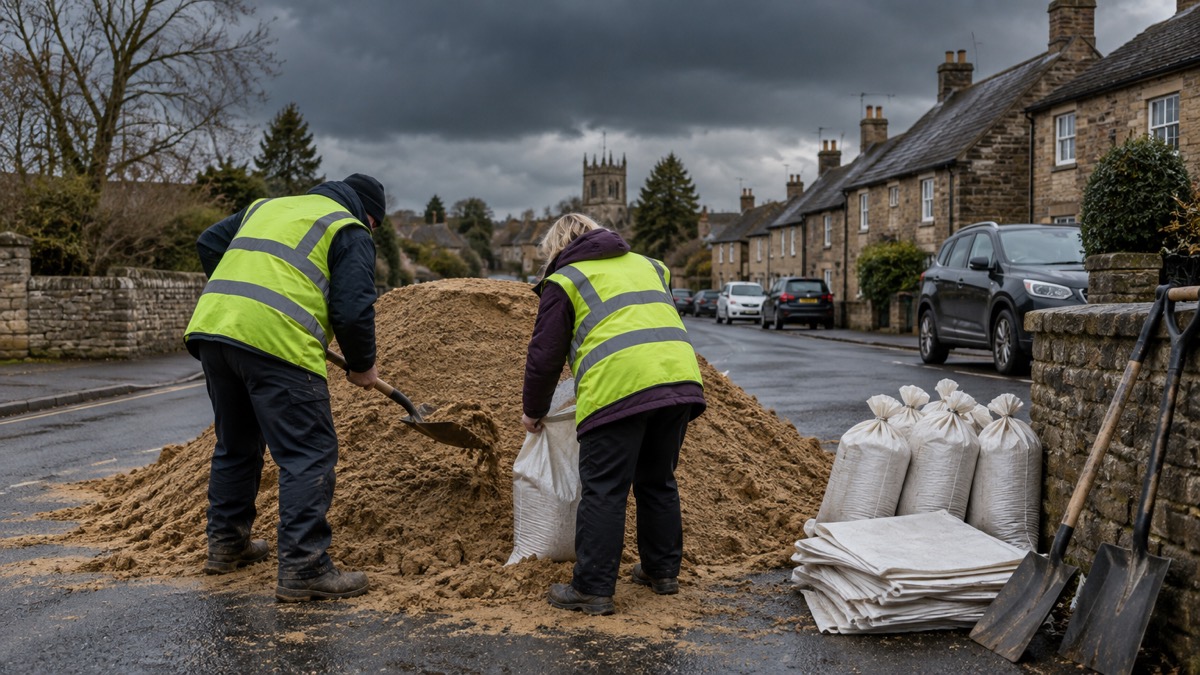
Severe weather in the UK rarely needs a heroic response. It needs a small group of people who know who is vulnerable, who has a key to the village hall, and who will knock on doors when the snow comes. That is the work a community group can do, and most of it happens before the weather arrives.
The single most useful task is checking on people. Official guidance for heavy snow is simply to check on your family and local community1, and the Met Office winter checklist asks households to think of vulnerable neighbours2. Before or when a storm is forecast, check on those in your community who might need extra help and offer practical support, such as help obtaining food or medication, if possible3. After the storm, make sure vulnerable neighbours or relatives are safe and help them make arrangements for any repairs4.
Everything else follows from that: a written plan so people know who does what, a list of who may need help, a named contact at the council, and a decision about whether your group could run a hub. This page sets out the jobs as a printable list, then explains how to build the plan behind them and where to get advice.
Severe weather checklist for community groups
Work through this list as the forecast turns. Each item is something a group can do without special equipment or training, and each is drawn from official guidance. Share the list with your neighbours and see if you can help each other prepare for what the weather might bring6.
Have a community emergency plan
A plan is what turns a group of willing people into something that works on the night. When an emergency happens, it is best to have a plan in place so you know who to contact and how your group will support your community and the emergency response7. In Scotland, guidance describes a plan as helping communities prepare for, respond to and recover from emergencies using their own strengths, skills, knowledge and resources, while complementing official efforts10.
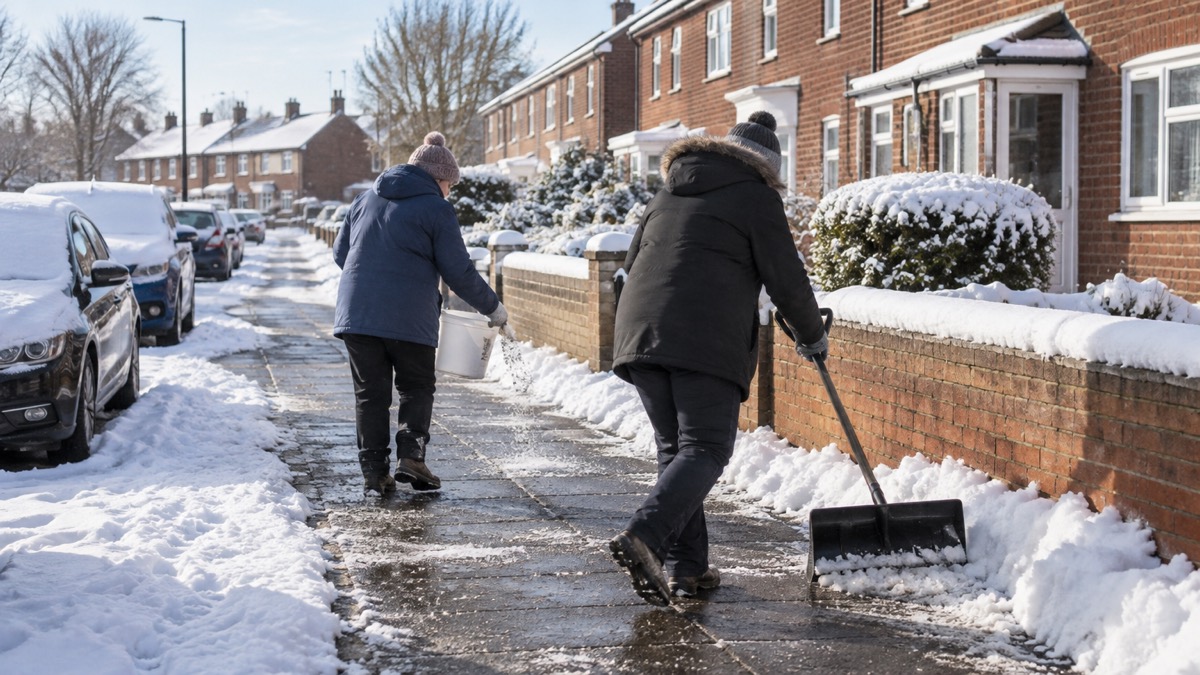
The plan does not need to be long. Official templates guide you through deciding who the plan is for, getting advice, thinking about the risks to your community and your local skills, knowledge and resources, involving people who can help, and writing and testing the plan14. A community emergency response plan helps identify what risks your community may face, what you can do to manage them, who has useful skills and training, what equipment is available, how to support vulnerable people safely, and how to look after and use volunteers15.
One condition matters more than any other: you need support from your community for a plan to work. People need to be prepared to sign up and offer to help if an emergency happens16. A plan written by two people and never shown to anyone else will not survive contact with a real event.
- Who it is for: the streets, estates or villages your group covers, and the people within them who may need help14.
- Who does what: roles and responsibilities, so nobody waits for someone else12.
- Who to contact: the council, the emergency services and your local resilience forum6.
- What you have: skills, equipment and premises, including any building that could serve as a hub15.
- How you test it: writing and testing the plan are part of the process, not an afterthought14.
If you are starting from nothing, the practical steps of forming a group, agreeing roles and writing a first draft are set out in Setting Up a Local Emergency Group: Members, Roles and First Steps. Once a draft exists, How to Test and Review a Community Emergency Plan covers exercising it, and When to Activate a Community Emergency Plan covers the decision to put it into action.
What a community emergency plan helps you prepare for
An emergency could be anything from severe weather, flooding or fire to a major incident involving transport17. The plan is the same document whatever the hazard; what changes is which part of it you use.
Your starting point should be your local risk picture. Local resilience partners produce Community Risk Registers, which focus on the highest priority risks in each local area18. Typical hazard scenarios considered include transport accidents, severe weather, flooding, industrial accidents and environmental pollution, human health, animal health, and industrial technical failure19. The register covers non-malicious events, that is hazards rather than threats such as terrorist incidents19.
The Scottish guidance is blunt about how to use it: focus on those risks that are important to your community and that you can do something about20. A group in a valley that floods does not need to plan for everything on the register.
| What the plan prepares for | What the group does about it |
|---|---|
| Severe weather, including snow and storms | Check on vulnerable neighbours, clear paths, deliver supplies1 |
| Flooding | Work to a community flood plan, with information needed before, during and after a flood21 |
| Power cuts and utility failures | Check that everyone has shelter and report life-threatening situations12 |
| Heat | Audit hot weather plans before summer and provide cold water on alert13 |
| Major incidents | Know who to contact and how the group will support the emergency response7 |
Flooding deserves its own plan. Communities can significantly reduce the impact of floods by working together to prepare for emergencies21, and formalising what you intend to do means developing a community flood plan that includes all the information needed before, during and after a flood21. Templates are available from councils22. Community Flood Plans: What to Include and How to Use One takes this further, and Flood Wardens: What They Do and How to Become One covers the warden role that often sits alongside it.
Community emergency hubs: what they are and what they need
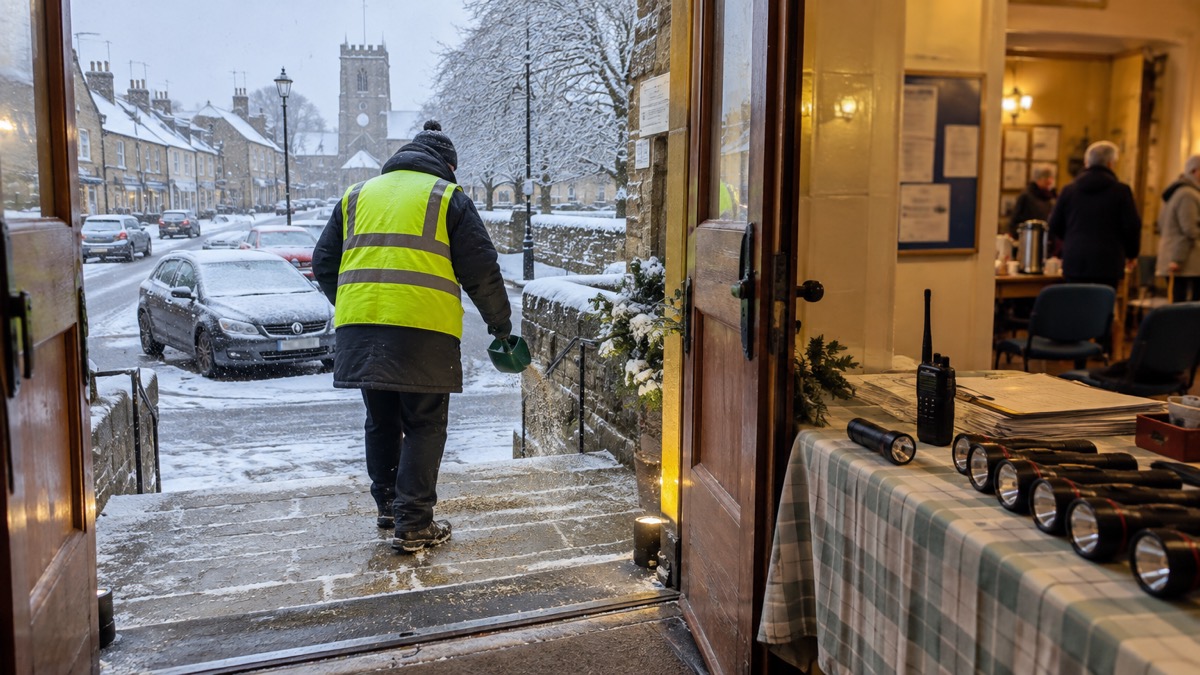
A Community Emergency Hub is a group of people with roles and responsibilities that can be used during an emergency or disruption12. It is not primarily a building, though a building usually comes into it. During a disruption, the hub's job is to identify priority groups, check on the community immediately after and regularly in the days that follow, check everyone has shelter, and report medical emergencies and life-threatening situations12.
If your group is considering a building, be clear about what it can and cannot provide. Any building used as a hub should support people with the basic essentials such as water, toilets and insurance cover. A hub likely will not come with food, so the community will need to consider how it will feed people who have been evacuated23. A hub can also act as a safe shelter, a cool or warm hub, or an assembly point for the community24.
Some councils support groups directly. Buckinghamshire Council sends a kit containing a guide to Community Emergency Hubs, a safety briefing, lanyards for roles, maps of the community, an AM/FM/DAB radio and stationery12. During a major flooding incident, information gathered at a community emergency information hub is shared with the local authority or the Environment Agency by phone or email, or when a representative visits the hub24.
Community Emergency Hubs: Setting One Up and Running It covers the practicalities, and the Emergency Hub Kit and Facilities Checklist lists what to gather. If your group is thinking about a hub, Do Emergency Volunteers Need Insurance? answers the question that usually comes next.
Getting help to start your plan
You do not have to invent this alone, and you should not try to. Contact your local resilience forum for more information on helping your community in severe weather6. A local resilience forum is the body that brings together the emergency services, councils and other responders for your area, and it is responsible for conducting Community Risk Assessments and developing a Community Risk Register18.
If you are a community group that is experiencing or responding to an emergency, contact your local council, which may be able to provide advice and assistance7. Some councils invite groups to send in their plan for guidance; Buckinghamshire Council, for example, asks groups to email its resilience team for guidance or to tell the council about their community emergency plan12. Belfast City Council invites anyone thinking about starting a community emergency plan in their area to email for more information25.
Training exists too. The Met Office community resilience training prospectus is aimed at those who work or volunteer in the local community to make them more resilient to severe weather events, and its courses give community responders and the voluntary sector who work closely with local responders the chance to increase their knowledge and find sources of information to assist them as they respond to severe weather26.
Grants are available in some areas. The Devon Community Resilience Forum offers grants for community engagement and for equipment to communities preparing or implementing community emergency plans, with applications open for 2026/727. Funding for Local Resilience Groups: Grants and Where to Apply sets out the wider picture.
Who to contact, and how to work with responders
The most common question from a new group is simply who to email. The answer depends on what you are asking.
| Your situation | Who to contact |
|---|---|
| You want information on helping your community in severe weather | Your local resilience forum6 |
| Your group is experiencing or responding to an emergency | Your local council, which may give advice and assistance7 |
| You want guidance on, or want to register, a community emergency plan | Your council's resilience team, where one exists12 |
| You are starting a plan in Belfast | Belfast City Council by email25 |
| You want training in community resilience | The Met Office community resilience training prospectus26 |
Working with responders is a two-way relationship. It is good practice for a community to identify local hazards and make plans on how to assist the emergency services and other responding agencies28. That means knowing what your group can offer and being clear about what it cannot do. What Volunteers Can Safely Do, and Where to Stop is the page to read before anyone takes on a task, and How Councils and Emergency Services Work With Local Groups explains the structures you will be dealing with.
Heat and summer weather
Summer tasks are easy to overlook because the danger feels less obvious than snow. Before summer, complete an audit of your organisation's community emergency plan and any hot weather plan to ensure they are up to date13. On a yellow heat alert, ensure sufficient cold water and ice are available to minimise risks from dehydration13.
Know who is most at risk. High-risk groups that are vulnerable to the effects of heat can find it hard to cool themselves efficiently once temperatures rise above 26°C29. Practical advice includes closing windows when outdoor temperatures are higher than indoor temperatures, for example during the day29. The heat health guidance for social care managers applies to England29.
If your group works with older people, read the Cold Weather Conversations and Talking About Heat toolkits to enhance how you communicate severe weather risk with residents in later life30. The Met Office summer advice is to enjoy the sunshine and hot weather but make sure you do it safely26. Heatwaves and Drought: A Household Guide covers what to tell households, and Checking on Vulnerable Neighbours in an Emergency covers the visit itself.
Keeping the list ready between events
A checklist is only useful if the people on it can find it. Keep the plan, the contact list and the hub kit together, tell every member where they are, and review them before each season. The Met Office winter checklist asks households to think of vulnerable neighbours2, and the summer equivalent asks neighbours to share a checklist and see if they can help each other prepare for what the weather might bring6. Both are seasonal prompts to do the same thing: check that the list is current and that the people on it know you are coming.
Severe cold weather can be dangerous for vulnerable groups such as older people and those with serious illnesses5, and local resilience work in some areas includes supporting communities with the cost of living and the pressures of heating bills, and providing practical support such as identified warm spaces throughout the county4. Knowing where the warm spaces are is part of the list.
Finally, remember the limit of the group's role. A community group complements the emergency services; it does not replace them. Report medical emergencies and life-threatening situations, check that everyone has shelter, and leave the rest to the responders12.
Sources (30)
- Heavy snow, Wiltshire and Swindon Prepared, 2026
- WeatherReady winter checklist, Met Office, 2026
- Community resilience, Met Office, 2026
- Community resilience, Ceredigion County Council, 2026
- Severe weather advice, Cumberland Council, 2026
- 10 things you should do now to prepare for summer, Met Office, 2026
- How to make a community emergency plan, Argyll and Bute Council, 2026
- Severe weather, Essex Prepared, 2026
- Winter weather: ready, be prepared, Argyll and Bute Council, 2026
- Why make a community emergency plan, Ready Scotland, 2026
- Storms, Prepare, 2026
- Community resilience, Herefordshire Council, 2026
- Emergency planning, Belfast City Council, 2026
- Community resilience, Nottinghamshire County Council, 2026
- Community response planning, West Yorkshire Prepared, 2026
- Prepare your community, Greater Manchester Combined Authority, 2026
- Resilient communities, Scottish Borders Council, 2026
- Get prepared, Carmarthenshire County Council, 2026
- Risks, Ready Scotland, 2026
- Community resilience, Buckinghamshire Council, 2026
- Set up a community emergency information hub, Surrey County Council, 2026
- Community flood planning, Thurrock Council, 2026
- Community involvement, Dorset Prepared, 2026
- Supporting vulnerable people before and during hot weather: social care managers, GOV.UK, 2024
- Devon Community Resilience Forum, Devon Communities Together, 2026
- What is a local resilience forum, Essex Prepared, 2026
- Cold temperatures, Wiltshire and Swindon Prepared, 2024
- Community resilience, Argyll and Bute Council, 2026
- Heat health alert action card for the voluntary and community sector, GOV.UK, 2024
- Information for communities and community groups, Prepare, 2026
 Emergency Hub Kit Checklist
 Flood Warden Checklist
 Carer's Emergency Plan