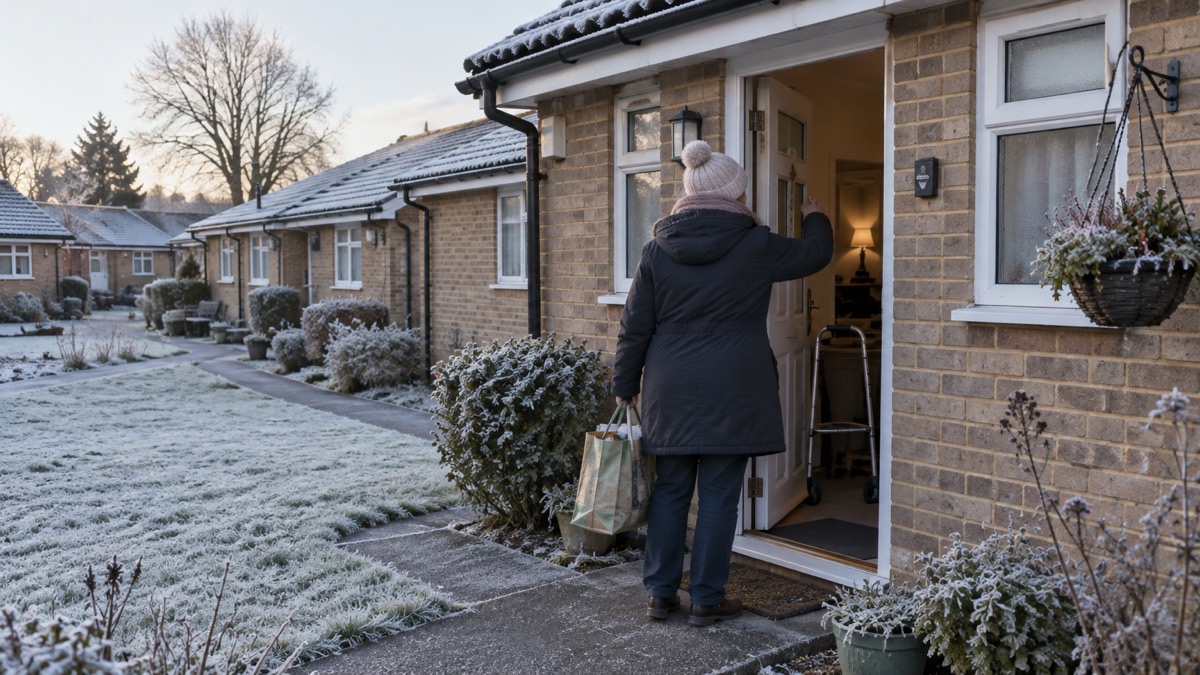
Most emergencies in the UK are weather, power and water events that stretch a neighbourhood for a few hours or a few days. In those hours, the people most at risk are usually those least able to ask for help: an older person living alone, someone who depends on mains power for medical equipment, a family with a new baby, or a person with dementia who may not realise anything is wrong. The single most useful thing most of us can do is simple: find out who those neighbours are before anything happens, and check on them when it does.
Official guidance across the UK is consistent on this point. If it is safe to do so, consider checking in on neighbours or anyone you think might need additional help or support, or passing on important information about the emergency1. Before an emergency, ask whether elderly or vulnerable neighbours might want or need your assistance2. And the most valuable practical step takes only minutes: getting them onto their suppliers' Priority Services Register, which is free and only takes a few minutes to join3.
Check in before, during and after an emergency
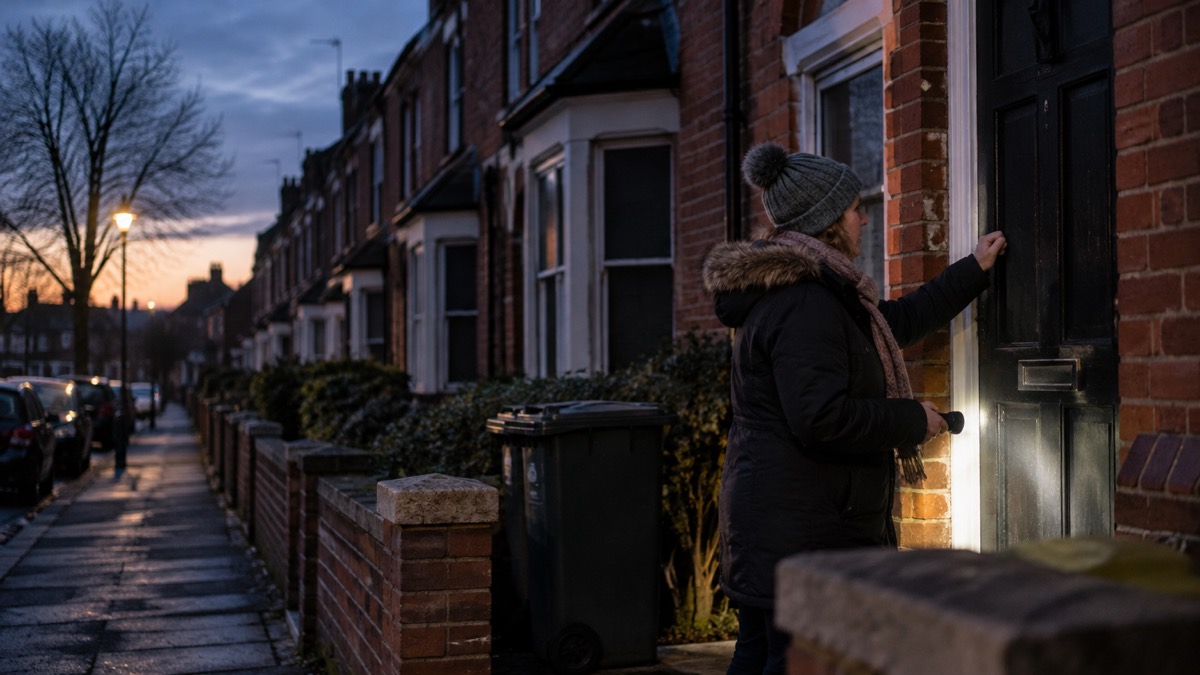
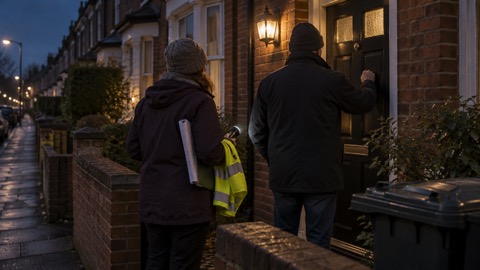
The best time to arrange help is before anything goes wrong. Warwickshire's emergency advice for residents is to find out if any elderly or vulnerable neighbours might need your help5, and Nottinghamshire's asks households to ask whether elderly or vulnerable neighbours might want or need assistance in the event of an emergency2. That conversation, had calmly on a doorstep, tells you who to knock for when the power goes, and tells them someone will knock.
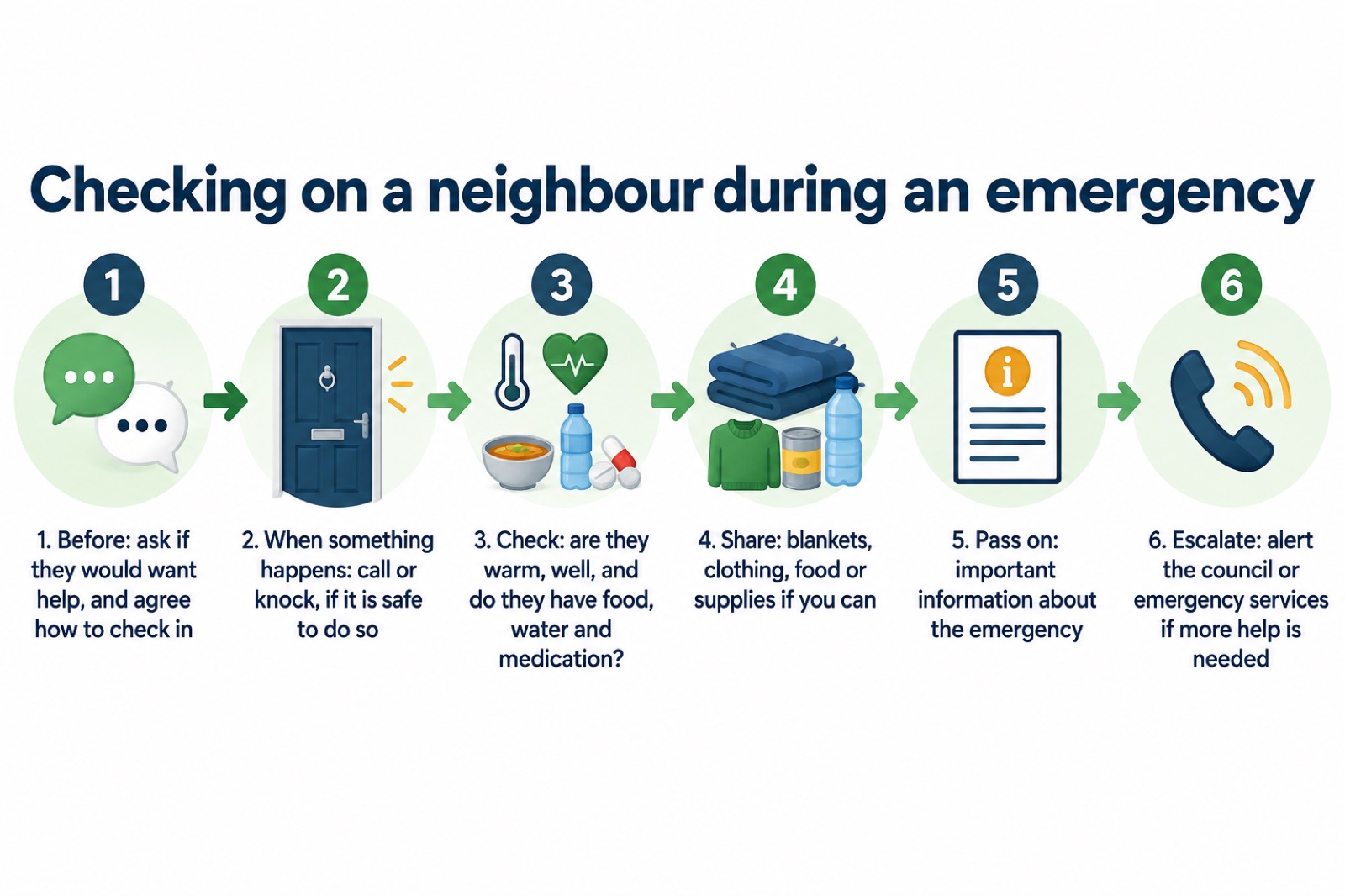
During the event itself, the advice is to check in, but only when it is safe. The national Prepare campaign advises: "If it is safe to do so, consider checking in on neighbours or anyone you think might need additional help or support, or to pass on important information about the emergency"1. Essex Prepared gives the same condition: "If you have less able neighbours please consider assisting them if it is safe to do so"6. Never cross flood water or go out in dangerous conditions to make a check; a phone call, or a message through a neighbour closer by, does the same job.
What a check-in looks like depends on the emergency. In a loss of essential services, Greater Manchester Combined Authority advises checking in on vulnerable neighbours and, if you can, offering to share blankets, clothing or other supplies such as food7. During flooding, West Midlands Ambulance Service advises helping vulnerable relatives or neighbours with support, as they may need help with food and supplies8. In wildfire situations, the Scottish Fire and Rescue Service says to make sure everyone in your household knows the escape route and meeting place, and to see if elderly or vulnerable neighbours might need assistance9. London's flash flooding guidance adds a preparation step: if you are a vulnerable person or know someone who is, sign up to the priority services registers for both power and water10.
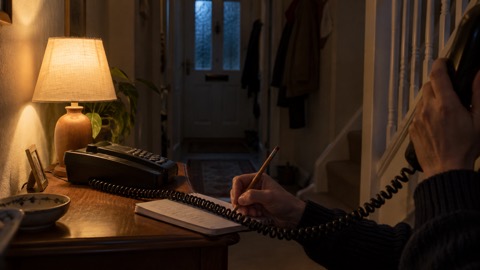
If you are organising this as more than an individual effort, a neighbourhood phone tree lets a street check on everyone quickly without anyone going out in bad conditions, and a local emergency group can divide a neighbourhood between volunteers. Surrey County Council makes a point worth repeating to any group: if you know anyone who may not be known to emergency, health and social care services but may need help in an emergency, check on them and support them if you can11. The people on no official list are the ones a community effort is best placed to find.
Who is likely to need extra help
There is no single official list of who counts as vulnerable, and the government's guidance for emergency planners in England is explicit about why: "It would be impossible to maintain a central, up-to-date, list of vulnerable people"13. Instead, planners use what the guidance calls the "list of lists" approach, drawing on lists of relevant organisations and establishments rather than one central register13. For a street, that means you make your own judgement, neighbour by neighbour, with consent.
The groups that official guidance repeatedly names are:
- Older people, especially those living alone14
- Disabled people and people with long-term health conditions3
- People who rely on medical equipment that needs power or water3
- Families with young children, and pregnant women3
- People with dementia or cognitive impairment15
- People not known to any emergency, health or social care service11
The London Resilience Partnership puts it plainly: be a good neighbour and consider whether anyone in your local community might require assistance in an emergency, including older people and families with young children or pets14. North Wales Fire and Rescue Service's advice for people in high-rise homes is to get to know your neighbours and ask whether they are young, elderly or vulnerable, because they may need help in an emergency16.
One practical arrangement from the "Are You Ready" booklet used by community preparedness groups: identify at least one emergency friend who lives nearby and a second one who lives further away, and arrange to swap house keys, provide places to stay, look after each other's children and keep copies of important documents safe for each other12. For someone who lives alone, that arrangement is often worth more than any amount of kit. The national advice for disabled people and carers suggests the same from the other side: make a plan with a neighbour or someone else you trust to check on you in an emergency situation if they have not heard from you17.
"Make a plan with a neighbour or someone else you trust to check on you in an emergency situation if they haven't heard from you."
Practical help you can give
What neighbours actually need in an emergency is usually ordinary: warmth, food, water, medication and a working phone. Belfast City Council's winter advice for older neighbours is the most concrete list available, and it applies well beyond cold weather. You can help your older neighbours by calling in, checking they are warm enough and their heating works, ensuring they drink fluids and eat hot meals, suggesting the flu jab, watching for signs something is wrong, checking for fire hazards and a working smoke alarm, and offering to collect shopping18.
Devon and Somerset Fire and Rescue Service adds the fire safety angle: check in on your neighbours to help them stay safe, assist them with checking their smoke alarms are in good working order, and make sure they have clear escape routes and emergency plans19. A smoke alarm check takes two minutes and is the single highest-value thing a neighbour can do, because a power cut pushes people towards candles and a flood towards damaged wiring, and both raise fire risk.
| Type of help | What to do | When it matters most |
|---|---|---|
| Warmth | Check they are warm enough and their heating works; share blankets18 | Cold weather, power cuts, gas failures |
| Food and drink | Ensure they drink fluids and eat hot meals; offer to collect shopping; share food supplies18 | Any emergency lasting more than a few hours |
| Medication | Pick up extra medications when preparing20; alert the council if medication help is needed12 | Evacuations, snow, floods |
| Fire safety | Check smoke alarms and escape routes19 | Before an emergency, and during power cuts |
| Information | Pass on important information about the emergency1 | Always, especially for people without internet |
| Access | Keep a spare key with a trusted neighbour17 | Arranged in advance |
The Scottish Government's emergency plan guidance sets out what helping with preparation looks like: preparing their home before an emergency, picking up extra food, water, toiletries or medications, making sure they have important numbers written down, and keeping in contact by phone or visiting them if it is safe to do so20. Written-down numbers matter more than they sound: if a power cut takes out wifi and a mobile battery, a card of numbers by the phone is what a frightened or confused person can still use.
For people with hearing difficulties, Mid and West Wales Fire and Rescue Service advises that in the event of a fire, if it is difficult to call 999 yourself, ask a neighbour to do it for you21. If you have a neighbour who would struggle to make that call, agree in advance that you will make it, and know that 999 can be called from a neighbour's phone, a mobile outside or a phone box15.
If you are helping with shopping or prescriptions as part of an organised group, how volunteers can deliver shopping and prescriptions covers the practicalities, and what volunteers can safely do, and where to stop covers the limits.
Get them on the Priority Services Register
The Priority Services Register is the one piece of official machinery a neighbour can act on directly. It is a list that utility companies keep of customers who need extra support. Cornwall Council's storm preparation advice states the two facts that matter most: registration is free and only takes a few minutes3. In return, the register can provide additional help during power or water outages, accessible communications, and other practical support3.
Surrey County Council describes the benefit in one line: priority help in an emergency22. For a neighbour who depends on electricity for medical equipment, or who would not know a power cut was scheduled maintenance rather than a permanent failure, that priority contact is the difference between a difficult evening and a dangerous one.
Community groups have a role here too. Greater Manchester Combined Authority's community preparedness guidance advises groups to think about who in your community might need the most support in an emergency and encourage them to sign up for their utility companies' Priority Services Registers23. That is a task a good neighbour scheme or a parish council can run as a winter campaign: a leaflet, a session where people bring a bill, and someone on hand to help with the phone call.
Who can join
Eligibility is broader than most people assume. Cornwall Council's guidance lists who can join: people with a disability, a long-term health condition, reliance on medical equipment, pregnancy, young children, or of pensionable age3. In Scotland, the Ready campaign's flooding guidance gives a similar list with a specific age: people who use medical equipment that needs power or water, are disabled or have a long-term health condition, live with children under 5, or are over 6024.
| Nation | Where to register | Eligibility highlights |
|---|---|---|
| England and Wales | Your energy supplier, or thepsr.co.uk25 | Disability, long-term condition, medical equipment, pregnancy, young children, pensionable age3 |
| Scotland | Your utility company24 | Medical equipment needing power or water, disability or long-term condition, children under 5, over 6024 |
| Northern Ireland | Customer Care Registers with your providers25 | Contact your utility companies directly |
The NHS in Norfolk and Suffolk adds a group worth flagging to neighbours: people who rely on electricity because of a medical condition may wish to explore whether they are eligible for their energy supplier's Priority Services Register26. Many people in that position do not know the register exists.
Signing someone up on their behalf
You can help a neighbour register without taking over the process. The simplest route is to sit with them while they contact their supplier, or to make the call together. The national power cuts guidance for England, Wales and Scotland says you can sign up by using the link above or by contacting your energy supplier25, so the person themselves only needs to make one contact per supplier. Ofgem, the energy regulator, confirms the mechanics: if you have a different supplier for your gas and electricity, you will need to contact them separately27.
Consent matters. The register is the customer's, and the details held are the customer's. Helping someone fill in a form or holding the phone while they talk is different from registering them without their knowledge. For a neighbour who lacks the capacity to consent, the right route is through their family, carer or social services rather than a well-meaning neighbour acting alone.
Register with each supplier separately
This is the detail that catches people out. Each company keeps its own register22. Your energy supplier, the company that provides your electricity and gas, and your network operator, the company responsible for the wires and pipes, will both keep a Priority Services Register28. Derbyshire County Council explains the link between them: your supplier can pass details to your network operator to add you to their register as well, and it is a good idea to do this especially if you rely on your energy for medical reasons28.
Water and telecoms suppliers may also keep one29. London's flash flooding guidance is direct about the practical implication: if you are a vulnerable person or know someone who is, sign up to the priority services registers for both power and water10. Buckinghamshire Council adds the caveat on eligibility: all providers will offer different schemes and eligibility criteria, so it is best to check their website for more details29.
So a full sign-up for one household can mean several short calls:
- Electricity supplier27
- Gas supplier, if different27
- Water company10
- Telecoms or broadband provider29
- Ask the energy supplier to pass details to the network operator28
What the register gives, and what it does not
In a power cut or water outage, being on the register means the supplier knows you are there and prioritises you. The national power cuts guidance says the registers will be helpful in the event of power outages or water supply interruptions10. Surrey County Council summarises it as priority help in an emergency22. What that priority help amounts to varies: some customers, depending upon their circumstances, may be given priority if there is a power cut, and the help can be ongoing or only for a short period after something that has happened in your life.
The extra help can be all the time, or for a short period due to something that has happened in your life28, so a neighbour recovering from an operation or a family with a new baby can be registered temporarily.
What the register does not guarantee
Be honest with neighbours about the limits. The register does not guarantee priority reconnection, a phone call within a fixed time, or that someone will physically check on them. The government's supporting guidance for Local Resilience Forums in England is clear about the wider picture: it does not introduce new standards or regulations13, and no authority maintains a central list of vulnerable people13. The register is a tool that improves the odds, not a promise, which is exactly why the human check-in matters as much as the paperwork.
Two administrative points are worth passing on. First, you will need to register again if you change suppliers or move home4, and Ofgem confirms that if you switch supplier, you will need to ask to join their Priority Services Register27. Second, coming off a register, or updating details, is done by contacting the company that keeps it, since each company keeps their own register22.
Bogus callers and password schemes
Emergencies bring out volunteers, and they also bring out people who exploit them. Belfast City Council defines the problem plainly: "A bogus caller is a person who visits or calls someone under false pretences, typically for the purpose of theft or fraud"30. The scale is not trivial: recent research from the Consumer Council shows that 44 per cent of consumers living in Northern Ireland have been targeted by a scam in the past three years30, across emails, social media, fake websites, fake online advertisements, romance scams, holiday-let scams, ticketing scams, bogus callers and scammers pretending to be a family member or friend requesting money30.
For older neighbours, the practical defence is a password scheme: many utility companies will set an agreed password with a registered customer so that any genuine caller from the company can be checked against it. Encourage neighbours on the Priority Services Register to ask their supplier about a password, and to always ask for identification before opening the door. Always report if you have been scammed or think someone is attempting to scam you or someone you know31.
Neighbours with dementia
A neighbour with dementia who lives alone needs a slightly different arrangement. North Wales Fire and Rescue Service's dementia fire safety guidance advises: "If a person with dementia lives on their own, or the person who lives with them is out of the house for long periods, a friendly neighbour may be prepared to keep an eye out for signs that something is wrong. You may be able to leave a spare set of keys with them and a phone number where you can be contacted"15. That spare-key arrangement is the same one the national advice for disabled people and carers recommends for anyone with mobility impairments: make arrangements with someone you trust to be able to access your home in an emergency17.
North Wales Fire and Rescue Service can visit and make your home, or their home, as safe as possible if you or someone you know has dementia15. An occupational therapist can advise on the full range of ways to make a home safer, contacted through your doctor's surgery or through social services15. In an emergency, 999 can be called from a neighbour's phone, a mobile phone outside or from a phone box15.
A person with dementia can also join the Priority Services Register, since dementia is a long-term health condition3. More on supporting a person with dementia in emergencies, including the Herbert Protocol for people who go missing, is on the extra help page.
Evacuations: when to call in the council
Some help is beyond a neighbour, and knowing when to escalate is part of doing this well. The "Are You Ready" booklet is specific: support them and alert the local council if further help and support is required, such as transport, medication, temporary accommodation and medical attention12. A neighbour who cannot walk far, who needs medication kept cold, or who has nowhere to go needs the council's rest centre machinery, not a lift in your car unless the situation is immediate and life-threatening.
In flats and buildings with a Responsible Person, there is a formal route. Cornwall Fire and Rescue Service's guidance on residential personal emergency evacuation plans says: "If you think you may need help to evacuate safely, contact the Responsible Person for your building", which might be your landlord, a managing agent, a housing provider or the building owner32. If a neighbour in your block would need help to get out, ask that they be given a personal evacuation plan, and check it exists rather than assuming.
For wildfire risk, the Scottish Fire and Rescue Service advises considering any vulnerable neighbours who may need assistance and reassurance9, and making sure everyone knows the escape route and meeting place9. Communities in wildfire-prone areas can go further with a Firewise approach.
How personal details are used
People sometimes worry that telling a council or supplier about a neighbour's condition is intrusive or against data protection rules. The government's guidance for emergency planners addresses the legal position directly: "In a serious emergency (e.g. where there is a risk of serious harm to human life) it should be assumed that it is lawful to share personal data if it is necessary to do so to respond to that emergency"13. Outside a serious emergency, the ordinary rules apply: the person consents to their own registration, and each company keeps its own register22.
For everyday preparedness, the Norfolk and Suffolk NHS advice is to keep important contact details in an easy-to-find location and identify family members, friends or neighbours who may be able to help in an emergency26. A neighbour who has agreed to be checked on, and whose key-holder and next-of-kin details are written down where helpers can find them, has done the data sharing properly: with consent, in advance, on their own terms.
Where to go next
Individual doorstep checks are the foundation, but a street that wants to do this properly can build on them. A community emergency plan turns individual goodwill into something that works when phones are down; phone trees spread the checking load; good neighbour schemes keep it going between emergencies; and working with councils and emergency services connects the effort to the official response. For households that need extra support themselves, the extra help page covers the Priority Services Register and dementia support in more detail.
Sources (32)
- Be informed about hazards, Prepare campaign
- Preparing for an emergency, Nottinghamshire County Council
- Storm preparation, Cornwall Council
- Priority Services Register, Derbyshire County Council
- Emergency advice for residents, Warwickshire County Council
- Step 2: during an emergency, Essex Prepared
- Loss of essential services, Greater Manchester Combined Authority
- Staying safe in flooding, West Midlands Ambulance Service NHS Foundation Trust
- Wildfire prevention, Scottish Fire and Rescue Service
- How to prepare for flash flooding, Greater London Authority
- Homes prepared, Surrey County Council
- Are You Ready booklet, Culham Parish Council, 2025-09
- Identifying and supporting persons who are vulnerable in an emergency, HM Government, 2025-04-28
- Preparing yourself for emergencies, Greater London Authority
- Dementia fire safety, North Wales Fire and Rescue Service
- High-rise living, North Wales Fire and Rescue Service
- Advice for disabled persons and carers, Be Ready campaign
- Stay warm at winter, Belfast City Council
- Staying safe this season, Devon and Somerset Fire and Rescue Service
- Emergency plan, Ready Scotland
- Home safety advice for people with disabilities, Mid and West Wales Fire and Rescue Service
- Priority Services Register, Surrey County Council
- Prepare your community, Greater Manchester Combined Authority
- Flooding, Ready Scotland
- Power cuts, Be Ready campaign
- Be prepared for winter emergencies, NHS Norfolk and Suffolk
- Get help from your supplier: Priority Services Register, Ofgem
- Priority Services Register, Derbyshire County Council
- Help from energy supplier, Buckinghamshire Council
- Bogus callers, Belfast City Council
- Bogus callers, Belfast City Council
- Residential personal emergency evacuation plans (RPEEPs), Cornwall Fire and Rescue Service
 Emergency Hub Kit Checklist
 Severe Weather Tasks for Groups
 Flood Warden Checklist
 Setting Up an Emergency Group
 Volunteering in Emergencies
 What Volunteers Can Safely Do
 Community Flood Plans
 Flood Wardens
 Starting a Flood Action Group
 Clearing Snow and Ice
 Community Emergency Hubs
 Neighbourhood Phone Trees
 Registering and Looking After a Village Defibrillator on The Circuit
 Funding Resilience Groups
 Voluntary Organisations