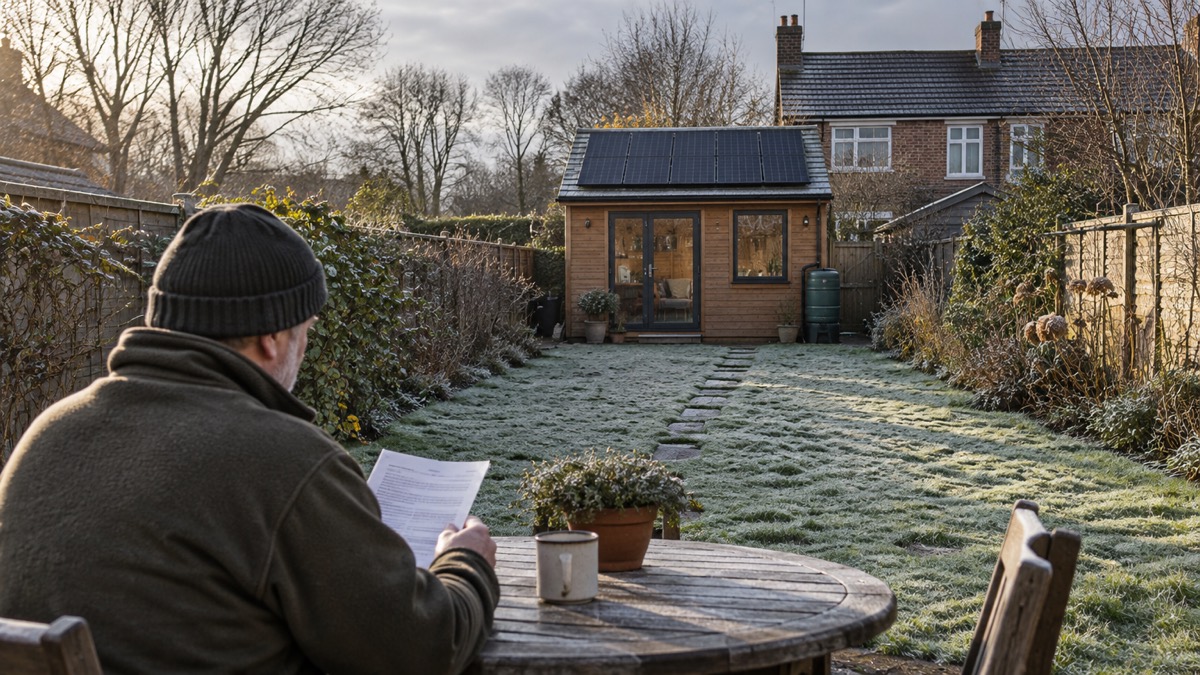
Off-Grid Solar Systems: How They Work and What They Can Power
An off grid solar system generates electricity, regulates its flow into a battery and stores it for use later. Add an inverter where equipment needs mains-style AC. Size it around what you use each day, not around the panel rating alone: in the UK, one kilowatt of panels can generate between 800 and 1000kWh per year, but output is strongly seasonal. A fairly large 4kW roof produces around 15kWh per day in May or June, yet only 3 or 4kWh on a typical December or January day.1
Small systems are correspondingly modest in winter.2 The payoff is independence: because an off-grid system stores its own generated power and is not connected to the grid, it is not affected by grid blackouts.3
What you can power off the grid
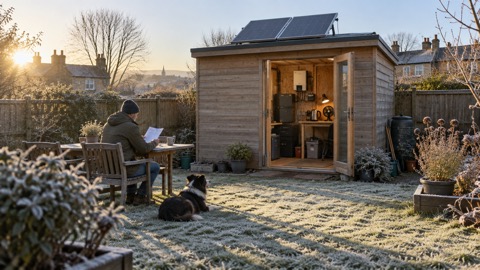
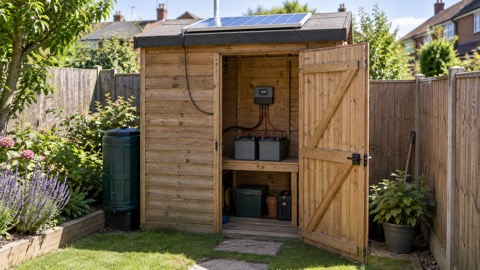
Start with the loads that matter most: lighting, phone charging, communications, refrigeration and water systems. A small shed or outhouse needs a very different system from a cabin expected to run all year. Jackery's off-grid checklist also includes reliable storage, communication devices and backup solutions alongside panels and refrigeration.4
| Arrangement | What it can provide | Key limit or feature |
|---|---|---|
| Dedicated 25W lighting kit | Four LED lights and a 5V USB socket for phones and USB devices | 12V system, maximum DC output current 3A5 |
| Larger off-grid system | Independently generated and stored electricity for remote cabins, boats and similar settings | Panel, storage and inverter capacity must match the connected loads4 |
| Portable panel and power station | Solar charging without a permanent household installation | Jackery states zero emissions and operation under 40 dB for its small solar generators6 |
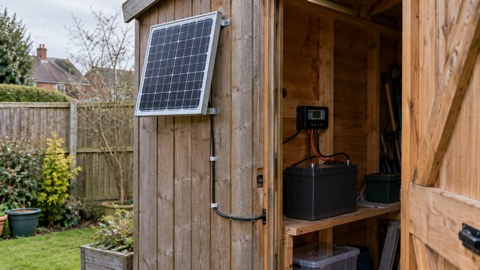
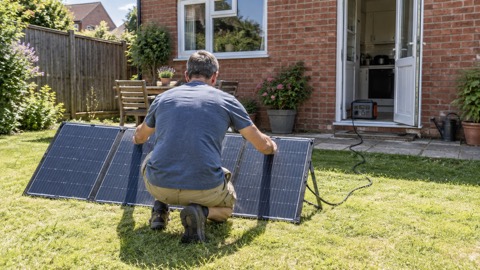
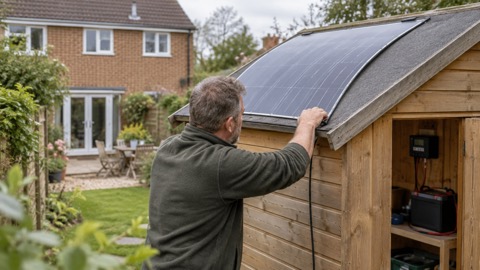
The 25W Photonic Universe kit illustrates the smallest practical approach: its panel charges a built-in 12V battery, its cables have plug-and-play connectors, and it is intended for places without mains electricity such as sheds, garages and outhouses.5 For occasional household backup, portable solar charging a power station is simpler than altering fixed wiring; backup power at home explains the wider options. The Anker SOLIX PS200 portable solar panel is one example of the portable format.
Plug-in solar: the smallest first step
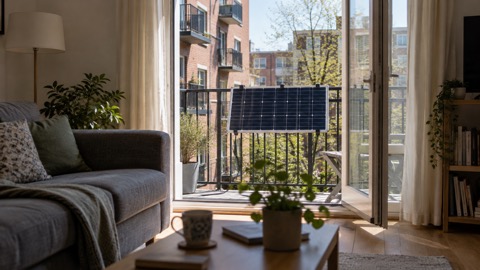
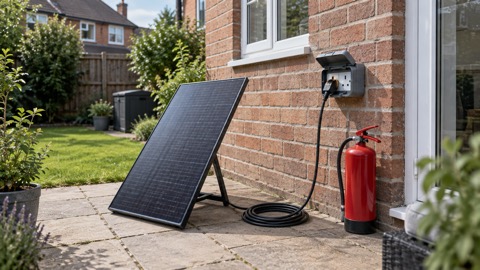
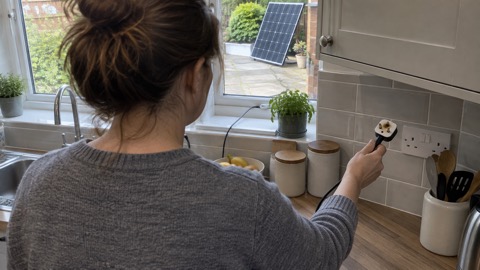
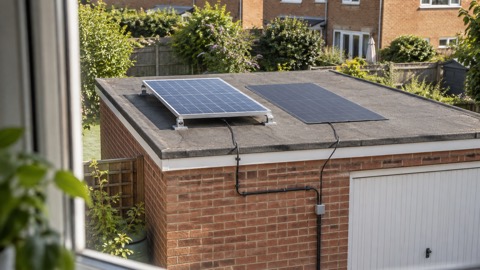
Plug-in solar means small photovoltaic panels plugged into a standard electrical socket. Sunlight generates electricity that flows into the home's circuit. London Fire Brigade says suitable positions include sunny terraces, balconies and shed or outhouse roofs, but also makes clear that these panels do not generate enough energy to power a home entirely.7
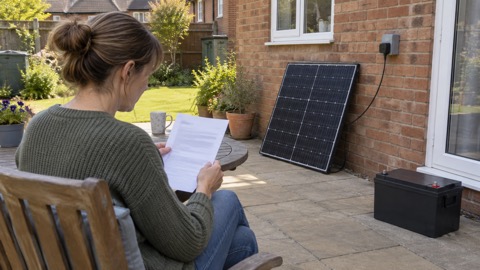
This is not the same as off-grid solar. It feeds household wiring rather than simply charging an independent battery. Connecting plug-in solar to a battery and products such as the EcoFlow STREAM need to be considered in that specific context.
Before considering one, follow these safety conditions:
- Electrical Safety First says homes with Type AC RCDs should not use plug-in solar without first upgrading the relevant circuits to at least a Type A bidirectional RCD.10
- It also says only one plug-in solar panel system is permitted per household because multiple units could reduce the effectiveness of protective devices.11
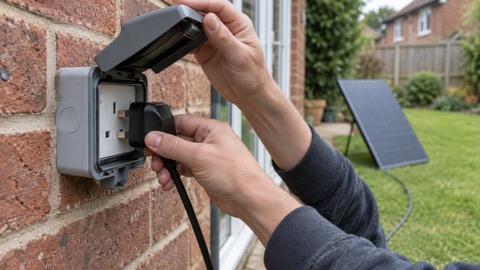
- London Fire Brigade says an outdoor socket must be at least an IP65-rated installation fitted by a competent person.12
- Surrey Fire and Rescue Service says to seek permission from a landlord, freeholder or managing agent where required. Unauthorised installation could affect building safety, insurance, tenancy rights or property management requirements.7
Read the detailed plug-in solar safety, landlord permission and extension lead and outdoor socket guidance before proceeding.
How an off-grid solar system works
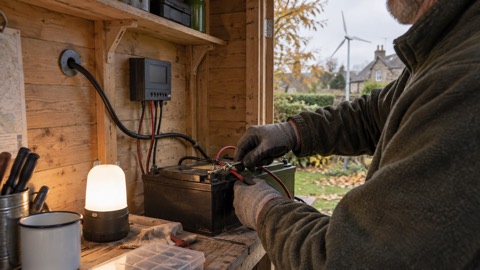
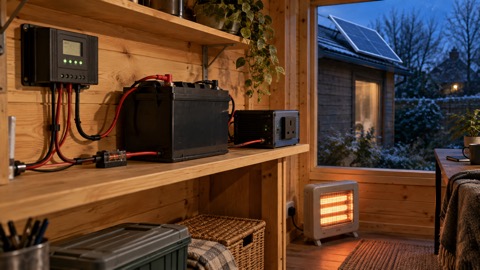
The panel produces DC electricity. A charge controller regulates the current reaching the battery, which stores energy for periods when the panels are not producing enough. DC loads can use a suitable low-voltage supply directly; an inverter converts DC to AC where required. CAT explains that a home inverter converts the panels' low-voltage DC output into the 230 volts needed in the home.1
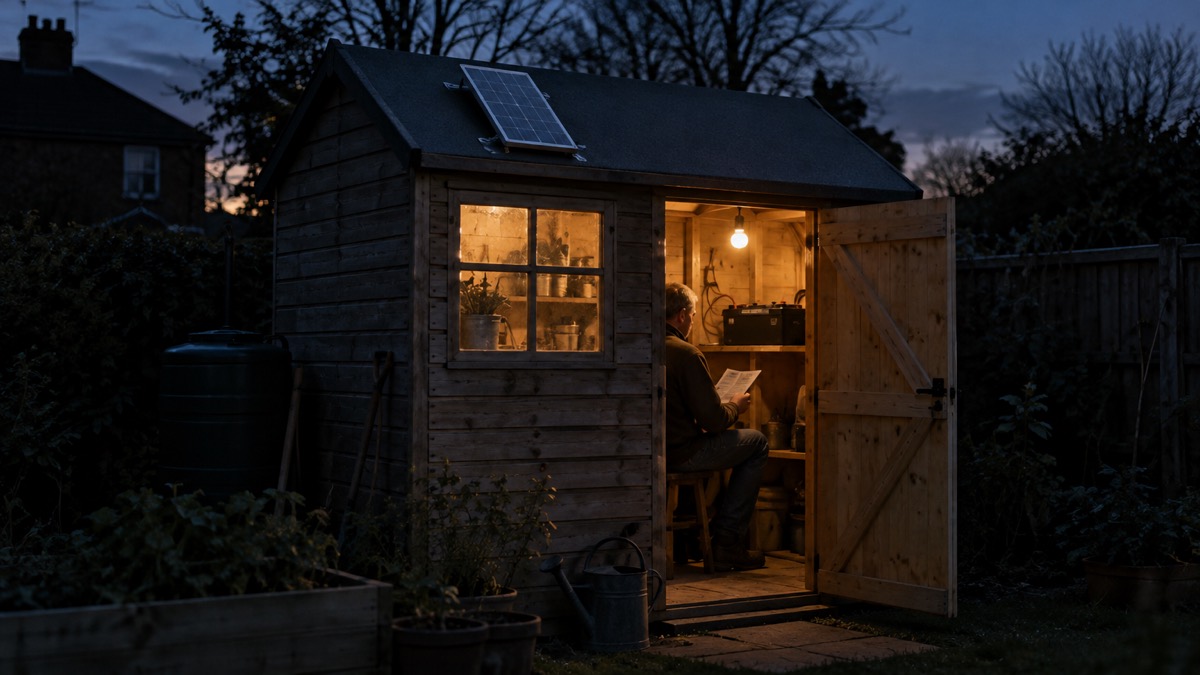
An on-grid system instead consists of panels, an inverter and a connection to the local electricity network. Marlec describes off-grid systems as suited to remote cabins, vehicles, boats and places where grid connection is impractical, while on-grid systems suit urban areas with reliable grid infrastructure.13 The 12V DC, AC and AC-coupled system guide explains the arrangements in more detail. Renogy's wiring guidance also calls for adapter cables between panels and controller, and tray cables between controller and deep-cycle battery.14 Whether a simple arrangement needs a blocking diode between panel and battery depends on that circuit.
Working out what you need
Begin with the equipment you actually intend to run, then work through sizing an off-grid system from daily watt-hours. This prevents a panel's headline wattage from standing in for the whole system. The off-grid solar kit checklist brings the parts together.
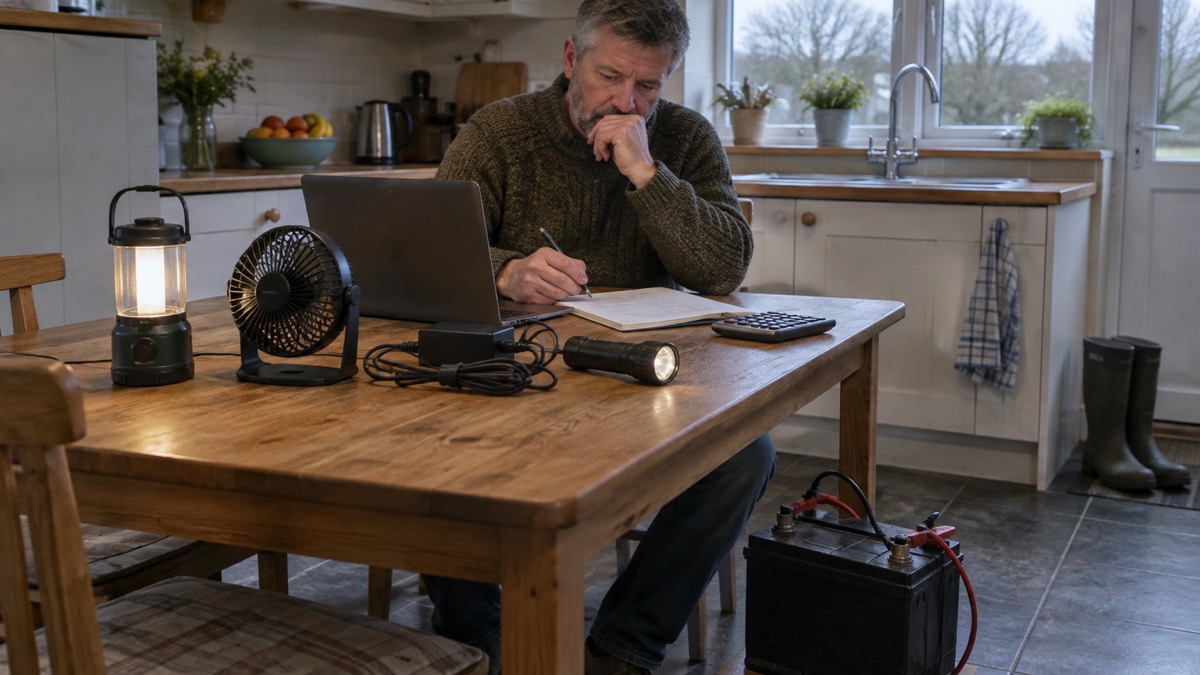
- List lighting, refrigeration, communications, water equipment and other loads, separating DC devices from AC devices.
- Establish the daily energy requirement and which loads may operate together.
- Choose the battery and panel capacity around that requirement, allowing for the winter output described below.
- Include the controller, suitable cables and connectors, secure mounting and a safe battery location.
- Check the connected load before switching equipment on.
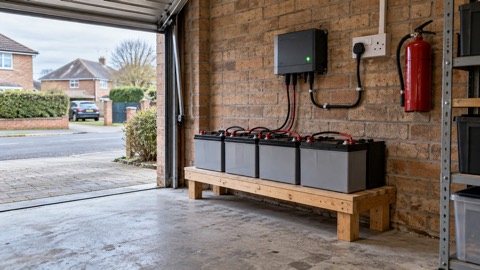
Bluetti's own setup instructions say AC devices belong on the AC port and DC devices on the DC port, and that total wattage must not exceed the battery's capacity. It advises placing the storage battery somewhere safe and dry, away from extreme temperatures, moisture and direct sunlight.15
Winter output across the UK
Winter does not stop solar charging, but it sharply reduces the energy available. Design for this season if the system must work all year rather than only for summer camping or occasional shed lighting.
| Solar arrangement | Generation stated |
|---|---|
| 4kW roof, May or June | Around 15kWh per day1 |
| 4kW roof, typical December or January day | Only 3 or 4kWh1 |
Location matters as well as season: CAT states that Cornwall receives 30% more solar energy than northern Scotland. Its annual UK estimate of 800 to 1000kWh per kilowatt therefore should not be read as a promise of equal output every day or in every region.1
Storage carries daytime generation into the evening, but it does not create extra energy. For a year-round off-grid supply, CAT notes that wind and solar complement each other because there is more wind in winter and more sun in summer.16 That makes a mixed system worth considering where a suitable wind site exists.
Choosing and siting panels
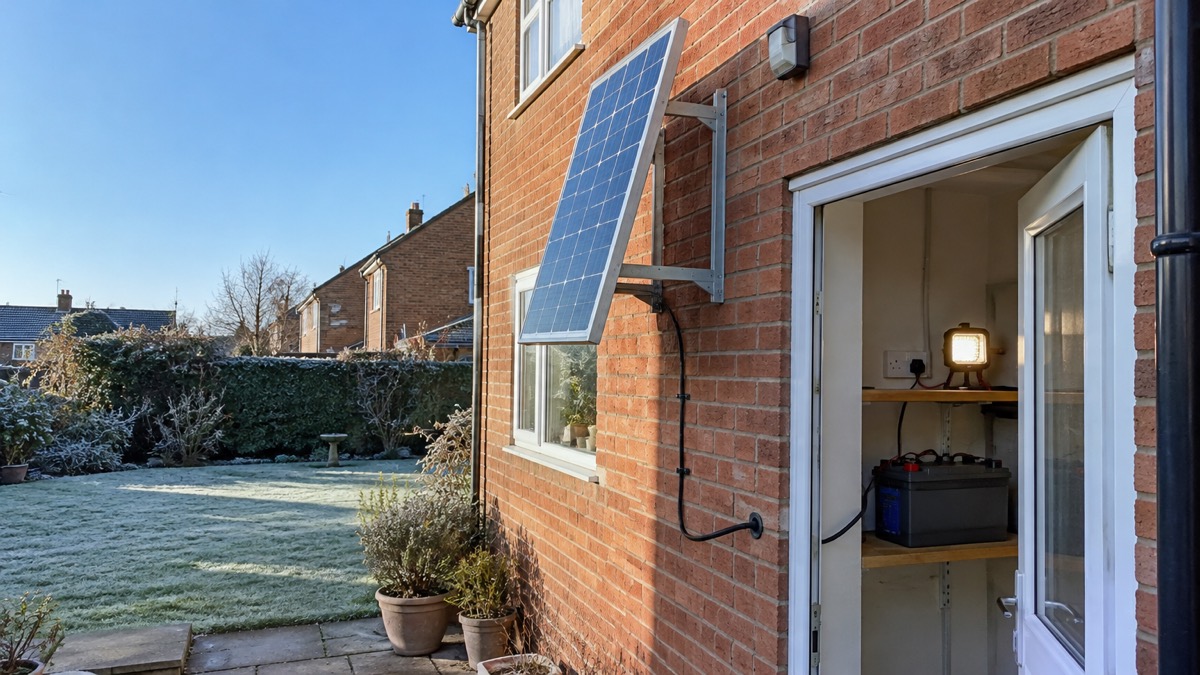
CAT advises a site largely free of shade, particularly between spring and autumn. Orientation and angle change output materially:1
| Siting choice | Expected performance |
|---|---|
| South-east through south to south-west | Performs well at an angle of 20 to 50 degrees |
| Due east or due west | About 20% less energy than an array facing due south |
| Integrated roof tiles or panels | Provide adequate ventilation; output is likely to be lower than an equivalent non-integrated roof |
For scale, domestic PV systems are commonly 3 to 4 kilowatts and occupy 20 to 30 square metres of roof. Panels have no moving parts and should last for decades; most carry a guarantee of something like 90% of maximum output after 25 years. CAT puts likely panel life at 30 years or longer.1
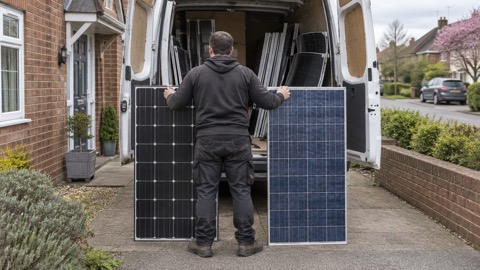
Polycrystalline panels are slightly less efficient than monocrystalline panels, although CAT says both produce roughly the same electricity under identical conditions. Other types may degrade more quickly, so check the power-output warranty. Compare solar panel types and rigid or flexible panels before choosing a format. The 100W semi-flexible ETFE panel illustrates a semi-flexible option.
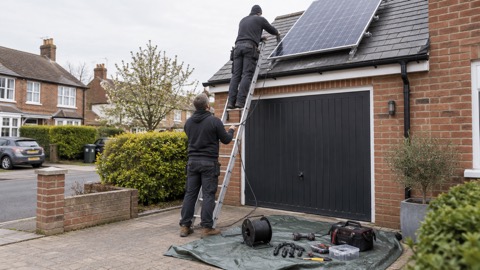
Follow the detailed mounting and wiring guidance for roof, pole or ground mounting, series and parallel connections, and connectors.
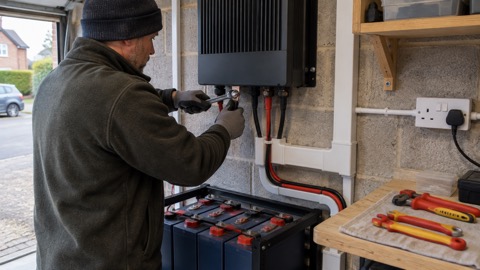
Batteries, controllers and inverters
Each electrical component solves a different problem:
| Component | Its job |
|---|---|
| Battery | Stores generated electricity for later use |
| Charge controller | Regulates current and manages charging; small kits may include overcharge protection3 |
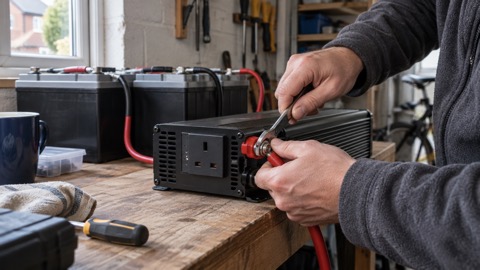
| Off-grid inverter | Converts DC from sources such as solar batteries into AC17 |
Morningstar describes off-grid inverters as suited to remote places or locations where grid access is limited or unreliable.17 Choose the battery chemistry and arrangement through the off-grid battery banks guide, then match regulation using the PWM, MPPT and shunt charge controller guide. The Morningstar SunSaver Duo and Victron SmartSolar MPPT RS pages cover particular controllers. For AC output and charging combinations, see off-grid inverters and inverter chargers.
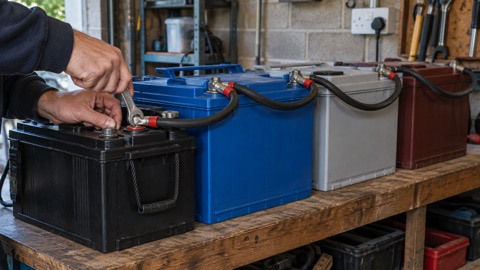
Battery condition determines how much of the panel output you can actually use. CSE gives a typical domestic battery lifespan of 8 to 12 years. CAT says a lithium-ion warranty is usually for 10 years or a minimum energy throughput, whichever comes first, and capacity after ten years may be only about 60% to 70% of the original figure.16
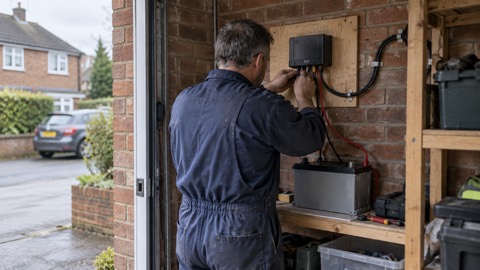
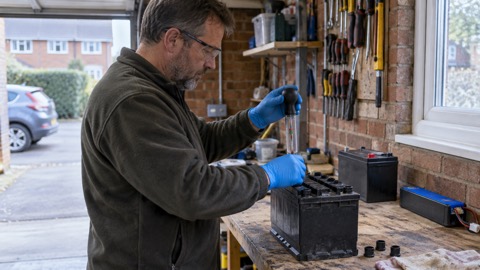
For fixed domestic equipment, CSE says to use an installer certified by the Microgeneration Certification Scheme. It generally favours AC-coupled batteries for easier retrofit to existing PV, and DC coupling when PV and battery are installed together.18 Follow safe battery charging and care, including the rules on which batteries need equalisation and which must not have it.
Wind turbines and solar water pumps
A small wind turbine or windcharger can complement solar where winter generation is the constraint. Marlec supplies off-grid water-pumping arrangements powered by wind alone, solar alone, or hybrid wind and solar systems.19
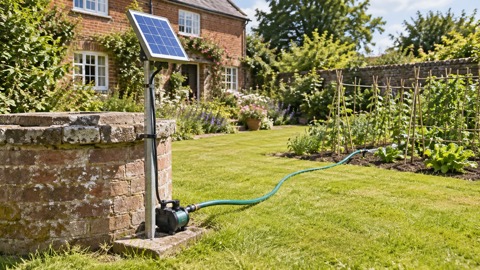
For solar water pumping, CAT notes that small turbines and PV panels usually produce power at 12 or 24 volts. A low-voltage pump can therefore operate without an inverter.1 This suits a directly matched DC arrangement rather than converting the supply unnecessarily.
Where pumping forms part of flood protection, the discharge arrangement matters as much as the power source. Flood Hub guidance says sump-pump water is pumped through a discharge pipe to outside the building, with a non-return valve preventing floodwater flowing back.20 The wider water harvesting and flooding guides cover the household context.
Solar panels in a power cut
Do not assume that having panels on the roof means the lights will stay on. The Government says only some solar installations with battery storage can continue providing power during a cut, specifically where designed and configured to operate independently of the grid.21 Grid-tied systems have an automatic switch that stops them sending energy during an outage.22 Most standard battery installations also cut off to avoid exporting electricity to the grid, although CAT says an island-capable system can be installed with additional equipment.16
For a planned outage, SSEN gives this sequence:23
- Turn off solar panels before the planned outage, including where they are connected to a temporary generator.
- Wait until mains power has been restored.
- Turn the panels back on once mains power is restored.
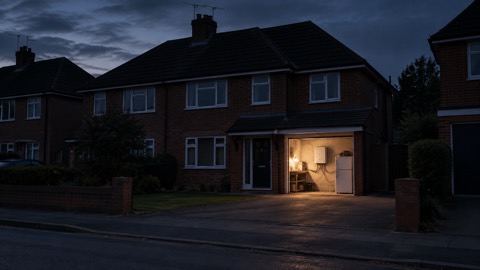
A separate off-grid battery system avoids that dependence on the grid. Portable solar panels charging a power station can provide limited independent backup without connecting to household wiring; see backup power and power cuts. Households relying on electrically powered medical equipment may particularly benefit from battery storage designed to provide backup, alongside the arrangements in extra help in an emergency.18
Keeping a system safe and working
Bluetti recommends professional installation so that an off-grid system is set up safely and efficiently. Keep its battery in the safe, dry location described above, away from extreme temperatures, moisture and direct sunlight.15 CAT says to follow proper safety procedures whenever dealing with batteries.16
Routine panel maintenance is limited because there are no moving parts. The main component CAT expects to need replacement every 10 years or so is the inverter. At end of life, PV panels are covered by waste electrical and electronic equipment legislation, making the manufacturer responsible for eventual disposal or recycling.1
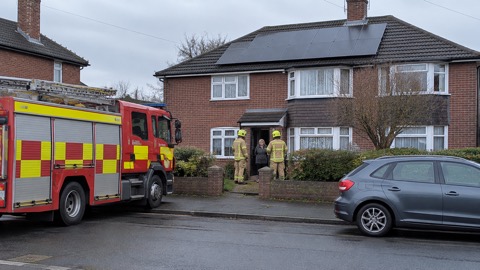
Keep the specific guidance on what to do in a fire with solar panels installed and what to do if a solar panel smells of burning with your household emergency information.
Permissions, notification and help
Roof-mounted panels are usually permitted development when flush with the existing roof. Restrictions may apply in National Parks, Areas of Outstanding Natural Beauty and conservation areas, and to listed buildings, so check with the relevant body. Solar tiles or slates may not be any easier to approve in those settings.1 Renters should also resolve the tenancy and property permissions covered in the plug-in section.
Notification is separate from planning permission and applies to systems able to export to the network:
| Export capability | Network process |
|---|---|
| Up to 3.68kWp | Notify the distribution network operator within 28 days of installation under the G98 connect-and-notify arrangement24 |
| Greater than 3.68kWp | Obtain pre-approval through the G99 apply-to-connect process before connection24 |
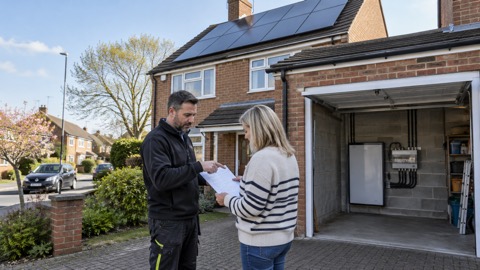
The G98 and network notification guide explains that process. Northern Powergrid's energy-advice partners can explain how solar panels and batteries work and help households plan installation.25 National Energy Action advises anyone whose situation is urgent because they are off supply to contact their supplier.26
Sources (26)
- Solar photovoltaic guidance, Centre for Alternative Technology, 2026-03-10
- Solar power technical advice, Caravan Club, 2026-10-25
- 200W monocrystalline solar kit with charge controller, Renogy, 2026-11-04
- Solar generators for off-grid living, Jackery, 2026-10-25
- 25W off-grid solar lighting system, Photonic Universe, 2026-11-04
- Small solar generators, Jackery, 2026-10-25
- Fire safety at home, Surrey County Council, 2026-10-15
- Plug-in solar panels, London Fire Brigade, 2026-10-25
- Solar panel safety, Electrical Safety First, 2026-10-25
- Plug-in solar panel safety, Electrical Safety First, 2026-10-25
- Response to the rollout of plug-in solar panels, Electrical Safety First, 2026-10-25
- Plug-in solar safety advice for residents and homeowners, London Fire Brigade, 2026-10-25
- On-grid and off-grid solar power systems, Marlec, 2024-08-02
- 320W N-Type bifacial solar panels, Renogy, 2026-11-04
- Off-grid solar power setup, Bluetti, 2026-10-25
- Domestic battery storage, Centre for Alternative Technology, 2025-06-27
- What is an off-grid inverter?, Morningstar, 2023-09-14
- Battery storage advice, Centre for Sustainable Energy, 2025-10
- Remote off-grid water pumping, Marlec, 2024-05-30
- Sump pump systems and how they are used, Flood Hub, 2024-05
- Power cuts, UK Government Be Ready campaign, 2026-10-21
- Using solar panels during a power outage, Jackery, 2026-09-28
- Planned outage guidance, SSEN, 2026-10-29
- Solar panel installation and network notification, Electrical Safety First, 2026-10-26
- Energy advice, Northern Powergrid, 2026-10-29
- Keeping afloat with your supply, National Energy Action, 2026-10-16
 Off-Grid Battery Banks
 Off-Grid Battery Care
 Solar Charge Controllers
 G98 DNO Notification
 Off-Grid Inverters
 Mounting and Wiring Solar Panels
 Solar Panel Types
 Sizing an Off-Grid Solar System
 Solar Water Pumping
 Off-Grid System Types
 Small Wind Turbines
 Blocking Diode for Solar Panels
 Equalisation Charging
 Plug-In Solar to a Battery
 Plug-In Solar Extension Leads
 Plug-In Solar and Landlords
 Plug-In Solar Safety
 Solar Panel Burning Smell
 Solar Panels in a House Fire
 Off-Grid Solar Kit Checklist
 Rigid vs Flexible Solar Panels
 Anker SOLIX PS200 Solar Panel
 EcoFlow STREAM Home Battery
 Morningstar SunSaver Duo
 Sterling Power ETFE Solar Panel
 Victron SmartSolar MPPT RS