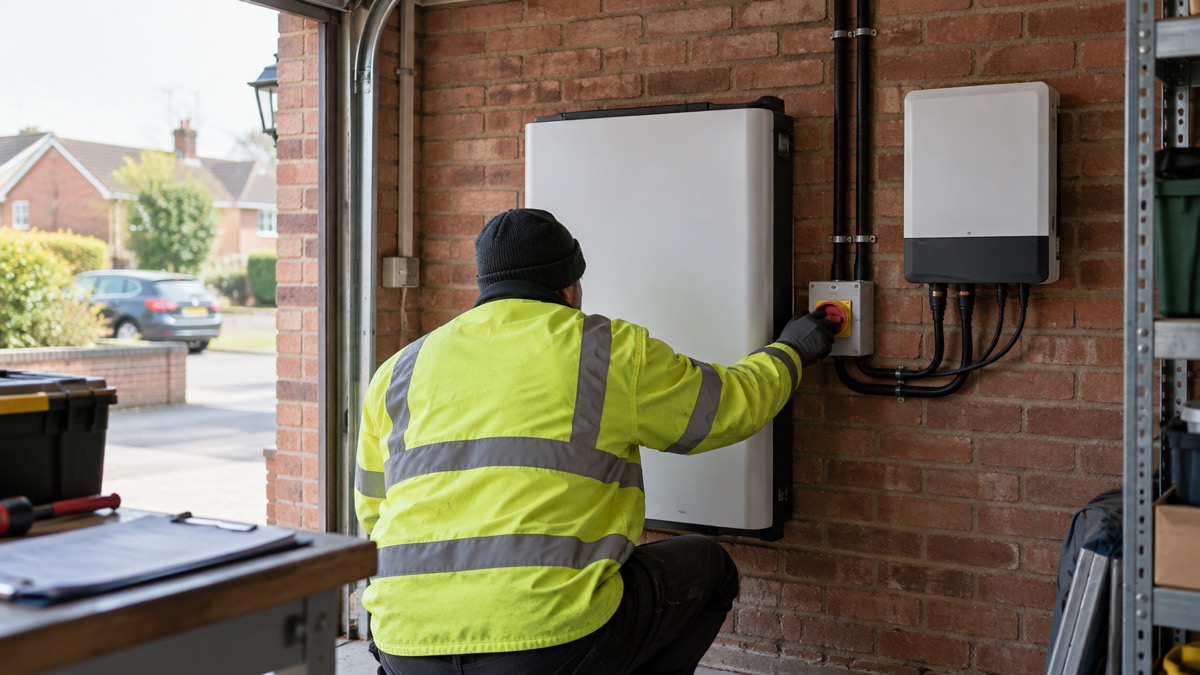
A fixed home battery can keep the lights on in a power cut, but only if the system is designed and configured to work independently of the electricity grid. The government's emergency preparedness guidance is clear on this point: if you have solar panels and a battery storage system with power backup capability, some installations can continue to provide power during a power cut, which may help keep essential appliances running during an outage1. A battery installed without that capability, which is how many are set up, will shut down with everything else when the grid goes down.
It is also worth keeping the risk in proportion. For a short power cut, a torch, a charged power bank and a power station may be all you need. A fixed battery earns its place for longer outages, for households that rely on powered medical equipment, and for homes that want to use their own solar power in the evenings. This page explains what size of battery suits which home, what backup modes do, how solar and batteries work together safely, and where lithium-ion batteries, the chemistry inside almost all of them, become a fire risk and what to do about it.
What size battery your home needs
Sizing a home battery comes down to what you want to keep running and for how long. A useful starting point is the household: a one or two bedroom home is generally matched by around 3 kWh to 5 kWh of storage, enough to keep lighting, a router, phone charging and a fridge going through a typical outage. Larger homes, with more people, more appliances and often a higher baseline demand, need more: 8 kWh to 10 kWh is the usual range quoted for whole-home cover.
Makers do not entirely agree on where the lines sit. One product page recommends 3 kWh to 5 kWh for smaller households while another recommends 8 kWh to 10 kWh for the same kind of home, so treat these figures as a range to discuss with an installer rather than a fixed rule. What matters more is the load you actually want to support. Work out which circuits matter to you, using our guide to deciding what to keep running when the mains fails, and size from there. If you want to understand the units involved, watts, watt-hours and surge explains how capacity translates into running hours for real appliances.
| Home type | Typical storage range | What it can cover |
|---|---|---|
| One or two bedroom home | 3 kWh to 5 kWh | Lighting, phone and router charging, a fridge through a typical cut |
| Larger family home | 8 kWh to 10 kWh | Essential circuits for longer, or more appliances at once |
Two things change the picture. First, a battery paired with solar panels can recharge during the day, so a smaller battery can stretch across a multi-day outage if the weather cooperates. Second, a battery sized for day-to-day use, charging cheaply overnight and discharging in the evening, is not necessarily sized for backup: the two jobs overlap but are not the same. If backup is your main reason for buying, say so at the survey stage, because it affects both the capacity and how the system is wired, which we cover in connecting a generator or battery to your home's wiring.
Bear in mind too that most cuts are short5, and compensation exists for the longer ones: you can get £100 for homes, or £195 for businesses, if fewer than 5,000 properties are affected for more than 12 hours, or more than 5,000 properties are affected for more than 24 hours2. The maximum payable where 5,000 or more properties are affected is £4002.
Free battery packs and the Priority Services Register
If someone in your household depends on electricity, for medical equipment, for a landline they rely on, or because of age, disability or illness, sign up to your energy supplier's Priority Services Register. It lets your supplier and network operator know that you need additional support during a power cut1, and the register is designed to keep the most vulnerable customers up to date in a cut and provide additional support if needed6.
This is not just a courtesy list. If you are on the Priority Services Register, contact your supplier directly to ask what extra help yours provides, because what each company offers will be different. If you rely on powered medical equipment or would be particularly vulnerable in a power cut, ask to join the register, and check whether any scheme offering battery packs is open to you in your area.
The landline switchover adds another reason to be on the register. Digital landlines cannot carry a power connection, so handsets and routers must be powered from your home supply and will not function in a power cut unless you have a backup power system such as a battery or generator7. If your landline will not work during a power cut, your landline provider might offer you a free solution, such as a back-up battery unit, for a minimum of one hour, so you can still call the emergency services1. Ofcom confirms the back-up must last for at least one hour in a power cut, and some providers have back-ups that last up to seven hours3. For vulnerable customers with an analogue landline, the provider must provide a free back-up battery unit, meaning the landline would work for at least an hour during a power cut, and many batteries now last much longer8.
If you rely on powered medical equipment, our page on powering CPAP, oxygen and other medical devices from a battery sets out the practical options.
Solar panels and a battery: installation that keeps the system safe
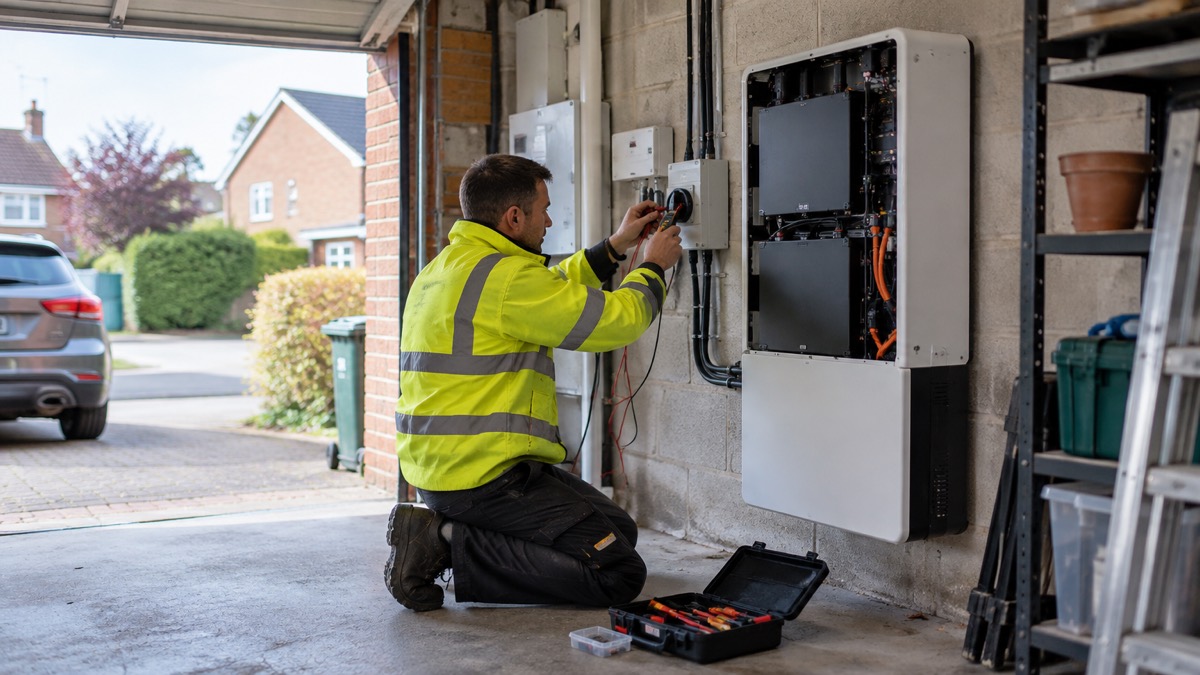
Solar panels on their own do not run your home in a cut, because a standard grid-tied system shuts down when the grid does, to protect engineers working on the lines. The combination that does work is solar panels plus a battery storage system with power backup capability: some installations can continue to provide power during a power cut if they are designed and configured to operate independently of the electricity grid, which may help keep essential appliances running during an outage1. Whether yours can do this depends on the inverter and the wiring, so it must be specified before installation, not assumed afterwards. Our page on whether home solar panels work in a power cut covers the detail.
The safety of the whole system rests on the installation. Electrical Safety First, the UK's electrical safety charity, says it is vitally important to use a skilled, trained and qualified solar PV installer who is registered with a competent person scheme, and that companies registered with MCS also offer an additional level of assurance9. Reputable installers should also be signed up to a consumer code, such as the RECC, which helps prevent pressure-selling tactics9.
Once installed, the system needs occasional attention:
- Have the system inspected and tested at least every five years to ensure it remains safe9
- Do regular visual checks for cracks, breaks, loose connections, and cable damage caused by vermin and weathering9
- Do not ignore burn marks, arcing sounds, buzzing or crackling, fuses blowing, circuit-breakers tripping, or anything that feels hot to touch: unplug and contact the retailer, manufacturer or a qualified repair technician9
The fire risk from solar panels themselves is low, but known problems can occur through bad installations, poor quality connections and cable damage through vermin and weathering9, which is why the visual checks above matter. Cleaning plays a part too. Most panels have a self-cleaning coating which, when installed at a suitable angle, allows rain to clear dirt and debris9. Periodic cleaning by a specialist company can remove accumulated dirt, dust and debris, including lichen and guano, improving sunlight absorption, maximising energy production and preventing hotspots which can result in a panel failing; Electrical Safety First says this could increase energy production by up to 15 per cent9.
Plug-in solar panels: what they change for households
Plug-in solar panels, small panels that feed electricity into your home through a normal socket, have attracted growing interest. In principle they are simple: light from the sun hits the panels and generates energy, which flows into the electrical circuit for the home, providing electricity. They will not generate enough energy to power your home entirely, so treat them as a supplement rather than a substitute for mains power or a battery.
The regulatory position is the sticking point, and it is changing, so check the current rules before you buy. If you are considering plug-in solar, check that any product you buy meets the current specification, use a skilled, trained and qualified solar PV installer registered with a competent person scheme where installation is needed10, and read our page on whether plug-in solar panels are safe to connect.
For charging a portable power station rather than feeding the house wiring, ordinary portable solar panels avoid these regulatory questions entirely, because they charge a battery rather than supplying the home's circuits.
Where lithium-ion batteries become a fire risk
Home batteries, power stations, power banks, phones, laptops, vapes, e-bikes and e-scooters all rely on lithium-ion cells. They are lightweight, energy dense and long-lasting, but can be more volatile than traditional batteries11. Fire services across the UK report an increase in the number of fires caused by lithium-ion batteries12, and warn that lithium-ion battery fires are particularly dangerous as they are instantaneous and explosive in nature, potentially compromising escape routes13.
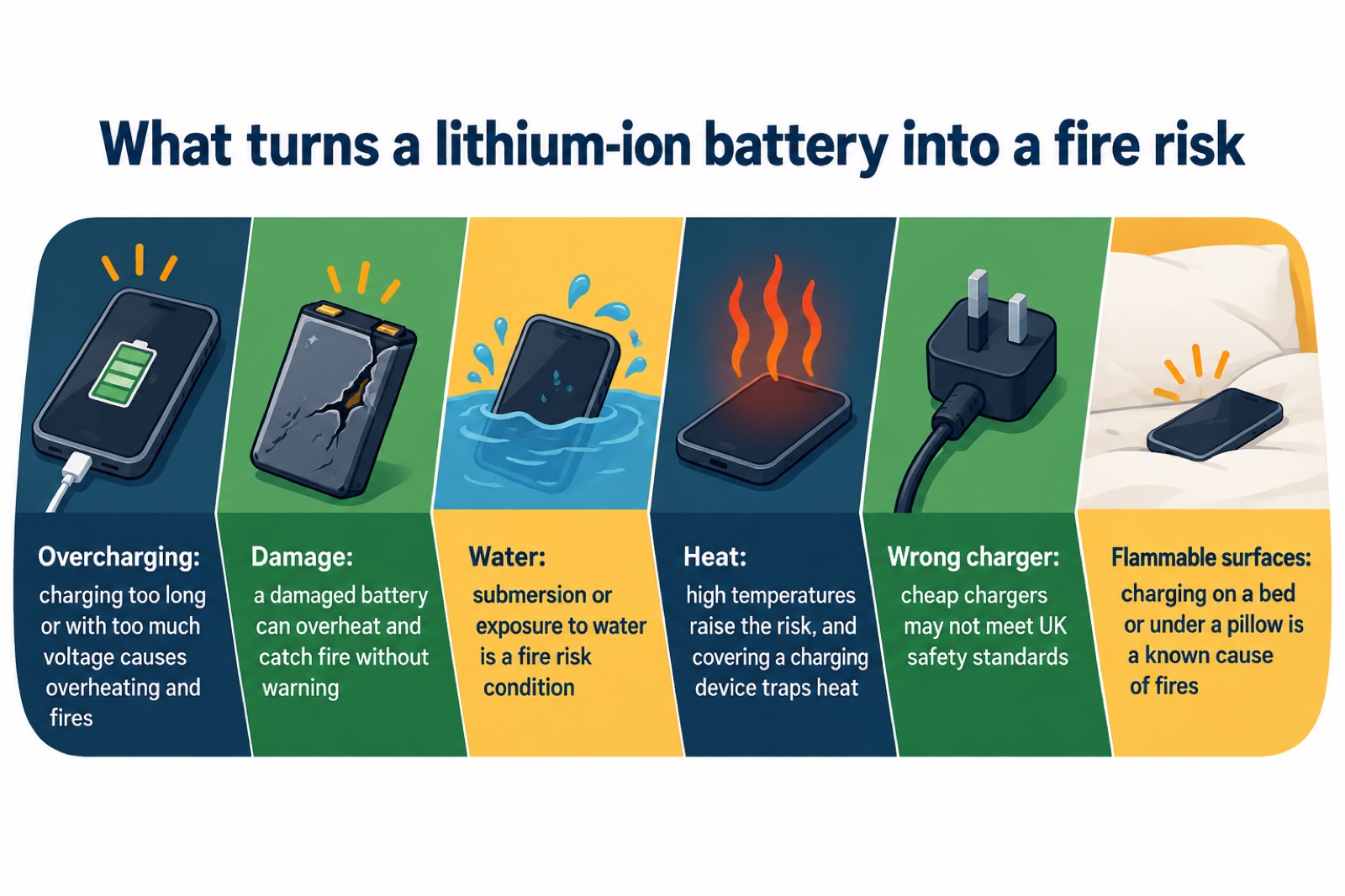
The causes are consistent across every fire service that publishes guidance. Devon and Somerset Fire and Rescue Service lists the conditions that turn a battery into a hazard: overcharging, short circuits, water submersion and physical damage12. Fires can result from overcharging batteries, charging devices on flammable surfaces such as on a bed or under a pillow, using batteries that are not recommended by the manufacturer, and exposing them to hot temperatures or water17. Lithium-ion batteries in phones, vapes, e-bikes and e-scooters can become a fire risk when exposed to high temperatures or charged incorrectly18. Misuse, such as unsafe charging or product modifications, can significantly increase fire risks19.
Many of these fires happen at the worst possible moment. Many happen in homes while batteries are charging20, and fires often occur when charging the batteries21. Covering devices while charging traps heat and increases fire risk11. Cheap chargers and batteries may not meet UK safety standards and can be dangerous11. A damaged lithium-ion battery can fail unexpectedly and start a fire22, and damaged or end-of-life batteries thrown into household waste can be crushed or punctured, releasing flammable electrolytes into the air which can trigger explosions and rapidly spreading fires17.
Disposal is part of the same picture. Lithium-ion batteries should never be placed in household waste15, and when punctured or crushed they can cause fires in bin lorries, recycling and waste centres14. Incorrectly placing them in general household and recycling waste can lead to significant waste fires12. Tape over the terminals with electrical tape to prevent short circuits11, and check your local authority's website or the recycle your electricals website for the safe way to dispose of lithium-ion batteries in your area23. Most local recycling centres accept lithium-ion batteries alongside Waste Electrical and Electronic Equipment items15. Our page on how to dispose of a damaged lithium battery gives the full procedure.
What to do if a battery overheats or catches fire
The warning signs are consistent: a battery getting unusually hot, swelling or bulging, hissing, or showing other damage. If a battery shows signs of overheating, swelling or other forms of damage, do not use the battery; dispose of it appropriately and report the defect to the manufacturer12. If a vape battery gets unusually hot, starts to bulge or starts hissing, stop using it immediately and leave it in a safe place until you can dispose of it properly24. If a battery shows signs of swelling, overheating or emitting smoke, safely remove it and report the incident to the appropriate authorities17. Our page on warning signs a lithium battery is dangerous lists what to look for.
If a battery catches fire, do not tackle it yourself. Call 999 and ask for the Fire and Rescue Service16. The reason fire services are so firm about this is the behaviour of the fire itself: battery fires can spread quickly, are difficult to extinguish and can reignite after appearing to have gone out25. When damaged or crushed, batteries can ignite without warning25. A fire that seems out can come back, which is why firefighters may need to keep a battery under observation after the flames are doused.
Prevention is mostly a matter of charging habits:
- Charge devices and equipment during the day, instead of at night while you are sleeping, and charge them away from escape routes12
- Never leave batteries unattended while charging and do not charge them overnight17
- Always use the charger that came with your device or a genuine replacement from a trusted supplier11
- If you notice any damage or wear and tear on your charger, replace it with an official charger from a reputable source15
- Use the correct charger for the equipment, as conversion kit guidance stresses22
- Do not charge on flammable surfaces such as a bed or under a pillow17
Our page on whether it is safe to charge overnight and the safe battery charging at home checklist go through the setup in detail, and lithium-ion battery safety at home covers the whole subject.
Storing a spare battery safely
If you keep a spare battery, a power station, expansion pack or loose cells, store the product and its batteries in a cool place, avoiding exposure to extreme heat or cold15. Heat is the enemy: high temperatures are one of the conditions that turn lithium-ion batteries into a fire risk18, and leaving a battery in a hot loft, a sunny conservatory or a car in summer works against you. Follow the manufacturer's instructions for the storage and maintenance of lithium-ion batteries if they are not going to be used for extended periods of time14, since makers know their own cells' tolerance best.
Check stored batteries periodically for the damage signs above, because a battery that fails in storage can do so without warning14. When a stored battery reaches the end of its life, the disposal rules in the fire risk section apply: never household waste, terminals taped, taken to a recycling centre15. Our page on how to store a power station when not in use covers the practicalities for the larger units.
What to have ready regardless of your battery
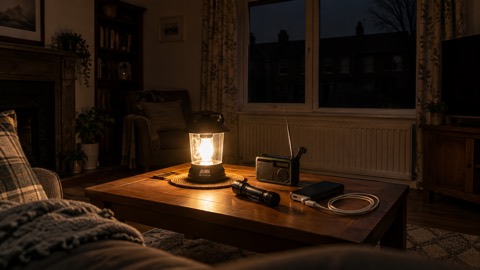
However capable your fixed battery is, keep a simple kit that works even if the battery or its inverter fails. The essentials that could help you cope with a power cut are battery candles, torches and batteries, and a mobile phone power pack26. Make sure you have multiple torches along with extra batteries27, and include a battery-operated torch and spare batteries, or a wind-up torch, in your home emergency kit28. Save key documents and information in a safe place, know where you can find a torch, and consider getting a separate battery charger10.
During the cut itself, use battery-operated lights or torches as an alternative light source29, and use your devices sparingly to conserve battery power until you can charge them again8. Firefighters can be called to fires started by candles or portable heaters during a power cut29, so torches are the safer light. Report the cut by calling 1054, and if you are on the Priority Services Register, your supplier should be in touch. The full procedure is in our power cut backup power checklist and the power cuts household guide.
Questions people ask
Do I need a G99 certificate to install a home battery? Any system connecting to your home wiring must meet the grid connection standards, and the connection arrangements differ between smaller plug-in systems and larger fixed installations. Use a skilled, trained and qualified solar PV installer registered with a competent person scheme10: your installer should handle the connection paperwork and confirm it before the system is energised.
How often should solar panels be inspected? Have the system inspected and tested at least every five years to ensure it remains safe, and do regular visual checks yourself for cracks, breaks, loose connections and cable damage9.
Do solar panels need cleaning? Most have a self-cleaning coating that lets rain clear dirt when they are installed at a suitable angle, but periodic specialist cleaning removing dirt, lichen and guano could increase energy production by up to 15 per cent and prevents hotspots that can cause a panel to fail9.
How do I spot a solar cold caller? Be suspicious if you are contacted out of the blue or put under pressure to buy quickly, especially with time-limited or one-off discounts; watch out for extremely short payback times and low prices that may not include all necessary parts and services. Use an installer registered with a competent person scheme, ideally MCS certified, and signed up to a consumer code such as the RECC9.
Is it safe to charge batteries overnight? Fire services advise charging during the day instead of at night while you are sleeping, charging away from escape routes, and never leaving batteries unattended while charging12.
Should I use a cheap replacement charger? No. Always use the charger that came with your device or a genuine replacement from a trusted supplier; cheap chargers and batteries may not meet UK safety standards and can be dangerous, and a damaged charger should be replaced with an official one from a reputable source11.
Can a battery fire restart after it has been put out? Yes. Battery fires spread quickly, are difficult to extinguish and can reignite after appearing to have gone out, which is why you should call 999 and ask for the Fire and Rescue Service rather than tackling one yourself25.
Will my landline work in a power cut after the digital switchover? Digital landlines cannot carry power, so handsets and routers will not work in a cut without backup power; providers may offer a free back-up battery unit lasting at least one hour, and some last up to seven hours, while vulnerable customers must be provided with one7.
Sources (29)
- Power cuts: be informed about hazards, Prepare (UK government campaign), 2026-10-21
- Check if you can get payment for a power cut, Ofgem, 2026
- Future of landline calls, Ofcom, 2026-08-26
- Adverse weather events, Llangattock Community Council, 2026-10-25
- Generators and power cuts, Wiltshire and Swindon Prepared, 2026-10-25
- Parental letter re power shortages, NHS, 2022-11-25
- UK transition from analogue to digital landlines, GOV.UK, 2023-01-06
- Phone and broadband outages, Prepare (UK government campaign), 2026-10-12
- Solar panels: safety advice, Electrical Safety First, 2026-10-26
- 10 things you should do now to prepare for summer, Met Office, 2026-10-25
- Lithium battery fire safety, Mid and West Wales Fire and Rescue Service, 2026-10-26
- Battery fires, Devon and Somerset Fire and Rescue Service, 2026
- Home safety position statement, National Fire Chiefs Council, 2025-12
- E-bikes and scooters guidance, National Fire Chiefs Council, 2022-01
- Lithium-ion batteries, Scottish Fire and Rescue Service, 2025-11-27
- Lithium-ion batteries safety advice, West Sussex County Council, 2023-07
- Recycle your batteries, prevent fires, Devon and Somerset Fire and Rescue Service, 2024-03-15
- How to stay safe during a heatwave, Devon and Somerset Fire and Rescue Service, 2026-06-23
- Lithium-ion batteries are everywhere but safety standards haven't caught up, warn fire chiefs, National Fire Chiefs Council, 2025-11-19
- E-bikes and e-scooters, London Fire Brigade, 2026-10-25
- E-scooter, e-bike and mobility scooter fire safety advice, North Yorkshire Fire and Rescue Service, 2026-03-25
- E-bike conversion kits: fire risks and safety advice, London Fire Brigade, 2026-10-25
- How to dispose of batteries from your e-bike or e-scooter, London Fire Brigade, 2026-10-25
- Vaping and e-cigarettes, London Fire Brigade, 2026-10-25
- Residents urged to think before binning batteries, Devon and Somerset Fire and Rescue Service, 2026-07-23
- Stay safe in a thunderstorm, Met Office, 2026-10-25
- What to do in a power cut, Met Office, 2026-10-25
- Emergency kit, Ready Scotland, 2026-10-22
- Power cuts, Scottish Fire and Rescue Service, 2026-10-25
 Power Cut Backup Power Checklist
 Backup Power Before Winter
 Safe Battery Charging at Home
 What to Keep Running in a Cut
 Power During an Outage
 Watts and Watt-Hours
 Portable Power Stations
 Portable Generator Types
 Generator Safety
 LPG Cylinders and Regulators
 Connecting to Your Home's Wiring
 Portable Solar Panels
 12V Inverters
 Leisure and LiFePO4 Batteries
 Power Banks for Phone Charging