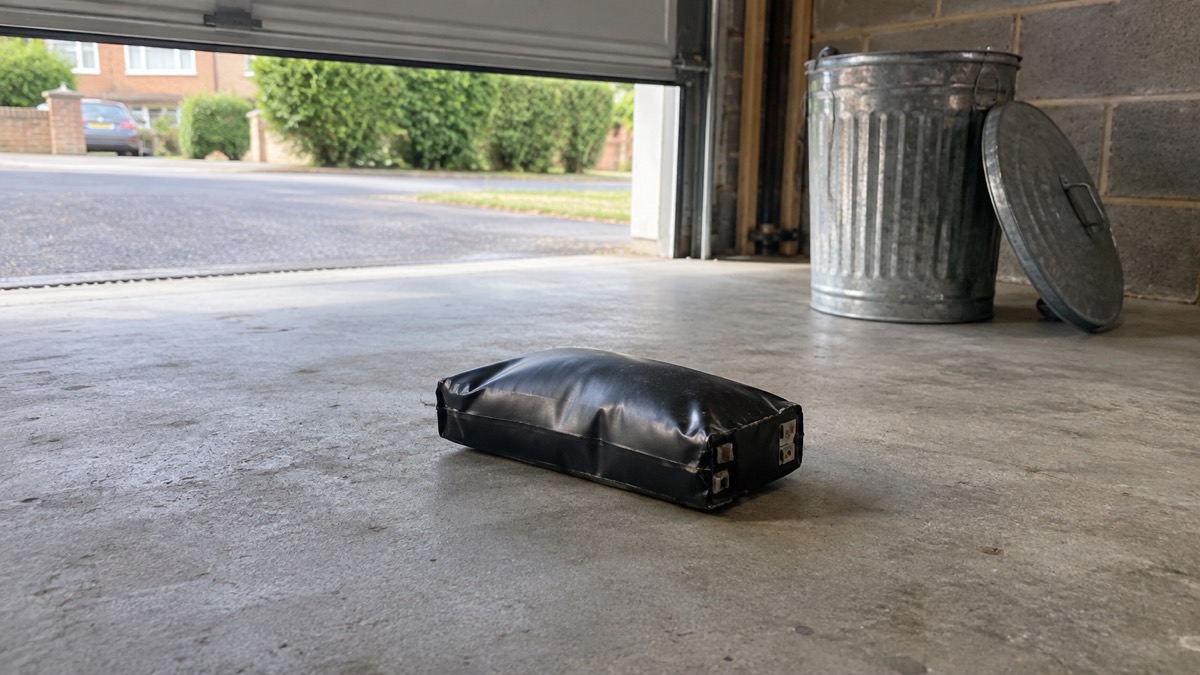
A lithium battery never goes in your household rubbish or your normal recycling. That applies to a phone, a laptop, a power bank, a vape, a loose AA cell and an e-bike battery alike. Fire and rescue services are consistent on this: never throw lithium batteries in household rubbish1, and they should never be placed in household waste2. The reason is what happens after the bin lorry arrives. These batteries, when punctured or crushed, can cause fires in bin lorries, recycling and waste centres3.
A damaged battery needs more than a trip to the tip. If a battery shows signs of overheating, swelling or other forms of damage, do not use it: dispose of it appropriately and report the defect to the manufacturer4. Where the battery is damaged, it can overheat and catch fire without warning, and if you suspect it is damaged it should be replaced and should not be used or charged5. Contact the manufacturer for specific advice on how to dispose of a damaged battery or device safely, and to confirm that it is safe to transport it6.
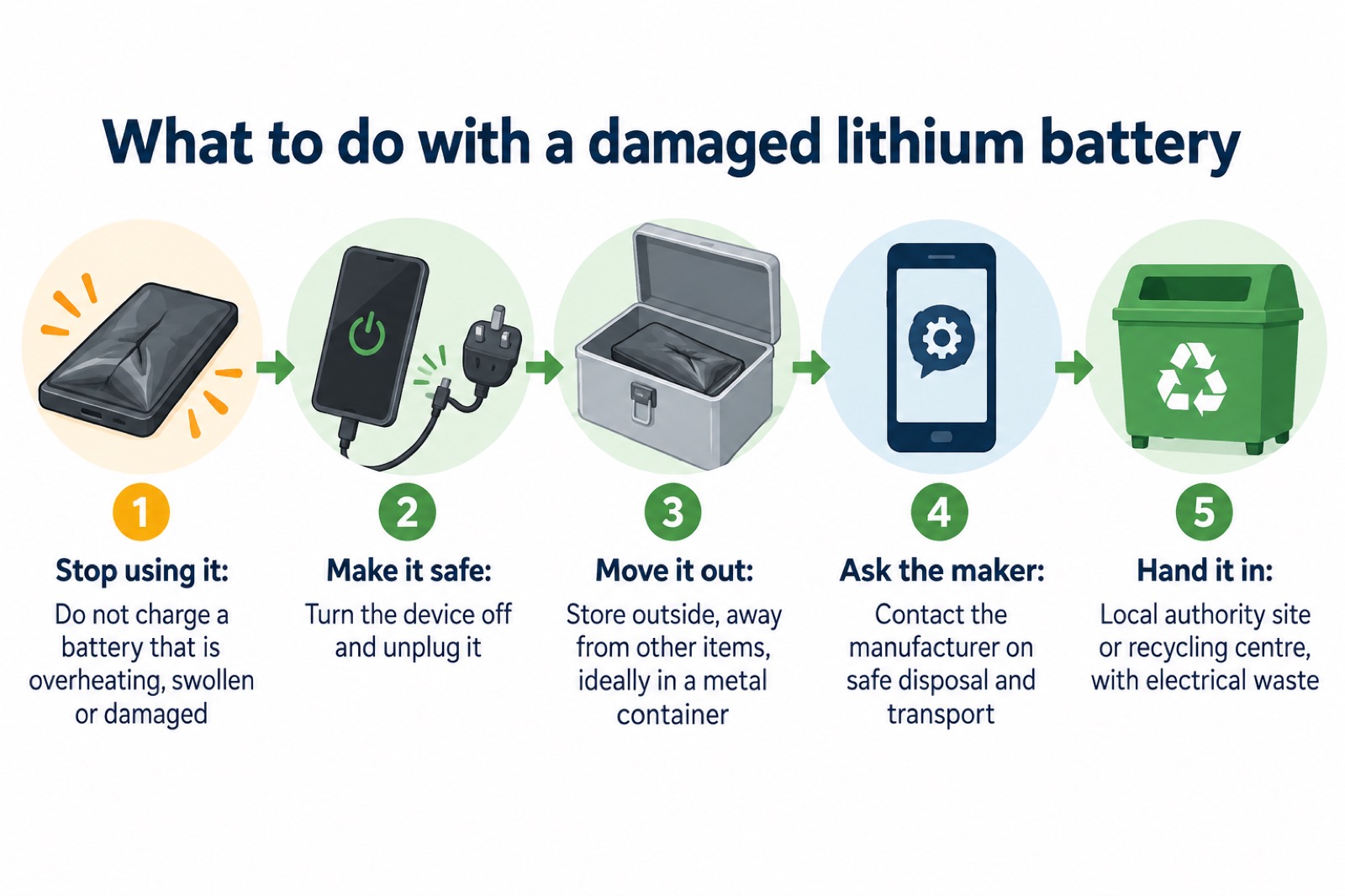
So the routine is short. Stop using the battery, keep it cool and dry and away from anything that burns, ask the maker how to move it, then take it to a household waste and recycling centre or a shop take-back point. Most local recycling centres accept lithium-ion batteries, and they should be disposed of alongside waste electrical and electronic equipment2.
Never put a lithium battery in your household bin
The rule is absolute and it covers every kind of lithium battery a household handles. Never throw lithium batteries in household rubbish1. They should never be placed in household waste2. A lithium battery cannot be disposed of in your household waste: you must take it to a household refuse and recycling plant or contact your local authority for more information3. For e-bike and e-scooter packs the same applies, and lithium-ion batteries should not be placed in the same bins as your regular rubbish or recycling7.
The consequence is not a tidy abstract. The incorrect disposal of lithium-ion batteries, such as placing them in a general waste bin at home, can lead to significant waste fires2. These batteries, when punctured or crushed, can cause fires in bin lorries, recycling and waste centres5. The batteries inside laptops, phones, tablets and power banks carry the same risk: if they get crushed or damaged, they can spark dangerous fires in recycling centres or bin lorries, and they must be recycled properly8. Never place loose batteries or electrical items, including those containing batteries, in general waste bins11.
| Item | Bin or normal recycling? | Where it should go |
|---|---|---|
| Phone, tablet, laptop | No9 | Recycled properly as electrical waste9 |
| Power bank or battery pack | No10 | Electrical waste, not general waste10 |
| E-bike or e-scooter battery | No7 | Local authority route or recycling centre7 |
| Vape or e-cigarette | No12 | Not household waste; dispose of properly12 |
| Loose AA or other cells | No11 | Never in general waste bins11 |
A damaged battery needs extra care until it goes
A damaged battery is a different problem from a flat one, because the damage itself is what makes it dangerous. Damaging a lithium-ion battery can cause fire, explosion or the release of hazardous substances13. Where the battery is damaged, it can overheat and catch fire without warning5. Batteries can be damaged by dropping them or crashing e-bikes or e-scooters, and where the battery is damaged it can overheat and catch fire without warning, so it should be replaced and not used or charged14.
If you notice warning signs of a failing battery, the advice from Oxfordshire County Council is specific: remove the battery and device, or the device if the battery cannot be removed, from your home and store it outside and away from other items, preferably in a metal container6. Do not ever try to open or fix it yourself6, and do not attempt to modify or tamper with the battery6. If the device is switched on, immediately turn off the device and unplug it from the power source, then call the device manufacturer or retailer for further instructions15.
A bulging or swelling shape is one of the recognised warning signs of a failing battery6. If a vape battery gets unusually hot, starts to bulge or starts hissing, stop using it immediately and leave it in a safe place until you can dispose of it properly16. For a swelling battery in a device, turn the device off17. Our page on what to do if a battery starts swelling goes through the warning signs in more detail, and warning signs a lithium battery is dangerous covers the full set to watch for.
Storing batteries safely while they wait for recycling
Between deciding to get rid of a battery and actually handing it in, storage matters. Store it in a cool, dry place until disposal1. Do not charge or store batteries in very hot or cold environments1, and store batteries in cool, dry places18. If you will not be using the battery for an extended period, follow the manufacturer's instructions for proper storage and maintenance2.
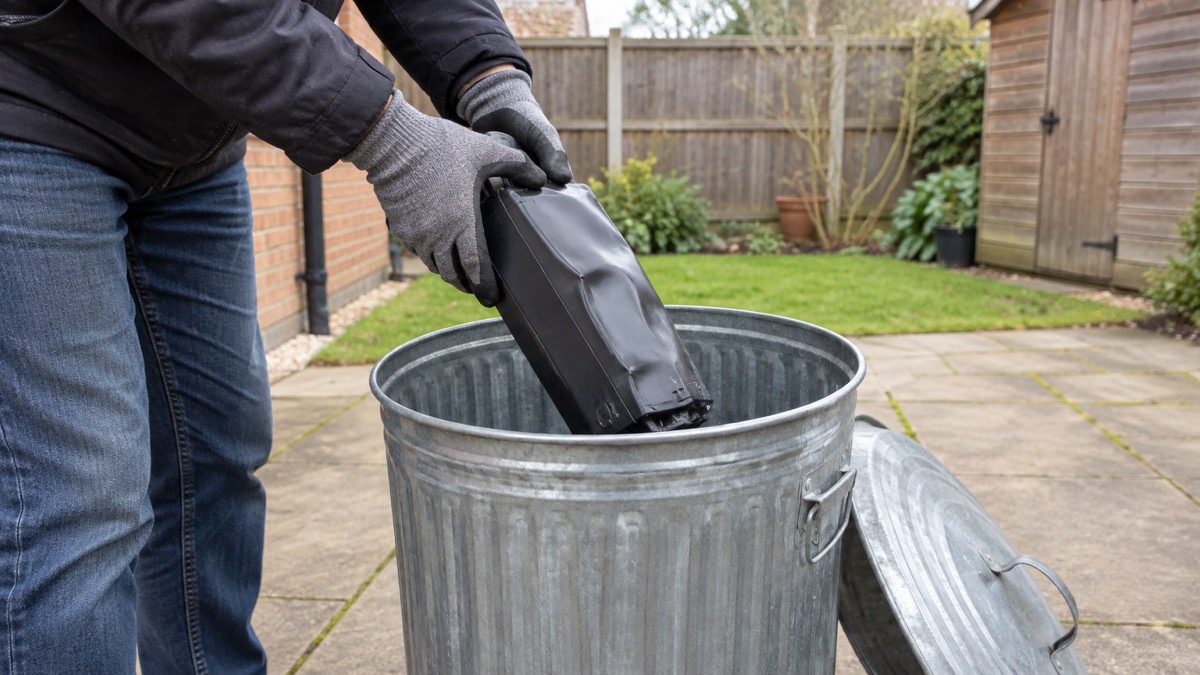
Keep it out of the way of an escape. When storing products that use lithium batteries, such as e-bikes or e-scooters, avoid keeping them in escape routes or communal areas: in the event of a fire, these could block people from leaving the building safely2. Do not block your exit or escape route by charging batteries or items such as e-bikes or scooters19, and do not charge them in hallways or communal areas that serve as escape routes2.
For the handover itself, check your local authority's website or the Recycle Your Electricals website for the safe way to dispose of lithium-ion batteries in your area7. Most local recycling centres accept lithium-ion batteries, disposed of alongside waste electrical and electronic equipment, though you should check with your local authority for specific recycling guidelines in your area2. The arrangements are set by each council, so the route differs between England, Scotland, Wales and Northern Ireland; the local authority website is the one to check wherever you live.
Why heat, damage and rough handling cause fires
Lithium-ion batteries store a lot of energy in a small space, and when that energy is released uncontrolled the result is fast and fierce. Occasionally, if a lithium-ion battery is improperly charged, handled, stored or disposed of, there is a risk of overheating, catching fire or explosion1. When overcharged or overheated, batteries rapidly overheat, release toxic fumes and ignite, causing intense fires that are hard to extinguish3. These fires quickly spread and are hard to put out, causing a lot of damage4.
The causes are well documented. Overcharging, charging too long or with too much voltage, can cause overheating and fires4. Overcharging, over-discharging, or charging the battery too quickly are some of the main causes of fires from lithium-ion batteries20. Damaged, faulty or incorrectly charged lithium-ion batteries are the root of the e-bike and e-scooter fires that fire services attend, and when those batteries fail they can ignite quickly and produce intense fires that spread rapidly22. Not charging or storing devices with lithium-ion batteries properly can cause fires23.
Rough handling is the disposal-specific risk. A lithium-ion battery is a main cause of waste fires and can be extremely dangerous when thrown away with general rubbish, or mixed with recyclable materials like card, metal and plastic4. If e-bike or e-scooter batteries get damaged or overheat, they may catch fire7. That is why the bin lorry and the recycling centre, where batteries are crushed and mixed, are exactly where a discarded battery does most harm.
Vapes, loose cells and batteries that got wet
Vapes are one of the most commonly binned lithium batteries, and one of the most dangerous. The lithium-ion batteries found in vapes are a known fire risk when disposed of incorrectly, and the chemicals inside can contaminate water sources and soil12. Avoid disposing of e-cigarettes, vapes or batteries in your household waste12. Treat a disposable vape like any other small lithium battery: keep it out of the bin and take it to a take-back point.
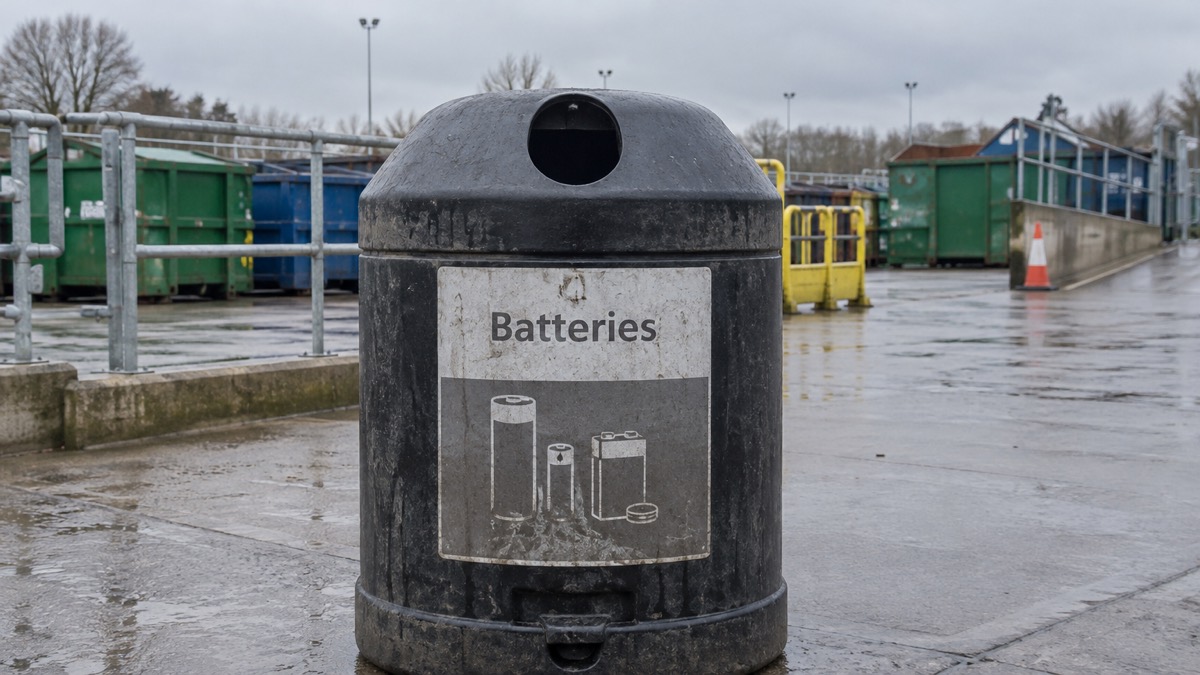
Loose cells need the same care. Never place loose batteries or electrical items, including those containing batteries, in general waste bins11. Keep them apart from each other and from metal so their terminals cannot touch, and take them in with your other electrical waste.
Water is a separate hazard. Dry the bike and battery if they become wet, and remove and dry the battery if possible before charging18. Submerging a battery in water or exposing it to heavy flooding can be particularly dangerous18. A battery that has been under floodwater should be treated as damaged: do not charge it, and seek the manufacturer's advice before moving or disposing of it.
Where to take it and how to get help
The route is the same for a damaged battery as for a working one, with the maker's advice added first. Check your local authority's website or the Recycle Your Electricals website for the safe way to dispose of lithium-ion batteries in your area7. Most local recycling centres accept lithium-ion batteries, disposed of alongside waste electrical and electronic equipment, and you should check with your local authority for specific recycling guidelines in your area2. A lithium battery can also be taken to a household refuse and recycling plant, or you can contact your local authority for more information3.
If a battery is smoking, on fire or hissing, do not handle it: call 99915. If it is damaged but not yet alight, contact the manufacturer for specific advice on how to dispose of it safely and to confirm it is safe to transport it6. For a failing battery you have already removed, keep it outside and away from other items, preferably in a metal container, until it can be collected or handed in6.
For the wider picture on charging, storing and using lithium batteries at home, see our guide to lithium-ion battery safety at home, and for what to do if one does catch fire, what to do if a lithium battery catches fire. If you are clearing out backup power kit, our backup power at home section covers storage and safe charging for the batteries you are keeping.
Sources (23)
- Lithium battery fire safety, Mid and West Wales Fire and Rescue Service, 2026
- Lithium-ion batteries, Scottish Fire and Rescue Service, 2025
- E-scooter, e-bike and mobility scooter fire safety advice, North Yorkshire Fire and Rescue Service, 2026
- Battery fires, Devon and Somerset Fire and Rescue Service, 2026
- E-bikes and e-scooters fire safety guidance, National Fire Chiefs Council, 2025
- Charging safety, Oxfordshire County Council, 2026
- How to dispose of batteries from your e-bike or e-scooter, London Fire Brigade, 2026
- Laptops and notebooks, Electrical Safety First, 2026
- Mobile phones and tablets, Electrical Safety First, 2026
- Power banks, Electrical Safety First, 2026
- Residents urged to think before binning batteries, Devon and Somerset Fire and Rescue Service, 2026
- Smoking, Devon and Somerset Fire and Rescue Service, 2026
- Lithium-ion batteries, National Fire Chiefs Council, 2026
- E-bike and e-scooters, Scottish Fire and Rescue Service, 2026
- Spot the warning signs: could your e-bike or e-scooter start a fire?, London Fire Brigade, 2026
- Vaping and e-cigarettes, London Fire Brigade, 2026
- Batteries and chargers, London Fire Brigade, 2026
- Heat, cold and rain: how weather conditions affect e-bikes and e-scooters, London Fire Brigade, 2026
- Digital easy read fire safety booklet, London Fire Brigade, 2026
- Hoverboards and self-balancing boards, Electrical Safety First, 2026
- E-bikes, Electrical Safety First, 2026
- E-bikes and e-scooters, London Fire Brigade, 2026
- Battery safety, Portsmouth City Council, 2026
 Power Cut Backup Power Checklist
 Backup Power Before Winter
 Safe Battery Charging at Home
 Running a Generator Indoors
 Carbon Monoxide from Generators
 Generator Sizing for a Power Cut
 Generator Run Time on a Tank
 Storing Petrol at Home
 Diesel Storage at Home
 Storing a Generator
 Generators in Cold Weather
 Generator Noise and Neighbours
 Power Station Capacity Sizing
 Power Station Run Time
 Power Station for a Gas Boiler