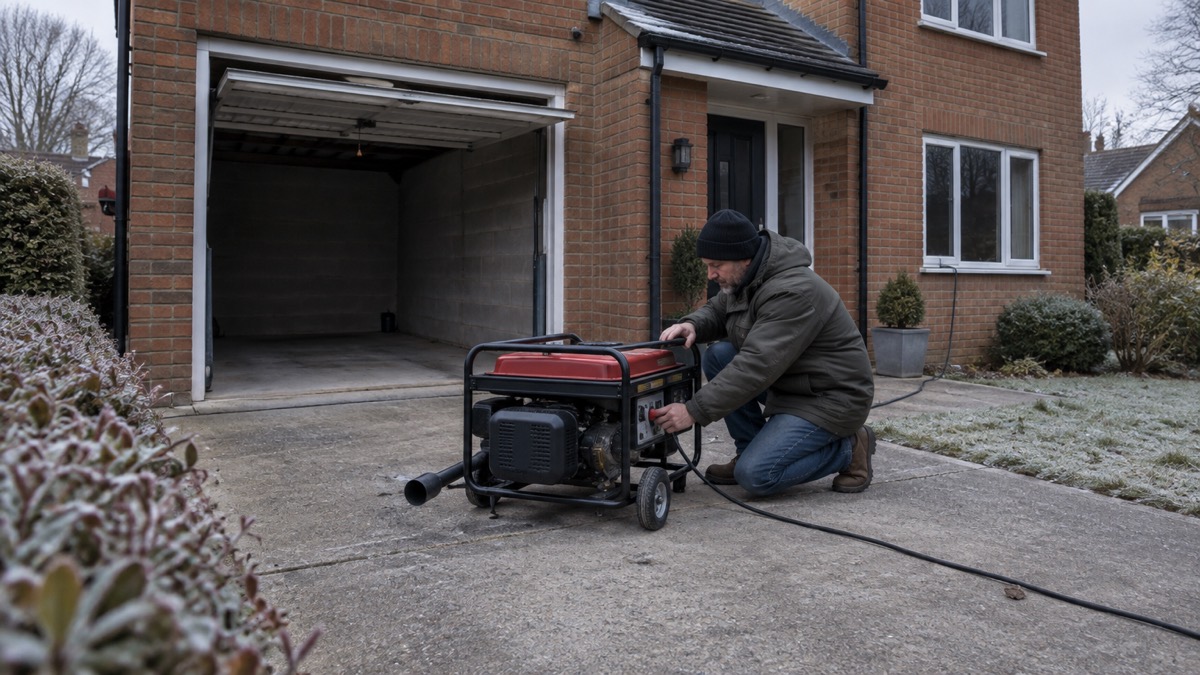
No. A petrol generator must never be run indoors, in a garage or in a shed. Its exhaust contains carbon monoxide, a gas you cannot see, taste or smell, and the Health and Safety Executive warns that using petrol powered equipment indoors or in an enclosed space can create levels that kill even after a few minutes1. The same applies to diesel generators and other fuel-driven equipment2.
The danger is not the smell of petrol or the noise. It is the exhaust. Carbon monoxide levels can quickly kill without warning, and the fire and rescue services say plainly that petrol or diesel generators used indoors can produce fatal levels of the gas1. An open garage door, a propped shed window or a "just for an hour" run does not make an enclosed space safe.
The safe rule is simple: the generator stays outside, in well ventilated open air, with its fumes dispersing away from the building and away from any door, window or vent1. If you need power inside during a cut, a battery power station is the safer route, and our guide to using generators and power stations during an outage sets out the choices.
Where a generator must never go
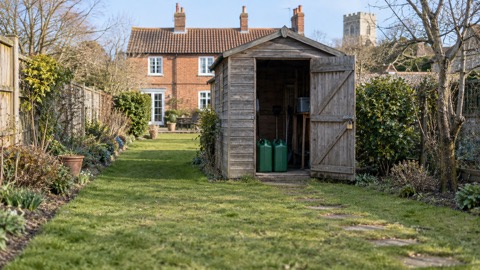
The list of places a generator must not run is longer than most people expect, because "enclosed space" covers more than a living room. The Health and Safety Executive says petrol powered equipment must never be used indoors or in enclosed spaces unless the ventilation needs have been fully assessed1. That covers a garage, a shed, a conservatory, a cellar, a porch and a workshop.
The fire and rescue services extend the same rule to the places people shelter in. North Wales Fire and Rescue Service says never to use barbecues or portable fuel-burning equipment indoors or in enclosed spaces4. The London Fire Brigade says never to take portable or disposable barbecues, grills or charcoal fuel burners into your home or any confined space such as a tent, houseboat or caravan5. A generator belongs in the same category: it burns fuel and gives off exhaust.
| Place | Safe for a running generator? | Why |
|---|---|---|
| Garage, even with the door open | No | Enclosed space; fumes gather and drift into the house1 |
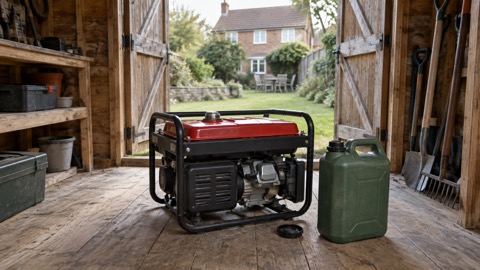
| Shed or outbuilding | No | Enclosed space with poor airflow1 |
| Tent or caravan | No | Confined space; fuel-burning devices must never be used inside4 |
| House, porch or conservatory | No | Indoors; carbon monoxide can kill3 |
| Open garden, well away from openings | Yes, with care | Fumes disperse in well ventilated open air1 |
The Northern Ireland Executive's storm advice for farmers and livestock owners is blunt about standby generators: never use them indoors, as the fumes from the engine can be lethal8. That applies to a permanently installed standby unit as much as to a portable one. If a generator is fixed to a building, its exhaust must still discharge outdoors, away from windows and vents.
Why carbon monoxide kills without warning
Carbon monoxide gives no warning. You cannot see it, taste it or smell it, but it can kill quickly and without warning, as the Mayor of London's office puts it in gas safety guidance for tenants9. The Health and Safety Executive says the same: carbon monoxide levels can quickly kill without warning1. There is no smell of burning, no visible smoke and no obvious sign that anything is wrong until someone becomes unwell.
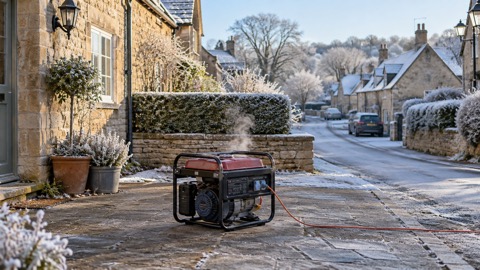
The risk peaks in winter. Government guidance notes that many carbon monoxide deaths take place between November and February, caused by faulty fossil fuel and wood burning appliances leaking the gas10. A generator run in a cold garage during a winter power cut sits squarely in that window. The gas builds up in the still, cold air and seeps into the house through the connecting door, gaps and vents.
"Carbon monoxide is invisible and odourless, so having an alarm in these rooms is essential."
The fire and rescue services treat an alarm as essential in any room with a fuel-burning appliance. Northern Ireland Fire & Rescue Service says carbon monoxide is invisible and odourless, so having an alarm in rooms with fuel-burning appliances is essential12. Devon and Somerset Fire and Rescue Service says alarms should be fitted in all rooms containing solid fuel appliances such as open fires or wood burners, and any gas appliances such as central heating systems, boilers, gas fires and paraffin heaters13.
An alarm is a backstop, not a substitute for siting the generator properly. It warns you once gas is present, which may be too late if the generator is in the room next door. Fit the alarm, and still keep the generator outside.
Siting a generator outdoors: air flow and distance from doors and windows
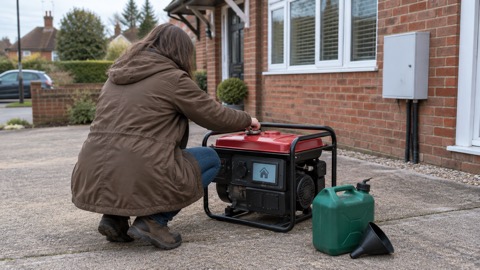
Outdoors is the starting point, not the whole answer. The Health and Safety Executive advises locating petrol generators outside in well ventilated spaces so that fumes disperse and cannot gather or drift into building openings1. Three things decide whether a spot is safe: airflow, distance from openings, and which way the exhaust points. Position the generator on firm, level ground away from combustible materials, standing water and areas where exhaust gases could accumulate14.
- Airflow: choose open ground, not a corner between a wall and a fence where fumes can pool.
- Openings: keep the exhaust away from doors, windows, air bricks and vents, so fumes cannot drift inside1.
- Direction: point the exhaust away from the building, not towards it.
- Weather cover: never bring the generator inside to keep it dry. If it must be sheltered, use an open-sided structure that does not trap fumes, and never a closed shed or garage.
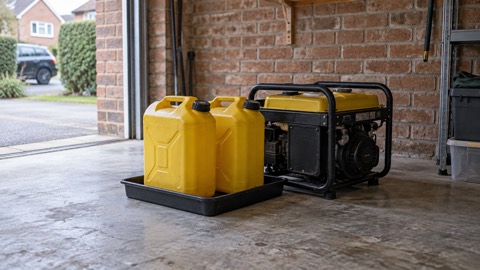
- Fuel: always decant fuel in the open air, not inside a garage or shed, and do not smoke near where petrol is stored15.
The same logic applies after a flood, when people are drying out a house and reach for a generator. Runnymede Borough Council's flood aftercare advice is to never run a petrol or diesel-powered generator indoors, because the exhaust gases contain carbon monoxide, which can kill3. Which? gives the same instruction in its flood recovery guidance: never use petrol or diesel-powered generators indoors16. Wiltshire and Swindon Prepared repeat it: do not use petrol or diesel generators indoors because the exhaust gases contain carbon monoxide, which can poison if in high concentrations in the air17.
If you are weighing up a generator against a battery unit, our comparison of a portable power station or petrol generator for a power cut sets out what each can and cannot do. For the full picture on fumes, fuel and electric shock, see generator safety.
Symptoms of carbon monoxide poisoning and what to do at once
Carbon monoxide poisoning is easy to miss because its early symptoms look like common illnesses. The Royal Society for the Prevention of Accidents says carbon monoxide symptoms can be mistaken for flu, food poisoning, viral infections and tiredness7. Headache, nausea, dizziness and feeling generally unwell are the kind of thing most people put down to a bug or a long day.
The NHS advises that you should not leave vehicles or other engines on in enclosed spaces such as a garage18. If you suspect carbon monoxide, act at once:
- Get everyone out into fresh air, including pets.
- Open doors and windows on your way out if you can do so safely.
- Turn off the generator if it is safe to reach it, but do not go back inside for it.
- Call the gas emergency line on 0800 111 999 if you smell gas or suspect a carbon monoxide leak6. The National Gas Emergency Service also offers a textphone line on 0800 371 78719.
- Seek medical help if anyone has symptoms, and tell the clinician you suspect carbon monoxide.
Petrol vapour carries its own risk. The fire and rescue services warn that petrol vapour can cause irritation of the eyes, nose and throat, and in confined spaces can cause dizziness and unconsciousness15. That is another reason fuel is decanted in the open air and generators run outside.
Who is most at risk
Carbon monoxide does not discriminate, but some people are more vulnerable to fire and fumes at home. The government's fire safety campaign identifies older adults, those who live alone, people who smoke and drink at home, and people with disabilities, physical mobility issues or mental health conditions as at higher risk from home fire20. If any of those describe your household, the case for keeping the generator outside and fitting an alarm is even stronger.
Age matters too. Across Devon and Somerset, the fire and rescue service says the group most at risk of fire is the age group aged 65 and over, with around three-quarters of this group's domestic fires started by cooking21. Older residents living alone may also be slower to notice symptoms or to get out.
Children and pregnant women deserve particular care. The safest rule is that nobody should be in a building where a generator is running, and that includes children and anyone who is pregnant. If you have a health condition, are pregnant or have young children, treat any headache, nausea or dizziness during a power cut as a possible warning and get everyone into fresh air.
If you have a neighbour who lives alone, is older or has a disability, check on them during a power cut. Fire and rescue service guidance identifies older adults, people who live alone, and people with disabilities, physical mobility issues or mental health conditions as at higher risk from home fire20. A quick knock to make sure they are not running a generator in the garage is worth the walk.
Generators, caravans and tents
Tents and caravans are the most dangerous places of all for a fuel-burning device, because they are small and seal tightly. Fire and rescue service prevention advice is never to take portable or disposable barbecues, grills or charcoal fuel burners into your home or any confined spaces such as a tent, houseboat or caravan4. A generator is a fuel-burning device and falls under the same rule.
Caravan and mobile home guidance adds that you should make sure heaters work properly22. If you are using a caravan during a power cut, keep any generator outside, well away from the door and any vents, and never bring it in to keep it dry or to stop it being stolen overnight.
Getting advice before you connect anything
A generator that simply powers an extension lead outdoors is one thing. A generator connected to your home's wiring is another, and it needs professional advice. Official guidance says it takes research by you and the advice and expertise of a qualified electrician for a generator to help you23. Connecting a generator to the house can back-feed the network and endanger the people working to restore your supply.
Your electricity network will not supply you with a generator. NIE Networks, which runs the network in Northern Ireland, states that it does not fit generators in individual homes or businesses, and fits them at the local substation where possible24. Network operators restore supply from their side; a generator for your home is your own responsibility.
For short cuts, a generator may not be worth the cost at all. Official guidance notes that for the few hours you may be without power, torches and lanterns are a suitable alternative23. Our guide to deciding what to keep running when the mains fails helps you work out what actually matters, and the power cut backup power checklist lists what to have ready.
If you do go ahead, read connecting a generator or battery to your home's wiring before you buy anything, and ask a qualified electrician to look at your plans.
Sources (24)
- Carbon monoxide, Health and Safety Executive, 2026
- Flooding and health: safely cleaning your home, Wiltshire and Swindon Prepared, 2026-10-25
- After a flood, London Fire Brigade, 2026-10-25
- Caravans and camping, North Yorkshire Fire and Rescue Service, 2026-05-13
- Carbon monoxide safety, London Fire Brigade, 2026-10-25
- Fire safety for tenants, Devon and Somerset Fire and Rescue Service, 2026
- Gas safety, Royal Society for the Prevention of Accidents, 2026-10-26
- Strong winds and heavy rain warning: information and advice, Northern Ireland Executive, 2026-01-27
- Gas safety for tenants, Mayor of London, 2026-10-25
- Reduce the risk of carbon monoxide poisoning over winter, GOV.UK, 2015-11-16
- At home for the holidays, safe for the season, Northern Ireland Fire and Rescue Service, 2025-12-01
- Keeping your home warm in winter, Met Office, 2026
- Fire safety for carers, Devon and Somerset Fire and Rescue Service, 2026
- Generators: Diesel and Petrol, Honda & Clarke - Clarke International, Clarke International
- Storing fuel, Devon and Somerset Fire and Rescue Service, 2026
- How to dry your home out after a leak or flood, Which?, 2025-12-01
- Flooding, Runnymede Borough Council, 2026-10-26
- Carbon monoxide poisoning, NHS, 2025-12-16
- Power, gas and water: what if they fail, Surrey County Council, 2026-10-26
- Domestic fire, Prepare campaign, 2026-10-12
- Cooking, Devon and Somerset Fire and Rescue Service, 2026
- Caravans and mobile homes, Devon and Somerset Fire and Rescue Service, 2026
- Generators, Wiltshire and Swindon Prepared, 2026-10-25
- Planned work, NIE Networks, 2026-10-25
 Power Cut Backup Power Checklist
 Backup Power Before Winter
 Safe Battery Charging at Home
 Carbon Monoxide from Generators
 Generator Sizing for a Power Cut
 Generator Run Time on a Tank
 Storing Petrol at Home
 Diesel Storage at Home
 Storing a Generator
 Generators in Cold Weather
 Generator Noise and Neighbours
 Power Station Capacity Sizing
 Power Station Run Time
 Power Station for a Gas Boiler
 Power Station UPS Mode