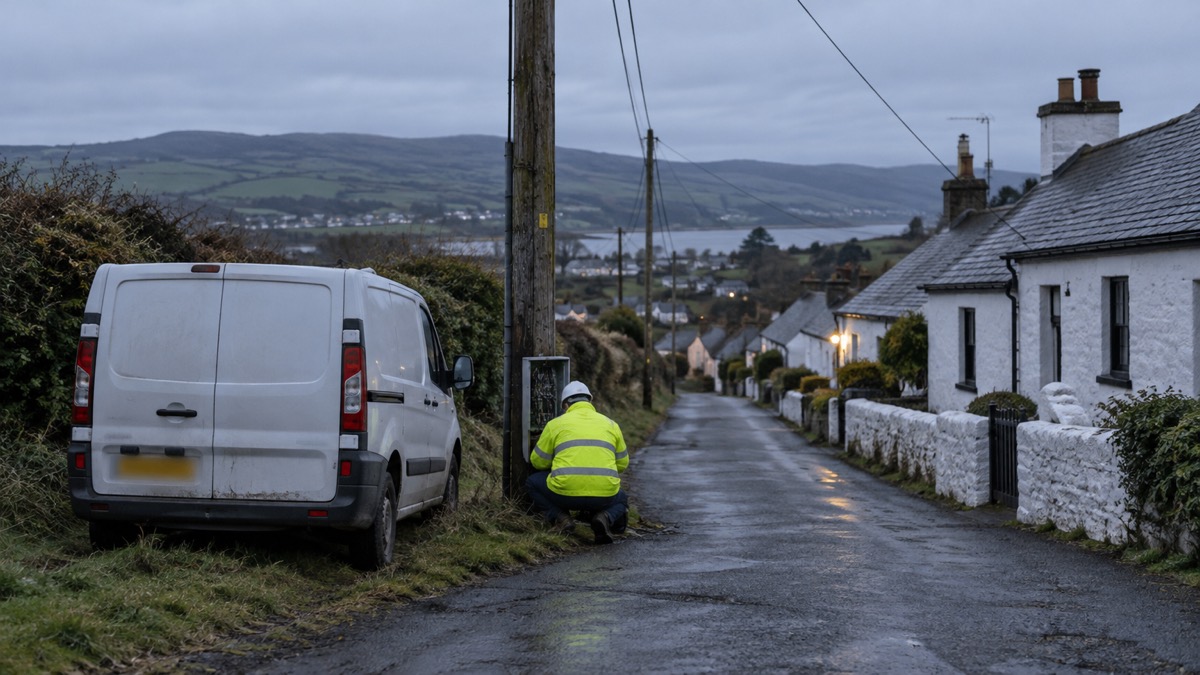
If your electricity goes off in Northern Ireland, report it to NIE Networks on 03457 643 643. That single number is for reporting both a power cut and damaged equipment, and you can also report through the Powercheck app1. Before you ring, check whether the cut is on your trip switches, then have your Meter Point Reference Number (MPRN) or your postcode and house number handy so NIE Networks can find your supply quickly3.
NIE Networks owns and maintains Northern Ireland's electricity network: the poles, wires and substations that carry power to your home4. It transports electricity from where it is generated to over 910,000 customers including homes, businesses and farms, and connects approximately 9,000 customers a year to the network4. One of its main priorities, it states, is to ensure that you have an uninterrupted supply of electricity4.
Report a power cut to NIE Networks on 03457 643 643
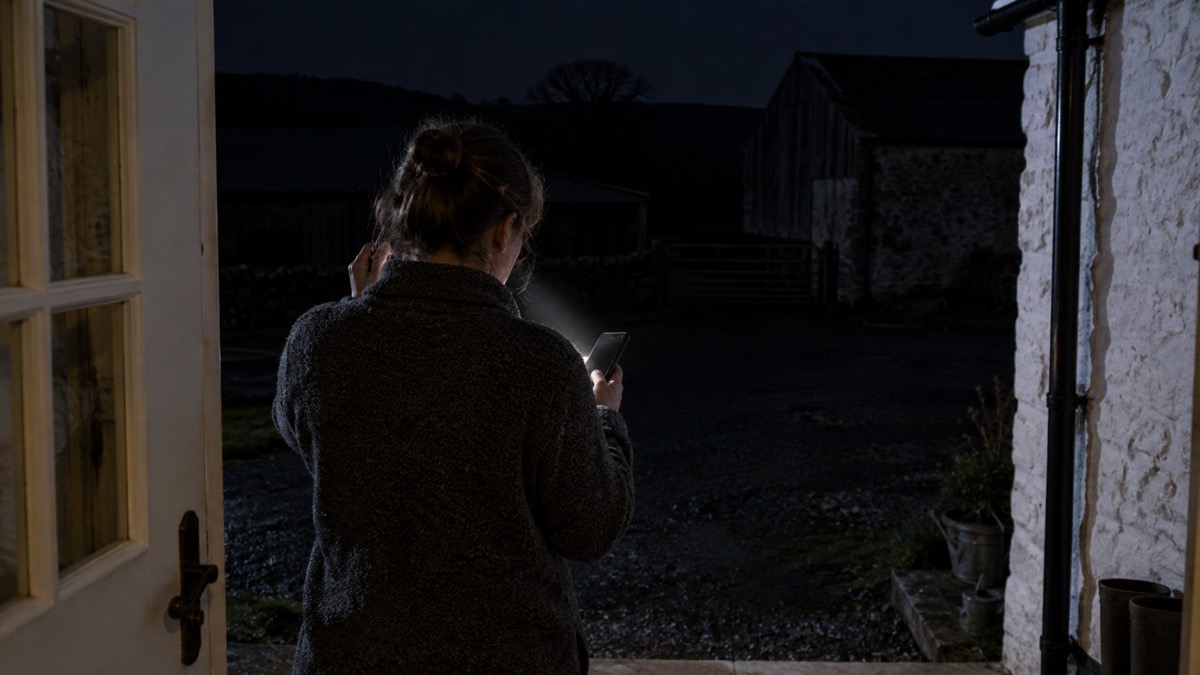
The NIE Networks Customer Helpline, 03457 643 643, is the number to call to report a power cut or a damaged power line1. The same number is given across official guidance for storms, ice, thunderstorms and floods, so it is worth keeping it written down where you can find it in the dark2. Householders can contact NIE 24 hours a day for advice, and there is a minicom number, 03457 147 128, and an email address, customercontact@nie.co.uk, if you cannot use the phone9.
Before you call, check whether the problem is on your side of the meter: look at your trip switches and consumer unit, and see whether your neighbours have power too. Then have your MPRN, or your postcode and house number, ready, as NIE Networks asks for these details when you report a fault3. If you rely on electricity for medical equipment, say so when you call, and make sure you are registered for extra help before an emergency happens. Our page on the Priority Services Register explains who can join and what it gives you.
One point that catches people out: in England, Scotland and Wales the free single number for power cuts is 105, but in Northern Ireland the number is 03457 64364310. If you are visiting or have recently moved, do not ring 105 expecting it to work in the same way.
Other ways to report: Power Check and the website
You do not always need to phone. Powercheck provides a real-time fault information map showing power cuts in your area, so you can see whether your outage is already known before you report it3. NIE Networks also publishes an updated list of areas affected by power cuts on its website during storms and severe weather12. Official guidance suggests visiting your local network operator's website to report a power cut and track updates when there is a problem, and calling only if you cannot report online11.
How long until the power comes back
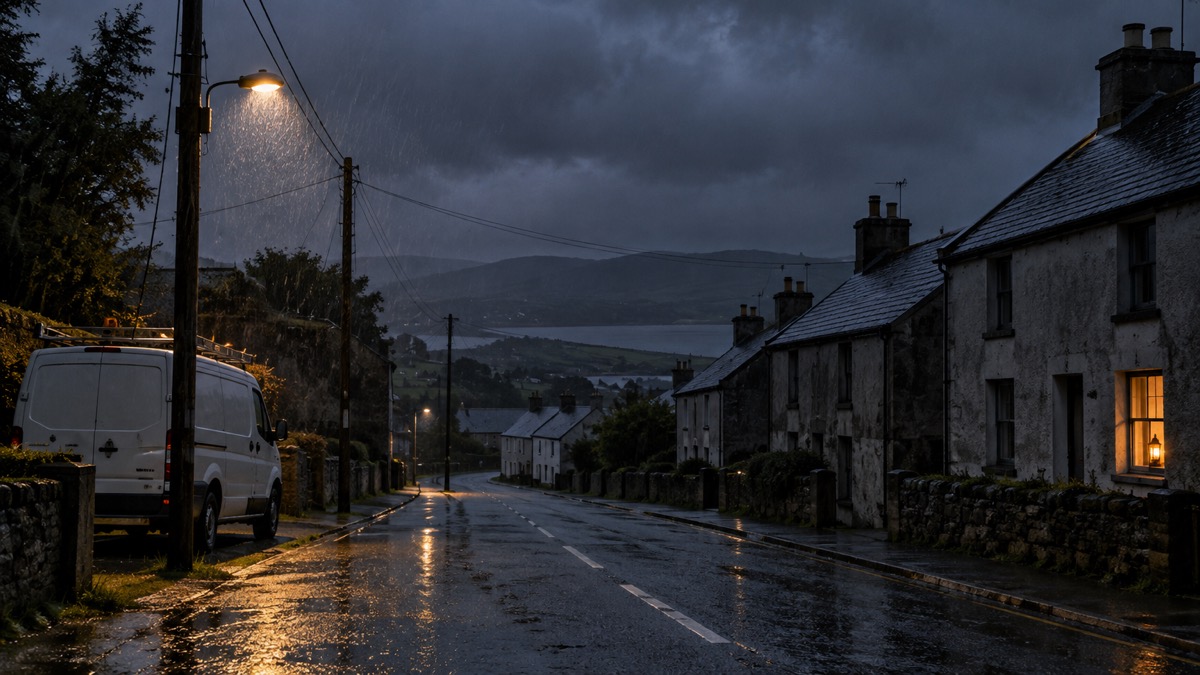
NIE Networks' standards state that it will restore your electricity within 24 hours of a power cut5. Most cuts are resolved well inside that. For a picture of how quickly networks recover even in severe weather, official storm reviews from Great Britain are instructive: during the storms of 23 to 28 December 2013, Northern Powergrid restored 70.0 per cent of customers interrupted within one hour, 99.6 per cent within 12 hours, and 99.9 per cent within one day, while UK Power Networks restored 53.8 per cent within one hour, 83.6 per cent within 12 hours, and 92.5 per cent within one day14. During Storm Arwen in November 2021, Northern Powergrid restored 83.7 per cent of customers within 24 hours and Scottish Power Electricity Networks restored 87.4 per cent within 24 hours15.
Northern Ireland sits outside those reviews because it runs as a separate system: Ofgem's Storm Arwen review noted that Northern Ireland Electricity Distribution was not affected by Storm Arwen and was not part of that review15. The practical point for your household is the same either way. A single fault affecting your street is usually fixed in hours, while a storm that brings down lines across a whole region can take a day or more, and you should prepare for that possibility rather than assume a quick fix. Our page on how long until the electricity comes back explains what affects repair times.
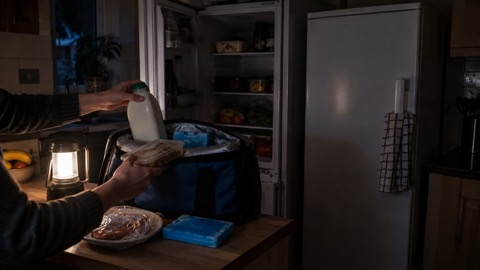
If a cut drags on, keep your freezer shut, unplug sensitive appliances, and check on neighbours who may be struggling. Our pages on what to do when the electricity goes off and fridge and freezer food when the electricity is off cover this step by step.
Storms and severe weather: how NIE Networks responds
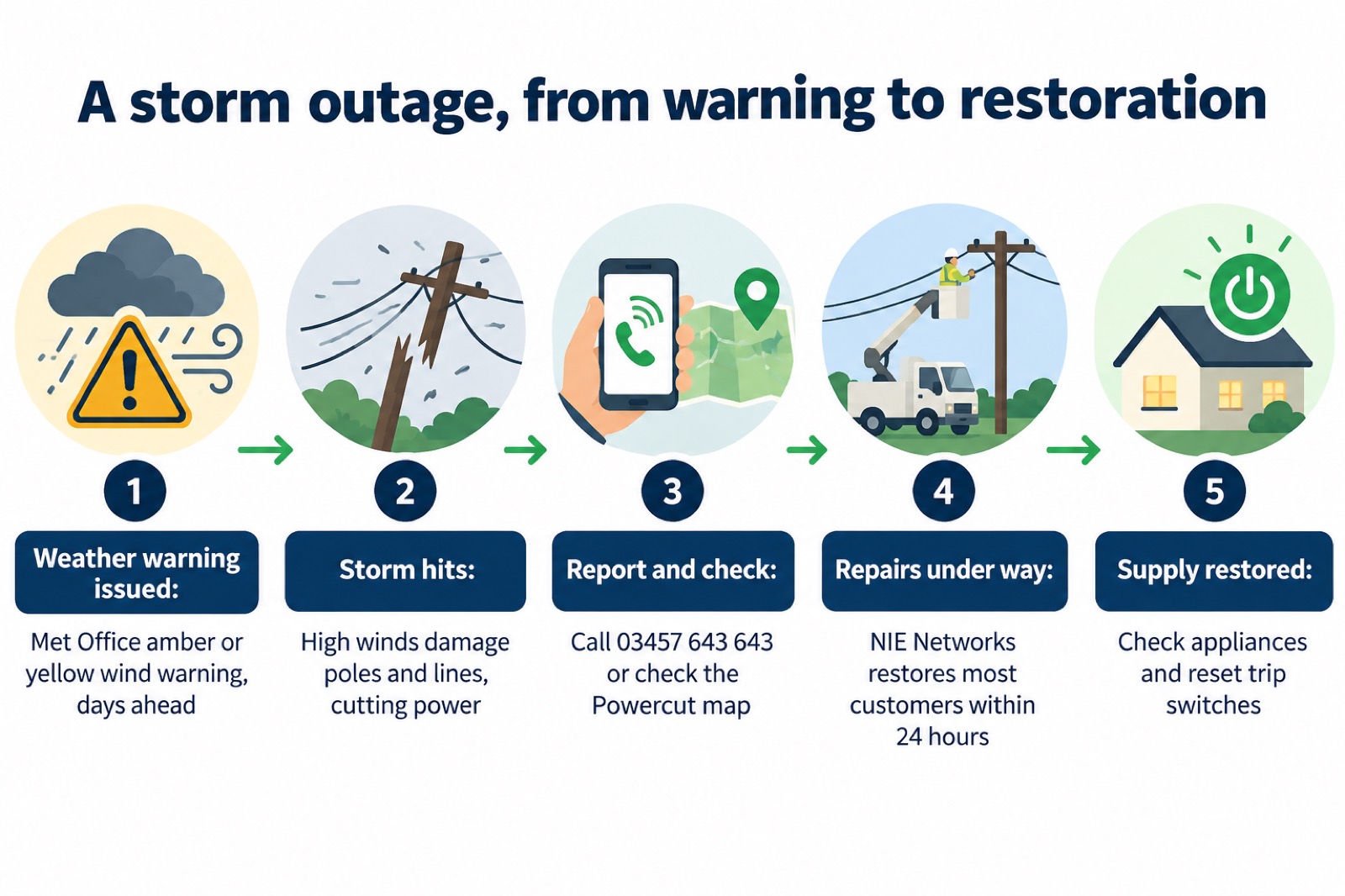
Northern Ireland's position facing the Atlantic makes wind storms the most common cause of widespread outages. Storm Boelo in October 2026 is a recent example: the Met Office issued amber and yellow weather warnings for strong winds on Saturday 24 and Sunday 25 October, warning of flying debris, large waves, travel delays, fallen trees and power cuts13. High winds damaged the electricity network and cut power to approximately 12,500 customers, with NIE Networks restoring around 11,500 and under 1,000 remaining without supply by the following day16.
During any storm, you can get information about electricity supply, including an updated list of areas affected by power cuts, on the NIE Networks website12. The Met Office advises that people cope better with power cuts when they have prepared for them in advance, and suggests gathering torches and batteries, a mobile phone power pack and other essential items before the weather arrives17. Power cuts and loss of utilities are more likely in adverse weather conditions, so preparation matters most exactly when the forecast turns bad18.
Trees near power lines
Fallen trees are one of the main ways storms bring down lines. Never try to cut back trees or bushes yourself; instead, ask your power company so a qualified professional can manage the work safely19. If a tree has fallen and is blocking a road in Northern Ireland, you can report it on 0300 200 789120. If it has brought down a line with it, treat the line as live and keep everyone well away.
Staying safe: never touch damaged lines or equipment
The single most important safety rule during any power cut or storm is simple: never touch damaged electricity equipment1. NIE Networks' own guidance to customers is blunt:
"Keep safe: Never approach broken lines or damaged poles."
The same warning appears across official severe weather advice from nidirect: do not approach any damaged electricity equipment or broken power lines12. North Wales Fire and Rescue Service adds a note about storms specifically: be careful not to touch any electrical or telephone cables that have been blown down or are still hanging21. A line lying on the ground can carry a lethal current, and you cannot tell by looking whether it is live. Stay at least five metres away and never attempt to move or touch it1. Our page on fallen overhead lines covers what to do in more detail, including what to do if a vehicle touches a line.
Planned work: at least three days' notice
Not every power cut is a fault. If your supply is turned off for planned reasons, such as maintenance or network upgrades, NIE Networks must give you three days' notice, which usually arrives as a postcard through the door6. This is more generous than the position in Great Britain, where distribution network operators have to give two days' notice, usually via a letter5.
When a planned card arrives, read the date and times carefully and plan around them: charge phones and power banks in advance, think about how you will cook and keep warm, and check on anyone nearby who may need help. Our page on planned interruptions explains why they happen and how to prepare. If the planned cut does not go ahead on the day you were warned about, keep the postcard, as it matters for compensation.
Compensation after a long power cut
Northern Ireland has its own compensation rules, and they differ from those in Great Britain, so do not apply GB figures to an NI outage. For an unplanned power cut, NIE Networks' standards state that it will restore your electricity within 24 hours. If it does not, you are due £50, then £25 for every 12 hour period after that, and you must claim within one month of the day of the power interruption5. For a planned power cut, if you do not get the three days' notice you are entitled to, you can claim £25 per home, again within one month of the day of the interruption5.
| Situation | What you can claim | Deadline |
|---|---|---|
| Unplanned cut not restored within 24 hours | £50, then £25 for every 12 hour period after that | Claim within one month of the interruption5 |
| Planned cut without three days' notice | £25 per home | Claim within one month of the interruption5 |
For comparison, in Great Britain the rules are different: you can get £100 for homes if less than 5,000 properties are affected for more than 12 hours, or more than 5,000 properties are affected for more than 24 hours, with an extra £45 for every additional 12-hour period without electricity23. Those figures do not apply in Northern Ireland, so always claim under the NI scheme.
You may also be able to claim for spoilt freezer contents on your home insurance, as National Grid's power cut advice notes, so check your policy after a long outage25. Our page on what food to throw away after an outage helps you decide what is still safe.
Emergency rota power cuts: what they mean for your home
A storm cuts power because equipment is damaged. An emergency rota is different: it is a deliberate, planned series of power cuts shared across the country to reduce how much power Britain needs, without switching everyone off at once26. If a national energy shortage were ever likely to last a few days, an emergency power cut rota would be published. You would enter your postcode to see when you would have a power cut the next day, and a timetable of risk for the days after, and you would need to keep checking the rota every evening as it is updated26.
Rota disconnections have not been used in recent decades, but the mechanism exists and is planned for. If one were announced, the practical steps for your household would be the same as for any long outage: know your block letter, keep torches and charged power banks ready, and plan for keeping warm and cooking without mains power. Our pages on rota disconnections and finding your block letter for an emergency rota explain the system in full.
Getting ready for a long power cut at home
Preparation is the part you control, and official advice is consistent about what to gather. The Met Office puts it plainly:
"People cope better with power cuts when they have prepared for them in advance. It's easy to do; consider gathering torches and batteries, a mobile phone power pack and other essential items."
Before a storm, nidirect's severe weather advice tells households to keep a supply of candles, and the Northern Ireland Fire and Rescue Service, ahead of Storm Éowyn in January 2025, advised making sure you are prepared for a power cut by having a torch or battery operated candles ready1. A torch is the safer first choice, and battery-operated candles avoid the risks of a naked flame altogether. Community guidance on adverse weather goes further and advises avoiding candles and paraffin heaters28. If you do use real candles, never leave them unattended, keep them away from curtains and anything that catches fire easily, and extinguish them before bed.
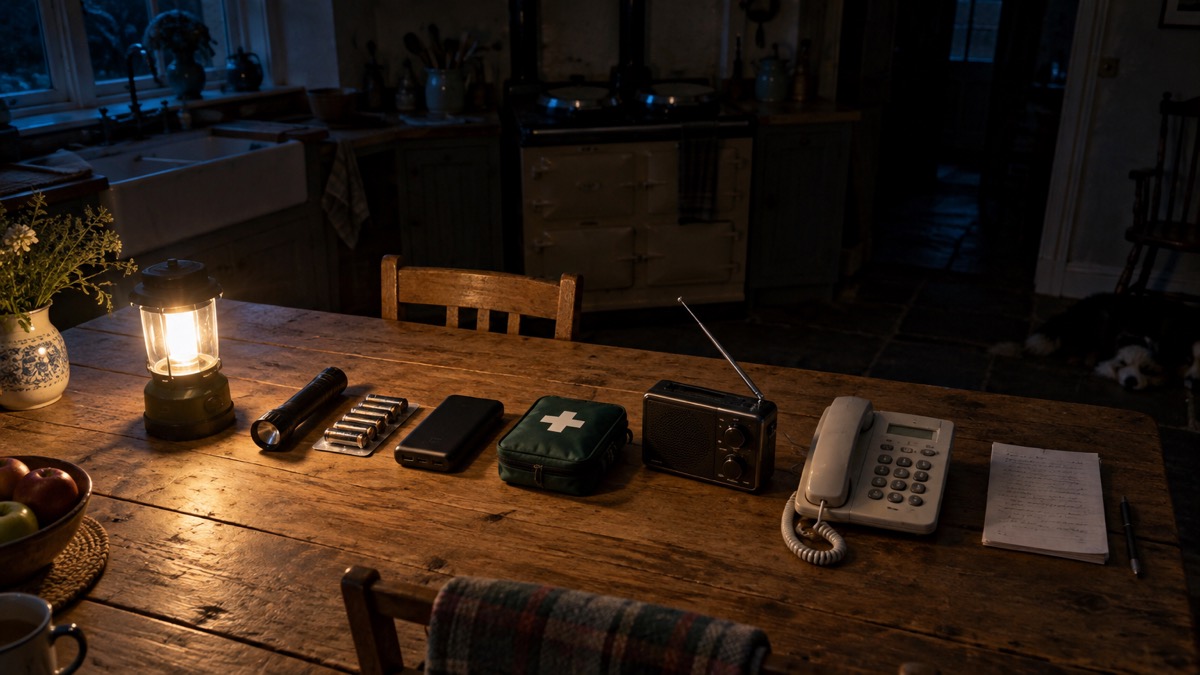
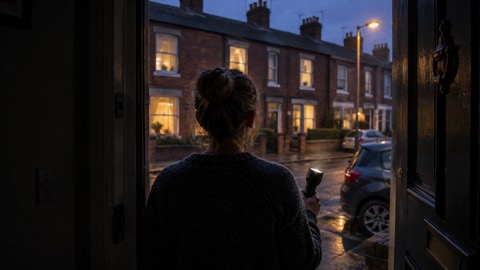
*A prepared household keeps torches, batteries, a power bank and essentials in one place it can find in the dark.]
What to have ready:
- Torches and batteries, gathered in advance17
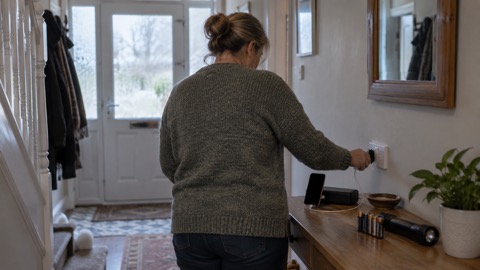
- A mobile phone power pack, kept ready17
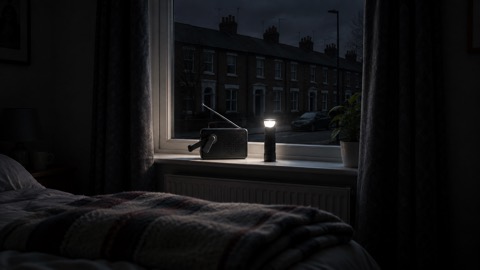
- A battery or wind-up radio for news and weather updates10
- A torch or battery-operated candles, ready before the power goes27
- Your MPRN or postcode written down, so you can report a cut quickly3
- The NIE Networks number, 03457 643 643, somewhere you can find it in the dark1
Look out for elderly neighbours and ensure they are prepared for a possible power cut, as the Met Office's seasonal advice recommends29. If flooding accompanies the storm, turn off gas, electricity and water supplies if it is safe to do so before water reaches them9. Our checklists on power cut kit, what to keep charged and a household emergency plan go through this in more detail, and getting your home ready for a loss of supply covers the longer view.
Heaters, cooking and fire safety during an outage
Power cuts push households towards improvised heating and cooking, and that is where fire risk rises. The number one cause of accidental fires is cooking, so never leave cooking unattended, and if you need to leave the kitchen while cooking, take pans off the heat or turn them off completely, as NIFRS advises30. Do not leave electrics charging on soft surfaces, do not overload extension leads, and stay vigilant for signs of overheating or malfunction when charging devices22. Smoking materials have been the leading cause of fatal house fires in Northern Ireland, accounting for 43% of such deaths over the past 10 years, and a majority of fatal fires started in a bedroom, followed by the living room and kitchen31. NIFRS strongly advises smoking outdoors and extinguishing cigarettes before placing them in a suitable container such as a metal bin31.
If a fire does start, get out, stay out and call 99922. Our pages on staying safe in the dark, keeping warm without electricity and carbon monoxide risks when the heating is off cover the specific dangers of outage heating.
Extra help: the NIFRS Home Fire Safety Check
The Northern Ireland Fire and Rescue Service offers a free Home Fire Safety Check to households, with referrals taken through the NIFRS website32. If you fit NIFRS Person at Risk criteria, have no access to the internet, or are unable to complete the online self-assessment, you can phone NIFRS on 028 9266 4221 to receive a free in-person Home Fire Safety Check31. NIFRS works collaboratively with partner agencies to reach those in the community who may be more at risk from fire, and its community safety work covers water safety, wildfire safety and seasonal fire safety advice as well as the home33.
A fire safety check before winter, or before a storm season, is a sensible step for any household that may face a long power cut with candles, alternative heating and cooking by torchlight. If you rely on medical equipment that needs electricity, read our page on relying on medical equipment that needs electricity and its checklist, and make sure NIE Networks knows your circumstances before an emergency, not during one.
Sources (33)
- Strong winds and heavy rain warning: information and advice, nidirect, 2026-01-27
- Ice weather warning: information and advice, nidirect, 2026-02-16
- I have a power cut, what should I do?, NIE Networks, 2026-10-25
- Energy, power supply and utilities, nidirect, 2025-10-23
- How to find out if there's a power cut, Which?, 2026-06-04
- Planned work on the electricity network | Northern Ireland Electricity Networks, Northern Ireland Electricity Networks (NIE Networks)
- Thunderstorms weather warning: advice and information, nidirect, 2026-08-30
- Household emergency kit, nidirect, 2026-07-06
- What to do if a flood happens, nidirect, 2025-10-24
- Be informed about hazards: power cuts, Beready campaign, 2026-10-21
- Be informed about hazards: power cuts, Prepare campaign, 2026-10-21
- Strong winds and heavy rain warning: information and advice, nidirect, 2026-10-24
- Strong winds weather warning: information and advice, nidirect, 2026-10-24
- Final December 2013 storms review, Ofgem, 2014-03-06
- Storm Arwen Review Main Report, Ofgem, 2021-11
- Storm Boelo update, Sunday 25 October 4.30pm, NIE Networks, 2026-10-25
- Accessible UK weather warnings, Met Office, 2026-10-24
- Top tips for keeping warm and safe this winter, North Yorkshire Fire and Rescue Service, 2023-11-29
- Protecting your home from wildfire, Scottish Fire and Rescue Service, 2026-01-15
- Severe weather: storms, flooding and drought, nidirect, 2026-07-06
- Flooding and high winds, North Wales Fire and Rescue Service, 2026-10-25
- Student Fire Safety Week sparks practising safe charging, Northern Ireland Fire and Rescue Service, 2025-09-22
- Check if you can get payment for a power cut, Ofgem, 2026
- Plan for a power cut, Ofgem, 2026
- What to do during a power cut, National Grid, 2026
- What are electricity rota loads?, Wiltshire and Swindon Prepared, 2026-10-25
- NIFRS statement: Storm Éowyn operational incident update 10am, Northern Ireland Fire and Rescue Service, 2025-01-24
- Adverse weather events, Llangattock Community Council, 2026-10-25
- What to do in a power cut, Met Office, 2026-10-25
- Hop into safety this Easter: top tips from NIFRS, Northern Ireland Fire and Rescue Service, 2025-04
- NIFRS reveals highest house fire fatalities in 25 years, Northern Ireland Fire and Rescue Service, 2026-01-23
- Crack down on fire risks this Easter, Northern Ireland Fire and Rescue Service, 2026-03-30
- Staying safe: community safety, Northern Ireland Fire and Rescue Service, 2024-09-06
 Power Cut Kit Checklist
 What to Keep Charged
 Household Emergency Plan
 Reporting a Power Cut
 What to Do in a Power Cut
 Getting Ready for a Power Cut
 Fridge and Freezer Food
 Keeping Warm Without Electricity
 Central Heating Without Power
 Cold Homes and Health
 Carbon Monoxide Risks
 Staying Safe in the Dark
 Smoke and Carbon Monoxide Alarms
 How Long Until Power Returns
 When the Power Comes Back