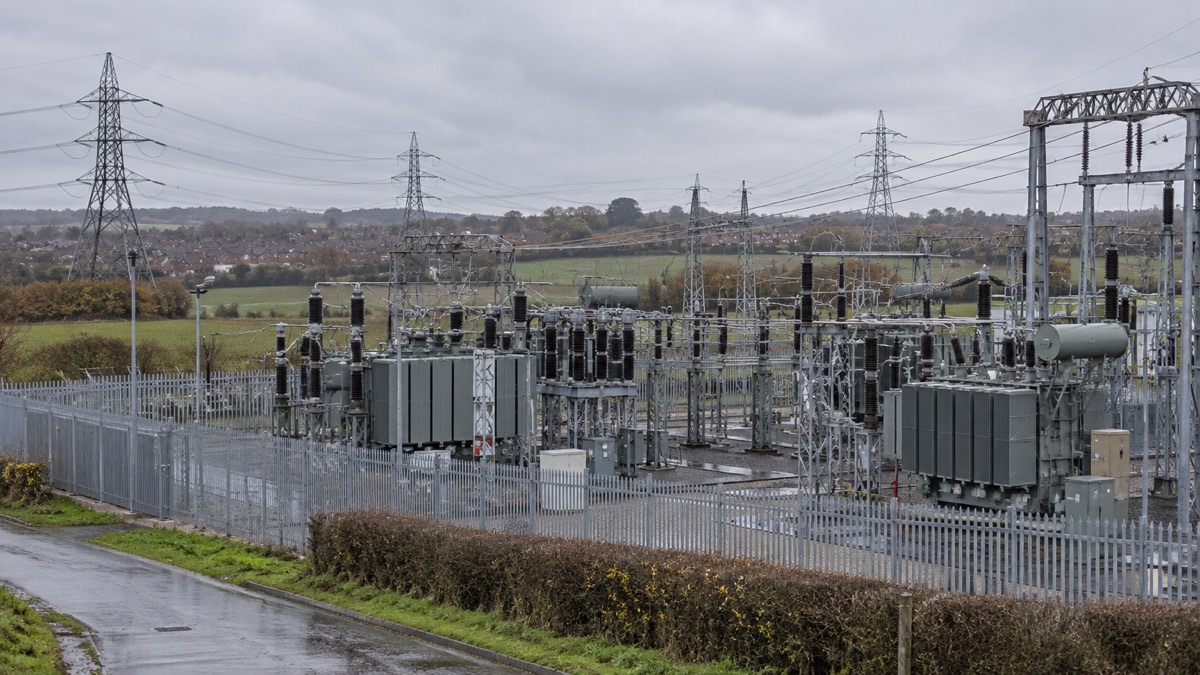
When the lights go out, most households reach for the phone. But who is on the other end, and who is actually responsible for switching the power back on? The answer surprises many people: it is not the company on your electricity bill. The National Energy System Operator (NESO) balances the system but does not create or sell electricity, as there is an electricity market where that happens1. The regional Distribution Network Operators (DNOs) then reduce the voltage and deliver electricity to homes and businesses across the country2.
This split matters to you in a power cut. NESO keeps the whole system balanced across England, Scotland and Wales3. Your local DNO owns the cables and towers that connect your street to the network, and it is the organisation that restores your supply when something goes wrong4. The free 105 number connects you straight to that local operator5.
Power cuts on this scale are rare, and the system is built with several layers of protection before any household is disconnected. NESO will first ask for more generation, ask large businesses to reduce their use, and pay ordinary customers to use less, all before instructing network operators to cut power6. Only if the grid's frequency falls to 48.8 Hz does an automatic scheme begin disconnecting demand in stages7. This page explains each of those layers, and what they mean for what you see at home.
Who runs the grid: the system operator, the networks and your supplier
Britain's electricity reaches your home through three kinds of organisation, and knowing which does what saves a lot of confusion when something goes wrong.
The National Energy System Operator, NESO, is responsible for making sure there is always enough power being generated to meet the needs of customers, a process the industry calls keeping the system "balanced"2. One of its roles is to operate the electricity system and guide electricity from where it is generated to where it is needed10. Crucially, NESO does not create or sell electricity: there is an electricity market where that happens10. It is the referee and the air traffic controller, not the power station or the shop.
The electricity NESO manages is distributed to the 14 Distribution Network Operators across the country1. The DNOs are the infrastructure we see bringing electricity into our homes1. A simple way of picturing the arrangement is that the transmission networks are the motorways, and the DNOs are the A and B roads that branch off to more localised areas1. These operators then reduce the voltage and deliver electricity to homes and businesses across the country5. National Grid, for example, is the DNO for the Midlands, South West England and South Wales, serving eight million customers; if you live elsewhere, you have a different DNO11.
Your energy supplier, the company whose name appears on your bill, is a separate organisation again. Suppliers buy electricity on the wholesale market and pay the DNOs for transporting it, and the customer pays the supplier1. DNOs do not sell electricity to consumers13. That is why you report a power cut to your network operator, not to the company you pay.
| Organisation | What it does | What it does not do |
|---|---|---|
| NESO (system operator) | Balances supply and demand across England, Scotland and Wales3 | Does not create or sell electricity10 |
| Your DNO (network operator) | Owns and maintains the cables and towers bringing power to your home; restores your supply4 | Does not sell you electricity13 |
| Your supplier (on your bill) | Buys electricity wholesale and sells it to you1 | Does not fix the network in a power cut |
| Ofgem (regulator) | Regulates the energy companies and sets rules on power cut responses14 | Does not run the network itself |
Overseeing all of this is Ofgem, the energy regulator for Great Britain14. Ofgem sets rules about how electricity companies respond to power cuts and how quickly power should be restored; if these are not met, you could be due compensation12. Like energy providers, DNOs have to be regulated by Ofgem, which stipulates that DNOs must connect customers to the grid when requested12.
Northern Ireland runs on a separate arrangement: its network is operated by NIE Networks rather than a GB DNO, and its standards state that it will restore your electricity within 24 hours of a power cut12. Our page on Northern Ireland covers that in detail.
Find your local network operator before you need one
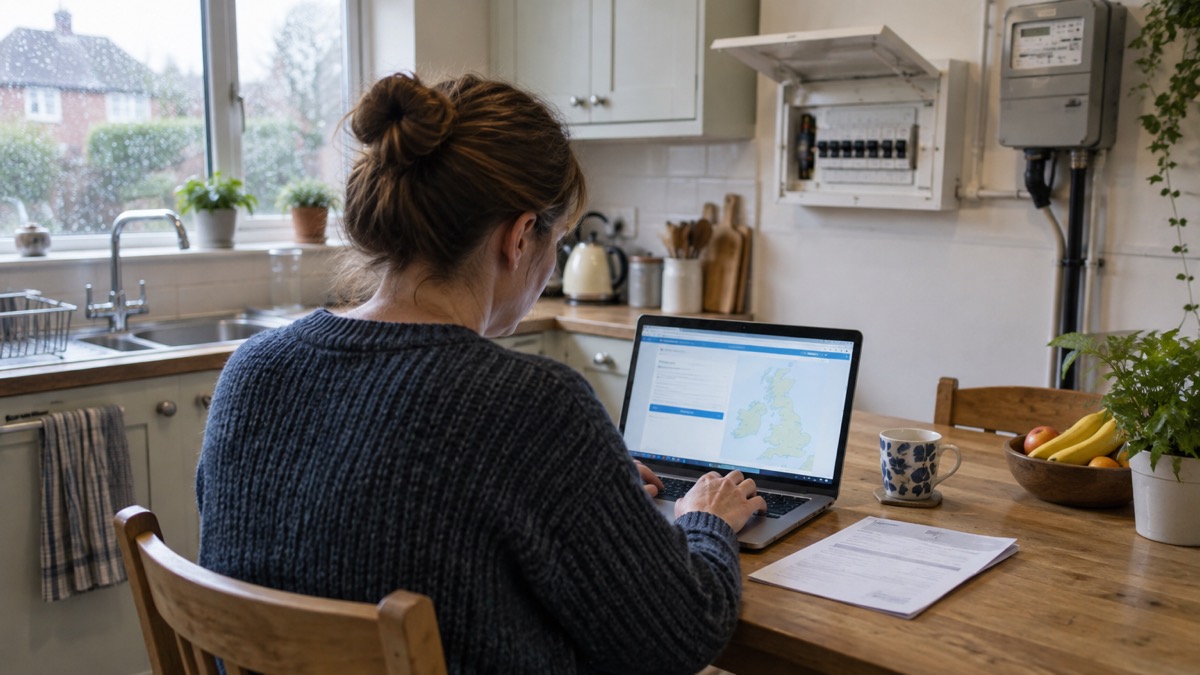
Your local network operator is responsible for fixing power cuts in your area13. Because there are 14 of them, the first practical step any household can take is to find out which one serves its postcode, and it takes a minute.
The free 105 number connects you to your local distribution network operator, who is responsible for restoring power5. You can call 105 or use the online postcode checker to find out who your distribution network operator is5. The Health and Safety Executive's electricity FAQs point to National Grid's information on how you can find the electricity operator for your area15. You can also find out who your DNO is by entering your postcode on the Energy Networks Association' website11.
The Power Track site at powercut105.com works the same way: enter your postcode and the site will tell you what company supplies you16. The same approach works for utilities generally: enter your postcode on the relevant website and it will show who supplies the utility at your door17. When a cut happens, you can look at your local utility providers' websites and search on your postcode to see if there is anything going on in your area18.
If you live in the Midlands, South West England or South Wales, your DNO is National Grid, and its power cuts map shows up-to-date details of any cut, including its location, cause and expected duration11. If you live elsewhere in the UK, contact your local network operator to report or track a power cut11. Our guide to reporting a loss of electricity walks through the whole process.
How the control room keeps supply matching demand
Electricity cannot be stored in the wires, so supply has to match demand second by second, every day of the year. That job belongs to NESO's national control room, where expert control engineers are working 24/7 to keep electricity flowing to where it is needed10. It is what NESO calls "balancing" the system, and it is all managed in the national control room10.
Balancing is not only about high demand. NESO's experts also managed the opposite problem, low demand, during 2020's lockdown periods, which required a different set of challenges that they plan for10. The system notices NESO issues to warn the industry are more commonly associated with managing winter's higher electricity demands10.
Network companies gear up for those pressure points. National Grid's distribution business has teams on hand 24/7 to restore the supply as quickly and safely as possible, and during periods of anticipated high demand, such as when storms are forecast, it has extra staff on standby in its contact centres, control centres and field teams8. Additional measures are put in place for winter to respond to wet, windy and cold conditions, as well as the increasing likelihood of extreme weather events caused by climate change8.
NESO also undertakes a winter outlook every year, which helps to inform the electricity industry and prepare for the winter ahead9. That annual winter outlook indicates whether emergency power cuts are ever likely to happen9. The practical message for households is that the industry plans for winter months in advance, and that local outages, not national ones, remain the realistic risk: while national power cuts are rare, local outages can still happen5.
What happens before any power is cut
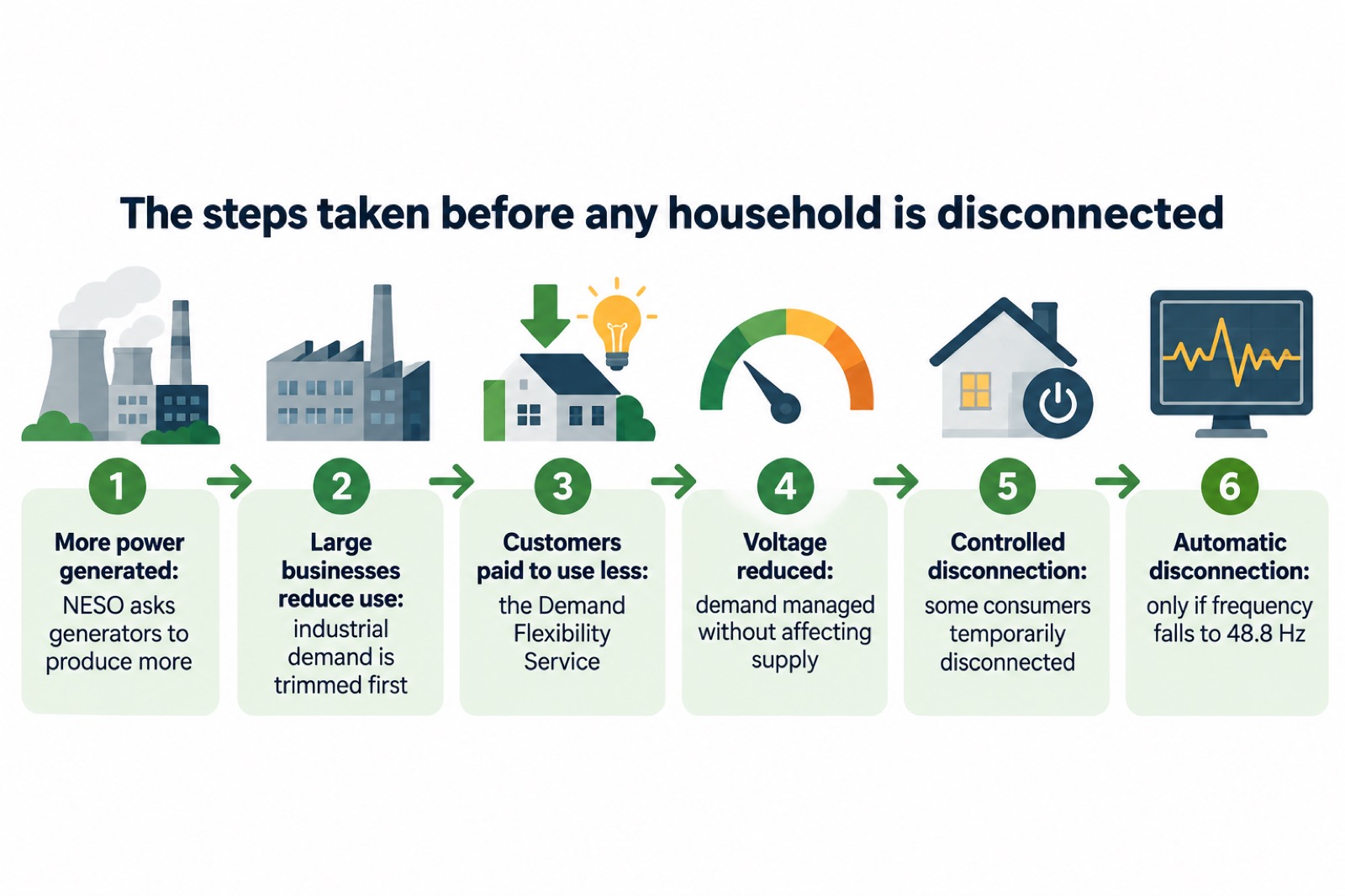
A lot happens between "demand is tight" and "your lights go off", and almost all of it is invisible to households. Before power is cut off, NESO will ask for more power to be generated, ask large businesses to reduce how much power they are using, and pay customers to use less energy at times of need6.
- More generation is called on. NESO asks power stations to produce more, restoring the margin between supply and demand6.
- Large businesses reduce their use. Big industrial users are asked to cut consumption, taking pressure off the system without touching homes6.
- Households are paid to use less. Through the Demand Flexibility Service, customers can be paid to reduce their electricity use at times of need6.
- Voltage is reduced. Network operators might reduce voltage to manage demand without affecting supply19.
- Controlled disconnection. In more severe situations, they might temporarily disconnect some consumers through a controlled process19.
- Automatic disconnection. Only if frequency collapses does the Low Frequency Demand Disconnection scheme operate automatically7.
Should there be a sudden loss of electricity, the network operator would be able to reconfigure its network to stabilise the grid and reconnect most customers20. That is the Welsh Government's assessment of the risk in Wales, and it reflects how the system is designed across Britain20.
Voltage reduction: the small drop you would not notice
Before anyone is disconnected, network operators have a quieter tool: reducing the voltage on the network. DNOs might reduce voltage to manage demand without affecting supply, or, in more severe situations, they might temporarily disconnect some consumers through a controlled process19.
Voltage reduction is exactly what it sounds like. These operators reduce the voltage and deliver electricity to homes and businesses across the country5. A small reduction trims the power drawn by the whole network at once, and for most households it passes completely unnoticed. Your lights may dim very slightly; most appliances are designed to cope with normal variations in supply.
The grid handles voltage on a grand scale. At a supergrid substation, transformers are designed to reduce the voltage from 275kV to 66kV21. The step down to the 230 volts in your sockets happens in stages as electricity travels from the transmission network through your DNO's local cables1.
The key point for a household: if you notice your lights dimming slightly on a cold winter evening, there is nothing to do. It is a sign the network is being managed, not that it is failing. If the supply actually goes off, that is a different event, and the what to do when the electricity goes off page covers it.
Planned cuts, emergency cuts and the notice you should expect
Not all power cuts are faults. Two kinds of deliberate interruption exist, and they give households very different amounts of warning.
Planned interruptions happen for engineering work. If your DNO cuts off your power for a pre-planned reason, such as for engineering work, they have to give you two days' notice, usually via a letter12. National Grid, which runs planned works for reasons including maintenance to prevent damage to cables, lines and equipment, upgrading the overhead network, diverting part of the overhead line network, and carrying out disconnections for safety reasons, will send you a letter and text message before the planned outage22. The industry aims to give you at least 48 hours' notice8. Our page on planned interruptions explains how to prepare for one.
Emergency power cuts are different. DNOs are legally required to implement power cuts when instructed by NESO, and they are not allowed to protect customers from them unless the site is classified as protected under government and NESO rules9. DNOs must action the instruction and can receive 30 minutes or less notice to do it9. Northern Powergrid's guidance for Priority Services Register customers is blunt about the consequence: it will not be possible to give advanced notice in the way normally given for a planned outage, because DNOs may receive as little as 30 minutes' notice of an instruction to implement a power cut9.
If a cut does happen, restoration is often faster than people expect. Power can be restored in minutes by control centre staff using a remote process known as "switching", where electricity is re-routed around the fault12. How long your own supply takes depends also on how many homes and businesses are affected13. Ofgem's rules mean that if restoration standards are not met, you could be due compensation, with payment normally sent within 10 working days of the operator becoming aware of the failure in normal weather12. Our how long until the electricity comes back page goes through the timescales.
Automatic disconnection: what happens at 48.8 Hz
The last line of defence is automatic, fast and blind to who you are. It is worth understanding, because it explains the rare nationwide event in which power simply goes off everywhere at once.
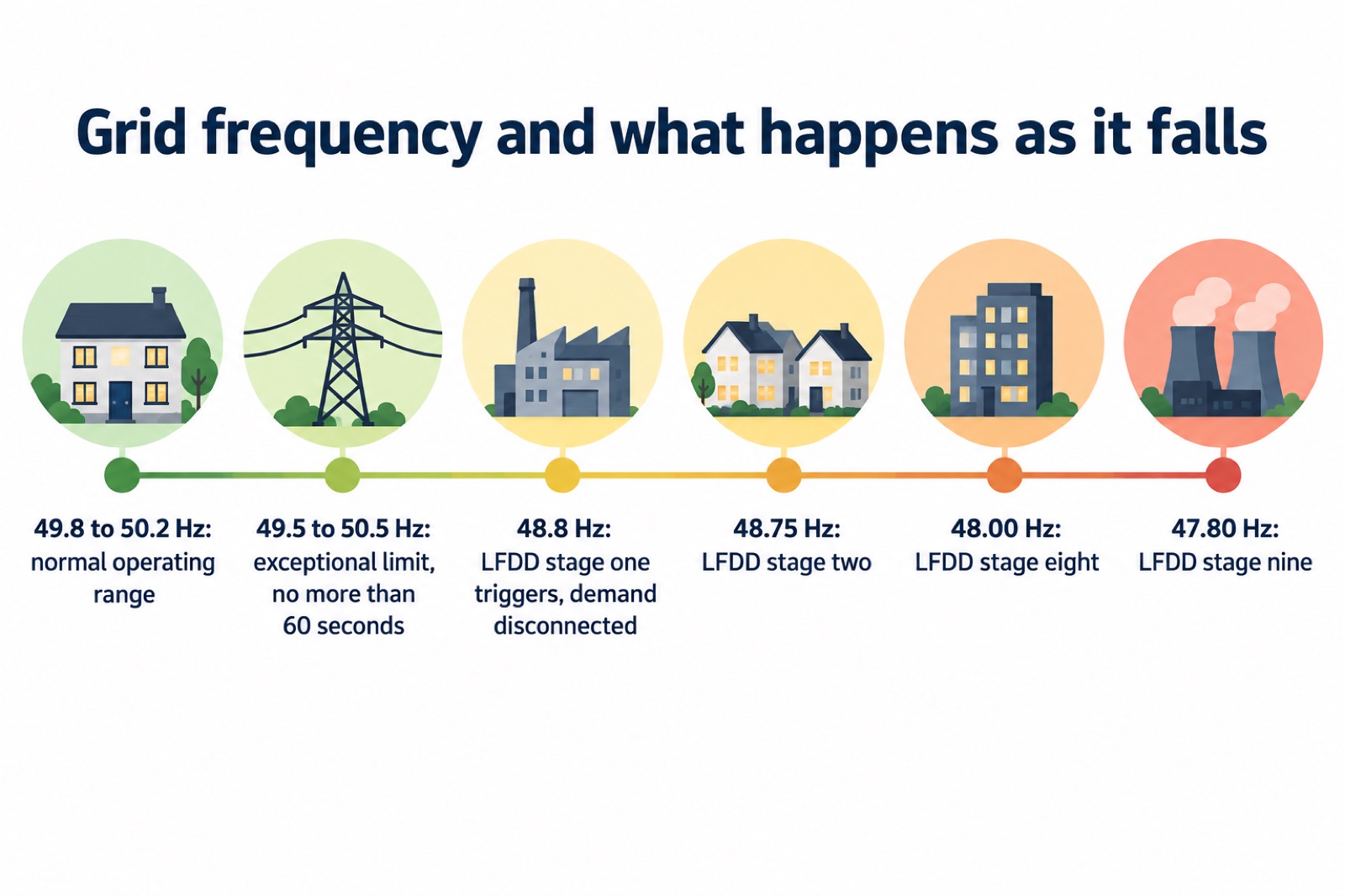
Under normal operating conditions, the system operator is obligated to maintain the system frequency between 49.8 and 50.2 Hz7. Under exceptional circumstances, such as the loss of a large generator, the frequency should not deviate outside the range 49.5 to 50.5 Hz for more than 60 seconds7.
If a sudden loss of generation pulls frequency down, the Low Frequency Demand Disconnection (LFDD) scheme takes over. Stage one of the LFDD scheme is triggered when the system frequency drops to 48.8 Hz7. The scheme then disconnects demand in stages as frequency falls further: stage 2 at 48.75 Hz, stage 8 at 48.00 Hz and stage 9 at 47.80 Hz7. The current settings were updated in April 2007 after a technical Grid Code Review Panel concluded that the LFDD ranges needed to be activated within a 1 Hz range from 48.8 to 47.8 Hz, where previously the range ran from 48.8 to 47.0 Hz7.
This is not a matter of network companies choosing who to protect. Distribution Network Operators are legally required to implement power cuts when instructed by the National Energy System Operator, and they are not allowed to protect customers from power cuts unless a site is classified as protected under government and NESO rules. In other words, when the instruction comes, the disconnection follows a controlled, pre-planned process rather than a judgement made on the day.
One point from the Grid Code is worth knowing: it does not require Distribution Network Operators to disconnect demand until the frequency reaches 48.5 Hz7. The automatic scheme begins at 48.8 Hz, and the DNO-level requirement sits below that. For households, the practical meaning is simple: in a genuine frequency event, power goes off without warning and comes back as the network is stabilised. Our page on a nationwide blackout covers how Britain would respond.
Being paid to use less, and running appliances safely
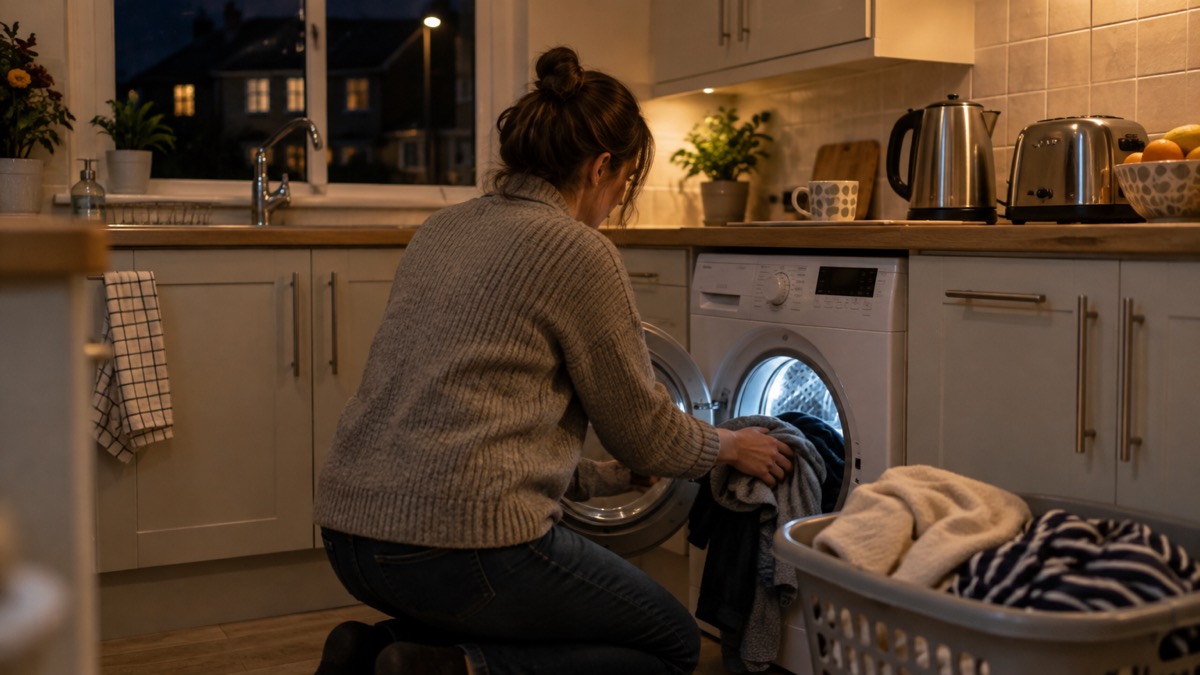
The Demand Flexibility Service allows energy suppliers to reward their customers for reducing their electricity use when demand is at its highest, therefore helping to balance the country's supply and demand of electricity11. Find out if you can be paid to use less energy at times of need by speaking to your energy supplier, and ask them to tell you about the service6. It is one of the few parts of the system that puts money in a household's pocket rather than taking it out.
The service works through your supplier, not your network operator, so it is the company on your bill you need to contact. Participation is voluntary, and it typically means shifting use of things like washing machines and dishwashers away from the peak hours the supplier identifies.
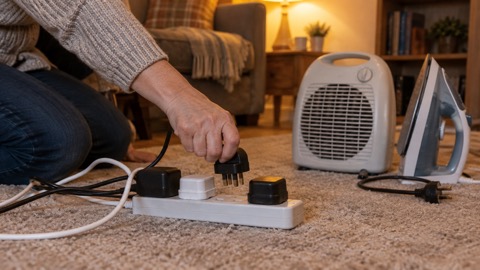
Running appliances at odd hours brings its own safety point, and the fire services are clear about it. The National Fire Chiefs Council's cost of living guidance warns that people who are not on a time of use tariff should not run appliances unattended at night, because electricity costs the same no matter what time of day or night it is used24. There is no saving to be had, and an unattended appliance is a fire risk.
That fits with wider fire safety advice, which matters doubly in a power cut, when candles and alternative lighting come out:
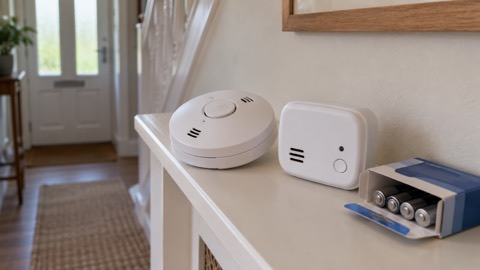
- Fit smoke alarms on every floor of your home and test them at least monthly to ensure they are working25.
- Some battery or mains alarms can be interlinked, so that when one alarm detects a fire they all go off together, giving everyone in the house warning26.
- The Northern Ireland Fire & Rescue Service advises having a working smoke alarm on every level of your home, and testing alarms before cooking28.
- For anyone who is deaf or hard of hearing, specialist alarms exist: a vibrating pad is placed under a mattress or pillow at night, and when smoke is detected the pad vibrates and a strobe light flashes to alert the sleeper29.
Our page on smoke and carbon monoxide alarms that keep working without mains covers which alarms suit a household that loses power often.
Getting ready at home: the practical steps
Understanding the system is useful; being ready for its failure is more useful still. NESO advises households to find out whether they can be paid to use less energy at times of need by speaking to their energy supplier about the Demand Flexibility Service. The Energy Networks Association, which represents the industry that runs the electricity wires, gas pipes and energy system in the UK and Ireland, is committed to reducing injuries to members of the public who come into contact with the electricity networks, and has produced a number of safety leaflets available from the NIE Networks website.
The essentials, covered in depth across our power cuts guide:
- Know your DNO and keep 105 handy. The free number connects you to the operator responsible for restoring your power5. Our emergency numbers to keep at home checklist helps.
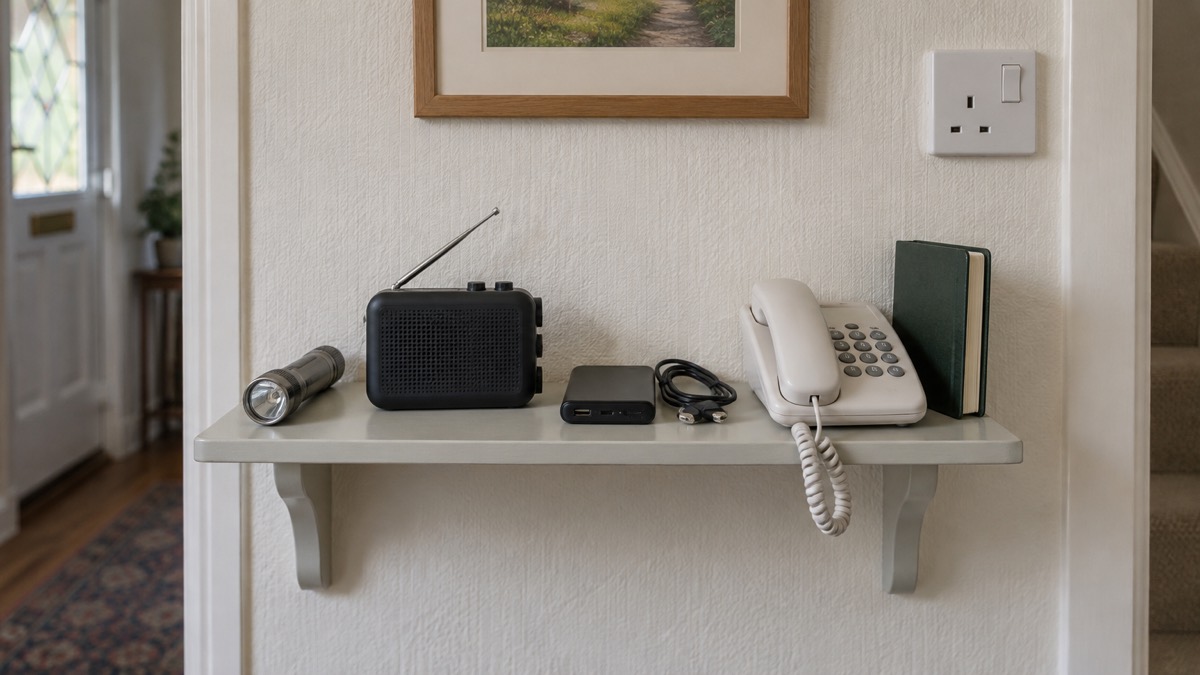
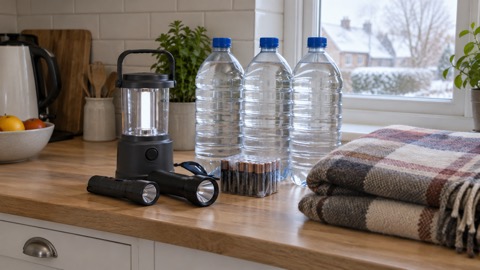
- Keep a torch and charged power bank. Our power cut kit checklist and what to keep charged pages list what to gather.
- Join the Priority Services Register if anyone in the house needs extra help. It is a free GB-wide service to help people who may need additional support, including when there is a power cut23. It helps all energy and water companies tailor their services to support households who need extra help in the event of a power cut, gas or water supply interruption30. You can register online with National Grid, who will do this on your behalf with all your suppliers30. Our Priority Services Register page explains who qualifies.
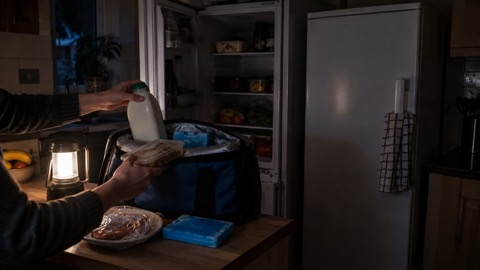
- Plan for food and warmth. See our guides on fridge and freezer food and keeping warm without electricity.
One group needed particular attention recently: households with RTS meters. The Radio Teleswitch Service was a radio signal that controlled some older heating and hot water meters, and the switch-off affects energy customers who have an RTS meter in their home31. The service ended on 30 June 2025, when the technology that supports RTS meters was switched off32. For affected customers, it may mean that their heating and hot water supply stops working as normal32. Ofgem provides more information about the RTS switch off and what affected customers need to do to upgrade their meter32. If your storage heating has behaved oddly since mid-2025, an RTS meter is a likely explanation, and your supplier is the first call.
Sources (32)
- How the power system works in the UK, Wiltshire and Swindon Prepared
- What are electricity rota loads, Wiltshire and Swindon Prepared
- Emergency power cuts, Northern Powergrid
- What to do in a power cut, Met Office
- Energy outages, National Energy System Operator
- Types of power cut, Power Cut 105
- E3C GB power disruption 9 August 2019 final report, BEIS, 2020
- How we deal with power cuts, National Grid
- Emergency power cuts FAQ, Northern Powergrid, 2025
- What are system notices, National Energy System Operator
- Power cuts, National Grid
- How to find out if there's a power cut, Which?, 2026
- Plan for a power cut, Ofgem
- Energy advice for households, Ofgem
- Electricity safety FAQs, Health and Safety Executive
- Power Track: what is it, Wiltshire and Swindon Prepared
- Independent utility companies: what are they, Wiltshire and Swindon Prepared
- Failure of national electricity, Wiltshire and Swindon Prepared
- Demand Control, National Energy System Operator
- Resilience and risks in Wales, Welsh Government
- NESO interim report, National Energy System Operator, 2025
- Reasons for planned works, National Grid
- England and Wales energy domestic consumer advice, Ofgem, 2024
- Cost of living toolkit, National Fire Chiefs Council, 2022
- Domestic fire, Prepare Campaign
- Smoke alarms and heat alarms, London Fire Brigade
- Smoke alarms, Devon and Somerset Fire and Rescue Service
- Crack down on fire risks this Easter, Northern Ireland Fire & Rescue Service
- Deaf awareness, Scottish Fire and Rescue Service
- Safety in severe weather conditions, Devon and Somerset Fire and Rescue Service
- The Radio Teleswitch Service switch off: what you need to know, Wiltshire and Swindon Prepared
- Radio Teleswitch Service (RTS) switch off, Age UK
 Power Cut Kit Checklist
 What to Keep Charged
 Household Emergency Plan
 Reporting a Power Cut
 What to Do in a Power Cut
 Getting Ready for a Power Cut
 Fridge and Freezer Food
 Keeping Warm Without Electricity
 Central Heating Without Power
 Cold Homes and Health
 Carbon Monoxide Risks
 Staying Safe in the Dark
 Smoke and Carbon Monoxide Alarms
 How Long Until Power Returns
 When the Power Comes Back