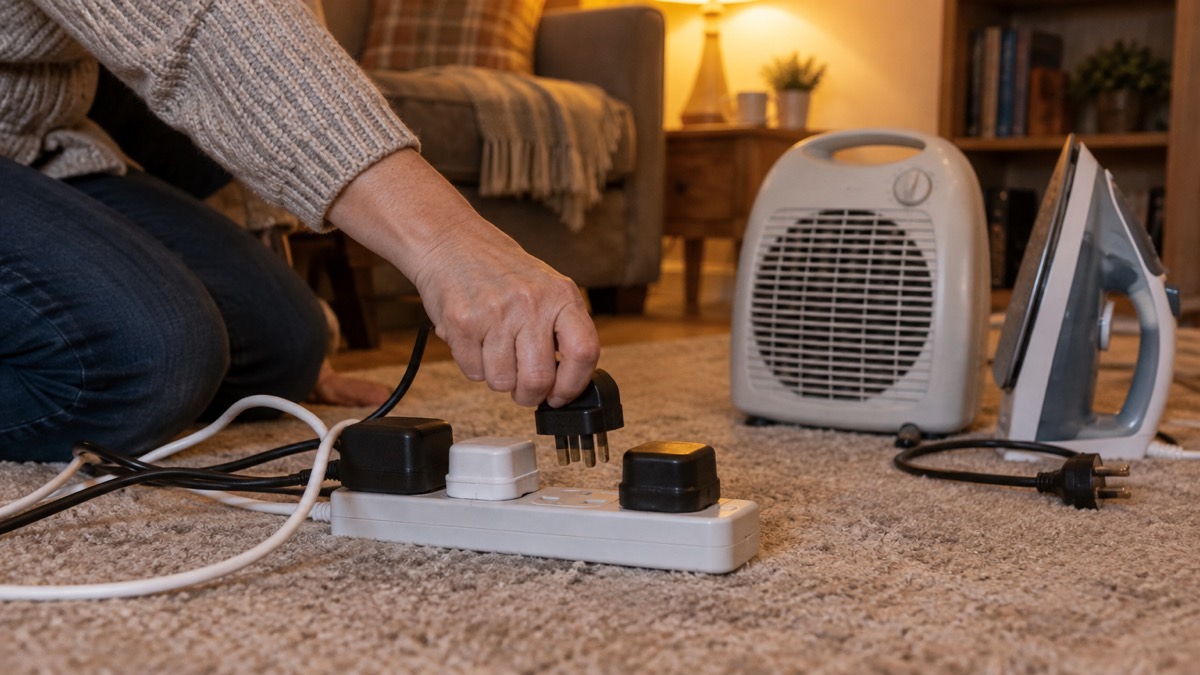
A power cut is usually a nuisance rather than a danger, but the minutes and hours after the lights go out carry real risks: appliances that come back on unattended when the supply returns, extension leads asked to carry more than they should, candles lit in a hurry, and, after storms, power lines brought down across roads and gardens. Almost all of these risks are avoidable with a few simple habits.
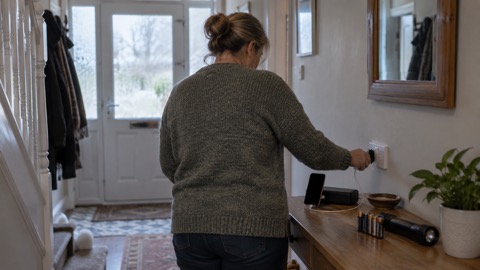
The first habit is to switch things off. The Scottish Fire and Rescue Service advises you to turn off all electrical equipment except a light or a radio1. The light tells you when the power is back; the radio keeps you informed. Check your sockets regularly as well: if you see burn marks or they feel hot, get a registered electrician to check whether they need repairing or replacing2.
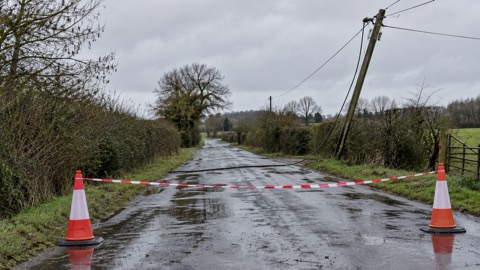
The second habit is to keep away from anything the storm has damaged. Electricity at high voltages can jump gaps with no warning, so fallen lines and damaged equipment are treated as live until the network operator says otherwise3. Report what you see: call 105 in England, Scotland and Wales, or 03457 643643 in Northern Ireland3.
Fallen power lines and damaged equipment: keep well clear
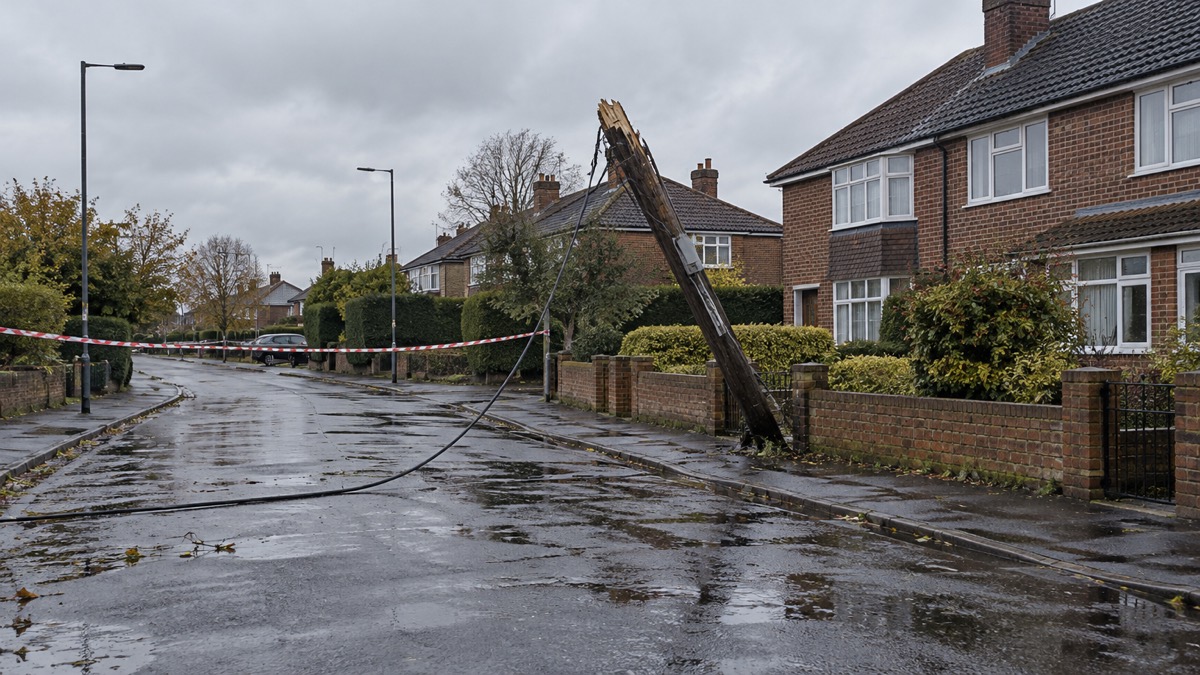
Storms bring down trees, and fallen trees often take electricity poles and wires with them as they fall6. If you go out after high winds to check on property or clear debris, be extra careful around fallen trees for exactly this reason, and never touch damaged electricity equipment8. The nidirect guidance for Northern Ireland is blunt on the point: do not approach any damaged electricity equipment or broken power lines6.
The reason for the distance is not obvious to most people. Electricity at high voltages can jump gaps, so you do not need to touch a fallen line for it to reach you3. Anglesey Council's winter readiness advice puts the rule simply: always treat fallen lines as live and report them right away by calling 1055. That applies even if the line looks slack, scorched or dead, and even if the whole street is already without power, because a line can be re-energised without warning as engineers work to restore supply.
Report what you see rather than assuming someone else has. Call 105, free of charge, and you will be put through to your local electricity network operator, who can give you help and advice9. In Northern Ireland, the number is different: report anything that looks dangerous to NIE Networks on 03457 6436436. NIE Networks also publishes an updated list of the areas affected by power cuts on its website, which is worth checking during a storm8. Our page on fallen overhead lines covers this in more detail, and reporting a loss of electricity explains how the 105 service works.
Switch off and unplug: appliances left on are the main fire risk
The danger from appliances is not while the power is off. It is the moment it comes back. Anything left switched on comes on again without you realising, and if that is a cooker, grill, chip pan, hair straighteners or electric fire, it can start a fire in an empty or sleeping house10. The Met Office's seasonal advice for snow and for lightning says the same thing both times: switch off all electrical appliances that should not be left unattended, ready for when the power comes back on11.
Work through the house in this order:
- Turn off items such as irons, ovens, electric fires and fryers2.
- Unplug your TV and computer, as they can be damaged if there is a surge when the power goes back on2.
- Leave one light on so you will know when the power returns4.
- Leave a radio on for news and updates1.
The Devon and Somerset Fire and Rescue Service adds a habit worth keeping between cuts as well as during them: always switch off electrical items when they are not in use, and have them serviced regularly13. Its kitchen safety advice makes the same point for the room where most electrical fires start14.
After a flood or storm: wet appliances
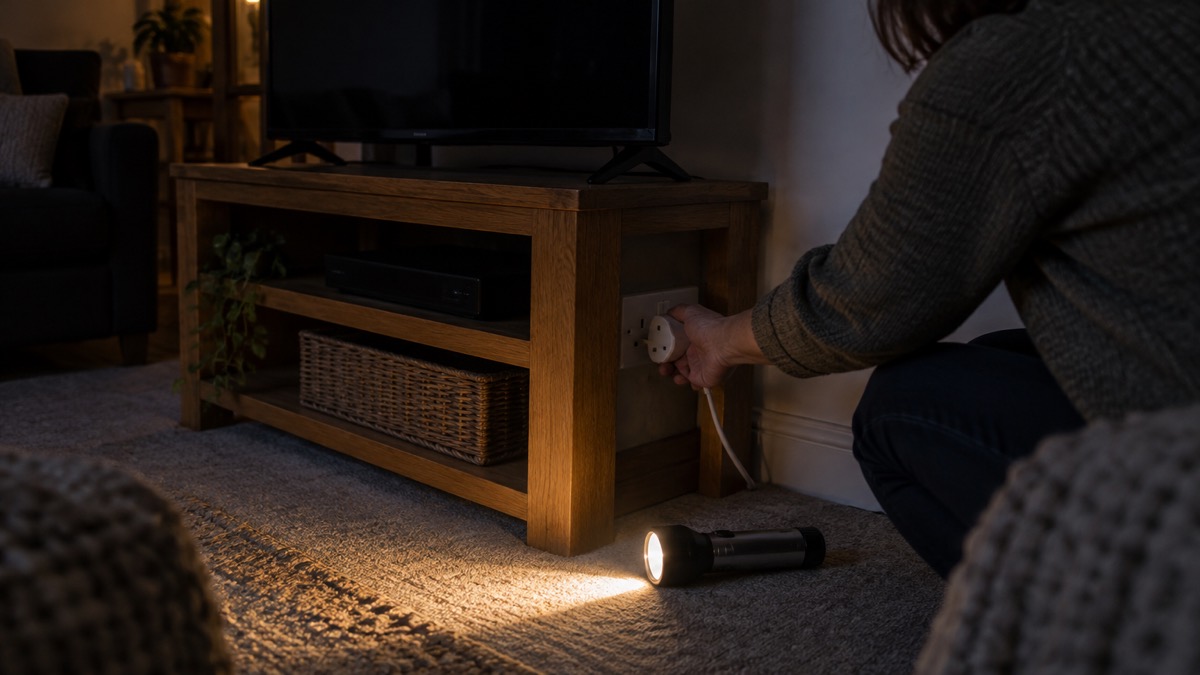
If electrical appliances have been wet, the London Resilience Partnership's advice for emergencies is to turn off the electricity at the fuse box, allow the appliances to dry out, and have a qualified professional check them before you turn them on15. This applies after flooding, a burst pipe in a cold snap, or rain getting into a damaged roof. Do not test a wet appliance by switching it on to see if it works. Our page on what to do when the electricity goes off covers the immediate steps, and when the supply returns covers switching back on safely.
Extension leads: the amp limit, and why leads must never join
Extension leads cause fires in two ways: they get overloaded, and they get chained together. Both are easy to avoid once you know the rules.
Every extension lead or adaptor has a limit to how many amps it can take, so check you are not overloading it16. North Wales Fire and Rescue Service gives the same warning: extension leads and adapters have a limit on how many amps they can take, so be careful not to overload them, to reduce the risk of fire17. Never ignore the warning signs on a socket or lead: burn marks, arcing (buzzing or crackling) sounds, fuses blowing, circuit-breakers tripping, or anything that feels hot to the touch. If you see any of these, unplug and contact the retailer, manufacturer, or a qualified repair technician.
| Rule | What it means | Who says so |
|---|---|---|
| Check the amp limit | Every lead has one; overloading it is a fire risk | North Yorkshire Fire and Rescue Service16 |
| One plug per socket where you can | Do not overload extension leads with too many goods | London Fire Brigade18 |
| Never join leads together | Do not plug extension leads into each other | Portsmouth City Council7 |
| Unroll cable reels fully | A coiled reel overheats | London Fire Brigade19 |
| Buy leads long enough | So leads do not need to be connected together | Humberside Fire and Rescue Service20 |
Never plug one extension lead into another
Portsmouth City Council's battery and electrical safety guidance states the rule directly: do not overload sockets or plug extension leads into each other7. Devon and Somerset Fire and Rescue Service's advice for parents and guardians is the same: never overload sockets or extension leads21. The reason is arithmetic as much as heat: a lead plugged into a lead multiplies the sockets fed from one wall point, and it takes only one high-power appliance somewhere down the chain to push the first lead past its limit. Humberside Fire and Rescue Service's practical answer is to make sure cables are long enough to reach in the first place, so leads never need to be connected together20.
Which appliances should never share an extension lead
Some appliances draw too much current to go on a multi-plug lead at all. Devon and Somerset Fire and Rescue Service's fire safety checklist is explicit: never use powerful appliances such as dishwashers, washing machines or tumble dryers on a multi-plug extension lead13. Its kitchen safety advice warns that overloading extension leads can cause fire14. Electric heaters get the same instruction from the same service: do not plug in using an extension lead, and do not overload the socket22. The National Fire Chiefs Council guidance on e-bike and e-scooter charging adds the general principle: do not overload socket outlets or use inappropriate extension leads, and make sure the lead is suitably rated for what you are plugging into it23.
If you are using a cable drum or reel lead, London Fire Brigade's electrical items advice is that cable drum extension leads should always be completely unwound to avoid overheating19. A reel left coiled cannot shed heat, and the same current that is harmless in an unrolled lead can cook the insulation in a coiled one.
Warning signs at plugs and sockets, and damaged cables
Between power cuts, your sockets and plugs tell you when something is wrong. London Fire Brigade's advice on electrical items in the home lists the signs to look out for: scorch marks, flickering lights, hot plugs and sockets, and fuses that blow or circuit-breakers that trip for no obvious reason. These could all be signs of loose or dangerous wiring19. North Wales Fire and Rescue Service adds the action to take: check your sockets regularly, and if you see burn marks or they feel hot, get a registered electrician to check whether they need repairing or replacing24.
Take damaged plugs and cables out of use straight away rather than repairing them. The Scottish Fire and Rescue Service's guide to fire safety at home is clear: never repair or re-join cables with insulating tape; always replace the whole cable or use an extension lead25. Tape is not a permanent fix, and a taped joint hides damage you can no longer inspect.
Badly wired plugs are their own warning sign. North Wales Fire and Rescue Service flags badly wired plugs where coloured wires stick out: these can come loose, and debris can also get into the plug24. If you open a plug and see exposed coloured wires, do not use it until it has been rewired properly.
"Look out for scorch marks, flickering lights, hot plugs and sockets, fuses that blow or circuit-breakers that trip for no obvious reason. These could all be signs of loose or dangerous wiring."
The Health and Safety Executive sets the wider frame for all of this: electricity can kill or severely injure people and cause damage to property, and its main hazards include electric shock and burns from contact with live parts, injury from exposure to arcing when electricity jumps from one circuit to another, and fire from faulty electrical equipment or installations26. It also advises arranging the inspecting and testing of fixed wiring installations, covering the circuits from the meter and consumer unit supplying light switches, sockets and wired-in equipment, with the work normally carried out by a competent person, usually an electrician26. For an ordinary household, that means having an electrician look at the wiring if the warning signs above keep appearing.
Chargers, fake electricals and buying safely
Chargers matter during a power cut because everything rechargeable in the house depends on them, and a cut is when cheap ones get pulled out of drawers. North Yorkshire Fire and Rescue Service's electrical safety advice is to always use the genuine charger that is designed for use with the product, as substandard and counterfeit electrical chargers can be dangerous16.
The same caution applies to anything with a heating element. Devon and Somerset Fire and Rescue Service's advice for carers states that heaters should be bought from a reputable supplier, and that the service is aware of cheap but highly dangerous plug-in heaters bought online with fake safety marks27. A fake safety mark is not a minor flaw: it means the product has never been checked against the standard the mark claims.
What to check when buying electricals:
- Buy from a reputable supplier, not an unknown online seller27.
- Use the genuine charger designed for the product, not a cheap substitute16.
- Treat a very low price on a heater or charger as a reason to check the seller, not a bargain27.
If you already own something that has scorched a socket, overheated or given a shock, stop using it and report it to your local authority's trading standards service, which handles unsafe products in your area. Unplug it and contact the retailer, manufacturer, or a qualified repair technician. Do not approach any damaged electricity equipment or broken power lines, and in Northern Ireland report anything that looks dangerous to NIE Networks on 03457 643643.
Candles, falls and moving around a dark house
Two risks come simply from being in the dark: fire from candles, and falls from cables and clutter.
On candles, the official advice cuts both ways. nidirect's storm guidance for Northern Ireland lists keeping a supply of candles among its preparations for a power cut6, and candles remain a common standby. But an open flame in a house that is normally lit needs treating with respect, and the fire and rescue services' general candle advice applies with extra force when candles are used for hours at a time. Keep candles away from anything that can catch fire, never leave them unattended, and never move a lit candle around a dark house. Our emergency lighting page sets out the safer options, torches and lanterns first, and covers candle fire safety in full. If you use candles, put a working smoke alarm on each floor; our page on smoke and carbon monoxide alarms that keep working without mains explains which alarms stay live during a cut.
On falls, London Fire Brigade's extreme weather advice is short and practical: avoid trips and falls, keep your cables tidy9. During a cut that means two things. First, the cables you have just run for lighting and charging should be routed along walls, not across doorways and walkways where someone will find them with a foot in the dark. Second, the things you have moved while hunting for torches and batteries should go back where they belong, because a floor that was clear at midday is a hazard at midnight. The Health and Rescue Service's wider point about electricity applies here too: electric shocks can lead to other types of injury, for example by causing a fall26. If someone does touch something live and gets a shock, the fall that follows can hurt as much as the shock itself.
Checking on older relatives and neighbours
A power cut that is an inconvenience for you can be a genuine danger for someone who is older, frail, or relies on equipment that needs electricity. The nidirect storm advice is to check on elderly or vulnerable neighbours in your area to make sure they are okay6. Do this early in the outage rather than at the end of it, because the risks, cold, darkness, and a house full of trip hazards, build over the hours.
A knock at the door is enough for most checks: are they warm, do they have light, do they have a phone that works, and is there anyone else who should be told. If they rely on medical equipment that needs electricity, our page on relying on medical equipment covers what to do, and the Priority Services Register explains who can join and what extra help network operators give during outages. You can also register a relative for extra help in many cases. Our checklist for checking on neighbours and relatives gives the full list of what to ask.
RCD protection and your home's wiring
Two pieces of your home's electrical setup change how much protection you have during and after a cut: the residual current device, or RCD, in your fuse box, and the state of the fixed wiring.
An RCD switches the power off fast if electricity flows somewhere it should not, such as through a person. North Wales Fire and Rescue Service cautions that although RCD protection reduces the risk of death or injury from electric shock, it does not reduce the need to be careful24. The Health and Safety Executive adds a figure worth knowing: RCDs rated above 30 milliamps provide very limited protection against harm from an electric shock28. RCD protection is particularly important when using electrical equipment outdoors24, which in a power cut context means anything from a generator to a light run out to a shed.
On wiring, the Health and Safety Executive advises that fuses, circuit-breakers and other devices must be correctly rated for the circuit they protect, and that isolators and fuse-box cases should be kept closed and, if possible, locked26. For the fixed wiring itself, its advice is to arrange inspecting and testing to minimise deterioration leading to danger, with the work normally carried out by a competent person, usually an electrician26. After a flood or a lightning strike near your home, that inspection stops being routine and becomes urgent before you use the circuits again.
Wiring a plug yourself
The Health and Safety Executive's position is that you can do your own electrical work if you are competent to do so, and that simple tasks such as wiring a plug are within the grasp of many people, but more complex tasks, such as modifying an electrical installation, may not be28. If you wire a plug, do it properly and check it before use: coloured wires sticking out of a badly wired plug can come loose, and debris can get into the plug24. Anything beyond a plug, a fuse or a socket faceplate belongs with a registered electrician.
Sources (28)
- Power cuts: what to do, Scottish Fire and Rescue Service
- Power cuts: be informed about hazards, Prepare (UK government campaign)
- Power cuts: be informed about hazards, Be Ready (UK government campaign)
- Power cut plan, Northern Powergrid
- Winter ready, Isle of Anglesey County Council
- Strong winds and heavy rain warning: information and advice, nidirect (Northern Ireland government)
- Battery safety, Portsmouth City Council
- Strong winds weather warning: information and advice, nidirect (Northern Ireland government)
- Extreme weather summer guide, London Fire Brigade
- 12 tips to prepare for a power cut, Horsted Keynes Parish Council
- Stay safe in snow, Met Office
- Stay safe in lightning, Met Office
- Fire safety checklist, Devon and Somerset Fire and Rescue Service
- Kitchen fire safety, Devon and Somerset Fire and Rescue Service
- Preparing yourself for emergencies, London Resilience Partnership
- Electrical safety at home, North Yorkshire Fire and Rescue Service
- High-rise living fire safety, North Wales Fire and Rescue Service
- Student fire safety, London Fire Brigade
- Electrical items in the home, London Fire Brigade
- Celebrate safely, Humberside Fire and Rescue Service
- Advice for parents and guardians, Devon and Somerset Fire and Rescue Service
- Heater safety, Devon and Somerset Fire and Rescue Service
- E-bikes and e-scooters guidance, National Fire Chiefs Council
- Looking after the electrics, North Wales Fire and Rescue Service
- Your guide to fire safety, Scottish Fire and Rescue Service
- Electricity at work: introduction, Health and Safety Executive
- Home safety partnerships: advice for carers, Devon and Somerset Fire and Rescue Service
- Electricity safety FAQs, Health and Safety Executive
 Power Cut Kit Checklist
 What to Keep Charged
 Household Emergency Plan
 Reporting a Power Cut
 What to Do in a Power Cut
 Getting Ready for a Power Cut
 Fridge and Freezer Food
 Keeping Warm Without Electricity
 Central Heating Without Power
 Cold Homes and Health
 Carbon Monoxide Risks
 Smoke and Carbon Monoxide Alarms
 How Long Until Power Returns
 When the Power Comes Back
 Fallen Overhead Lines