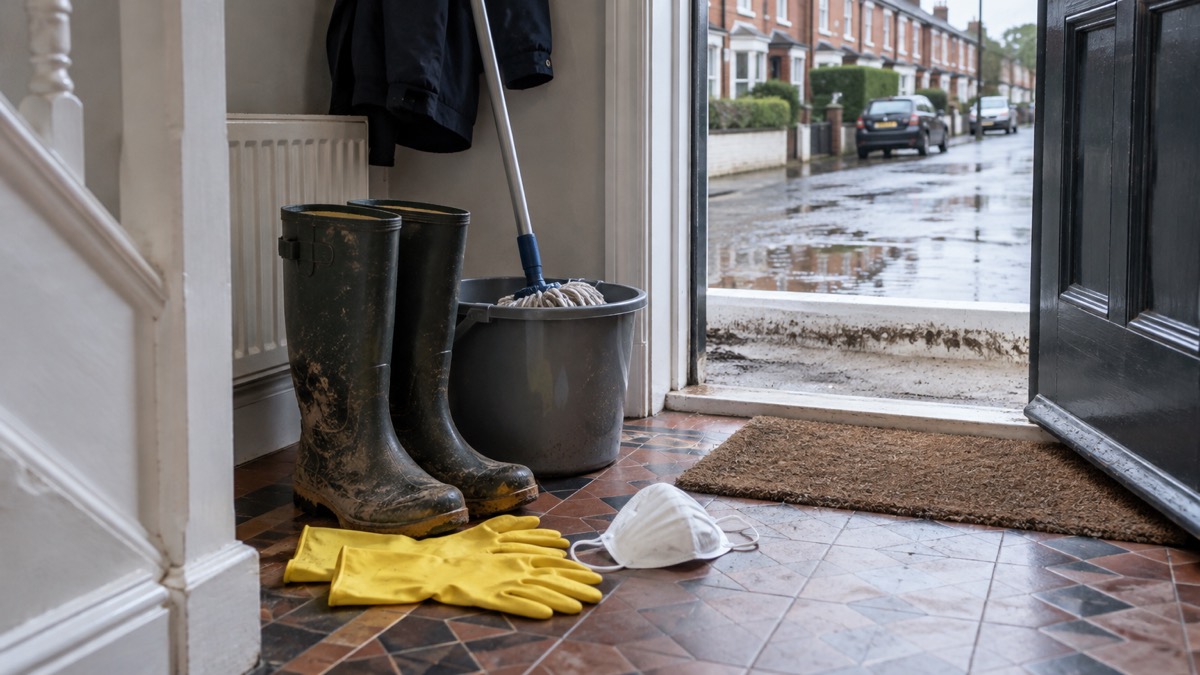
Going home after a flood is not a single moment: it is a sequence of checks, and the order matters. The first rule is simple. If you have had to leave your home, check with the emergency services that it is safe before you return1. In Scotland, the official advice is the same: only return home when the emergency services say it is safe2. Before you go back in, your gas and electricity must stay off until a qualified person has checked them, and you should not eat any food that has touched floodwater3.
Once you are inside, the order of work is: record the damage before you clean anything, contact your insurer before you throw anything away, wear protective clothing for the clean-up, and only move back in properly once the home has been thoroughly cleaned, disinfected and allowed to dry out1. If you cannot live at home, your local council can help with emergency accommodation, and if you have no insurance, the council can tell you about hardship grants and charities that may help3.
Only go back when the emergency services say it is safe
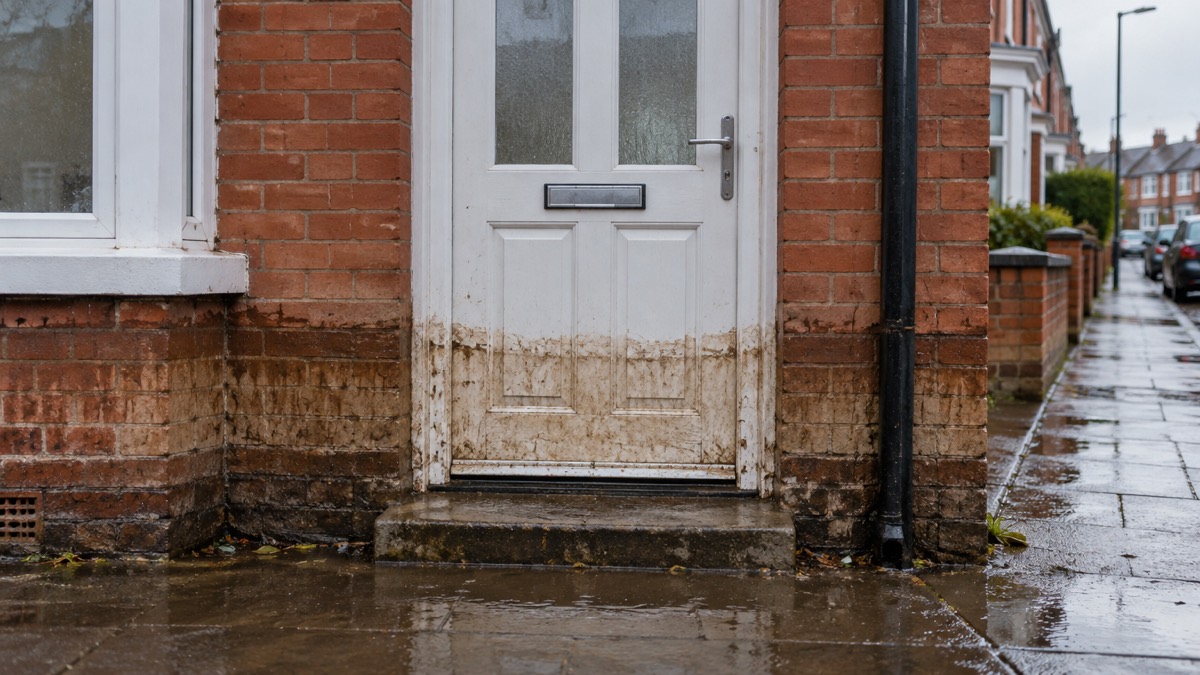
The emergency services, not you, make the first call on when a property can be re-entered after an evacuation. If you have had to leave your home, check with the emergency services that it is safe before you return1. Do not try to return until the emergency services tell you it is safe to do so1.
There are two separate judgements here, and it helps to tell them apart. The first is whether it is safe to enter the building at all, which is the emergency services' call. The second is whether it is safe to live there again, which takes longer. Wiltshire and Swindon Prepared's recovery guidance says to check with the emergency services that it is safe before you return6, while Derbyshire County Council recommends that you only return to live in your home once cleaning has been completed, with your insurance company, housing officer, landlord or builder advising on any additional work needed7. North Warwickshire's health advice goes further: only fully reoccupy the home once it has been thoroughly cleaned and disinfected and allowed to dry out8.
Be patient with water levels outside as well. When it rains heavily, river levels may stay high even after the rain has stopped, because it takes time for rainwater to run off9. More generally, water levels may rise and fall for several weeks depending on drainage and any further rainfall3. A house that looks dry on the day you are allowed back may still be in an area where levels rise again. Flooding problems are also worse at night when you cannot see, so if you are returning or checking a property, do it in daylight where you can9.
If you left home during the flood itself, the advice during the event was to move to an upstairs room with a window that could be used as an escape route, or to find a safe place if you do not have an upstairs, and to contact your local authority for emergency accommodation10. The return home comes after the all-clear, not before.
Keep out of floodwater: sewage, chemicals and fast water
Floodwater is not clean river water. The Met Office warns that flood water may contain harmful substances like sewage, chemicals and animal waste which could make you unwell, and that if you come into contact with it you should wash your hands thoroughly11. Cornwall's fire and rescue service is explicit about children: do not allow children to play in floodwater, as it can be contaminated with sewage and chemicals12. The same guidance says not to take boats onto rivers or walk alongside rivers in a flood, not to smoke, eat or drink whilst in contact with floodwater, and to wash hands thoroughly afterwards12.
There is a specific electrical danger as well. Northern Ireland's nidirect guidance on clearing up after a flood says don't touch sources of electricity while standing in floodwater14. If any electrical device has been submerged or splashed, avoid turning it on until it has been checked: Derbyshire's guidance says to avoid turning on devices that use gas or electricity as they may have got wet, and that a registered electrician should be called to assess electrical wiring, equipment and appliances affected by the flood7.
Chemical contamination is a further risk that is easy to miss. North Warwickshire's health advice warns that flood waters may have moved or soaked into containers of chemicals, solvents and other industrial items from their normal storage place, so avoid contact with water and materials which may be chemically contaminated, and if handling them wear rubber gloves, boots and a disposable apron8. Cotswold District Council's flood preparation leaflet gives the same warning that flood water can contain sewage, chemicals and animal waste, and says always to wear waterproof outerwear including gloves, wellington boots and a face mask when clearing up15.
Some people need to stay away from floodwater altogether. Wiltshire and Swindon Prepared's guidance is that "women that are pregnant, small children, the elderly or vulnerable should stay as far away from it as possible."16 If you are helping neighbours or relatives, keep those groups back from the water and the mud, and do the clearing yourself.
Gas and electricity stay off until a qualified person checks them
This is the rule that saves lives after a flood, and every official source in the UK says the same thing. Mid and West Wales Fire and Rescue Service says to have your electricity and gas checked by your supplier or a qualified technician before switching them on5. Surrey County Council says you will need to turn off any electricity until a qualified electrician or the utility company has checked all switches, sockets and appliances, and that you should then use a circuit breaker with any electrical equipment used in or to clean and repair the property17. Oxford City Council says to wait for an electrician's approval before turning power back on, and not to use electrical equipment exposed to flood water until it has been checked by a qualified electrician18.
In Scotland, Ready Scotland's instruction is: "Do not switch your electricity back on until a qualified person checks it."2 Nottinghamshire's easy-read after-a-flood guide says to contact a qualified electrician and gas engineer to check that it is safe to turn your gas and electricity back on19, and the county's local resilience forum leaflet says do not turn on the electric or gas supply until it has been checked by a qualified technician20.
Before you even reach that point, the supplies should have been turned off at the mains. Gov.uk's help-during-a-flood guidance says to turn off your gas, electricity and water supplies if it is safe to do so21, and the UK government's flooding campaign repeats this for when a flood warning or severe flood warning is in force3. If you are not sure where the shut-offs are, our page on turning off utilities explains how to find and operate them.
For gas specifically, Surrey's guidance says to turn off the gas supply to appliances that have been flooded, or where vents and flues may have been affected, and to contact your utility company if in any doubt17. Runnymede Borough Council adds two points worth remembering: after a flood do not turn gas supplies back on until they have been checked by a qualified technician, and be wary of damage to gas appliances long after flooding, including central heating systems, radiators and hot water systems4. Damage to heating systems can appear weeks later, so treat the gas check as a condition of moving back in, not a formality.
Cornwall's fire and rescue service summarises the whole utilities picture for returning householders: get an approved service engineer to check gas, electricity and water before turning them back on12. For more detail on the electrical side, see is it safe to turn the electricity back on? and using electrical appliances after water damage.
Protective clothing for the clean-up
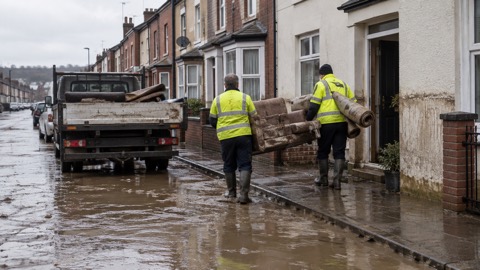
Anyone who cleans up after a flood is working with contaminated water and mud, and the clothing advice is consistent across the UK. Northern Ireland's nidirect guidance says to wear protective clothing like a waterproof jacket and trousers and rubber gloves, and to use a face mask14. Natural Resources Wales says to wear waterproof clothing, gloves, wellington boots and a face mask when cleaning a flooded property yourself13. Lancaster City Council says to use protective clothing, i.e. gloves and masks, when cleaning water, mud and other debris from the house, and to wash any part of the body that comes into contact with contaminated materials22.
| Item | What it is for | Who says |
|---|---|---|
| Waterproof jacket and trousers | Keeps floodwater off skin and clothing | nidirect14 |
| Rubber gloves | Stops contact with contaminated water and mud | nidirect14, NRW13 |
| Wellington boots | Protects feet from sharp objects and contamination | NRW13, Cotswold15 |
| Face mask | Reduces inhaling splashes and contaminated dust | nidirect14, NRW13 |
| Goggles | Added protection where cleaning causes splashing | Surrey17 |
| Waterproof dressings over cuts | Keeps open wounds covered | Northumberland23 |
Surrey County Council adds useful detail on when a mask matters most: wear protective clothes, boots and rubber gloves, and a standard face mask if cleaning causes water to splash from scrubbing, hosing or pressure-washing; goggles offer added protection and can be reused after thorough washing17. Northumberland County Council's advice for anyone involved in cleaning is to wear protective clothing including gloves, overalls and suitable footwear, and to cover cuts and open wounds with waterproof dressings23.
Hand washing is as important as the clothing. Oxford City Council says to wear waterproof boots and gloves during cleanup, regularly wash hands with soap and clean water, disinfect toys that came into contact with floodwater, and keep cuts and sores covered using waterproof plasters or gloves18. Northern Ireland's guidance says to wash hands after being in contact with flood water, sewage or anything contaminated by these24. If you send items to specialist cleaners, tell them the item has been exposed to floodwater and possible harmful contaminants such as sewage, and wear gloves and a disposable plastic apron when handling it25.
Photograph the damage and mark the water line before you clean
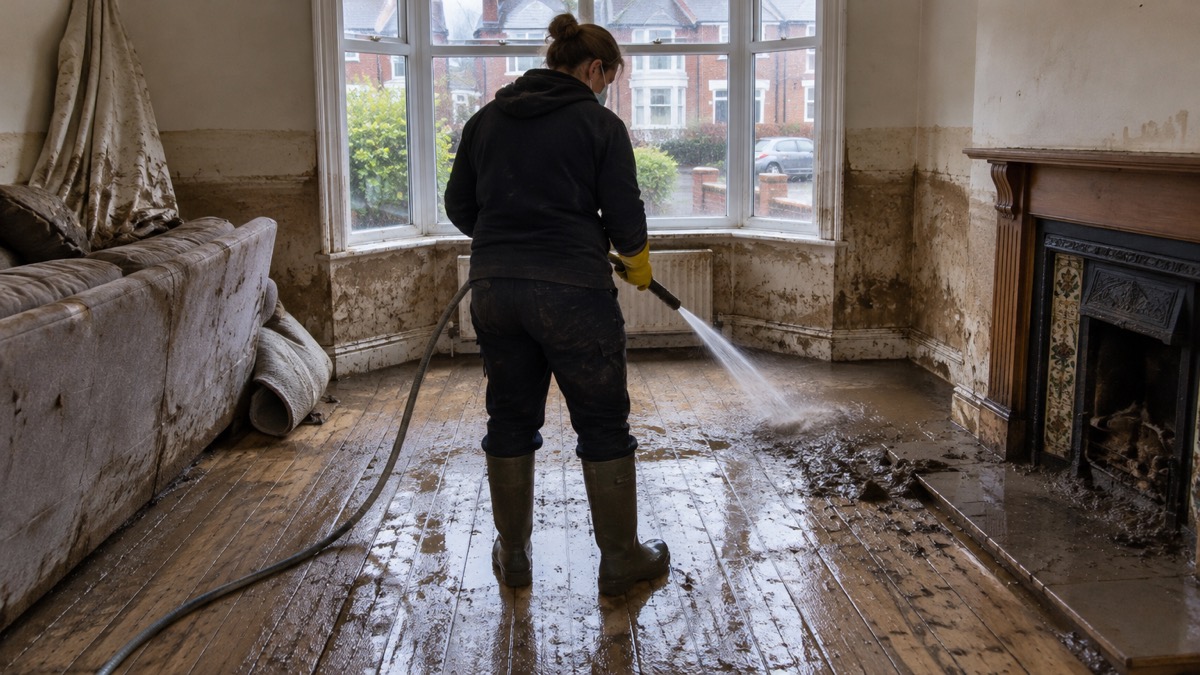
Before you move a single item or start cleaning, record everything. Gov.uk's after-a-flood guidance says to take photos of any damage and the flood water line before you start clearing up1. The UK government's flooding campaign goes further: take photographs or video footage of all damage, and mark the water levels on the wall before they recede3. Once the water has dropped and the walls have been cleaned, the evidence of how high it reached is gone, so the marking has to happen while it is still visible.
Nottinghamshire County Council breaks the recording job into three parts: mark on the wall the height the flood water reached in each room, photograph or video the flood water and damage, and make a list of damage to property and belongings26. Cotswold's leaflet adds practical detail: use a permanent ink pen to mark on the wall the height the flood water got to, in every room affected by flooding; photograph or video damaged property; keep copies of letters, emails and faxes; and keep receipts15.
The reason for all this recording is your insurance claim, and the claim runs on paper. Northern Ireland's guidance says you should keep a record of the flood damage and any contact you have with the insurance company24. Always ensure the insurance company has given approval before going ahead with any repair work3. Our insurance claim records checklist sets out what to keep, and our page on making an insurance claim after a flood walks through the process.
Contact your insurer before throwing anything away
The instinct after a flood is to clear everything out. Resist it, because damaged items are evidence. Mid and West Wales Fire and Rescue Service says to contact your insurers as soon as possible and not to throw damaged items away until your insurers have inspected them5. Nottinghamshire's further support page says the same: contact your insurer as soon as possible, try not to move damaged items as your insurer may need to inspect them, and if possible take photos or video of damaged property to give to your insurer27. Belfast City Council's advice is to dispose of items only when asked to do so by your insurer, broker or loss adjuster, and before removal to make sure you have photographed all the items9.
There is one exception: food. Ruined food can go, because it is a health hazard, but check with your insurer or loss adjuster before throwing anything away, and photograph damaged items before removal15. If you are covered for loss of perishable goods, make a list of all the foods you throw away13.
Contact your insurance company to start your claim as soon as possible; they will tell you what to do next1. Keep in mind that the insurance company may only offer to clean and repair something, not replace it15. If you are unsure of your insurance status, the National Flood Forum or the Association of British Insurers can be contacted for support25.
Throw away any food that has touched floodwater
Food safety after a flood is not a matter of judgement: the rule is absolute. Do not eat any food that has been in contact with floodwater, and throw away any food that has5. Nottinghamshire's flood FAQ puts it memorably: "As a general rule within your home, do not eat any food that has been touched by floodwater. If in doubt throw it out!"28
This includes sealed containers. Lancaster City Council says to discard all tins, bottles and cans containing food or drink if they have come into contact with flood water22. Double bag the food you throw away: Nottinghamshire says to double bag and throw away all food that has come into contact with flood water27, and Runnymede says to dispose of it immediately, preferably in plastic refuse sacks, double bagged if possible, put out for your next refuse collection4.
| Situation | What to do |
|---|---|
| Food touched by floodwater | Throw it away, double bagged27 |
| Tins, bottles and cans touched by floodwater | Discard them22 |
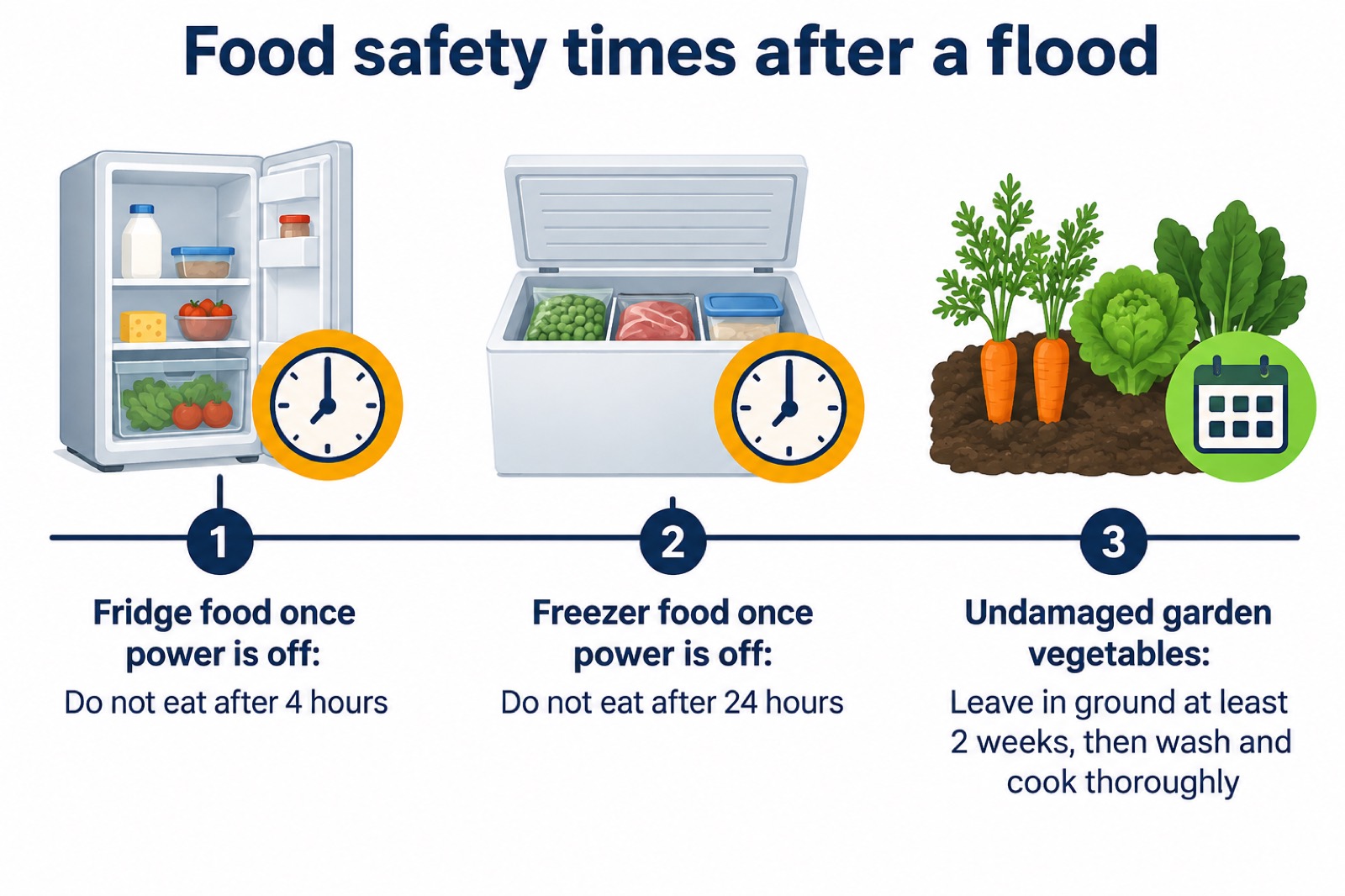
| Power off: fridge food | Do not eat fresh food after 4 hours6 |
| Power off: freezer food | Do not eat after 24 hours6 |
| Frozen food at room temperature for a few hours | Dispose of it; consult your insurer first18 |
| Chipped or damaged crockery, wooden chopping boards and spoons | Throw away; they cannot be properly sanitised29 |
Food Standards Scotland adds a warning about items people forget: throw away any chipped or damaged crockery, as well as wooden chopping boards and spoons, if they have come into contact with flood water, as they can't be properly sanitised and can absorb contaminated water29.
Home-grown produce needs its own rules. Food Standards Scotland says floodwater can also impact any home-grown fruit and vegetables grown in a garden or an allotment, and to discard all produce if it has come into contact with or even splashed by flood water29. Nottinghamshire's FAQ says not to eat any garden or allotment vegetables that have been covered by flood water, to leave undamaged vegetables in the ground for at least another 2 weeks and then only use them after thorough washing and cooking28. Oxford's guidance says to discard above-ground produce that floodwater has touched, such as cabbages18. Our page on when your garden is safe after sewage covers the garden side in more detail.
If you cannot live at home: emergency accommodation and council help
A flooded home is often unliveable for weeks, and there is a route to help. Gov.uk's help-during-a-flood guidance says that if your home is flood damaged and you're not able to live there, contact your local council for help getting emergency accommodation21. The UK government's flooding campaign gives the same advice3, and gov.uk's after-a-flood pages add that you should contact your local council if you need emergency housing because of flooding1.
What the council can provide varies. Somerset Council's guidance for households whose homes are flooded says that where other options are exhausted, it may help find temporary or permanent accommodation if you are homeless or threatened with homelessness because of the flood, possibly emergency accommodation such as a hostel, bed and breakfast or council property, and you may have to pay rent or a contribution30. So treat council accommodation as help that exists but may come with costs, and check what applies in your area.
If you rent or are in social housing, contact your housing provider as a priority to ensure you have somewhere to stay6. Our page on will insurance pay for temporary accommodation? covers the insured route, and do you still pay rent if your home floods? covers the renting side.
No insurance: hardship grants and charities
If you do not have insurance, you are responsible for covering the costs of flood damage, but you are not on your own. The UK government's flooding campaign says that if you do not have insurance, contact your local council for information on hardship grants or charities that may be able to help you3. Nottinghamshire's easy-read guide says that if you don't have insurance, you can contact your district council for help19, and Cotswold's leaflet says your local council should be able to provide information on hardship grants or charities that may be able to help you15.
Nottinghamshire's further support page notes that interest free crisis loans are available in some circumstances27. Your local authority or charities may be able to help with practical things such as skips or grants20. If you are unsure of your insurance status, contact the National Flood Forum or the Association of British Insurers for support25. Our page on recovery grants and help if you are not insured goes through the options in detail.
Renting: tell your landlord and claim on your own contents policy
If you rent, the flood splits into two halves: the building, which is your landlord's responsibility, and your belongings, which are yours. Devon's flood recovery leaflet says that if you are renting, contact your landlord to report the flooding, as it is their responsibility to insure the building, and you may have a separate contents insurance policy31. Northern Ireland's guidance says that if you live in rented accommodation, the landlord will deal with the structure of your home, and for contents claims you should contact your own insurer24. Nottinghamshire's advice is the same: if you rent your property, contact your landlord and contents insurer26.
Tell your landlord as soon as possible if your home has flooded and needs repairs; they must complete repairs within a reasonable time30. The London Fire Brigade's after-a-flood guidance says that if you're in social housing or renting privately, let your landlord know what has happened so they can take any remedial action needed to keep you safe32. Derbyshire's guidance adds that you should contact your insurance company and landlord, where applicable, for advice and to get approval to carry out any repairs, and to take photos of the damage and keep records7.
Looking after your health and mental wellbeing after a flood
The physical health risks after a flood run alongside the mental ones, and both need attention. On the physical side, the key rules are already on this page: keep out of floodwater, wash hands thoroughly after any contact, keep cuts covered, and throw away contaminated food. If you become ill after accidentally swallowing mud or contaminated water, contact your doctor18. In Wales, Public Health Wales says to contact NHS 111 Wales or your doctor if you become ill after accidentally swallowing floodwater or mud, particularly if you develop diarrhoea, a fever or stomach pains within 10 days of being in contact with floodwater or sewage33. Wiltshire and Swindon Prepared says that if you ingest any flood water or start to feel unwell, seek professional medical attention as soon as possible and state that you have been in contact with flood water16. Parents with infants that are unwell with diarrhoea and vomiting after contact with floodwater should seek medical advice from NHS Direct 111 or their doctor33.
On the mental health side, the effects of a flood are real and recognised. Surrey County Council's guidance on staying healthy and safe after flooding lists events after a flood that can be a source of stress, including difficulties accessing continuing healthcare and prescription medications, disruption to normal household activities, loss of school facilities, seeking compensation and insurance claims, and loss of employment or income34. The same guidance offers reassurance: only a small minority of people are at risk of going on to develop further mental health problems after a flood, and anyone whose symptoms persist should visit their GP34.
The self-care advice from Wiltshire and Swindon Prepared is practical rather than clinical: make time for yourself, go to a place where you feel calm and safe, take time to rest, relax, get sufficient sleep and eat healthily and regularly35. It also says to start clean-up efforts within your home when you feel ready, and not to overdo it during the clean-up and recovery process35. Runnymede Borough Council's advice is to remember to take care of your own wellbeing and do not try to tackle everything at once4.
Support from other people matters. Wiltshire and Swindon Prepared says it is important to seek support from loved ones such as family, friends and neighbours to lessen the negative impacts of flooding on mental health, and to get in touch with a local community support group or neighbours to help you cope and recover35. It also advises keeping in touch with your local authority, who will be able to support you in resolving practical issues35. If you are concerned about your own or a family member's mental health or any other health issue, make an appointment with your GP26. The National Flood Forum provides a step by step guide on what you need to do after a flood32, and our page on mental health after a flood lists where to get support.
If you are helping someone else affected by flooding, the same guidance sets out how: assess the situation and ensure the person's circumstances are safe, help them make contact with recovery agencies such as through the local authority or a flood warden, check there are no immediate physical health needs, check whether any basic needs such as access to food, water, shelter and medication are met, help people contact their loved ones, listen, and help them make plans for next steps35. Public Health Wales adds that when helping someone, try to become familiar with the nature of the flooding event, identify how those affected can access help and whether there are flood risks in the future33.
The order of recovery, start to finish
Pulling the whole process together, the sequence that runs through every official source is:
- Wait for the emergency services to say it is safe before returning1
- Keep gas and electricity off; arrange a qualified electrician and gas engineer to check them19
- Stay out of standing floodwater; never walk in it where avoidable13
- Mark the water line on the wall in every room, and photograph or video all damage26
- Contact your insurer to start the claim, and do not throw damaged items away until they have inspected them5
- Throw away food that has touched floodwater, double bagged, and list what you discard27
- Wear waterproof clothing, gloves, boots and a face mask for the clean-up13
- Remove all standing water, particularly from the under floor area, using a pump or buckets followed by a wet/dry vacuum, then shovel out mud17
- Clean all hard surfaces with hot soapy water and ensure they dry thoroughly, using heating and ventilation to aid drying18
- Only fully reoccupy the home once it has been thoroughly cleaned, disinfected and allowed to dry out8
For the cleaning itself in more detail, see cleaning up safely after floodwater, drying out a house with dehumidifiers and how soon mould grows and how to stop it. If you are planning repairs, repairing a home so it recovers faster next time explains resilient repair options, and avoiding rogue traders after a flood covers a problem that follows many floods. For the wider picture of what to do before and during a flood, start with our flooding household guide, and for general household preparedness, see getting started.
Sources (35)
- After a flood, Gov.uk
- Flooding, Ready Scotland
- Flooding, Prepare campaign, Gov.uk
- Flooding aftercare, Runnymede Borough Council
- Cleaning up, Mid and West Wales Fire and Rescue Service
- Recovering from a flood, Wiltshire and Swindon Prepared
- Cleaning up, Derbyshire County Council
- Cleaning up after a flood: health advice, North Warwickshire Borough Council
- Flooding advice, Belfast City Council
- What to do in a flood, Natural Resources Wales
- Protecting your property from flooding, Met Office
- Flooding, Cornwall Fire and Rescue Service
- What to do after a flood, Natural Resources Wales
- After a flood: clearing up, nidirect, Northern Ireland
- Preparing your home for flooding, Cotswold District Council
- What to do in a flood, Wiltshire and Swindon Prepared
- After a flood, Surrey County Council
- Clearing flood, Oxford City Council
- After a flood: easy read, Nottinghamshire County Council
- Flood recovery leaflet, Nottinghamshire County Council
- Help during a flood, Gov.uk
- Be prepared, Lancaster City Council
- Information about specific safety concerns, Northumberland County Council
- Thunderstorms: weather warning advice and information, nidirect, Northern Ireland
- How to recover from flooding, Gov.uk
- After a flood, Nottinghamshire County Council
- Further support, Nottinghamshire County Council
- Flooding before, during and after: frequently asked questions, Nottinghamshire County Council
- Flooding: food safety in the kitchen, Food Standards Scotland
- Housing help if your home is flooded, Somerset Council
- Flood recovery information, Devon County Council
- After a flood, London Fire Brigade
- Flooding and health, Public Health Wales, NHS Wales
- Staying healthy and safe after flooding, Surrey County Council
- Flooding and health: mental health, Wiltshire and Swindon Prepared
 Flood Warning Checklist
 First Steps After a Flood
 Insurance Claim Records
 Checking Flood Risk by Postcode
 Types of Flooding
 Flood Alerts and Flood Warnings
 Flood Guidance Statement
 Wales Flood Warnings and Maps
 Making a Household Flood Plan
 Protecting Your Home
 Door Flood Barriers
 Sandbags and Alternatives
 Flood Doors and Windows
 Airbrick Covers
 Non-Return Valves and Bungs