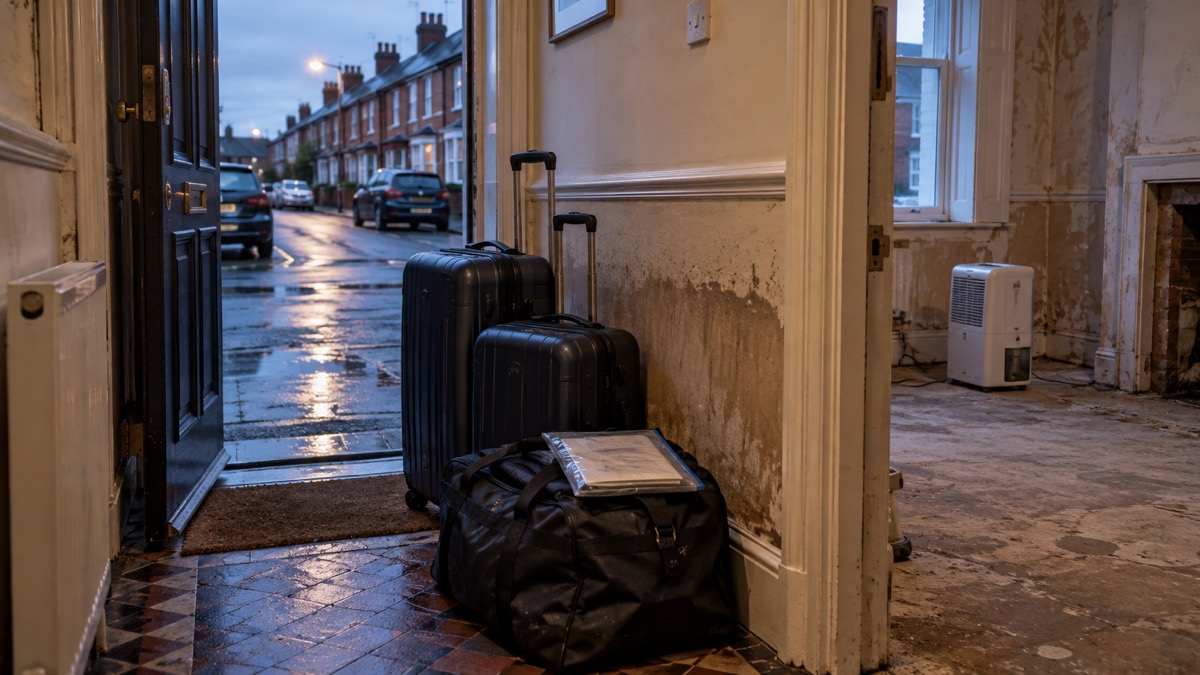
If floodwater has made your home unlivable, the first thing to do is ring your insurer, before you move out or throw anything away. Insurers may pay the costs of temporary accommodation and clean up, and your insurance company may be able to pay for a hotel, bed and breakfast or rented property while your home is being repaired1. The cover is not automatic and it is not unlimited: what you get, and for how long, depends on the policy you bought.
The order matters. Contact your insurer as soon as possible, and do not move damaged items, because your insurer may need to inspect them3. If you have different insurers for the structure of your home and your contents, contact them both4. Then agree where you will stay, and keep every receipt.
If you have no insurance, you are responsible for covering the cost of the damage yourself, but your district council may be able to help with temporary accommodation5. Consider temporary housing straight away, because local accommodation is likely to fill up quickly6.
What insurance can pay for while your home is repaired
The cover most households are looking for sits in two places. Buildings cover means your insurer should dry, clean and fix your home after a flood. Contents cover means your insurer should dry, clean and restore your possessions and replace or pay for any possessions that cannot be cleaned up or fixed6. Temporary accommodation is a separate benefit that either policy may include, so check both.
If you own your own home, you should have both buildings and contents insurance. If you live in public or private rented accommodation, you should have contents insurance, and your landlord should have buildings insurance on the property8. That split explains why a tenant's route to a hotel room usually runs through their own contents policy rather than the landlord's buildings policy.
When you check your policy, look for four things: whether it covers flooding at all, whether it covers alternative accommodation, whether it replaces new for old, and any limit on repairs9. Homeowners should also check whether insurance covers repair costs, replacement of damaged belongings, temporary accommodation and legal cover or advice2. If your insurance does not cover flooding, FloodRe may be able to help10.
| Policy type | Who usually holds it | What it should cover after a flood |
|---|---|---|
| Buildings | Homeowner, or landlord for a rented home | Drying, cleaning and fixing the structure of the home6 |
| Contents | Householder, whether owner or tenant | Drying, cleaning and restoring possessions, replacing or paying for those that cannot be fixed6 |
| Alternative accommodation | Either policy, if included | A hotel, bed and breakfast or rented property while repairs are done2 |
Ask your insurer before you move out
The single most useful instruction after a flood is to make contact before anything else happens. Contact your insurer as soon as possible3. Contact your insurance company to start your claim and they will tell you what to do next11. They may require evidence of damage before clean up begins12.
That timing protects the claim. Keep damaged items and avoid undertaking repair works until you have made contact with your insurance company, as you may invalidate your claim13. Do not throw damaged items away until your insurers have inspected them14. Speak to your insurance company about what you can move and throw away before you start clearing up11, and make sure you have spoken to your insurers before removing or disposing of anything15.
Once you have their agreement, the practical question is where to sleep. Your insurer may be able to provide alternative accommodation5. If they cannot, consider staying with friends or family, or contact your district council about temporary housing5. If your home is uninhabitable, seek temporary shelter with family, friends or an emergency accommodation centre16. During an evacuation you will in most situations be taken to a temporary rest centre, or you may choose to go to family or friends7.
Tenants: who to ask, your insurer or your landlord
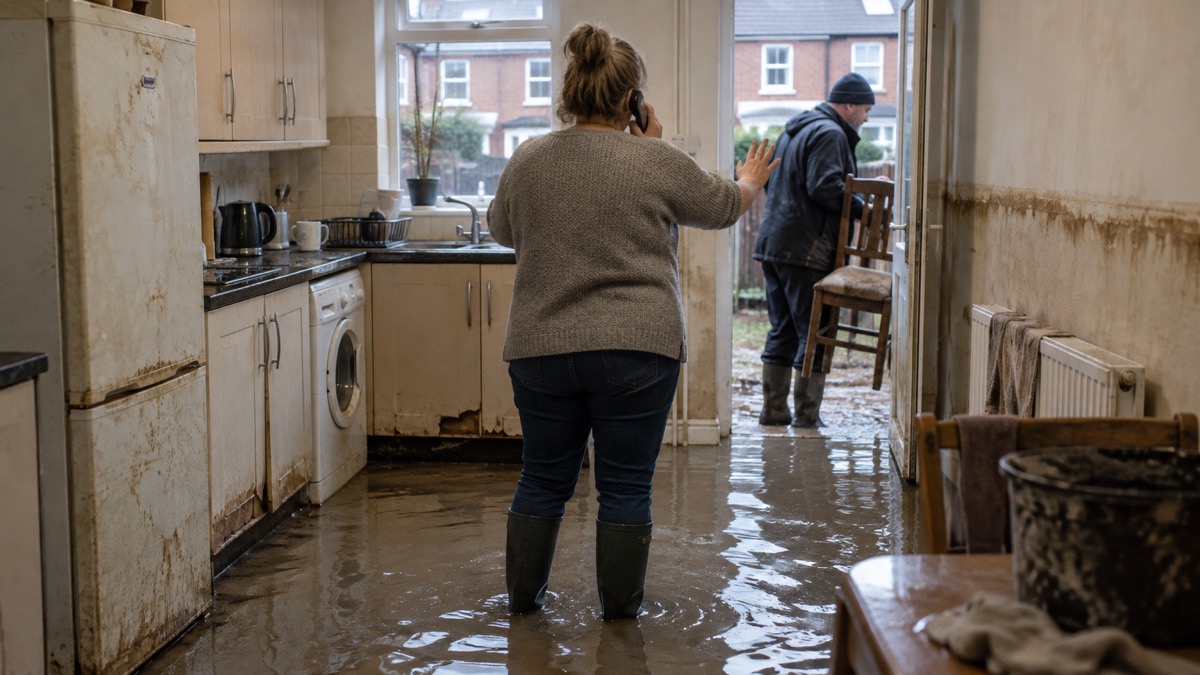
For a tenant, the answer is usually both, for different things. If you live in rented accommodation, the landlord will deal with the structure of your home, and for contents claims you contact your own insurer4. If you rent your property, contact your landlord and contents insurer14. If you rent your home, contact your landlord and your contents insurer17.
Report the flooding to your landlord, because it is their responsibility to insure the building, and you may have a separate contents insurance policy5. If you are in social housing or renting privately, let your landlord know what has happened so they can take any remedial action needed to keep you safe12. If you rent in social housing or private housing, contact your housing provider as a priority to ensure you have somewhere to stay18.
Do not assume the landlord will house you. Private landlords do not usually have to find you alternative accommodation if you need to move out due to flooding, but they may have insurance that covers this, so contact the landlord to check2. Your own contents insurer may cover damaged items or temporary accommodation2. If you are a renter, it is also worth speaking to your landlord or housing association about how they can better protect you from flooding19.
- Do first: report the flood to your landlord, and ring your contents insurer14
- Ask your landlord: whether their buildings insurance covers alternative accommodation2
- Ask your contents insurer: whether your policy covers a hotel or rented home2
- If you have no contents policy: contact your district council for help17
What to check in your policy, and how long cover lasts
Check that your household insurance cover is adequate and up to date14. Check your household building or contents insurance covers flooding20. Make sure you have a policy that meets your coverage needs for potential flood damage inside your home21, and make sure you have the correct insurance cover including flood cover22. Confirm you are covered for flooding by asking your insurer, landlord or letting agent, and check whether the policy covers alternative accommodation, replaces new for old, and has a limit on repairs23.
On duration, the policy is the only authority. Check the policy for what it covers and for how long2. There is no standard period in the public guidance, and repair times can be long: one documented household was out of their home for 8 to 9 months after a flood24. Groundwater can remain for weeks after the rain has stopped25, which is one reason drying and repairs take time. Ask your insurer to confirm the limit in writing before you commit to a long let, and ask what happens if repairs overrun.
If you have no insurance, or cannot stay with family
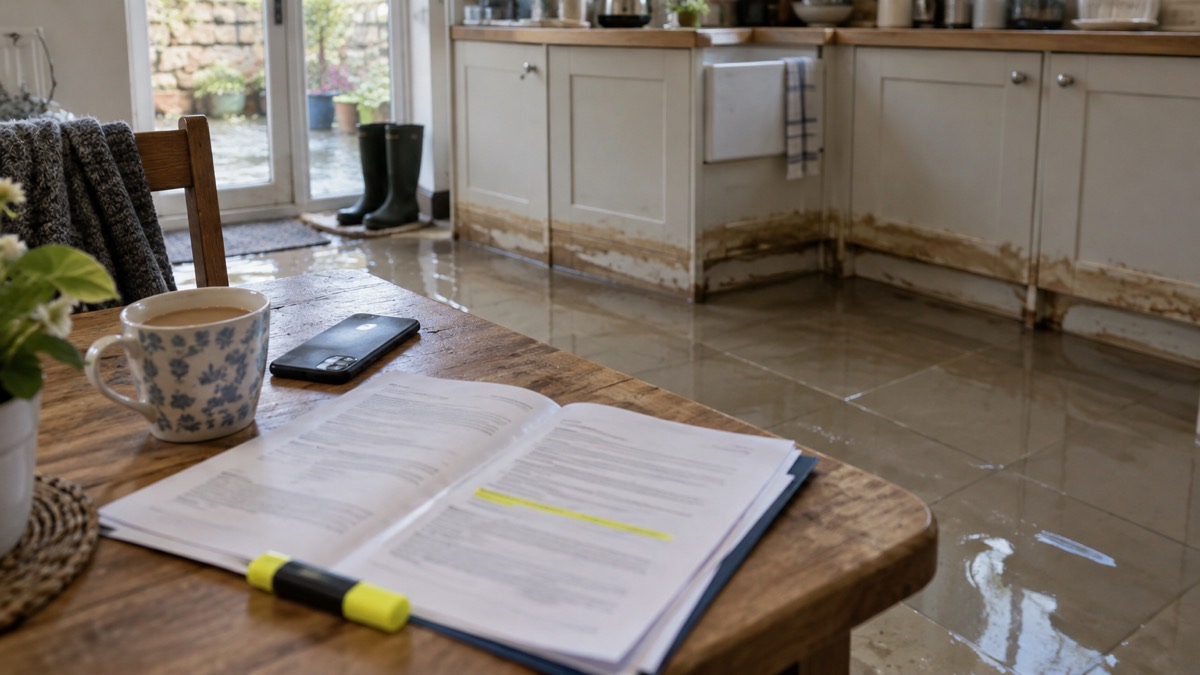
Without a policy, the route runs through the council. If you do not have insurance, you can contact your district council for help14. If you are uninsured you will be responsible for covering the cost of the damage, but your district council may be able to help with temporary accommodation5. Consider temporary housing straight away, as local accommodation is likely to fill up quickly6.
Where other options are exhausted, a council may help find temporary or permanent accommodation if you are homeless or threatened with homelessness because of the flood, possibly emergency accommodation such as a hostel, bed and breakfast or council property, and you may have to pay rent or a contribution2. That last point matters: council help is not automatically free.
Staying with family is a legitimate choice. If your insurer cannot provide alternative accommodation, consider staying with friends or family, or contact your district council about temporary housing5. If your home is uninhabitable, seek temporary shelter with family, friends or an emergency accommodation centre16. Wherever you end up, keep a record of the flood including photos, receipts and correspondence with your landlord, insurer or council2.
Getting your paperwork ready before the water comes
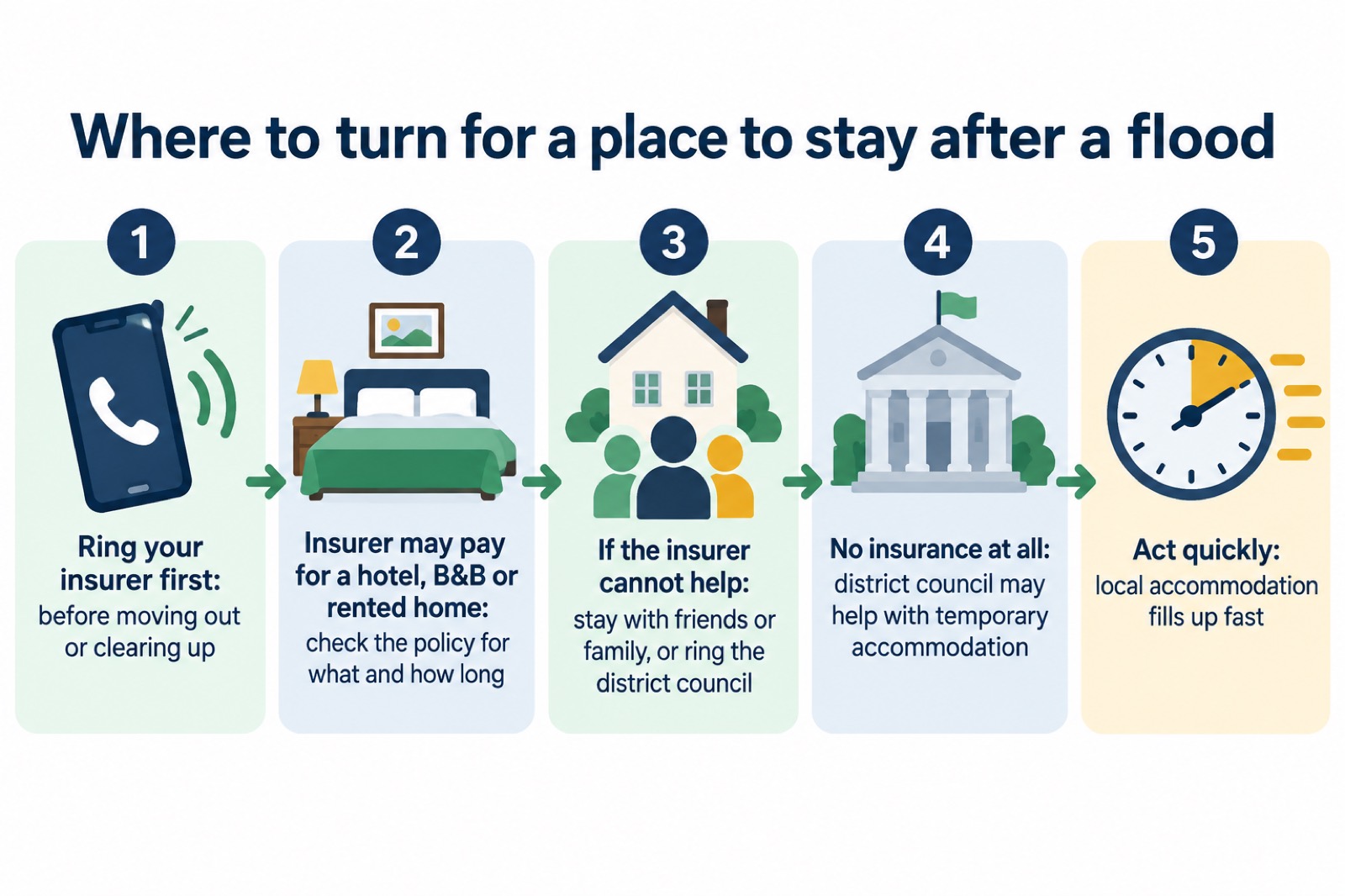
Sort this out before a flood. Ensure you have sufficient house and contents insurance and find out if it covers temporary accommodation8. Keep copies of your home insurance documents in your emergency flood kit, alongside a phone charger and battery pack, a list of important telephone numbers, a torch with spare batteries, a radio, warm waterproof clothing and blankets, a first aid kit and prescription medication, bottled water and non-perishable food, baby food and baby care items, pet supplies, rubber gloves and wellington boots, face masks and hand sanitiser23. Ensure important documents are safe, including your home insurance details26.
It also helps to know your risk. Our guide to checking your home's flood risk by postcode explains how to look up your address, and home insurance in a flood risk area and Flood Re covers what to do if flooding cover is hard to find. Some insurers offer reduced premiums for properties that implement property flood resilience measures27, so improvements can feed back into what you pay.
If a flood does happen, our first steps after your home floods checklist and making an insurance claim after a flood walk through the sequence in more detail, and recovery grants and help if you are not insured covers the council route. For the wider picture, start with Flooding: A Household Guide.
Sources (27)
- Be informed about hazards: flooding, GOV.UK Prepare, 2026-10-12
- Housing help if your home is flooded, Somerset Council, 2026-06-04
- Further support after a flood, Nottinghamshire County Council, 2026-10-29
- Thunderstorms weather warning: advice and information, nidirect, 2026-08-30
- Flood recovery information, Devon County Council, 2026-01-29
- Flood recovery leaflet, Nottinghamshire Local Resilience Forum, 2025
- During the flood, Belfast City Council, 2026
- Flooding advice, Belfast City Council, 2026-10-29
- Natural Resources Wales / Preparing for a flood, Natural Resources Wales
- How to prepare for flash flooding | London City Hall, Greater London Authority (London City Hall)
- After a flood, GOV.UK, 2026-10-25
- Flooding advice: after a flood, London Fire Brigade, 2026-10-25
- Advice for homeowners affected by flooding, Nottinghamshire County Council, 2026-10-29
- After a flood, Nottinghamshire County Council, 2026-10-29
- Flood recovery information for Suffolk, Suffolk County Council, 2026-10-29
- Dealing with the aftermath of a fire, Warwickshire County Council, 2026-10-29
- Flooding: preparing for a flood (easy read), Nottinghamshire County Council, 2025-11-02
- Recovering from a flood, Wiltshire and Swindon Prepared, 2026-10-25
- Preparing for civil emergencies, Argyll and Bute Council, 2026
- Plan and prepare for floods, Westminster City Council, 2026-09-03
- How to prepare for floods and flooding, British Red Cross, 2026-10-25
- Preparing for flooding, National Flood Forum, 2026-10-29
- Preparing for a flood, Natural Resources Wales, 2026-10-29
- Property flood resilience case studies, Derbyshire County Council, 2024
- Flooding and your water supply, South Staffs Water, 2026-10-28
- During a flood, Nottinghamshire County Council, 2026-10-29
- Homeowner flood protection responsibilities and prevention tips, Central Bedfordshire Council, 2026
 Flood Warning Checklist
 First Steps After a Flood
 Insurance Claim Records
 Signing Up for Flood Warnings
 Flood Warnings Without Email
 Who to Report Flooding To
 Reporting a Blocked Gully
 Garden Safety After Sewage
 Council Sandbag Duties
 Filling and Laying Sandbags
 Makeshift Sandbags
 Disposing of Used Sandbags
 Turning Off Utilities
 Walking or Driving in Floodwater
 Turning Electricity Back On