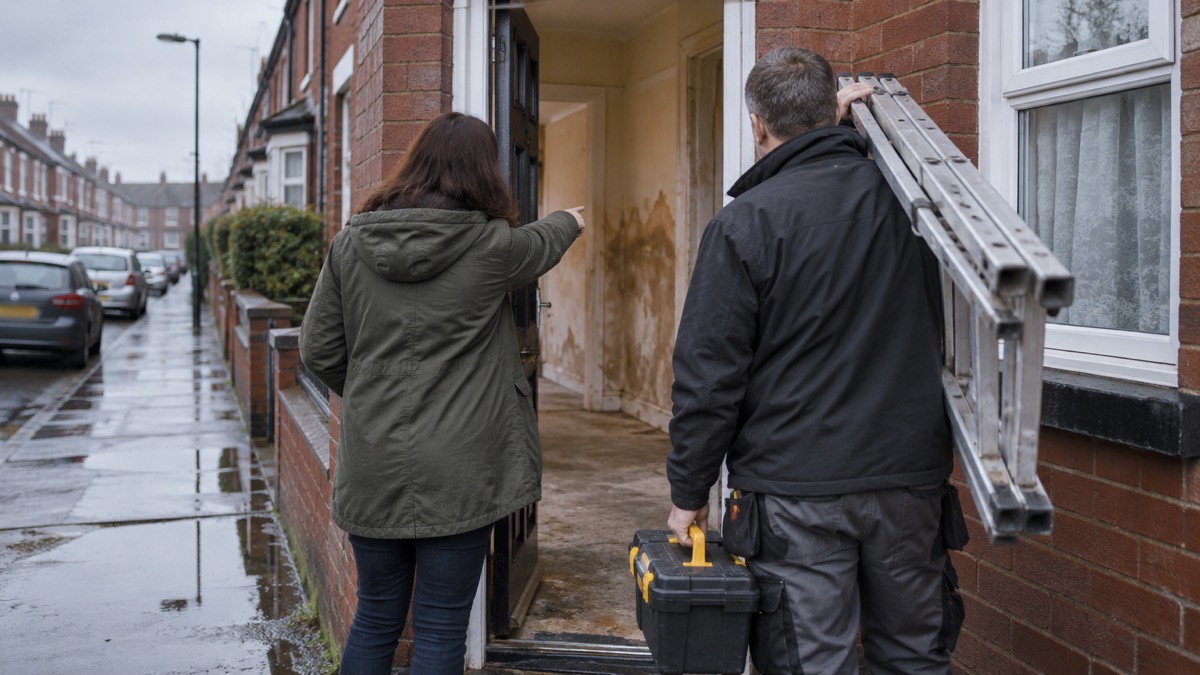
If your rented home floods, the first thing to know is that the building is your landlord's responsibility, not yours. The government's flood recovery guidance is direct: "Your landlord is responsible for repairs to your home if you've got flood damage."1 Your job is to tell them quickly, and to deal with your own belongings through your own insurance.
On rent itself, the practical answer is that you keep paying it unless you and your landlord agree otherwise, and the way to protect yourself is to report the flooding at once and get the repair timetable in writing. Somerset Council advises tenants to "Tell your landlord as soon as possible if your home has flooded and needs repairs. They must complete repairs within a reasonable time."2 If you move out while work is done, tell your landlord first and ask them to confirm how long repairs should take and when you can move back in3.
This page sets out what your landlord must repair, what to do in the first hours, how to report damage properly, and where to turn if repairs stall. It is written for tenants in England, with notes where the arrangements differ elsewhere in the UK.
Your landlord is responsible for repairs after a flood
The split of responsibility after a flood is straightforward. Your landlord looks after the building; you look after your belongings. Somerset Council sets out what a landlord must put right after rain flooding: the structure and exterior, such as walls, roof, windows and doors; the plumbing, heating, gas, electricity and water supply systems; and fixtures and fittings they provided, such as carpets, curtains and appliances2. The government's guidance on renting a safe home makes the same point in general terms: your landlord is always responsible for repairs to the structure and exterior of your home, including drains, gutters and external pipes6.
That division carries through to insurance. If you live in public or private rented accommodation, you should have contents insurance, and your landlord should have buildings insurance on the property4. Surrey County Council's recovery guidance says the same for tenants: household contents, fixtures and fittings should be covered by your contents policy, and it is normally the landlord's responsibility to provide building insurance7. If you rent, contact your landlord to report the flooding, because it is their responsibility to insure the building, and you may have a separate policy for contents8.
| What needs sorting | Who deals with it |
|---|---|
| Walls, roof, windows, doors | Landlord2 |
| Plumbing, heating, gas, electricity, water supply | Landlord2 |
| Carpets, curtains and appliances the landlord supplied | Landlord2 |
| Your furniture, clothes, electronics and other belongings | You, through your contents insurance4 |
| Somewhere to stay if you cannot remain at home | Your insurer may pay for temporary accommodation; check your policy2 |
One limit is worth knowing before you need it. Tenants are responsible for protecting their own property from flooding, alongside homeowners and businesses9. That does not shift the repair duty onto you, but it does mean simple precautions, such as moving possessions upstairs where you can, are yours to take10. If you want to go further, talk to your landlord or housing association about how they can better protect you from flooding11, and see our guide to protecting your home for measures that suit a rented property.
What to do first if your rented home floods
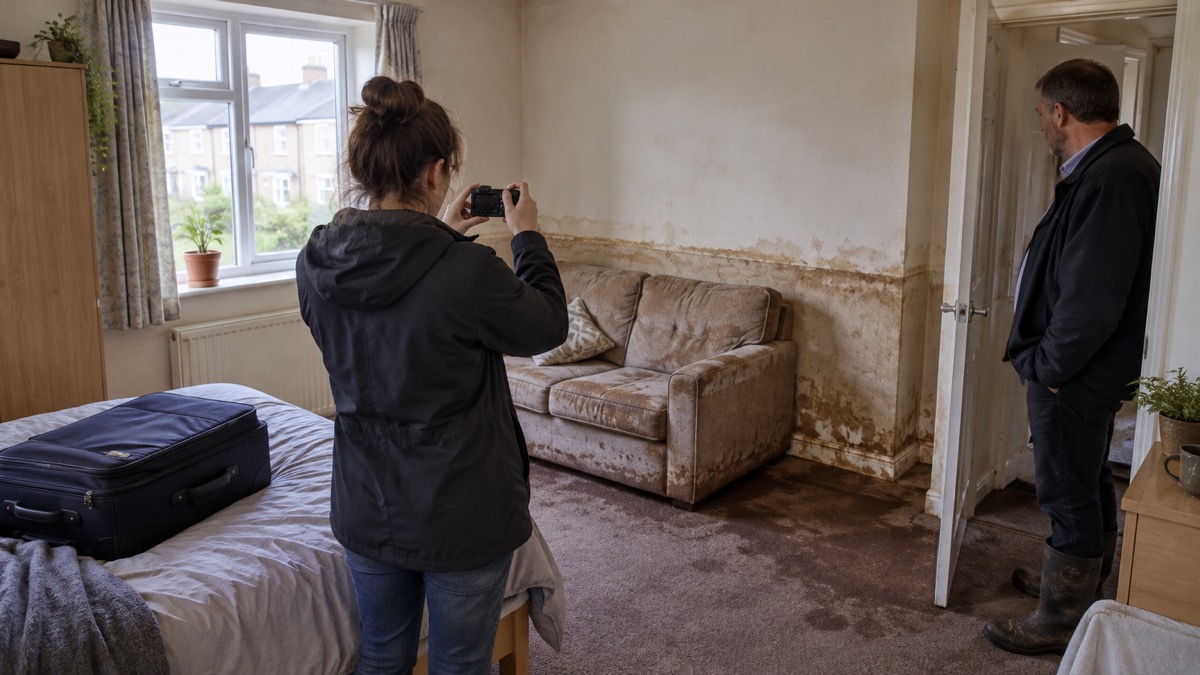
In the first hours, three calls matter more than anything else: your landlord, your contents insurer, and, if the water came from a burst pipe, your water supplier. The government's flood recovery guidance says that if you rent, you should contact your landlord and your contents insurer5. Northern Ireland's official advice draws the line clearly: if you live in rented accommodation, the landlord will deal with the structure of your home, and for contents claims you contact your own insurer12.
If the flooding is from a burst pipe, contact your water supplier, the company you pay your water rates to13. In rented accommodation, landlords are responsible for insulating and protecting all inside pipework14, so tell them as well.
Before anything is moved or thrown away, record it. Contact your insurance company and landlord for advice and approval to carry out repairs, take photos of the damage and keep records where possible15. Southern Water adds that you should report losses or damage to your insurance provider, keep receipts of emergency expenses, and contact your landlord if you rent16.
A sensible order of work looks like this:
- Make the property safe and keep clear of floodwater, following our guide to what to do during a flood at home.
- Photograph and list the damage to your belongings and to the property15.
- Tell your landlord, in writing if you can, and ask when repairs will start2.
- Contact your contents insurer and start a claim5.
- Keep receipts for any emergency spending, such as cleaning materials or temporary stays16.
Telling your landlord about flood damage
Report the flooding as soon as possible, and put it in writing so there is a dated record. Somerset Council's wording is the one to work from: tell your landlord as soon as possible if your home has flooded and needs repairs, and they must complete repairs within a reasonable time2. The London Fire Brigade's advice for people in social housing or renting privately is to let the landlord know what has happened so they can take any remedial action needed to keep you safe18.
Your message should cover four things:
- What happened and when, including whether the water came from a river, the sea, surface water, groundwater or a pipe.
- What is damaged, room by room, with photographs attached15.
- What you have already done, such as moving possessions or contacting your insurer.
- What you are asking for, which is a repair timetable and a named contact.
There is a reason to be prompt beyond getting the work started. A landlord may claim compensation if you caused the flood or did not report it2, so a clear, early report protects you as much as it helps them. The same council guidance notes that tenants may claim compensation if the landlord caused the flood or failed to fix the problem, but that you must show the landlord was negligent or broke their agreement, and that you suffered loss or inconvenience2.
If you are unsure whether your policy responds, check it now rather than later. Westminster City Council strongly encourages every resident to have appropriate insurance in place, whether they own or rent, with buildings or contents insurance that includes flood cover19. If your household insurance does not cover flooding, FloodRe may be able to help11. Our guide to home insurance in a flood risk area and Flood Re explains how that works.
Moving out while repairs happen
If the damage is serious, you may need to leave while the work is done. The charity Citizens Advice, whose guidance includes information for people in rented properties about rented home flooding8, advises considering moving out if your home is seriously damaged, but says that before you do so you should inform your landlord and get them to confirm how long repairs should take and when you can move back in once they are complete3.
Two things follow from that. First, get the timescale in writing, because it is the basis for any arrangement about rent and for planning your return. Second, ask your insurer whether temporary accommodation is covered. Your insurance company may be able to pay for temporary accommodation such as a hotel, bed and breakfast or rented property while your home is being repaired, so check the policy for what it covers and for how long2.
Private landlords do not usually have to find you alternative accommodation if you need to move out due to flooding, but they may have insurance that covers this, so contact the landlord to check2. If you are in social housing, your housing provider is the first call17.
Flooding from a burst pipe or a sewer
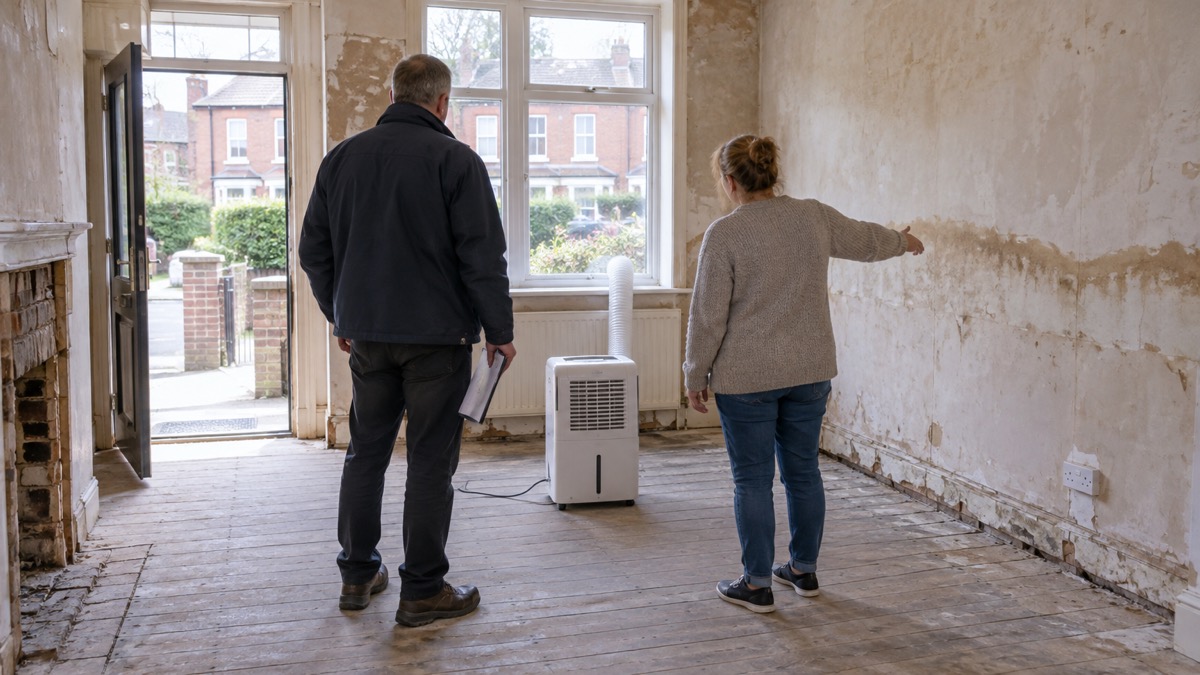
Not every flood arrives from outside, and the route to help differs with the source.
Burst pipes. Contact your water supplier, the company you pay your water rates to13. Landlords are responsible for insulating and protecting all inside pipework in rented accommodation14, so the repair duty sits with them. Northern Ireland's guidance on reducing the risk of burst pipes covers the same ground for households there14.
Sewer flooding. Report the damage to your insurance provider and make a claim, keep receipts for emergency expenses, and contact your landlord if you rent16. If you rent, contact your landlord or housing association for help20. There may also be a payment due from the water company. Under the household code of practice published by the water regulator Ofwat, if wastewater from one of the company's sewers enters your building, you are entitled to an automatic payment or credit equal to the annual wastewater charge for the current year, subject to a minimum and a maximum set out in the code, for each event21. Those payments will not apply if the flooding is caused by exceptional weather, industrial action, your own actions, or any defect, inadequacy or blockage in your drains or private sewers21. Our pages on sewer flooding and guaranteed standards payments go through this in more detail.
Damp, mould and getting the home dry
Drying the property out properly is part of the repair, not an optional extra. Getting your home dry after a flood is important because there are long term impacts from damp and mould22. As your home continues to dry out, the mould should disappear, and if it persists you should contact a specialist cleaner23. Surrey County Council gives the same advice: mould should disappear as your home dries out, but if it persists, contact a specialist cleaner24.
Tell your landlord about any damp or mould that follows the flood, so they can take the remedial action needed to keep you safe18. If you are doing any of the drying yourself, our guide to drying out a house with dehumidifiers and our page on how soon mould grows and how to stop it cover the practical steps.
Where to get help if your landlord does not act
Start with the record you have built: dated reports, photographs and the repair timetable you were promised. If work is not happening, the first step is a written reminder to your landlord setting out what was agreed and when2. Somerset Council's guidance confirms that landlords must complete repairs within a reasonable time, and that tenants may claim compensation where the landlord caused the flood or failed to fix the problem, provided they can show negligence or a broken agreement and the loss or inconvenience they suffered2.
If you have no insurance of your own, help may still be available. Your local district council may provide information on hardship grants or charities25. Our guide to recovery grants and help if you are not insured sets out what exists.
For the wider picture of who does what after a flood in your area, including councils and water companies, see who manages flood risk. And if the flooding has affected your health or your peace of mind, our pages on floodwater and your health and mental health after a flood explain where support comes from.
Sources (25)
- After a flood, GOV.UK, 2026-10-29
- Housing help if your home is flooded, Somerset Council, 2026-06-04
- How to dry your home out after a leak or flood, Which?, 2025-12-01
- Flooding advice, Belfast City Council, 2026-10-29
- After a flood, Nottinghamshire County Council, 2026-10-29
- How to rent a safe home, GOV.UK, 2020-12-10
- Getting back into your home following flooding, Surrey County Council, 2026-10-28
- Flood Recovery Leaflet, .pdf), Devon Communities Together, 2026-01
- Preparing for flooding, Somerset Council, 2026-10-28
- Report a flood in Suffolk, Suffolk County Council, 2026-10-29
- How to prepare for flash flooding, Greater London Authority, 2026-10-25
- Thunderstorms weather warning: advice and information, nidirect, 2026-08-30
- During flooding, Somerset Council, 2026-10-01
- Steps to reduce the risk of burst pipes, nidirect, 2025-10-23
- Cleaning up, Derbyshire County Council, 2026-10-29
- My property is flooded, Southern Water, 2026-10-28
- Recovering from a flood, Wiltshire and Swindon Prepared, 2026-10-25
- After a flood, London Fire Brigade, 2026-10-25
- Plan and prepare for floods, Westminster City Council, 2026-09-03
- Sewer flooding: what to do if your home is affected, Consumer Council for Water, 2025-03-11
- Household code of practice, Ofwat, 2022-11
- Flood recovery information, Devon County Council, 2026-01-29
- Flooding and health advice for the public, GOV.UK, 2024-03-13
- After flooding, Surrey County Council, 2026-09-23
- Before, during and after a flood, Suffolk County Council, 2021-05
 Flood Warning Checklist
 First Steps After a Flood
 Insurance Claim Records
 Signing Up for Flood Warnings
 Flood Warnings Without Email
 Who to Report Flooding To
 Reporting a Blocked Gully
 Garden Safety After Sewage
 Council Sandbag Duties
 Filling and Laying Sandbags
 Makeshift Sandbags
 Disposing of Used Sandbags
 Turning Off Utilities
 Walking or Driving in Floodwater
 Turning Electricity Back On