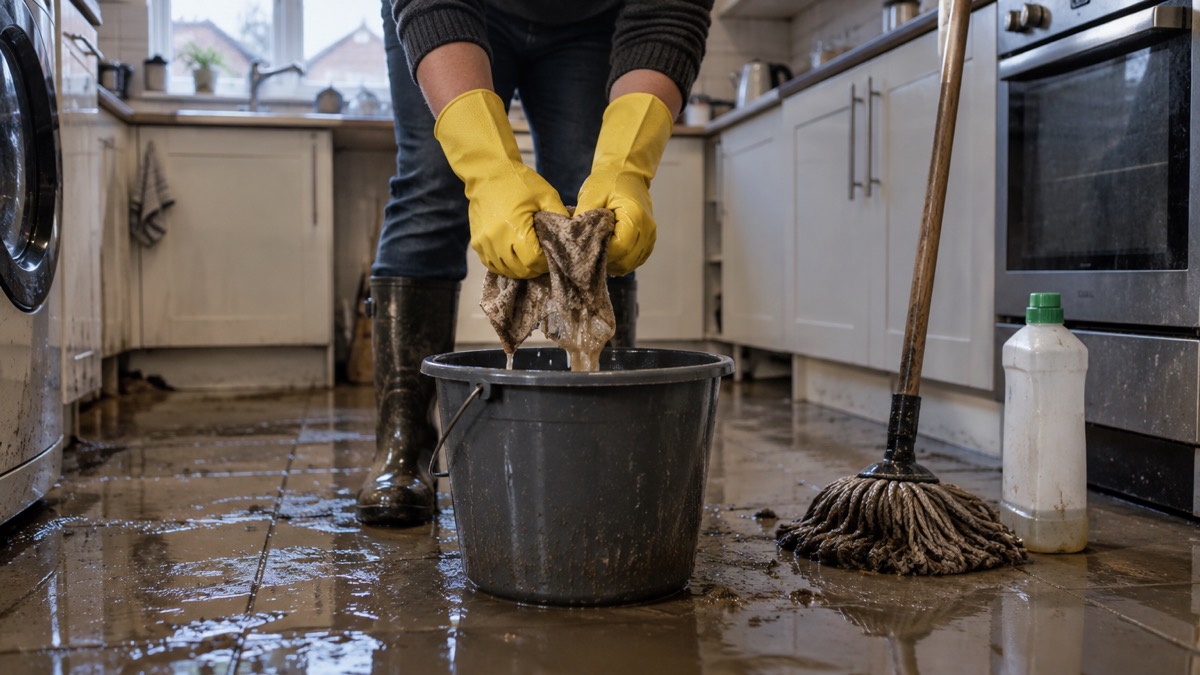
Cleaning up after a flood is not ordinary housework. Floodwater can be contaminated with sewage, animal waste and other substances, and although those contaminants are usually diluted, they can still pose a health risk1. The work itself is hazardous too: injuries can occur from electrocution or sharp items hidden by flood waters2. So before you pick up a bucket, you need to know what to wear, what order to work in, who should stay out of the house, and when to call for help.
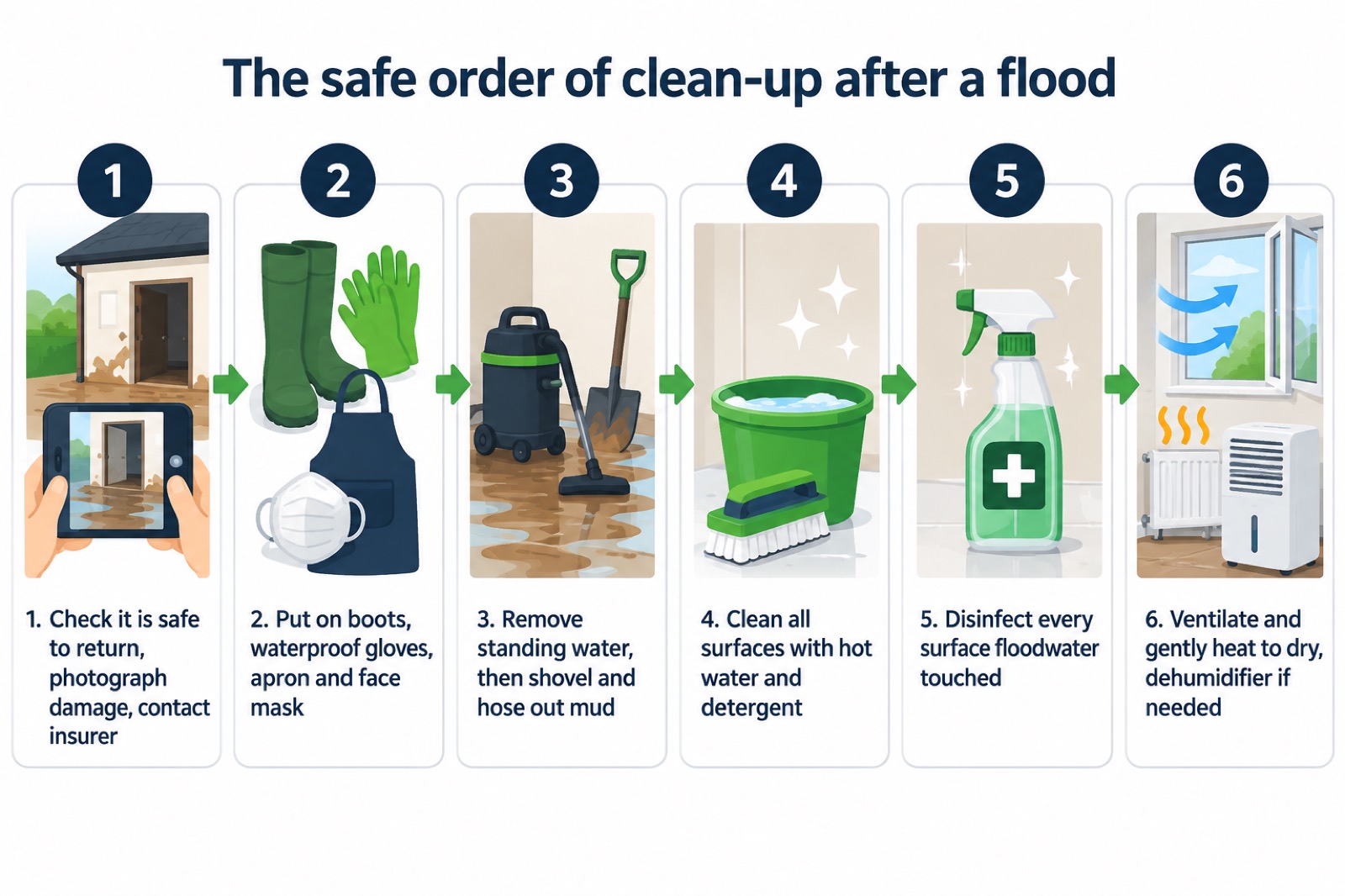
The safe order of work is this. First, only start cleaning when you are certain it is safe to return to your home3. Second, put on protective clothing: waterproof clothing, gloves, wellington boots and a face mask4. Third, remove standing water and mud, then clean every surface that floodwater touched with hot water and detergent, and disinfect afterwards5. Fourth, dry the home out with ventilation and gentle heat. Fifth, keep children and pets out until the clean-up is complete6. And throughout, wash your hands thoroughly with warm water and soap after each cleaning session and after any contact with floodwater5.
This page walks through each of those steps in order, with the official advice behind every instruction, and points to more detailed pages on pumping water out, drying out, mould and cleaning with bleach.
Why floodwater is not just dirty water
Floodwater picks up whatever it passes through. Council and government guidance is consistent on what it can contain: sewage, animal waste and other substances1, and in some cases human and livestock waste, household, medical and industrial hazardous waste, physical objects, wild or stray animals, and petrol or oil spillages9. The London Fire Brigade warns that floodwater may be contaminated, especially by untreated sewage, and that this contamination remains after the floodwater has gone10. That last point matters most for the clean-up: the water leaving your home does not take the risk with it.
Two further hazards sit alongside the biological ones. Floodwater may have moved or soaked containers of chemicals, solvents and other industrial items from their normal storage place, so avoid contact with water and materials which may be chemically contaminated, and if you must handle them wear rubber gloves, boots and a disposable apron11. And the water itself can hide physical dangers: rubbish, wreckage, uneven roads and pavements, and broken drain and manhole covers7.
The extent of the damage depends on the water. Floodwater can cause lots of damage to your home, especially if the water has been flowing quickly, is over 1 metre deep, or has been in the property for a long time10. If any of those apply to your flood, expect a longer and more thorough clean-up, and read After a Flood: Returning Home Safely before you go back in.
"Flood water can contain harmful bacteria. Wear protective clothing if you need to clean up."
Never walk or drive in floodwater
This rule applies before, during and after the clean-up. Natural Resources Wales is blunt about it: never walk in floodwater4. SEPA's advice for Scotland goes further: do not walk, drive or swim through flood water13. Perth and Kinross Council adds the reason: do not have any form of direct contact with flood water, as it could be contaminated14.
The danger is not only contamination. Even shallow water moving fast can sweep you off your feet, and there may be hidden dangers such as open drains, damaged road surfaces, submerged debris or deep channels, which can result in serious injury or, in the worst cases, death15. Serious injury can also be caused by falling into fast-flowing water or from hidden dangers under the water, such as missing manhole covers16. Wiltshire and Swindon Prepared puts the test simply: if you cannot see what is below the water, you do not know it is safe, because manhole covers could have been removed and debris deposited where you least expect it17.
If you are faced with water on your route, the dedicated page Is It Safe to Walk or Drive Through Floodwater? covers the judgement in detail. The short version: do not enter it, find another way, and if anyone is in immediate danger or requires urgent rescue, call 99918.
Who should stay away until the clean-up is done
Not everyone should be in the house while the work is going on. Official guidance across the UK is consistent:
- Children and pets: keep them out of the affected area until the clean-up is complete6, and away from contaminated areas, standing water and outdoor spaces that have been flooded, to prevent infection19.
- Young children outdoors: do not let young children play on affected grass or paved areas until the area has been cleaned down and restored to its normal condition6.
- Babies, people with allergies, asthmatics and the elderly: mould can be a health hazard for these groups, and if possible they should stay away during the clean-up20.
- Anyone unwell or exhausted: do not overdo it when cleaning up, and remember that tiredness, difficulty sleeping and anxiety are normal in these circumstances21.
Oxford City Council adds a useful expectation for outdoor spaces: keep children out of recently flooded areas until the areas have thoroughly dried, and expect any health risk from the soil to diminish within a week1. For pets specifically, the UK Health Security Agency's recovery guidance says to avoid direct contact with floodwater, prevent pets from drinking floodwater, keep them on a lead or limit garden access until water has receded, clean away mud and dry pets well, and ensure vaccinations and deworming are up to date9.
What to wear: boots, gloves, apron and face mask
Treat protective clothing as non-negotiable. The standard kit named across official guidance is:
| Item | What it does | Who says so |
|---|---|---|
| Wellington or rubber boots | Keeps feet and lower legs out of contaminated water and mud | Natural Resources Wales4; UKHSA5 |
| Waterproof gloves (rubber or waterproof) | Prevents floodwater reaching cuts and skin | Oxford City Council1; nidirect22 |
| Protective overalls or waterproof apron | Keeps clothing and skin dry and can be removed before you go indoors | UKHSA5; Derbyshire County Council8 |
| Face mask | Protects against splashes and contaminated dust when scrubbing, hosing or pressure-washing | Natural Resources Wales4; Surrey County Council23 |
| Goggles or safety glasses | Protects the eyes; goggles can be reused after thorough washing | Surrey County Council23; Suffolk Resilience24 |
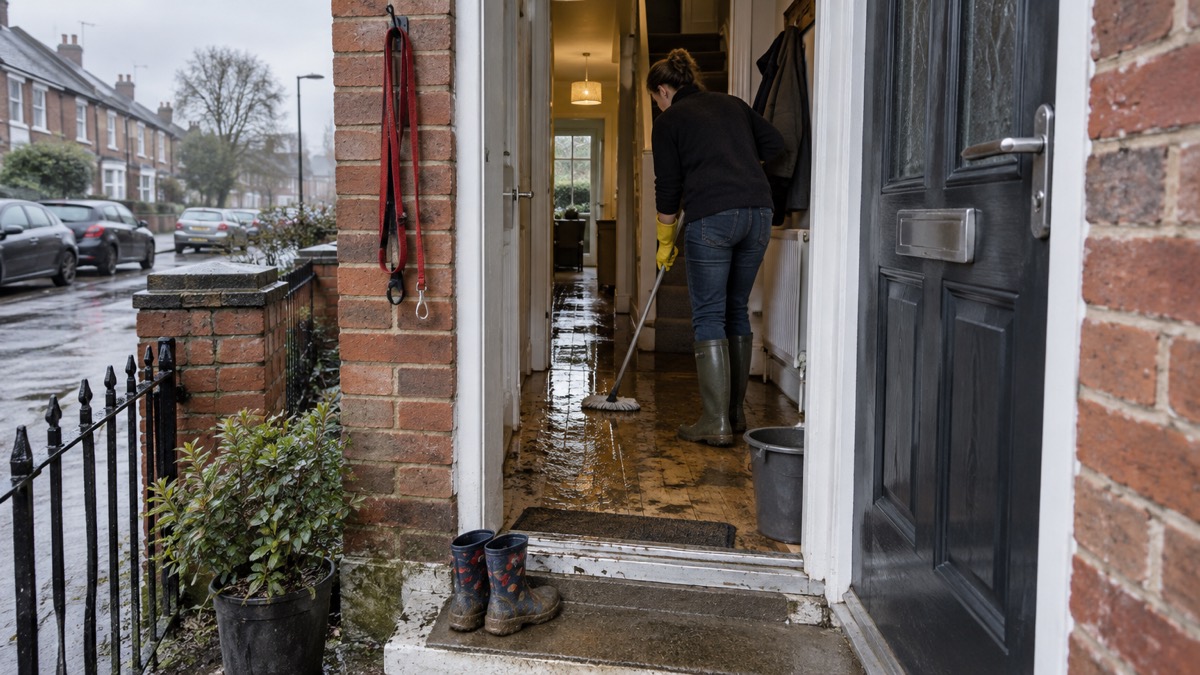
The London Fire Brigade recommends the full set, rubber boots, gloves, protective clothing and goggles or a face mask, whenever you are in or around a flooded property10. Surrey County Council adds the detail on when a mask matters most: if cleaning causes water to splash from scrubbing, hosing or pressure-washing23. Northumberland County Council, writing for businesses but applying the same logic to anyone cleaning, says to cover cuts and open wounds with waterproof dressings before you start25.
Two rules complete the picture. First, wherever possible, try to avoid coming into direct contact with floodwater at all, even with the protective kit on8. Second, cover any cuts or open sores with waterproof plasters before you begin, and keep them covered throughout22.
The safe order of clean-up
Work in this order and you will not have to clean anything twice.
1. Check it is safe, and record the damage
Only start cleaning when you are certain it is safe to return to your home after a flood3. Before you move or clean anything, speak to your insurance company about what you can move and throw away7, and take photos of the damage before cleaning26. SEPA's advice is to assess any damage when safe to do so, gathering evidence such as photos, and not to discard any property until instructed by your insurer13. The checklist Insurance Claim Records Checklist covers what to record.
2. Remove standing water and mud
Before you can properly move back into your home, all standing water must be removed, particularly from the under-floor area. Surrey County Council advises using a pump or buckets, followed by a wet/dry vacuum, then shovelling out the mud and hosing down or using a garden sprayer23. The page Pumping Water Out of a Home or Cellar covers the equipment choices, and Submersible or Flat Suction Pumps for Removing Water compares the two main types.
3. Clean every surface floodwater touched
Use hot water and detergent to clean all hard surfaces across your home that may have come into contact with floodwater, including walls and flooring5. nidirect describes the same job as an initial clean with a brush, hot water and household cleaning fluid3. For walls and furnishings specifically, Lancaster City Council's flood advice is to clean down any dirt sticking to them, preferably with a hose, rinse several times, then wipe down all surfaces with bleach with adequate ventilation, and rinse27.
4. Disinfect
The initial clean is followed by disinfecting all surfaces that were contaminated by floodwater3. Make liberal use of disinfectants when cleaning up27, and disinfect all areas affected after cleaning23. Where you use bleach, leave it on surfaces for the contact time stated on the manufacturer's instructions9.
5. Dry the home out
Ventilate the building and gently heat affected rooms to dry out, using a dehumidifier if necessary25. The page Drying Out a House with Dehumidifiers covers this stage in detail, and How Soon Mould Grows and How to Stop It explains what to watch for as the building dries.
Cleaning walls, floors and furnishings
For hard surfaces, the method above, hot water and detergent followed by disinfectant, is the standard official advice5. For soft furnishings the decisions are harder. The UK Health Security Agency's recovery guidance says people will need to decide whether to throw items away or clean them, with steam cleaning or a hot 60°C machine wash as the cleaning options9. Items that cannot be cleaned, such as mattresses and carpets, should not simply be binned: ask your insurer before discarding them9. The page Disposing of Damaged Furniture and Carpets covers this.
If you send items to a specialist cleaner, tell them the item has been exposed to floodwater and possible harmful contaminants such as sewage, and wear gloves and a disposable plastic apron when handling it9.
For the kitchen, where contamination meets food safety, see the dedicated page How to Clean a Kitchen After Floodwater, and for the bleach question in full, Can You Use Bleach to Clean Up?.
Change your clothes and wash your hands when you finish
Hygiene between cleaning sessions is as important as the cleaning itself. Thoroughly wash your hands with warm water and soap after each cleaning session and after any contact with floodwater5. Clean open cuts or sores and use waterproof plasters5. nidirect's advice for Northern Ireland adds the routine: wear gloves, a face mask and work clothes when cleaning up, change your clothes when you are finished, and always wash your hands after cleaning up and before eating28.
Surrey County Council's version of the hand-washing rule is to wash hands thoroughly with antiseptic, keep open sores or cuts clean, and use waterproof plasters23. Wash children's hands frequently and always before meals while the clean-up is under way11. If tap water is discoloured or tastes bad after the flood, contact your water company rather than using it29.
Garden produce and allotments after a flood
Outside the house, the questions change. Oxford City Council advises discarding above-ground produce that floodwater has touched, such as cabbages, though cooked produce is generally safe to eat even if it was flood-contaminated1. On allotments, keep young children away to prevent soil eating, always wash your hands after gardening, and avoid soil ingestion1.
The same drying rule applies outdoors as indoors: keep children out of recently flooded areas until the areas have thoroughly dried, and expect any health risk from the soil to diminish within a week1. If your garden was affected by sewage specifically, the page When Your Garden Is Safe After Sewage covers the waiting periods and checks in detail.
If you feel ill after swallowing floodwater or mud
The rule is simple: contact your doctor if you become ill after accidentally swallowing mud or contaminated water1. Orkney Islands Council's flood guidance spells it out: if you accidentally ingest mud or contaminated water and you become ill, consult your doctor and tell them your house was flooded30. Wiltshire and Swindon Prepared adds that if you ingest any flood water or start to feel unwell, seek professional medical attention as soon as possible and state that you have been in contact with flood water17.
In Wales, Public Health Wales gives the most specific trigger: contact NHS 111 Wales or your doctor if you become ill after accidentally swallowing floodwater or mud, particularly if you develop diarrhoea, a fever or stomach pains within 10 days of being in contact with floodwater or sewage16. Parents with infants who are unwell with diarrhoea and vomiting after contact with floodwater should seek medical advice from NHS 111 or their doctor16. The page Floodwater and Your Health covers the health risks in full.
Getting help with pumping out and salvage
Drying and clearing up is the responsibility of the homeowner or landlord10. That does not mean you are on your own. The London Fire Brigade says its firefighters will use equipment to pump out water and do some salvage work where possible, even though the main job rests with you10. Water companies will assist where possible to reduce the amount of water escaping from the system and will tidy up areas where sewage has been deposited, once the flooding has subsided29.
Your local council is the other main port of call. Councils can help with the collection, retention and disposal of damaged household contents, and with arrangements to clean up your home and garden22. For advice rather than practical help, contact your local environmental health department27, and if you are particularly concerned about any issue, seek further advice from the Environmental Health Unit of the District Council28. North Warwickshire Borough Council also lists a local flood support line, 0845 988 1188, for further advice and information11.
If you are not insured, or need wider help, see Recovery Grants and Help If You Are Not Insured, and be wary of cold callers offering clean-up work: Avoiding Rogue Traders After a Flood explains the checks to make.
Stress and anxiety after a flood
The mental toll of a flood is real and officially recognised. Tiredness, difficulty sleeping and anxiety are normal after being flooded and cleaning up21, and this holds even if your home was not flooded: the UK Health Security Agency notes it is normal to experience these feelings in these circumstances even if your home was not directly affected5. Tewkesbury's flood recovery leaflet puts it plainly: "Flooding is stressful. It is normal to feel anxious, upset and experience sleeping difficulties."20
The practical advice is to pace yourself. Start clean-up efforts within your home when you feel ready, and do not overdo it during the clean-up and recovery process31. Take regular breaks and seek help from others where possible2. Perth and Kinross Council advises seeing your GP or visiting a drop-in centre for details of help available if you feel overwhelmed14.
The stresses do not stop when the water goes. Surrey County Council lists what commonly weighs on people afterwards: difficulties accessing continuing healthcare and prescription medications, disruption to normal household activities, loss of school facilities, seeking compensation and insurance claims, and loss of employment or income21. The English National Cohort Study of Flooding and Health found that people who had experienced flooding were more likely to have symptoms of post-traumatic stress disorder, depression and anxiety disorders between 6 months to 3 years following the event9. If you are feeling distress, get in touch with a local community support group, or neighbours, to help you cope and recover31. The page Mental Health After a Flood: Where to Get Support lists the sources of help.
Checking your area's flood risk for next time
Once the clean-up is done, the question turns to whether it could happen again. The government's Check for flooding service lets you check current flood warnings or alerts, river, sea, groundwater and rainfall levels, and flood risk in the next 5 days32. There is a different service if you want to check the long term flood risk for an area32. In Scotland, SEPA advises using its flood maps to find out the level of flood risk in your area13, and in Wales you can check whether your area is at risk through Natural Resources Wales16.
Signing up for free warnings means you hear before the next flood rather than after it: see How to Sign Up for Free Flood Warnings. To understand what the alerts mean, read Flood Alerts, Flood Warnings and Severe Flood Warnings, and to reduce the damage a future flood does, Protecting Your Home: Resistance and Resilience Measures and Repairing a Home So It Recovers Faster Next Time.
Sources (32)
- Clearing up after a flood, Oxford City Council, 2026
- Flooding and health: safely cleaning your home, Wiltshire and Swindon Prepared, 2026
- After a flood: clearing up, nidirect (Northern Ireland government), 2026
- What to do after a flood, Natural Resources Wales, 2026
- Flooding and health: advice for the public, UK Health Security Agency, 2024
- Keeping children safe during a flood, nidirect (Northern Ireland government), 2025
- What to do after a flood, GOV.UK, 2026
- Cleaning up and returning home after flooding, Derbyshire County Council, 2026
- How to recover from flooding, UK Health Security Agency, 2023
- After a flood, London Fire Brigade, 2026
- Cleaning up after a flood: health advice, North Warwickshire Borough Council, 2024
- Flooding, Ready Scotland, Scottish Government, 2026
- Before, during and after a flood, Scottish Environment Protection Agency, 2026
- Flooding checklist for residents, Perth and Kinross Council, 2024
- Thunderstorms weather warning advice and information, nidirect (Northern Ireland government), 2026
- Flooding and health, Public Health Wales, 2026
- What to do in a flood, Wiltshire and Swindon Prepared, 2026
- Flood recovery information, Devon County Council, 2026
- Flood recovery leaflet, Nottinghamshire Local Resilience Forum, 2025
- After a flood: flood recovery leaflet, Tewkesbury Borough Council, 2023
- Staying healthy and safe after flooding, Surrey County Council, 2026
- What to do if a flood happens, nidirect (Northern Ireland government), 2025
- Flooding: after, Surrey County Council, 2026
- Before, during and after a flood booklet, Suffolk Resilience, 2021
- Information about specific safety concerns, Northumberland County Council, 2026
- Resident grab bags, Harborough District Council, 2026
- Be Prepared flood advice, Lancaster City Council, 2026
- Household flood plan, nidirect (Northern Ireland government), 2018
- Flooding advice, Mid and West Wales Fire and Rescue Service, 2026
- During the flood, Orkney Islands Council, 2026
- Flooding and health: mental health, Wiltshire and Swindon Prepared, 2026
- Check for flooding, GOV.UK, 2026
 Flood Warning Checklist
 First Steps After a Flood
 Insurance Claim Records
 Checking Flood Risk by Postcode
 Types of Flooding
 Flood Alerts and Flood Warnings
 Flood Guidance Statement
 Wales Flood Warnings and Maps
 Making a Household Flood Plan
 Protecting Your Home
 Door Flood Barriers
 Sandbags and Alternatives
 Flood Doors and Windows
 Airbrick Covers
 Non-Return Valves and Bungs