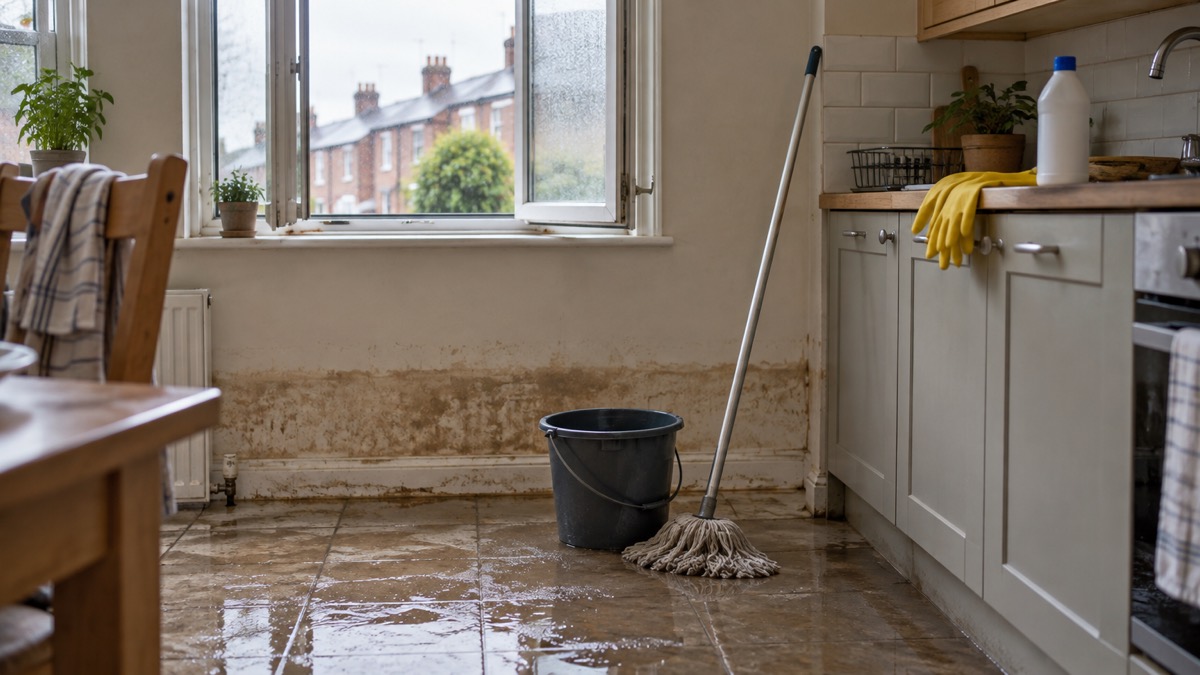
Yes, bleach has a place in cleaning up after a flood, but it is the second step, not the first. Official guidance is to clean contaminated surfaces with a brush, hot water and household cleaning fluid, then disinfect all areas affected after cleaning1. Bleach is one way to do that disinfecting step, used diluted on hard floors and surfaces, and left for the contact time stated on the manufacturer's instructions before being wiped off3.
What bleach cannot do matters just as much. It must never be mixed with other cleaning products, because doing so can release harmful fumes3. It is not the right treatment for mould, which official guidance says to address with a fungicidal solution and good ventilation5. And it will not rescue food that has touched floodwater, which should be thrown away rather than salvaged6.
The reason for all this care is what floodwater carries. Floodwater will often be contaminated by untreated sewage, which remains after the floodwater has gone, so wear rubber boots and gloves in and around the affected property7. Flood water can contain harmful bacteria, and protective clothing is advised for anyone cleaning up8. This page sets out the order of work, how to use bleach safely, where it does harm, and where to get help.
Clean first, disinfect second
The sequence is what makes a flood clean-up work. An initial clean with a brush, hot water and household cleaning fluid lifts the mud, silt and debris off the surface; disinfecting afterwards deals with what is left on it1. Skip the cleaning and you are disinfecting a layer of dirt. Surrey County Council's advice is blunt: floodwater may be contaminated, so disinfect all areas affected after cleaning, and wash your hands thoroughly with antiseptic afterwards2.
For walls and floors, one council's answer to a common question is to clean with a soap solution and then disinfect with a bleach solution12. Devon's flood recovery information says to use disinfectant regularly and to wear protective equipment such as boots, gloves and overalls when cleaning up4. Lancaster's guidance puts it more simply still: make liberal use of disinfectants when cleaning up13.
Hard surfaces throughout the home that may have come into contact with floodwater, including walls and flooring, should be cleaned with hot water and detergent14. Kitchen surfaces and utensils need hot water, detergent and a food-safe sanitiser, and chipped or damaged kitchenware should be discarded rather than cleaned5. If the floodwater contained oil or diesel, clean the remaining contamination with a hot detergent solution5.
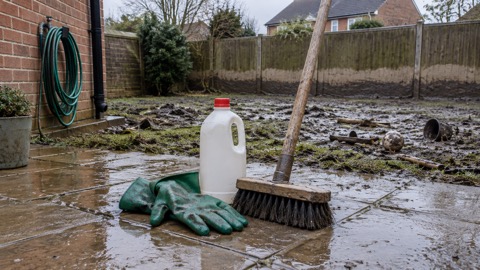
Outside, the advice changes. Do not dig or rake the affected area, because this spreads contamination further into the soil, where lack of light prolongs the life of bacteria15. Leave wet items out to dry naturally where you can: sunlight and natural UV radiation are effective at killing micro-organisms, which makes natural drying most appropriate for open areas such as gardens6.
Using bleach safely: dilution, ventilation and protective clothing
Bleach is a strong chemical and the guidance around it is specific. Diluted bleach can be used to mop hard floors or sprayed onto surfaces and wiped off, but it should be left on the surface for the contact time stated on the manufacturer's instructions to ensure disinfection, then residues wiped off3. That contact time is on the bottle, not in this page: read it and follow it.
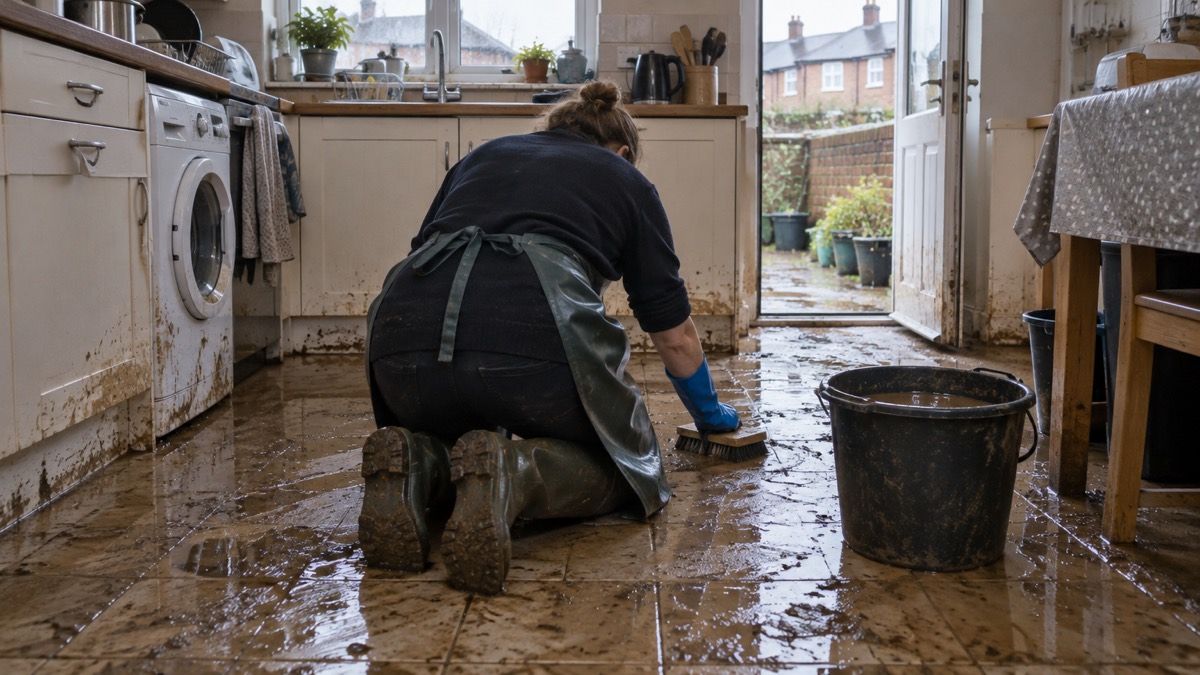
Ventilation is not optional. Cleaning activities should be carried out in ventilated spaces, for example with open windows10. The same point appears in the government's flooding and health advice for the public, alongside the warning not to mix bleach with other cleaning products because this could result in the release of harmful fumes6.
Dress for the job. Wear rubber boots, waterproof gloves and an apron when cleaning up11. Floodwater can be hazardous, so wear rubber boots and gloves in and around the affected property16. If floodwater has displaced containers of hazardous household chemicals such as cleaning products, garden pesticides or domestic heating oil, wear rubber gloves when handling them6.
Where bleach does harm: porous materials, wood and fabrics
Bleach works on hard, non-porous surfaces. On soft furnishings, fabrics and other porous materials it is the wrong tool, and the official guidance routes those items elsewhere. Clothes and toys affected by flood water should be washed separately from uncontaminated items, and some may need to be pre-soaked12. Toys that have been in floodwater should be washed with hot water and disinfectant before they are used again12.
For the fabric of the building, the emphasis is on drying rather than bleaching. As your home continues to dry out, mould should disappear; if it persists, contact a specialist cleaner19. Mould can be a health hazard for babies, people with allergies, asthmatics and the elderly, and if possible they should stay away during the clean-up21. Where mould is the problem, the advice is to address it with a fungicidal solution and ensure good ventilation, not to reach for bleach5.
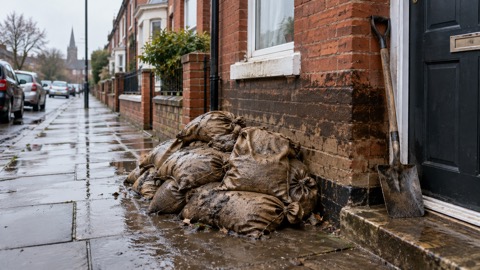
Some items should not be cleaned at all. Contaminated or flood-damaged property can go through your council's Household Bulky Waste Collection service, or you can speak to customer services5. Sandbags are a case in point: they are prone to leakage, rot very quickly after use and contain viral and bacterial infections often present in flood water, which is why disposal matters rather than reuse22.
Food, toys and surfaces that touched floodwater
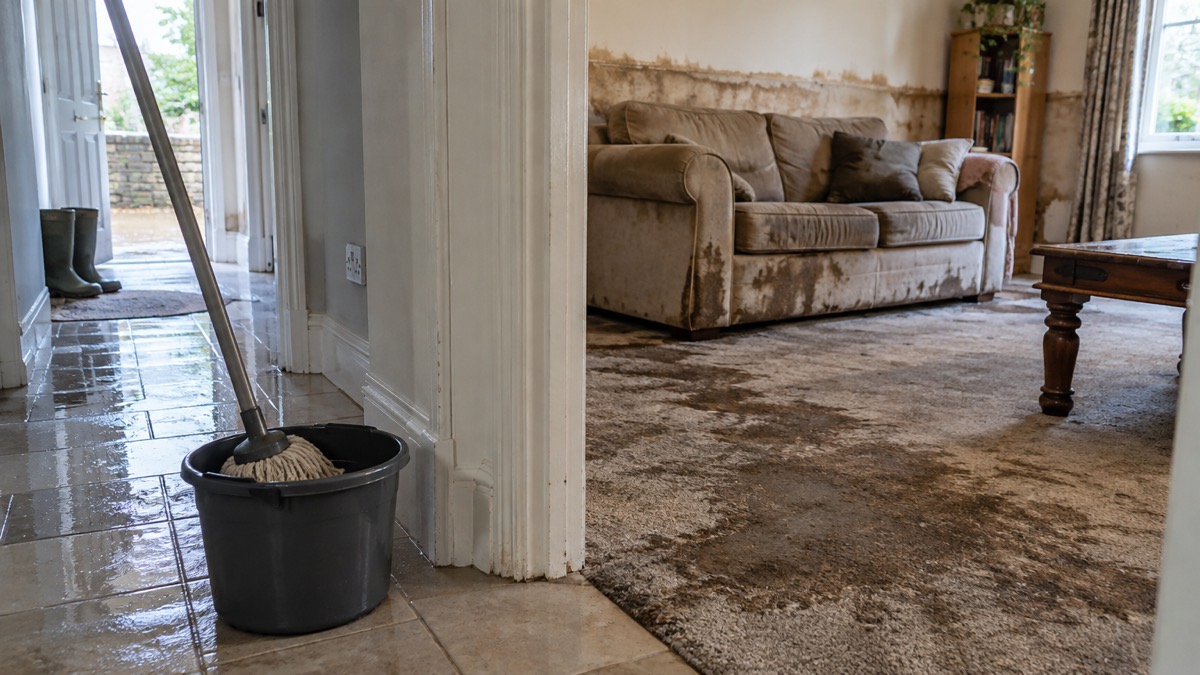
The rule on food is absolute. The Food Standards Agency advises not to eat any food that has been touched or covered by floodwater or sewage, and not to salvage food that has come into contact with floodwater, including tins6. No amount of washing or bleaching makes that food safe again.
Toys are different, because they can be cleaned. Wash floodwater-contaminated toys with hot water and disinfectant before allowing them to be used again12. Clean toys that have been in flood water with disinfectant18. And until that has happened, do not let children or pets play with toys that have been in flood water23.
| Item | What to do | Why |
|---|---|---|
| Hard floors and walls | Hot water and detergent, then disinfect14 | Removes mud and silt before disinfection can work |
| Kitchen surfaces and utensils | Hot water, detergent and a food-safe sanitiser; discard chipped or damaged items5 | Cracks harbour contamination |
| Toys | Hot water and disinfectant before reuse12 | Children put them in their mouths |
| Clothes and bedding | Wash separately from uncontaminated items; some need pre-soaking12 | Cross-contamination in the machine |
| Food, including tins | Throw away; do not salvage6 | Floodwater and sewage penetrate where cleaning cannot reach |
| Taps submerged in floodwater | Clean with a bleach solution and run for 30 seconds before use7 | Contamination sits in the outlet |
That last row comes from flood advice for businesses, but the principle applies to any tap that has been under contaminated water7. For drinking water more broadly, do not use tap water if you notice a change in the colour, taste or smell25.
Bleach, mould and your water supply
Mould and water treatment are the two places where people reach for bleach and should not. On mould, the guidance is consistent across councils: address it with a fungicidal solution and good ventilation5, and as the home dries out the mould should disappear; if it persists, contact a specialist cleaner19. Bleach on a damp wall does not solve the underlying moisture, which is what mould needs.
On private water supplies, the advice is a clear prohibition. Do not use the water supply if the tank or connecting pipework has been damaged, or where flood water has been in contact with taps or connections within or outside the home26. That applies to wells, boreholes and tanks serving a single property or a small group of them, and it is a matter for the local authority and a contractor, not a bottle of bleach.
Septic tanks need similar restraint. If the tank becomes covered with water, do not use the tank at all if possible, avoid contact with standing water that may contain sewage, eliminate all non-essential water use and flush toilets as little as possible while a flood is in progress6. Get advice from a drainage contractor before having the tank emptied, because in some circumstances emptying the tank can cause mud or silt to be drawn into the tank or, in extreme cases, result in it lifting out of the ground6. Our page on toilets and septic tanks after a flood covers the sequence in more detail.
Getting help with flood clean-up and contamination
Before you lift a brush, speak to your insurance company about what you can move and throw away25. They may require evidence of damage before clean-up begins, and they may hire someone to do the cleaning for you27. Normal household cleaning products are fine for the clean-up itself, but the insurer's view comes first28. Our guide to making an insurance claim after a flood sets out what to record and when.
Your local council is the other source of practical help. It can give advice on cleaning up, structural damage, removing bulky waste and help if you find vermin or pests in your home after flooding29. Councils do not supply disinfectant, but they do advise cleaning walls and floors with a soap solution and disinfecting with a bleach solution12. For the wider job, see cleaning up safely after floodwater and after a flood: returning home safely.
Keep children and pets out of the affected area until the clean-up is complete24. Do not let them play in or near flood water, or with toys that have been in flood water until they have been cleaned with disinfectant23. If anyone in the household is elderly, asthmatic, allergic or a baby, they should stay away during the clean-up if possible, because of the mould risk21. Our page on floodwater and your health covers symptoms and when to seek advice.
Sources (30)
- After a flood: clearing up, nidirect, 2026
- After a flood, Surrey County Council, 2026
- Cleaning up and returning home after flooding, Derbyshire County Council, 2026
- Flood recovery information, Devon County Council, 2026
- Clearing flood, Oxford City Council, 2026
- How to recover from flooding, GOV.UK, 2023
- Information about specific safety concerns, Northumberland County Council, 2026
- Rain and flooding, Ready Scotland, 2026
- Flooding, Ready Scotland, 2026
- Cleaning up, Derbyshire County Council, 2026
- Flooding, City of York Council, 2026
- Further support after a flood, Nottinghamshire County Council, 2026
- Be prepared: flood guidance, Lancaster City Council, 2026
- Flooding and health advice for the public, GOV.UK, 2024
- What to do if a flood happens, nidirect, 2025
- Extreme weather winter guide, London Fire Brigade, 2025
- Home fire safety, Northern Ireland Fire and Rescue Service, 2026
- Thunderstorms: weather warning advice and information, nidirect, 2026
- Flooding and health: safely cleaning your home, Wiltshire and Swindon Prepared, 2026
- Flood recovery leaflet, Nottinghamshire County Council, 2025
- After a flood: flood recovery leaflet, Tewkesbury Borough Council, 2023
- Flooding FAQs, Scottish Environment Protection Agency, 2026
- Flooding advice, Belfast City Council, 2026
- Keeping children safe during a flood, nidirect, 2025
- After a flood, GOV.UK, 2026
- Private water supplies after floods or storms, Argyll and Bute Council, 2026
- After a flood, London Fire Brigade, 2026
- Flooding after a flood: easy read, Nottinghamshire County Council, 2025
- Household flood plan, nidirect, 2018
- Flooding and health, Public Health Wales, 2026
 Flood Warning Checklist
 First Steps After a Flood
 Insurance Claim Records
 Signing Up for Flood Warnings
 Flood Warnings Without Email
 Who to Report Flooding To
 Reporting a Blocked Gully
 Garden Safety After Sewage
 Council Sandbag Duties
 Filling and Laying Sandbags
 Makeshift Sandbags
 Disposing of Used Sandbags
 Turning Off Utilities
 Walking or Driving in Floodwater
 Turning Electricity Back On