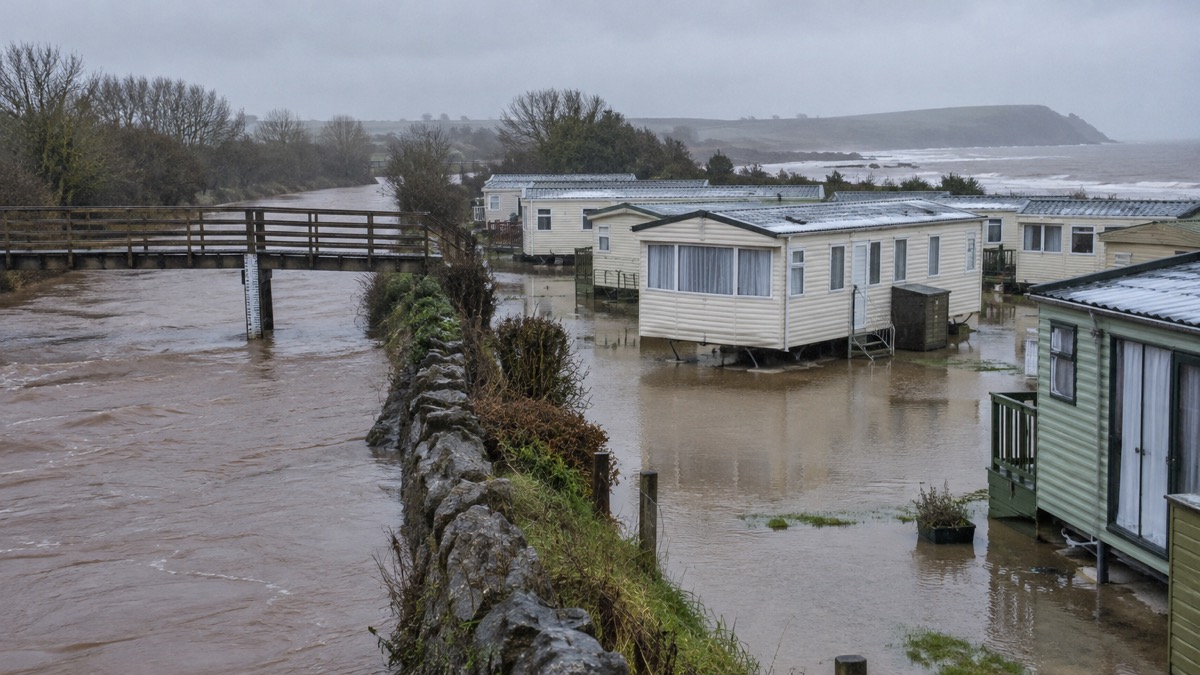
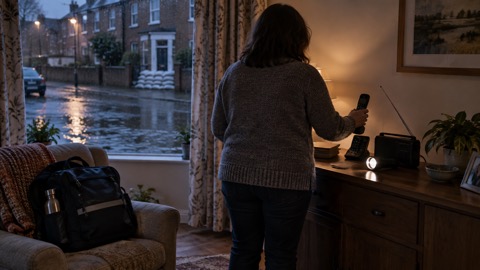
You do not need an email address to be warned about flooding. The free flood warning services run by the Environment Agency in England, Natural Resources Wales in Wales and the Scottish Environment Protection Agency (SEPA) in Scotland will all contact you by phone, text or email, whichever you choose1. When you register you give the address you want warnings for, an email address and the best way to contact you with a warning4. If email is the sticking point, a relative, a friend or your council can help you set the account up, and after that the warnings can arrive as a voice call on your landline or a text on your mobile.
The same account can cover more than one property. You can sign up using a postcode, or search by town or city to find the warnings available, including for a workplace or school that is not your own home3. That makes it practical to arrange warnings for an elderly parent, a tenant or a second home, with the messages coming to you.
What the service cannot do is warn you about everything. Flood warnings cover flooding from rivers, the sea and groundwater, depending on your area, but not surface water flooding, sometimes called flash flooding1. Floods can happen without any warning at all, so a warning service is one layer of your plan, not the whole of it5.
Signing up by phone instead of email
The registration route is the same whichever contact method you want. You can sign up online for free flood warnings delivered by phone, email or text, or you can register by telephone by calling Floodline9. The service is free and is run for households and businesses at risk of flooding7. In England it is the Environment Agency's service, for homes and organisations in England at risk of flooding1.
When you register you will be asked for three things: the address you want flood warnings for, an email address, and the best way to contact you with a warning, whether that is email, a call or a text4. If you do not have an email address, ask someone you trust to help you complete the form, or contact the flood warning service for your nation and explain what you need.
Once you are registered, the warnings come to you directly. The Met Office and local councils both point households at the same free service: warnings sent direct to your mobile, home phone or email11. You are choosing a channel, not a different level of service.
Getting warnings by text message or voice call
The warning services offer several delivery methods, and you pick the one that suits your household. The Flood Warning Information Service can send messages direct to you by telephone, mobile, email, SMS text message, fax or pager10. In practice most households choose a mobile text, a voice call to a landline, or both.
| What you choose | How it reaches you | Who it suits |
|---|---|---|
| Voice call to a landline | Automated message on your home phone12 | Homes with poor mobile signal, or where the phone is always answered |
| Text message to a mobile | SMS to the number you register10 | People who carry their phone all day |
| Message to your inbox1 | People who check email regularly, or who want a written record | |
| More than one | All the methods you register10 | Households that want a backup if one channel fails |
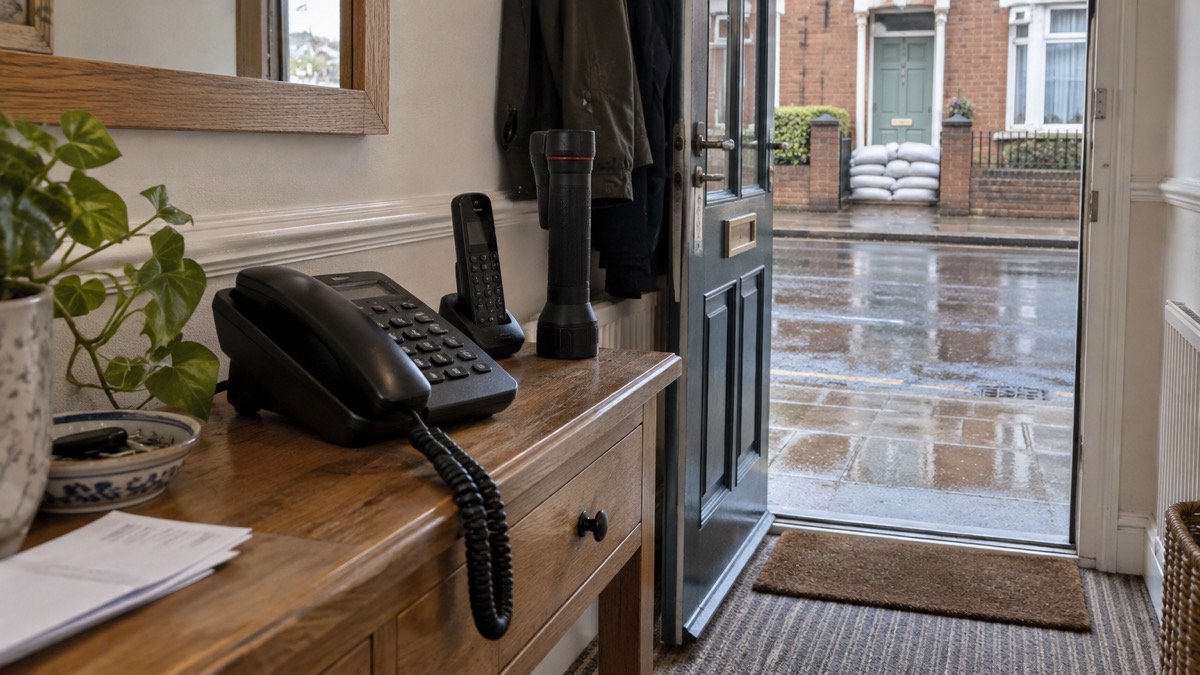
In Scotland, SEPA delivers warnings by automated messaging to landlines and mobile phones, and can also deliver by text message12. In Wales, Natural Resources Wales notifies you by text message, phone call and/or email as soon as warnings are issued for your chosen location13.
If you have no mobile signal where you live, a landline voice call is the sensible choice, because the warning arrives on the phone that works. The government's emergency alerts to mobiles do not need mobile data or wifi, but they do need a mobile signal14. Do not treat any single channel as guaranteed: floods can happen without warning, and you may not receive a flood alert or warning at all5.
Adding several addresses to one account
One registration can cover more than one place. In Wales, MyFloodline lets you sign up using a postcode, or search by town or city to find the flood warnings that are available3. The same search works for a workplace or school that is not your own property: you search by its postcode or town and select it15.
In England, the service is free for individuals and small businesses with up to 10 locations8. That covers a family with a main home and a second property, a landlord with a small portfolio, or a shop and a house in the same town. Each location is registered by its address, and the warnings for each come to the contact details you have given.
There is one limit to know about when you check risk rather than sign up. When you look up flood risk by postcode, multiple buildings at the same address are not selected16. If your property is one of several at a single address, such as a flat in a block or a unit on a farm, check that the right building is the one being warned about, and search by town if the postcode does not bring it up.
Warnings for someone else: a relative, a tenant or a second home
You can arrange warnings for a property that is not yours. Register the address you want warnings for and give your own contact details, so the messages come to you17. You will need the address, an email address and a way to contact you at any time of day or night17. That is what makes it work for an elderly parent whose phone they may not hear, or a tenant who has just moved in.
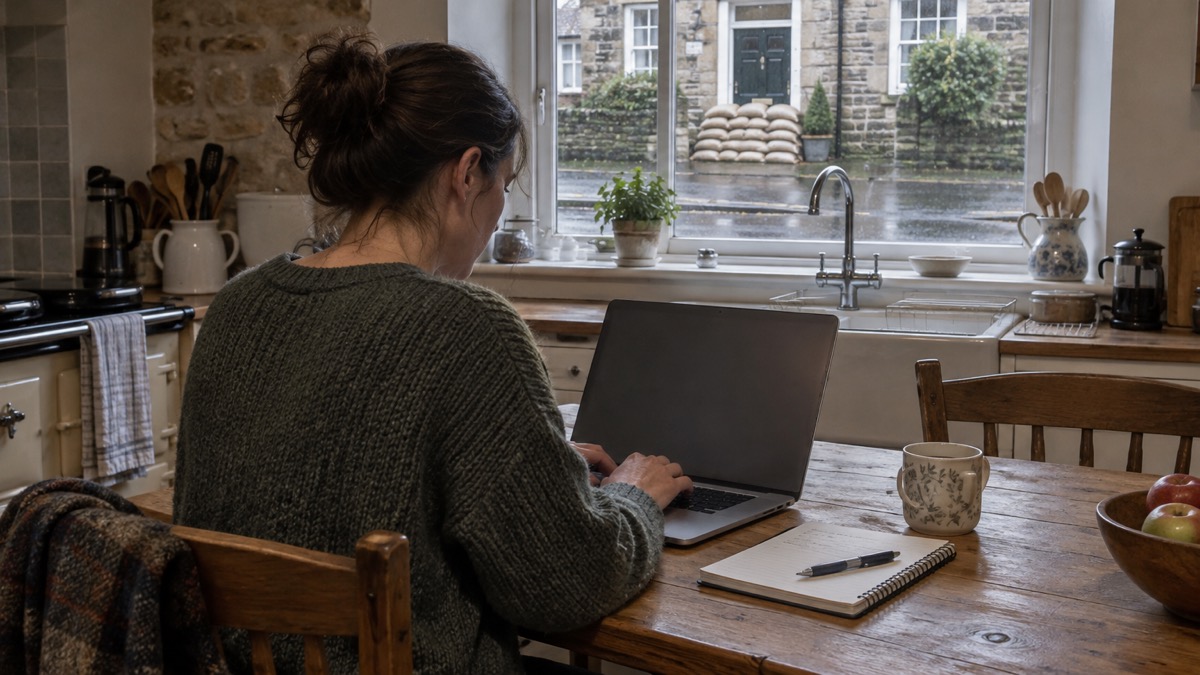
Tell the person you have done it. Councils advise households to check on vulnerable neighbours or relatives when flooding is forecast, and a warning that reaches you is only useful if you act on it18. The NHS also advises people at risk of flooding to check whether their property is in a flood risk area and to sign up for warnings by text, phone or email19.
For a business or a holiday let, the same registration applies. The service is open to homes and businesses at risk of flooding20, and the Met Office runs an email alert system for severe weather warnings that all residents and business owners are encouraged to use, whether or not their property is in a flood risk area21. If you manage a let, register the property and keep your own contact details on the account so you are told when the guests are not.
What each warning level asks you to do
A warning is only useful if you know what to do when it arrives. The messages come in levels, and the level tells you how much time you have and what to do first. The three levels are not always used in sequence: in a flash flood, a severe flood warning may be issued immediately with no preceding level22.
- Flood alert: flooding is possible, be prepared. Check your plan, move valuables upstairs and keep an eye on the water.
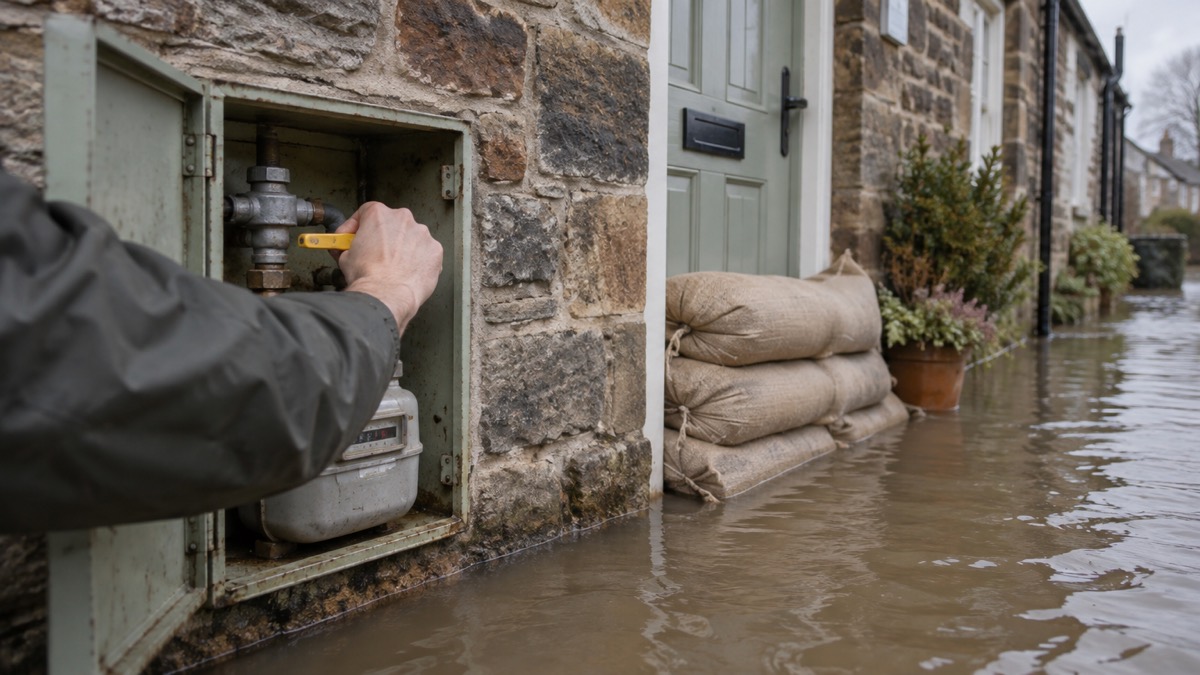
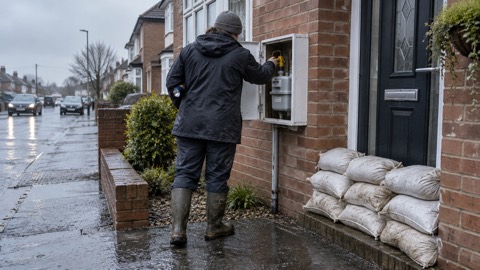
- Flood warning: flooding is expected, act now. Turn off your gas, electricity and water supplies if it is safe to do so23.
- Severe flood warning: flooding is expected and there is a danger to life. Follow the advice of the emergency services.
When you act, do it safely. Do not touch an electrical switch if you are standing in water23. If you are in immediate danger, call 99924. The Met Office's advice for heavy rain is to turn off gas, water and electricity supplies25, and our guide to turning off gas, electricity and water before a flood walks through each one.
Warnings in Wales and Scotland
The warning service is devolved, so the organisation you sign up with depends on where the property is. In England it is the Environment Agency1. In Wales it is Natural Resources Wales, which runs its own sign-up and its MyFloodline account system26. In Scotland it is SEPA, which delivers warnings by automated messaging to landlines and mobile phones and by text message12.
| Nation | Who warns you | How to sign up |
|---|---|---|
| England | Environment Agency1 | Online, or by telephone through Floodline10 |
| Wales | Natural Resources Wales26 | Natural Resources Wales sign-up, or MyFloodline3 |
| Scotland | SEPA12 | SEPA flood warning service12 |
A few things differ in Wales. Some locations will only receive flood alerts and not flood warnings, because alerts cover large areas and give advance notice of the possibility of flooding; they are issued earlier and more often than warnings13. If your property is outside a warning area, you can sign up for the nearest relevant area by searching by town or city and selecting from the list13. Natural Resources Wales messages are provided only in Welsh or English13, and the information you give is used only for flood warning and informing13. If you have registered but are not receiving warnings, contact Natural Resources Wales so they can check your registration13. Our guide to Wales: Natural Resources Wales warnings and risk maps goes further.
When the warning does not come
The most important thing to understand about flood warnings is their limit. Floods can happen without any warning, and you may not live in a flood risk area, so you may not be notified by the service at all5. Flooding can happen without warning6. Surface water flooding is the clearest example: it can occur very quickly and is often very localised, so there is not time to issue advance warning messages13.
That is why the Met Office advises people to sign up to its weather warnings as well, which cover heavy rain and storms before they arrive28. Our guide to staying informed and in touch in an emergency sets out how the different warning channels fit together.
Sources (28)
- Get flood warnings by text, phone or email, GOV.UK, 2026-10-29
- Sign up for flood warnings, GOV.UK, 2026-10-29
- Flooding FAQs, SEPA, 2026-10-29
- Communities affected by flooding - Derbyshire County Council, Derbyshire County Council
- Stormy weather, Cumberland Council, 2026
- Types of risk: flooding, Dorset Prepared, 2025-08-11
- Preparing for a flood, Nottinghamshire County Council
- Flooding: preparing for a flood (easy read), Nottinghamshire County Council, 2025-11-02
- Preparing for a flood, London Fire Brigade, 2026-10-25
- Preparing for flooding, Surrey County Council
- Protecting your property from flooding, Met Office, 2026-10-25
- Flood warnings, Scottish Borders Council, 2026-10-29
- Sign up to receive flood warnings, Natural Resources Wales, 2026-10-29
- How emergency alerts work, GOV.UK, 2026
- Flooding FAQs, SEPA, 2026-10-29
- Natural Resources Wales / Understanding your flood risk results, Natural Resources Wales
- Alerts and warnings, Prepare campaign, 2026-10-20
- During a flood, Nottinghamshire County Council, 2026-10-29
- Staying safe in flooding, West Midlands Ambulance Service, 2026-05-20
- Be informed about hazards: flooding, Prepare campaign, 2026-10-25
- Adverse weather events, Llangattock Community Council, 2026-10-25
- Derby and Derbyshire flood warden handbook, Parwich Parish Council, 2019-11
- Help during a flood, GOV.UK, 2026-10-25
- Be flood aware, London Assembly, 2026-10-26
- Stay safe in heavy rain, Met Office, 2026-10-28
- Flood warnings and help before and after a flood, Welsh Government, 2026
- What to do in a flood, Natural Resources Wales, 2026-10-29
- How to prepare for flash flooding, London Assembly, 2026-10-25
 Flood Warning Checklist
 First Steps After a Flood
 Insurance Claim Records
 Signing Up for Flood Warnings
 Who to Report Flooding To
 Reporting a Blocked Gully
 Garden Safety After Sewage
 Council Sandbag Duties
 Filling and Laying Sandbags
 Makeshift Sandbags
 Disposing of Used Sandbags
 Turning Off Utilities
 Walking or Driving in Floodwater
 Turning Electricity Back On
 Appliances After Water Damage