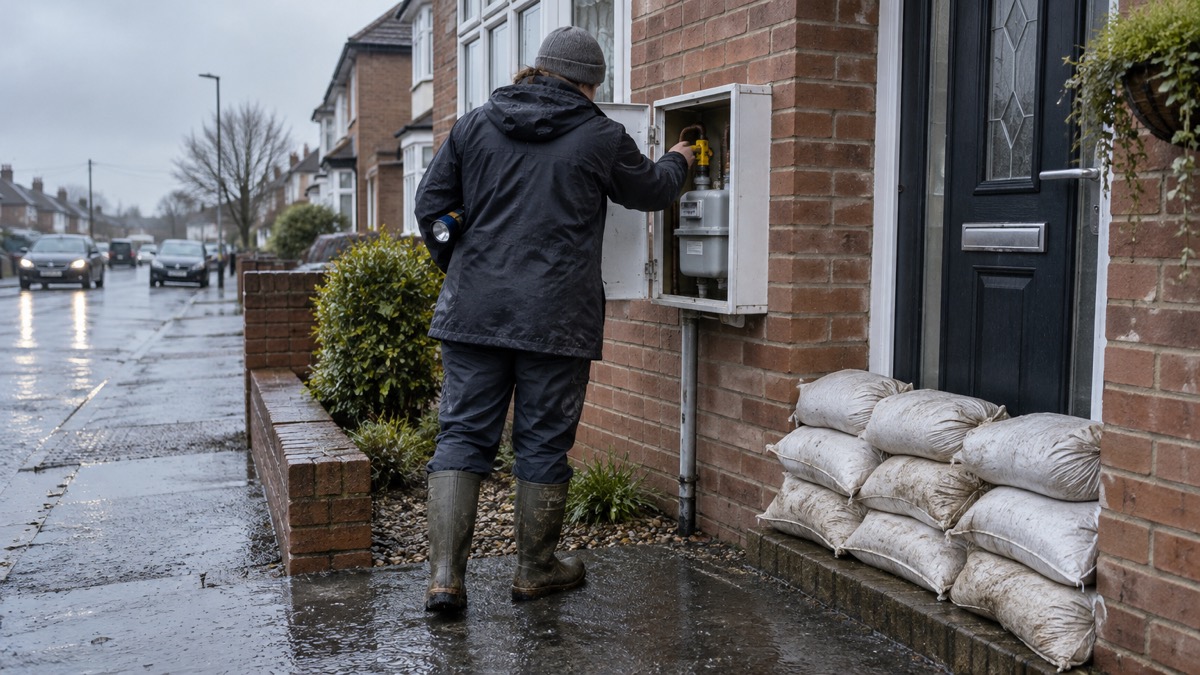
If flood water is about to enter your home, the advice from councils and fire and rescue services across the UK is the same: turn off the gas, electricity and water at the mains, but only if it is safe to do so1. Doing it before the water arrives is what prevents the worst outcomes, an electrical supply meeting flood water, a gas leak in a flooded building, or contaminated water backing up through the pipes.
The catch is that most people have never located their stopcock or fuse box switch, and a flood is the wrong moment to start looking. Learn where each shut-off is now, while the house is dry and the lights are on, and note it in your household flood plan. The steps below take you through what to do when a warning comes, what to do if water is already inside, and how to bring the supplies back safely afterwards.
When to turn the supplies off, and when to leave them alone
The trigger is not the weather warning itself but the water. Council and fire service guidance is consistent that you turn off gas, electricity and water supplies when flood water is about to enter your home, and only if it is safe to do so1. Natural Resources Wales gives the same instruction for households in Wales: during a flood, turn off gas, electricity and water8. If you are evacuating rather than staying, the advice is to turn off your mains water, gas and electricity before you leave, again only if it is safe3.
A flood warning is the point to get ready, not to cut the supplies while you still need them. The Northumberland flood warning level "Act" sets out the sequence: turn off gas, water and electricity, move things upstairs or to safety, and move family, pets and car to safety9. Natural Resources Wales puts moving family, pets and valuables to a safe place first, then turning off the supplies if it is safe, then putting flood protection in place8. Either order works, as long as the shut-offs happen before the water is at the door.
| Situation | What the guidance says | Source |
|---|---|---|
| Flood water about to enter | Turn off gas, electricity and water if safe to do so | 1 |
| You are leaving the property | Turn off mains water, gas and electricity if safe | 3 |
| Flood warning issued | Act: turn off supplies, move things and people to safety | 9 |
| Flash flooding | Turn off electricity, gas and water if safe to do so | 10 |
| Heavy rain or thunderstorm warning | Turn off gas, water and electricity supplies | 11 |
Flash flooding is the case that catches people out, because it can arrive with very little notice10. That is the strongest argument for learning the shut-offs in advance rather than reading about them during the event. The same applies to severe weather more broadly: Met Office advice for heavy rain includes turning off gas, water and electricity supplies11, and its thunderstorm advice says the same12.
Where to find the gas valve, the electricity mains and the water stopcock
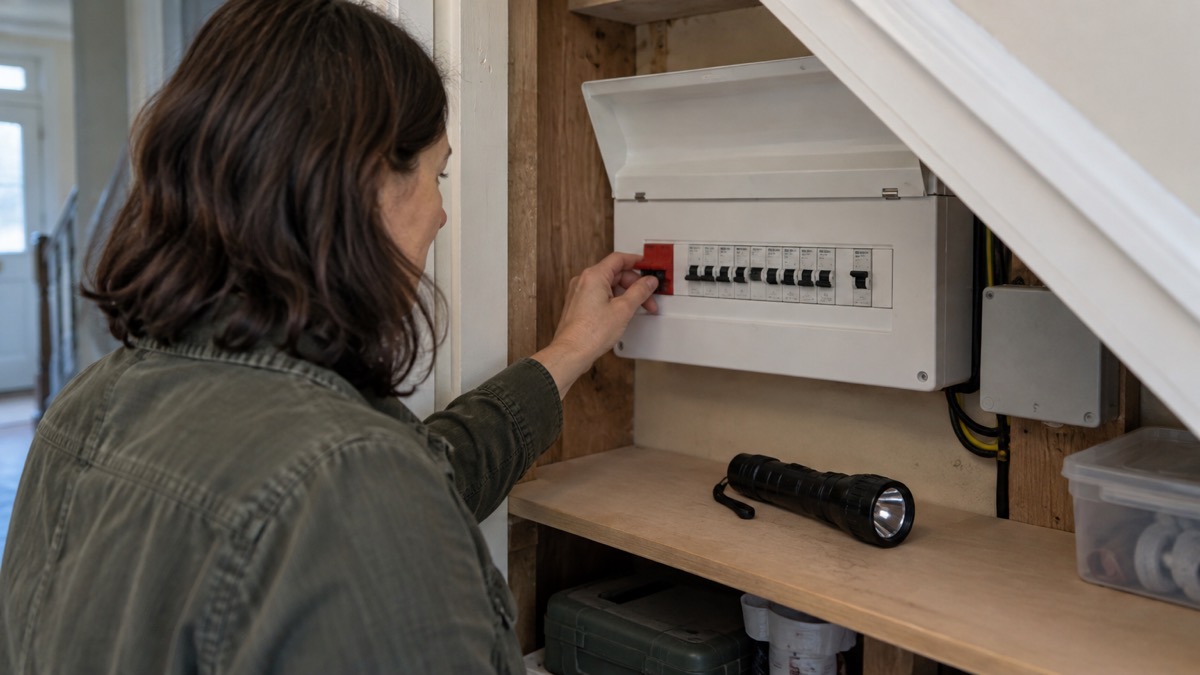
Every property is laid out differently, but the usual locations are well established. The water stop tap is usually inside your home where the supply comes in, or outside near your property boundary under a cover. The gas shut-off valve is usually next to your gas meter. The mains electricity cut-off is on your fuse board, as a large on and off switch13. Natural Resources Wales describes the same three: the gas valve next to the gas meter, the electricity main usually a red switch on the fuse box, and the water stopcock usually under a kitchen sink or where the pipe enters the home8.
Go and find all three this week, in daylight, and photograph them on your phone. If you live in rented accommodation and cannot find them, ask your landlord or letting agent. The Dover District Council guidance is blunt about the priority: find out now if you do not know where they are14.
- Water: stop tap where the supply enters, often under the kitchen sink, or outside at the boundary under a cover13
- Gas: shut-off valve next to the gas meter13
- Electricity: the main switch on the fuse board, often red8
What to do when a warning comes: a step-by-step
When a flood warning is issued for your area, work through the following in order. It follows the official "Act" sequence and the personal flood plan checklist9.
- Get your flood kit and put your flood plan into action8.
- Move important items to safety. Take valuables, documents and electrical items upstairs or well above expected water level8.
- Lift what you can. Lift rugs and smaller furniture onto tables or worktops, and lift curtains over their rails above flood water level15.
- Deal with the outside. Move or weigh down large or loose items, and move your car to higher ground8.
- Put flood protection in place if you have it, such as door guards or air brick covers8.
- Turn off gas, electricity and water at the mains, if it is safe to do so1.
- Charge phones and devices before the power goes off15.
- Move family and pets to a safe place, upstairs or to higher ground9.
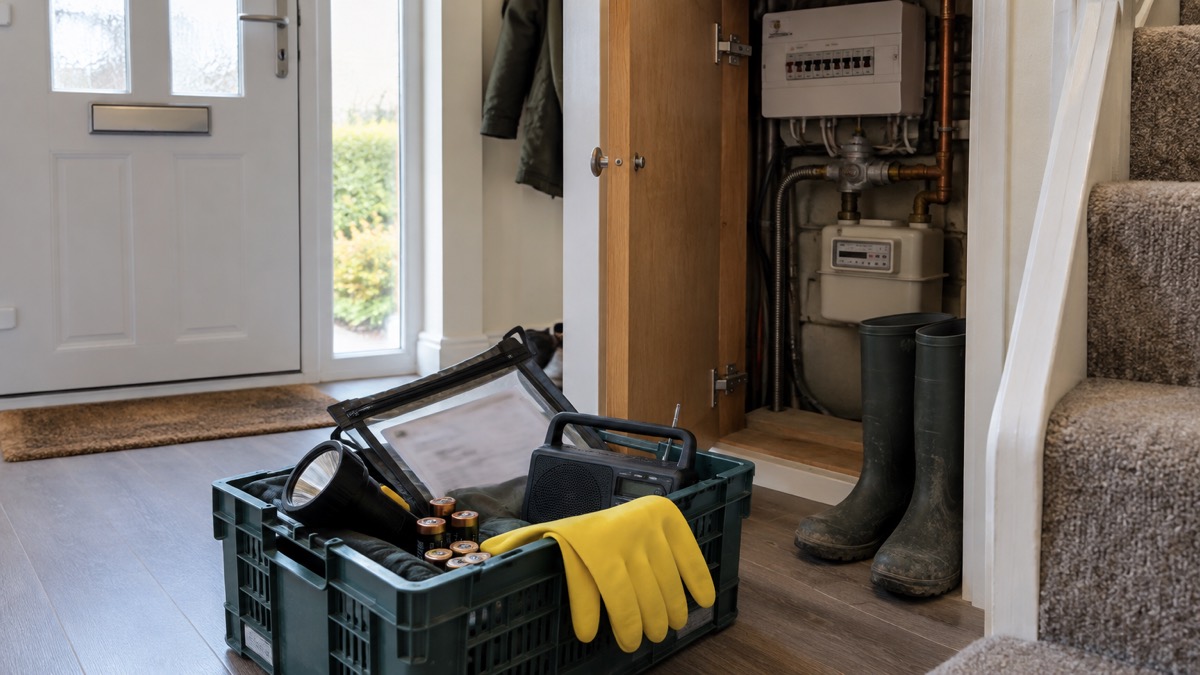
Before you switch off the electricity, it helps to unplug appliances and switch them off at the socket. Lancaster City Council's guidance is to switch off all electrical appliances, remove plugs from sockets and turn off the main electricity switch, and it notes that freezers and fridges will become ineffective once the power is off16. Plan for the food in them accordingly; our guide to emergency food covers what keeps and for how long.
If you are in a flat or a building with shared supplies, the same principles apply but the shut-offs may be in a communal area. Ask your building manager or neighbours now, not during the flood.
If water is already inside the house
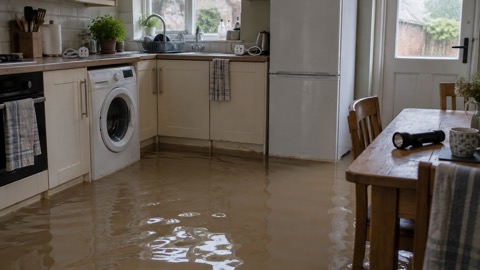
Once flood water has entered, the priority changes from protecting property to protecting people. Fire and rescue services are clear: get family and pets upstairs or to higher ground, and do not attempt to turn off the electricity while standing in water5. If you can reach the fuse board safely, without wading, turn off the electricity at the mains; if you cannot, leave it5.
Cumberland Council's guidance for a flooded home or business is to switch off the electricity at the fuse box and turn off the water and gas at the mains, if it is safe to do so17. The words "if it is safe" carry the whole weight here. A gas valve next to a meter in a flooded cellar is not safe to reach. A stopcock under a sink surrounded by standing water is not safe to reach.
"Attempt to turn off the electricity supply while standing in water."
If you have to leave, do so, and do not walk or drive through flood water on the way. Our page on what to do during a flood at home sets out the wider sequence, and walking or driving through water explains why moving water is so dangerous.
Learning the shut-offs now, and writing them into your plan
The single most useful thing you can do this month is learn how to turn off your gas, electricity and water safely, and write down where each one is6. The Scottish Environment Protection Agency's flooding guide for older communities puts it plainly: learn how to shut off gas, electricity and water supplies and make a note of this in your flood plan6. The government's Be Ready campaign makes the same point, adding that you will need to turn these off if you have to leave your home because of flooding or a leak18.
The government's personal flood plan template asks you to check you know how to turn off your electricity and water19, and the fuller version includes turning off electricity, water and gas supplies among the things to do immediately before a flood, alongside lifting curtains, using door guards and moving important items to safety15. Cheshire Fire and Rescue Service folds it into the wider household emergency plan: learn how to turn off your gas, electricity and water safely, check your home insurance cover and sign up for flood and weather alerts20.
- Write it down: where each shut-off is, and what it looks like6
- Photograph it: a picture of each valve and switch on your phone13
- Tell the household: everyone old enough should know, not just one person20
- Check it works: turn the water stop tap gently and back, so you know it is not seized13
- Add it to your plan: note it in your household flood plan6
If you have not yet signed up for warnings, our guide to signing up for free flood warnings explains how, and flood alerts, warnings and severe flood warnings explains what each level means. For Wales specifically, see Natural Resources Wales warnings and risk maps.
Bringing the supplies back on after a flood
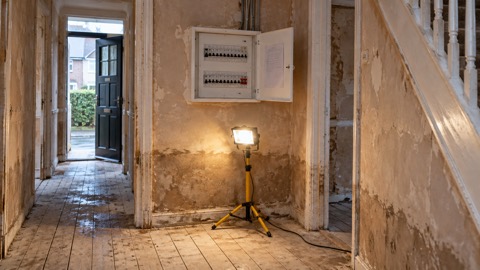
Do not rush this. The electricity is the one to treat with most caution: have all electrical circuits fully dried out and checked by an electrical engineer before switching back on5. That is not a step to skip because the lights seem to work. Our page on whether it is safe to turn the electricity back on goes through it in detail, and using electrical appliances after water damage covers what to do with individual items.
For gas and water, if you are in any doubt, contact your supplier or a qualified engineer rather than testing the supply yourself. The general principle from the official guidance is that the utilities go off before the water arrives and come back on only once the property is dry and checked5. Returning home after a flood is a staged process; our guide to returning home safely after a flood sets out the order, and cleaning up safely after floodwater covers the health precautions once you are back inside.
Where to get help
If you need assistance turning off supplies, or you are older, disabled or medically dependent, ask now rather than during a flood. Your water company's Priority Services Register can help during supply interruptions, and our guide to extra help in an emergency explains who qualifies and how to sign up. For warnings and practical help during a flood, the government's help during a flood page is the starting point21, and our page on who to report flooding to covers the councils and agencies to contact.
In an emergency where life is at risk, call 999. For flood warnings in England and Wales, sign up in advance; for Scotland, see the SEPA guidance6. Wherever you are, the principle is the same: know your three shut-offs, act before the water arrives, and never take a risk with electricity and water together.
Sources (21)
- Flooding support, Lancashire County Council, 2026
- During a flood, Kingston Council, 2026
- Flood water is coming into my home, London Fire Brigade, 2026
- Protect your property, GOV.UK, 2026
- Flooding, Cornwall Fire and Rescue Service, 2026
- Flooding guide for older communities, Scottish Environment Protection Agency, 2026
- Flooding and high winds, North Wales Fire and Rescue Service, 2026
- Preparing for a flood, Natural Resources Wales, 2026
- Northumbria Local Resilience Forum, Northumberland County Council, 2026
- How to prepare for flash flooding, London Assembly, 2026
- Stay safe in heavy rain, Met Office, 2026
- Stay safe in a thunderstorm, Met Office, 2026
- Be informed about hazards: flooding, Prepare campaign, 2026
- Damage limitation guide, Dover District Council, 2001
- Personal flood plan, GOV.UK, 2023
- Be prepared, Lancaster City Council, 2026
- Preparing for flooding, Cumberland Council, 2026
- Get prepared for emergencies, Prepare campaign, 2026
- Personal flood plan, GOV.UK, 2023
- Be ready for emergencies, Cheshire Fire and Rescue Service, 2026
- Help during a flood, GOV.UK, 2026
 Flood Warning Checklist
 First Steps After a Flood
 Insurance Claim Records
 Signing Up for Flood Warnings
 Flood Warnings Without Email
 Who to Report Flooding To
 Reporting a Blocked Gully
 Garden Safety After Sewage
 Council Sandbag Duties
 Filling and Laying Sandbags
 Makeshift Sandbags
 Disposing of Used Sandbags
 Walking or Driving in Floodwater
 Turning Electricity Back On
 Appliances After Water Damage