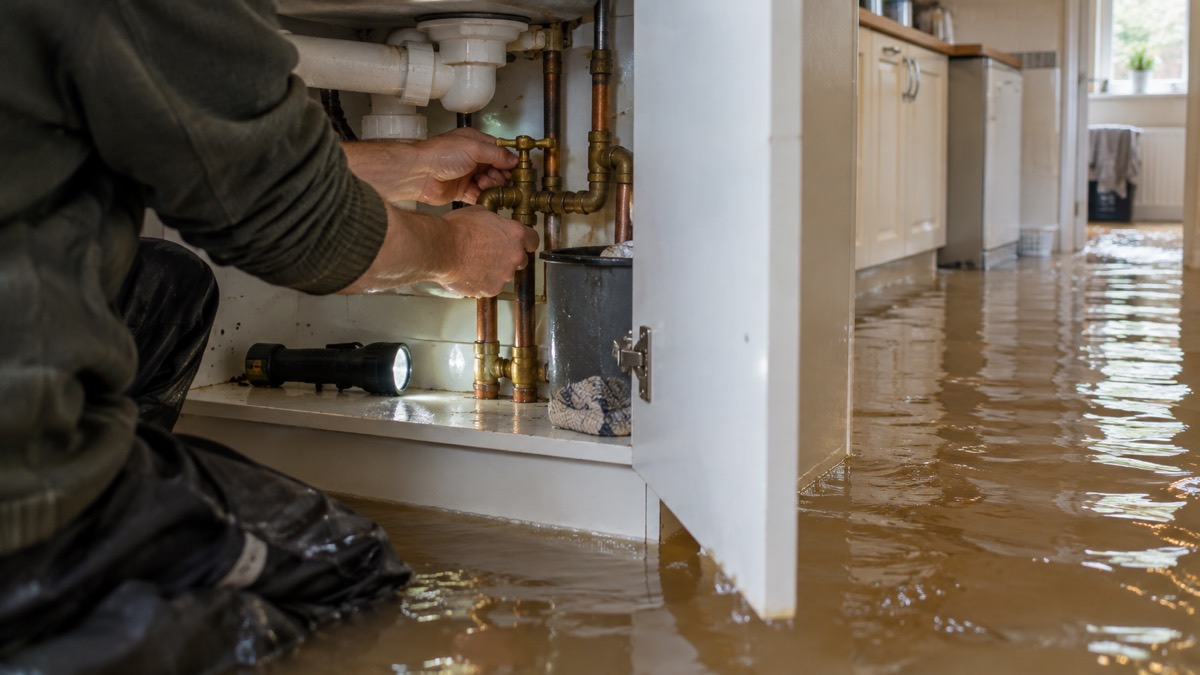
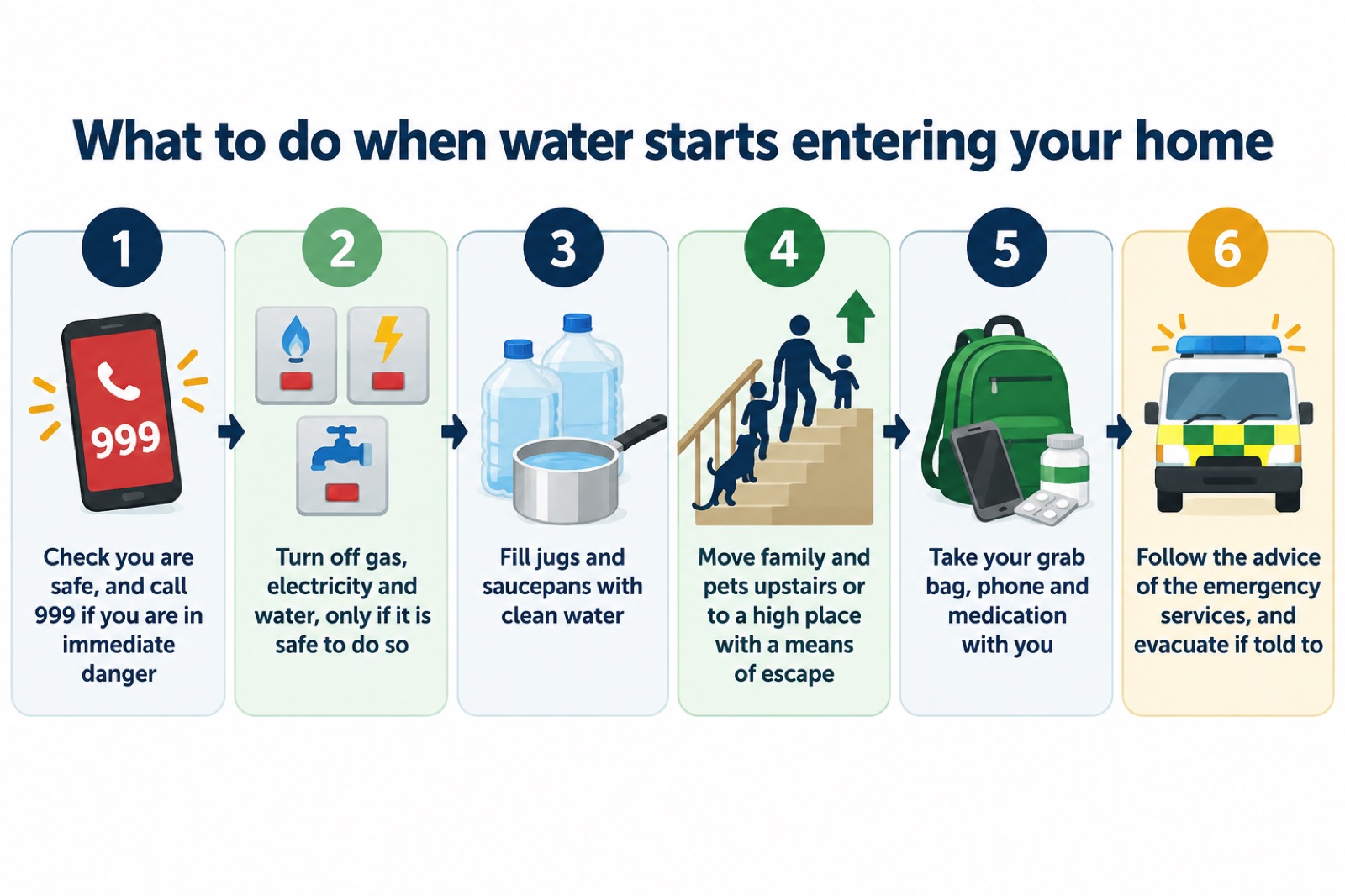
If water is entering your home and you are in immediate danger, call 999 and follow the advice of the operator1. That is the first and most important instruction on this page. Everything else depends on staying safe: turn off gas, electricity and water only if it is safe to do so2, move people and pets upstairs or to a high place with a means of escape3, and never walk, swim or drive through flood water4.
Flood water is not clean water. It may contain sewage and hide rubbish, wreckage, uneven roads and pavements or broken drain and manhole covers2. Treat every puddle and every flooded road as contaminated and as deeper than it looks. If the emergency services tell you to evacuate, leave: refusing to do so puts you, your family and the people trying to help you at risk5.
This page sets out what to do in the order you need it: the immediate actions while water is rising, how to protect people and property, what flood water hides, and what to do once the water goes down, including insurance, health and where to get help.
If water is coming in and you are in danger, call 999
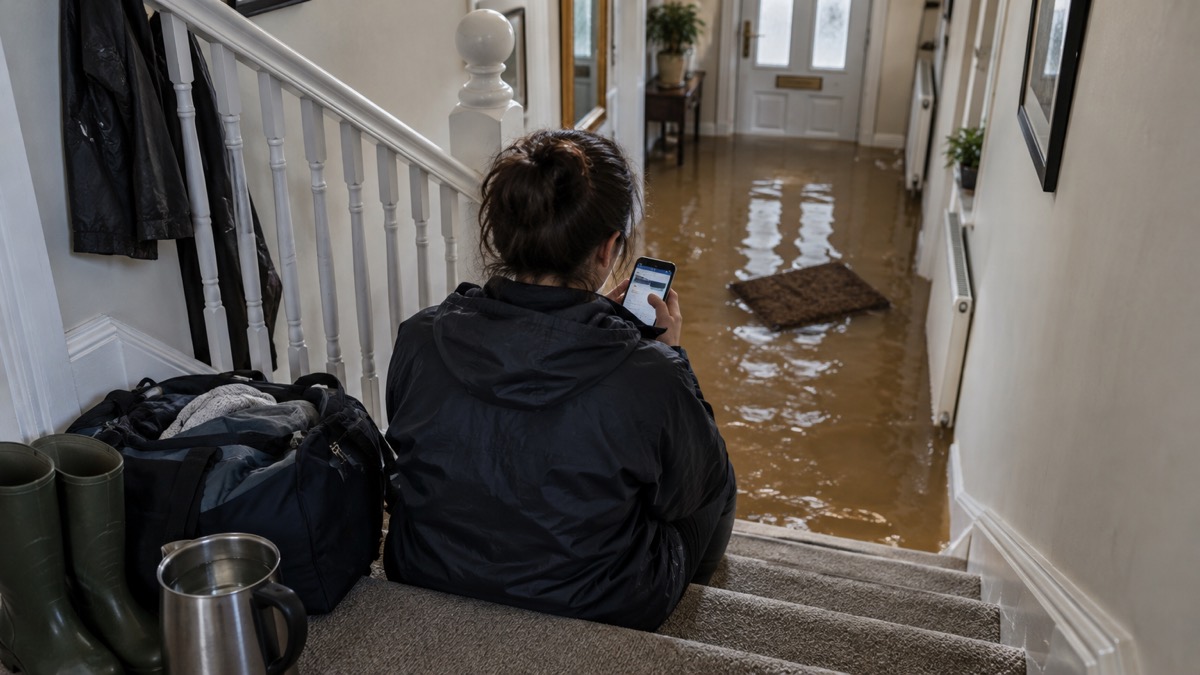
The London Fire Brigade's advice for water entering your home is plain: "If you are in immediate danger, call 999." Follow the advice of the operator and, if you are told to evacuate, do so1. Devon's flood recovery guidance gives the same number when there is risk to life, safety or property7, and the London Fire Brigade's winter weather guide adds that you should follow the operator's advice throughout8.
Use your judgement about what counts as immediate danger. Guidance on street flooding says to call 999 immediately if you feel that you or someone else is in danger9. Examples that fit this include water rising fast inside your home with no safe route to higher ground, someone stranded in flood water, or a person who cannot move themselves out of the water's path. If you become stranded in flood water and you feel there is a risk to life, dial 999 for emergency help10.
Do not call 999 to report flooding that is not threatening life, safety or property. For flooding that needs reporting but is not an emergency, see who to report flooding to, and for the warning levels that tell you how serious a flood is expected to be, see flood alerts, flood warnings and severe flood warnings. If a severe flood warning is in force, official advice is to stay in a safe place, be ready to evacuate your home, and call 999 if you are in immediate danger11.
Turn off gas, electricity and water only if it is safe
Every official source repeats the same instruction with the same condition attached: turn off your gas, electricity and water supplies, if it is safe to do so. GOV.UK gives this advice for a flood warning2, the national Prepare campaign for a flood warning or severe flood warning6, Somerset Council for a home about to be flooded12, and West Yorkshire Prepared in its flooding guidance13. Kingston Council advises doing this before flood water enters your home, if it is safe3.
The condition matters more than the instruction. If water is already around your feet, or the switch, stopcock or meter is on the far side of a flooded room, do not wade to it. Learn in advance how to turn off your water, gas and electricity supply, as the Greater London Authority advises: you may need to do this if you are flooded, and it is safe to do so14. Our page on turning off gas, electricity and water before a flood explains where to find each control.
For electricity specifically, Lancaster City Council's guidance for householders is to switch off all electrical appliances, remove plugs from sockets and turn off the main electricity switch or switches, remembering that freezers and refrigerators will become ineffective15. In Scotland, Ready Scotland's advice is not to use electrical appliances during a flood16.
If you use gas heating or gas appliances, you will need a Gas Safe-registered engineer to inspect them after a flood before they are used again17. Surrey County Council also advises turning off the gas supply to appliances that have been flooded, or where vents and flues may have been affected, and contacting your utility company if in any doubt18.
Move people and pets upstairs or to a high place with a way out
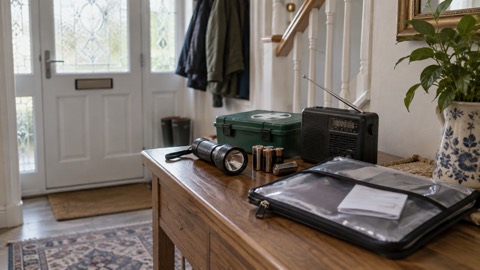
Once your home is being flooded, Kingston Council's advice is to move your family and pets upstairs, or to a high place with a means of escape, and to take your emergency grab bag with you3. The Environment Agency leaflet used by Nottinghamshire County Council adds a practical step to do first: fill jugs and saucepans with clean water, then move family and pets upstairs or to a high place with a means of escape19.
The phrase "with a means of escape" is the part to plan around. Going upstairs is the right move in most homes, but you need a way out if water keeps rising: a window that opens, a route to higher ground, or a neighbour's home you can reach safely. The London Fire Brigade's advice on street flooding is to think about a safe place you could go to if flood water comes into your home, and not to put yourself in danger to get there9.
If you live in a basement or ground floor flat, upstairs may not be yours to use. The Greater London Authority's flash flooding guidance says you could move to a neighbour's flat on a higher level14, and the London Fire Brigade gives the same advice for basement and ground floor residents9. Decide in advance which neighbour, and agree it with them. If you are caught in a flash flood, move to higher ground or the upper floor if it is safe to do so11.
Pets should move with you, not be left behind. If you have livestock or farming equipment, a flood alert is the time to move them away from areas likely to flood, before the water arrives11. Our page on pets and animals in an emergency covers what to have ready for them.
Protecting valuables and your home as the water rises
Once people and pets are safe, use the time before water enters to protect what you can reach without risk. nidirect's storm advice is to move your valuable belongings to safety10, and the Greater London Authority's flash flooding guidance is to move yourself, your family and pets away from danger if water starts to enter your home14.
The government's personal flood plan lists the actions to take if you know you are about to be flooded20:
- Turn off electricity, water and gas supplies
- Lift curtains over rails above flood water levels
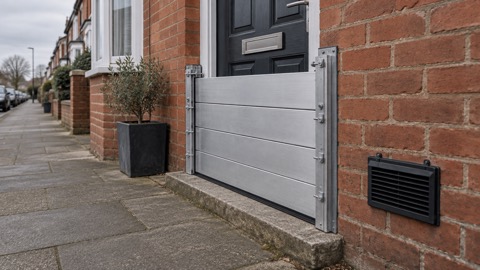
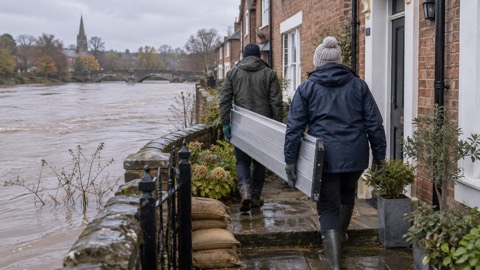
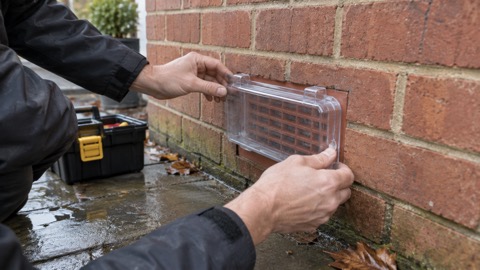
- Use door guards or air brick covers
- Move important items to safety
- Lift rugs and smaller furniture upstairs or on to tables or worktops
- Get your flood kit together
- Move your pets and car away from flood areas
- Make sure your mobile phone or devices are charged
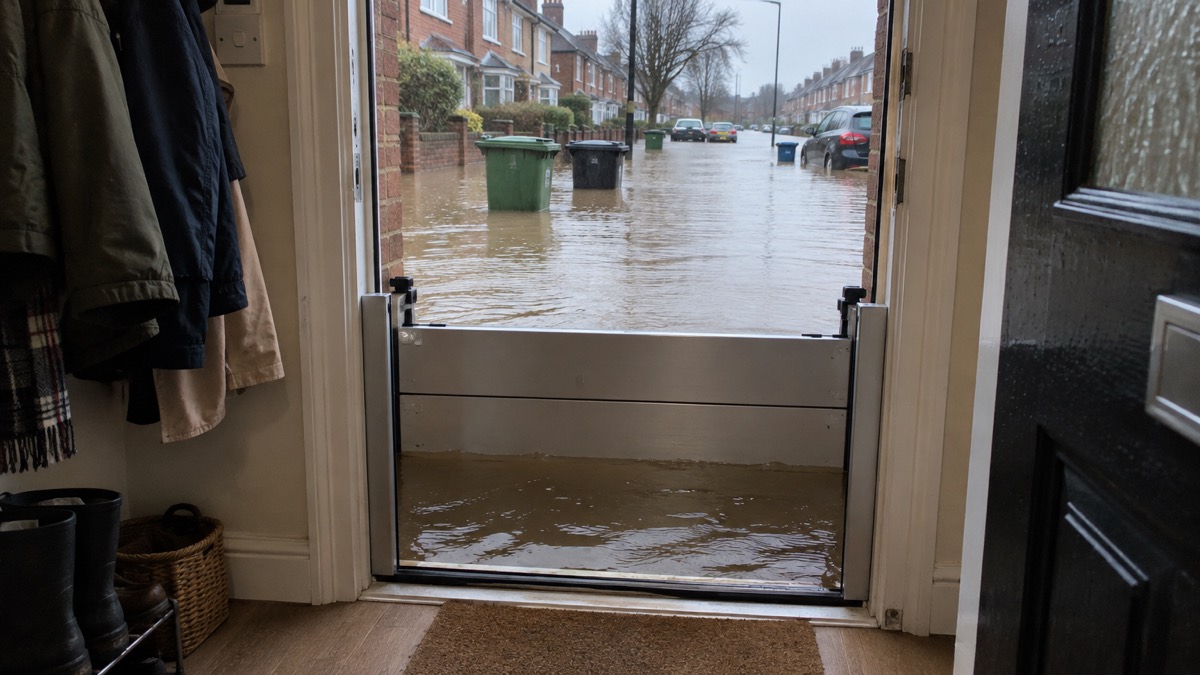
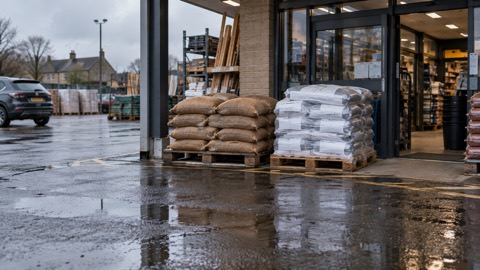
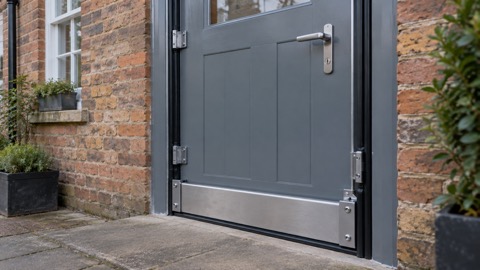
These are the actions of a household that prepared in advance, and that is the difference they make. Door guards, airbrick covers and other equipment only work if you have them already and can put them in place in the minutes a warning gives you. Our pages on door flood barriers, airbrick covers and sandbags explain the options, and the checklist for when a flood warning is issued runs through them in order.
Do not delay people's safety for the sake of possessions. The order in every official source is the same: people and pets first, then what you can move quickly, then property measures such as barriers. If you have a household flood plan, follow it: a flood alert is the point to be ready to act on it, with insurance documents and any medications to hand11.
Staying or leaving: when you must evacuate
If the emergency services tell you to evacuate your home, you should leave. GOV.UK's advice is to leave the area if the emergency services tell you to evacuate2, and the London Fire Brigade says the same for water entering your home1. nidirect, for Northern Ireland, puts the reason plainly: refusing to leave on their advice puts you, your family and people trying to help you at risk5.
Evacuation is not a decision you make alone against the water. It follows a warning and an instruction. At a severe flood warning, be ready to evacuate your home11. When the instruction comes, take your grab bag, medication and phone, and go where you are directed.
If you are evacuated, there are steps that protect your home and your family's peace of mind. Northern Ireland's household flood plan advises: make sure your premises are secure, do not leave windows open in the hope it will help dry out the property, notify the Police that your property has been vacated, and let your family know where you can be contacted21. If you leave your home during a flood, turn off your mains water, gas and electricity if it is safe to do so, and find out in advance how to do this22.
Where you go depends on what is offered and what you can arrange. If your home is flood damaged and you are not able to live there, contact your local council for help getting emergency accommodation6. If you are made homeless by flooding to a private property and you are insured, contact your insurance provider for support12. Our page on whether insurance pays for temporary accommodation explains what cover usually provides.
Never walk, swim or drive through flood water
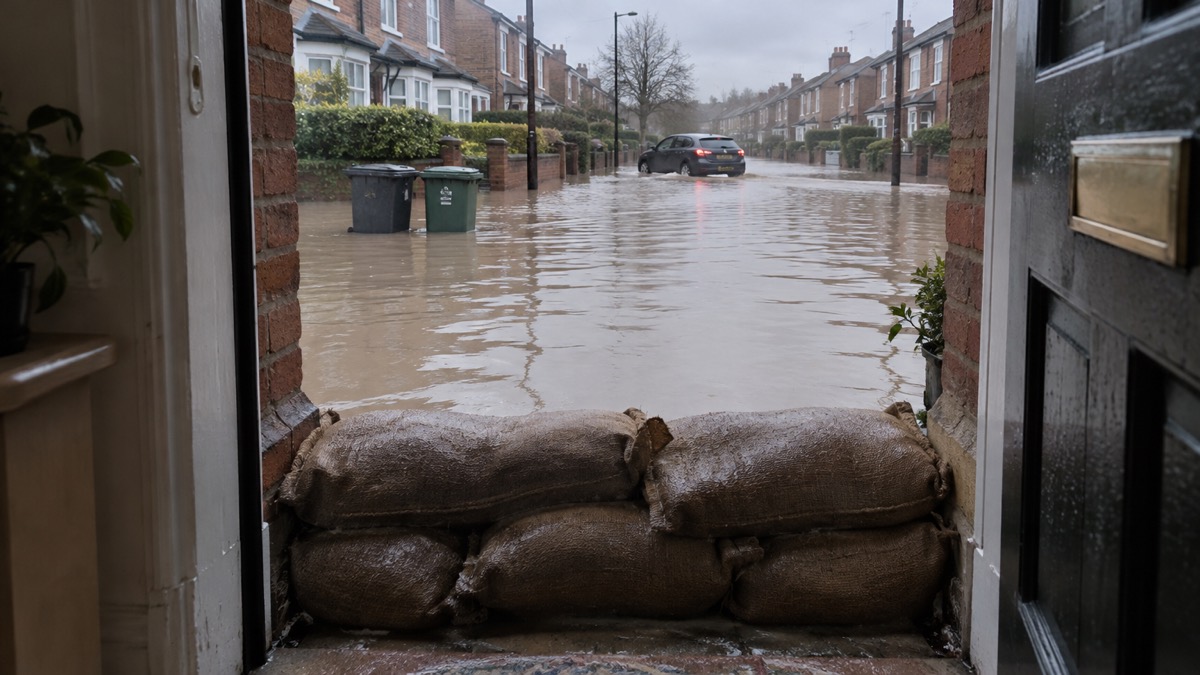
This is the rule that saves the most lives, and every official source states it without exception. The advice is to try to avoid coming into contact with flood water, because it can be dangerous and may be contaminated4. Flood water is highly likely to be contaminated: it is rarely clear, often a muddy brown colour, and could be full of raw sewage23. Flood waters can contain chemical hazards, spread infectious diseases and carry bacteria that pose significant health risks24, and pregnant women, small children, the elderly or vulnerable people should stay as far away from it as possible23. Remember that flooding problems are worse at night when you cannot see4.
For drivers, the Greater London Authority's advice is never to drive through flood water and always to find an alternative route22. Cornwall Fire and Rescue Service explains why: do not attempt to drive through flooded roads or fords, because water is often deeper than it looks and may be moving fast, and vehicles may be swept away or stranded25. The government's personal flood plan gives the same warning, that flood water may conceal hidden dangers20.
"Avoid walking, swimming, or driving through floodwater."
The dangers under the surface are the reason. Flood water may hide rubbish, wreckage, uneven roads and pavements or broken drain and manhole covers2. An open manhole under dark water can drop an adult straight into the sewer system. Moving water can knock you off your feet at depths that look trivial from the kerb. Our page on whether it is safe to walk or drive through floodwater goes into the depths and speeds involved.
If someone else is in the water and in danger, do not go in after them. Call 999 immediately9 and follow the operator's advice. If you become stranded yourself and feel there is a risk to life, dial 99910.
Flood water is dirty and hides hazards
Flood water is not rainwater sitting in a puddle. Devon's flood recovery information warns that flood water is often very dirty and can spread diseases, and that debris washed into your property can also be a hazard7. Public Health Wales advises avoiding contact with flood water because it may be contaminated24, and North Yorkshire Fire and Rescue Service warns that it could be contaminated with sewage: if you encounter it, wash your hands and clothes well with clean water4. Northern Ireland's household flood plan notes that floodwater may be contaminated with sewage, animal waste and other contaminants21.
That contamination reaches into your kitchen and bathroom. Kingston Council's guidance is not to smoke, eat or drink whilst in contact with flood water, and always to wash your hands in clean water before doing so3. Surrey County Council's health advice after flooding is to follow your local water company's advice on the safety of the water supply, and if in doubt to boil all water intended for drinking, brushing teeth, washing food and cooking26.
Food that has touched flood water must be thrown away. GOV.UK's after a flood guidance is not to eat food that has touched flood water27, and Mid and West Wales Fire and Rescue Service says to throw away any food that has been in contact with it28. Food Standards Scotland goes further on the detail29:
| What to do | What it covers |
|---|---|
| Discard all produce | Anything that has come into contact with, or even been splashed by, flood water, including home-grown produce |
| Discard wrapped food | Food stored or wrapped in paper, cardboard or plastic wrappers, such as cereal, rice, flour, sugar and baked goods |
| Discard containers | Tins, bottles and cans containing food or drink that have come into contact with flood water |
| Discard wooden and damaged items | Chipped or damaged crockery, wooden chopping boards and spoons, which cannot be properly sanitised and can absorb contaminated water |
Lancaster City Council's guidance matches this: do not consume any food or drink contaminated by floodwater, and discard all tins, bottles and cans that have touched the water15. If you are insured and covered for loss of perishable goods, Natural Resources Wales advises making a list of all the foods you throw away23. If you live in an area that regularly floods, Food Standards Scotland suggests keeping food in high cupboards or shelves29.
Floods can come without a warning
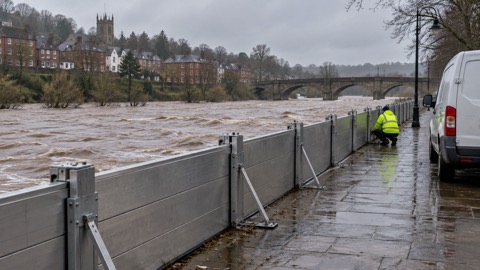
Not every flood gives you a flood alert first. Flooding can often be predicted; however, on occasions it occurs with very short notice and can be completely unexpected30. Floods can sometimes happen without any warning, or you may not live in a flood risk area, so you may not be notified by a flood alert or warning. Flooding has long been a high risk on any risk register no matter where you live, in rural and urban areas alike, and the types that impact households include river flooding, groundwater flooding and surface water flooding31.
This is why the actions on this page are worth knowing before you need them. Cornwall Fire and Rescue Service warns against underestimating flood damage and against waiting: floods can occur very quickly, so do not wait to prepare25. The same guidance notes that people have suffered from hypothermia after their homes became flooded with cold rainwater, even in summer, which is a reason to get people, especially older people, out of cold water and into warmth quickly.
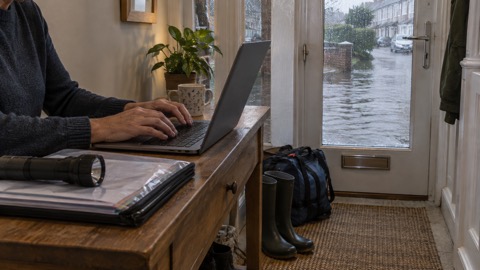
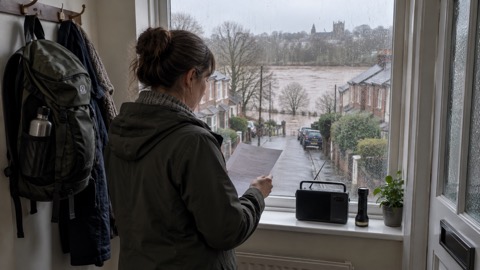
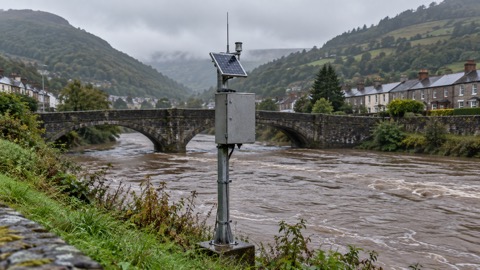
If you live in an area with a risk of flooding, Dorset Prepared advises being prepared in advance: check whether your property is within a flood risk area, sign up for the Environment Agency's free flood warnings, listen to local radio for updates, and check your insurance policy for your property or speak to your landlord30. Our pages on checking your home's flood risk by postcode and how to sign up for free flood warnings cover both steps, and the page on the Flood Guidance Statement explains the five-day forecasts.
Cornwall's storm advice also asks households to look after neighbours, and to avoid travelling in heavy rainstorms unless absolutely necessary, calling for immediate help only if there is a risk to life25.
After the water goes down: photos, insurance and checks
The first hours after the water recedes set up everything that follows, especially an insurance claim. The national Prepare campaign's advice is to take photographs or video footage of all damage, and to mark the water levels on the wall before they recede. Always ensure the insurance company has given approval before going ahead with any repair work, and do not dispose of any item until you are told to do so6. Nottinghamshire County Council's advice for homeowners is the same: when safe to do so, take pictures of any damage to assist your claim32.
Surrey County Council adds a step that protects the claim itself: before you start to clean your home, contact your insurer. They will arrange for a loss adjuster, and you should speak to them before acting on anything18. In Scotland, Ready Scotland's advice is to contact your insurer as soon as possible and take photos of any damage to your home16. Our page on making an insurance claim after a flood walks through the whole process, and the insurance claim records checklist lists what to keep.
Water levels may rise and fall for several weeks after a flood, depending on drainage and any further rainfall6. Before you can properly move back into your home, all standing water must be removed, particularly from the under floor area, using a pump or buckets followed by a wet/dry vacuum, then shovelling out mud and hosing out or using a garden sprayer18. Drying out your home can take weeks or months, depending on how serious the flooding was and the type and thickness of the building materials17.
Do not switch supplies back on without checks. A Gas Safe-registered engineer must inspect gas heating and appliances after a flood17, and our pages on whether it is safe to turn the electricity back on and on using electrical appliances after water damage cover the electrical side. The full sequence, from returning home to cleaning up, is on our page on after a flood: returning home safely.
Where to get help: councils, agencies and accommodation
If your home is flood damaged and you are not able to live there, contact your local council for help getting emergency accommodation6. GOV.UK gives the same advice, and adds that you should contact your local council if you need emergency housing because of flooding, whether you are legally homeless or about to become homeless27. If you are insured and made homeless by flooding to a private property, contact your insurance provider for support12.
If you do not have insurance, your local council should be able to provide information on hardship grants or charities that may be able to help you19, and the national Prepare campaign gives the same route6. Our page on recovery grants and help if you are not insured sets out what may be available. Councils can also help practically: in Northern Ireland, local council help after a flood includes collection, retention and disposal of damaged household contents, and help with arrangements to clean up your home and garden5.
Devon's flood recovery information adds that you should report the flooding to your insurance provider and contact your local council to report the flooding and get any help they can offer7. For flooding from water mains or public sewers in West Yorkshire, report it to Yorkshire Water on 0345 122 24 2413; our page on who to report flooding to covers the equivalent bodies elsewhere.
Help also comes from people around you. SEPA's flooding guide for older communities advises finding out what help family, friends and neighbours can offer if flooding is likely33. Public Health Wales, advising on helping someone affected by flooding, says to check that they are safe and help them make contact with flood recovery agencies if needed24. If you have a disability or require extra assistance, prepare a flood plan that sets out what to do and who can help you33, and keep in touch with your local authority, which can support you in resolving practical difficulties34. Our page on extra help in an emergency covers the support available to older, disabled and medically dependent households.
Stress and mental health after a flood
Flooding does not end when the water goes down. Public Health Wales is direct about the normal reaction: "Feeling tired, upset or anxious or having difficulty sleeping are normal after being flooded." If you are worried about your own or someone else's mental health, seek support from family and friends, your GP or other expert help24.
The stress has identifiable causes. Wiltshire and Swindon Prepared lists factors that can cause distress after a flood: disruption to your GP clinic and access to necessary healthcare, disruption to regular household activities, interruption to school facilities, and damage to your home and personal belongings34. Surrey County Council's health guidance adds difficulties accessing continuing healthcare and prescription medications, disruption to normal household activities, loss of school facilities, seeking compensation and insurance claims, and loss of employment or income26.
What helps, according to the same guidance:
- Start clean-up efforts within your home when you feel ready, and do not overdo it during the clean-up and recovery process34
- Make time for yourself; go to a place where you feel calm and safe, take time to rest, relax, get sufficient sleep and eat healthily and regularly34
- Get in touch with a local community support group, or neighbours, to help you cope and recover34
- Seek support from loved ones such as family, friends and neighbours to lessen the negative impacts of flooding on mental health34
- Keep in touch with your local authority, which will be able to support you in resolving practical issues34
If you are helping someone else affected by flooding, Wiltshire and Swindon Prepared advises assessing the situation and ensuring their circumstances are safe, helping them make contact with recovery agencies through the local authority or a flood warden, checking there are no immediate physical health needs, identifying whether basic needs such as food, water, shelter and medication are met, helping them contact loved ones, and listening34. Our page on mental health after a flood lists the specialist support available.
Sources (34)
- Flood water is coming into my home, London Fire Brigade, 2026-10-25
- Help during a flood, GOV.UK, 2026-10-25
- During a flood, Royal Borough of Kingston upon Thames, 2026
- Water safety campaign, North Yorkshire Fire and Rescue Service, 2026-08-18
- What to do if a flood happens, nidirect, 2025-10-24
- Flooding: be informed about hazards, Prepare campaign, 2026-10-12
- Flood Recovery Information leaflet, Devon County Council, 2026-01-29
- Extreme weather winter guide, London Fire Brigade, 2025-01
- My street is flooding, London Fire Brigade, 2026-10-25
- Thunderstorms weather warning advice and information, nidirect, 2026-08-30
- Flood alerts and warnings: what they are and what to do, GOV.UK, 2010-11-01
- During flooding, Somerset Council, 2026-10-01
- Flooding, West Yorkshire Prepared, 2026-10-29
- How to prepare for flash flooding, Greater London Authority, 2026-10-25
- Be prepared: flooding guidance for householders, Lancaster City Council, 2026-10-26
- Flooding, Ready Scotland, 2026-03-24
- After a flood: clearing up, nidirect, 2026-05-06
- Flooding: after, Surrey County Council, 2026-09-23
- What to do in a flood leaflet, Nottinghamshire County Council, 2010-11
- Personal flood plan, GOV.UK, 2023-11-15
- Household flood plan, nidirect, 2018-12
- Preparing yourself for flooding incidents, Greater London Authority, 2026-10-25
- What to do after a flood, Natural Resources Wales, 2026-10-29
- Flooding and health, Public Health Wales, 2026-07-31
- Flooding safety advice, Cornwall Fire and Rescue Service, 2026-10-29
- Staying healthy and safe after flooding, Surrey County Council, 2026
- After a flood, GOV.UK, 2026-10-25
- Flooding advice, Mid and West Wales Fire and Rescue Service, 2026-10-29
- Flooding: food safety advice, Food Standards Scotland, 2026-10-25
- Flooding risk, Dorset Prepared, 2025-08-11
- Hazards / Risks: Flooding - Wiltshire & Swindon Prepared, Wiltshire & Swindon Prepared (Wiltshire & Swindon Local Resilience Forum)
- Advice for homeowners affected by flooding, Nottinghamshire County Council, 2026-10-29
- Flooding guide for older communities, SEPA, 2026-10-29
- Flooding and health: mental health, Wiltshire and Swindon Prepared, 2026-10-25
 Flood Warning Checklist
 First Steps After a Flood
 Insurance Claim Records
 Checking Flood Risk by Postcode
 Types of Flooding
 Flood Alerts and Flood Warnings
 Flood Guidance Statement
 Wales Flood Warnings and Maps
 Making a Household Flood Plan
 Protecting Your Home
 Door Flood Barriers
 Sandbags and Alternatives
 Flood Doors and Windows
 Airbrick Covers
 Non-Return Valves and Bungs