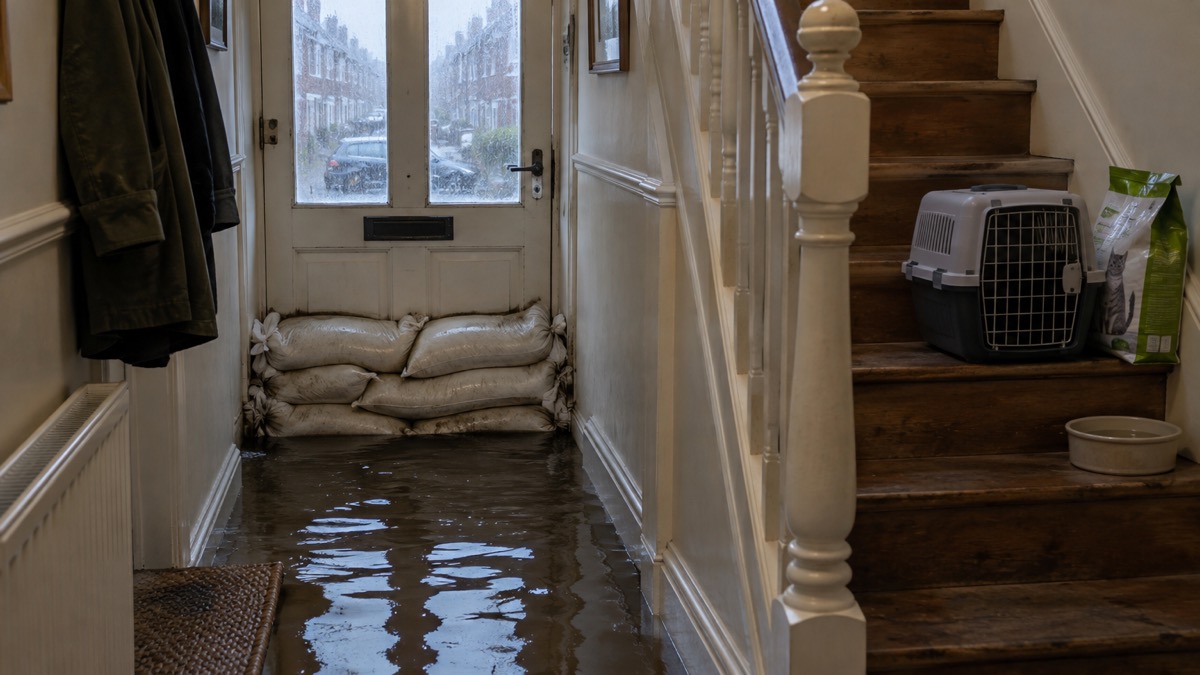
Floods are one of the emergencies most likely to catch a UK household with pets unprepared, and the actions that protect animals are the same ones that protect people, done a little earlier. When a flood warning is issued, bring pets indoors and provide a litter tray1. If it looks as though your home might be at risk, move everyone, including pets, upstairs or to higher ground2. Keep pets away from floodwater entirely: Public Health Wales advises "Do not walk, drive or allow children or pets to play in floodwaters" because flood water may be polluted by sewage, chemicals and animal poo that can cause a wide range of disease3.
The single most useful thing you can do before any of this is sign up for flood warnings. Floodline is a free service that provides flood warnings directly to you by phone, text or email, whichever you select, and you can sign up so you are notified when the area you live, work or travel through is at risk of flooding; call 0345 988 11884. Warnings give you the hours you need to bring animals in, move them up or move them out before water arrives.
This page covers the flood-specific actions for pet owners: what to do at each warning stage, what goes in a pet flood kit, where animals can go if you evacuate, what floodwater can do to them, and the checks to make before they come home. For the wider household side of flooding, see Flooding: A Household Guide, and for planning that covers all emergencies, see Including Your Pets in a Household Emergency Plan.
Bring pets inside and upstairs as soon as a flood is forecast
The first and most important action is timing: get animals inside and up before water reaches the property, not once it is lapping at the door. Mid and West Wales Fire and Rescue Service advises that on a flood warning you should bring pets indoors and provide a litter tray1. Dorset and Wiltshire Fire and Rescue Service goes further: if it looks as though your home might be at risk, move everyone, including pets, upstairs or to higher ground, and move as many possessions as possible upstairs with them2.
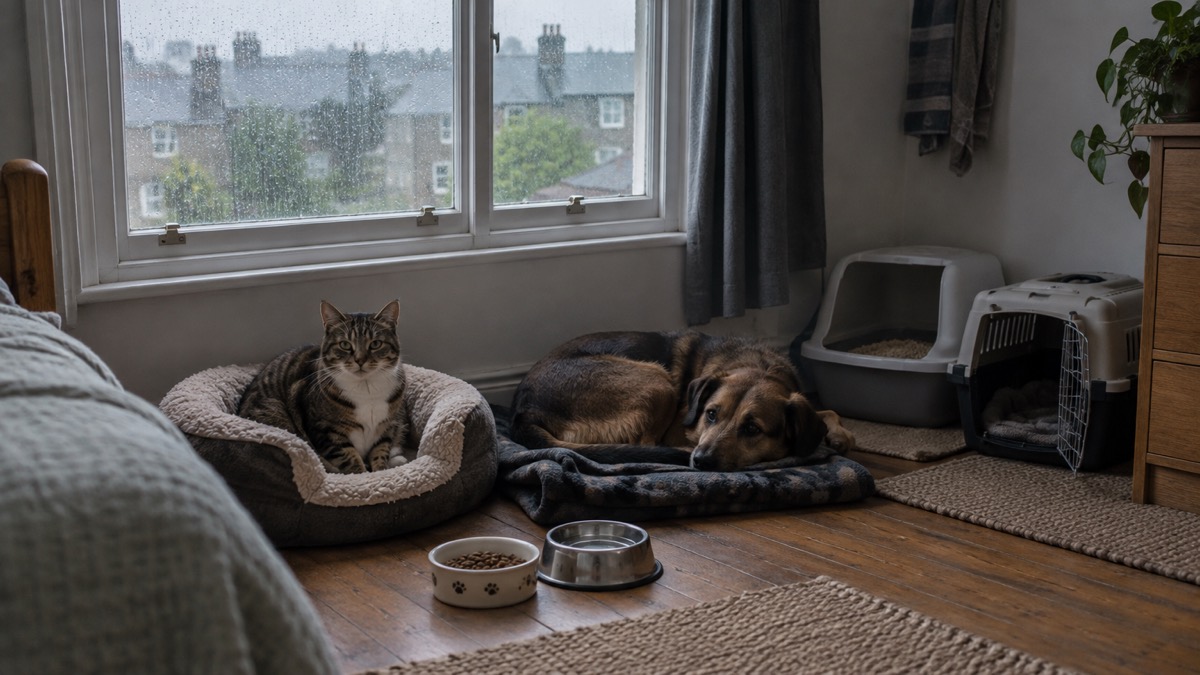
Do this as early as the warning allows for three reasons. First, floodwater rises faster than most people expect, and a dog or cat loose in a garden or a rabbit hutch at the bottom of the garden can be cut off in minutes. Second, animals sense the change: bringing them in early, before the noise and stress of the flood itself, is calmer for them and easier for you. Third, you will have your hands full with the rest of the household's flood actions, and pets dealt with early are pets you are not chasing later.
For cats, a litter tray upstairs is essential: a cat shut upstairs with no tray will hold on or find an unsuitable corner. For dogs, bring leads and any indoor bedding up with you. For small animals in outdoor hutches, such as rabbits and guinea pigs, SEPA's flooding guide for older communities advises considering moving small animals upstairs8, and the same logic applies to any household: a hutch on the ground in a flood zone is a hutch at risk.
Wiltshire and Swindon Prepared's general advice for pets in emergencies is to ensure pets are brought inside, if appropriate, when storms or extreme heat is forecast9. Flooding is the same principle with a harder deadline. West Midlands Ambulance Service asks households at risk of flooding a plain question worth repeating to yourself: "Pets? Can you arrange a suitable place of safety for them?"10. If the answer is no, that is the gap to close before the next warning arrives.
Sign up for Floodline warnings: 0345 988 1188, 24 hours a day
Floodline is the free warning service that tells you flooding is coming while there is still time to act. The number is 0345 988 1188, and it is a 24-hour service4. Surrey County Council sets out how to register: sign up to the Flood Warning Information Service for free flood warning messages for your area, either registering online or by telephone by calling Floodline5. Nottinghamshire County Council confirms who it is for: it can be used by households and businesses who are at risk of flooding, and it is a free service that provides flood warnings directly to you by phone, text or email, whichever you select11.
The service works because of river gauges. The Floodline service uses gauges at strategic locations in main rivers to identify any rivers rising past specific thresholds11. When flooding is forecast in your area, messages are sent by phone as an SMS or voice message and will tell you where to find more information12. SEPA's Floodline leaflet explains how the messages are assigned: if your property is in a local Flood Warning Area you receive local Flood Warnings specific to your area; if it is not, you receive regional Flood Alerts12.
If you can see water building up in the street, London Fire Brigade advises calling Floodline on 0345 988 118813. Deanshanger Parish Council's animals-in-a-flood guidance gives the same number for pet owners: contact Floodline on 0345 988 1188 if you are concerned that your property might flood14. And if you are in immediate danger at any point, call 99915.
Scotland, Wales and Northern Ireland
In Scotland, Floodline is operated by the Scottish Environment Protection Agency (SEPA) and provides live flooding information and advice on how to prepare for or cope with the impacts of flooding 24 hours a day, 7 days a week16. The number is the same, 0345 988 1188: select option 2 for Scotland and option 3 to speak to an advisor17. To register with Floodline online you will need to provide your email address; if you have no email or need assistance, call 0345 988 1188, option 2 for Scotland and option 3 to speak to an advisor16. SEPA can provide two different types of warning message depending on your property location: a targeted Flood Warning message for your local area if your property is within an area covered by a SEPA flood monitoring system, or a more general Flood Alert message for the wider geographical area, usually representing local authority boundaries, if it is not16. You can find out your quick dial code or codes online or by calling Floodline on 0345 988 118816.
In Wales, flood warnings are issued through the same Floodline number, 0345 988 1188, which is a 24-hour service18. If you're in Wales you can sign up, update your details or cancel your account by calling Floodline, just as in England and Scotland12.
The 0345 988 1188 Floodline number covers England, Scotland and Wales4. Northern Ireland's flooding guidance is published through nidirect, which advises calling 999 immediately if you are in danger and warns you to beware of sharp objects and pollution in flood water15. If you live in Northern Ireland, use the nidirect flooding pages for warnings and clean-up advice in your area.
Help for deaf or disabled callers
If you have a disability or need extra help, you can contact Floodline and ask for flood warnings to be sent to a friend or relative instead of you6. Floodline also has a textphone number, 0345 602 63406. When you register, choose the format that works for your household: warnings can arrive by phone, text or email, whichever you select11. If you need extra help in emergencies more broadly, see Extra Help in an Emergency.
Flood alerts and flood warnings: what each message means for your pets
The warning system uses escalating messages, and each one has a matching set of pet actions. The government's personal flood plan tells you to check you understand what the warnings mean, starting with the flood alert19. A flood warning means flooding is expected6, and at that point you should move your family, pets and important items to safety, for example upstairs or to higher ground.
| Message | What it means | What to do for pets |
|---|---|---|
| Flood alert | Flooding is possible; prepare19 | Check carriers, leads and pet food are where you can reach them; know where pets will go19 |
| Flood warning | Flooding is expected6 | Bring pets indoors and provide a litter tray1; move everyone including pets upstairs or to higher ground if the home is at risk2 |
| Severe flood warning | Danger to life | Move family, pets and valuables to a safe place; turn off gas, electricity and water supplies if it is safe to do so; put flood protection equipment in place20 |
Natural Resources Wales' advice for a flood warning in Wales is to move family, pets, and valuables to a safe place, turn off gas, electricity and water supplies if it is safe to do so, and put flood protection equipment in place20. At a flood alert in Wales, prepare a flood kit of essential items, monitor local river levels, check the 5 day flood risk, and farmers should consider moving livestock and equipment away from areas likely to flood20.
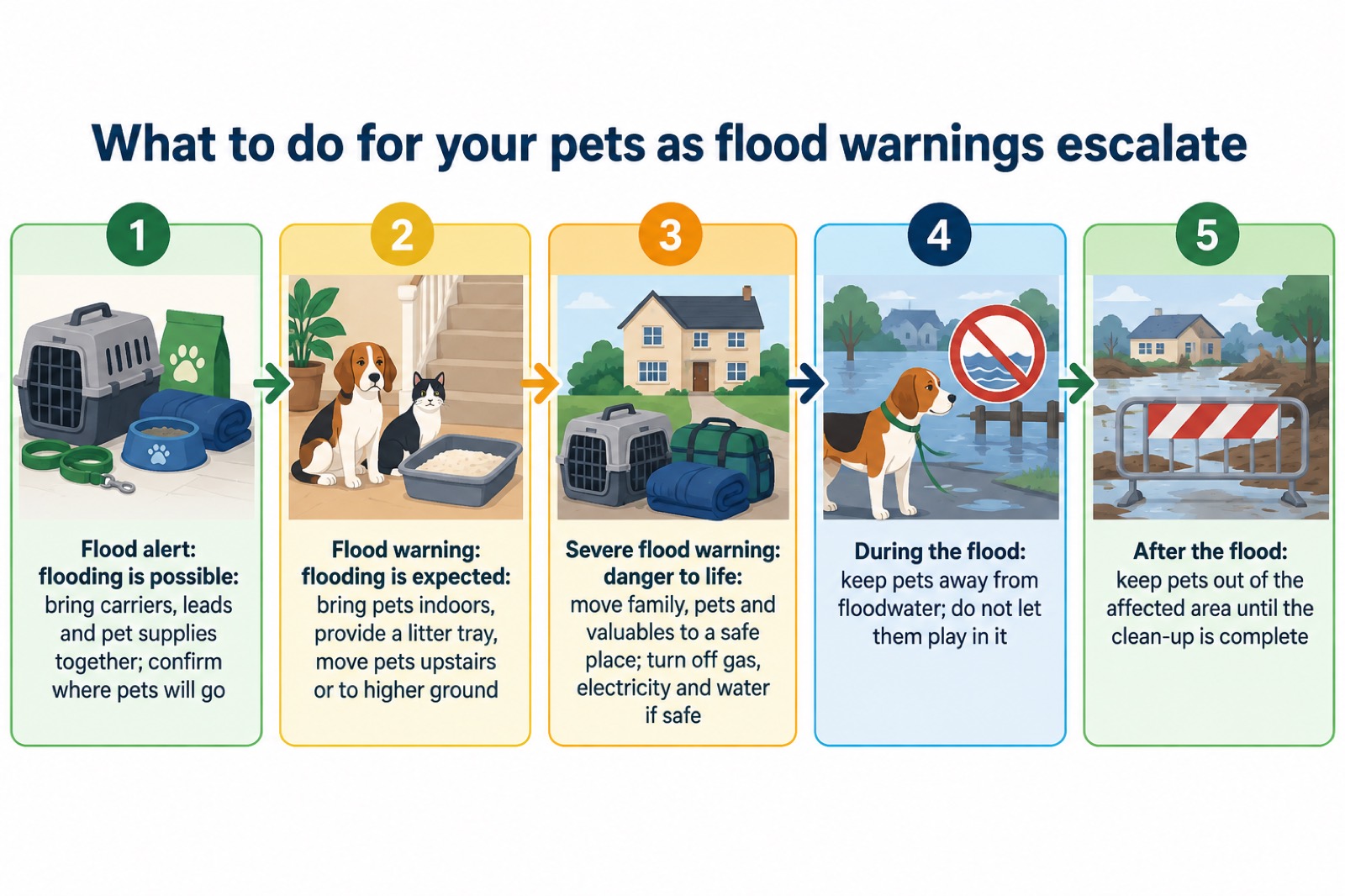
The government's personal flood plan lists the immediate actions for the moment before water arrives: turn off electricity, water and gas supplies; move important items to safety; get your flood kit together; move pets and vehicles away from flood areas; and make sure mobile phones or devices are charged19. Note where pets sit in that list: they are moved at the same stage as vehicles, early, while the roads and routes are still passable.
Add your pets to your flood plan and emergency kit
A flood plan that only covers people will fail at the moment it matters, because pets need carrying, feeding and containing. The government's personal flood plan asks you to think about what to do with pets if a flood happens: where they might go, food, carriers, medicines19. North Yorkshire Fire and Rescue Service's advice for heavy rain is to think about your pets, car and furniture21, and to include supplies for your baby or pet in your emergency flood kit21. Lancaster City Council's emergency guidance puts it simply: remember to make provisions for domestic animals22.
What that means in practice, gathered from the official guidance:
- Carriers and leads: keep portable pet carriers and leads close at hand, as SEPA's flooding guide for older communities advises8
- Food and water: keep their food, water and bedding somewhere safe8; see How Much Pet Food and Water to Store for an Emergency
- Medicines: include any medicines your pet needs in the kit19
- Documents: keep pet documents with your plan; for horses, SEPA advises keeping the passport with the flood kit23. See Documents to Keep for Your Pet in an Emergency
- Litter tray: have one ready even for cats that normally go outside1
- Contact numbers: for horse and livestock owners, list emergency contact numbers including your vet, and keep this in a safe place23
Natural Resources Wales' flood advice for households adds the wider kit actions that protect the home your pets live in: get your flood kit, prepare to move people and pets to a safe place, move important items, move or weigh down large or loose items outside, put flood gates in place, turn off gas, electricity and water, and move your car to higher ground20. SEPA's community flooding guide's preparation step is to put a family flood kit together8, and Birmingham City Council's "Are You Ready" guidance asks households to plan so their pets have a safe place to stay24.
Deanshanger Parish Council's animals-in-a-flood guidance adds a step many pet owners miss: plan your escape route before a flood14. Know which road out of your area stays passable longest, and where you would go with animals if you had to use it. For the general household kit around all this, see Emergency Kit: What a UK Household Should Keep Ready.
Where pets can go if you have to evacuate
If you have to leave your home, pets need somewhere to go too, and that decision is far easier made in advance. Birmingham City Council's advice is to plan so your pets have a safe place to stay24. The government's personal flood plan frames the same question: where might they go19. London's flood awareness guidance describes the action at the sharp end, moving family and pets to safety if you are at high risk of flooding and receive a severe weather alert or flood warning25.
Work through the options before a flood is forecast:
- Family or friends outside the flood zone: the simplest option for dogs, cats and small animals that can travel in a carrier
- Boarding kennels and catteries: book early, as flood events affect many households at once
- Pet-friendly accommodation: identify it in advance rather than searching during the warning
- Your vet: record your vet's contact details in your plan, alongside boarding kennels, cattery and friend or relative contacts, so you have them to hand23
Whether you can take pets to an emergency rest centre depends on the centre and the circumstances; see Can I Take My Dog or Cat to an Emergency Rest Centre?. If the worst happens and an evacuation leaves a pet behind, see What to Do If You Have to Leave a Pet Behind in an Evacuation. Whatever option you choose, the kit items above, carriers, leads, food, medicines and documents, travel with the animal.
Keep pets away from floodwater
This is the rule that protects animals most during a flood, and it comes from the health authorities in plain terms. Public Health Wales advises: "Avoid contact with flood water. Do not walk, drive or allow children or pets to play in floodwaters."3 The reason is that flood water may be polluted by sewage, chemicals and animal poo that can cause a wide range of disease3.
The UK Health Security Agency's flooding and health guidance for frontline responders sets out what floodwater can contain: human and livestock waste; sewage; household, medical and industrial hazardous waste; physical objects; wild or stray animals; and petrol or oil spillages26. For pets, that list means contaminated fur they lick clean, water they drink, sharp objects under the surface, and stray animals displaced by the same flood.
The practical rules from the official guidance:
- Prevent pets from drinking floodwater, whether running or standing26
- Keep pets on a lead or limit garden access until water has receded26
- Keep pets out of the affected area until clean-up is complete26
- Clean away mud and dry pets well after any contact26
- Ensure pet vaccinations and deworming are up to date26
For dog walkers specifically, Derbyshire County Council advises keeping dogs on leads close to water: dogs running free risk struggling to slow themselves on slippery banks and paths and end up in deep or fast-flowing water27. That applies during the flood and for as long as water remains afterwards. If a dog does get into trouble in water, see What to Do If Your Dog Gets Into Trouble in Water or at the Coast.
SEPA's flooding guidance adds an electrical danger: stay away from power lines and electrical wires during a flood28. That applies to you and to where you walk your dog.
Floodwater health risks to people and animals
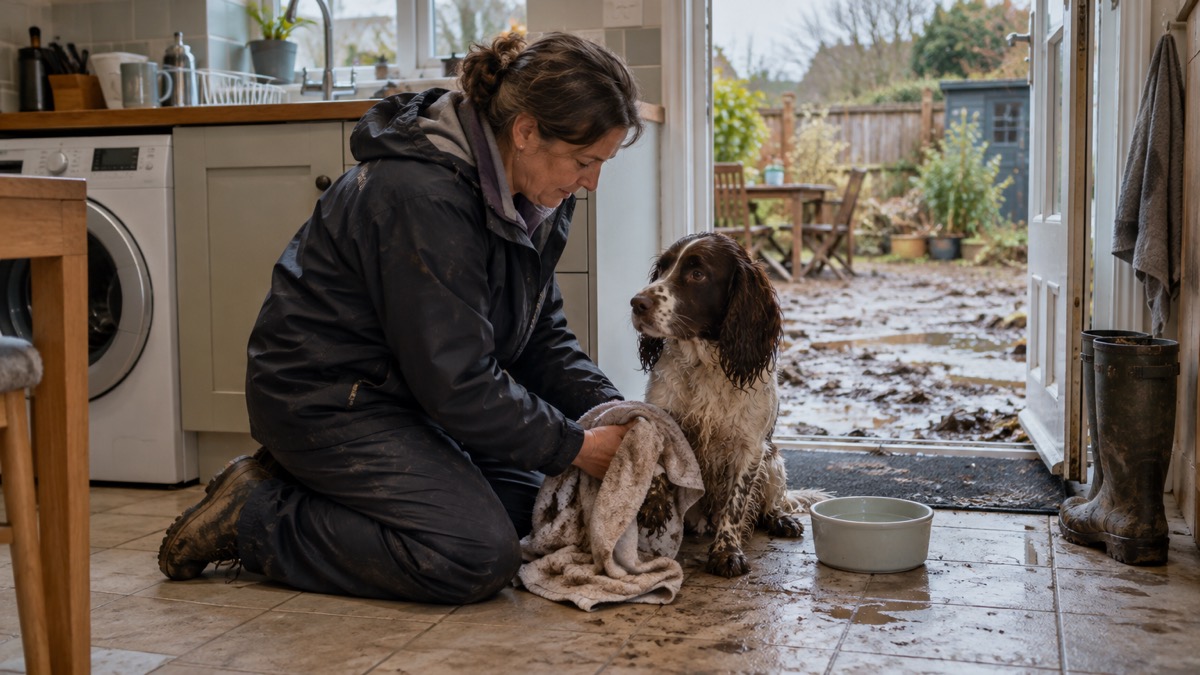
The health risks of floodwater run in both directions: the water can harm your pets, and what your pets carry in can harm your household. Public Health Wales warns that flood water may be polluted by sewage, chemicals and animal poo that can cause a wide range of disease3. The UK Health Security Agency's guidance lists the contents in detail, from human and livestock waste to medical and industrial hazardous waste, and states that floodwater can contain sewage, harmful pollutants or contaminants to humans and animals26.
For animals, the main routes in are drinking the water, licking contaminated fur and paws, and walking through it. The guidance for recovery from flooding addresses all three: avoid direct contact with floodwater, prevent pets from drinking floodwater, clean away mud and dry pets well, and ensure pet vaccinations and deworming are up to date26. The vaccination and deworming point is worth acting on before flood season, not after: a pet whose routine treatments are current has one less route for disease during and after a flood.
For people, the same guidance covers hygiene around animals in a flooded home. Northern Ireland's nidirect advice after a flood in your home is to cover cuts or open sores, wash children's hands regularly, keep children and pets out of contaminated areas, use rubber gloves when cleaning up, and use disinfectant to clean surfaces and tables where you want to put food15. Those rules matter most in a household with pets, because animals move between contaminated and clean areas without knowing the difference.
One winter overlap deserves special attention. Floods and freezing weather often arrive in the same season, and grit and salt spread on roads and paths can sit in floodwater and mud. Wiltshire and Swindon Prepared, citing the British Veterinary Association, warns that grit and salt can be toxic to dogs and cats if ingested, so it is important to get it off their paws around the winter season29. Wipe or wash paws after walks near treated surfaces. For more detail, see Is Rock Salt Dangerous to Dogs' and Cats' Paws?.
Returning home: keep pets out until the clean-up is finished
The flood ending is not the moment pets come home. Northern Ireland's guidance on keeping children safe during a flood is direct: keep children and pets out of the affected area until the clean-up is complete7. The same guidance adds that you should not let young children play on affected grass or paved areas until the area has been cleaned down and restored to its normal condition30, and the same caution applies to pets that sniff, lick and walk bare-pawed over those surfaces.
The UK Health Security Agency's recovery guidance gives the pet-specific version: keep pets out of the affected area until clean-up is complete, clean away mud and dry pets well, and ensure pet vaccinations and deworming are up to date26. Before your pets re-enter the home, work through the checks:
- Clean-up of the affected area finished, surfaces cleaned down and restored to their normal condition7
- Mud and contamination cleaned away from anywhere pets will walk or sleep26
- Any pet bedding, food or belongings that were in floodwater discarded or thoroughly cleaned26
- Pets dried well and cleaned after any contact during the flood itself26
- Vaccinations and deworming up to date26
nidirect's after-flood advice also covers protecting the home while water is still a threat: if you don't have non-return valves fitted, plug water inlet pipes with towels or cloths and turn off any equipment that uses water, like washing machines and dishwashers15. And it repeats the standing warning to beware of sharp objects and pollution in flood water15, which matters most in the days of clean-up when pets most want to return to their territory.
When you do bring pets back in, dry any that got wet properly: nidirect's winter advice is that after a walk in snowy, icy or wet conditions, you should dry your pet off as quickly as possible and make sure they keep warm31. A wet pet in a cold, half-restored house is at risk of getting chilled, so dry them quickly and keep them warm31. If a pet seems unwell after flood contact, contact a vet; see Emergency Vets: Out-of-Hours Care and the 24-Hour Rule for how to reach one at night or at a weekend.
Horses and livestock: gates, field details and emergency access
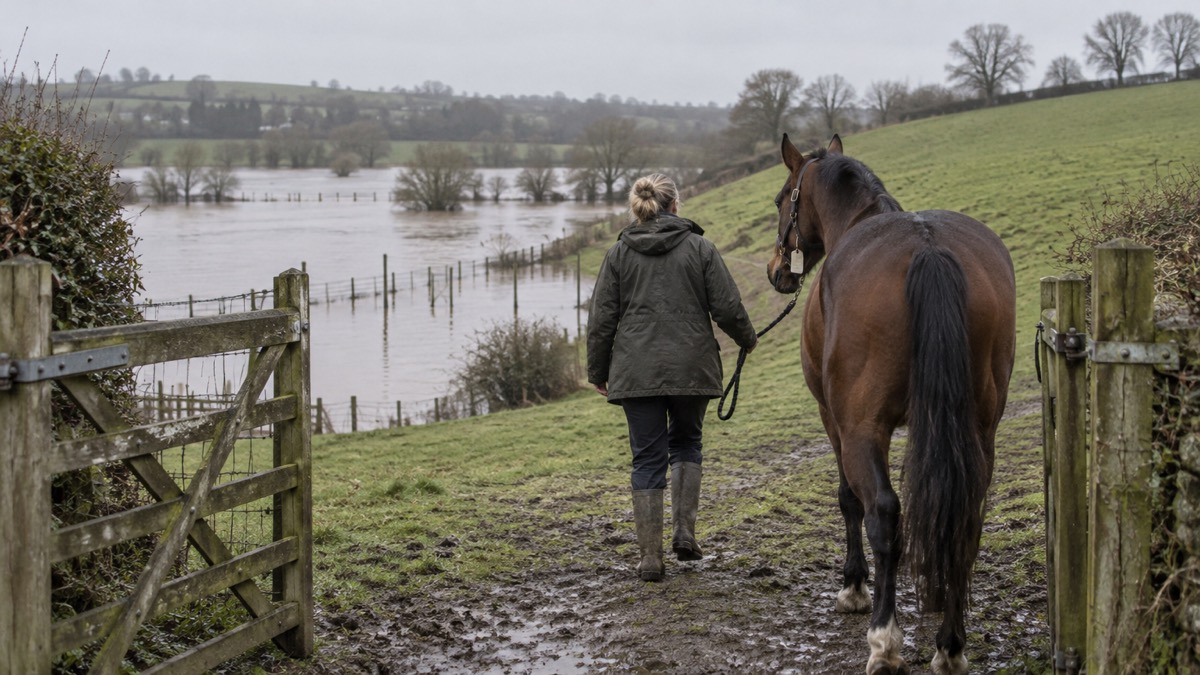
Animals kept outside cannot be brought upstairs, so the flood plan for them is about ground, gates and access. SEPA's guide to protecting your farm and livestock sets out the preparation steps. Identify fields on higher ground and gain permission to use these in advance of flooding so livestock can be moved to safety23. The same applies to horses: identify fields on higher ground and gain permission in advance23. Somerset Council's advice during flooding is to check that pets and livestock kept outside can move freely and escape rising water32.
SEPA's horse-specific advice covers handling: wear a hat and gloves, and if you have many horses, try to move them together as this helps to keep them calm23. Plan ahead by listing everything you need in the event of a flood, including emergency contact numbers: emergency services, local authority, insurance companies, horse transporters, feed suppliers and your vet. Keep this in a safe place and add a flood plan to your emergency procedures23.
SEPA's horse flood kit list:
- A spare head collar and lead rope, with contact details attached to the head collar23
- Your horse's passport and first aid kit23
- Any medication your horse needs23
- Wire cutters, in case you can't leave the field through a gate23
- A warm waterproof rug23
The wire cutters point is worth pausing on: floodwater can make a planned route unusable, and a gate that is underwater or blocked is no longer an exit. For the full kit, see Horse Evacuation Kit Checklist, and for the wider arrangements, see Horses and Livestock in Floods and Snow. Farmers in Wales should note that at a flood alert, Natural Resources Wales advises considering moving livestock and equipment away from areas likely to flood20.
Sources (32)
- Flooding advice, Mid and West Wales Fire and Rescue Service
- Flooding safety advice, Dorset and Wiltshire Fire and Rescue Service
- Flooding and health, Public Health Wales, 2026
- Check if you're at risk of flooding and get flood warnings, GOV.UK
- Preparing for flooding, Surrey County Council
- Flooding: be informed about hazards, Prepare Campaign, 2026
- Keeping children safe during a flood, nidirect, 2025
- Flooding guide for older communities, Scottish Environment Protection Agency, 2026
- Your pets: personal resilience, Wiltshire and Swindon Prepared, 2026
- Staying safe in flooding, West Midlands Ambulance Service NHS Trust, 2026
- Preparing for a flood, Nottinghamshire County Council, 2026
- Floodline service leaflet, Scottish Environment Protection Agency, 2018
- My street is flooding, London Fire Brigade, 2026
- Animals in a flood, Deanshanger Parish Council, 2023
- What to do if a flood happens, nidirect, 2025
- Floodline, Scottish Environment Protection Agency, 2026
- Register with Floodline, Scottish Environment Protection Agency, 2026
- Flood risk management annual report 2023 to 2024, Natural Resources Wales, 2024
- Personal flood plan, Environment Agency, 2023
- What to do in a flood, Natural Resources Wales, 2026
- Keeping safe during high winds and heavy rain, North Yorkshire Fire and Rescue Service, 2024
- Be prepared, Lancaster City Council, 2026
- Protecting your farm and livestock, Scottish Environment Protection Agency, 2026
- Are You Ready, Birmingham City Council, 2026
- London Flood Awareness Week 2021, Greater London Authority, 2021
- How to recover from flooding, UK Health Security Agency, 2023
- Communities affected by flooding, Derbyshire County Council, 2026
- Flooding guide for communities | Beta | SEPA | Scottish Environment Protection Agency, Scottish Environment Protection Agency (SEPA)
- Winter hacks this winter, Wiltshire and Swindon Prepared, 2026
- Microsoft Word - Floods_cleanup_leafletv2.doc, North Warwickshire Borough Council
- Staying warm in winter, nidirect, 2026
- During flooding, Somerset Council, 2026
 Pet Emergency Documents
 Storing Pet Food and Water
 Carer's Emergency Plan
 Antifreeze Poisoning
 Pets in Cold Weather and Snow
 Emergency Vets and Out-of-Hours
 Pet First Aid Kits
 How Fast a Car Heats Up
 Keeping Pets Cool in Hot Weather
 Oak Processionary Moth and Dogs
 Pets in Your Emergency Plan