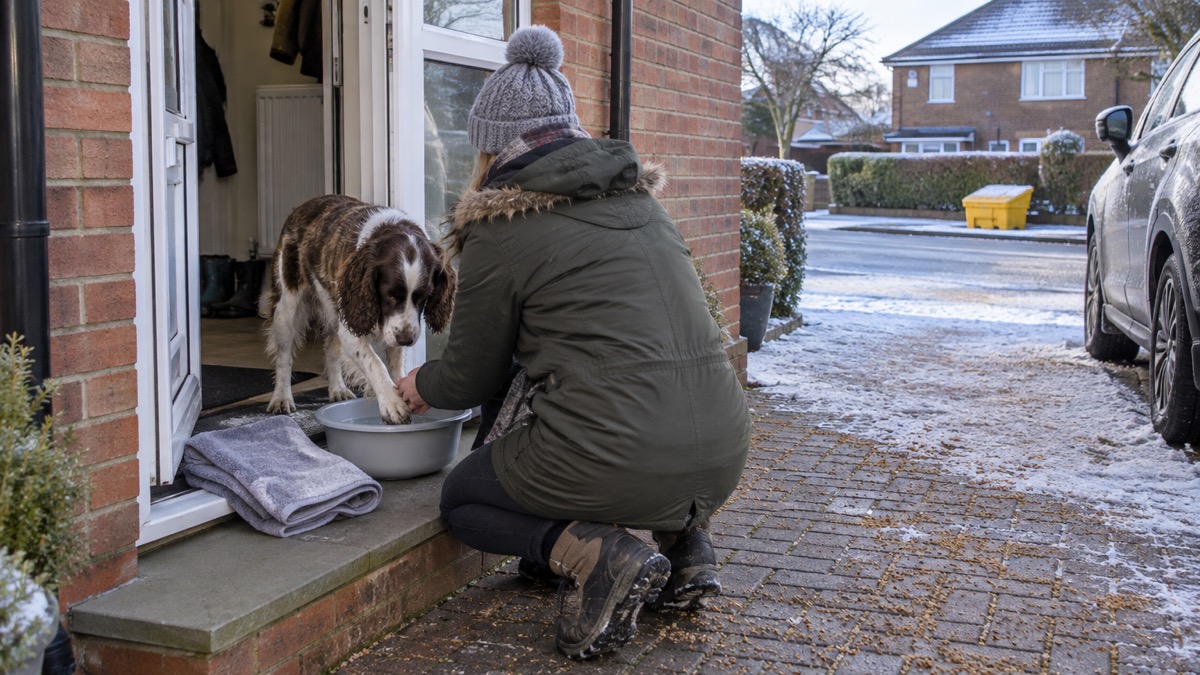
Yes. Grit and rock salt can be extremely toxic to dogs and cats if they are swallowed, and the usual way a pet swallows it is by licking it off their own paws and fur after a walk on a treated road or path1. The salt is a mixture of sodium chloride and grit, and licking it off fur can lead to a high blood sodium concentration, excessive thirst, coma and kidney damage2.
The practical answer is simple and takes a minute: wipe your pet's paws, legs, tummy and fur thoroughly when you come in from outside, and take a towel with you so you can clear salt and grit off while you are still out1. If your pet seems uncomfortable, wash the affected areas with a mild, pet-safe shampoo and warm water and dry them completely with a towel2.
If you think your pet has swallowed salt, or is showing signs such as thirst, vomiting or lethargy, contact a vet immediately rather than waiting to see how they go3. This page sets out what the salt does, how to clean paws properly, how to grit your own drive safely with pets at home, and when a call to the vet cannot wait.
Why rock salt is a problem for paws, not just roads
Councils grit roads by spreading rock salt to stop ice forming, and in heavy snowfalls snow ploughs may be used to clear it6. That salt does not stay on the carriageway. It is walked into pavements, verges, drives and the edges of parks, and it sticks to paws and fur.
Rock salt is a mixture of salt (sodium chloride) and grit7. The grit is abrasive and the salt is the toxic part. Most cases of rock salt poisoning involve animals who have walked through gritted snow and then licked or chewed it off their paws, because they found it irritating7. Cats are exposed in the same way when they groom, which is why the advice for cats is to wipe off any road grit, salt or anything else stuck to their paws and fur when they come in from the snow8.
It is worth knowing that salt is not a perfect de-icer. Rock salt has a limited impact on icy surfaces once the temperature drops below 8 degrees centigrade, so on the coldest days there may be more grit left lying around, not less6. Carmarthenshire County Council advises that salt should be used very sparingly, as it does not aid grip but is supplied to help prevent ice forming and to melt snow9. That matters for households: a heavily salted path is not a safer path for a dog's feet, it is a more contaminated one.
Rock salt is not the only winter hazard on a paw. Antifreeze is very poisonous to pets, is found in screen wash, de-icers and brake fluid, and ingesting even the smallest amounts can cause kidney failure and can be fatal10. The RSPCA advises looking out for antifreeze and rock salt on the ground, as both can be fatal to dogs and cats, and wiping feet, legs and tummy after a walk or time outside in cold weather when there may be grit down5. If you want the fuller picture on the chemical side, our page on antifreeze poisoning in cats and dogs covers the signs and the sources.
Signs of salt poisoning, from thirst to kidney damage
Ingestion of rock salt can cause thirst, vomiting and lethargy, and in severe cases convulsions and kidney damage3. The RSPCA lists the effects of licking salt off fur as a high blood sodium concentration, excessive thirst, coma and kidney damage2. In cats, ingestion can cause thirst, vomiting and lethargy, and in severe cases there is a risk of convulsions and kidney damage4.
The amount matters, and so does water. The PDSA advises that if a pet eats a large amount of salt very quickly and does not have access to water, poisoning can be fatal10. That is why a bowl of clean water available at all times is part of winter care, not just summer care11.
Signs can be vague, which is why owners sometimes miss them. Your vet is the person who can judge what is wrong; you cannot judge it at home.
| What you may see | What it can mean | What to do |
|---|---|---|
| Excessive thirst, drinking more than usual | High blood sodium concentration2 | Contact your vet5 |
| Vomiting, lethargy | Salt ingestion3 | Contact your vet5 |
| Convulsions, collapse | Severe case, risk of kidney damage3 | Contact your vet immediately5 |
Cleaning paws and fur after a winter walk
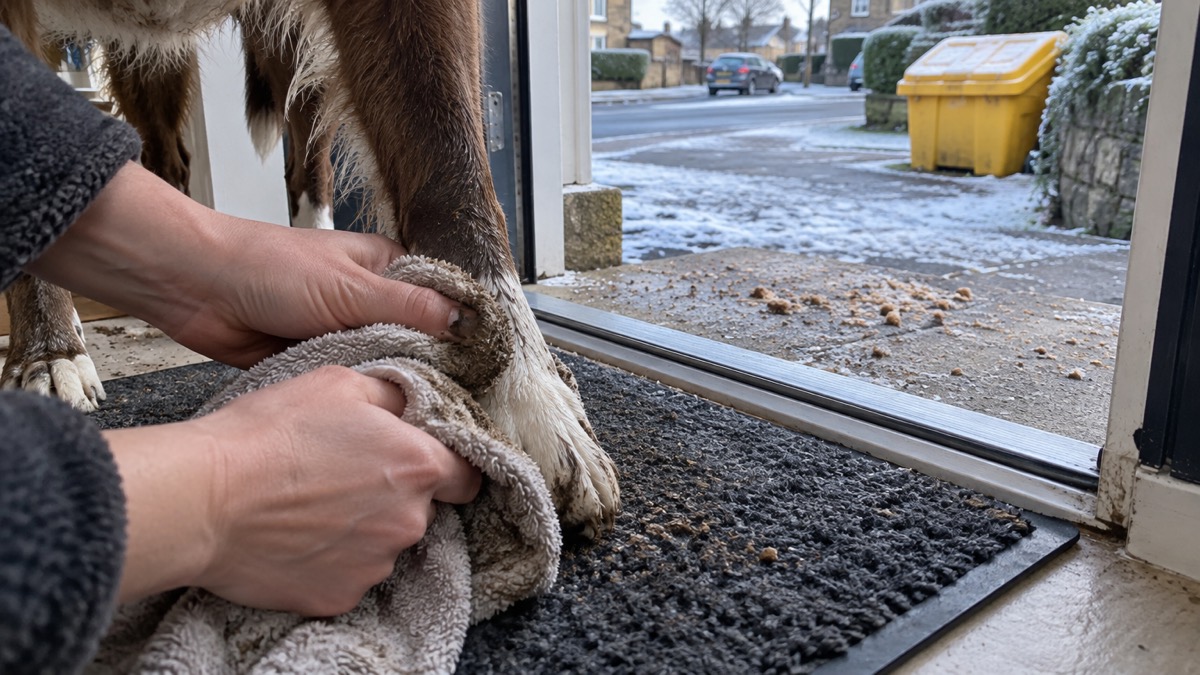
The routine is short enough to do at the door every time. The Met Office advises packing a towel to remove salt and grit from your dog's paws when you are out and about1. The RSPCA's winter dog advice is to dry the dog off after a walk and thoroughly wipe down their paws and tummy to remove grit, antifreeze and rock salt, which are poisonous to dogs3.
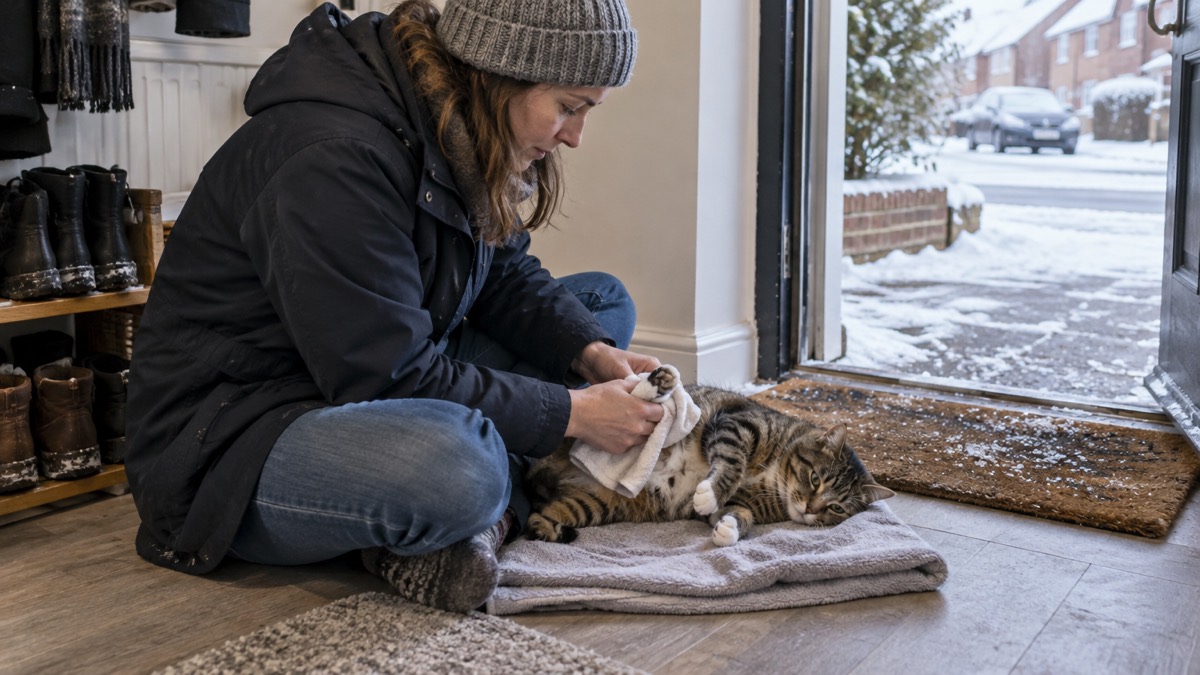
For a dog that seems sore or irritated, the RSPCA suggests wiping paws, legs, tummy and fur thoroughly after being outside, and washing affected areas with a mild, pet-safe shampoo and warm water if there are signs of discomfort2. For cats, the advice is to wash the affected areas with a mild, pet-safe shampoo and warm water and dry completely with a towel if rock salt could be on their feet or fur7. The Cats Protection guidance is to wipe down the cat's paws and tummy after a trip outside to remove any antifreeze and rock salt, which is poisonous to cats8.
A workable order for the doorstep:
- Take a towel out with you so salt and grit come off before your dog has a chance to lick1.
- On the way home, wipe paws and lower legs while you are still outside.
- At the door, wipe paws, legs, tummy and fur thoroughly2.
- If the skin looks sore or the pet is licking at it, wash with a mild, pet-safe shampoo and warm water, then dry completely4.
- Empty the bowl of water you used and wash your hands.
Gritting your own drive when you have pets
If you clear your own path or drive, you control what goes on it, and that is the safest position to be in. The government's snow clearing guidance says to pay extra attention when clearing steps and steep pathways, and that using more salt may help12. The Snow Code makes the same point: clear snow and ice from steps and steep pathways, and you might need more salt on these areas13.
Two cautions apply when pets share the space. First, be careful not to spread salt on plants or grass, as it may damage them14. Second, keep the treated area to the path and away from the lawn your pet uses.
Do not take grit from council bins for your own drive. Derbyshire County Council states that grit from council bins is not for use on private property such as driveways, and that if you are caught taking grit or salt for use on private property you may be prosecuted15. Buy your own supply and store it somewhere dry and out of reach.
If there is a chemical incident in your area, official advice is to bring pets indoors16. In cold weather generally, keep an eye on local warnings and travel advice, and look out for gritters spreading salt or using snow ploughs if you are driving, overtaking only where it is safe17.
When to call a vet straight away
If you suspect your pet has been poisoned, contact a vet immediately and never watch and wait5. That is the whole rule.
The RSPCA's advice for a suspected poisoning is specific and worth knowing before you need it: remove your pet from the source of the poison or toxin, collect what they have ingested and take a sample to the vet, do not make them vomit, and do not give salt water2. If you are unsure whether your pet has swallowed something, ring the vet and describe what happened.
If a person is bitten while separating animals or handling a frightened pet, clean the wound and seek medical advice, contact NHS 111 if concerned, and seek urgent medical attention for severe wounds, heavy bleeding, signs of infection, or bites to the face, hands, feet or head18.
For out-of-hours cover and what to expect when your own vet is closed, our page on emergency vets and the 24-hour rule explains how the system works. If your pet needs moving and is injured, see how to move an injured dog or cat to the vet.
Winter walks: ice, water and other hazards on the same trip
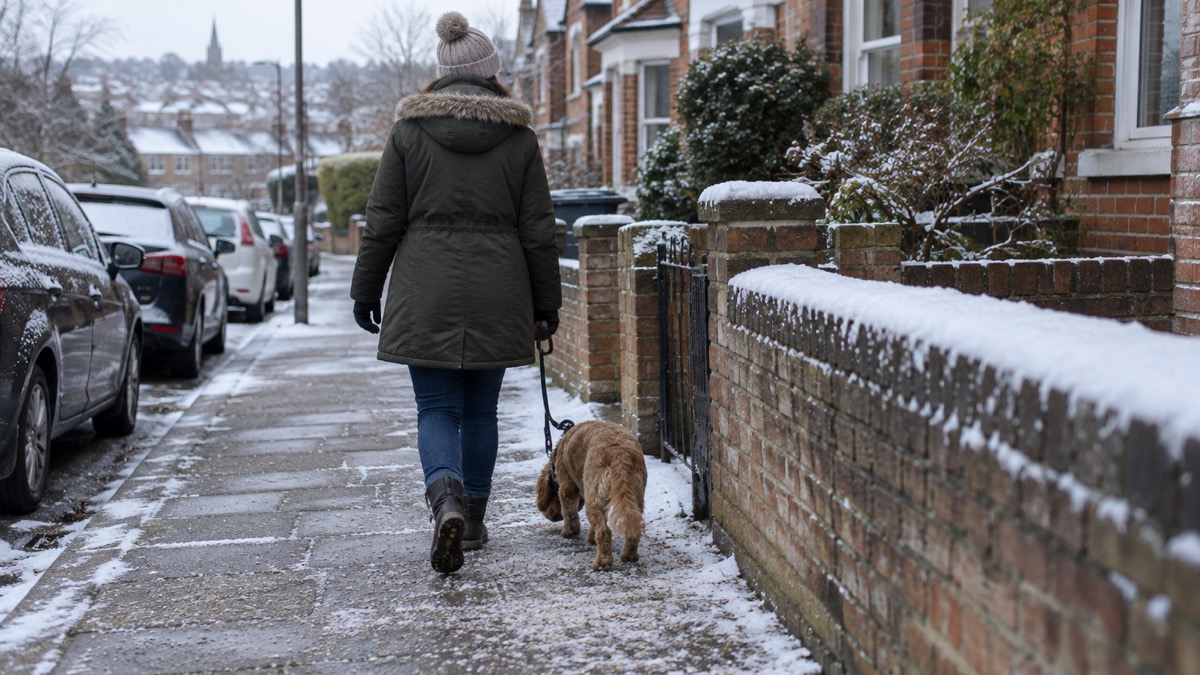
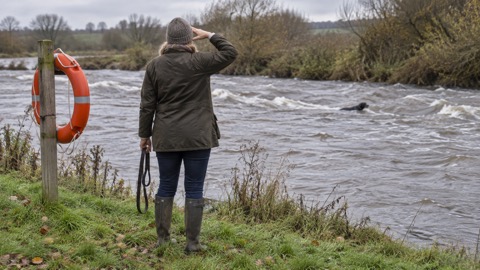
Grit is one hazard among several on a cold walk, and the same trip that picks up salt can end in water. Over 50% of ice related drownings involve the attempted rescue of a dog19. The fire and rescue services are blunt about what to do: if your dog cannot get out of the water, do not enter the water yourself as you could be putting yourself in danger, and call 999 and ask for the Fire and Rescue Service inland or the Coastguard at the sea, as the emergency services are trained and ready to rescue your dog20. If your dog can't get out and is in danger, never go into the water as you are likely to end up in danger too; call 999 and ask for help21.
Keeping a dog on a lead near water is the simplest prevention22. Near flood water, dog walkers are advised to keep dogs on leads close to the water, because dogs running free risk struggling to slow themselves on slippery banks and paths and ending up in deep or fast-flowing water23. Dogs Trust also advises staying out of water that may contain raw sewage, toxins and other hazards that could injure your dog24.
There are other winter risks worth a glance. Blue-green algae is a summer hazard but a serious one: dogs have died after going into the water at the shores of affected lochs, and affected animals can deteriorate very quickly after very little contact25. In hot weather the same principle of watching your dog applies, and the RSPCA advises contacting a vet immediately if you spot the signs of heatstroke11.
For the wider picture on cold, ice and snow, see pets in cold weather, snow and ice and walking a dog safely in snow and darkness. If your dog does go through ice, dogs and frozen ponds sets out what to do.
Sources (25)
- WeatherReady weather hacks, Met Office, 2026-10-26
- Christmas pet safety, RSPCA, 2026-10-29
- Dogs in winter, RSPCA, 2026-10-29
- Cats and cold weather, Cats Protection, 2026-10-29
- Pets in winter, RSPCA, 2026-10-29
- Does gritting always work?, Derbyshire County Council, 2026-10-29
- Antifreeze Poisoning in Cats - Symptoms & Prevention - RSPCA - rspca.org.uk, RSPCA
- Cats in winter, RSPCA, 2026-10-29
- Winter gritting service, Carmarthenshire County Council, 2026-08-04
- Poisons and hazards for your pets, PDSA, 2026-10-29
- Dogs in summer, RSPCA, 2026-10-29
- Clearing snow, road, path or cycleway, GOV.UK, 2026-10-29
- Snow Code, Derbyshire County Council, 2026-10-29
- Clearing your path or driveway - the snow code - Met Office, Met Office
- Grit salt bins, Derbyshire County Council, 2026-10-29
- Chemical accidents, Fareham Borough Council, 2026-10-29
- Cold weather advice, West Midlands Ambulance Service, 2026-05-20
- Child safety, Berkshire Healthcare NHS Foundation Trust, 2026-10-29
- Frozen water dangers, Devon and Somerset Fire and Rescue Service, 2024-01-18
- Water safety, Devon and Somerset Fire and Rescue Service, 2025-08-20
- Be water aware, Devon and Somerset Fire and Rescue Service, 2026-07-24
- Winter water safety, London Fire Brigade, 2026-10-25
- Communities affected by flooding, Derbyshire County Council, 2026-10-29
- Stormy weather advice for dogs, Dogs Trust, 2026
- Blue-green algae, Argyll and Bute Council, 2026
 Pet Emergency Documents
 Storing Pet Food and Water
 Carer's Emergency Plan
 Pet Birds in Cold Weather
 Birds and Chickens in Heat
 Breaking a Car Window for a Dog
 Keeping a Cat Cool in a Heatwave
 Chocolate Poisoning in Dogs
 Christmas Hazards for Pets
 Dog Left Alone on a Hot Day
 Dog in a Hot Car
 Hypothermia in Dogs and Cats
 Dogs in Water or Coast Trouble
 Fireworks and Small Pets
 Fish in a Power Cut