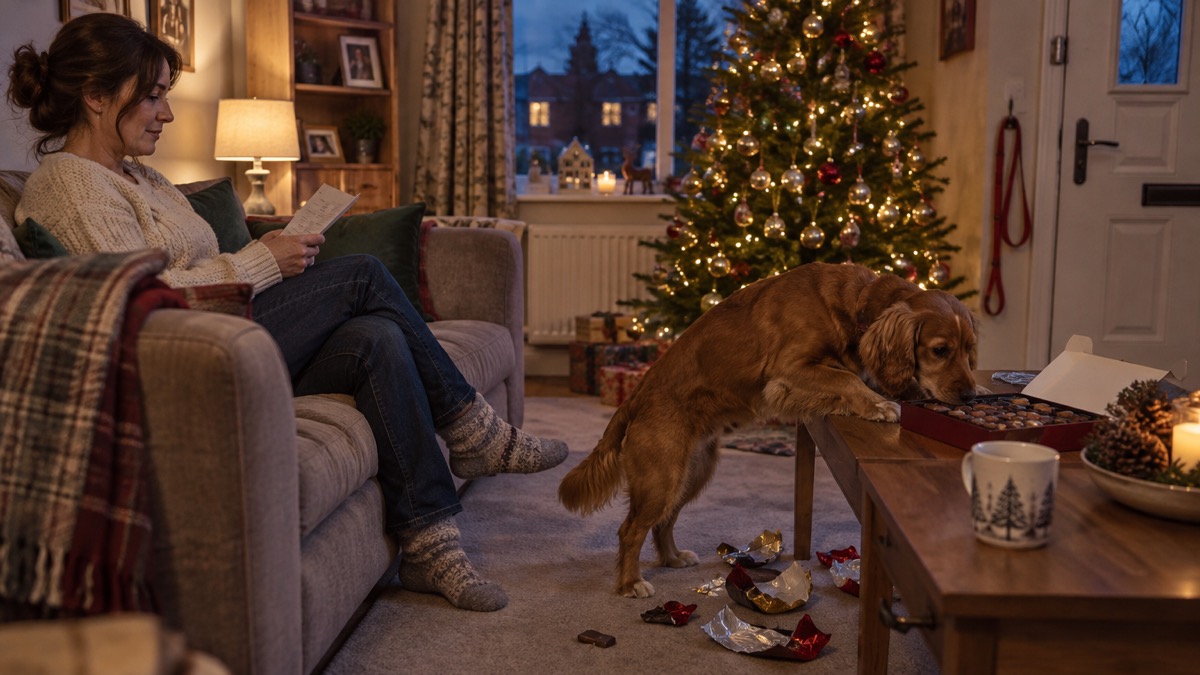
Chocolate is the most commonly reported type of dog poisoning reported to the VPIS, and Christmas is when most of it is in the house1. It contains theobromine, a chemical that is toxic to cats, dogs and other pets, and the RSPCA's advice is simple: never give chocolate to your pet2. Dark chocolate and cocoa are the most dangerous because they contain more theobromine than milk chocolate, while white chocolate carries a much smaller risk2.
Chocolate is not the only festive hazard. Alcohol is toxic to pets and turns up in drinks and in household products such as mouthwash, perfume, aftershave, cologne and glue4. Grapes, raisins, sultanas and currants contain toxins that are potentially fatal to dogs, and in severe cases can cause kidney failure4. Xylitol, a sugar substitute found in sugar-free chewing gum, sweets and some nut butters, is extremely harmful to dogs and can be fatal if eaten4.
The practical answer is to treat the Christmas house as a series of small risks to be closed off: chocolates and cakes out of reach, glasses cleared away, bins lidded, and pets kept away from the tree, the presents and the party food. Most of what follows is about knowing which items matter, what a poisoned pet looks like, and what to do if the worst happens.
Chocolate is the most common cause of dog poisoning
Chocolate poisoning is the most commonly reported type of dog poisoning reported to the VPIS, the Veterinary Poisons Information Service1. That single fact explains why so much festive advice centres on it: chocolate is everywhere in December, in advent calendars, selection boxes, tree decorations, cakes and gifts, and dogs are good at finding it.
The risk is not limited to dogs. Chocolate contains theobromine, a chemical that can be fatal to dogs, cats and rabbits, and the darker the chocolate the higher the risk4. The RSPCA's guidance is to keep pets away from any foods containing chocolate, such as cakes, sweets, cookies and cocoa powder4. For rodents, the same chemical is described as a powerful stimulant similar to caffeine, which is poisonous to them, and dark chocolate and cocoa contain high levels of it3.
Two other festive foods deserve the same care. Grapes, raisins, sultanas and currants contain toxins that are potentially fatal to dogs, and in severe cases toxicity can cause kidney failure, so call your vet if you suspect your dog has eaten them4. Xylitol is a sugar substitute that is extremely harmful to dogs and can be fatal if eaten; it is found in sugar-free chewing gum, sweets, medications, some nut butters and nicotine replacement chewing gums, and may be listed on a label as "birch sugar"4. The RSPCA's instruction is blunt: never feed your pets any foods that contain xylitol2.
Why dark chocolate and cocoa are the most dangerous
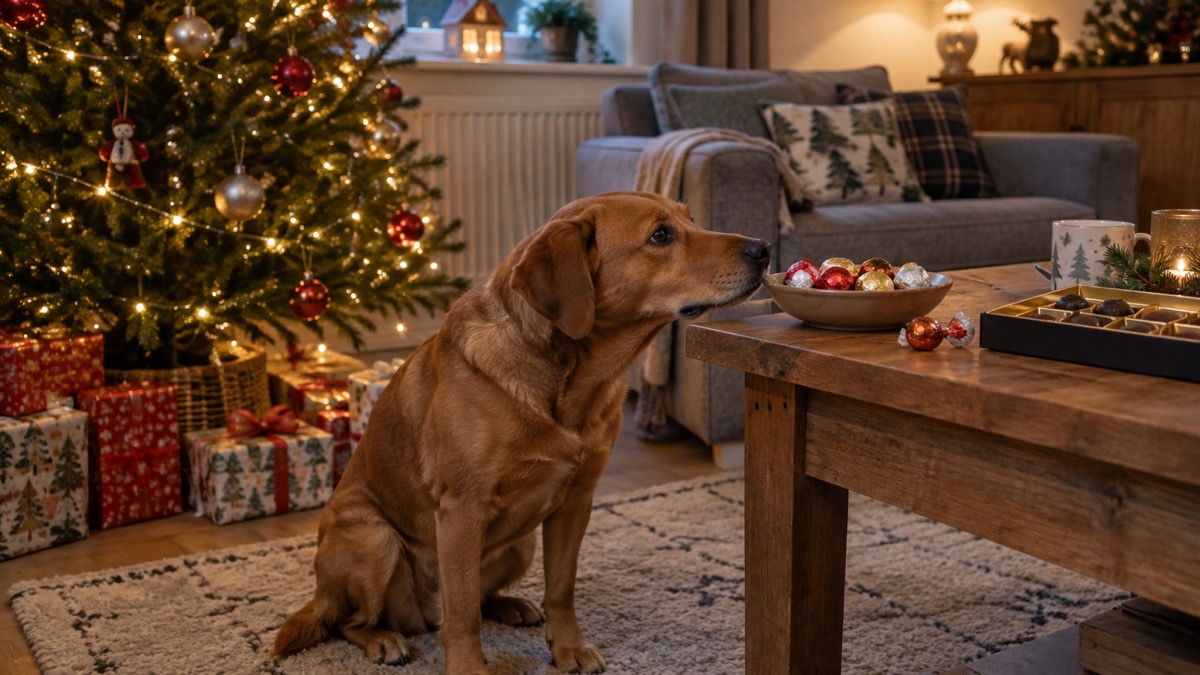
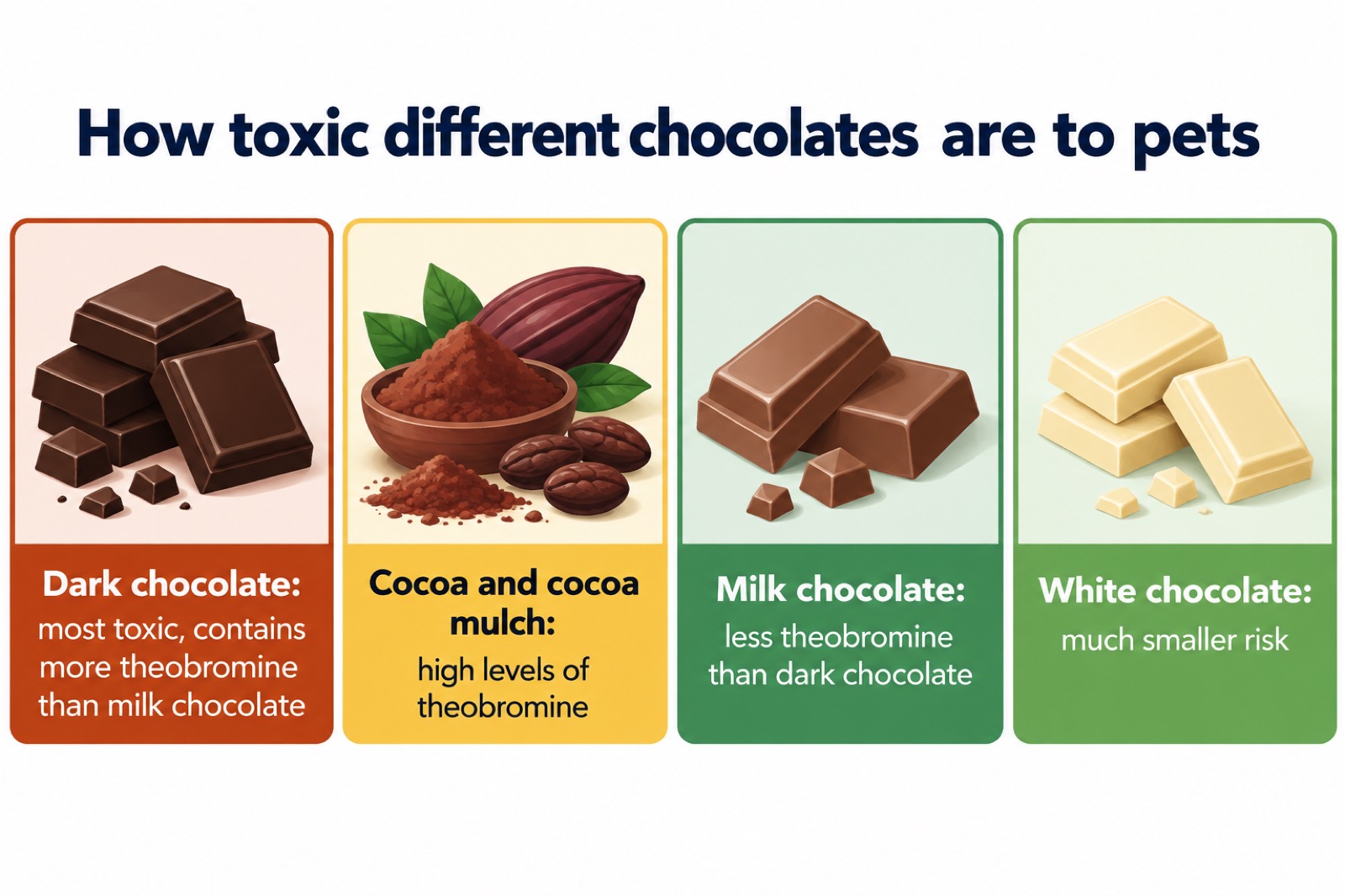
Not all chocolate carries the same risk. Dark chocolate is the most toxic, as it contains more theobromine than milk chocolate, and white chocolate has a much smaller risk2. Cocoa powder and cocoa mulch sit at the top of the scale: the RSPCA lists dark chocolate, cocoa mulch and cocoa as containing high levels of theobromine1.
That matters in two places at Christmas. In the kitchen, cocoa powder used for baking and hot drinks is a concentrated source, and the RSPCA advises keeping pets away from any foods containing cocoa powder4. In the garden, cocoa mulch used on borders is the same hazard in a form a dog may sniff and eat. If you use it, keep pets away from newly mulched beds.
The other common source is medication. Tablets, capsules, liquid medication and medicinal hot drink cold and flu remedies contain dangerous substances for pets, including vitamins, painkillers, antihistamines and caffeine2. A pet that chews a blister pack or laps a mug of cold remedy is taking in more than the active ingredient.
Signs of chocolate poisoning: vomiting, a racing heart and seizures
The signs of chocolate poisoning reflect the stimulant in it. The RSPCA lists vomiting, diarrhoea, dehydration, hyperactivity, high temperature and blood pressure, abnormal heart rhythm and tremors1. In rabbits, chocolate contains theobromine and caffeine and can cause vomiting, diarrhoea, increased heart rate, restlessness, tremors, seizures and lethargy if ingested6.
If you see any of these after a pet has had access to chocolate, treats or the bin, treat it as urgent and contact your vet. The same principle applies to other festive poisons. Rat and mouse poisons can cause bleeding, as many of the poisons prevent clotting, along with coughing, vomiting and seizures4. Blue cheese contains a substance called Roquefortine C that is toxic for pets, with symptoms including tremors and seizures that can last days2. Onions, garlic, leeks and chives can cause anaemia in severe cases of poisoning in dogs and cats4.
For more on the specific signs and what to do, see chocolate poisoning in dogs and rat poison and pets.
Alcohol is toxic to pets, in drinks and household products
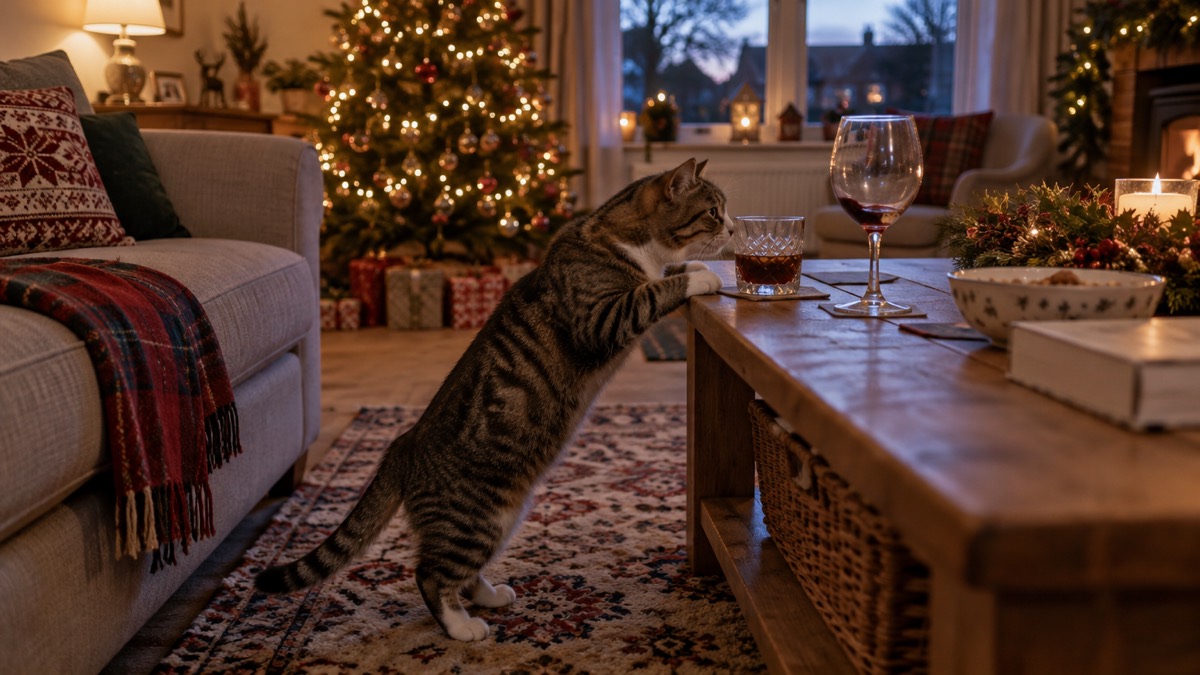
Alcohol is toxic to pets and can be found in some household products, including mouthwash, perfume, aftershave, cologne and glue4. At Christmas the drinks themselves are the obvious risk: a half-finished glass on the floor, a punch bowl within reach of a curious dog, or a spilled drink under the table.
The RSPCA's advice for the party is to keep pets away from Christmas cakes, mince pies, unsalted nuts, savoury snacks and grated cheese left out for wildlife7. The same care applies to the drinks: clear glasses away as you go rather than at the end of the night, and keep bottles closed and out of reach.
There is a second reason to clear up promptly. Small amounts of alcohol can be harmful to children, so clear up any glasses5. The same instruction protects both the toddler and the dog.
Symptoms of alcohol poisoning in dogs and cats
The signs of alcohol poisoning in pets can look like drunkenness. In cats, antifreeze poisoning produces signs that include seeming depressed or sleepy, appearing drunk and uncoordinated, seizures (fits) and difficulty breathing2. In dogs, the signs include seeming depressed or sleepy, appearing drunk and uncoordinated, seizures, difficulty breathing, excessive thirst and urination, a complete lack of urination 12 to 24 hours after ingestion, vomiting and diarrhoea, loss of appetite, coma and kidney failure9.
Antifreeze is a particular danger in winter, and poisoning in cats and dogs can cause kidney failure, which can be fatal; it is also sometimes found in snow globes2. Very little antifreeze can be toxic to dogs, and death can follow sometimes within 24 to 72 hours10. If you suspect your pet has swallowed antifreeze, contact your vet immediately.
Clearing up glasses and food after a party
The clean-up is where most of these risks are closed off. Clear glasses, plates and bowls as the evening goes on, not the morning after. Put chocolates, cakes and nuts into sealed containers and into a cupboard a pet cannot open. Take the bin out, or at least put a lid on it, before you go to bed.
If a pet does get into something, the same hygiene rules that protect people apply to the clean-up. NHS Inform advises disinfecting any surfaces or objects that could be contaminated, using a bleach-based household cleaner, and washing contaminated clothing or bedding separately on a hot wash11. Flush away poo or vomit and clean the surrounding area11.
Outdoors, the winter hazards continue. Grit or rock salt can be extremely toxic to dogs and cats if ingested12. The RSPCA advises thoroughly wiping your pet's paws, legs, tummy and fur after being outside, and washing affected areas with mild pet-safe shampoo and warm water if there are signs of discomfort7. For cats, thoroughly wipe down their paws and tummy to remove any antifreeze and rock salt, which is poisonous to cats13. For dogs, dry the dog off after a walk and thoroughly wipe down their paws and tummy to remove grit, antifreeze and rock salt, which are poisonous to dogs9.
Decorations, plants and the Christmas tree
The tree itself is a low-level hazard rather than a severe one. Christmas trees are of low toxicity, but their pines and oils can cause mouth pain, excess salivation, vomiting or diarrhoea2. Needles can embed in paws, and the water in the stand can become contaminated7.
Some plants are more serious. The RSPCA lists plants that can cause much more serious symptoms in pets, including Autumn Crocus, Azalea and Rhododendron, Cotoneaster, Cordyline and Dracaena, Daffodil, Dumbcane, Horse Chestnut, Oak, Potato plants, Yew, Mushrooms and Fungi, and Giant Hogweed4. Daffodils, especially the bulbs, are toxic to dogs14. For more, see garden and house plants that are poisonous to dogs and cats.
Small furries need their own care. Don't put tinsel around cages, and keep fairy lights and electrical cables out of reach to prevent small pets from nibbling objects2. Batteries contain strong acids, and if a pet eats a battery it could cause burns to their mouth, throat and stomach, as well as difficulties breathing and swallowing4.
| Decoration or plant | Risk to pets | What to do |
|---|---|---|
| Christmas tree | Low toxicity, but pines and oils can cause mouth pain, salivation, vomiting or diarrhoea2 | Keep pets away from needles and tree water |
| Daffodils, especially bulbs | Toxic to dogs14 | Keep bulbs and cut flowers out of reach |
| Tinsel and fairy lights | Small furries may nibble them2 | Keep out of reach of cages |
| Batteries | Strong acids can cause burns4 | Store spare batteries securely |
| Cocoa mulch | High levels of theobromine1 | Keep pets off mulched beds |
Christmas cards, reindeer food and glitter
Shop-bought reindeer food is a festive tradition with a hidden risk: many shop or website versions contain ingredients that can be dangerous for animals, particularly edible glitter7. If children make reindeer food at home, keep it to bird-friendly ingredients and scatter it where pets cannot reach it.
The RSPCA removed glitter and foil from its FSC certified Christmas cards in 2019 to make them more environmentally friendly7. That is a useful prompt for households with pets: cards, wrapping paper and decorations that shed glitter or foil are best kept off the floor.
Where to get help
If you think your pet has eaten something poisonous, contact your vet immediately, including out of hours. For guidance on finding a vet when your own practice is closed, see emergency vets: out-of-hours care.
For the wider picture on keeping pets safe through winter, see pets in cold weather, snow and ice and antifreeze poisoning in cats and dogs. If you are planning for a power cut or a storm over the holidays, including your pets in a household emergency plan sets out what to prepare.
Sources (14)
- Common dog poisons, RSPCA, 2026-10-29
- Christmas pet safety, RSPCA, 2026-10-29
- Poisoning in rodents, RSPCA, 2026-10-29
- Poisons and hazards for your pets, PDSA, 2026-10-29
- Safety for medicines and poisons, NHS West Yorkshire Healthier Together, 2026-10-29
- Rabbits in winter, RSPCA, 2026-10-29
- Christmas dangers for pets - RSPCA - rspca.org.uk, RSPCA
- Christmas safety, North Wales Fire and Rescue Service, 2026-10-29
- Dogs in winter, RSPCA, 2026-10-29
- Antifreeze poisoning in dogs, Scottish SPCA, 2025-11-17
- Food poisoning, NHS Inform, 2026-08-17
- WeatherReady weather hacks, Met Office, 2026-10-26
- Cats in winter, RSPCA, 2026-10-29
- Toxic items for dogs, Dogs Trust, 2026
 Pet Emergency Documents
 Storing Pet Food and Water
 Carer's Emergency Plan
 Pet Birds in Cold Weather
 Birds and Chickens in Heat
 Breaking a Car Window for a Dog
 Keeping a Cat Cool in a Heatwave
 Chocolate Poisoning in Dogs
 Dog Left Alone on a Hot Day
 Dog in a Hot Car
 Hypothermia in Dogs and Cats
 Dogs in Water or Coast Trouble
 Fireworks and Small Pets
 Fish in a Power Cut
 Flystrike in Rabbits