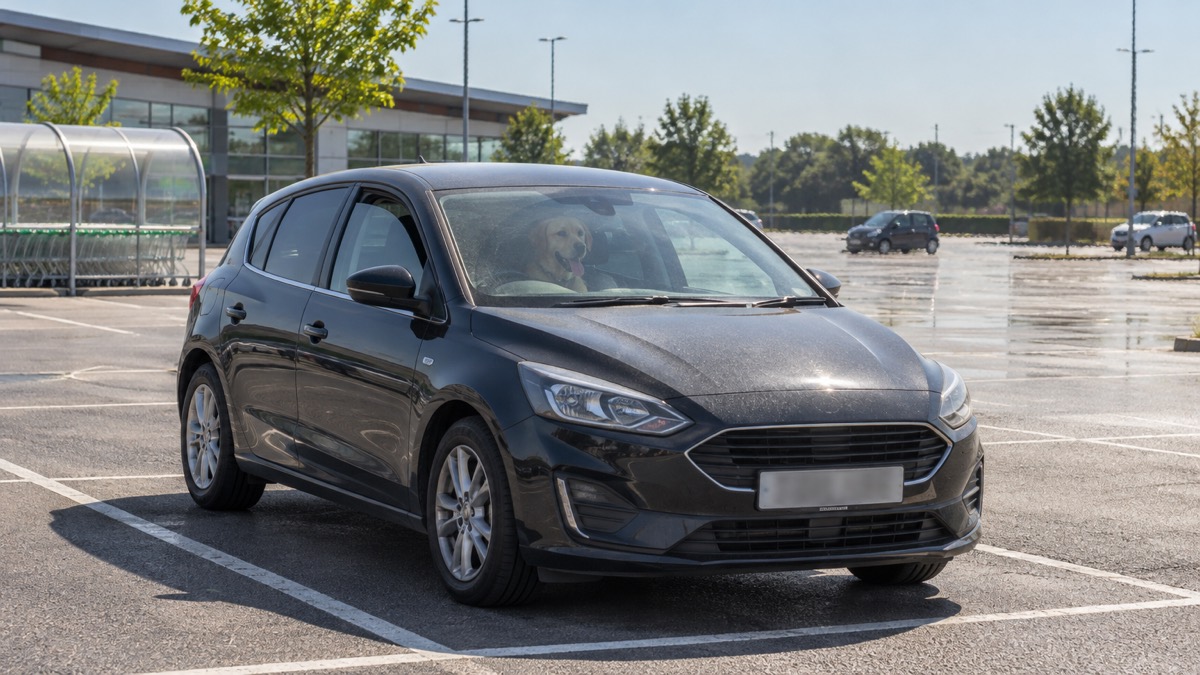
If you see a dog in a hot car, the first thing to do is look at the dog. A dog showing any signs of heatstroke means dialling 999 at once and asking for the police1. If the dog seems okay, try to find the owner, ask staff at a shop, supermarket or event to make an announcement, and stay with the dog to keep watching its condition3.
The reason for acting quickly is that a car heats up far faster than most people expect. When it is 22°C outside, the temperature inside a car can reach 47°C within an hour, even when the car is parked in the shade with the windows open4. Dogs can overheat in minutes3. A dog's internal body temperature above 41°C can be fatal4.
You do not need to be a dog owner to help. What matters is checking the dog, calling the right number, finding the owner if you can, and recording what you see. This page sets out each step, what the law says about breaking into a car, and why leaving a dog in a car can lead to prosecution.
What to do first if you see a dog in a hot car
Start by assessing the dog's condition. If it is showing any signs of heatstroke, dial 999 at once6. Stay with the dog to monitor its condition until help arrives7.
Signs of heatstroke in a dog include heavy panting, drooling, lethargy, confusion and collapse. Contact a vet immediately if you have any concerns about your pet's health8. The Scottish SPCA says a dog showing any signs of heatstroke needs to be seen by a vet urgently and should be cooled down as quickly as possible before moving them3.
If the dog is in distress but you are not sure whether it has heatstroke, treat it as an emergency. Woodgreen advises calling 999 if the dog is showing signs of distress or heatstroke, and waiting for the police, who are best placed to know what to do9. Blue Cross says to call 999 immediately if you see a dog in a hot car showing signs of distress10.
If the dog shows no signs of heatstroke: find the owner
If the dog appears okay, your job is to find the owner quickly and keep the dog under observation. Look out for the owner of the vehicle. If you are at a shop, supermarket or event, ask the staff to make an announcement to let the owner know about their dog's condition4. The Scottish SPCA advises asking for a broadcast to be put out asking the owner to return to their car3.
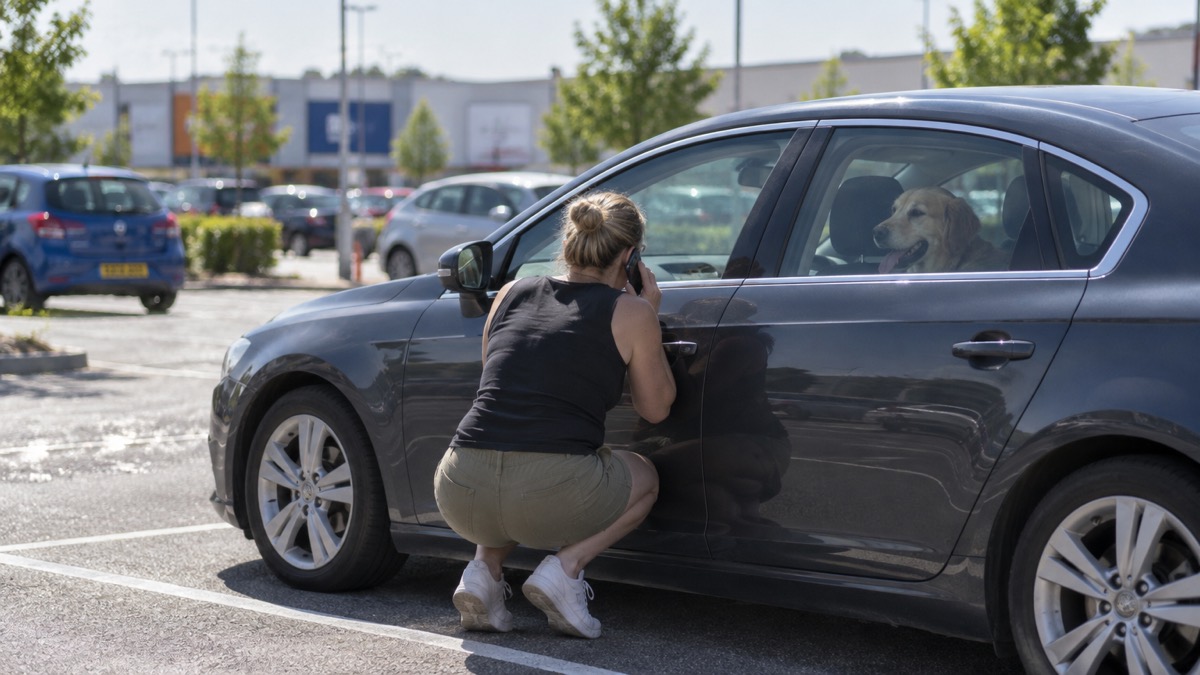
Stay with the dog to monitor its condition, even if it is not showing signs of distress3. Heatstroke can develop quickly, and a dog that seems fine when you arrive may deteriorate. The PDSA says dogs in hot cars can overheat in minutes3.
If the owner returns, and you still feel they would put the dog in danger, you can tell the police. Make a note of the car's registration so you can pass it on6.
If the owner does not return and the dog starts to show signs of heatstroke, move to the emergency step: dial 999 and ask for the police1. Once the dog is free, start first aid for heatstroke and contact the nearest vet1. Let the vet know you are on your way with a suspected heatstroke case so they can prepare for your arrival11.
Record what you see: photos, videos and witnesses
Recording what you find helps the police and any prosecution, and it protects you if your actions are questioned later. The Scottish SPCA advises taking the names and telephone numbers of any witnesses, and taking photos and videos of the dog and the car3.
If you are sure you need to free the dog, tell the police what you intend to do and why. Take photos or videos of the dog, and take the names and telephone numbers of any other witnesses2.
Work out how long the dog has been in the car. A pay and display ticket can help. Make a note of the car's registration so you can tell the police if the owner returns but you still feel they would put the dog in danger6.
| What to record | Why it helps |
|---|---|
| Names and phone numbers of witnesses | Corroborates what you saw3 |
| Photos and videos of the dog and car | Shows the dog's condition and the car's position3 |
| Car registration | Lets the police trace the owner6 |
| How long the dog has been there | A pay and display ticket can help establish this6 |
If the dog is in a car at an event, ask event staff to make an announcement, as you would at a shop4. The same recording steps apply.
Why a hot car can kill a dog, and when it leads to prosecution
A car can become as hot as an oven even when the weather does not feel warm. When it is 22°C outside, the car could reach an unbearable 47°C within an hour6. The PDSA gives the same figure: within an hour the temperature in a car can reach an unbearable and deadly 47°C, even parked in the shade with the windows open4. Woodgreen also states that when it is 22°C outside, a car can reach an unbearable 47°C within an hour9.
For a dog, the danger is internal. If a dog's internal body temperature exceeds 41°C, it can be fatal4. Dogs in hot cars can overheat in minutes3. Every summer, dogs die in hot cars9.
The Met Office warns that even on cool days, strong sunshine can make car interiors very hot, and says never leave children or animals in parked cars12. The UK government's hot weather advice says small closed spaces such as stationary cars can get dangerously hot very quickly, and that babies, children, older people and pets should not be left alone in them13. Westminster City Council warns that cars can become dangerously hot in minutes, and this is not just a risk in the summer14. The Northern Ireland government advises never leaving animals inside a car on a hot day15.
Leaving an animal in a hot car can have fatal consequences and lead to prosecution11. Breaking into a car to free a dog could be classed as criminal damage, and you may need to defend your actions in court. Legally you can commit damage if you believe the car owner would consent to it if they knew the dog was in danger6. The Criminal Damage Act 1971 provides a lawful excuse to commit damage if you believe the owner of the property would consent to the damage if they knew the circumstances, under section 5(2)(a)2.
"Never leave your dog in a car on a warm day: Not even for a few minutes, with the windows open, or in the shade."
The same applies in cold weather. The PDSA warns that on a cold day the inside of your car is likely to be the same temperature as outside, and the temperature drops very quickly once the heating is switched off, so do not leave your dog in your car in the colder months17. The RSPCA says never leave a dog alone in the car, even if the heating is on, as they could develop hypothermia or overheat18.
Where to get help and what happens next
If the dog is showing signs of heatstroke, dial 999 and ask for the police1. In Scotland, call 999 and/or the Scottish SPCA on 0300 099 99995. The Scottish SPCA says leaving an animal in a hot car can have fatal consequences and lead to prosecution11.
If you are waiting for an ambulance for a person and have a dog with you, the NHS advises putting pets somewhere safe19. If you are on a motorway or a road and have animals with you, National Highways says animals must be kept in the vehicle or, in an emergency, under control on the verge20. If your car is on fire, put your hazard lights on21.
For more on keeping dogs cool, see Keeping Dogs, Cats and Small Animals Cool in Hot Weather and Dogs in Hot Cars: How Fast a Car Heats Up. If you are thinking about breaking a window, read Can I Break Into a Car to Save a Dog? first. For out-of-hours vet care, see Emergency Vets: Out-of-Hours Care and the 24-Hour Rule. To prepare your own household, see Including Your Pets in a Household Emergency Plan.
Sources (21)
- Dogs die in hot cars and on hot walks, PDSA, 2026-10-29
- Dogs in hot cars, RSPCA, 2026-10-29
- Dogs die in hot cars, Scottish SPCA, 2026-03-19
- Safe car travel for pets, PDSA, 2026-10-29
- Hot weather, Dogs Trust, 2026
- Dogs in hot cars infographic, RSPCA, 2026-10-29
- Heatstroke in dogs, RSPCA, 2026-10-29
- Summer, RSPCA, 2026-10-29
- Your dog could die in a hot car, Woodgreen, 2023-11-29
- How to keep dogs cool in the summer heat, Blue Cross, 2023-06-12
- Dog care in summer, Scottish SPCA, 2026-06-22
- Hot weather and its impacts, Met Office, 2026-10-29
- Beat the heat: staying safe in hot weather, GOV.UK, 2026-07-21
- Pet welfare emergency, Westminster City Council, 2025-09-24
- Hot weather advice, nidirect, 2026-10-05
- Heatstroke in dogs, PDSA, 2023-09
- Hypothermia in pets, PDSA, 2021-12
- Winter pets, RSPCA, 2026-10-29
- Using 999, East of England Ambulance Service, 2026-10-28
- Driving on motorways, National Highways, 2026-10-29
- Car and vehicle fires, Devon and Somerset Fire and Rescue Service, 2026
 Pet Emergency Documents
 Storing Pet Food and Water
 Carer's Emergency Plan
 Pet Birds in Cold Weather
 Birds and Chickens in Heat
 Breaking a Car Window for a Dog
 Keeping a Cat Cool in a Heatwave
 Chocolate Poisoning in Dogs
 Christmas Hazards for Pets
 Dog Left Alone on a Hot Day
 Hypothermia in Dogs and Cats
 Dogs in Water or Coast Trouble
 Fireworks and Small Pets
 Fish in a Power Cut
 Flystrike in Rabbits