Emergency Lighting at Home: Torches, Lanterns and Candles
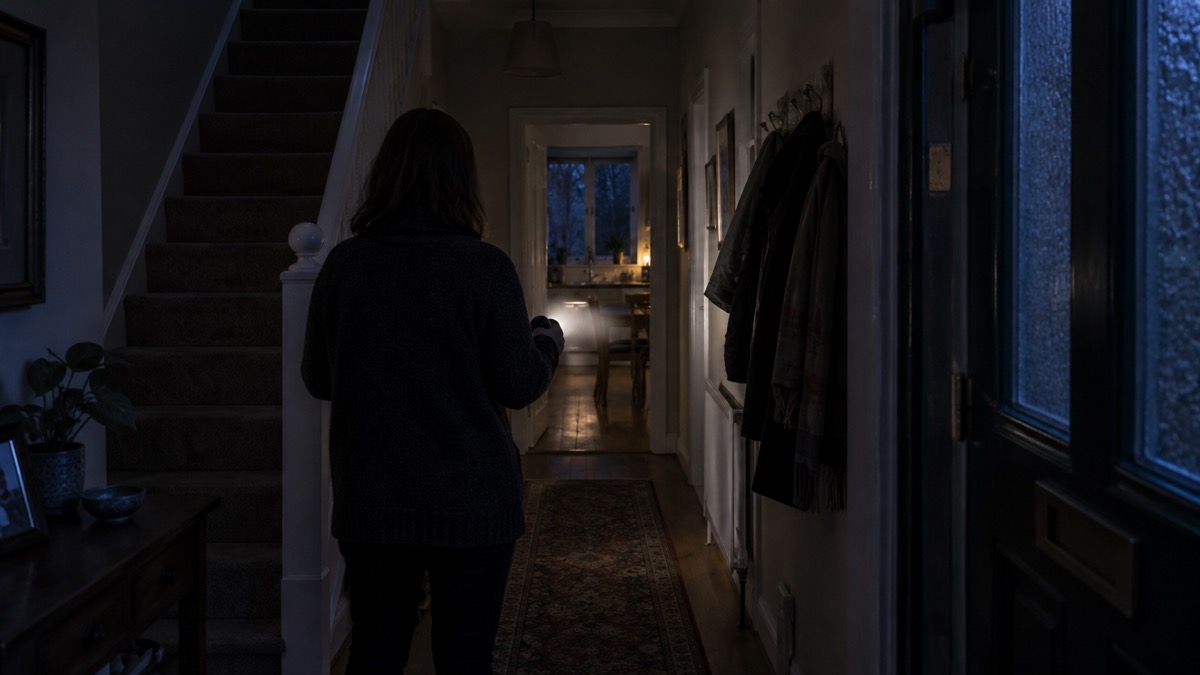
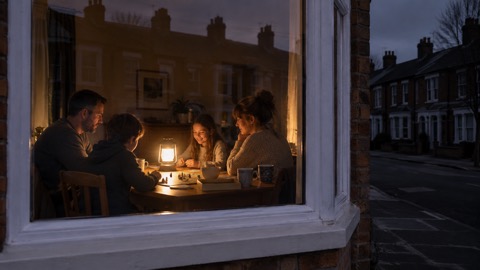
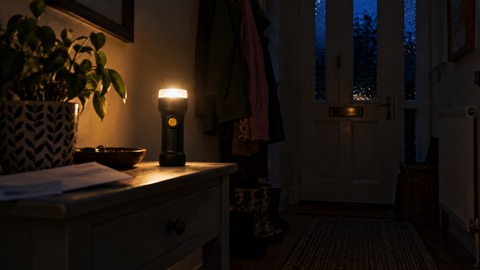
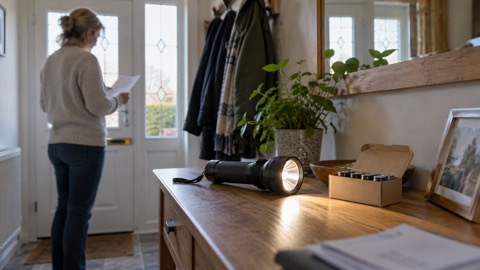
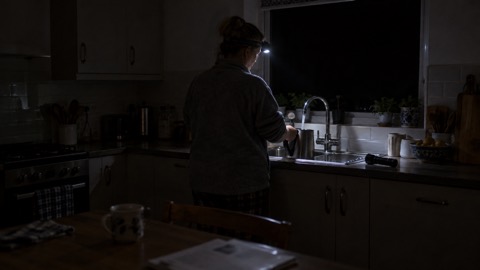
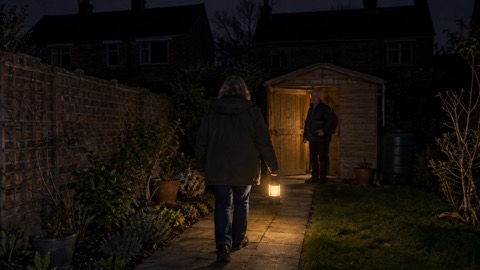
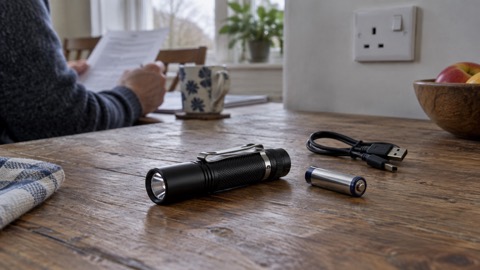
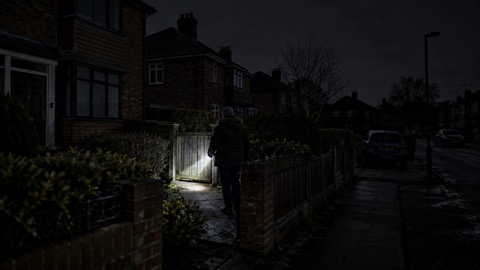
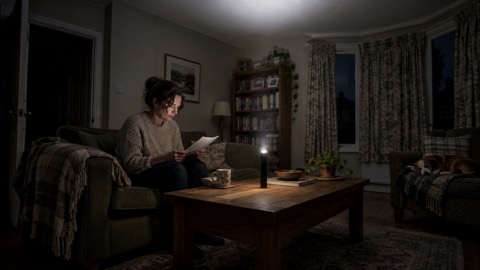
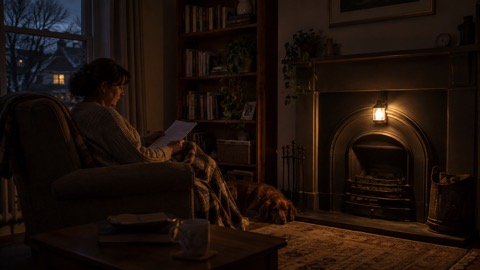
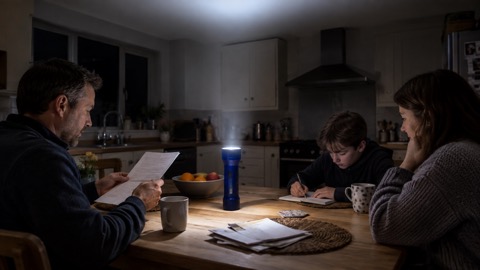
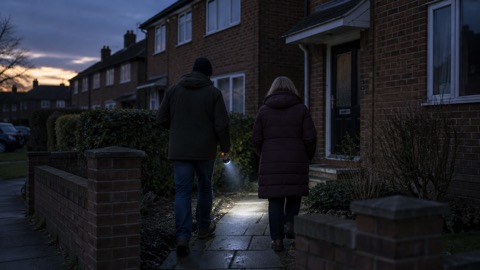
Use battery-operated lights or torches when a power cut leaves your home dark. Keep torches and spare batteries where everyone can find them, and use a head torch or chargeable lamp when you need both hands free. Fire and rescue services advise choosing these instead of candles wherever possible.1
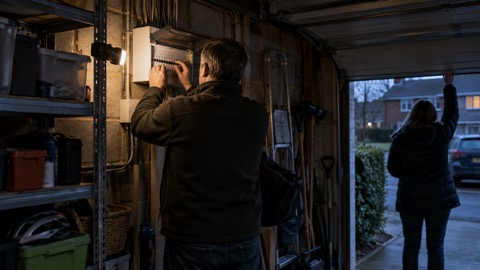
When the electricity goes off, switch off appliances that should not be left unattended and leave one light on so you know when the supply returns. Dial 105 for the electricity power cut service in Great Britain. In Northern Ireland, contact NIE Networks for electricity faults, hazards, supply issues or power cuts. Check on neighbours, particularly anyone who may struggle to move around safely in the dark.3
When the lights go out
Start with the light you can reach without crossing an unlit room. Then make the rest of the house safe before worrying about everything that has stopped working. The immediate steps are:
- Use a torch or battery-operated light. Scottish Fire and Rescue Service recommends these as alternative light sources during a power cut.1
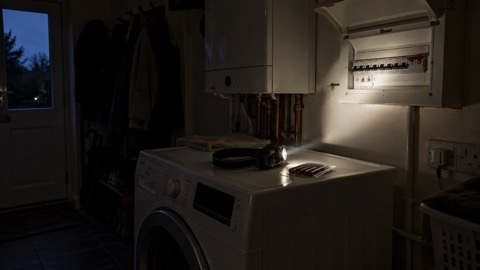
- Switch off electrical appliances that should not be left unattended. This is part of the Met Office's advice for a power cut.3
- Leave one light on so that you know when the electricity has been restored.3
- Report or check the power cut. Dial 105 in Great Britain; in Northern Ireland, NIE Networks handles electricity faults, hazards, supply issues and power cuts.4
- Check on neighbours. Pay particular attention to anyone who may need help finding a light or moving safely.3
The full sequence, including the other household checks, is in Lighting Your Home Safely When the Power Goes Off and the wider Power Cuts: A Household Guide. For a list you can work through, use the Torches, Lanterns and Candles: Power Cut Checklist.
Do not reach automatically for candles. Devon and Somerset Fire and Rescue Service puts the choice plainly:
"If you need to light your home when you're without power, if you can, please choose torches or battery-powered lights rather than candles."
Torches, lanterns and head torches
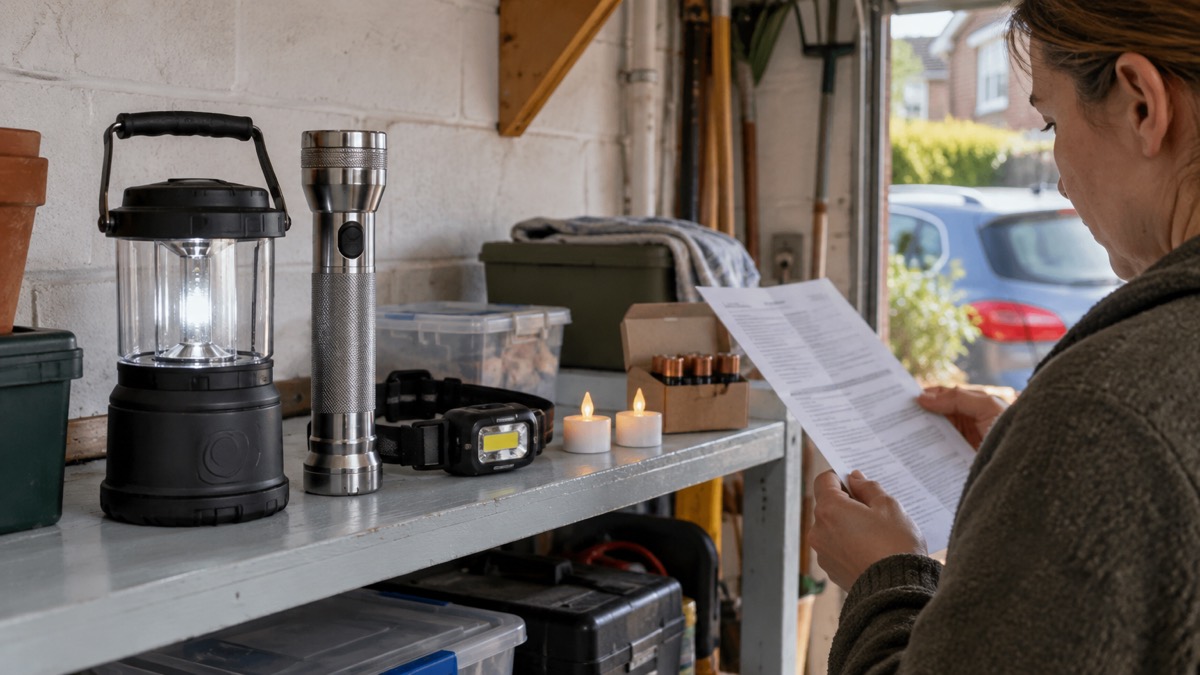
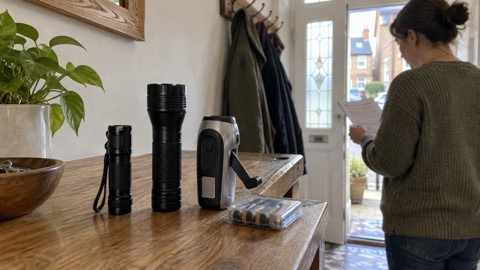
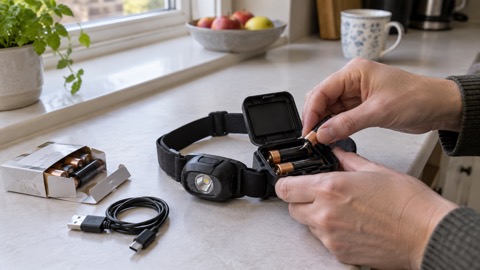
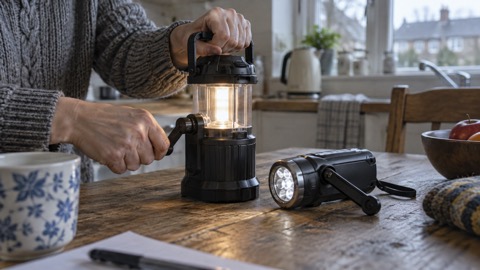
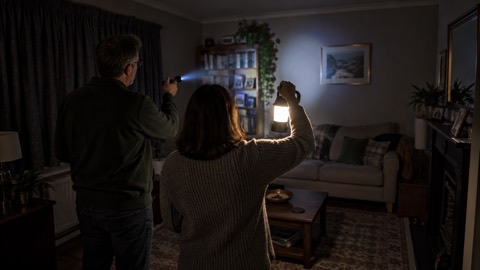
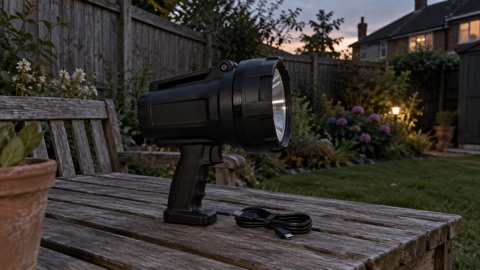
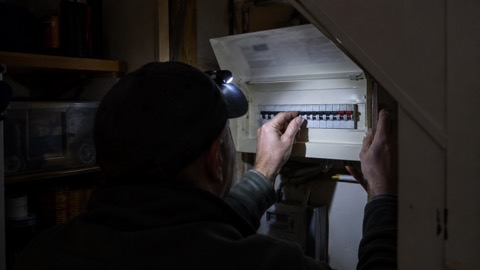
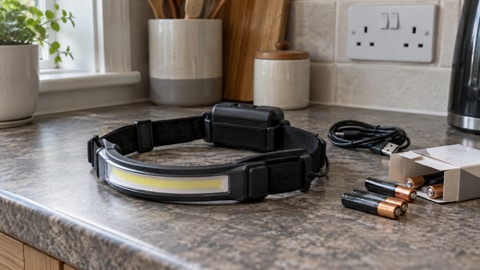
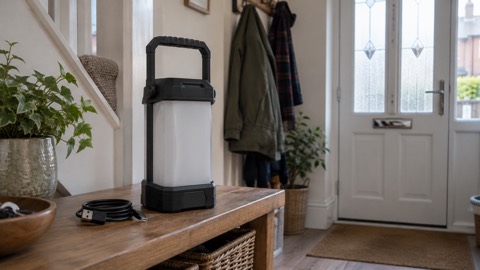
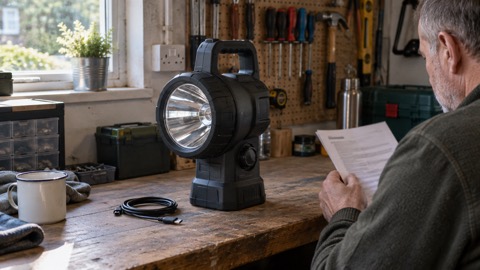
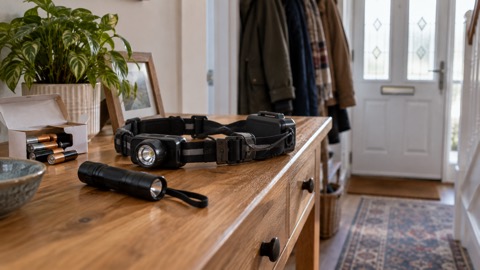
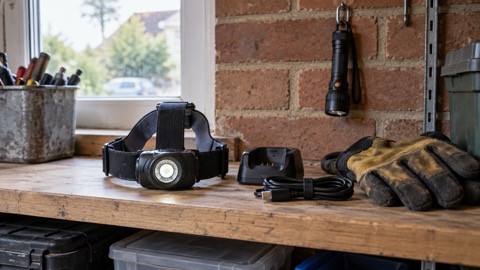
Match the light to what you need to do. A torch kept handy can provide the first light; a lantern or chargeable lamp can be used where you need light while your hands are occupied; a head torch also leaves both hands free. NHS guidance for families caring for technology-dependent children specifically recommends chargeable lamps and head torches because they allow hands-free care, including suction. It advises obtaining them in advance rather than waiting for an announced outage, when shops may have shortages.9
| Type | When to consider it | Preparation to make now |
|---|---|---|
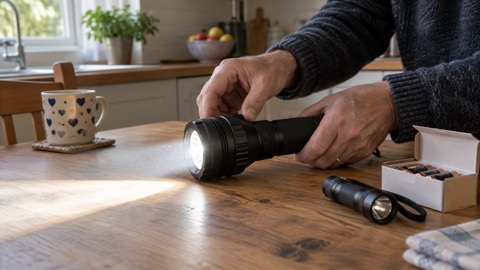
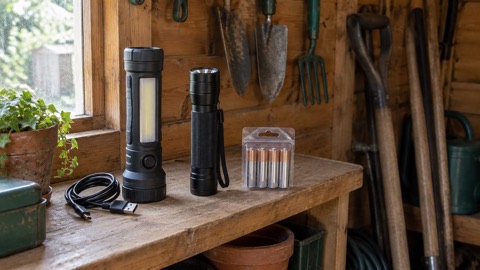
| Torch | A light kept handy around the home | Keep spare batteries somewhere convenient10 |
| Lantern or chargeable lamp | Lighting while you carry out a task or provide care | Have it ready before an outage is announced9 |
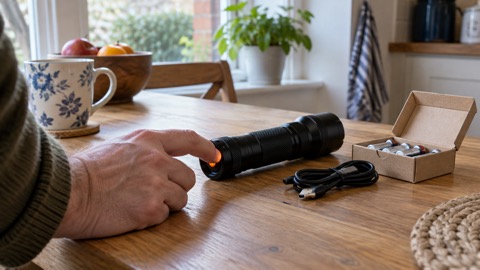
| Head torch | Work or care that needs both hands free | Charge it in advance where rechargeable9 |
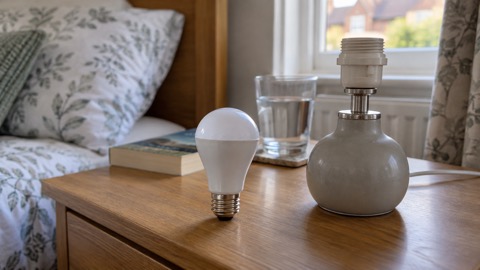
| Power failure light or emergency bulb | A light to consider as part of the home's preparation | Decide where it would be useful before the power fails |
| Solar or wind-up light | A lighting option that does not rely on disposable batteries | Include it in your household lighting checks |
The individual guides cover Torches: Types and How to Choose One for Home, Head Torches for Power Cuts and Jobs in the Dark, Battery and Rechargeable Lanterns for Lighting a Room, Power Failure Lights and Rechargeable Emergency Bulbs and Solar and Wind-Up Lamps That Need No Batteries.
For a direct choice between two approaches, see Torch or Head Torch for a Power Cut?, Lantern or Torch: Which Lights a Room Better? and Rechargeable or Battery Torches for Emergencies. When comparing products, Lumens, Beam Distance and Run Time Explained explains the specifications, while How Long Does a Torch Battery Last on Low? and How Long Does a Camping Lantern Run in a Power Cut? deal with run time. Suffolk Fire and Rescue Service's underlying advice remains simple: use battery-operated lights or torches in a power failure.11
What to have ready before a power cut
Put lighting into your household emergency kit before you need it. The UK Government's Be Ready checklist pairs a torch and spare batteries with blankets, sleeping bags and warm clothing. Ready Scotland's home emergency plan likewise lists a torch and batteries under light. These are household preparations, not specialist equipment.12
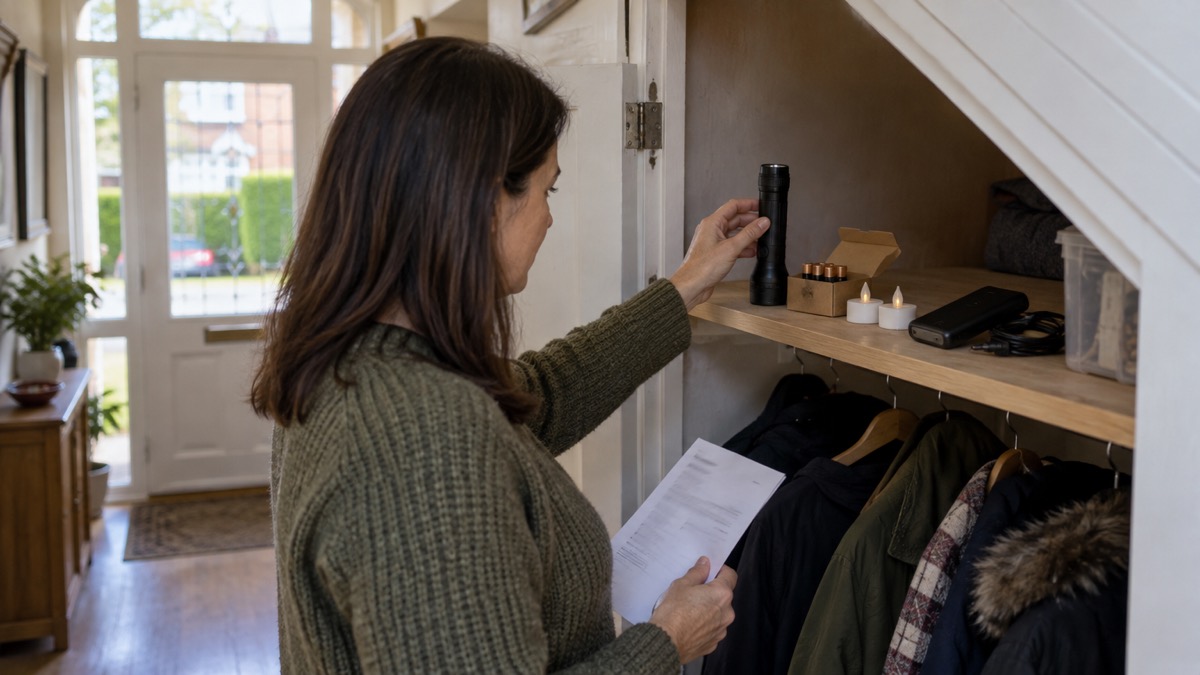
Prepare the following:
- Torches in convenient places: North Wales Fire and Rescue Service advises keeping a light or torch handy, while NHS winter guidance recommends torches around the home.10
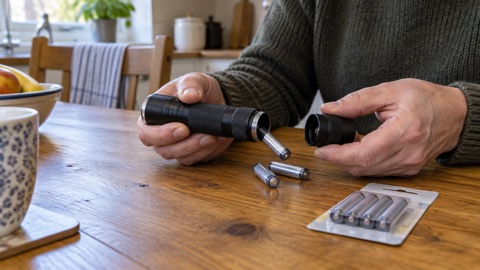
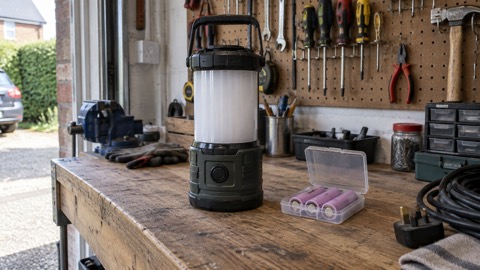
- Spare batteries: Store them somewhere convenient and make sure everyone knows where both batteries and torches are kept.2
- A charged power pack: Wiltshire and Swindon Prepared says a charged power pack can be very helpful in an emergency or power cut.14
- Hands-free lighting where someone needs care: Obtain chargeable lamps or head torches in advance if they would help you provide that care.9
- Warmth alongside light: Include blankets, sleeping bags and warm clothing in the same household preparations.12
Where to Keep Torches So You Can Find Them in the Dark looks at storage in more detail. Add these items to your Emergency Kit, and use the Lighting Checks Before Winter to review them. The wider sequence for a new household plan starts with Getting Started.
Northern Ireland's storm advice includes keeping a supply of candles, but this does not make a naked flame the first choice. Fire services recommend battery-powered alternatives, so treat any candles as a fire safety responsibility rather than simply another item to store.15
Batteries and spare power
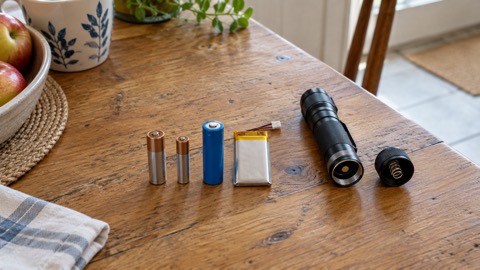
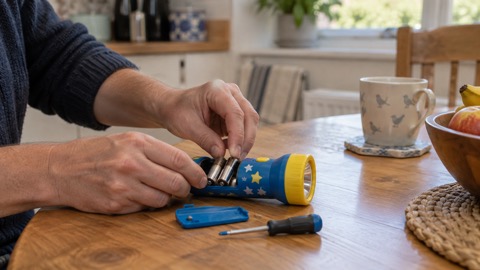
Spare power is what keeps your lighting useful after the first torch is switched on. Keep batteries with, or close to, the lights they serve, and make their location part of the household plan. Torch Batteries: AA, AAA, 18650 and Built-In Packs explains the different formats, while Spare Batteries to Keep for Your Lights turns that into a storage checklist.
| Spare power | How to include it in your preparations |
|---|---|
| Disposable torch batteries | Keep spares to hand and somewhere everyone can find2 |
| Rechargeable AA and AAA cells | Keep them with the lights they are intended to serve, alongside your other battery preparations |
| Power bank or power pack | Keep it charged so it is helpful in an emergency or power cut14 |
| Power station with a built-in lamp | Consider its lamp as one light source within your wider Backup Power at Home arrangements |
Rechargeable cells and power banks reduce neither the need for preparation nor the need for fire safety. A power pack only provides the intended backup if it is charged before the emergency.14
Batteries also deserve attention when they are stored, charged or disposed of. Figures from the National Fire Chiefs Council, reported by Suffolk County Council, recorded over 1,200 preventable battery fires across the UK in 2023, up by over 70% from 2022. Keep battery safety attached to your lighting plan rather than treating batteries as harmless household clutter.16
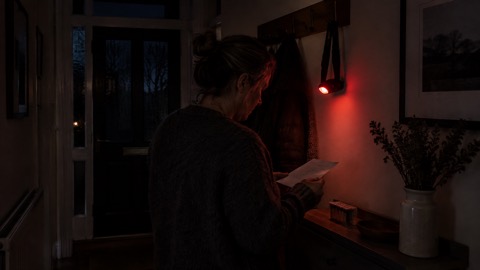
For the broader options, including power banks and power stations, see Backup Power at Home: A Household Guide. For light-specific details, What Is Red Light Mode For?, How to Use SOS and Strobe Modes on a Torch and What IPX Ratings Mean for Torches and Lanterns explain features you may encounter when choosing equipment.
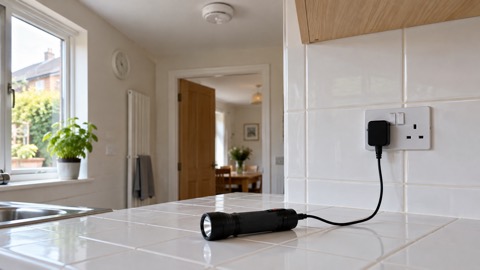
Charging rechargeable lights safely
Treat charging as part of home fire safety, not as a separate technical task. Devon and Somerset Fire and Rescue Service includes electrics and charging safely among the subjects covered in its home safety visits. Its visits also check smoke alarms, escape planning, cooking, heating and bedtime checks, showing how charging fits into the safety of the whole home.7
Use these pages for the detailed charging questions:
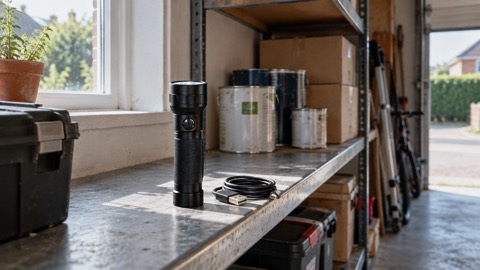
- Charging and Storing Rechargeable Torches Safely covers the routine for rechargeable lights.
- Can You Use a Torch While It Is Charging? deals with that specific limitation.
- Can the Wrong USB Charger Damage a Torch Battery? looks at charger compatibility.
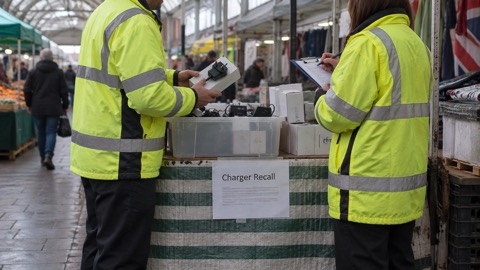
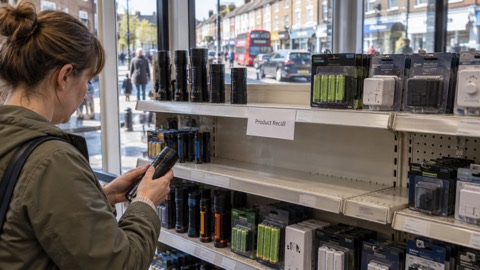
- Recalled and Unsafe Torches and Chargers: Checking and Reporting explains what to do about unsafe equipment.
A charged power pack is useful during a power cut, so charging should be completed as preparation rather than left until the lights fail.14 If you are unsure about the arrangements in your home, a fire service visit can include electrics and charging safely, and can identify further support where required.7 The wider battery and backup-power context is in Backup Power at Home.
LED candles and button batteries
Battery-powered candles remove the naked flame. Lincolnshire's candle safety guidance states that it is safer to use battery-powered candles, while Northern Ireland Fire and Rescue Service describes torches and other battery-powered lights as safer sources of light during a power failure. North Yorkshire Fire and Rescue Service also suggests battery-operated candles or glow sticks as alternatives to real candles.17
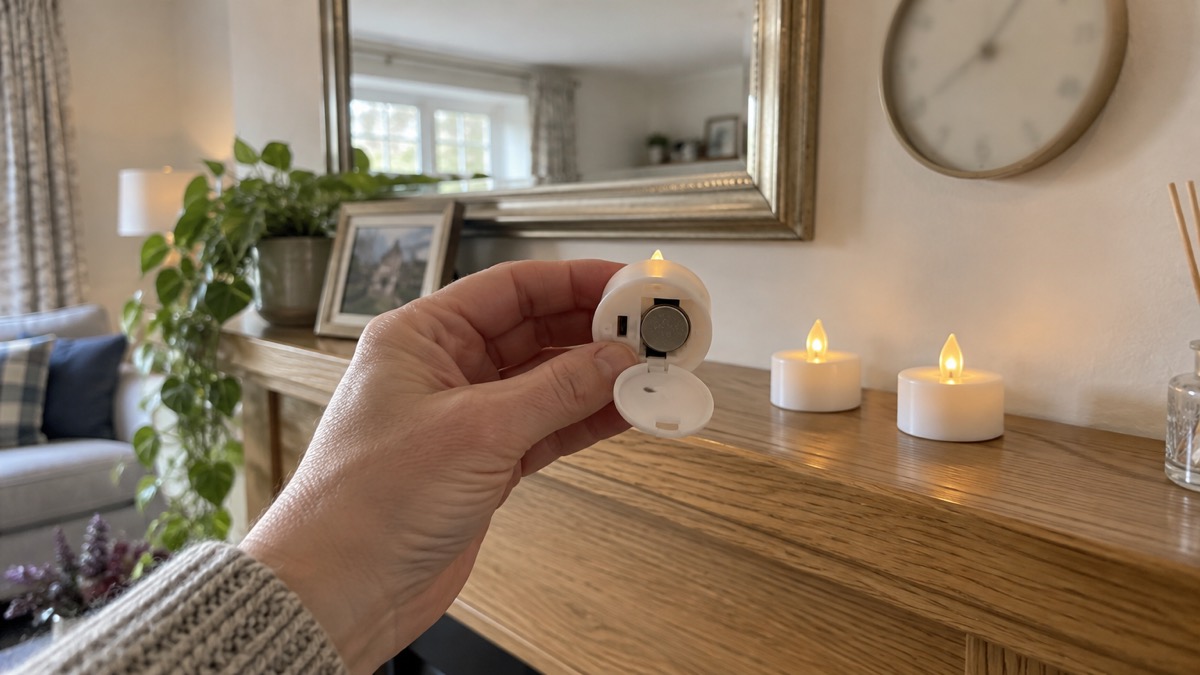
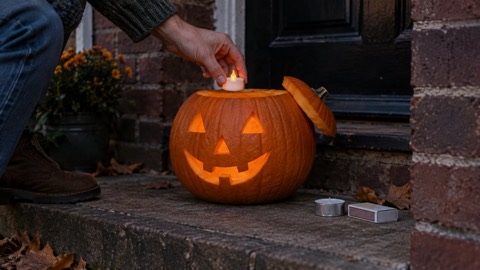
The choice is explained in LED Candles or Real Candles: Which Is Safer?. For decorative uses, Should You Use Battery Tea Lights in a Pumpkin? applies the same principle.
| Lighting choice | Main safety point |
|---|---|
| Real candle | A naked flame that must never be left unattended18 |
| Battery-operated candle | Safer than a real candle because it avoids that flame18 |
| Glow stick | Suggested by North Yorkshire Fire and Rescue Service as another alternative19 |
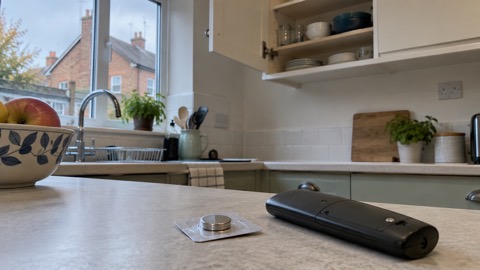
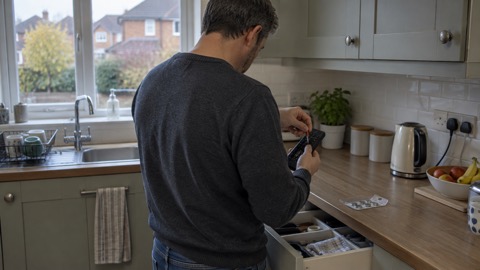
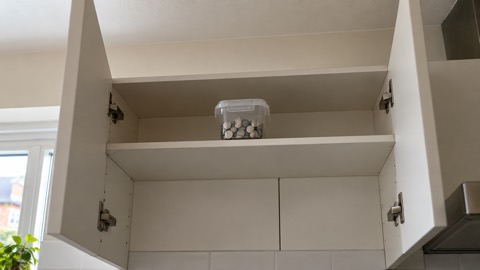
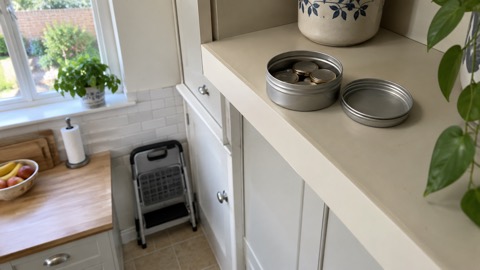
LED tea lights and small lights can contain button or coin cells. These batteries are dangerous to children if swallowed, so spare cells need secure storage. Read Storing Spare Coin Cell Batteries Safely with Children and Are Flat Button Batteries Still Dangerous? before putting spares into a household drawer. Used or flat batteries should not be treated as safe simply because they no longer power a light.
Keep this alongside the wider advice in Torches, Candles and Children: Keeping Them Safe. Northern Ireland Fire and Rescue Service also advises keeping children away from naked flames and avoiding a naked flame or candle in pumpkins, recommending a torch, glow stick or battery-operated candle instead.20
If you use real candles
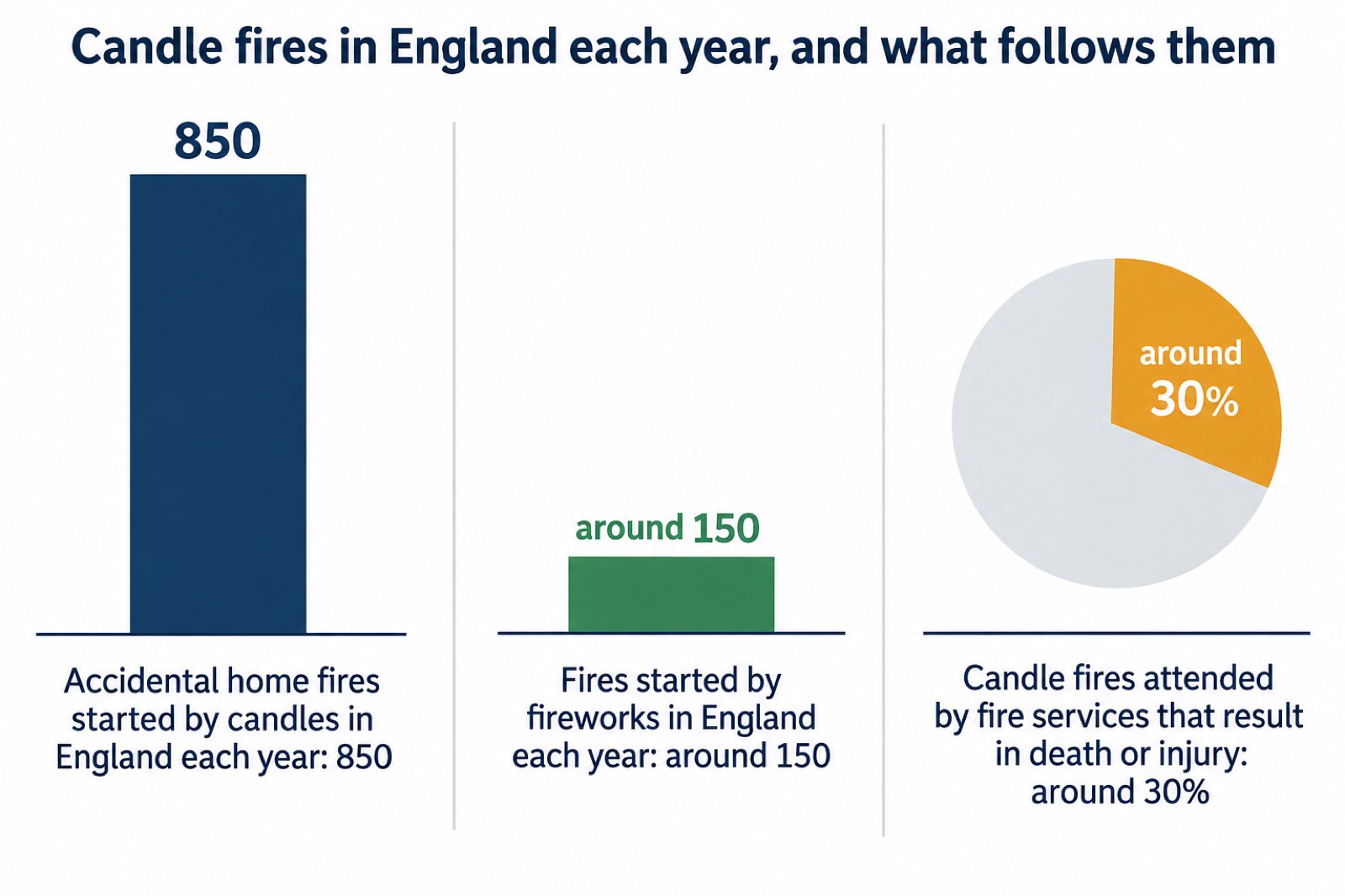
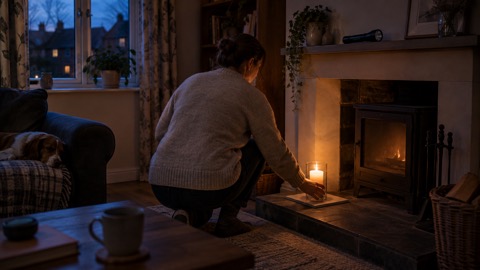
Use battery-powered lighting instead if you can. Scottish Fire and Rescue Service warns that its firefighters can be called to fires started by candles or portable heaters during power cuts. Greater Manchester Fire and Rescue Service describes candles as one of the top five causes of fire in the home.1
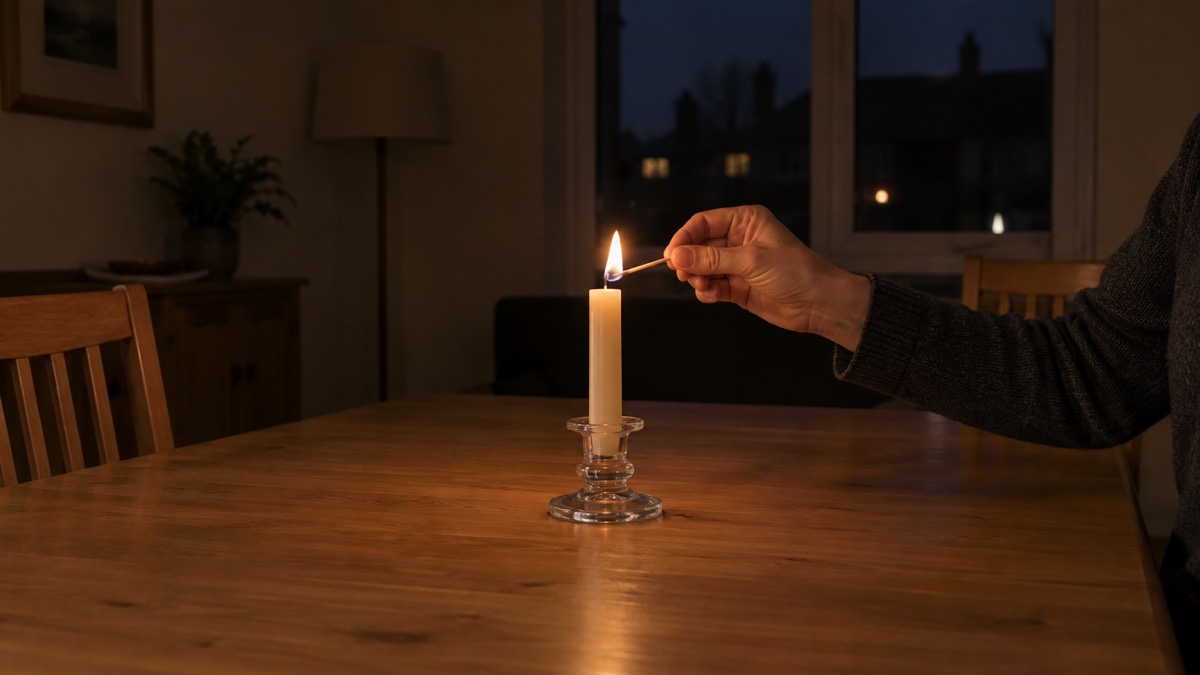
If a real candle is used, follow the fire services' rules:
- Clear the area. Warwickshire's guidance says to keep candles at least one foot away from curtains, tablecloths, bedding and any other flammable materials.6
- Use the correct holder. Greater Manchester Fire and Rescue Service says to use a holder designed specifically for tea lights.21
- Stay with the flame. Lincolnshire's guidance says never to leave a burning candle unattended.18
- Keep children and pets with a responsible adult. North Yorkshire Fire and Rescue Service says never to leave children or pets alone in a room with lit candles.19
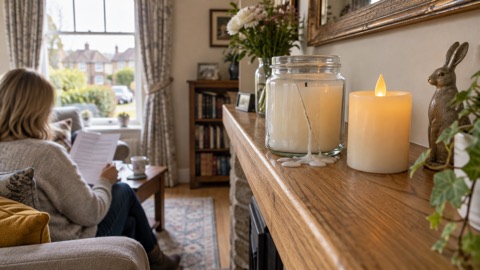
The detailed guidance is in Candle Fire Safety at Home and the Candle Safety Checklist. Related situations are covered in Keeping Pets Away from Lit Candles, Can Jar Candles Shatter?, How to Use an Oil Burner Safely and Using Candles Safely at Christmas. If decorative lights are part of the same room, Should You Unplug Fairy Lights at Night? addresses that separate question.
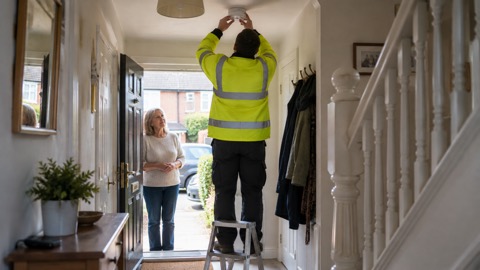
Working smoke alarms are essential where candles are used. If you are not eligible for a fire service visit, Norfolk's guidance strongly recommends buying smoke alarms and fitting at least one on every floor of your home.22
Stairs, falls and older or disabled people
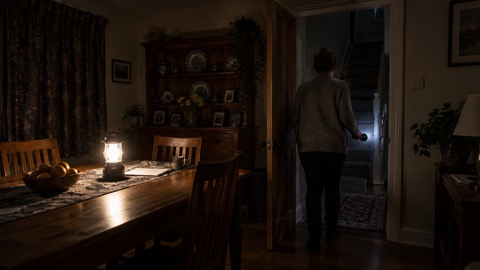
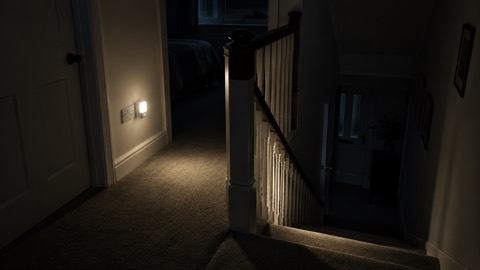
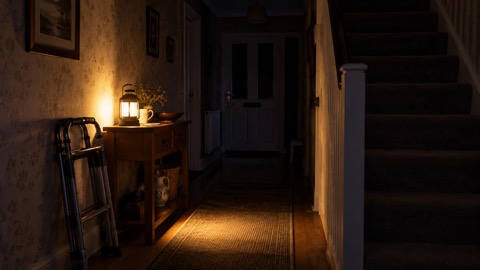
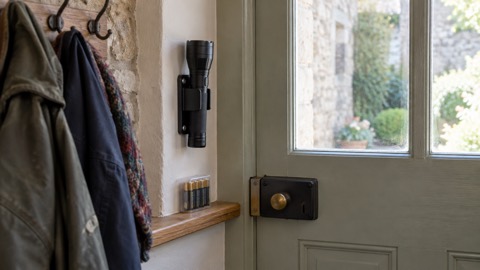
Keep the routes between rooms lit, particularly stairs, hallways and floors anyone must cross to reach a torch, toilet or exit. This is part of the practical preparation in the Power Cuts: A Household Guide, not just a matter of comfort. Torches should be handy around the home, with everyone aware of their location, so that the first journey in the dark is not a search for equipment.2
Hands-free lighting can matter more than a handheld beam when someone needs support or care. NHS guidance for technology-dependent children recommends chargeable lamps and head torches precisely because they leave hands free for care.9
| Person or circumstance | Preparation or help to consider |
|---|---|
| Someone caring for another person | Have chargeable lamps or head torches ready for hands-free care9 |
| An older person or someone with limited mobility | Ask about a fire safety visit and keep lighting easy to find |
| Someone with hearing or sight impairment | Suffolk includes these people among those its visits are intended to reach23 |
| Someone living with dementia | Suffolk also identifies people living with dementia among those who may need support23 |
| A neighbour who may need assistance | Check on them when the power goes out3 |
Lights for Older and Disabled People in a Power Cut develops these arrangements. The wider Extra Help in an Emergency guide covers support for older, disabled and medically dependent households, while Community Resilience explains the neighbour and local-group context.
Suffolk Fire and Rescue Service describes its visits as person-centred, taking account of physical health, mental health and behavioural factors. Its reported eligibility includes elderly people, people with hearing or sight impairments, people with limited mobility and people living with dementia.23
When the power comes back
The light you left switched on is your signal that the supply has returned. The Met Office advises: "Leave a light on, so you know when the power cut has been fixed."25
Until then, keep the appliances that should not be left unattended switched off. Once power is restored, return to the household checks in Lighting Your Home Safely When the Power Goes Off and Power Cuts: A Household Guide. Restore your preparations as well: replace the torch and batteries in their agreed places so they can be found during another outage.2
If you use rechargeable lighting or a power pack, return to the charging and storage routine in Charging and Storing Rechargeable Torches Safely. Wiltshire and Swindon Prepared's reason for keeping a power pack charged is that it can be helpful in an emergency or power cut, which applies just as much to being ready for the next one.14
Smoke alarms and free fire safety visits
A free fire service visit can help with more than lighting. Devon and Somerset Fire and Rescue Service says its visits usually take around 45 minutes and cover smoke alarm set-up, a fire escape plan, electrics and charging, cooking, heaters, bedtime checks and further support. Specialist fire safety equipment may be fitted where required. Visits are offered Monday to Friday, between 9am and 5pm, with morning slots from 9.30am to 1pm or afternoon slots from 1pm to 5pm. British Sign Language and some foreign language translations are available if requested when booking.7
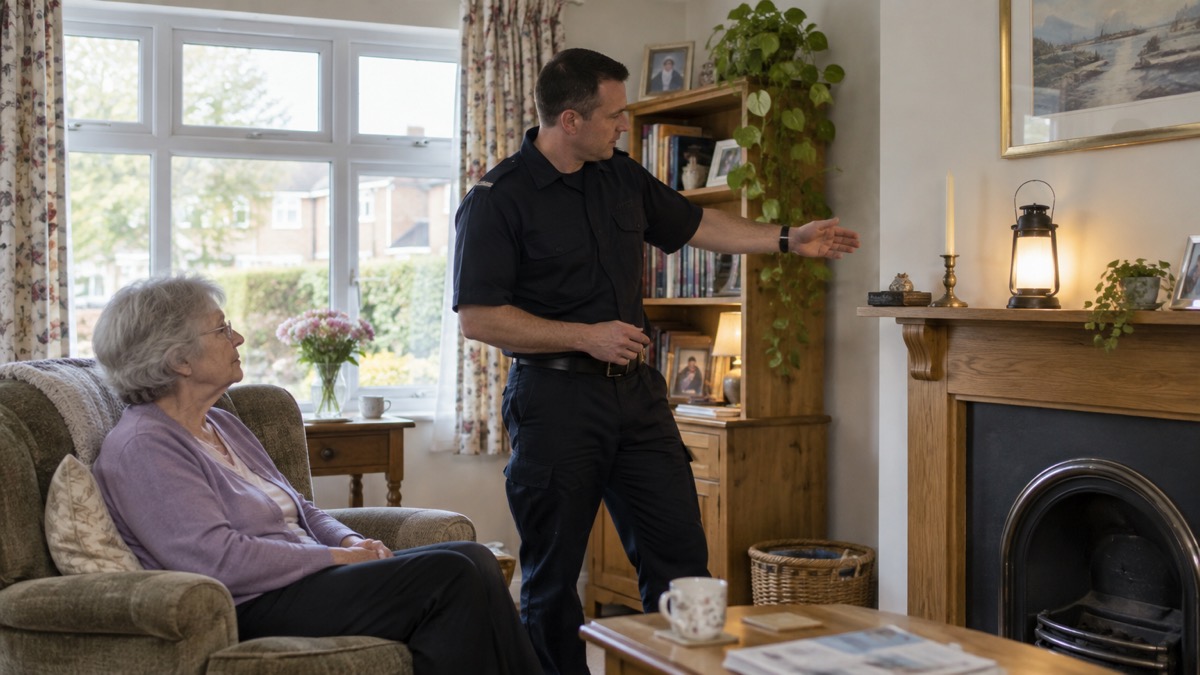
Names and routes vary across the UK:
| Area | Service or route | What to expect |
|---|---|---|
| Scotland | Free Home Fire Safety Visit: call 0800 0731 999, text FIRE to 80800, or use the online form | The visit is free; advice can include an emergency plan and smoke alarms26 |
| Norfolk | Complete the online home fire safety check first | If you qualify, the form requests contact details and consent before the service arranges a visit; smoke alarm needs are assessed22 |
| Devon and Somerset | Home safety visit | A room-by-room safety discussion covering alarms, escape, charging and other risks7 |
| Suffolk | Safer Home Visit | Delivered by a prevention practitioner or local operational firefighters, with a person-centred assessment24 |
| Dorset and Wiltshire | Safe and Well visit | A free room-by-room check, arranged after a telephone discussion28 |
| Lincolnshire | Safe and Well contact route | Low-risk occupants may receive a personalised fire safety action plan; the published contact number is 01522 84341529 |
Start with Free Home Fire Safety Visits From Your Fire Service. If you are not eligible, Norfolk strongly recommends buying smoke alarms and fitting at least one on every floor.22
There are also access and security arrangements worth knowing. Staffordshire Fire and Rescue Service accepts text requests or enquiries on 07528 983 101 from residents who are deaf or hard of hearing. Devon and Somerset asks anyone concerned about a visitor's identity to call 0800 05 02 999.30
Dorset and Wiltshire describes its advice as based on goodwill rather than enforcement. It can also signpost people to partners such as Age UK or Warm and Safe. Its service telephones beforehand to discuss concerns and arrange a convenient time, although an arranged visit may be cancelled or postponed in unforeseen circumstances.28
Sources (32)
- Power cuts, Scottish Fire and Rescue Service, 2026-10-25
- 12 tips to prepare for a power cut, Horsted Keynes Parish Council, 2026
- WeatherReady tips for snow and ice, Met Office, 2025-11-19
- Emergency information, Basingstoke and Deane Borough Council, 2026-10-29
- Emergency contact numbers, Belfast City Council, 2026-10-29
- Fire safety around candles, Warwickshire County Council, 2026-10-29
- Home safety visits, Devon and Somerset Fire and Rescue Service, 2026
- Fire service warning on power cut fire risks, Devon and Somerset Fire and Rescue Service, 2022-02-20
- Power shortages: advice for families, NHS North West Children's Operational Delivery Network Hub, 2022-11-25
- Keeping well in winter, Moulton Medical Centre, NHS, 2026-10-29
- Lighting factsheet, Suffolk Fire and Rescue Service, 2014-01-09
- Be Ready Checklist, UK Government Be Ready campaign, 2026
- Home emergency plan, Ready Scotland, 2026
- Preparing yourself, Wiltshire and Swindon Prepared, 2026-10-25
- Strong winds and heavy rain: information and advice, nidirect, 2026-01-27
- Hidden batteries and fire safety, Suffolk County Council
- Safer Together: fire risk identification and management, Northern Ireland Fire and Rescue Service, 2021-02
- Candle safety, Lincolnshire County Council, 2026-10-29
- Halloween safety tips, North Yorkshire Fire and Rescue Service, 2025-10-24
- Halloween fire safety advice, Northern Ireland Fire and Rescue Service, 2026-10-21
- Candle safety at home, Greater Manchester Fire and Rescue Service, 2026-10-29
- Home fire safety check, Norfolk County Council, 2026-10-29
- Increase in home fire safety visits, Suffolk County Council, 2025-10-20
- Safer Home Visit eligibility, Suffolk County Council, 2026-10-29
- Stay safe in a thunderstorm, Met Office, 2026-10-25
- Home Fire Safety Visit contact details, Scottish Fire and Rescue Service, 2024-01
- Reaching people most at risk of fire, Scottish Fire and Rescue Service, 2023-12-28
- What is a Safe and Well visit?, Dorset and Wiltshire Fire and Rescue Service, 2026-05-27
- Request a Safe and Well check, Lincolnshire County Council, 2026-10-29
- Home fire safety visits, Staffordshire Fire and Rescue Service, 2026-10-29
- Fire safety when celebrating, UK Government, 2021
- Candle safety, Mersey Fire and Rescue Service, 2026
 Lighting Home in a Power Cut
 Choosing a Torch for Home
 Head Torches for Power Cuts
 Lanterns for Lighting a Room
 Emergency Bulbs
 Solar and Wind-Up Lamps
 Lumens and Beam Distance
 Torch Batteries Explained
 Charging and Storing Torches
 Candle Fire Safety at Home
 Lights for Disabled People
 Torches, Candles and Children
 Recalled Torches and Chargers
 Can Jar Candles Shatter
 Battery Tea Lights in a Pumpkin
 Keeping Pets Away from Candles
 Finding Torches in the Dark
 Red Light Mode on a Head Torch
 SOS and Strobe Modes
 IPX Ratings for Torches
 Torch Battery Runtime
 Camping Lantern Run Time
 Using a Torch While Charging
 Looking Into a Bright Torch
 Storing Spare Coin Cells
 Flat Button Battery Dangers
 USB Charger and Torch Batteries
 Oil Burner Safety
 Unplugging Fairy Lights at Night
 Candles Safely at Christmas
 Spare Batteries for Lights
 Candle Safety Checklist
 Lighting Checks Before Winter
 Power Cut Lighting Checklist
 LED Candles vs Real Candles
 Torch or Head Torch
 Lantern vs Torch
 Rechargeable or Battery Torches
 Home Fire Safety Visits
 NEBO Galileo Tempest 350
 NEBO Newton 500 Torch
 NEBO Davinci 800L
 NEBO Luxtreme SL25R
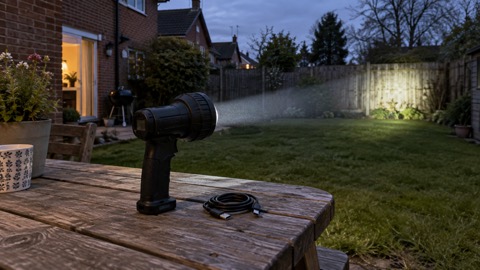 NEBO Master Series SL25
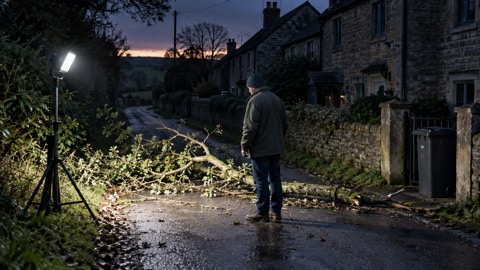 NEBO 8K Flood Light
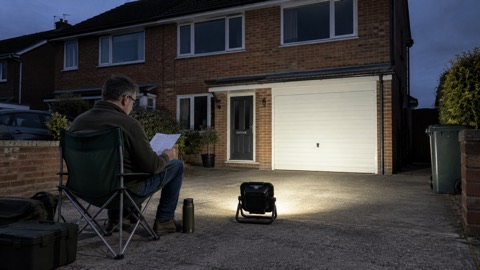 NEBO 5K Floodlight
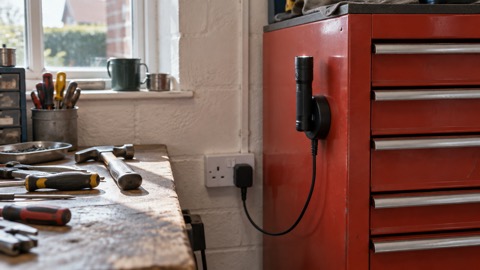 NEBO Torchy 2K Torch
 NEBO Torchy 600 Flex
 NEBO Tac Slyde Torch
 NEBO Slyde King 4K
 NEBO Mycro 900+ Headlamp
 NEBO Edge 800
 NEBO Einstein 250
 NEBO Leo 800 Flex
 NEBO Curvbeam 600 Flex
 NEBO Poppy Puck Light
 NEBO Transport 400
 NEBO Blackout Backup Bulb
 Fenix CL20R V2.0 Lantern
 Fenix CL26R Pro Lantern
 Fenix CL28R Lantern
 Fenix CL30R Power Lantern
 Fenix E04R Keyring Torch
 Fenix E05R Keychain Torch
 Fenix E06R Pro Pocket Torch
 Fenix E09R Torch
 Fenix LD35R Torch
 Fenix LR60R Searchlight
 Fenix HP16R Head Torch
 Ledlenser KidBEAM4
 Ledlenser P7R Signature
 Ledlenser P18R Signature
 Ledlenser K6R Safety
 Ledlenser ML4
 Ledlenser ML6
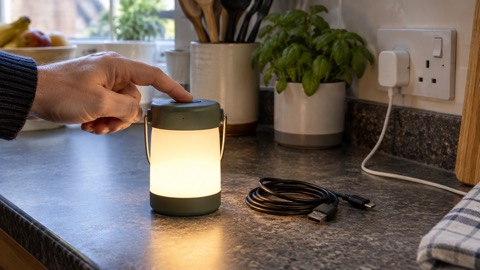 BioLite AlpenGlow Mini
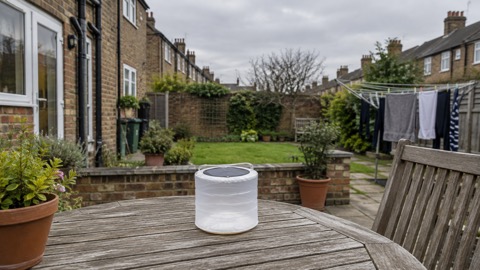 MPOWERD Luci Emergency
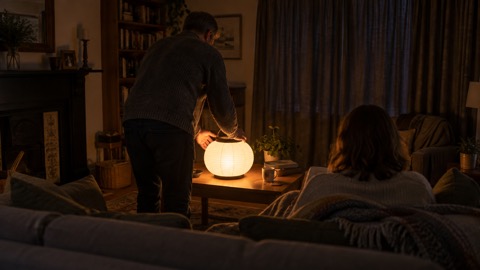 MPOWERD Luci Original
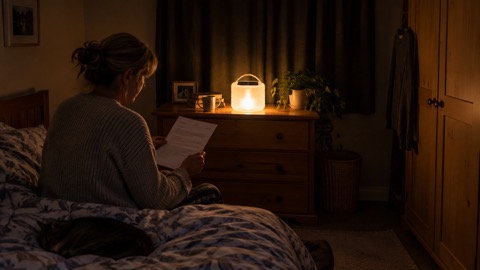 MPOWERD Luci Charge 360
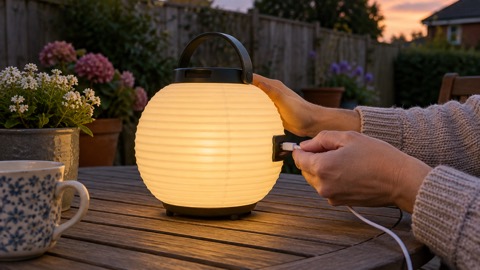 Coleman 360 Sound and Light
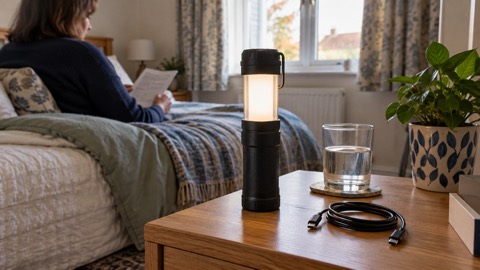 Nitecore LR70 Lantern
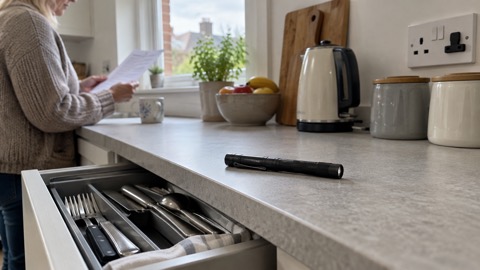 Ledlenser P4R Core
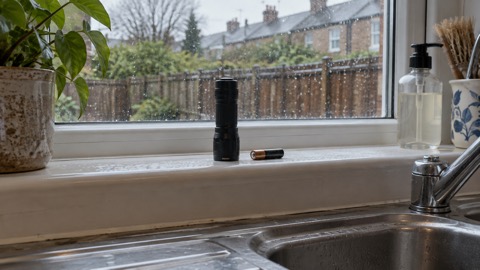 Ledlenser P3 Core
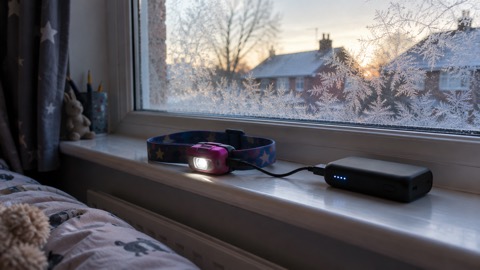 Ledlenser KidLED4R Head Torch
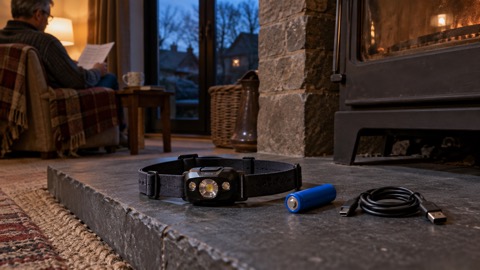 Ledlenser MH11
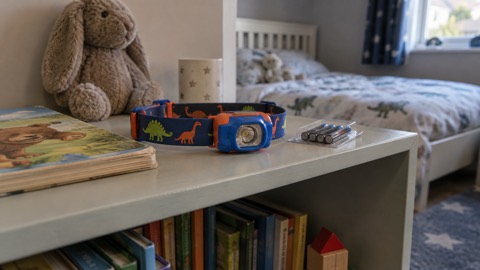 Ledlenser KidLED2
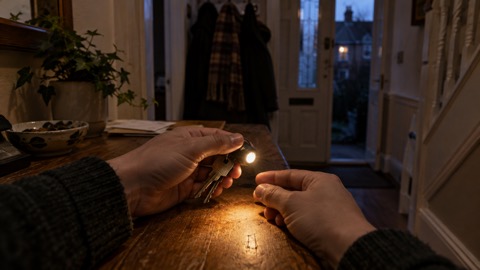 Ledlenser Lite Wallet
 Ledlenser P7R 25th Anniversary
 Ledlenser HF6R Head Torch
 Ledlenser P7R Core
 Ledlenser P6R
 Ledlenser P5R
 Ledlenser P7R Work
 Ledlenser H8R Head Torch
 Ledlenser HF4R Signature
 Olight Olantern Stretch