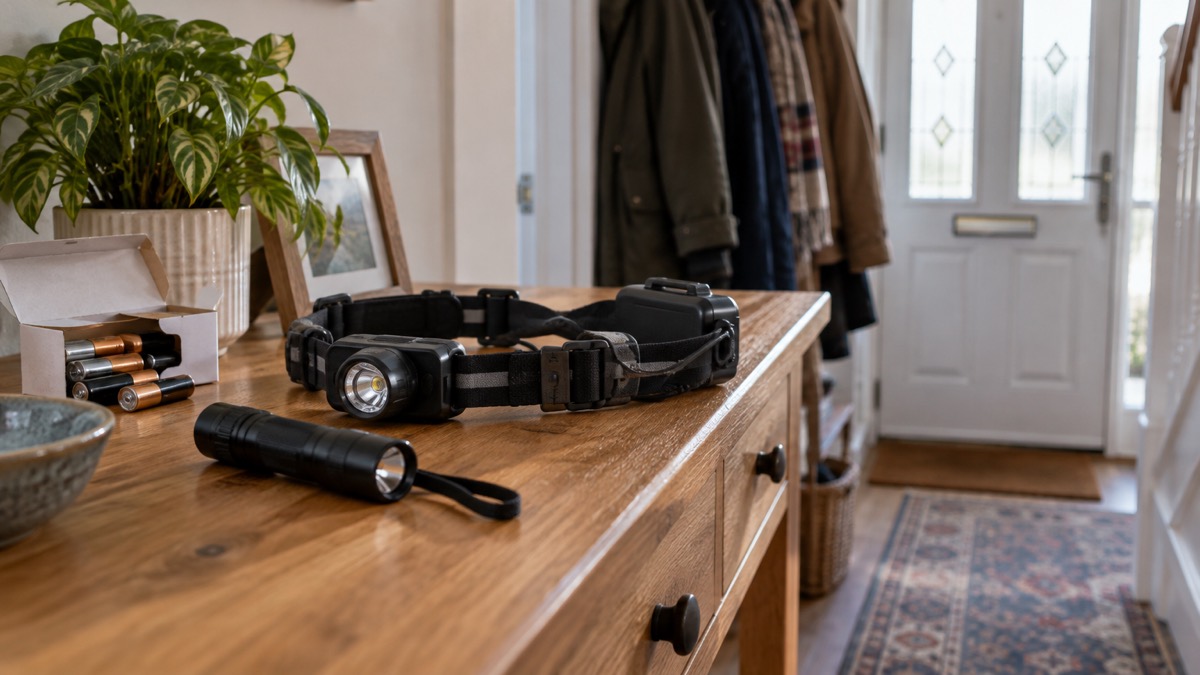
The Fenix HP16R is a rechargeable head torch with a maximum output of 1250 lumens and a maximum beam distance of 255 metres, and it weighs 216g1. It runs from a rechargeable 3000mAh battery pack that charges over USB-C with the cable in the box, and it will also take 4 x AA alkaline or 4 x AA NiMH batteries if the pack is flat1. For a household, that combination is the point: a bright light for a job in the dark, and a fallback that uses the most common household battery in the country.
It is built as a working torch rather than a lantern. Three LEDs give a white spot beam, a white flood and a red light, and the body is cast aluminium and high quality plastics with a toughened glass lens1. The distributor rates it IP66 and states it is water resistant up to 2 metres1.
This page sets out what the torch can do and for how long, how the two power options work, how to charge and store it safely, and what comes in the box. It gives you the specifications to judge for yourself, including the dual on - off mode switches and the smooth aluminium reflector1.
What the Fenix HP16R is and who it suits
A head torch earns its place in a household because it leaves both hands free. That matters when you are carrying a candle to a sink, holding a child's hand on a dark stair, or working on a fuse board with a phone in one hand. The HP16R is a substantial example of the type, with dual on and off mode switches and a smooth aluminium reflector1. If you want the general case for this shape of light, our page on head torches for power cuts and jobs in the dark sets out the trade-offs.
The three LEDs are what make it flexible. The distributor lists a Luminus SST40 White, a Cree XP-G3 S4 NW and an Everlight 2835 Red1. In practice that gives you a narrow spot for looking down a garden or along a path, a wider flood for lighting a room or a staircase, and a red light that preserves night vision and is easier on other people in the same room. The switch is a dual on-off mode switch arrangement, so the two white beams and the red are selected separately1.
Who it suits: a household that wants one light that can do a job outdoors as well as light a landing, and that values being able to feed it ordinary AA cells when the rechargeable pack runs out. Who it may not suit: someone who wants a small, light torch to keep in a bedside drawer, or a child. At 216g it is a working tool, and a smaller light is easier to live with for simple tasks. Our torches section covers the lighter options.
Fenix HP16R specifications
The headline figures are 1250 lumens and 255 metres, but the numbers that decide whether a torch is useful in a power cut are the middle and low settings, where the run times are long. The table below sets out the spot and flood modes as the distributor lists them1.
| Mode | Output | Run time | Beam distance |
|---|---|---|---|
| Spot turbo | 1250 lumens | 4 hours | 260 metres |
| Spot high | 400 lumens | 8 hours | 149 metres |
| Spot medium | 150 lumens | 12 hours | 88 metres |
| Spot low | 50 lumens | 36 hours | 52 metres |
| Flood high | 400 lumens | 8 hours | 48 metres |
| Flood medium | 150 lumens | 12 hours | 30 metres |
| Flood low | 5 lumens | 300 hours | 6 metres |
| Red | 5 lumens | 300 hours | 6 metres |
| Red flash | 5 lumens | 600 hours | 6 metres |
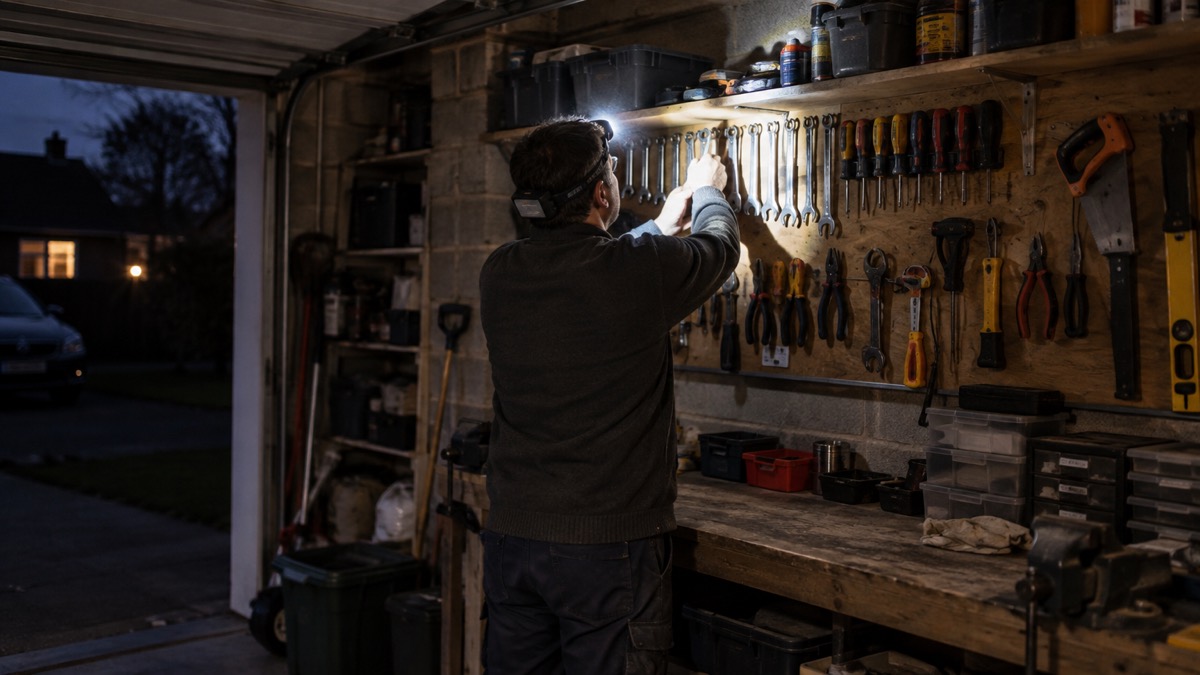
Two things stand out. First, turbo is a short burst setting: 4 hours at 1250 lumens is not a whole night, and it is not meant to be1. Second, the low settings are where the endurance is. Flood low at 5 lumens runs for 300 hours, and the red flash runs for 600 hours1. If you want to understand why a lower setting lasts so much longer, our explainer on lumens, beam distance and run time covers the relationship.
Note the small discrepancy in the distributor's own listing: the headline maximum beam distance is given as 255 metres, while the spot turbo row gives 260 metres1. Both are the distributor's figures and they are close enough not to matter in use, but treat the beam distance as approximate rather than exact.
Three LEDs: white spot, white flood and red light
The value of three LEDs is that you stop using one beam for everything. A spot beam thrown 260 metres at turbo is for finding something at a distance; it is a poor way to light a room, because it gives a bright circle and dark edges. The flood setting spreads light more evenly, which is what you want over a table, in a stairwell or while cooking1.
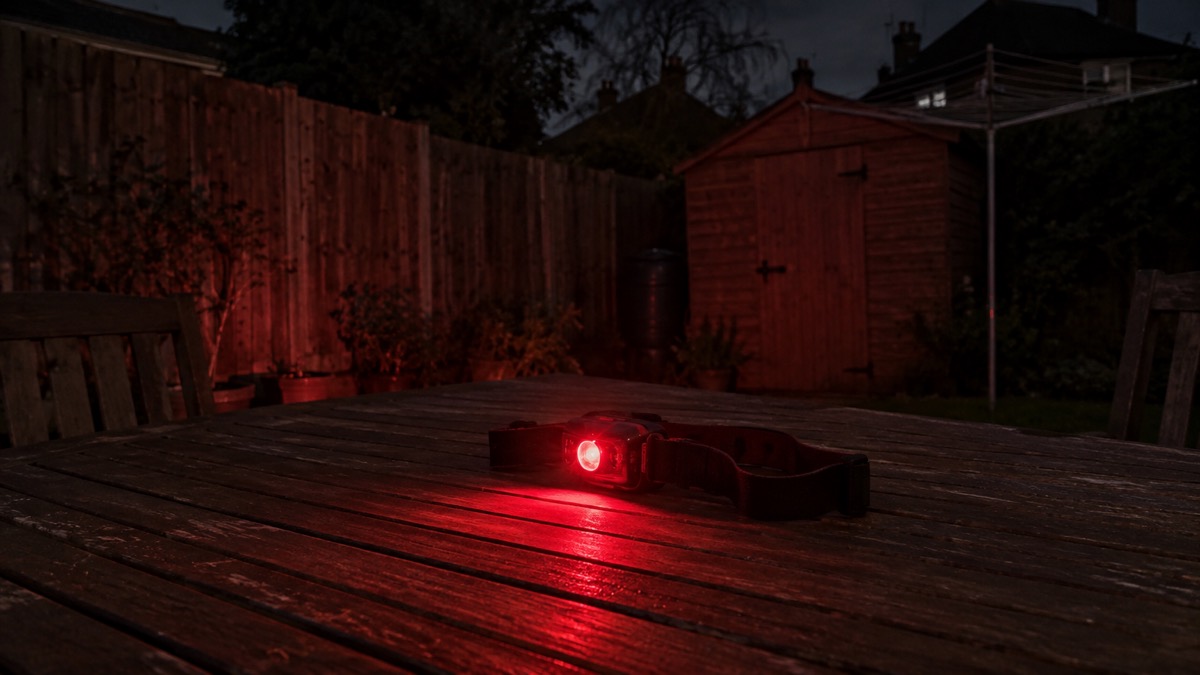
The red light is the third option and the one people ask about most. At 5 lumens it runs for 300 hours, and the red flash runs for 600 hours at the same output with a 6 metre beam distance1. That is a marker light, not a working light. It is useful for making a doorway, a tent or a person easier to spot, and it is gentler if you are sharing a room and do not want to wake anyone. Our page on what red light mode is for explains the wider uses, and how to use SOS and strobe modes covers signalling conventions.
Power: the rechargeable pack or four AA cells
The torch ships with a Fenix ARB-LP3000 3000mAh Li-polymer battery pack, listed elsewhere on the same page as an LP3000 Li-Polymer battery1. It is rechargeable, and the torch is also listed as compatible with 4 x AA alkaline batteries and 4 x AA NiMH batteries1. That gives you two ways to run it, and the choice matters in an emergency.
| Power option | What it gives you | What to watch |
|---|---|---|
| Rechargeable 3000mAh pack | Full output and the run times in the table above; recharges over USB-C1 | Needs charging before an outage, and a flat pack cannot be topped up without power or a power bank |
| 4 x AA alkaline | A fallback using the most widely stocked household battery1 | Alkaline cells can leak if left in a device for a long time |
| 4 x AA NiMH | Rechargeable AA cells, reusable many times1 | Needs a separate NiMH charger, and cells should be kept as a matched set |
The AA option is the one to think about before a storm. A rechargeable pack is excellent until the power goes off and stays off, at which point a torch that only takes a built-in pack is a torch with a countdown on it. Keeping four AA cells in the bag with the torch means the light keeps working whatever happens to the mains. Our page on torch batteries: AA, AAA, 18650 and built-in packs sets out the wider picture, and rechargeable or battery torches for emergencies covers the trade-off in more depth.
If you are choosing between a head torch and a hand torch for household use, our comparison of torch or head torch for a power cut may help.
Built to take rain and knocks
The body is cast aluminium and high quality plastics, with a toughened ultra clear glass lens that has an anti-reflective coating, and a smooth aluminium reflector behind it1. That is a torch built to be dropped on a path and used in the rain rather than kept in a drawer.
The weather rating is IP66, and the distributor also states the torch is water resistant up to 2 metres1. Those two statements are not the same thing, and it is worth being clear about the difference. IP66 covers protection against dust and against powerful jets of water; it does not certify continuous immersion. The 2 metre figure describes the depth the torch is rated to withstand, not an invitation to leave it at the bottom of a pond. Our page on what IPX ratings mean for torches and lanterns explains the rating system.
In household terms: rain, a splash at the sink, a drop into a puddle and a rinse under a tap are within what the torch is built for. A torch left submerged, or taken into a bath or a river, is being asked to do more than the rating promises. If it does get soaked, dry it with the battery compartment open and leave it to air before charging.
Charging, battery care and what comes in the box
The torch charges over USB-C with the cable included in the box1. The full contents are the Fenix ARB-LP3000 3000mAh Li-polymer battery, a USB Type-C charging cable, 4 helmet attachment hooks, 3 cable clips, a spare o-ring and a storage bag1. The hooks and clips are for mounting the lamp on a helmet and routing the cable; the spare o-ring is a service part for the seals that keep water out.
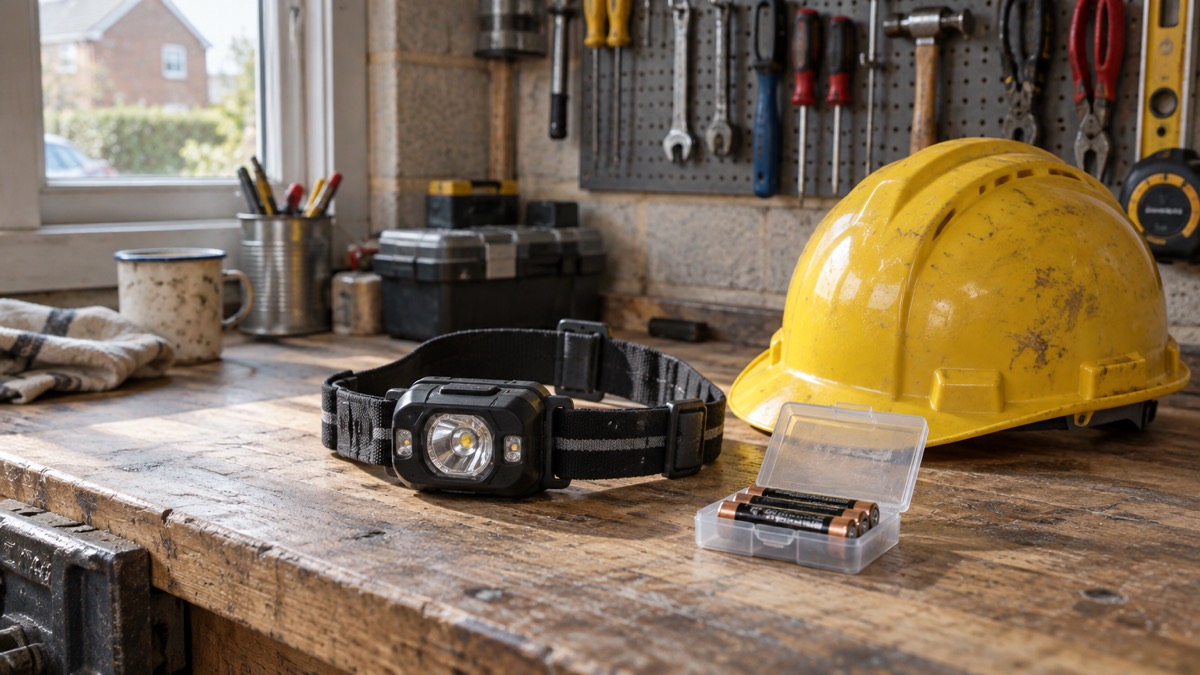
On charging and battery care, the maker's own instructions for its battery and charger are the ones to follow. The HP16R charges via USB-C with the included cable1. The general rules that apply to any lithium torch battery are worth stating plainly: charge on a hard, non-flammable surface rather than on a bed or a carpet, do not leave a charging battery unattended for long periods, and stop using a battery that is swollen, damaged or hot to the touch. Our page on charging and storing rechargeable torches safely sets out the routine, and can the wrong USB charger damage a torch battery covers the charger question.
For storage, take the battery out if the torch will sit unused for months, keep the torch and cells dry and out of reach of children, and check the charge before winter. Our lighting checks before winter checklist covers the seasonal routine, and spare batteries to keep for your lights helps you decide what to hold.
Fitting it to a helmet and wearing it on the head
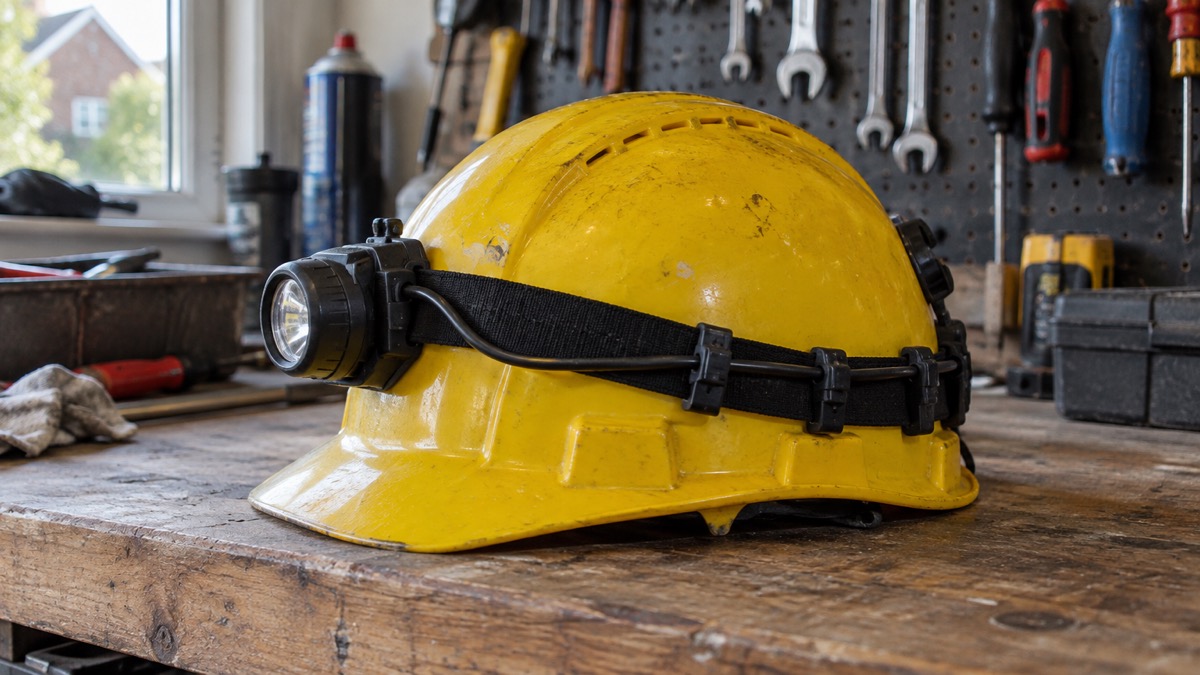
The box includes 4 helmet attachment hooks and 3 cable clips, which is the mounting kit for putting the lamp on a helmet and running the cable clear of your face and neck1. The lamp head measures 62mm long, 47mm wide and 32mm high1. Check the hooks suit your helmet before you rely on them, and route the cable so it cannot catch on a branch, a door handle or a strap.
On the head, the figure to judge is 216g1. That is carried on a strap around the skull, so the fit matters as much as the weight. Adjust the strap so the lamp sits steady above the brow without pinching, and try it for a full evening before you need it in the dark. A torch that gives you a headache after twenty minutes is not much use in a long power cut.
Where to get it and what to check before you buy
The distributor's product page listed the Fenix HP16R as In Stock when it was checked on 25 October 20261. A second retailer page also listed it as in stock on the same date2. Stock moves, so treat either as a snapshot rather than a promise, and check the page again if it is out when you look.
Before buying, check three things against your own household. First, whether you want a head torch at all or whether a lantern would light a room better; our comparison of lantern or torch: which lights a room better sets out the difference. Second, whether you have a way to charge it, or a stock of AA cells as a fallback. Third, whether the weight suits everyone who might wear it. For the wider picture on lighting a home through an outage, start with lighting your home safely when the power goes off and the power cut checklist.
Sources (2)
- Fenix HP16R product page, Flashaholics, 25 October 2026
- Olight customised 21700 battery page, Torch Direct, 25 October 2026
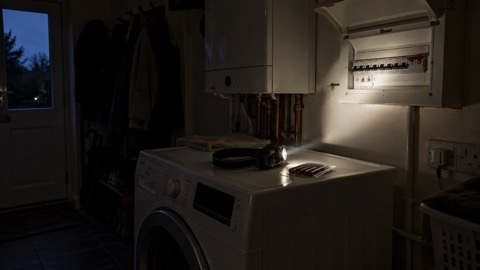 NEBO Einstein 250
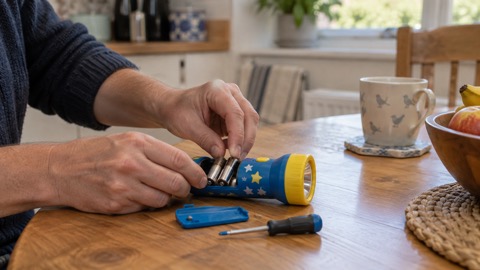 Ledlenser KidBEAM4