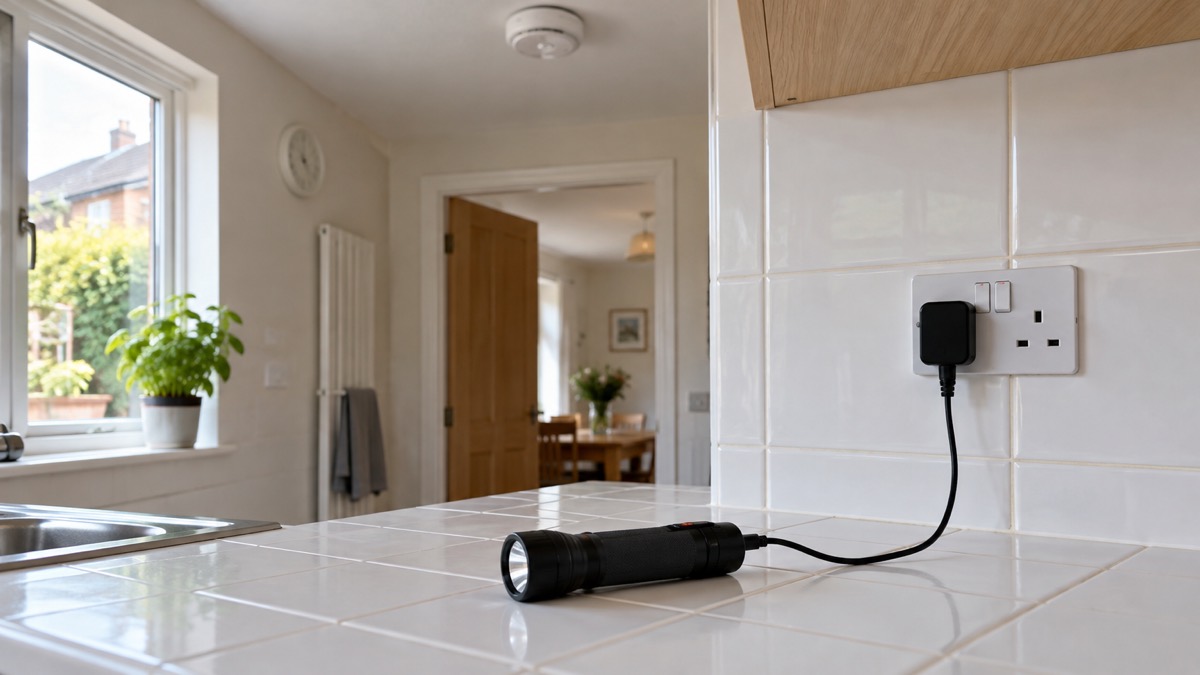
A torch is the first thing most households reach for when the power goes off, and a rechargeable one is convenient until the battery or the charger becomes the problem. The risk is real but narrow: lithium-ion batteries can overheat, catch fire or, in the worst cases, explode if they are charged incorrectly, handled badly, stored badly or disposed of badly1. Fire and rescue services across the UK now treat battery fires as a routine part of home safety advice.
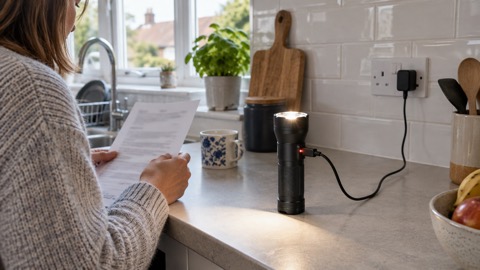
The single most useful thing you can do is match the charger to the device. Electrical Safety First warns that substandard or counterfeit USB chargers bought from third-party sellers online have serious safety concerns and may present a higher risk of exploding or catching fire2. Charging a battery too quickly is one of the main causes of lithium-ion fires3. Use the charger that came with the torch, or one the maker specifies, and charge it in daylight, in a place you can see it.
If you want the simplest safe option for a power cut, choose a torch that runs on standard batteries, or a wind-up torch, and keep spare cells beside it. That removes the charging question altogether. For everything else, this page sets out how to charge a rechargeable torch safely, what to check on a power bank, how to spot a failing battery, and what to do with a torch whose battery cannot be replaced.
Incompatible chargers are a recognised fire risk
The danger is not usually the torch itself but the combination of a battery and a charger that were never designed for each other. Electrical Safety First states plainly that overcharging, over-discharging or charging a battery too quickly are some of the main causes of fires from lithium-ion batteries3. A charger that pushes more current than a small torch expects, or one built without proper safety components, falls into that category.
Cheap equipment is a particular concern. Merseyside Fire and Rescue Service warns that cheap chargers and batteries may not meet UK safety standards and can be dangerous1. London Fire Brigade goes further on counterfeit chargers, saying many fail to meet UK safety regulations, leading to fires and injury8. The National Fire Chiefs Council says the risk of fire increases when products do not meet safety standards, are damaged or are charged incorrectly9.
There is a documented example specific to torches. In June 2022 a product sold as an "18650 Lithium Battery Charger for LED Torch Rechargeable Flashlight with UK Plug" was found not to meet the requirements of the Electrical Equipment (Safety) Regulations 2016 or the Plugs and Sockets Safety Regulations 1994; the fuse fitted in the plug contained no silica, and the fuse and supply cord were considered counterfeit10. That is the kind of product a household buys without thinking, because it is cheap and the listing looks ordinary.
What this means in practice is simple. Buy chargers from reputable sources, not marketplace sellers with no traceable brand. If a charger becomes damaged or worn, replace it with an official charger from a reputable source rather than repairing it or carrying on5. And never use a charger that shows signs of damage or appears not to be working properly11.
Fast chargers and small torches: what actually goes wrong
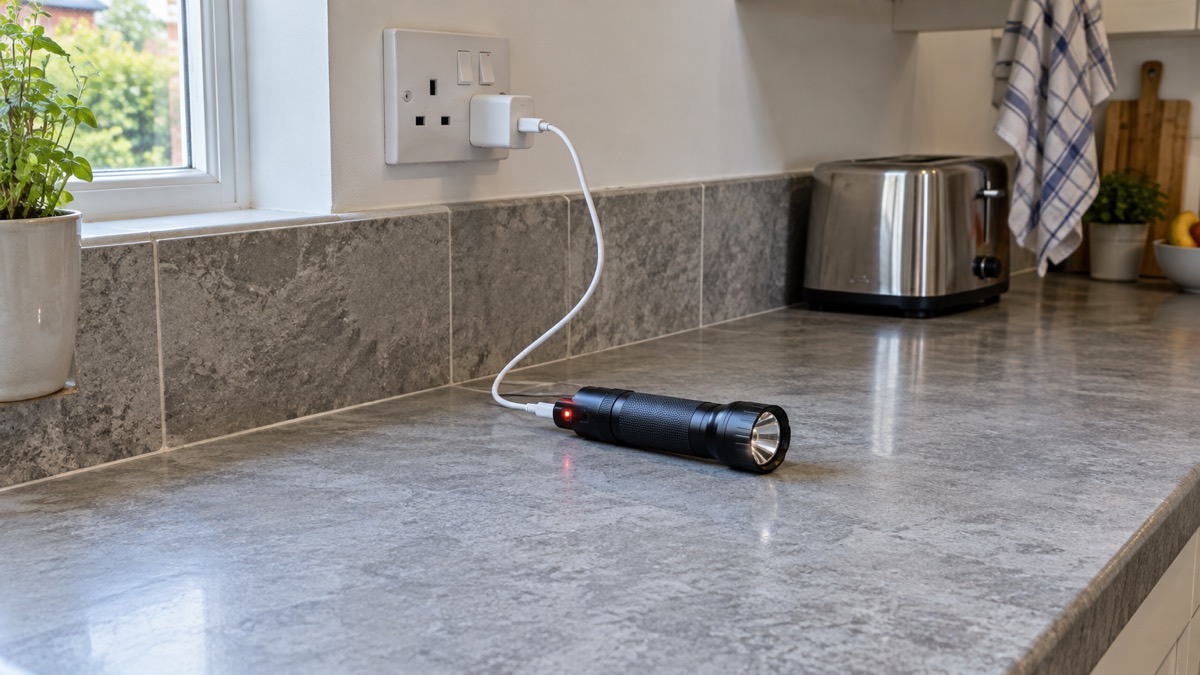
A modern phone charger can deliver far more power than a small torch battery is built to take, and the torch's own charging circuit is what decides how much it accepts. Where that circuit is cheap or faulty, the battery can be overcharged or charged too quickly, and both are named by Electrical Safety First as leading causes of lithium-ion fires3. The same charity's guidance on e-bike and e-scooter batteries makes the same point: overcharging, over-discharging, or charging the battery too quickly are some of the main causes of fires from lithium-ion batteries3.
The practical rules that follow:
- Use the cable and charger that came with the torch, or the exact type the maker names in its instructions.
- Do not mix chargers between devices just because the plug fits.
- Do not leave a torch on charge unattended for long periods, and never overnight while people are asleep12.
- Charge on a hard, non-flammable surface, away from bedding, curtains and paperwork.
Covering a device while it charges traps heat and increases fire risk1. That applies to a torch left under a pillow or a coat as much as to a phone.
Charging overnight, and where to charge
Fire and rescue services are consistent on this point. Devon and Somerset Fire and Rescue Service advises charging devices and equipment during the day instead of at night while you are sleeping, and ensuring they are charged away from escape routes4. North Wales Fire and Rescue Service says do not charge devices overnight when anyone is asleep, or leave them on charge when you have left the home12. London Fire Brigade's student safety advice asks the same question directly: do you charge your devices overnight, or have you got a dodgy charger8?
The reason is not that charging always goes wrong, but that a fire starting while you are asleep or out gives you no time to react. A battery fire develops fast. Portsmouth Homes' battery safety guidance notes that not charging or storing devices with lithium-ion batteries properly can cause fires13.
A safe charging routine for a torch looks like this:
- Charge it during the day, in a room you are using.
- Put it on a hard surface, clear of anything that burns.
- Keep it out of the hallway, stairs and doorway you would use to escape1.
- Unplug it when the charge is complete, and never leave it on charge when you go out12.
- Check the charger and cable for damage each time you use them11.
If you rely on a rechargeable torch as your main light, this routine matters more than the torch's specification. A torch that is flat when you need it is no better than one that failed, and a torch left charging unattended is a small but avoidable risk in the home.
Torches with built-in batteries that cannot be replaced
Many modern rechargeable torches have sealed lithium-ion packs. They are convenient and often brighter, but when the battery reaches the end of its life you cannot simply swap it. The maker's instructions are the only safe guide to charging and care, and opening the casing or fitting a different cell is not something a household should attempt.
The bigger issue is disposal. A damaged or end-of-life lithium-ion battery must not go in household waste or normal recycling, because these batteries, when punctured or crushed, can cause fires in bin lorries and at recycling and waste centres14. Take a failed torch to a battery recycling point instead.
If you are choosing a torch for emergency use and want to avoid this problem entirely, the choice comes down to two approaches:
| Type | What it needs | What suits it |
|---|---|---|
| Torch with standard cells (AA, AAA and similar) | Spare batteries, stored safely | Households that want a light that works after years in a drawer |
| Torch with a sealed built-in pack | A matched charger and a charging routine | Regular use where you will keep it charged and check it |
| Wind-up torch | No batteries or charger | A backup kept for power cuts, where winding is acceptable |
For a fuller comparison, see rechargeable or battery torches for emergencies and torch batteries: AA, AAA, 18650 and built-in packs.
Power banks recalled over fire risk: check yours
A power bank is a lithium-ion battery in a case, and it carries the same risks as any other. In December 2025 the Office for Product Safety and Standards recalled the Belkin BoostCharge USB-C BPB002 and the Playa USB-C PB0003 power banks. The recall notice states that the product presents a risk of fire as the lithium-ion batteries can overheat whilst in use, which can lead to localised smoking, melting and/or a risk of fire, and that the product has been recalled from end users6.
If you own either model, stop using it and follow the recall instructions. More generally, London Fire Brigade advises that you should not continue to use a battery or charger that has been identified as unsafe15. Check any power bank you rely on for a power cut against recall notices, and register for product safety alerts where the scheme is available15.
Using a power bank to charge a torch is fine in principle, provided both are undamaged and the power bank is not subject to a recall. Charge it where you can see it, not under a pillow or in a bag, and not overnight4. If a power bank becomes hot, swells or smells unusual while charging, stop and treat it as damaged.
Signs a battery is damaged, and what to do
A failing lithium-ion battery usually gives warning. Scottish Fire and Rescue Service lists the signs: producing smoke, feeling extremely hot to touch, looking swollen or having any type of lump or leak, making a hissing or cracking sound, smelling unusual, or taking longer to charge or not fully charging5. London Fire Brigade adds that a battery which appears swollen or misshapen is a strong sign that it is failing16.
If you see any of these, do not use or charge the device. Dispose of it appropriately and report the defect to the manufacturer4. A damaged battery can fail unexpectedly and start a fire17, and batteries can be damaged by dropping, so a torch that has had a hard knock deserves a check before it goes back on charge18.
For a torch with a sealed pack that shows these signs, the safe course is to stop using it and have it recycled rather than used or charged3. Do not attempt to open the torch or replace the cell yourself.
Keep a torch with spare batteries where you can reach it
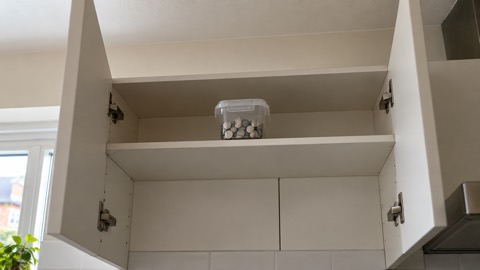
The safest light for a power cut is one that does not depend on a charger at all. Ready Scotland's emergency kit advice is to include a battery-operated torch and spare batteries, or a wind-up torch7. SP Energy Networks says keep a torch with charged batteries or a wind up dynamo torch within easy reach19. Northern Powergrid's power cut plan lists a torch and radio, battery, solar or wind-up20. Which? lists a torch and spare batteries, or a wind-up torch, in its storm kit21. NIE Networks says keep a torch and spare batteries in an easily accessible place22.
The common thread is spare batteries and a fixed place. Wiltshire and Swindon Prepared adds that you should make sure you have spare batteries if the torch is battery operated23. Electricity North West's advice is to keep a battery-operated or windup torch somewhere easy to find24.
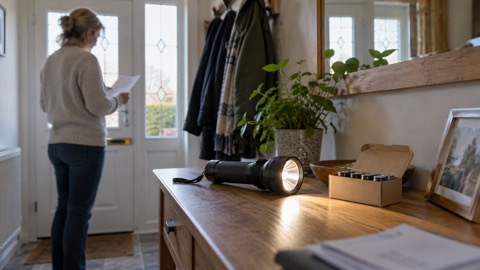
Where to keep it matters as much as what you keep. A torch in a loft or a drawer you cannot find in the dark is no use. Keep one in a known place on each floor, and check it before winter. For more on placement, see where to keep torches so you can find them in the dark and the power cut checklist.
A battery-powered or wind-up torch is the safest option
For most households, the safest emergency light is the one with the fewest things to go wrong. A battery torch with a spare set of cells, or a wind-up torch, needs no charger, no mains power and no charging routine. That is why fire and rescue services, energy networks and preparedness bodies all recommend it7.
If you want a rechargeable light as well, choose one whose maker gives clear charging instructions, and follow them. The MPOWERD Luci range, for example, is charged by solar or USB-C, and the maker's own advice is to charge via solar for a natural source of power, but if you are in a pinch, charge via USB26. That is a maker's instruction for its own product, and it illustrates the principle: use the method the maker specifies.
For candles, the safest substitute is a battery-powered one. Devon and Somerset Fire and Rescue Service says the safest way to use candles is to buy battery-powered versions, which have almost no fire risk, last longer and are better for the environment because you can replace, recycle or recharge the battery and reuse the candle27.
For more on choosing between light types, see emergency lighting at home and solar and wind-up lamps that need no batteries. If you are charging any rechargeable light, the guidance on charging and storing rechargeable torches safely sets out the routine in full.
Sources (27)
- Lithium battery fire safety, Merseyside Fire and Rescue Service, 2026-10-26
- Chargers, Electrical Safety First, 2026-10-26
- E-bikes, Electrical Safety First, 2026-10-26
- Battery fires, Devon and Somerset Fire and Rescue Service, 2026
- Lithium-ion batteries, Scottish Fire and Rescue Service, 2025-11-27
- Belkin BoostCharge and Playa power bank recall, London Borough of Bromley, 2025-12-08
- Emergency kit, Ready Scotland, 2026-10-22
- Batteries and chargers, London Fire Brigade, 2026-10-25
- Charge safe, National Fire Chiefs Council, 2026-10-09
- 18650 lithium battery charger for LED torch recall, Electrical Safety First, 2022-06
- Electrical safety, North Yorkshire Fire and Rescue Service, 2026-09-14
- Lithium-ion batteries, North Wales Fire and Rescue Service, 2026-10-25
- Battery safety, Portsmouth City Council, 2026-10-26
- E-bikes and e-scooters fire safety guidance, National Fire Chiefs Council, 2025-01-21
- Registering your e-bike or e-scooter for safety alerts and product recalls, London Fire Brigade, 2026-10-25
- Spot the warning signs, London Fire Brigade, 2026-10-25
- E-bike conversion kits fire risks and safety advice, London Fire Brigade, 2026-10-25
- E-bikes and e-scooters, Scottish Fire and Rescue Service, 2026-10-25
- Being prepared for a power cut, SP Energy Networks, 2026-10-26
- Power cut plan, Northern Powergrid, 2026-10-26
- Storm damage: how to protect your home from a thunderstorm, Which?, 2026-10-21
- Get storm ready, NIE Networks, 2025-12-03
- How to prepare for the loss of electricity, Wiltshire and Swindon Prepared, 2026-10-25
- Equipment services: what to do in a power cut, Mersey Care NHS Foundation Trust, 2026-10-25
- Button battery safety leaflet, WWL Teaching Hospitals NHS Foundation Trust, 2026-10-25
- Luci Original, BioLite, 2026-10-25
- Stay warm safely this winter, Devon and Somerset Fire and Rescue Service, 2026
 Spare Batteries for Lights
 Candle Safety Checklist
 Lighting Checks Before Winter
 Can Jar Candles Shatter
 Battery Tea Lights in a Pumpkin
 Keeping Pets Away from Candles
 Finding Torches in the Dark
 Red Light Mode on a Head Torch
 SOS and Strobe Modes
 IPX Ratings for Torches
 Torch Battery Runtime
 Camping Lantern Run Time
 Using a Torch While Charging
 Looking Into a Bright Torch
 Storing Spare Coin Cells