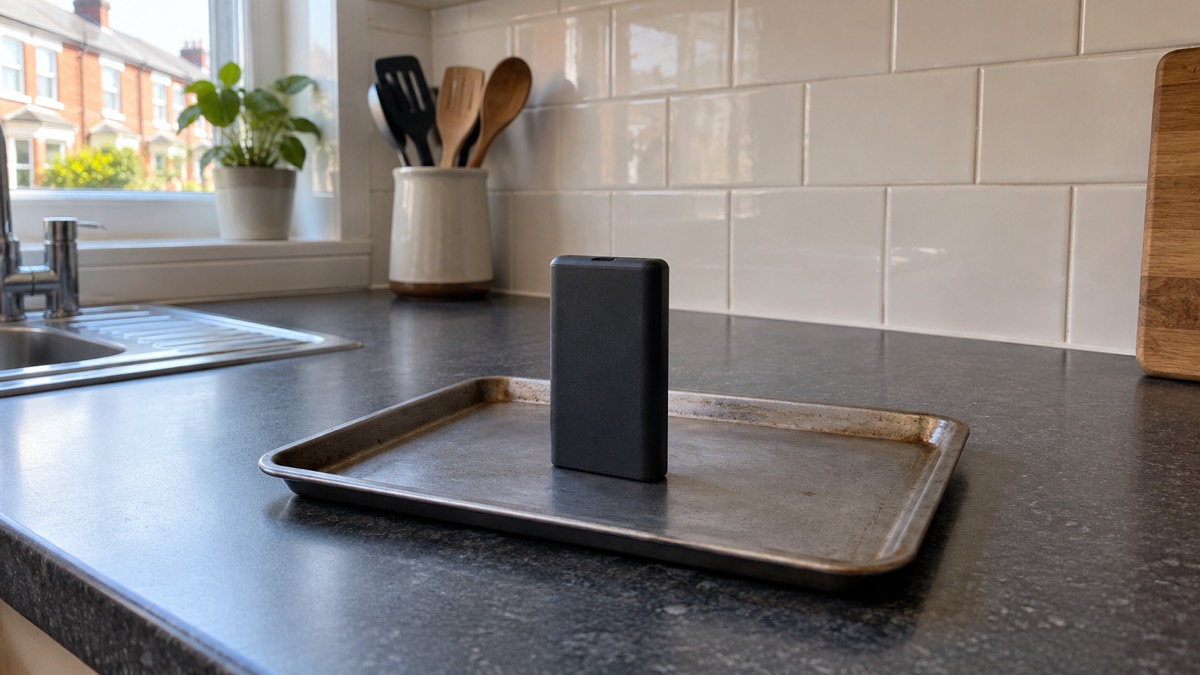
If you own a Belkin BoostCharge USB-C Power Bank 10K, model BPB002, stop using it now. The Office for Product Safety and Standards has recalled it, together with the Playa USB-C PB0003, because the lithium-ion batteries can overheat while in use, which can lead to localised smoking, melting or fire1. The product has been recalled from end users, and the official advice is to stop using it immediately and complete the recall form on the Belkin website to receive a full refund or replacement2.
That is the whole of the practical answer for an owner: unplug it, set it aside somewhere safe, and claim your remedy. The rest of this page explains how to check whether your power bank is one of the affected models, how the recall process works, why the model failed, and what the recall means for a household that was keeping a power bank ready for a power cut.
A power bank is one of the simplest pieces of backup power a household can hold: it keeps a phone, a torch or a radio alive when the mains fails. That is exactly why a recalled one matters. A device you keep charged and ready, often on a bedside table or in a hallway drawer, is a device that sits close to you. The recall is not a reason to give up on power banks. It is a reason to check the one you have.
Recalled for fire risk: stop using the BPB002 now
The safety warning is specific. The product presents a risk of fire as the lithium-ion batteries can overheat whilst in use, and this can lead to localised smoking, melting and/or a risk of fire1. The same wording appears in the recall notice published on 8 December 20252. This is not a vague caution about batteries in general. It is a statement that this model, in normal use, can fail in a way that produces smoke, heat and flame.
For a household, "in use" covers more than you might think. It means charging the power bank from the mains, and it means the power bank charging a phone or a torch. If the bank is sitting in a bag or on a shelf with a cable in it, treat that as use and stop. Unplug it, do not charge it again, and do not leave it somewhere it could do harm if it did overheat: away from soft furnishings, away from a bed, away from the route out of the house.
The recall notice also records that the product does not meet the requirements of the General Product Safety Regulations 20051. That is the legal test the product failed, and it is why the regulator has stepped in rather than leaving it to the maker alone. For an owner, the practical consequence is the same: the product is not considered safe to keep in use, and there is an official route to a refund or replacement.
If you have already noticed your power bank running hot, that is worth taking seriously in its own right. Our page on why a power bank gets hot while charging explains what normal warmth looks like and when heat is a warning sign, and warning signs a lithium battery is dangerous sets out what to watch for across all your battery kit.
How to get your remedy through the Belkin recall form
The official remedy is straightforward. Consumers should stop using the product immediately and complete the recall form on the Belkin website to receive a full refund or replacement2. The regulator's notice repeats the same instruction: complete the recall form on the Belkin website1. There is no shop counter process for most buyers, and no need to prove the fault: the recall applies to the model.
If you bought yours from TK Maxx, there is a second route. Products purchased via TK Maxx can be returned to any TK Maxx store for a full refund or replacement2. That is useful if you no longer have the packaging or would rather deal with a shop in person. Keep whatever proof of purchase you have, but do not let a missing receipt stop you starting the process.
A sensible order of work looks like this:
- Stop using the power bank immediately2.
- Find the model number on the back or side of the device and confirm it is a BPB0021.
- Complete the recall form on the Belkin website, or take a TK Maxx purchase back to a TK Maxx store1.
- Keep the power bank somewhere cool and away from anything flammable until you have sent it back or handed it in.
- Replace it only once you have a remedy in hand, and check any replacement against current product safety alerts before you rely on it.
Check whether your power bank is affected: models and barcodes
Only two models are caught by this recall: the Belkin BoostCharge BPB002 and the Playa PB00031. The model number can be located on the back or side of the Belkin device1. Turn the unit over and read the small print; you are looking for BPB002. If you find a different model number, this particular recall does not apply to your device.
The recall notice also lists five barcodes for the affected stock1:
| Barcode |
|---|
| 745883797622 |
| 745883806751 |
| 745883797639 |
| 745883806768 |
| 745883797646 |
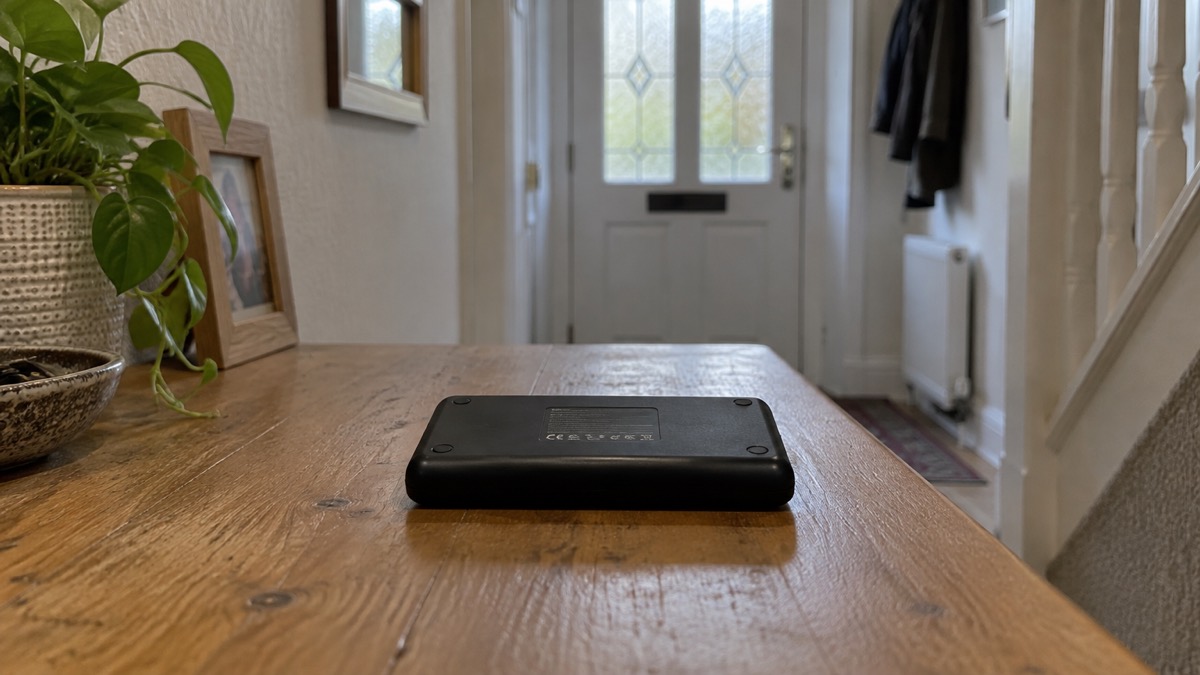
If your barcode matches one of these, you have an affected unit. If the model number matches but the barcode does not appear on the list, treat the model number as the deciding factor and contact Belkin through the recall form rather than assuming you are clear.
The affected products were sold by Belkin or by other retailers, including TK Maxx1. That matters because it tells you where to look: not just Belkin's own shop, but high street and discount retailers. A power bank bought as a gift, or picked up in a sale, is just as likely to be in scope.
The recall is classed as electrical appliances and equipment, chargers2. That classification is worth knowing if you are searching the regulator's records, because it is how the entry is filed. The country of origin is given as Vietnam1, which is a detail of the record rather than a statement about products from that country.
If you are checking a household's whole battery kit at the same time, our guide to buying safe chargers covers what to look for on the label and the markings, and UKCA, CE and battery safety markings explained sets out what the marks on a charger actually mean.
BoostCharge USB-C BPB002 or BoostCharge BPB002: the names used for this model
You will see the same product described in slightly different ways depending on where you look. The regulator's recall entry uses the full name, Belkin BoostCharge USB-C BPB002 and Playa USB-C PB0003 Power Banks1. The notice published on 8 December 2025 shortens it to BoostCharge BPB002 and Playa PB00032. Belkin's own product line is the BoostCharge range, and the model code BPB002 is the part that identifies the recalled unit.
For an owner, the model code is what matters. Marketing names change, packaging gets redesigned, and a power bank bought two years ago may carry a name that no longer appears on a shelf. The code on the back or side of the device does not change1. If you are searching for the recall, use the code, and if you are filling in the recall form, use the code as well.
The pairing with the Playa PB0003 is worth understanding. The two models are covered by a single recall, PSD notification number 2511-02251, and a single set of instructions. If you own a Playa PB0003, the advice is identical: stop using it, complete the recall form, claim your refund or replacement. Our page on the Belkin Playa USB-C Power Bank (PB0003) covers that model in its own right.
Belkin is a well-known maker of charging accessories, and this recall is specific to these models rather than a statement about the brand as a whole. If you want the wider picture of what the company makes, see our Belkin page.
Why the BPB002 was recalled: lithium-ion battery and safety failure
The recall notice describes the product as a portable power bank with lithium-ion battery cells1. Lithium-ion is the chemistry used in most power banks, phones and laptops because it stores a lot of energy in a small, light package. That energy density is also why a fault can develop quickly: a cell that overheats can vent, smoke and ignite, and heat can spread from one cell to the next.
The specific failure described in the notice is overheating while in use, leading to localised smoking, melting and/or a risk of fire1. The regulator's conclusion is that the product does not meet the requirements of the General Product Safety Regulations 20051. In plain terms, the product was placed on the market without meeting the safety standard the law requires, and the remedy is a recall from end users1.
This is not a story about misuse. The warning is about the product as sold, in ordinary use. That is why the advice is to stop using it rather than to use it more carefully. There is no safe way to keep drawing power from a device the regulator has recalled over a fire risk.
For a household building backup power, the lesson is not that power banks are unsafe. It is that battery kit needs checking, and that a recall notice is one of the few pieces of post you should act on the day it arrives. Our guide to lithium-ion battery safety at home covers charging, storage and warning signs across all your battery devices, and what to do if a lithium battery catches fire sets out the response step by step.
Official recall record: PSD notification 2511-0225
The recall is recorded by the Office for Product Safety and Standards under PSD notification number 2511-02251. The entry names the two models, gives the country of origin as Vietnam, lists the five barcodes, and states the corrective action: the product has been recalled from end users1. The notice published on 8 December 2025 adds the remedy detail, including the TK Maxx returns route and the finding that the product does not meet the General Product Safety Regulations 20052.
If you need to quote a reference when you contact Belkin, or when you return a unit to a store, the notification number is the one to use. It ties your query to the official record and saves a lot of explaining.
The recall record is also the place to check whether the position has changed. Regulators sometimes update a notice with new barcodes, a revised remedy or additional models. Before you assume a power bank is clear, check the current entry rather than an old screenshot or a social media post.
For a household, the recall is a reminder to keep a simple record of the battery kit you own: the model codes, where you bought each item and roughly when. If a recall lands, you can check your list in a couple of minutes rather than hunting through drawers. Our power banks guide explains how a power bank fits into a household's backup plan, and the power cut backup power checklist sets out what to keep ready for an outage.
Sources (2)
- Product recall: Belkin BoostCharge USB-C BPB002 and Playa USB-C PB0003 Power Banks 2511-0225, GOV.UK, 2025-11-26
- Belkin BoostCharge BPB002 and Playa PB0003 power bank recall notice, London Borough of Bromley, 2025-12-08
 BLUETTI Apex 300 Power Station
 BLUETTI Elite 100 V2
 Anker SOLIX C2000 Gen 2
 Anker SOLIX C1000 Power Station
 EcoFlow DELTA Pro
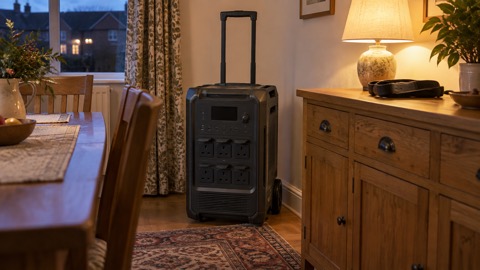 BLUETTI Elite 400
 Anker SOLIX C300 Power Station
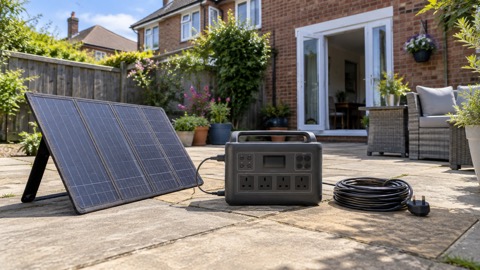 EcoFlow DELTA 3
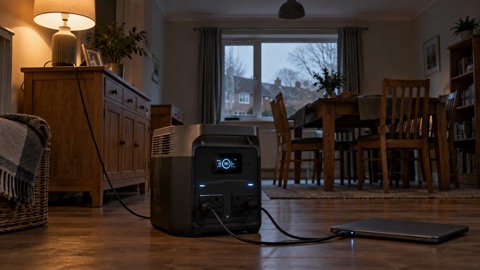 EcoFlow DELTA 2 and DELTA 2 Max
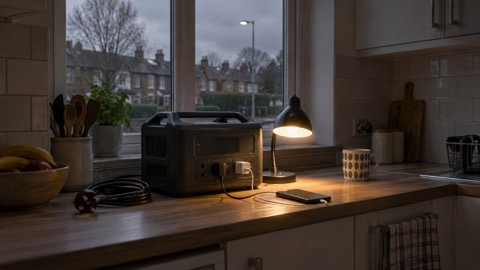 EcoFlow DELTA and DELTA Max
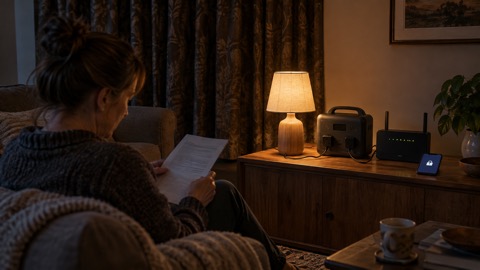 EcoFlow RIVER 3 and RIVER 3 Plus
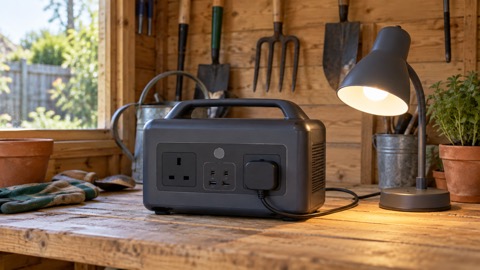 EcoFlow RIVER 2 and RIVER 2 Max