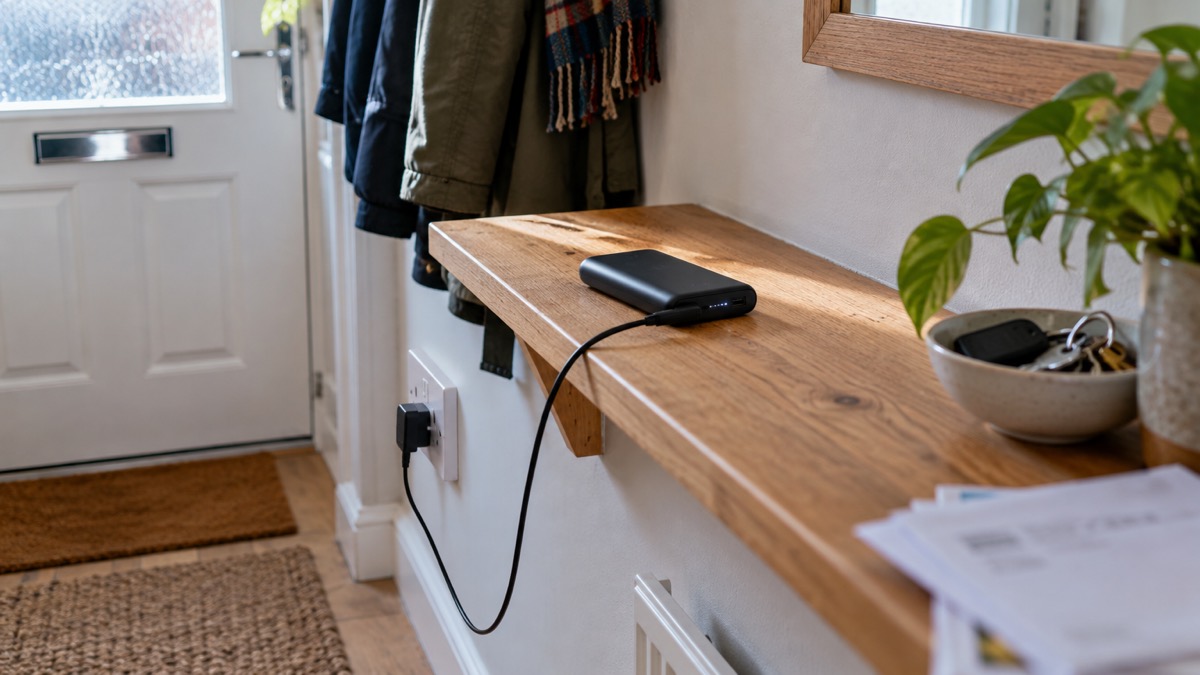
A power bank that feels warm while it is charging is usually behaving normally. Most power banks use lithium-ion batteries, and Electrical Safety First notes that these "will naturally get warm during charge and discharge cycles"1. Warmth alone is not a fault. What matters is the kind of heat, and whether anything else changes with it.
The line to hold in your head is between warm and wrong. A power bank that becomes extremely hot to the touch, swells, hisses, smells unusual or produces smoke is failing, and fire and rescue services are consistent: stop using it and stop charging it immediately2. A damaged lithium-ion battery can overheat and catch fire without warning2, so the safe response is to act on the first sign rather than wait and see.
The practical answer for an ordinary household is simple. Charge your power bank where you can see it, while you are awake and at home, on a hard surface that is not covered, using the charger and cable that came with it or ones the maker approves. Never charge it overnight or while you are out5. If it gets hot in a way that worries you, unplug it and treat it as suspect.
Some warmth is normal, but heat that worries you is not
Lithium-ion batteries warm up as they charge and as they discharge, and that is a property of the chemistry rather than a sign of a bad product1. A power bank that is slightly warm after an hour on charge, or warm after charging a phone, is doing what it should. The warmth should be gentle and even, and it should fade once the charge finishes.
The warning is heat that is out of proportion. Oxfordshire Fire and Rescue Service puts the test plainly: a battery is a concern if "it feels unusually hot"9. London Fire Brigade goes further, warning that "if a battery becomes extremely hot to the touch it may be defective and could start a fire"10. You are the judge of unusual, because you know how your own power bank normally feels. If it is hotter than it has ever been, that is your signal.
Heat has causes you can control. Overcharging, meaning charging too long or with too much voltage, can cause overheating and fires11. Covering a device while it charges traps heat and increases fire risk12. Charging places stress on the battery, and if the charger is incompatible or the battery is damaged, it can overheat and fail6. So the three things that most often turn ordinary warmth into a problem are time on charge, something covering the power bank, and the wrong charger.
Smoking, swelling or a changed shape: stop using it
When a power bank moves beyond warmth, the advice from every fire and rescue service is the same and it is immediate. Stop using it. Stop charging it. Do not give it one more go to see whether it settles.
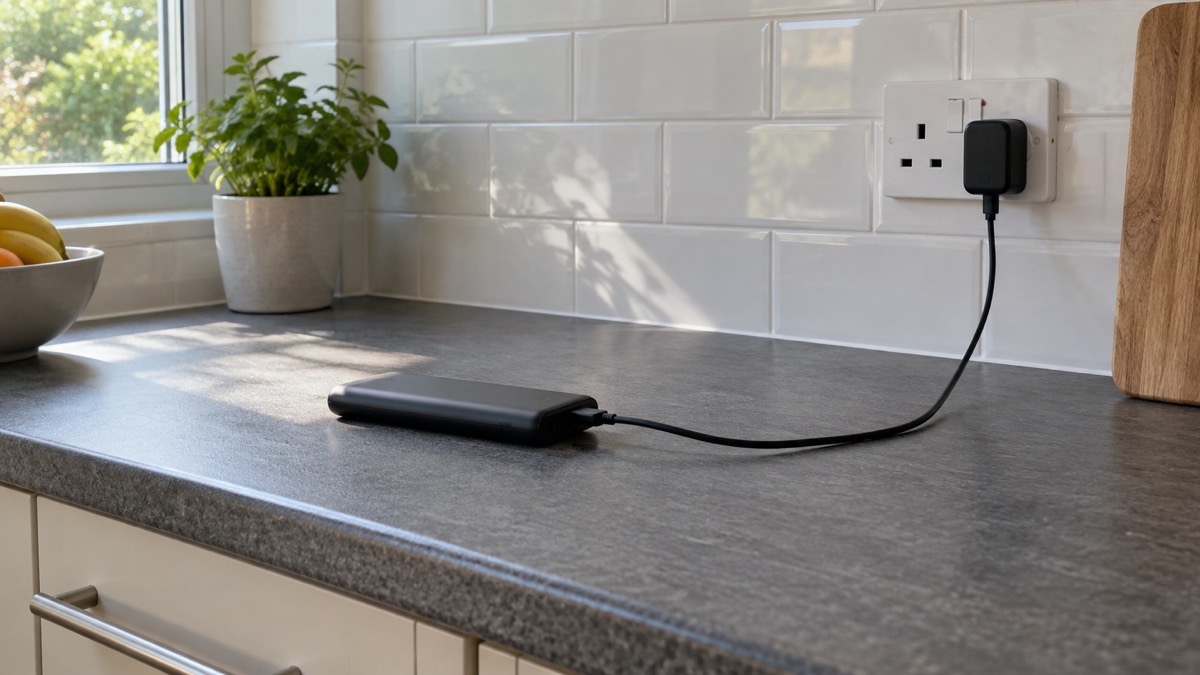
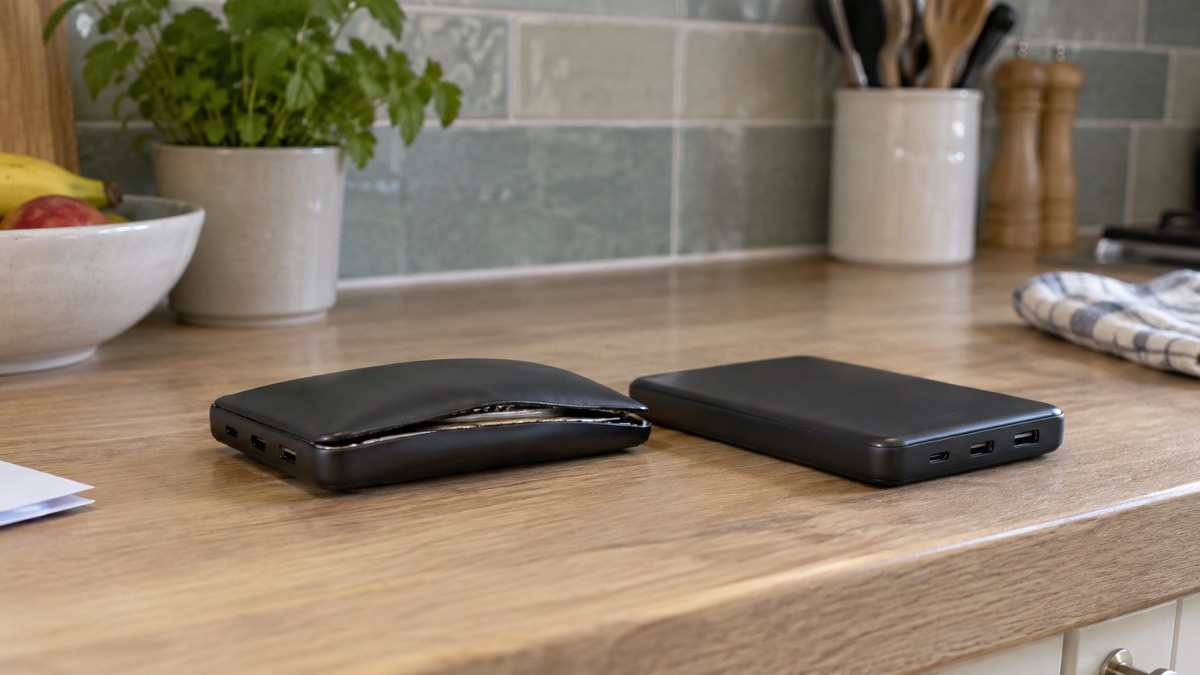
The signs to act on are set out clearly by the Fire Industry Association and the National Fire Chiefs Council. Do not use or charge a device if you notice the battery producing smoke, feeling extremely hot to touch, looking swollen or having any type of lump or leak, making a hissing or cracking sound, smelling unusual, or taking longer to charge or not fully charging2. North Yorkshire Fire and Rescue Service says you must stop using or charging your battery immediately if you notice overheating, deformation, noise, smell, performance problems or smoke4. The London Fire Brigade's instruction for a swelling battery is blunt: "Stop charging immediately"3.
| What you notice | What it can mean | What to do |
|---|---|---|
| Warm to the touch | Normal for lithium-ion1 | Carry on, but keep it uncovered and in sight |
| Unusually or extremely hot | Possible defect, possible fire risk9 | Unplug it and stop using it |
| Swollen, lumpy or leaking | Battery damage2 | Stop charging immediately3 |
| Hissing or cracking | Battery failure2 | Stop using it and move away |
| Smoke or an odd smell | Battery failure, possible fire2 | Get out and call 9998 |
| Slower to charge, or never full | Declining battery2 | Stop using it and replace it |
If you notice odd smells, sparking, smoke, swelling, cracks or damage while charging, Electrical Safety First's advice is to unplug immediately and contact the retailer or the manufacturer13. Do not put a suspect power bank in the household bin. Batteries that are damaged or overheated may catch fire14, and a damaged battery should be disposed of properly rather than stored loose in a drawer.
Why a damaged battery is a fire risk
A lithium-ion battery stores a lot of energy in a small space, and when it fails it fails fast. North Yorkshire Fire and Rescue Service notes that the high energy density allows these batteries to burn at temperatures over 700°C to 1000°C8. That is why a small power bank deserves the same respect as any other lithium battery in the home.
Damage is the main route to failure. Where a battery is damaged, it can overheat and catch fire without warning2. Damaged batteries may release flammable electrolytes, increasing the risk of fire11. Batteries can be damaged by dropping them, and a damaged battery should be replaced, not used or charged5. A power bank that has been dropped onto a hard floor, crushed in a bag or soaked is no longer a known quantity, even if it looks fine.
Charging badly is the other route. The risk of fire increases when products do not meet safety standards, are damaged or are charged incorrectly15. A fire could start due to a substandard battery, charging the battery incorrectly or damage to the battery11. A cracked, severely twisted or exposed charging cable could cause a fire and should not be used16. And when a battery does fail, it can explode or lead to a rapidly developing fire5.
The consequences are worse than a ruined device. These batteries could overheat, leading to an intense fire that produces toxic gases and large amounts of smoke with little warning9. Lithium-ion battery fires can spread rapidly and produce toxic smoke17. That is the reason the advice is to leave the room rather than tackle it: the smoke itself is the danger.
Safe charging: never overnight, never while you are out
The single most useful habit is to charge only while you are awake and at home. The National Fire Chiefs Council is direct: "Do not charge while sleeping or when away from home: This allows you to respond quickly if something goes wrong"18. The Fire Industry Association gives the same instruction for e-bike and e-scooter batteries, to charge only while awake and alert5. The principle applies to any lithium-ion device, including a power bank.
Keep it uncovered and on a hard surface. Do not cover the charger, battery or device while charging, as this can cause overheating or even a fire2. Never cover a charger, because it may build up heat during the charging process7. Do not cover chargers or battery packs when charging, as this could lead to overheating or even a fire19. A power bank under a cushion, a coat or a pile of washing is the classic mistake.
Use the right charger and check it. Read the manufacturer's instructions carefully and always follow them1. Regularly check the charger, the plug and the socket for burn marks, buzzing or crackling, or if it feels too hot to touch21. Do regular checks of plugs and sockets for burn marks, sounds of arcing, fuses blowing, circuit-breakers tripping or heat22. If the charger is incompatible or the battery is damaged, it can overheat and fail6.
A few more habits keep a power bank in good order. Do not immerse it in water, and protect it from damage1. Do not leave it in a parked car where it could get cold in winter or hot in summer1. Allow a cold battery to warm to room temperature before charging, because charging a battery when it is extremely cold can damage it23. And register your power bank so you can be contacted easily if there is a safety recall of your product24.
If it does catch fire: get out and call 999
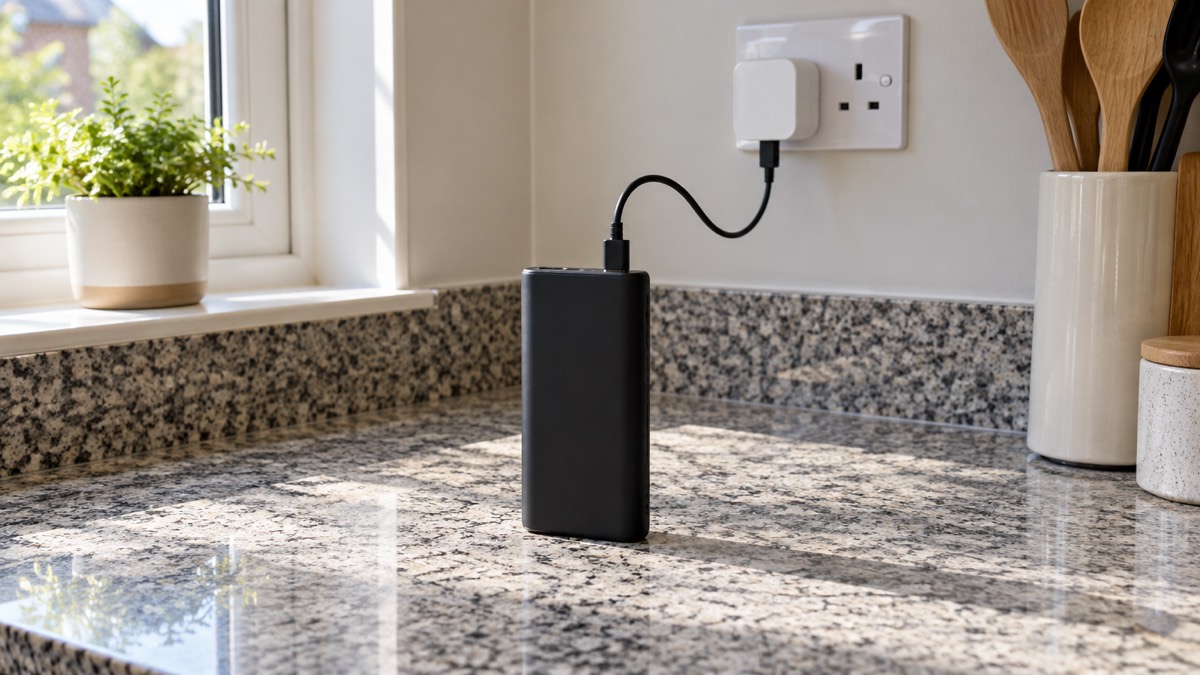
If a power bank starts smoking or burning, do not try to move it far or fight the fire. Get everyone out of the room, close the door behind you if you can, and call 9998. Lithium-ion battery fires can spread rapidly and produce toxic smoke17, and they release toxic fumes when they overheat8. Stay out and wait for the fire and rescue service.
Once the emergency is over, a failed power bank still needs dealing with properly. Do not put a damaged or swollen battery in the household bin, because damaged or overheated batteries may catch fire14. Take it to a household waste and recycling centre that accepts batteries, or follow your council's advice on disposing of damaged lithium batteries.
Where to get help and how to check for a recall
Recalls are the reason to register a power bank when you buy it. Registration means the maker can contact you if there is a safety recall of your product, and it makes returning a faulty item or ordering a repair much easier24. If you did not register, check the maker's website and the official product safety notices from time to time.
Recalls do happen, and they name the model. A safety notice for the Belkin BoostCharge USB-C BPB002 and Playa USB-C PB0003 power banks warned that the product presents a risk of fire as the lithium-ion batteries can overheat whilst in use, leading to localised smoking, melting or a risk of fire20. The instruction was to stop using the product immediately and complete the recall form on the Belkin website for a full refund or replacement20. Anker issued a recall for its 321 Power Bank (PowerCore 5K, Black) A1112, stating that the lithium-ion battery in the affected power banks can overheat, potentially causing melting of plastic components and smoke25.
If your model is recalled, stop using it at once and follow the maker's recall instructions. Do not keep using it while you wait for a replacement, and do not pass it on to someone else.
For more on keeping phones and small devices charged safely through a power cut, see Power Banks: Keeping Phones Charged in an Emergency and Lithium-Ion Battery Safety at Home. If you are setting up charging for a longer outage, the Safe Battery Charging at Home Checklist sets out the routine step by step.
Sources (25)
- Power banks, Electrical Safety First, 2026
- Lithium-ion batteries, Scottish Fire and Rescue Service, 2025
- Batteries and chargers, London Fire Brigade, 2026
- Charge safely for your own safety, Northern Ireland Fire and Rescue Service, 2026
- E-bike and e-scooters, Scottish Fire and Rescue Service, 2026
- How to charge e-bikes and e-scooters safely, London Fire Brigade, 2026
- Electrical safety, North Yorkshire Fire and Rescue Service, 2026
- E-scooter, e-bike and mobility scooter fire safety advice, North Yorkshire Fire and Rescue Service, 2026
- Charging safety, Oxfordshire County Council, 2026
- Spot the warning signs, London Fire Brigade, 2026
- Battery fires, Devon and Somerset Fire and Rescue Service, 2026
- Lithium battery fire safety, Mid and West Wales Fire and Rescue Service, 2026
- USB chargers, Electrical Safety First, 2026
- How to dispose of batteries from your e-bike or e-scooter, London Fire Brigade, 2026
- Charge Safe, National Fire Chiefs Council, 2026
- Student safety, Devon and Somerset Fire and Rescue Service, 2026
- What to do if there's a fire caused by an e-bike or e-scooter, London Fire Brigade, 2026
- Lithium-ion batteries, National Fire Chiefs Council, 2026
- E-bikes and e-scooters fire safety guidance, National Fire Chiefs Council, 2026
- Belkin power bank recall, London Borough of Bromley, 2025
- Mobile phones and tablets, Electrical Safety First, 2026
- Looking after the electrics, North Wales Fire and Rescue Service, 2026
- Heat, cold and rain: How weather conditions affect e-bikes and e-scooters | London Fire Brigade, London Fire Brigade
- Power banks, Electrical Safety First, 2026
- Anker 321 Power Bank recall, Anker, 2026
 Power Cut Backup Power Checklist
 Backup Power Before Winter
 Safe Battery Charging at Home
 Running a Generator Indoors
 Carbon Monoxide from Generators
 Generator Sizing for a Power Cut
 Generator Run Time on a Tank
 Storing Petrol at Home
 Diesel Storage at Home
 Storing a Generator
 Generators in Cold Weather
 Generator Noise and Neighbours
 Power Station Capacity Sizing
 Power Station Run Time
 Power Station for a Gas Boiler