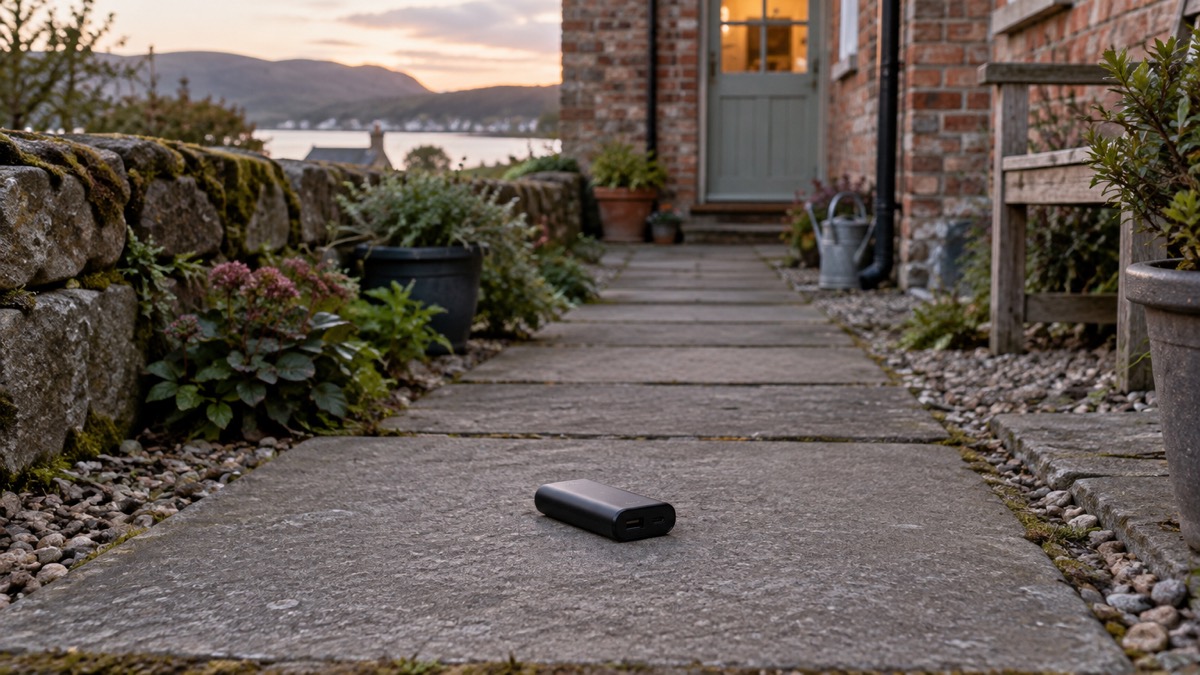
If you own an Anker 321 Power Bank (PowerCore 5K, Black) with the model number A1112 on the bottom, stop using it now. The unit has been recalled because a manufacturing defect in its lithium-ion battery can cause overheating, melting of plastic components, smoke and fire1. Anker's recall covers units bought between 1 March 2023 and 6 June 2024, and the government product safety notice records affected batch 22D511.
The action is straightforward. Store the power bank somewhere safe, check the serial number on Anker's recall form, stop using it, and dispose of it at a facility that accepts lithium batteries rather than putting it in the bin3. If the serial number confirms an affected battery cell, Anker says it will send a replacement2. UK owners can email support@anker.com with "Anker 321 Power Bank Recall" in the subject line, or phone +44 (0) 1604 936 2002.
For a household building a power cut kit, the recall matters beyond one product. A power bank is a simple way to keep a phone alive through an outage, and this one weighs 118g and gives up to 12W4. But a recalled lithium battery sitting in a drawer is a fire risk in your home, and the same care that gets you through a power cut is the care that keeps a battery safe. This page covers what the recall means, how to tell the two versions apart, what the power bank can do for a household, and how to charge, store and use it safely.
Recall: stop using the Anker 321 Power Bank A1112 now
The recall is official on both sides. The government product safety notice, PSD number 2406-0051 and dated 9 August 2024, records that the product has been recalled from end users by the manufacturer, that it presents a risk of fire as the lithium-ion battery may overheat, causing the product to ignite, and that it does not meet the requirements of the General Product Safety Regulations 20051. Anker's own notice says the same thing in its own words: some of the lithium-ion batteries used in the A1112 may pose a fire safety risk due to a manufacturing defect, and the battery can overheat, potentially causing melting of plastic components, smoke and fire hazards5.
Anker's notice sets out a short sequence for owners3:
- Store the device in a safe location.
- Verify your serial number on the recall form, and if it matches, fill out the form.
- Immediately stop using the product.
- Dispose of it at a facility that accepts lithium batteries.
The remedy is a replacement, not a repair. Anker states that if your power bank is verified, based on the serial number, as having one of the affected battery cells, it will send you a new one2. The recall applies to units purchased between 1 March 2023 and 6 June 2024, and Anker says it is reaching out to all customers who bought the product in that window2.
The government notice adds detail that helps you place your own unit. It records the product type as electrical appliances and equipment, a power bank, sold via Amazon, with China as the country of origin, and notified by Local Authority Trading Standards1. The affected batch is 22D511. Anker's notices do not name a batch number, working from the serial number instead, so if your unit falls in the purchase window but you cannot match a batch, the serial number check on the recall form is the test that decides it2.
Never put a recalled power bank in the bin or recycling
Anker is blunt about disposal: "DO NOT throw the power bank into the trash or recycling bin"5. The reason is that a damaged or defective lithium battery can ignite in a bin lorry, a waste transfer station or a recycling plant, where nobody is watching it. The same warning appears across Anker's power bank recalls, which ask owners not to discard recalled cells in the trash, general recycling streams, or used battery drop-off boxes at retail and home improvement stores6.
The correct route is a facility that accepts lithium batteries. Anker's instruction is to dispose of the device following municipal recycling centre procedures for damaged, defective or recalled lithium-ion batteries5. In practice that means your local household waste recycling centre, booked in or handed over as the site requires, and not the small battery tub by the till in a shop.
Electrical Safety First, the independent charity, gives the same advice for power banks in general: recycle old power banks properly, and do not dispose of them in the general waste or normal recycling7. That applies to every power bank you retire, not only recalled ones.
- Do: take it to a facility that accepts lithium batteries5
- Do: keep it out of reach of children and pets until then
- Do not: put it in the bin, the kerbside recycling, or a shop battery box5
- Do not: post it back to a retailer unless you have been told to
If you are unsure where your nearest site is, your council's waste pages will say. The principle is the same across the UK: a lithium battery is hazardous waste, and it leaves the house by a different route from everything else.
The two versions: A1112 and the PowerCore 5K listing
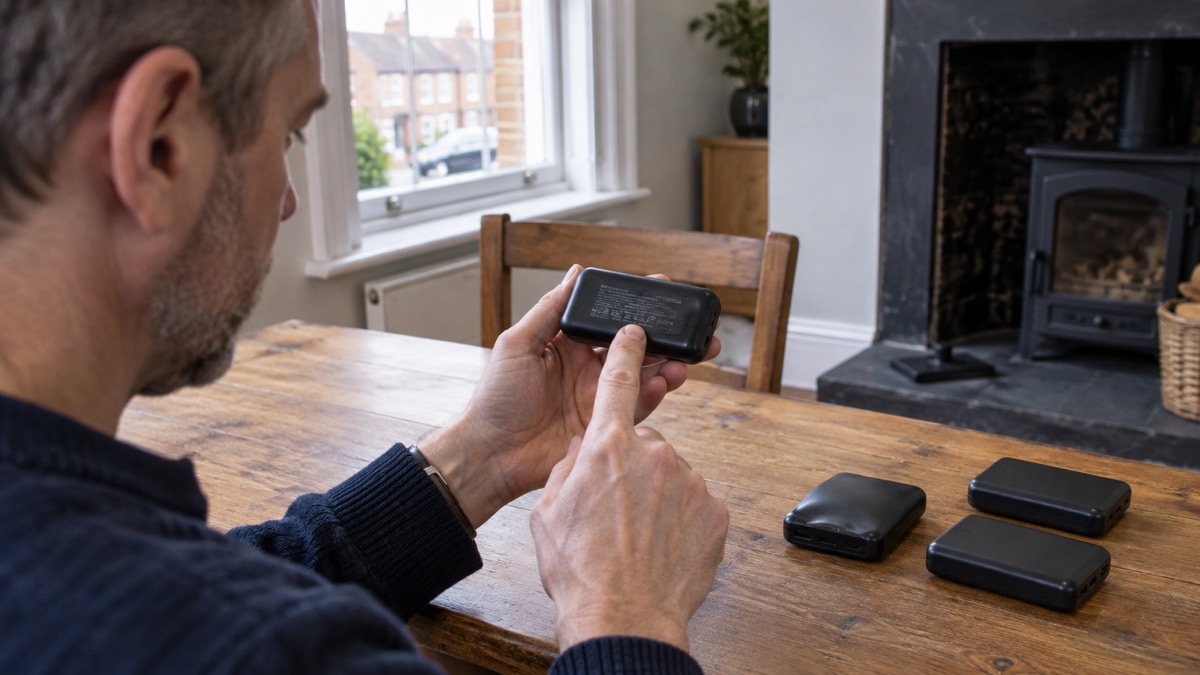
The name on the box is not enough to tell you whether you have a recalled unit. Anker sells the PowerCore 5K under the Anker 321 name, and the recall turns on the model number printed on the casing, not the product name on the listing. Anker's instruction is to look at the bottom of the power bank and confirm that it reads: Anker 321 Power Bank (PowerCore 5K, Black), Model: A11125.
That single check separates two situations. If the bottom says A1112, you have a unit in the recall's scope and should follow the recall steps. If it carries a different model number, the A1112 recall does not apply to it, though the general advice on charging and storing lithium batteries still does.
| What to check | Where to look | What it tells you |
|---|---|---|
| Model number | Bottom of the power bank | A1112 means the recall applies5 |
| Serial number | Bottom of the power bank, then Anker's recall form | Confirms whether the battery cell is affected2 |
| Purchase date | Your order records | The window is 1 March 2023 to 6 June 20241 |
| Batch | Government notice | Affected batch is 22D511 |
Anker has run other power bank recalls, and they are easy to confuse. A separate notice covers the Anker 334 MagGo Battery (PowerCore 10K), Anker Power Bank and Anker MagGo models A1642, A1647 and A1652, again over a manufacturing defect in lithium-ion batteries causing overheating, melting of plastic components, smoke and fire hazards8. That notice uses a different email subject line, "Anker Power Bank Recall", and asks owners not to return the unit to the company, Amazon or anyone else8. If you hold more than one Anker power bank, check each one against the notice that names its model, and use the matching contact route.
Specifications: 5200mAh, 12W output and 118g
Set the recall aside for a moment and the PowerCore 5K is a small, light power bank of the kind that earns its place in a power cut kit. Anker's specification for the model gives a 5200mAh total nominal rated capacity of internal battery cells, a maximum output of 12W, and a weight of 118g4. It has one USB-C input rated 5V 2.4A (12W), a USB-A output at 5V 2.4A (12W) and a USB-C output at 5V 2.4A (12W), with total output of 5V 2.4A (12W)4.
| Specification | Figure |
|---|---|
| Battery capacity | 5200mAh total nominal rated capacity4 |
| Maximum output | 12W4 |
| USB-C input | 5V 2.4A (12W)4 |
| USB-A output | 5V 2.4A (12W)4 |
| USB-C output | 5V 2.4A (12W)4 |
| Total output | 5V 2.4A (12W)4 |
| Weight | 118g4 |
| In the box | 1 x 2 ft (0.6 m) USB-A to USB-C cable4 |
| Warranty | 18 months4 |
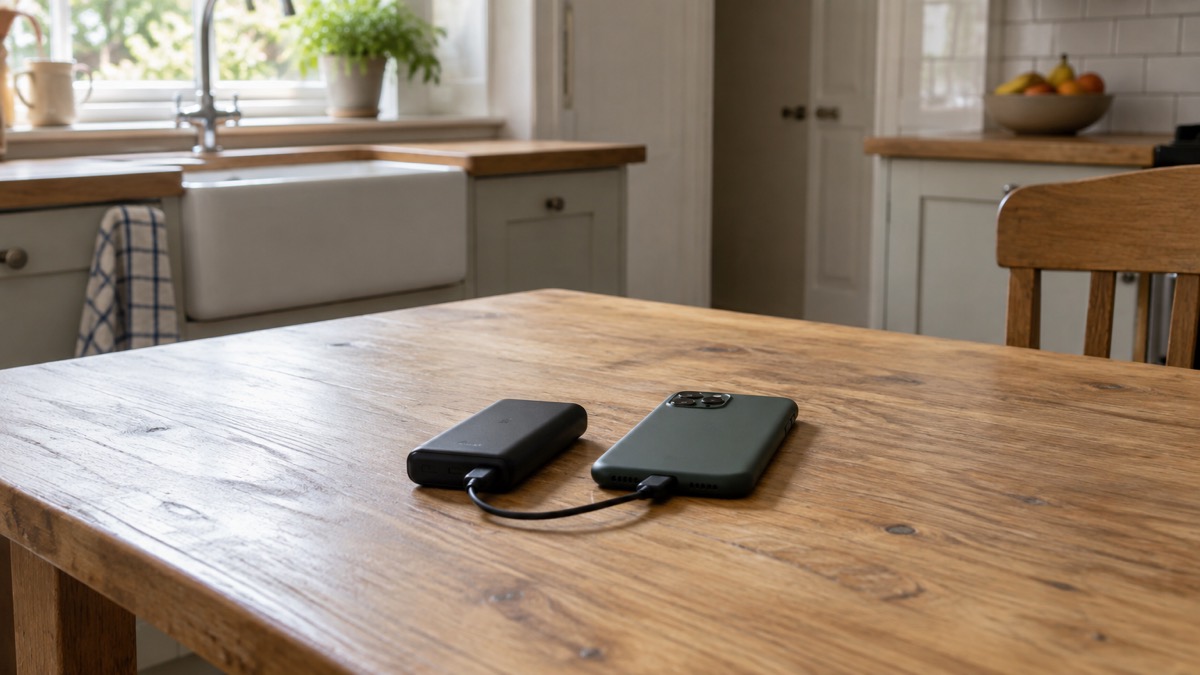
What those numbers mean for a household is modest and useful. Anker states that it can charge an iPhone 13 to 98% in 2 hours4. That is roughly one full phone charge from a unit the size of a small wallet, which is the difference between a phone that dies on the first evening of a power cut and one that lasts into the next day. It is not a device for running appliances, and 12W total output will not charge a laptop at speed or power anything with a mains plug.
The 5200mAh figure is the total nominal rated capacity of the internal cells, as Anker puts it, not the amount you can draw out at the socket4. Every power bank loses some energy in conversion, so treat the phone charge figure as the realistic guide rather than doing your own arithmetic from the capacity. If you want to work out what a given device needs, see Watts, Watt-Hours and Surge Explained.
What it does for a household in an emergency
In a power cut, the thing that fails first and matters most is communication. Mobile networks usually keep running for a while on backup power, but a phone with a flat battery cannot use them, cannot show you the local outage map, and cannot reach a vulnerable neighbour or a family member. A power bank of this size is a light way to buy a day of phone use, and at 118g it can live in a bag, a glovebox or a hallway drawer without being noticed4.
Its limits are worth being clear about, because a household that expects too much from a small power bank will be disappointed at the worst moment.
- It charges phones and small devices. Anker lists compatibility with many phones and devices such as iPhone 7, Samsung Galaxy S7, Airpods and Apple watches, and says it works with iPhone, Samsung, Google Pixel, LG and more4.
- It has a low-power mode. Anker's Trickle Charging Mode is for charging low-powered devices and accessories, and the maker says you can use it to charge low-powered devices such as Bluetooth headphones or portable speakers without worrying about overcharging4.
- It will not run mains appliances. At 12W maximum output it is not a substitute for a portable power station, which is the kit that runs a fridge, a router or a boiler4.
- It is one charge, not a supply. Plan on it topping up a phone, not carrying the household for days.
That places it in a household plan as a personal item rather than a household one. One per adult, kept charged, is a sensible baseline; the wider question of how many and what capacity is covered in Power Banks: Keeping Phones Charged in an Emergency and the Power Bank or Portable Power Station comparison sets out where the line falls. For a full list of what to have ready before an outage, the Power Cut Backup Power Checklist is the place to start.
Charging it, built-in protection and warranty
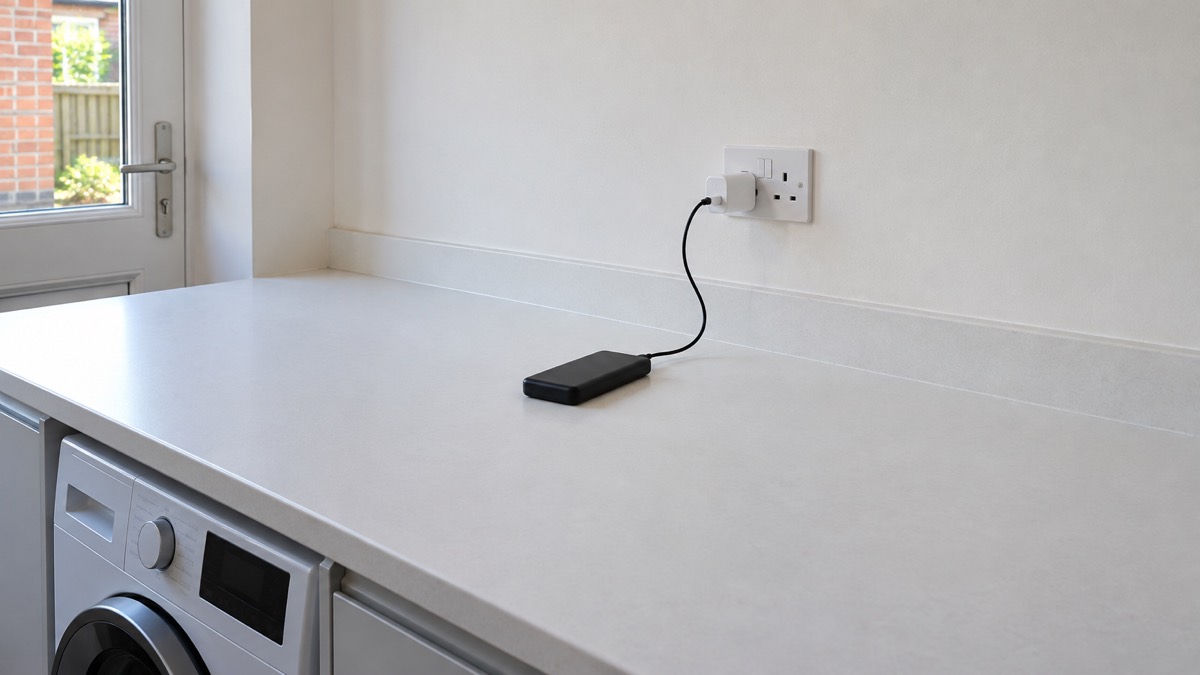
Charging is through the USB-C input at 5V 2.4A (12W), using the USB-A to USB-C cable supplied4. There is no mains plug in the box, so you charge it from a USB charger you already own. Anker's own safety design for the model is its MultiProtect system, which the maker describes as combining temperature control, overload protection, overcurrent protection and more safety features4. That is the maker's description of its own product; it is not a substitute for using the right charger and watching the unit while it charges.
Anker gives a warranty of 18 months on the model4. For a recalled unit, the remedy is the replacement described in the recall notice rather than a warranty claim, and the recall route is the one to use2.
Safe charging and storage follow the same rules as any lithium battery in the home, and the independent guidance is consistent. Electrical Safety First advises recycling old power banks properly rather than putting them in general waste7. The wider safety picture, including warning signs and what to do if a battery fails, is set out in Lithium-Ion Battery Safety at Home, with specific pages on warning signs a lithium battery is dangerous, what to do if a battery starts swelling and what to do if a lithium battery catches fire. The Safe Battery Charging at Home Checklist turns those into a routine.
For a household keeping a power bank ready for emergencies, the practical routine is short. Keep it charged and check it every few months so it is not flat when you need it. Charge it on a hard surface, not on a bed or sofa, and not overnight while you sleep. Keep it out of direct sun and away from radiators. If it gets hot in normal use, stop and investigate rather than pressing on. The page on why a power bank gets hot while charging covers what is normal and what is not, and how long power banks last helps you decide when to retire one.
Where to get help
Anker's UK route for the recall is email at support@anker.com with "Anker 321 Power Bank Recall" in the subject line, or phone on +44 (0) 1604 936 2002. The same notice lists numbers for other countries, including the United States on (800) 988 7973 and Germany on +49 (0) 69 9579 7960, which are not the line for UK households2. Anker's own brand pages carry the current product information, and the Anker page gathers it in one place.
If you want the official record rather than the maker's, the government product safety alert for the Anker 321 Power Bank (PowerCore 5K, Black) A1112 sold via Amazon carries PSD number 2406-0051 and is dated 9 August 20241. Quote that reference if you contact anyone official about the product.
For a household that has lost confidence in a power bank, the sensible next step is not to abandon the idea but to check what you hold. Go round the house, look at the base of every power bank, and match each model number against the recall notices that name it. The Backup Power at Home: A Household Guide sets out the wider kit, and Deciding What to Keep Running When the Mains Fails helps you work out what your household actually needs to keep going.
Sources (8)
- Product Recall: Anker 321 Power Bank (PowerCore 5K, Black) A1112 sold via Amazon (2406-0051), GOV.UK, 9 August 2024
- Anker 321 Power Bank (PowerCore 5K, Black) A1112 Recall, Anker, 25 October 2026
- Anker 321 Power Bank (PowerCore 5K, Black) A1112 Recall (Poland), Anker, 25 October 2026
- Introduction to Anker 321 Power Bank (PowerCore 5K) Model Number A1112, Anker, 23 November 2022
- Anker 321 Power Bank (PowerCore 5K, Black) A1112 Recall (EU), Anker, 25 October 2026
- Anker Power Bank Recall: A1642, A1647, A1652, Anker, 2025
- Power Banks, Electrical Safety First, 26 October 2026
- Anker Innovations Recalls A1642/A1647/A1652 - Anker US, Anker Innovations

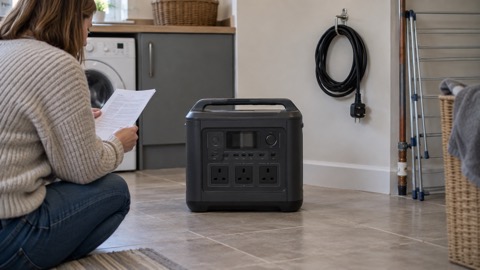 BLUETTI Apex 300 Power Station
 BLUETTI Elite 100 V2
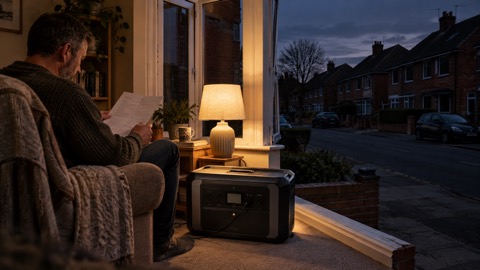 Anker SOLIX C2000 Gen 2
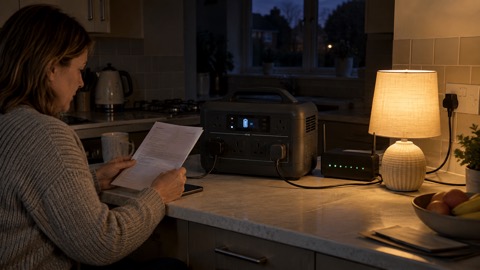 Anker SOLIX C1000 Power Station
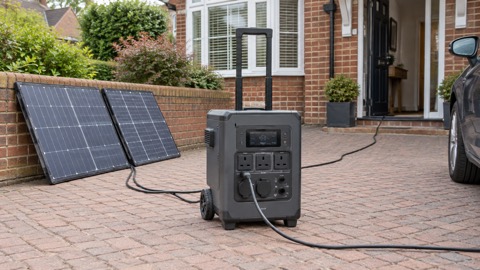 EcoFlow DELTA Pro
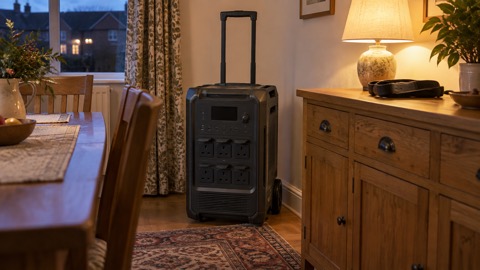 BLUETTI Elite 400
 Anker SOLIX C300 Power Station
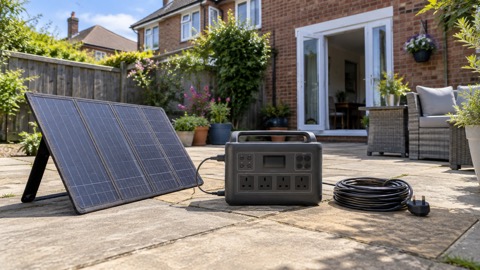 EcoFlow DELTA 3
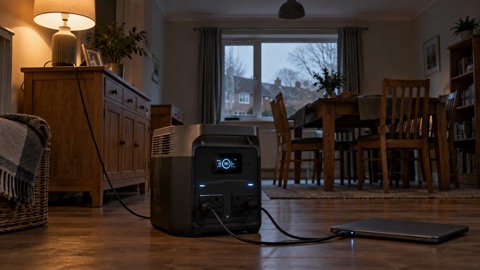 EcoFlow DELTA 2 and DELTA 2 Max
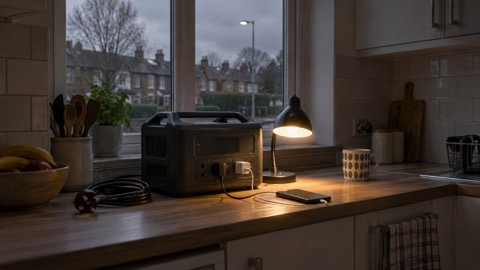 EcoFlow DELTA and DELTA Max
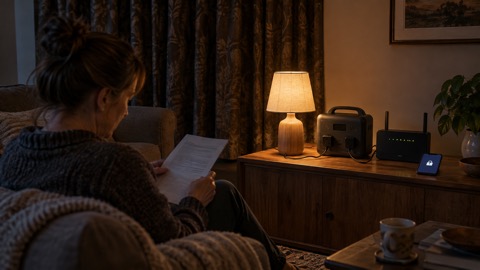 EcoFlow RIVER 3 and RIVER 3 Plus
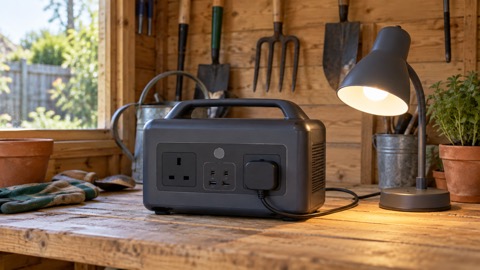 EcoFlow RIVER 2 and RIVER 2 Max