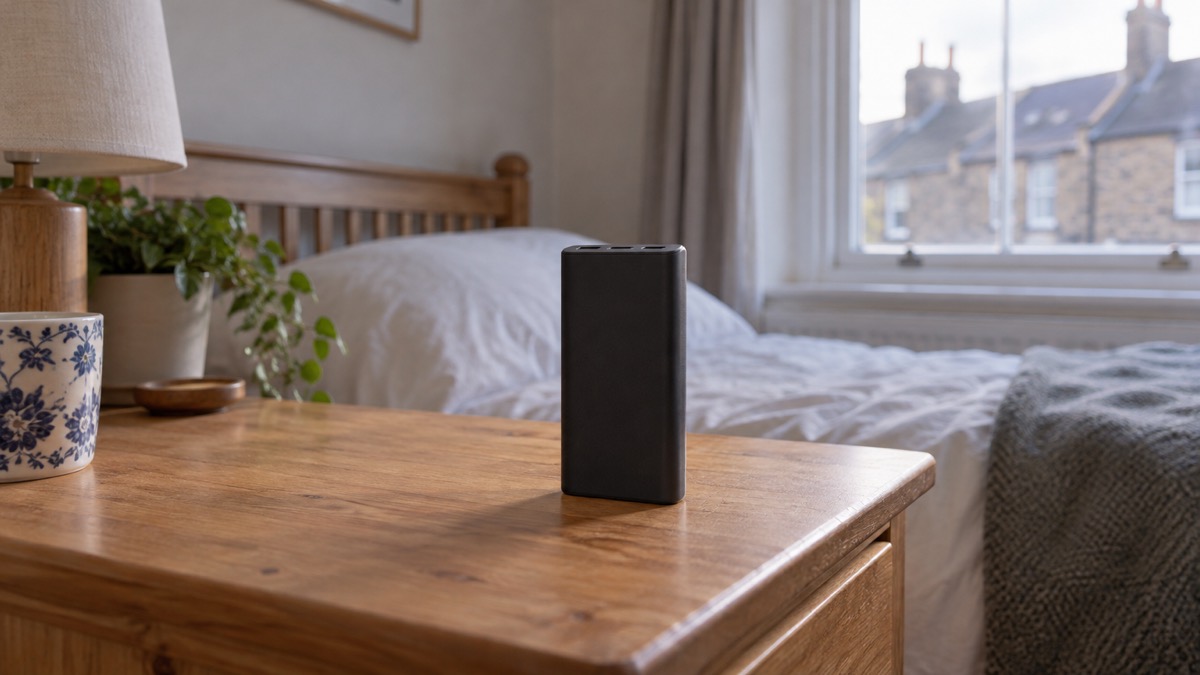
If you own an Anker A1647 power bank, stop using it now. The model is part of a voluntary recall that Anker says covers the United Kingdom and many other countries, and the maker's instruction is blunt: "Stop using the device immediately."1 That applies even if the power bank still charges your phone perfectly well, because Anker says any unit confirmed to be part of the recall should be stopped from use whether or not it appears to function normally1.
The reason is fire. A lithium-ion battery that fails can burn, and a power bank is a battery in a pocket-sized case. Electrical Safety First, the UK charity that campaigns on electrical safety, describes a swollen power bank as a sign of internal failure and says it may mean the device is at serious risk of catching fire2. A recalled unit is one the maker has already decided carries that risk.
What to do takes a few minutes. Turn the power bank over, read the model number on the bottom, and if it says A1647, check the 16-digit serial number against Anker's recall form3. If it matches, keep the unit out of the bin, store it somewhere safe, and start a claim with Anker for a refund or a gift card1. The sections below take each step in turn, including what to do if the power bank is already swollen, already thrown away, or was bought second-hand.
Anker A1647 recall: stop using it and check your power bank
The recall is Anker's own, announced by the company rather than by a UK regulator, and it is voluntary. Anker describes it as "a voluntary global recall of several Anker power bank models"4. The models named in the recall notice are the A1642, A1647 and A16523. This page deals with the A1647; the A1652 has its own page.
The instruction for anyone holding an affected unit is the same in every version of the notice. Anker asks owners to store the device in a safe location, verify the serial number through the submission form, and stop using the product immediately3. It repeats the point for anyone whose serial number matches: "Even if the device appears to function normally, any unit confirmed to be part of this recall should be stopped from use"1.
That last sentence matters more than it might seem. A power bank that works is not evidence that it is safe. The failure the recall addresses is a battery fault that can develop without warning, and the only reliable test is the serial number, not how the unit behaves. So the order of actions is: stop using it, find the label, check the number, then decide what happens next.
"Stop using the device immediately."
There is a second instruction that owners often miss. Anker says not to dispose of the power bank until it has confirmed that the unit qualifies for the recall4. In other words, do not put it out with the rubbish in a fit of tidiness before you have your answer. Keep it, safely, until Anker tells you what to do with it.
How to check whether your power bank is the A1647
Checking takes one minute and needs no tools. Anker says you can verify the model of your power bank by looking at the bottom of it, where the model name and the model number are printed, in the form Model: A1642, A1647 or A16523. The same label carries the serial number, which is 16 digits long3.
One small trap: Anker states that serial numbers do not contain the letter O or the letter I3. If a character looks like an O, it is a zero; if it looks like an I, it is a one. Getting this wrong on the form is the most likely reason a genuine recalled unit comes back as "not matched".
- Turn it over. The label is on the base of the power bank3.
- Read the model line. You are looking for A1647. The A1642 and A1652 are covered by the same recall3.
- Find the 16-digit serial number on the bottom; serial numbers do not contain the letter "O" or the letter "I"3.
- Enter it in Anker's recall submission form to see whether your unit is affected3.
- If it matches, stop using it and keep it until Anker confirms what happens next1.
If the label is worn away and you cannot read the number, do not guess. Contact Anker directly and explain; the contact details are in the help section below.
What to do with a recalled power bank at home
Once Anker has confirmed that your unit qualifies, the question becomes what to do with a small object you must not use and must not bin. Anker's answer is a certified disposal route. It asks owners to dispose of the affected unit at a certified facility that accepts recalled lithium-ion batteries, and says Anker will arrange pick-up, or the unit may be shipped to Anker for disposal at its certified facility4.
Until that is arranged, the unit is your responsibility. Treat it as you would any damaged battery: keep it away from anything that burns, out of direct sun, away from children and pets, and somewhere you would notice if it started to swell or get hot. Electrical Safety First's guidance on power banks is a good general standard for the whole household: regularly check the charger, plug and socket for burn marks, buzzing or crackling, or a plug that feels too hot to touch6.
If your unit is already showing any of those signs, do not wait for the claim to complete before acting on them. Unplug it, move it away from anything flammable, and contact Anker. Our page on what to do if a battery starts swelling covers the household steps in more detail.
Why a recalled power bank must not go in household rubbish
The instinct with a small broken gadget is the bin, or the battery box by the till at the supermarket. Anker's UK notice rules out both. It says not to throw the power bank into the trash or recycling bin, and to dispose of it at a facility that accepts lithium batteries5. It goes further: do not return it to the Company, Amazon or anyone else, and do not use the used battery recycling boxes at retail and home improvement stores5.
The reason is the same fire risk that triggered the recall. A lithium-ion battery crushed in a bin lorry, compacted at a waste transfer station or mixed into a kerbside recycling load can short and burn. Anker's global notice puts it plainly: do not throw the recalled battery in the rubbish, the general recycling stream, or used battery drop-off boxes at retail or home improvement stores4.
| Where people put old power banks | What Anker says for a recalled A1647 |
|---|---|
| Household rubbish | Do not5 |
| Kerbside recycling | Do not5 |
| Shop battery recycling box | Do not5 |
| Back to Anker, Amazon or another seller by post | Do not, unless Anker directs it5 |
| A certified facility that accepts recalled lithium-ion batteries | Yes, or Anker arranges pick-up4 |
For a general household, the practical rule is simple: a recalled unit follows the recall route, not the ordinary waste route. Our guide to disposing of a damaged lithium battery sets out the wider picture for batteries that are not part of a recall.
The expanded recall: what changed for A1647 owners
The A1647 has been through two rounds. Anker's Australian notice links to an ACCC recall advertisement dated 2 October 2024 for the A1647 power bank7. Then, in June 2025, Anker launched an additional recall covering the A1647 and A1652, and asked customers who had received 2024 recall information to re-check all their power banks using the 2025 submission form3.
That history explains a common confusion. Someone who checked their power bank in 2024, found it was not affected and carried on using it may now be holding a unit that the 2025 expansion does cover. The instruction from Anker is to re-check, not to assume the earlier answer still stands3.
- If you checked in 2024 and were told you were clear: check again with the 2025 form, because the scope has changed3.
- If you have more than one Anker power bank: check every one, not just the one you remember buying3.
- If you were given a power bank as a gift: the recall still applies, and Anker's gift route is set out below5.
The recall is not a UK-only matter. Anker describes it as global, covering the United Kingdom, the United States, Canada, Australia and numerous other countries across Europe, Asia, the Middle East and the Americas4. The claim form and the disposal instructions are country-specific, so use the page for where you are.
Getting a refund or replacement from Anker
Anker's remedy is a refund or a credit. Its notice offers instructions on how to request a full refund, or a gift card redeemable on anker.com, eufy.com, soundcore.com, ankersolix.com, seenebula.com or eufymake.com1. The route is the Recall Claim form at anker.com/rc2506-form, which you submit once your unit is confirmed to be part of the recall1.
If you were given the power bank as a gift, you are not shut out. Anker's notice says a gift recipient can still get a replacement, but must contact the original purchaser for the order invoice5. The invoice is what ties the claim to a purchase, so ask the person who bought it before you start the form.
An earlier version of Anker's notice, covering the A1642, A1647 and A1652, described the remedy as "an appropriate compensation based on your specific case" for affected products3. The newer notice is more specific, naming a full refund or a gift card1. If you are unsure which applies to you, ask Anker when you make contact.
Where to get help with a recalled power bank
Anker's main channel is email. Its notice asks owners to contact support@anker.com and to include "Anker Power Bank Recall" in the subject line5. The same address and subject line appear in the earlier notice covering the A1642, A1647 and A16523. Anker also says regional phone support numbers can be found on its website7.
When you write, include the model number, the 16-digit serial number from the base of the unit, and, if you have it, the order invoice. Say plainly whether the unit is swollen, hot or damaged, because that changes what you should do with it while the claim is processed.
For general safety questions that are not about the recall, Electrical Safety First publishes independent guidance on power banks, including what to check on chargers and plugs and what to do if a unit shows signs of failure6. Its advice is a useful second opinion for any household that keeps power banks for emergencies.
If you are rebuilding your backup power after a recall, our guides to power banks for emergencies and to lithium-ion battery safety at home set out how to choose, charge and store a replacement safely. The wider backup power section covers what a household needs to keep phones, torches and a radio running through a power cut.
Sources (7)
- Anker Power Bank Recall Notice (rc2506), Anker
- Major Airline Bans the Use of Power Banks This Week, Electrical Safety First
- A1642, A1647 and A1652 Power Bank Recall, Anker
- Anker Power Bank Global Recall Notice, Anker
- A1647 Power Bank Recall (EU and UK), Anker
- Power Banks: Product Safety Guidance, Electrical Safety First
- A1647 Power Bank Recall (Australia), Anker

 BLUETTI Apex 300 Power Station
 BLUETTI Elite 100 V2
 Anker SOLIX C2000 Gen 2
 Anker SOLIX C1000 Power Station
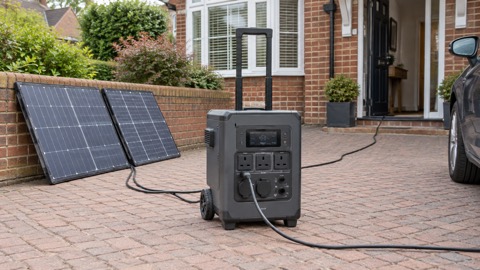 EcoFlow DELTA Pro
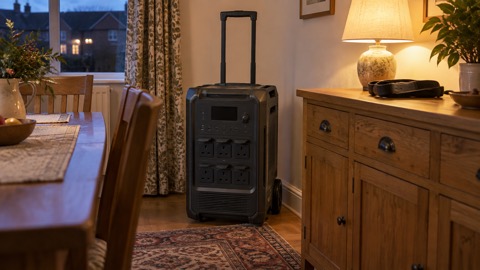 BLUETTI Elite 400
 Anker SOLIX C300 Power Station
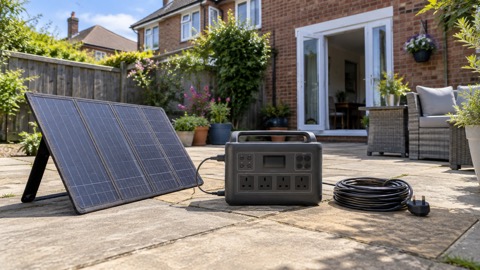 EcoFlow DELTA 3
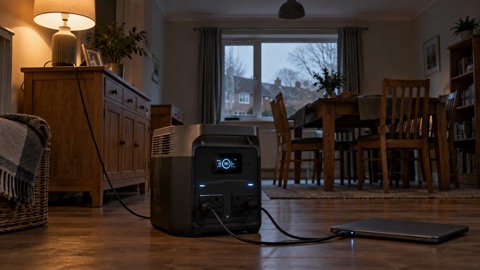 EcoFlow DELTA 2 and DELTA 2 Max
 EcoFlow DELTA and DELTA Max
 EcoFlow RIVER 3 and RIVER 3 Plus
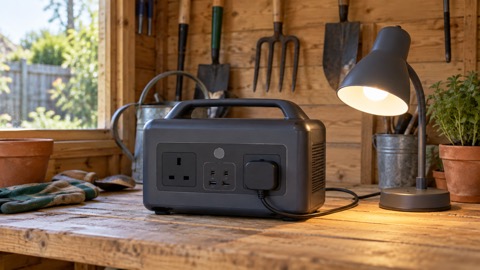 EcoFlow RIVER 2 and RIVER 2 Max