
The BLUETTI Elite 100 V2 is a portable power station with a 1,024Wh LiFePO₄ battery and a 1,800W AC output, which the maker rates at 2,700W of lifting power for appliances that draw a burst of current as they start1. It is aimed at households that want a battery they can carry to where it is needed, charge quickly from a mains socket, and top up from a solar panel or a car when the mains is off2.
For a power cut, the figures that matter most are these. The maker states a 10ms UPS switchover, so sensitive equipment such as a router or a CPAP machine keeps running through a brief interruption1. From the mains it charges from 0 to 80% in 45 minutes and reaches 100% in about 70 minutes, using a 1,200W TurboBoost input2. It weighs 11.5kg and comes with a five-year warranty1.
This page sets out what the Elite 100 V2 can run and for how long, how to charge it from each source, how to store it safely, and what the maker's warranty and app offer. It does not compare it with other products or give a price. For the wider picture, start with our household guide to backup power.
What the Elite 100 V2 is and who it suits
The Elite 100 V2 is BLUETTI's latest lightweight portable power station, built around a 1,024Wh battery3. The cells are LiFePO₄ (LFP), which the maker describes as ultra-safe and rates at over 4,000 cycles, enough for 10 years of daily use on its own reckoning2. BLUETTI says it was one of the first to adopt the LiFePO4 battery type in portable power stations5.
The maker positions it as the all-new upgrade of the AC180, lighter, faster and smarter2. If you already own an AC180, our page on the BLUETTI AC180 sets out that model's own figures so you can compare them with the ones here.
The maker lists the situations it is built for: power outages, camping, motorhomes, and backing up sensitive devices such as CPAP machines, medical equipment, servers, payment terminals and routers6. In household terms, that means it suits someone who wants one unit that can sit in a cupboard, come out for a power cut, and also travel. It is less suited to running high-draw appliances for long periods, because the battery capacity is fixed and there is no expansion battery listed for it in the maker's material.
Output: what 1,800W will run
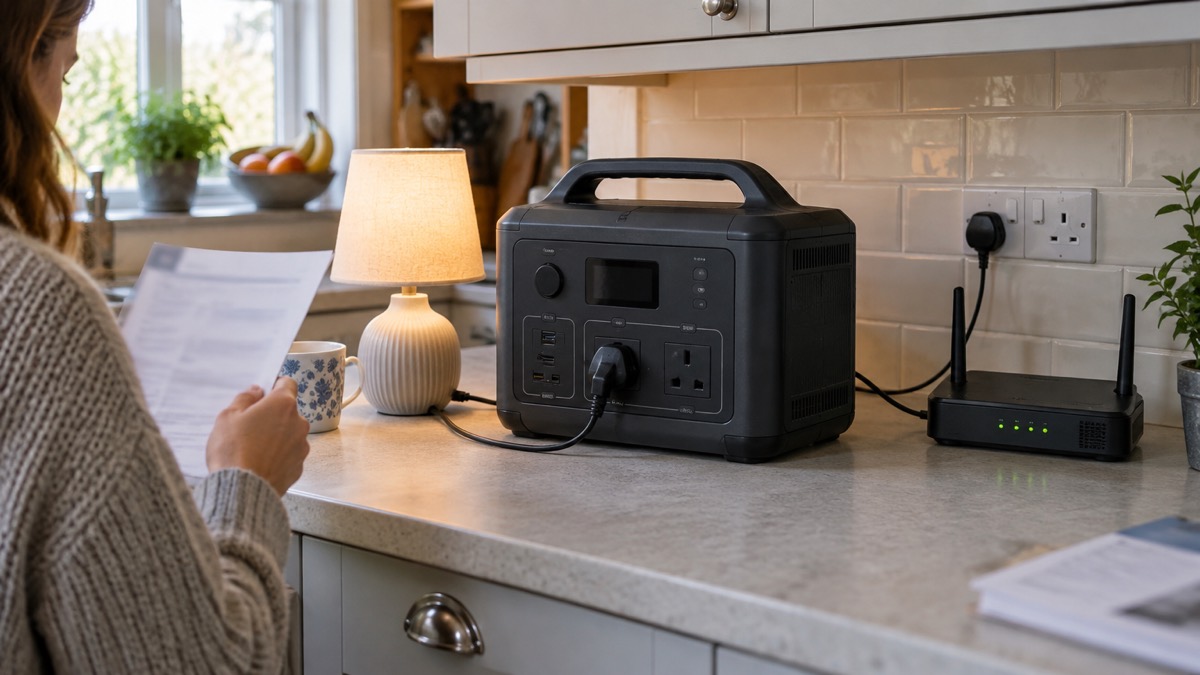
The maker gives the AC output as 1,800W continuous, with 2,700W of lifting power and up to 3,600W surge with HyperVolt2. Lifting power is the short burst a motor or compressor needs as it starts; continuous output is what the unit can hold for as long as the battery lasts. The maker states that the output and its 9 ports run 90% of appliances with ease4.
That is the maker's claim for its own product, and it is worth reading alongside the wattage on the appliance itself. A fridge, a freezer or a microwave will have its running wattage printed on a label, and a motor-driven appliance will also state a starting figure. Our guide to watts, watt-hours and surge explains how to read those labels.
| Specification | Maker's figure |
|---|---|
| Battery capacity | 1,024Wh1 |
| AC output, continuous | 1,800W1 |
| Lifting power | 2,700W2 |
| Surge with HyperVolt | up to 3,600W2 |
| AC outlets and ports | 9 ports4 |
| UPS switchover | 10ms1 |
| Noise under 600W load | 30dB3 |
The maker's own run-time example is a 60W table lamp for 11.9 hours7. That is a single worked example rather than a table of appliances, so use it as a guide to the arithmetic: a device drawing a steady 60W runs for roughly that long, and a device drawing twice as much runs for about half as long. For a worked method, see our page on how long a power station runs a fridge or laptop.
Charging from the mains: 80% in 45 minutes
The headline charging figure is TurboBoost: from 0 to 80% in 45 minutes, and to 100% in about 70 minutes, on a 1,200W maximum AC input2. One maker page puts the full mains charge at 1.8 hours instead6.
That speed matters in a household because it changes how you use the unit. A power cut that ends is a chance to recharge before the next one, and 45 minutes on a kitchen socket gets the battery back to most of its capacity. It also means the unit draws a substantial load while charging, so plug it into a wall socket rather than a daisy chain of extension leads. Our guide to extension leads and overloading explains why.
The maker's app lets you set a customisable charging speed3. That is useful if you want a slower, quieter charge overnight, or if the circuit you are using is shared with other appliances. The maker also states that the unit can charge from the mains and a solar panel at the same time, with up to 1,200W of combined input2.
Solar and car charging: panels, voltage and the Charger 1
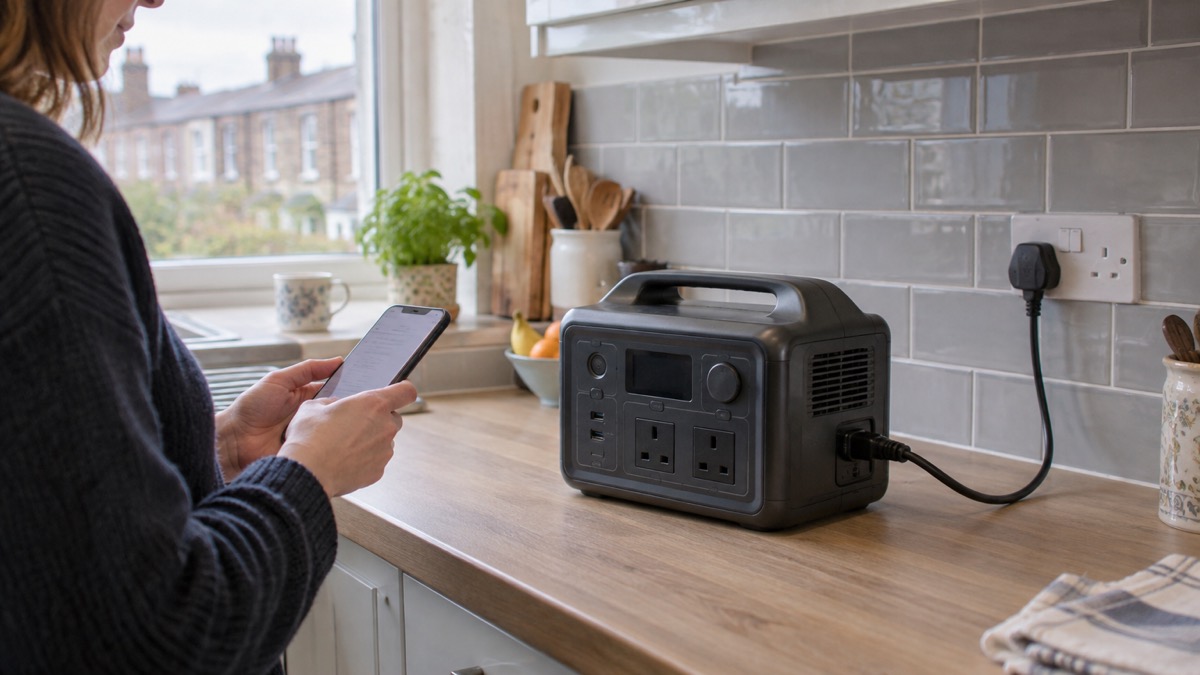
The solar input is rated at 1,000W, and the maker states a full charge in 70 minutes with the built-in MPPT controller4. That figure assumes ideal sun and a large array; in a UK winter you should expect far less, and our guide to how long solar charging takes in the UK sets out why.
The maker lists its own 100W, 200W and 350W panels as compatible, connected with MC4 connectors, and states that the total open-circuit voltage of the panels must be between 12V and 60V2. Those two figures decide whether a panel will work: too low a voltage and the unit will not charge, too high and you risk damage. Follow the maker's manual for how panels are wired together, and read our guide to portable solar panels before buying.
For charging on the move, the maker sells the Charger 1 separately. It gives a maximum car charging input of 560W and a charge time as fast as 1.8 hours, and the maker states it is 6 times faster than standard car chargers2. BLUETTI also states that its chargers can charge from both a car and solar panels at once, powering the main storage and leisure battery while driving with no drain on the reserve8.
| Charging source | Maker's figure |
|---|---|
| Mains, TurboBoost | 1,200W maximum, 0 to 80% in 45 minutes2 |
| Solar | 1,000W maximum, full charge in 70 minutes4 |
| Solar panel voltage | 12V to 60V total open-circuit2 |
| Car, via Charger 1 (sold separately) | 560W maximum, as fast as 1.8 hours2 |
| Mains and solar together | up to 1,200W combined2 |
Safe charging, storage and battery life
The maker's own instructions for its product are the place to start. It states that the Elite 100 V2 uses LiFePO₄ cells rated at over 4,000 cycles, and describes that as enough for 10 years of daily use2. One maker page also refers to a 10-year battery life alongside the five-year warranty2. Those are two different things: the warranty is the period the maker covers the product, and the battery life is an estimate of how long the cells will last. Read the warranty terms for what is actually covered.
For storage, the practical points are the ones that apply to any lithium battery at home. Keep the unit on a hard, level surface with the vents clear, do not charge it in a confined space with no air movement, and keep it out of damp and away from anything flammable. Our safe battery charging checklist and our guide to storing a power station when not in use set out the routine. If the battery is ever damaged, swollen or unusually hot, stop using it and follow our guide to warning signs a lithium battery is dangerous.
The BLUETTI App connects over WiFi or Bluetooth, and the maker states that you can monitor usage, control outputs and track charging in real time through it2. It also offers low-battery and full-charge alerts, a customisable charging speed, and Power Memory Mode, which the maker states will auto-resume power after outages with no manual restart needed3. That last setting is the one to turn on if the unit is backing up a router or a medical device, because it means the outputs come back by themselves when the mains returns.
Using it as a UPS and keeping devices running
The maker states a 10ms UPS switchover, which it says keeps critical devices such as medical equipment, servers and payment terminals running smoothly during unexpected outages1. Ten milliseconds is a very short break, short enough that most equipment will ride through it, but it is not zero. If a device cannot tolerate any interruption at all, check with its supplier before relying on this unit.
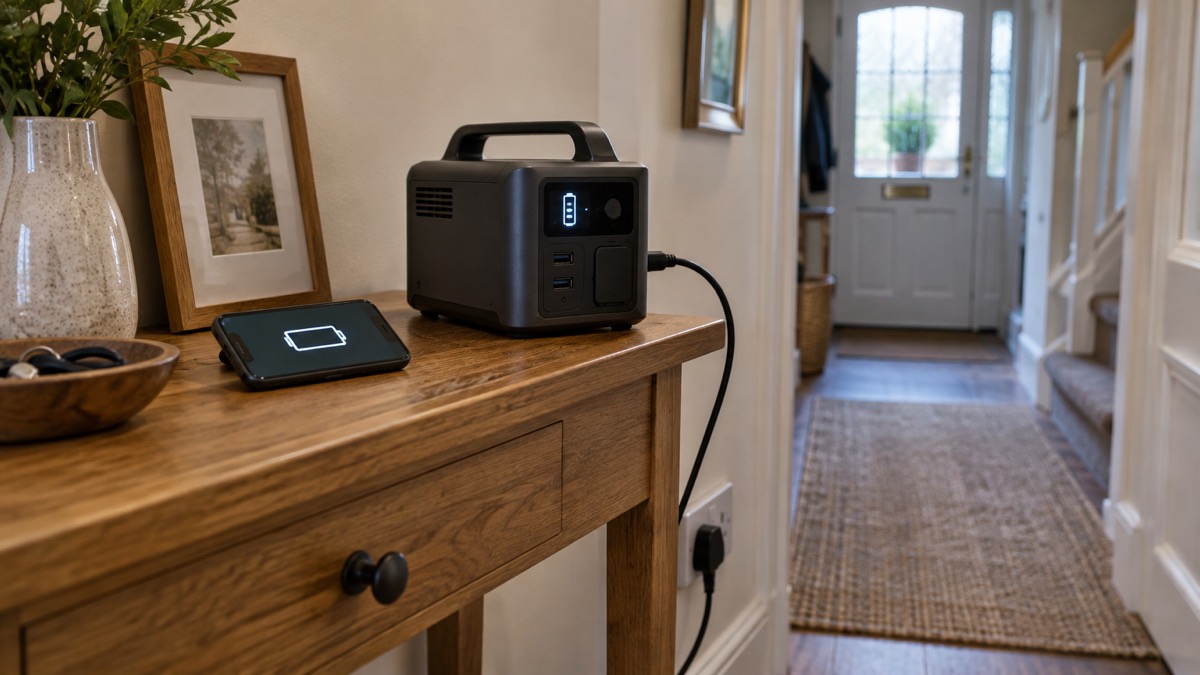
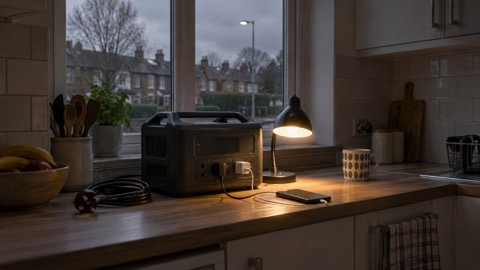
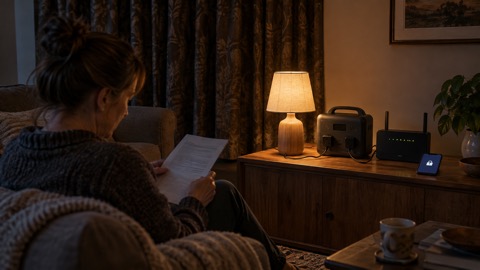
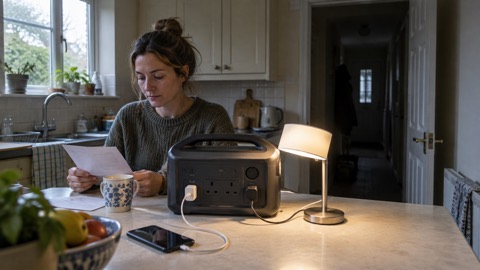
For a household, the most common use is a router, a phone charger and a lamp on the same unit, so that the broadband stays up and the room stays lit. The maker lists routers among the devices it is built to back up6. Our guide to using a power station as a UPS explains what switchover time means in practice, and our page on powering CPAP and other medical devices covers the questions to ask before depending on a battery for health equipment.
The unit is quiet at light loads: the maker states 30dB under a 600W load3. That is roughly the level of a quiet room, so it will not keep you awake if it is running a lamp or a router overnight. Under a heavy load the fan will work harder, and the maker does not give a figure for that. Our guide to power station noise puts the numbers in context.
Weight, carrying and what comes in the box
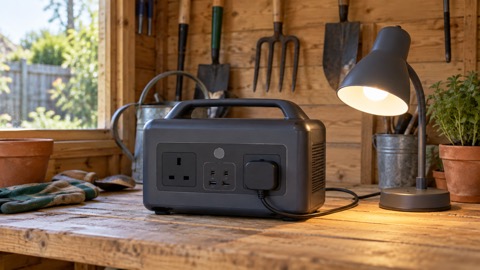
The maker gives the weight as 11.5kg in a 17L body, with a hidden handle for carrying1. At that weight it is a one-person lift for most adults, but it is not something to carry up a ladder or down a cellar steps in the dark. Decide where it will live before it arrives, and keep it somewhere you can reach without lifting it.
The box contents differ between the maker's pages. One lists the Elite 100 V2, an AC charging cable, a grounding screw and the user manual4. Another lists the power station, an AC charging cable, a solar charging cable, ten M5 screws and a user manual2.
Warranty and support: five years from the maker
The maker states that the Elite 100 V2 comes with a five-year warranty2. That is longer than the two years BLUETTI lists for its portable power stations generally on one of its warranty pages9, and shorter than the five years it lists for the EP500Pro9. Another maker page gives a range of 2 to 6 years across its products10, and a third gives 2 to 10 years depending on the model11.
For support, the maker's product pages and manual are the first place to look for charging, storage and app questions. If you are comparing this unit with the rest of the maker's range, our BLUETTI brand page lists the models covered on this site, and our guide to portable power stations explains what to look for in any of them.
Sources (11)
- Elite 100 V2 350W, BLUETTI, 2026-10-25
- Elite 100 V2 portable power station, BLUETTI, 2026-10-25
- Elite 100 V2 500W, BLUETTI, 2026-10-25
- Elite 100 V2 Charger 1, BLUETTI, 2026-10-25
- Home backup, BLUETTI, 2026-10-25
- Elite 100 V2 200W, BLUETTI, 2026-10-25
- BLUETTI portable power station, BLUETTI, 2026-10-25
- Camping portable power station, BLUETTI, 2026-10-25
- BLUETTI EP500Pro, BLUETTI, 2026-10-25
- Charger 1, BLUETTI, 2026-10-25
- Off-grid solar power, BLUETTI, 2026-10-25

 BLUETTI Apex 300 Power Station
 Anker SOLIX C2000 Gen 2
 Anker SOLIX C1000 Power Station
 EcoFlow DELTA Pro
 BLUETTI Elite 400
 Anker SOLIX C300 Power Station
 EcoFlow DELTA 3
 EcoFlow DELTA 2 and DELTA 2 Max
 EcoFlow DELTA and DELTA Max
 EcoFlow RIVER 3 and RIVER 3 Plus
 EcoFlow RIVER 2 and RIVER 2 Max
 BLUETTI Elite 30 V2