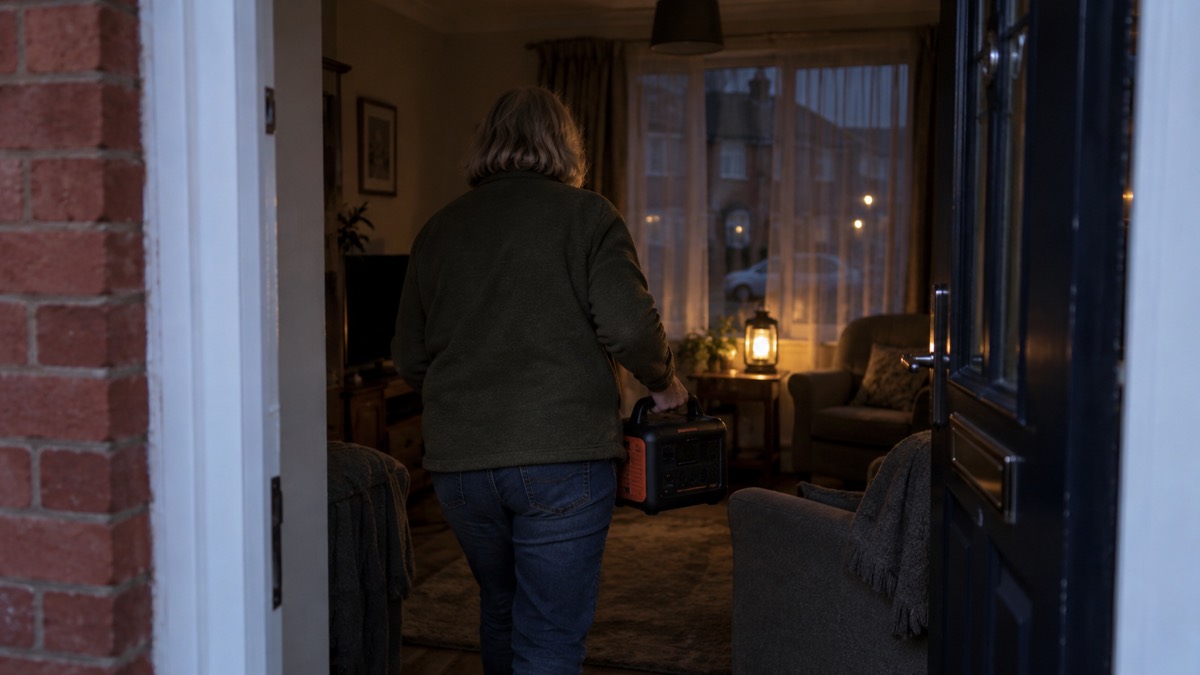
The Anker SOLIX C300 is a small portable power station with a 288Wh battery and 300W of rated output, rising to 600W for a surge1. It comes in two versions: the standard C300, which has AC sockets as well as DC ports, and the C300 DC, which is DC only1. Both are made by Anker, and both are aimed at the same jobs: camping, days out, and keeping phones, laptops and small appliances going when the mains fails3.
What it can do is set by two numbers. The 288Wh battery is the fuel tank, and the 300W rating is the size of the tap. A cooler runs for about 5.6 hours and a kettle for about 0.4 hours, both figures from the maker5. That tells you the shape of the thing: fine for lights, phones, a laptop and a small fridge, not a substitute for a generator or a home battery.
This page sets out what each version does, how long it runs the things a household actually uses, how to charge it from the wall, the car, USB-C or a solar panel, and the maker's own instructions for first use, storage and safety. It also covers the Anker power bank recalls, because owners of Anker batteries reasonably ask whether their model is caught.
Check your Anker power bank against the recall list first
Before anything else, if you own an Anker power bank, check it. Anker's safety notice asks owners to check the model number, located on the back or side of the power bank, against a list of recalled models: A1647, A1652, A1257, A1681 and A16897. If your model is on that list, stop using it and follow the maker's recall instructions rather than keeping it as backup power7.
"Check your model number, located on the back or side of your power bank. If it matches one of the following models (A1647"
The SOLIX C300 and C300 DC are portable power stations, not power banks, and the recall list names power bank model numbers rather than the C300. If your Anker power bank matches one of those codes, stop using it and follow the recall instructions rather than treating it as backup kit. For the wider picture on battery hazards and what to do if a battery swells, heats up or catches fire, see Lithium-Ion Battery Safety at Home.
Anker SOLIX C300 and C300 DC: how the two versions differ
The two versions share a battery and a power rating but not a set of sockets. The standard C300 is described by Anker as 288Wh with 300W from AC and DC outlets1. The C300 DC is described as 288Wh, 300W, DC only1. The difference that decides it for a household is the mains socket: the standard model has AC outlets, rated by Anker at a maximum of 300W to connected devices, or 600W with SurgePad6. The C300 DC has no AC outlets; its outputs are USB and a single car socket rated at 120W2.
| Anker SOLIX C300 (standard) | Anker SOLIX C300 DC | |
|---|---|---|
| Battery | 288Wh1 | 288Wh, listed as 90,000mAh8 |
| Rated output | 300W AC and DC1 | 300W DC only1 |
| Surge | 600W with SurgePad1 | 600W with SurgePad on the AC outlets4 |
| USB-C | Two 140W two-way ports1 | Two 140W two-way ports2 |
| Car socket | Listed among the outputs1 | One 120W socket8 |
| Size claim | 15% smaller than similar power stations9 | 30% smaller to go anywhere8 |
| Warranty | 5 years6 | 3 years4 |
| In the box | Power station, AC charging cable, safety manual, warranty info3 | Power station, USB-C to C charging cable, safety manual, warranty info2 |
The size claims are the maker's own comparisons with similar power stations, not measurements you can check against a tape9. The C300 DC's 90,000mAh figure is the same 288Wh battery expressed in milliamp hours8. For a plain explanation of why both numbers describe one battery, see Watts, Watt-Hours and Surge Explained.
Capacity and output: 288Wh, 300W rated and 600W surge
The 300W rating is the continuous load the unit is built to carry. Anker states the AC outlets deliver a maximum of 300W rated power to connected devices, and 600W with SurgePad, and that all AC outlets support SurgePad1. Surge is the short burst a motor draws as it starts, which is why a device rated below 300W can still trip a smaller unit but should start on this one.
The 288Wh capacity sets how long that output lasts. A load of 300W would flatten a 288Wh battery in under an hour, which is why the maker's run times are for much smaller appliances. The practical rule for a household is to add up what you want to run, keep the total under 300W, and expect the battery to last in proportion to the load. The power station sizing guide walks through that sum.
Two limits matter more than the headline figures. First, this is not a whole-home backup: it cannot run an electric shower, an oven or a heat pump, and it is not designed to be wired into your consumer unit. Connecting any battery to your home's wiring is a separate job with its own rules, covered in Connecting a Generator or Battery to Your Home's Wiring. Second, the 600W surge is brief. A fridge compressor may start within it; a larger motor may not.
Run times: a cooler for about 5.6 hours, a kettle for about 0.4
Anker publishes run times for a handful of devices, and they show the range you should expect5:
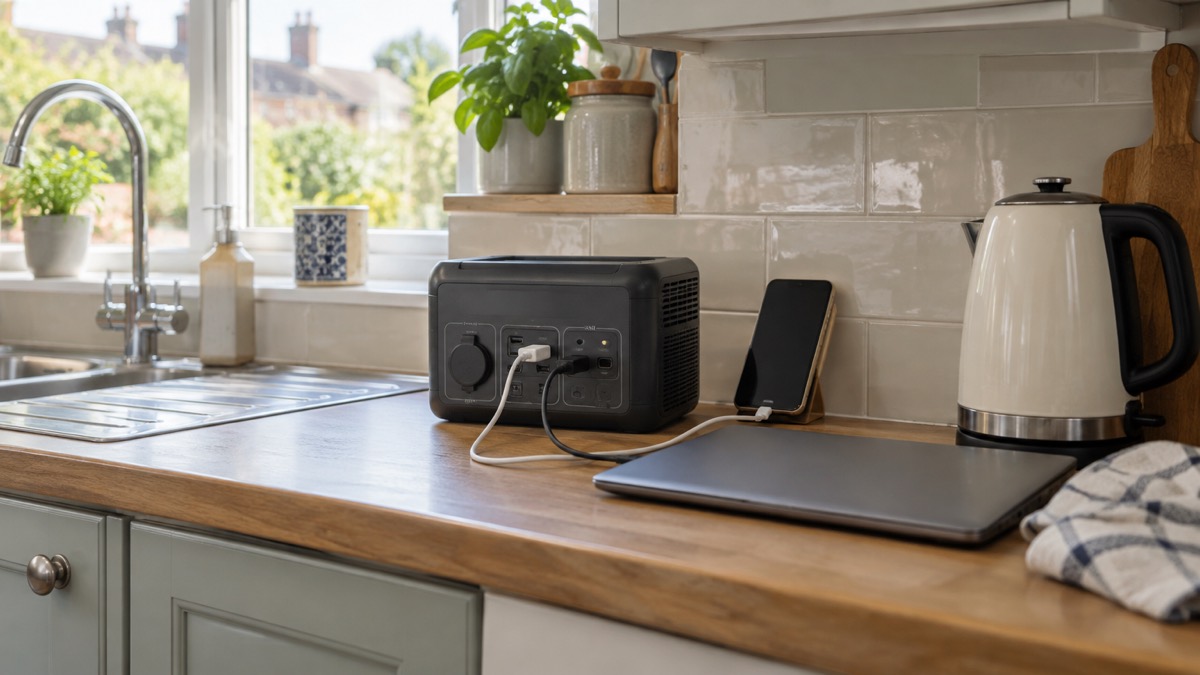
The pattern is simple: the more heat a device makes, the faster the battery goes. A kettle is close to the unit's maximum output and empties it in well under an hour. A cooler draws far less and runs for most of a working day. Anker also states the C300 DC will recharge a speaker 6 times and a MacBook Pro 4 times5.
For a household planning for a power cut, that means the C300 is a device charger and small-appliance unit, not a fridge backup for days. If keeping the fridge cold is the priority, a larger unit is the right tool; the portable power stations guide sets out the sizes and what they suit. For how long a given appliance will run on a given capacity, see How Long Will a Power Station Run a Fridge or Laptop?.
Ports: seven outputs and which USB-C ports charge
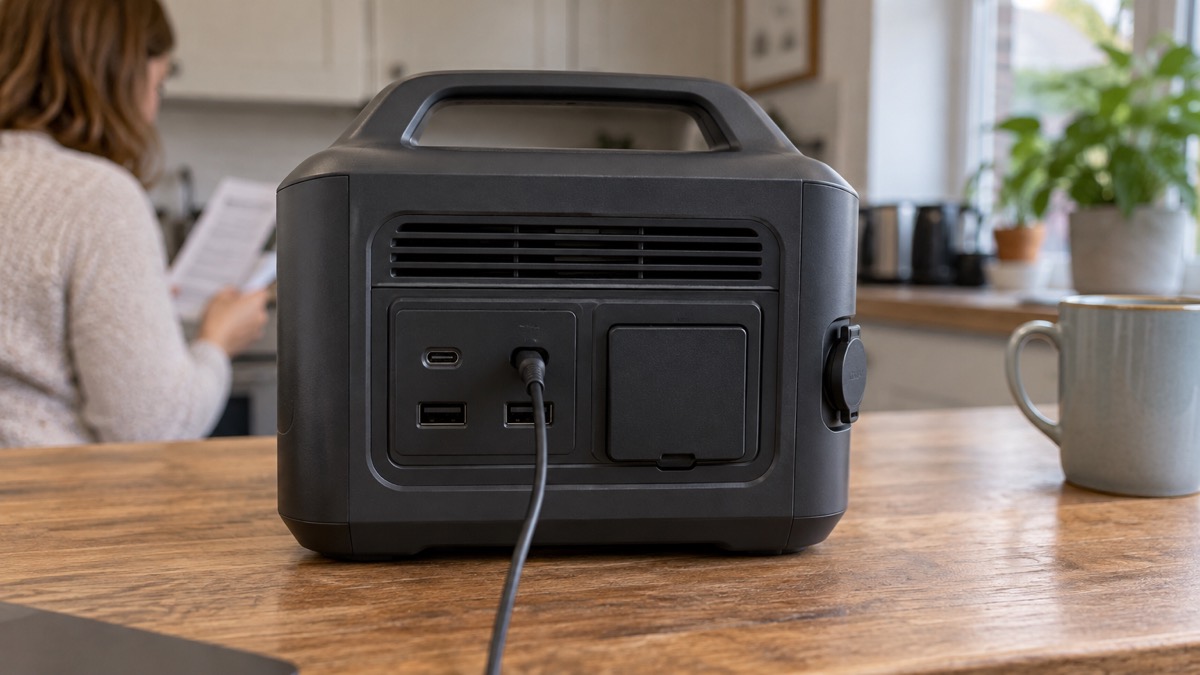
Anker lists 7 ports with 300W on the C300 DC5, and 7 device charging ports on the standard C3001. The port roles are the same across the maker's listings: USB-C1 and USB-C3 are output only, and USB-C2 is input and output1. That single detail decides how you charge the unit over USB-C: it goes into USB-C2.
The USB-C ports are not all equal in output either. Anker states that USB-C1 and USB-A running together give 20W, USB-C1 alone gives 15W and USB-A alone gives 12W9. The two 140W two-way USB-C ports are the fast ones, and the maker describes the battery as supporting 140W two-way USB-C fast charging1. The C300 DC also carries a 120W car socket8 and two 12W USB-A outputs5.
If you are unsure which cable and charger will give you the fastest charge, USB-C Charging, Power Delivery and Cables Explained covers the standards behind those numbers.
Charging from the wall, car, USB-C or solar
Anker lists three ways to recharge the C300 DC: 100W solar, 140W PD USB-C and a car socket8. The standard C300 adds a wall outlet to that list alongside solar panels, the car and the PD 3.1 USB-C port3. The maker states the standard C300 recharges to 80% in just 50 minutes from a wall outlet3. For the C300 DC, Anker states 80% in 2.5 hours8; its listings also describe fast recharging through the dual PD 3.1 USB-C port, and the two figures are not reconciled in the maker's material, so treat the wall and USB-C times as approximate.
The car and solar charging cables are sold separately, and Anker directs owners to its support team for them1. If you plan to charge from a vehicle, read Can You Charge a Power Station from Your Car? before you rely on it.
Solar charging: 11 to 28V panels with an XT60 connector
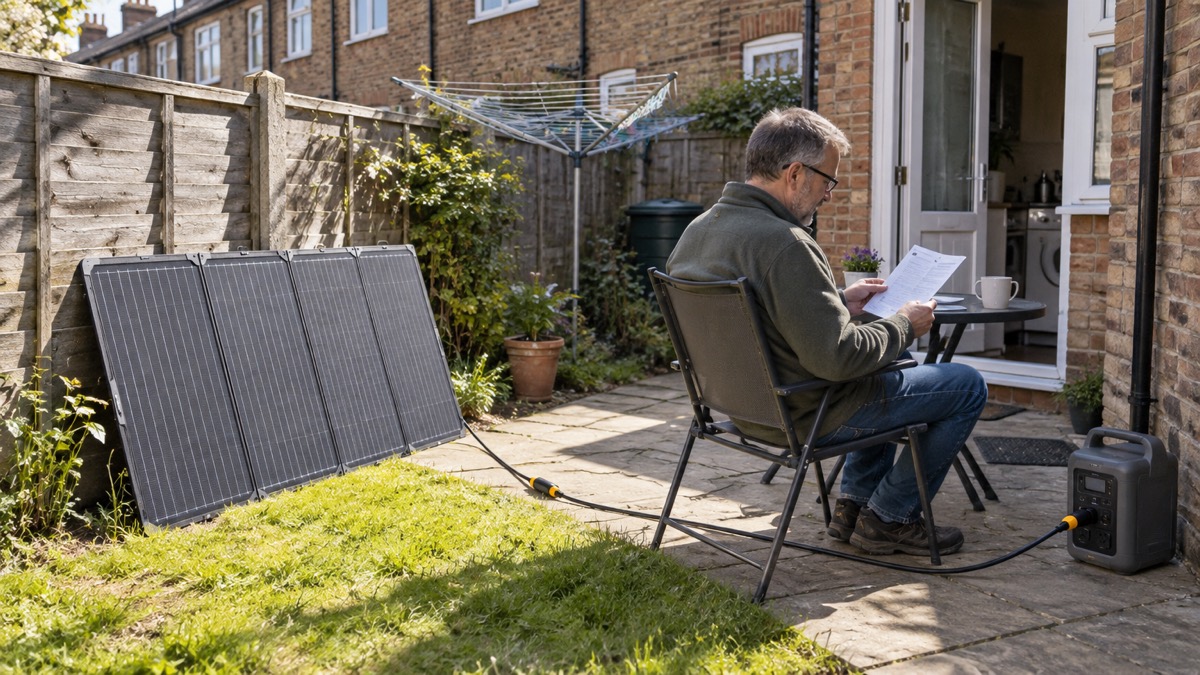
Solar charging is the option that matters in a long outage, and it has hard limits. Anker states you should only use solar panels between 11 and 28V and with an XT60 connector1. The maker recommends 100W Anker solar panels for the standard C3003, and 100W or 60W panels for the C300 DC4. The C300 DC accepts up to 100W of solar recharging2, and a bundle with a 60W panel gives 60W of solar recharging4.
The incompatibility list is just as important. Anker states the unit is not compatible with the Anker SOLIX PS30 or other 5V to 3A USB-C solar panels2. A small USB-C panel that charges a phone will not charge this power station, however good the sunshine.
Two practical points follow. First, check the panel's voltage and connector before buying, not after. Second, keep the panel and its cable dry and undamaged; Electrical Safety First advises checking leads are clean and free from damage, uncoiling them fully to prevent overheating, positioning them to prevent damage and keeping them dry11. For panel sizing and realistic UK charging times, see What Size Solar Panel Do I Need to Charge a Power Station? and How Long Does Solar Charging Take in the UK?.
Before first use and keeping it safe
Anker's first-use advice is specific. Recharge before activating for the first time, using PD with a 9V charger or higher, MPPT solar panels with output between 11 and 28V, or AC charging, then unplug the AC cable and power on or off as needed1. The maker also states the unit checks temperature up to 10 times per second while charging to prevent the battery from overheating5.
For storage, Anker's camping series advice is to turn off all outputs when not in use to avoid battery power loss, store in a dry and cool area, check battery capacity each week and charge to 100% if it falls below 30%, and fully charge once every 3 months12. The manual is digital only: scan the QR code on the first page of the safety instructions in the package4.
The C300 uses LFP batteries, which Anker says allow the power station to last for years, and its components are expected to last 50,000 hours, described by the maker as a 6 times longer lifespan than similar portable power stations4. The standard C300 carries a 5-year warranty and the C300 DC a 3-year warranty6. For the wider routine, see How to Store a Power Station When Not in Use and Safe Battery Charging at Home Checklist.
Sources (12)
- Anker SOLIX C300 product page, Anker SOLIX, 2026
- Anker SOLIX C300 DC product page, Anker SOLIX, 2026
- Anker SOLIX C300 with 100W solar panel, Anker SOLIX, 2026
- Anker SOLIX C300 DC with 60W portable solar panel, Anker SOLIX, 2026
- Anker SOLIX camping battery portable power station, Anker SOLIX, 2026
- Anker SOLIX C300 with 100W solar panel offer, Anker SOLIX, 2026
- Anker power bank safety notice, Anker, 2026
- Anker SOLIX camping battery portable power station (UK), Anker SOLIX, 2026
- Anker SOLIX C300 DC and C300 comparison page, Anker SOLIX, 2026
- Anker SOLIX C300 DC Portable Power Station 300W - Anker SOLIX AU, Anker SOLIX
- Garden safety guidance, Electrical Safety First, 2026
- Anker SOLIX camping power station range, Anker SOLIX, 2026

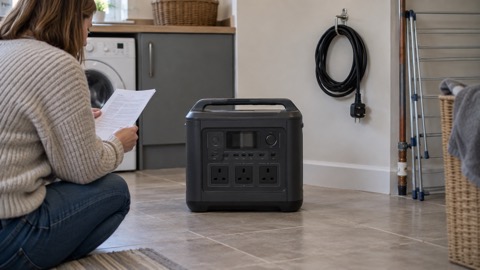 BLUETTI Apex 300 Power Station
 BLUETTI Elite 100 V2
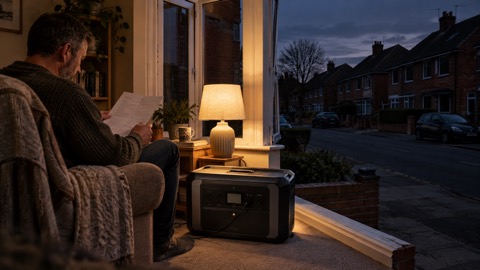 Anker SOLIX C2000 Gen 2
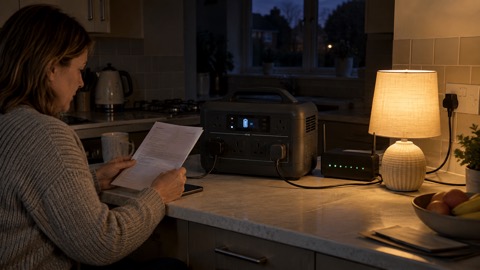 Anker SOLIX C1000 Power Station
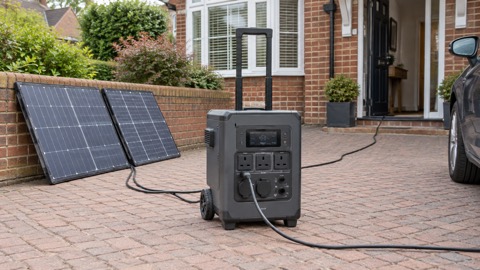 EcoFlow DELTA Pro
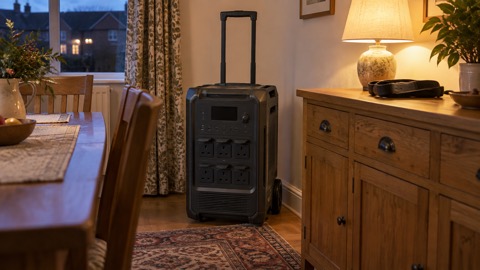 BLUETTI Elite 400
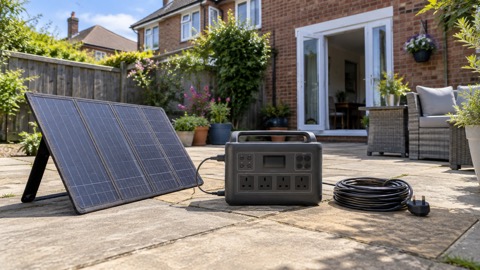 EcoFlow DELTA 3
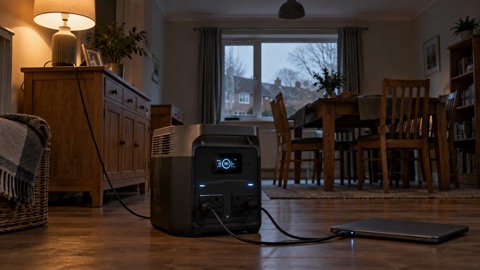 EcoFlow DELTA 2 and DELTA 2 Max
 EcoFlow DELTA and DELTA Max
 EcoFlow RIVER 3 and RIVER 3 Plus
 EcoFlow RIVER 2 and RIVER 2 Max
 BLUETTI Elite 30 V2