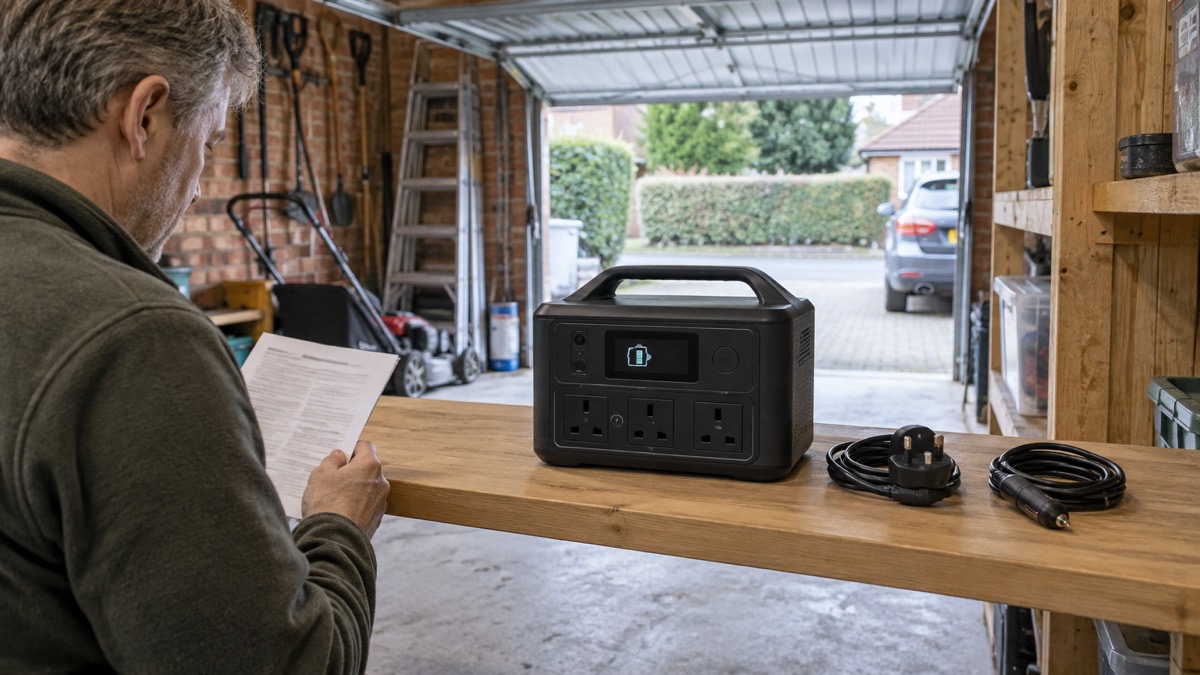
A portable power station is only useful if it still has charge in it when the power goes off. The single most important storage rule is to keep it charged and ready rather than flat, and to store it in a cool, dry place. Fire and rescue services are clear that lithium-ion batteries must be stored and charged properly to reduce the risk of fire, and that not charging or storing them properly can cause fires1.
So the routine is simple. Keep the unit indoors, somewhere cool and dry, away from escape routes. Top it up between uses rather than leaving it to drain, and do not leave it plugged in continuously once the charge cycle is complete4. Check it before winter, when power cuts are more likely, and keep the charging kit with it so you can top it up from the mains, a car socket or solar panels5.
This page covers what a power station is, how to store it safely, how to keep it ready, what a small unit will realistically run, and why it is not the answer for medical equipment.
What a power station is and why storage matters
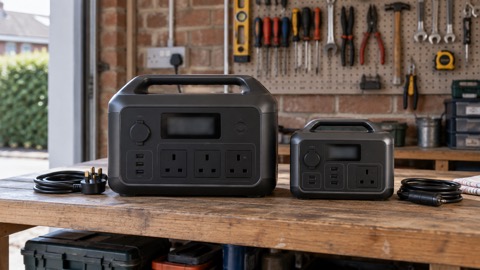
A portable power station is a battery in a box with mains sockets and USB ports on the front. It stores energy so you can run small appliances when the mains fails, and it is recharged from a wall outlet, and sometimes from a car port or solar panels5. Because it contains a lithium-ion battery, it holds a lot of energy in a small space, and that energy has to be managed properly2.
That is why storage matters. Fire and rescue services warn that lithium-ion batteries can overheat, catch fire or explode if they are improperly charged, handled, stored or disposed of9. The risk is low when a battery is treated well, but it rises when a unit is left flat for months, stored somewhere freezing or baking, or left on charge indefinitely. The same batteries, when crushed or damaged, can spark dangerous fires, which is why they must never go in the bin3.
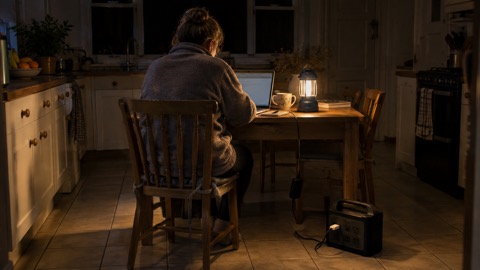
Storage is also about readiness. A power station that has been sitting in a cold shed since last winter may have lost its charge, or may not work when you need it. The point of storing it well is that it works first time, every time.
Charging methods: mains, car socket or solar panels
Most battery-powered generators need to be charged at a wall outlet, although some models can be charged using a car port or solar panels5. Which methods your unit supports depends on the model, so check the maker's instructions before relying on any of them.
| Method | What it suits | What to watch |
|---|---|---|
| Mains socket | Routine top-ups at home | Don't leave it on charge after the cycle is complete4 |
| Car socket | Topping up on the move or after a trip | Some models support it, some don't5 |
| Solar panels | Keeping a charge topped up without mains | It will take a while to charge11 |
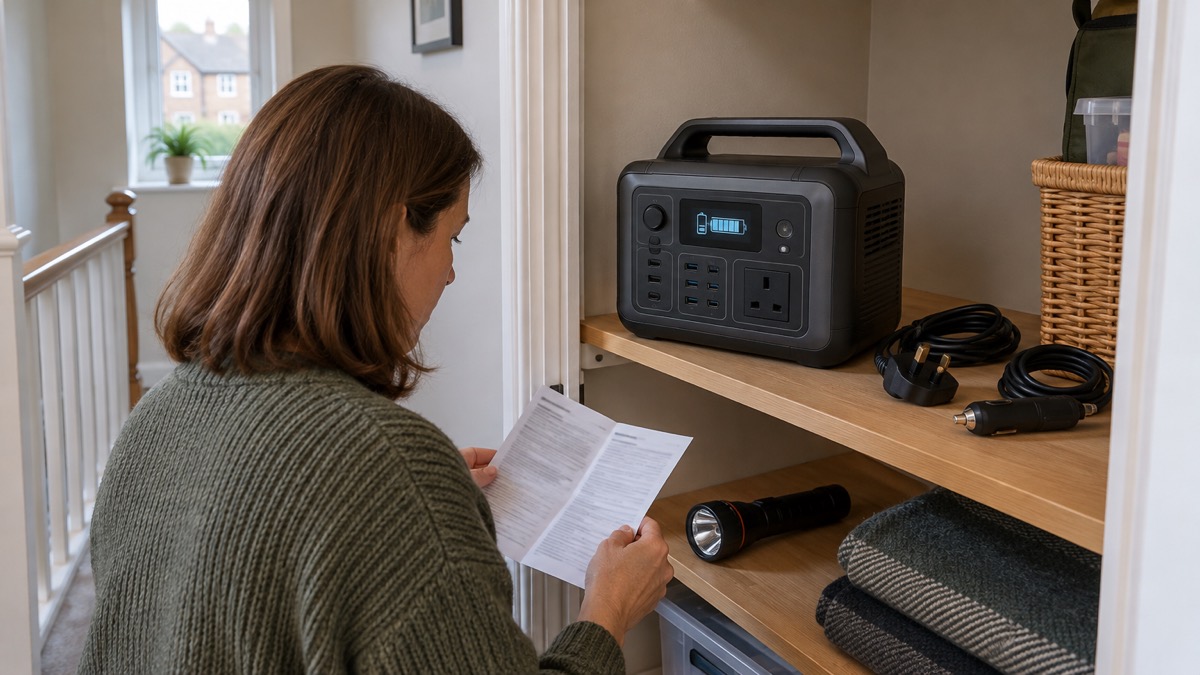
Whichever method you use, charge in a cool, dry place, away from flammable materials, and do not overload sockets or use unsuitable extension leads1. If you are charging from a car, do it while the engine is running or as the maker instructs, and bring the unit back indoors afterwards.
Solar charging is the slowest of the three. A power station can be charged with solar panels, but it will take a while11. That makes solar a good way to keep a unit topped up over a sunny spell, not a quick fix in the middle of a winter outage. For more on this, see Portable Solar Panels for Charging in a Power Cut.
Keeping it ready for a power cut
The aim is a unit that is charged, checked and easy to reach. Work through these steps before winter, and again if a storm is forecast.
- Check the charge level. If it has dropped noticeably, recharge it. If you are worried about winter power cuts, keep your power pack charged up and ready to go in an emergency8.
- Recharge after use. Always recharge a battery after use, and if you are storing it for more than a month, store it fully charged in a cool, dry place12.
- Unplug once full. Don't leave items continuously on charge after the charge cycle is complete4.
- Store it cool and dry. Store and charge batteries in a cool, dry place, avoiding extreme temperatures10.
- Keep it out of escape routes. Avoid keeping lithium battery products in escape routes or communal areas, where they could block people from leaving in a fire1.
- Check the outputs. Plug in a small load and confirm the sockets and display work before you need them.
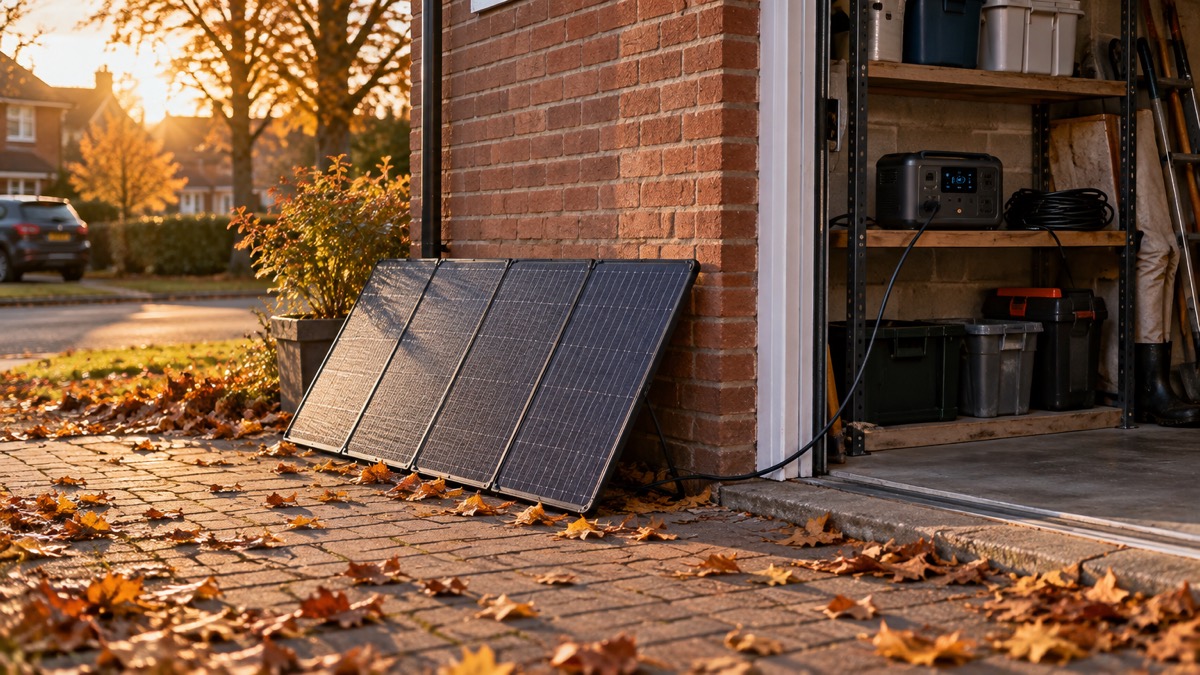
It also helps to keep the wider power cut kit together: a charged power bank, a torch and spare batteries, and important telephone numbers written down somewhere accessible7. The Met Office suggests storing key information such as the power cut helpline number, 105, on your phone14. For a full list, see the Power Cut Backup Power Checklist.
Where to store it: cool, dry and out of the way
Fire and rescue services across the UK give the same core advice: store lithium-ion batteries in a cool, dry place, and avoid very hot or very cold environments9. That rules out a few obvious spots.
- Not the shed in winter. A shed that freezes is a very cold environment, and batteries should not be stored or charged in very cold conditions9.
- Not a hot car or a sunny windowsill. Very hot environments are just as bad9.
- Not an escape route or communal hallway. In a fire, these could block people from leaving the building safely1.
- Not under the stairs next to the electric meter. Fire services warn against storing gas cylinders in cupboards containing electric meters or equipment, and the same caution applies to keeping combustible or high-energy items in that space15.
A cool, dry cupboard indoors, away from direct sunlight and heat sources, is the sensible home for it. Keep it out of reach of children and pets, and store cables neatly and out of the way to prevent tripping hazards17.
What a 200 to 500Wh unit will run when you need it
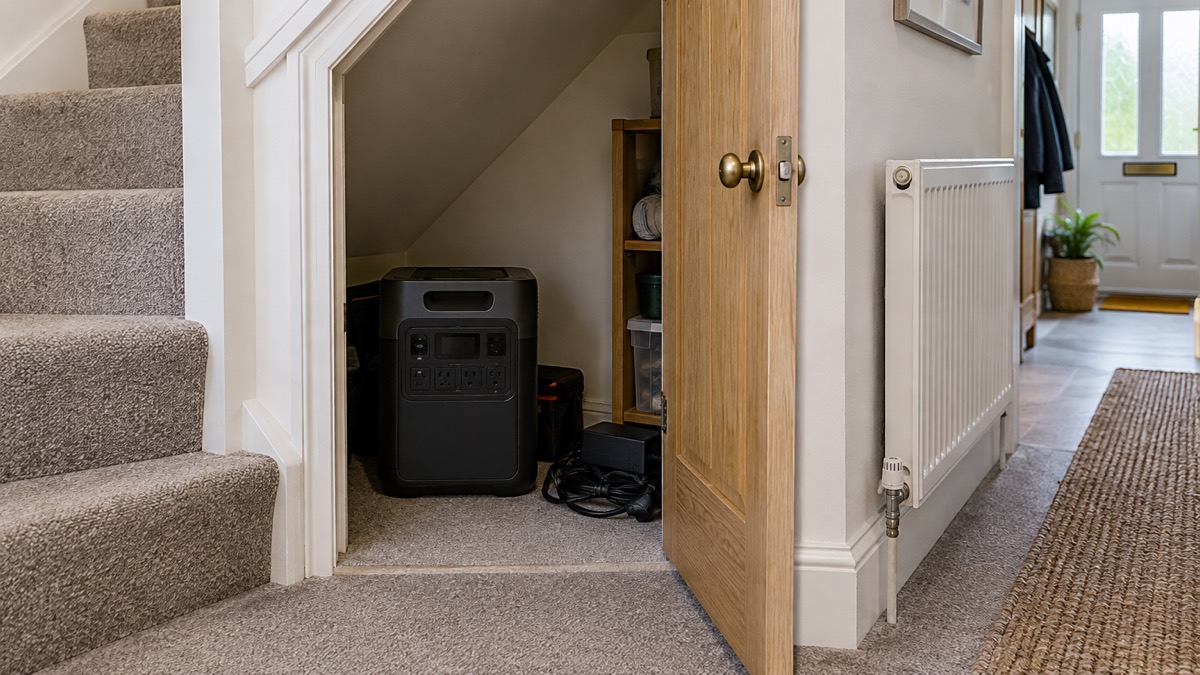
A small power station is not a whole-house backup. It is a way to keep a few essentials going: phones, a light, a radio, perhaps a laptop. What it will run depends on the wattage of each appliance and the capacity of the battery, which is measured in watt-hours.
To give a sense of scale, a freezer uses around 200 watts18. A unit in the 200 to 500Wh range will therefore run a freezer for a limited time, and smaller loads for longer. Manufacturers make claims about running a refrigerator for a set period, but these depend on the appliance and the conditions, so treat them as a guide rather than a promise11.
| What you might run | Rough power draw | What it means for a small unit |
|---|---|---|
| Phone or tablet | Low | Many charges from a small unit |
| LED light or radio | Low | Hours of use |
| Laptop | Moderate | A few hours |
| Freezer | Around 200W18 | Short run time only |
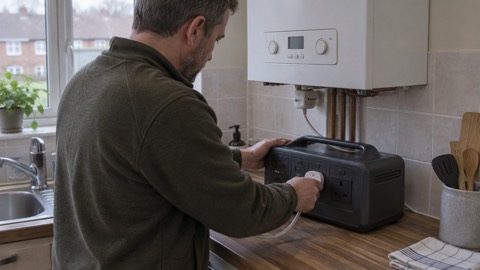
The lesson for storage is that a small unit is best kept for small jobs. If you need to run a fridge or a boiler, you need a bigger unit, and the storage principles are the same but the stakes are higher. For the sums, see Watts, Watt-Hours and Surge Explained and What Capacity Power Station Do I Need?.
Not intended for medical appliances
A portable power station is not a medical device, and it should not be relied on to power one. If someone in your household depends on equipment such as oxygen concentrators, CPAP machines or other medical devices, plan with the supplier and the NHS rather than assuming a consumer power station will do the job.
Fire services give specific storage advice for medical oxygen: cylinders must be stored upright, out of direct sunlight, in a well-ventilated, dry area away from heat sources, and the storage area should not be used for paint, oil, grease or other combustible materials19. That is a different job from storing a battery, and it needs proper planning.
The NHS advises keeping a charged power bank, a torch and spare batteries at home for reassurance during a power cut7. That is about keeping phones and lights going, not about running medical equipment. If you need to power a medical device, speak to your equipment supplier and your GP or care team about a backup plan. For more, see Powering CPAP, Oxygen and Other Medical Devices From a Battery.
Storing it after camping or a trip
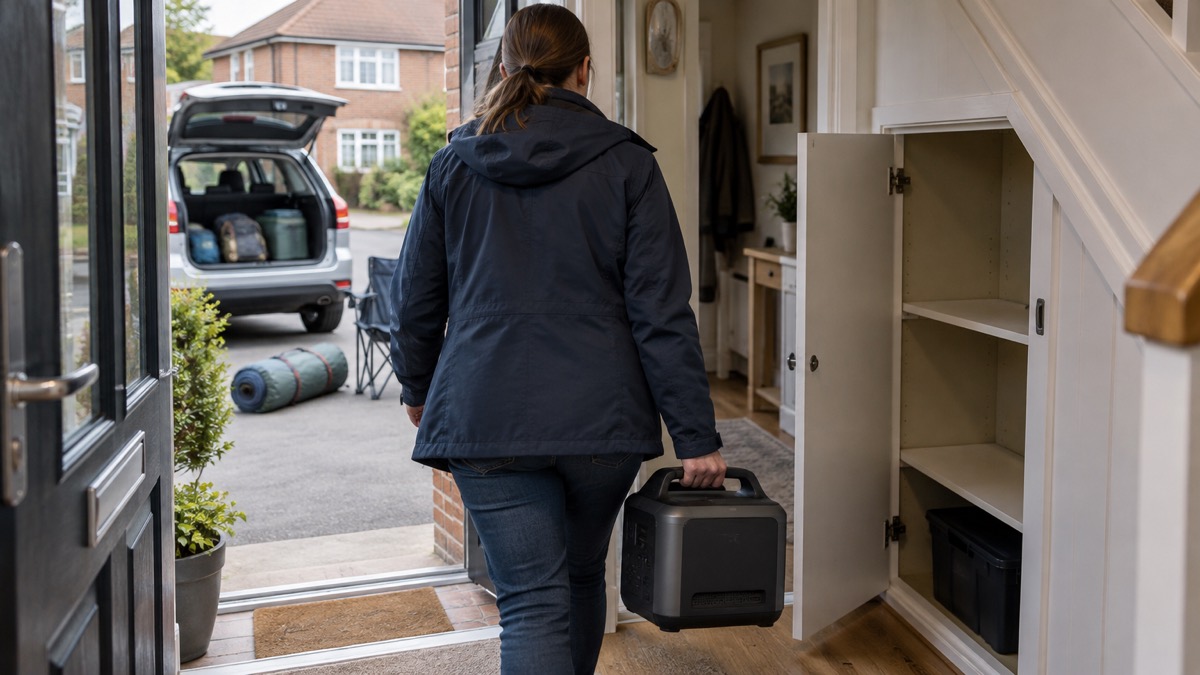
If you have used the unit for camping, a festival or a day out, put it away properly rather than leaving it in the boot. Recharge it after use, then store it fully charged in a cool, dry place12. Caravan guidance makes the same point for leisure batteries: always recharge after use, and if storing for more than a month, remove the battery and store it fully charged somewhere cool and dry12.
Follow the maker's instructions for the storage and maintenance of lithium-ion batteries if they are not going to be used for extended periods20. Bring the unit indoors, check the casing and cables for damage, and top it up if the display shows it has dropped. Then check it again before winter.
Sources (21)
- Lithium-ion batteries, Scottish Fire and Rescue Service, 2025-11-27
- Battery fires, Devon and Somerset Fire and Rescue Service, 2026
- Power banks, Electrical Safety First, 2026-10-26
- Batteries and chargers, London Fire Brigade, 2026-10-25
- How to buy the best generator, Which?, 2026-01-20
- Battery safety, Portsmouth City Council, 2026-10-26
- Be prepared for winter emergencies, NHS Norfolk and Suffolk, 2026-10-01
- What to do in a power cut, Which?, 2026-06-04
- Lithium battery fire safety, Mid and West Wales Fire and Rescue Service, 2026-10-26
- Charge safe, National Fire Chiefs Council, 2026-10-09
- Emergency kit packing list, Which?, 2026-09-30
- Batteries, The Caravan Club, 2026-10-25
- Charging safety, Oxfordshire County Council, 2026
- Top tips to be weatherready, Met Office, 2026-10-25
- Portable heaters, gas fires and open fires, London Fire Brigade, 2026-10-25
- Heating and gas, Scottish Fire and Rescue Service, 2024-11-21
- Home office, Electrical Safety First, 2026-10-25
- Ratings of electrical appliances, Electrical Safety First, 2026-10-25
- Specialist health equipment, Devon and Somerset Fire and Rescue Service, 2026
- E-bike and e-scooters, Scottish Fire and Rescue Service, 2026-10-25
- E-bikes and e-scooters, South Wales Fire and Rescue Service, 2026-07-29
 Power Cut Backup Power Checklist
 Backup Power Before Winter
 Safe Battery Charging at Home
 Running a Generator Indoors
 Carbon Monoxide from Generators
 Generator Sizing for a Power Cut
 Generator Run Time on a Tank
 Storing Petrol at Home
 Diesel Storage at Home
 Storing a Generator
 Generators in Cold Weather
 Generator Noise and Neighbours
 Power Station Capacity Sizing
 Power Station Run Time
 Power Station for a Gas Boiler