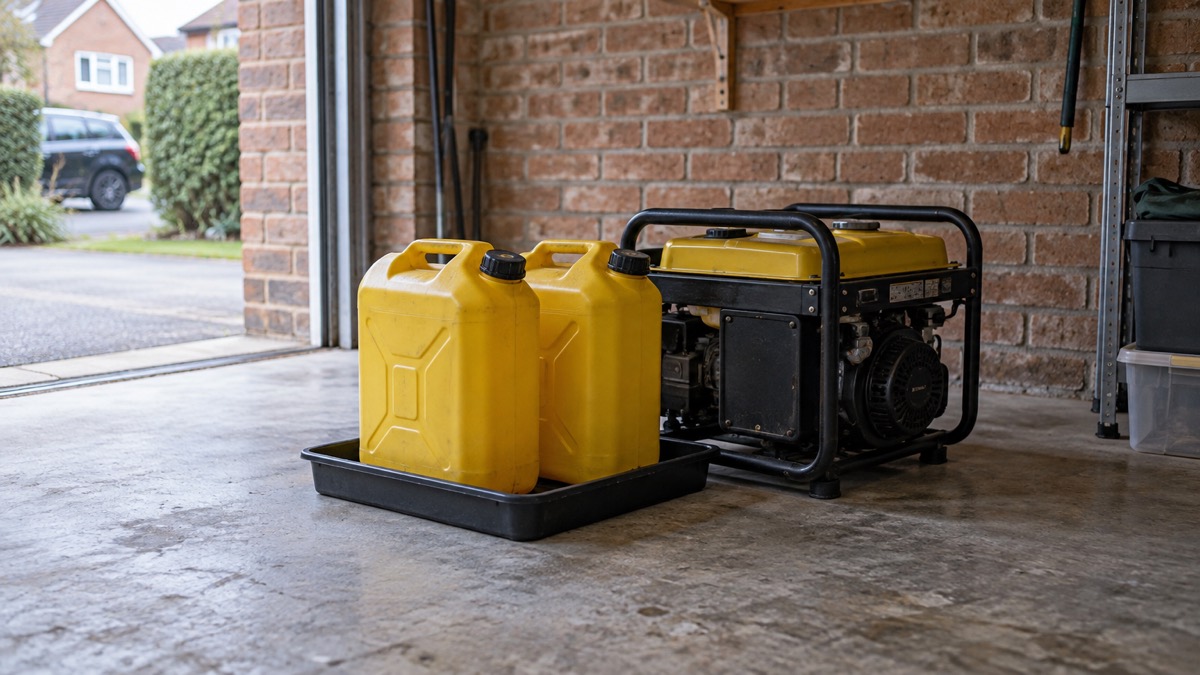
If you keep diesel at home to run a generator through a power cut, there is no set legal limit on how much you may store. Dorset and Wiltshire Fire and Rescue Service states plainly that there is no specific legal requirement on the amount of diesel you are allowed to store at home1. That is the key difference from petrol, which is capped at 30 litres on non-workplace premises before you must inform your local Petroleum Enforcement Authority1.
The absence of a limit is not permission to be careless. The same fire service says petrol and diesel are extremely flammable and, if not stored correctly, could start a fire2. The rules that matter are about how and where you store it, and about where the generator that burns it is allowed to run. A generator must never run indoors, because the fumes from the engine can be lethal3.
This page sets out what the fire and rescue services and network operators say about storing diesel, siting a generator, choosing between diesel, petrol and dual fuel, and matching output and sockets to what you need to keep running. It also covers what your electricity network operator will and will not do for you during an outage.
There is no legal limit on how much diesel you can store at home
The headline answer is simple: diesel is not capped in the way petrol is. The fire and rescue service guidance for storing fuel says there is no specific legal requirement on the amount of diesel you are allowed to store at home, and asks that you follow the safety guidance around storing it on the government website1. Petrol is different: you can store up to 30 litres at home or on non-workplace premises without informing your local Petroleum Enforcement Authority1.
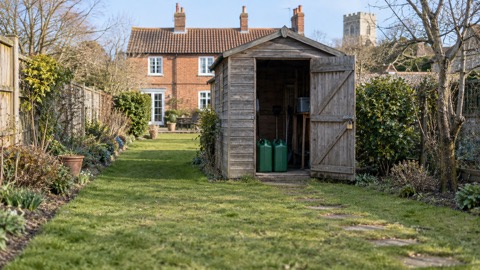
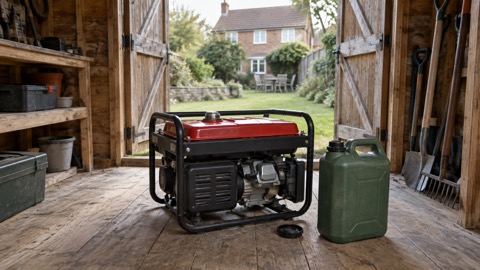
That does not mean any quantity is sensible. The fire service warns that petrol and diesel are extremely flammable and, if they are not stored correctly, could start a fire2. Practical storage advice from the same source includes not smoking near where your petrol is stored1, and, for caravans and mobile homes, not storing fuel under your home or in direct sunlight6. For bio-ethanol, the fire service recommends a cool, dry place away from direct sunlight and naked flames, stored in garages and sheds but out of reach of children and pets7. The same principles apply to a diesel can: keep it cool, out of direct sun, away from flames and away from children.
If you keep a bulk tank rather than cans, the wildfire guidance for rural properties says to clear at least a three-metre space around any fuel tanks, and to store tanks on non-combustible material such as gravel or concrete8. That is written for rural fire risk, but the separation principle is sound anywhere.
Why you might keep diesel: running a generator through a power cut
A generator is a way to keep selected appliances running when the mains fails. Network operators use generators themselves, connecting them as close as possible to the local electricity substation to restore supplies while permanent repairs are completed10. Depending on how close you live to a substation, that may mean a generator is located very close to your home10.
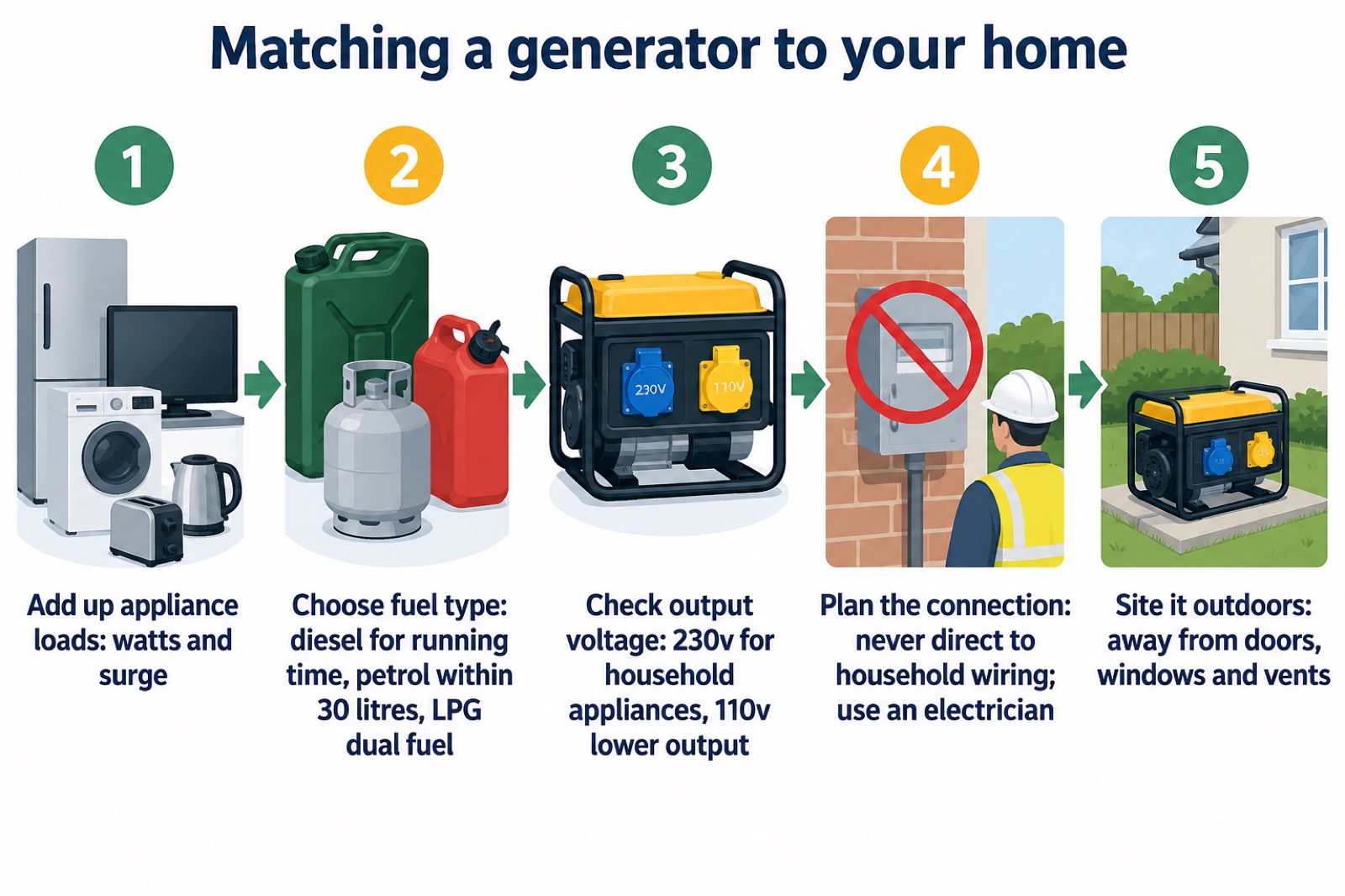
For a household, the case for diesel is running time. Which? says diesel generators generally last longer than petrol generators, with long running time, though diesel is more expensive to buy than petrol and can be noisier than petrol alternatives12. If you expect to run a generator for many hours across a multi-day outage, that longer running time is the reason to choose diesel.
Before you rely on a generator, do the groundwork. Wiltshire and Swindon Prepared says it takes research by you and the advice and expertise of a qualified electrician for a generator to help you13. Keep your vehicle's fuel tank at least half full and fill up if you know a power cut is coming4, so you are not caught out if you need to travel or collect supplies. And if the generator has been stored with fuel in the tank or carburetor, the maker's guidance is that all the fuel must be drained and the carburetor cleaned to remove debris and clear blockages before you use it safely14.
Where a generator must never go
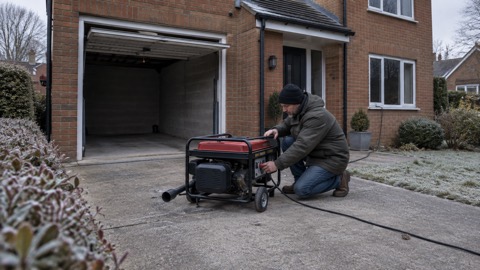
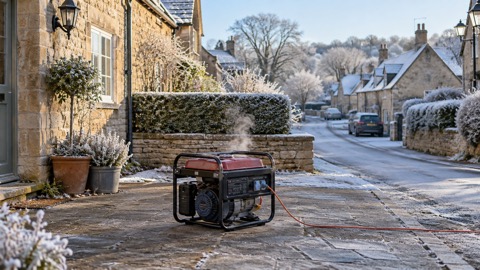
This is the section that matters most. Northern Ireland's official storm advice is blunt: never use standby generators indoors, as the fumes from the engine can be lethal3. The Health and Safety Executive advises locating petrol generators and similar equipment outside in well ventilated spaces so that fumes disperse and cannot gather or drift into building openings16. The maker's own instruction is to keep it outdoors and well away from doors, windows and vents5.
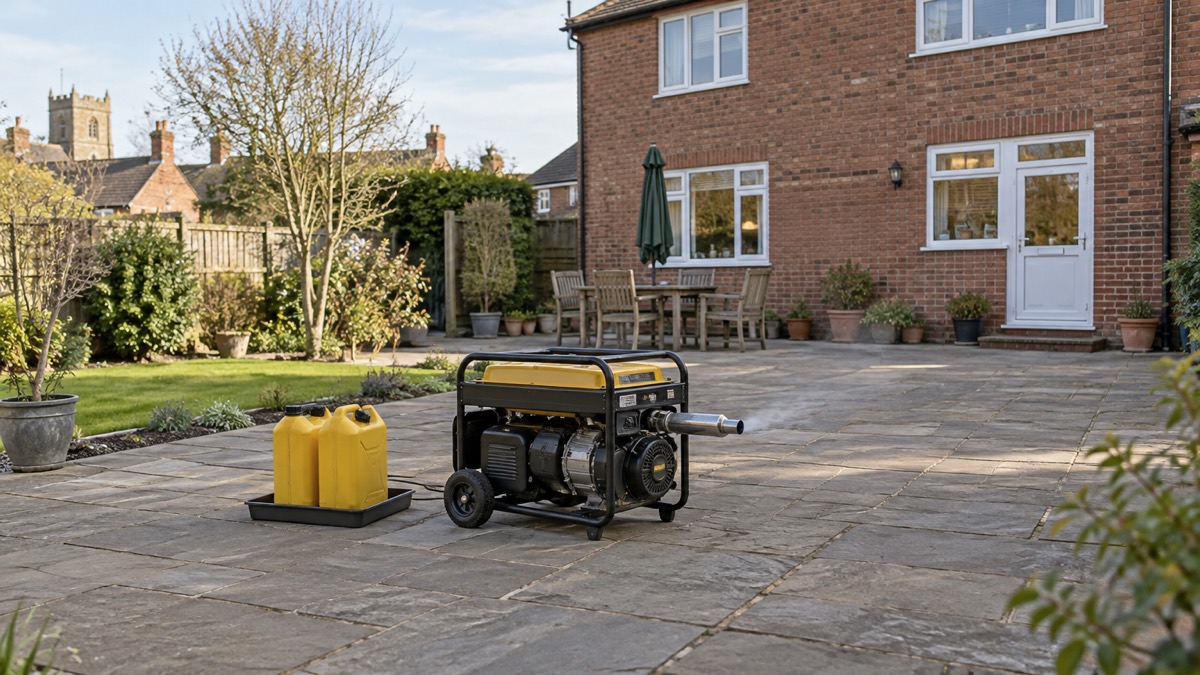
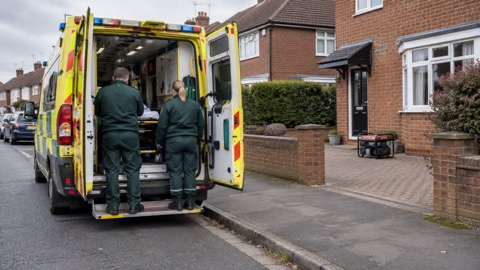
Carbon monoxide is the reason. The London Fire Brigade warns that an extinguished barbecue can continue to produce carbon monoxide for many hours after it has been put out, and that the gas can travel through walls9. The same logic applies to a generator: running it in a garage, shed or porch, even with the door open, is not safe. Only equipment designed to be used indoors should be brought inside the home3.
Network operators echo the point. NIE Networks advises being careful where you site a generator in case of carbon monoxide poisoning, and making sure there is plenty of air flow around it to supply oxygen and remove the fumes17.
Diesel, petrol or dual fuel: how each generator behaves
The three fuel types behave differently, and the choice affects how much fuel you store and how you maintain it.
| Fuel type | What it does well | What to watch | Storage rule |
|---|---|---|---|
| Diesel | Generally lasts longer than petrol generators, with long running time12 | More expensive to buy than petrol and can be noisier12 | No specific legal limit on how much you store at home1 |
| Petrol | Widely available; smaller portable models common12 | Fuel degrades if stored in the tank or carburetor; needs draining and cleaning14 | Up to 30 litres at home without informing your local Petroleum Enforcement Authority1 |
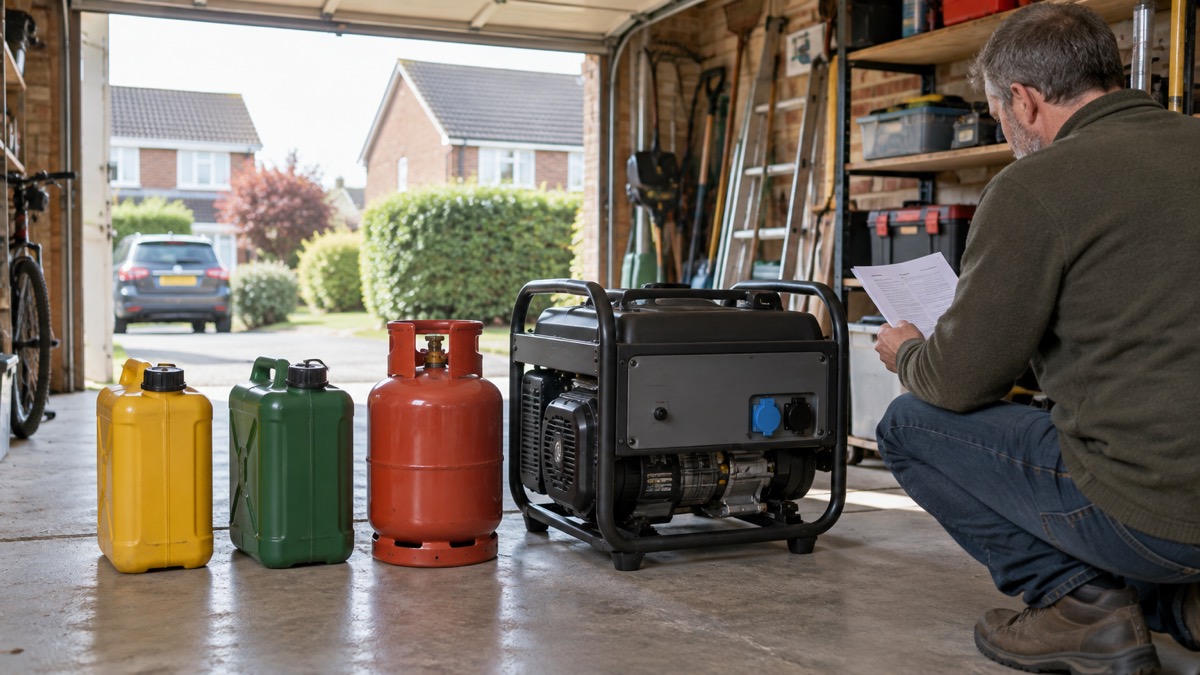
| Dual fuel (LPG) | Runs on LPG cylinders as well as petrol18 | Needs cylinder storage and regulator care | Follow cylinder storage advice |
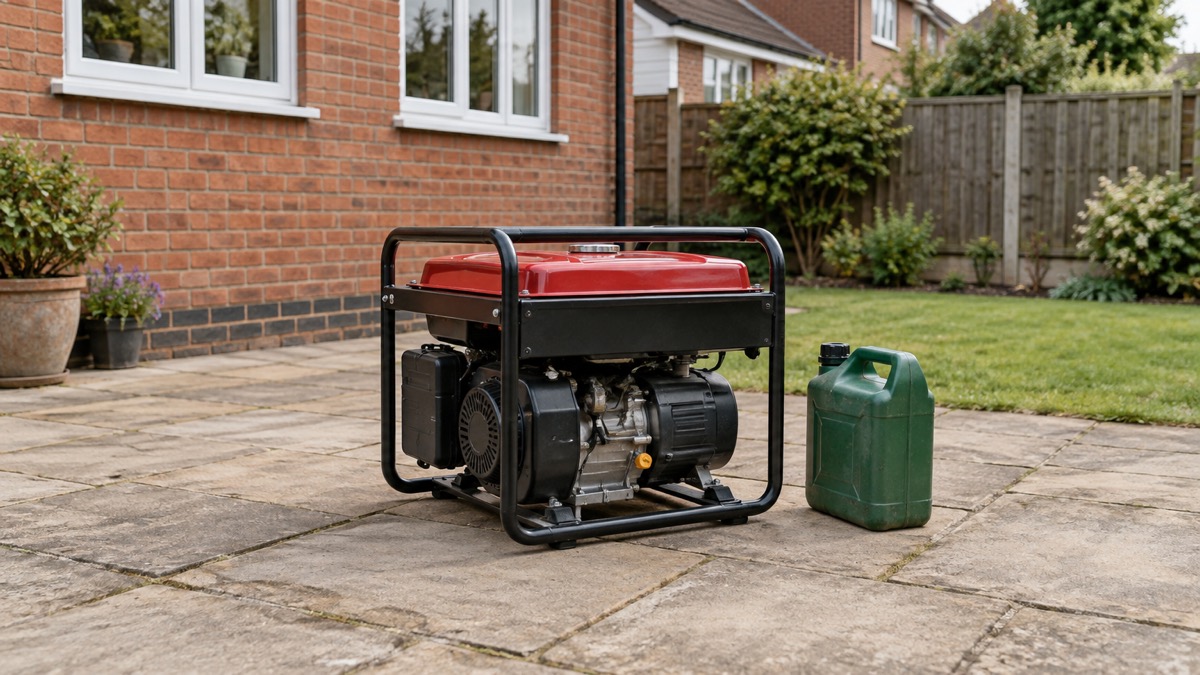
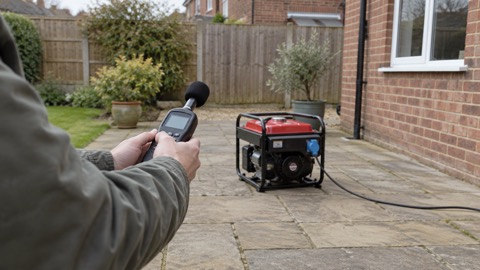
Diesel's advantage is endurance. Which? notes that diesel generators generally last longer than petrol generators with long running time, and that a petrol model it reviewed had a fuel tank capacity of around 20 litres12. If you are weighing up running time against noise and purchase cost, the trade-off is real: diesel is more expensive to buy and can be noisier12.
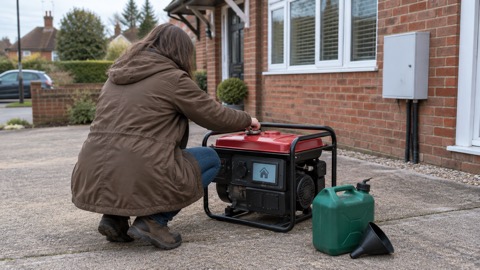
Petrol brings a hard storage cap. You can store up to 30 litres at home or on non-workplace premises without informing your local Petroleum Enforcement Authority1, in suitable portable metal or plastic containers, one demountable fuel tank, or a combination, as long as no more than 30 litres is kept1. Store petrol only in approved containers5, and do not smoke near where it is stored1.
Dual-fuel generators give you a second option. The Champion CPG3500E2-DF runs on LPG as well as petrol18. If you go that route, read the guidance on LPG cylinders and regulators before you buy, because cylinder storage and connection have their own rules.
Size, output and sockets: matching a generator to your home
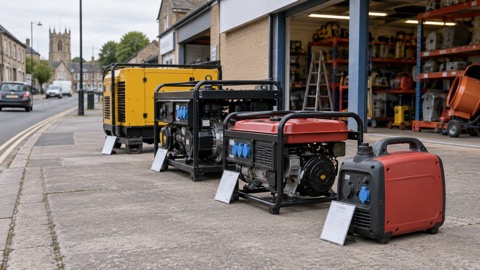
A generator only helps if its output matches what you want to run. Which? warns that because they are small, portable generators have a limited output capacity, and some models will not power all appliances12. Work out what you need first: the watts and watt-hours guide explains how to add up appliance loads, and the generator sizing page takes you through the calculation.
Sockets decide what you can plug in. A large three-phase diesel set, for example, lists 2 x 110v 32 amp, 1 x 240v and 1 x 240v 32 amp outlets, plus a 12v battery charging outlet and 415v three-phase and 240v single-phase output sockets19. Most households need 230v single-phase sockets for ordinary appliances. If you are offered a 110v set, note the maker's warning that 110v is 40-50% lower output in watts than 230v, and that if full power is required on 110v a single-phase 110v-only generator is needed18.
If you want the generator to feed your home's circuits rather than individual appliances, that is a job for an electrician and a proper transfer arrangement. The maker's warning is unambiguous: never connect a portable generator directly to household wiring or a wall socket, as this can create dangerous backfeed into the electricity network and may cause serious injury, fire or damage5. An automatic transfer switch is one route, but the maker warns that the size and type of generator purchased will determine the power delivered to the equipment or consumer unit, so specify the generator correctly in accordance with the appliances or equipment wattage to be powered20. Read connecting a generator to your home's wiring before going further.
For shock protection, Electrical Safety First advises buying an RCD (residual current device) which will cut off electricity if it detects a fault that could cause electric shock; a portable one is a good start, but for even better protection get one built into your main electrics for the house21.
What your network operator will and will not do
It helps to know what to expect from the company that runs your local wires. NIE Networks says that where possible it fits a generator at the local substation, and that it does not fit generators in individual homes or businesses22. SSEN says it cannot provide you with a generator, though you can hire small generators from local hire shops, and you must let SSEN know so it can make sure it is safe11. UK Power Networks connects generators as close as possible to the local electricity substation, which may mean very close to your home depending on where you live10.
Generators are used for temporary restoration while permanent repairs are completed, and for extended repairs the operator orders generators through network partners with a refuelling strategy in place23. In exceptional circumstances, such as weddings or funerals, Electricity North West does its best to provide a generator to minimise the impact of the power cut24. Generators are only provided in exceptional circumstances, such as for medical needs like oxygen equipment, mobility aids or end-of-life care24.
If you have medical equipment at home, tell your network operator in advance and ask about the Priority Services Register. The medical devices page covers powering equipment from a battery.
After a repair, you may experience a short outage whilst you are being connected back to the network23. Keep devices charged and use them sparingly to conserve battery power until you can charge them again25.
Sources (25)
- Storing fuel, Dorset and Wiltshire Fire and Rescue Service, 2026
- Stay warm safely in winter, Dorset and Wiltshire Fire and Rescue Service, 2026
- Strong winds and heavy rain warning: information and advice, nidirect, 2026
- 12 tips to prepare for a power cut, Horsted Keynes Parish Council, 2026
- Generators, Clarke International, 2026
- Caravans and mobile homes, Dorset and Wiltshire Fire and Rescue Service, 2026
- Bio-ethanol and gel fuels, Dorset and Wiltshire Fire and Rescue Service, 2026
- Wildfires: rural, Dorset and Wiltshire Fire and Rescue Service, 2026
- Portable heaters, gas fires and open fires, London Fire Brigade, 2026
- Why do you use generators?, UK Power Networks, 2026
- Your planned power cut explained, SSEN, 2026
- How to buy the best generator, Which?, 2026
- Generators, Wiltshire and Swindon Prepared, 2026
- FAQ, Champion Power Equipment, 2026
- What are electricity rota loads?, Wiltshire and Swindon Prepared, 2026
- Carbon monoxide, Health and Safety Executive, 2026
- Power cut help - what should I do in a power cut? | Northern Ireland Electricity Networks, Northern Ireland Electricity Networks
- Champion 2800 Watt LPG Dual Fuel Generator CPG3500E2-DF, Champion Power Equipment, 2026
- Warrior 12.5 kVA Diesel Generator 3 Phase, Champion Power Equipment, 2026
- Diesel ATS Automatic Transfer Switch, Champion Power Equipment, 2026
- Electrical safety in the home and garden, Electrical Safety First, 2026
- Planned work, NIE Networks, 2026
- Restoration following a power cut, Electricity North West, 2026
- Advice and support: FAQs, Electricity North West, 2026
- Phone and broadband outages, Prepare, 2026
 Power Cut Backup Power Checklist
 Backup Power Before Winter
 Safe Battery Charging at Home
 Running a Generator Indoors
 Carbon Monoxide from Generators
 Generator Sizing for a Power Cut
 Generator Run Time on a Tank
 Storing Petrol at Home
 Storing a Generator
 Generators in Cold Weather
 Generator Noise and Neighbours
 Power Station Capacity Sizing
 Power Station Run Time
 Power Station for a Gas Boiler
 Power Station UPS Mode