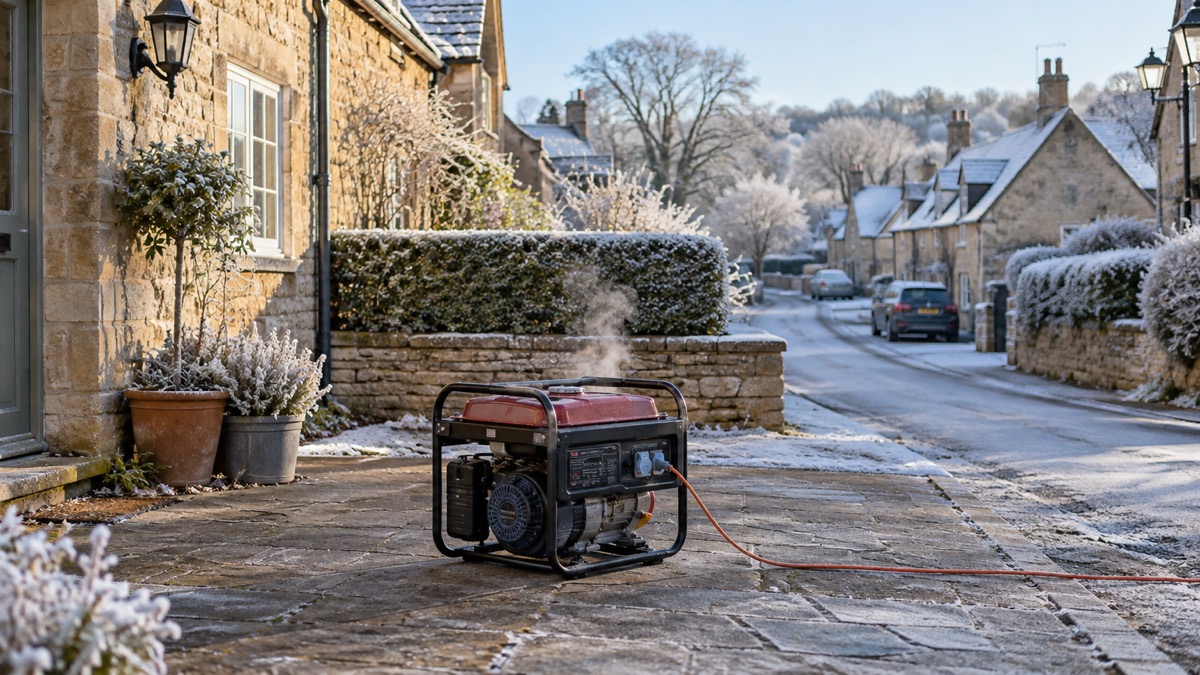
Most generators will start in cold weather, but not by accident. The cold is exactly when the power is most likely to fail, so the morning you need the generator is the morning it has to work first time. Some models are built for it: Champion states that its 2200 Watt Inverter Petrol Generator has Cold start Technology that ensures a quick start in cold weather1. Others need help, particularly electric-start models whose battery has to be kept charged and maintained2.
The bigger risks in winter are not the engine but the siting and the fuel. A petrol or diesel generator must never run indoors, because its exhaust gases contain carbon monoxide3. It should not be exposed directly to rain or standing water either, and any shelter you build around it must still provide proper ventilation and stop heat or exhaust gases building up2. Get those two things right and a generator can carry a household through a winter outage.
This page covers how each type starts, what it runs on, where to put it, what to check before winter, and when your network operator will supply a generator instead. For the wider picture, start with Backup Power at Home: A Household Guide.
Electric start or pull cord: how each behaves in the cold
There are two ways to start a generator, and the cold treats them differently. An electric-start model uses a key or switch, which makes larger engines easier to operate, but its battery must be kept charged and maintained, and some models retain a recoil starter as a backup2. That backup matters in winter: a flat starter battery on a freezing morning leaves you pulling a cord on an engine that was designed to be turned by motor.
Pull-cord, or recoil, starting is the simpler arrangement and has no battery to go flat. It is harder work on a large engine, which is why makers fit electric start to bigger sets in the first place. If you have a choice, an electric-start model with a recoil backup gives you both routes.
Some generators go further and can be started remotely. The EcoFlow Smart Generator offers electric start, manual start, control through the EcoFlow app, and auto-start at a designated battery limit5. The auto-start function is worth understanding: it means the generator can begin charging a connected battery when that battery falls to a level you have set, without anyone going outside. For a winter outage that is a real convenience, but it also means the generator must be sited safely and permanently enough to run unattended.
Whichever start you have, the winter discipline is the same: test it before you need it. The Northern Ireland Executive's storm advice for farmers and livestock owners is to check and test backup generators and equipment6. The same instruction appears in its general strong winds and heavy rain warning7. That advice is aimed at farms, but it applies to any household that owns a generator.
Petrol, diesel or dual fuel: what each generator runs on
The fuel you choose shapes how the generator behaves in winter, how long it runs and how much noise it makes.
| Fuel type | What it means in practice | Trade-offs |
|---|---|---|
| Petrol | Conventional petrol generators use an engine to drive an alternator at a relatively constant speed, practical for tools, lighting, pumps and workshop equipment, and often provide a higher output for the price2 | Fuel needs care and rotation; not the quietest option |
| Diesel | Generally last longer than petrol generators, with long running time8 | More expensive to buy than petrol and can be noisier than petrol alternatives8 |
| Dual fuel | Runs on more than one fuel, typically petrol and LPG | Check the maker's instructions for the model; see LPG Cylinders and Regulators for Dual-Fuel Generators |
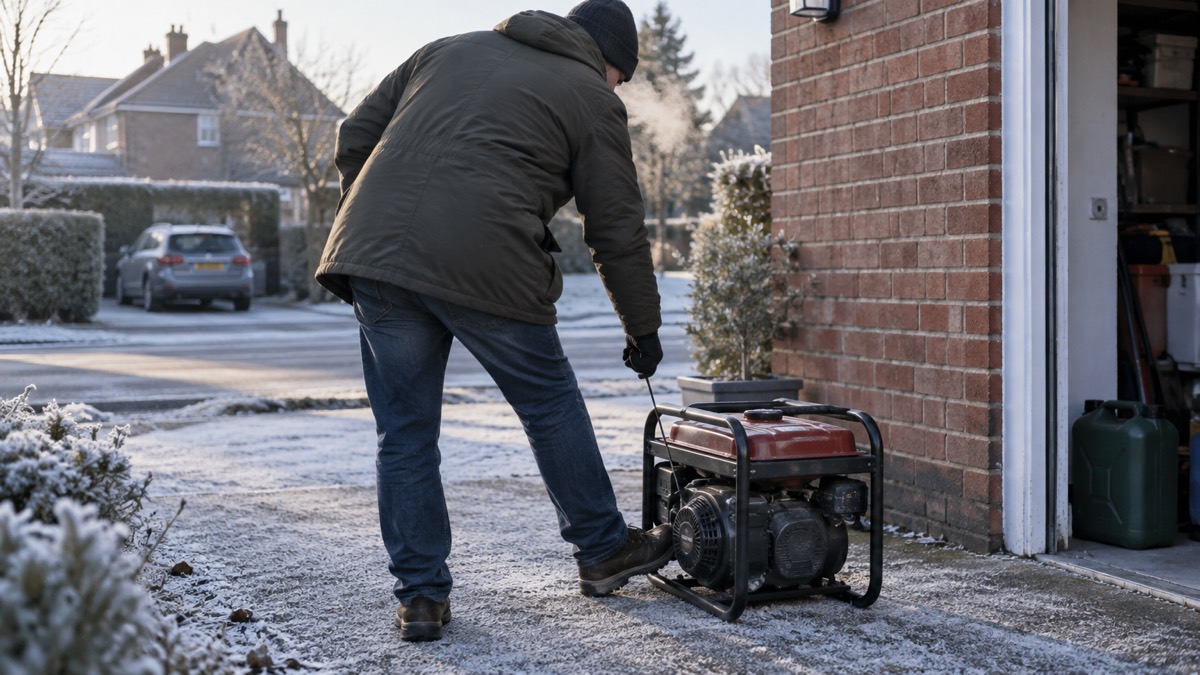
Which? sets out the diesel case plainly: diesel generators generally last longer than petrol generators and have long running time, but diesel is more expensive to buy than petrol and can be noisier than petrol alternatives8. For a household that expects to run a generator for many hours across a long outage, that long running time is the attraction. For occasional short use, petrol is simpler.
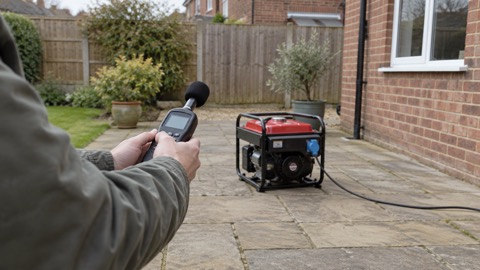
There is also a distinction between generator types that affects noise and load behaviour. Inverter generators are generally quieter than conventional open-frame generators, particularly at lower loads, though actual noise varies by model, operating load and measuring distance2. If you are weighing the two, see Inverter Generator or Open-Frame Generator and How Loud Is a Generator? Noise and Neighbours.
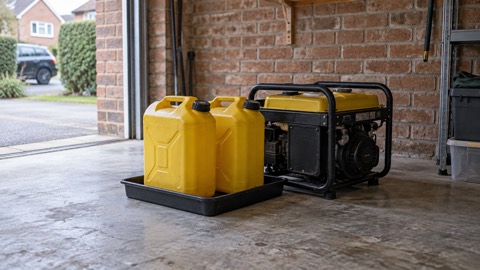
Fuel storage is its own subject with its own limits. For the rules on keeping petrol and diesel at home, read How Much Petrol Can I Store at Home Safely? and Is There a Limit on Diesel Storage at Home?.
Where to site a generator: carbon monoxide and air flow
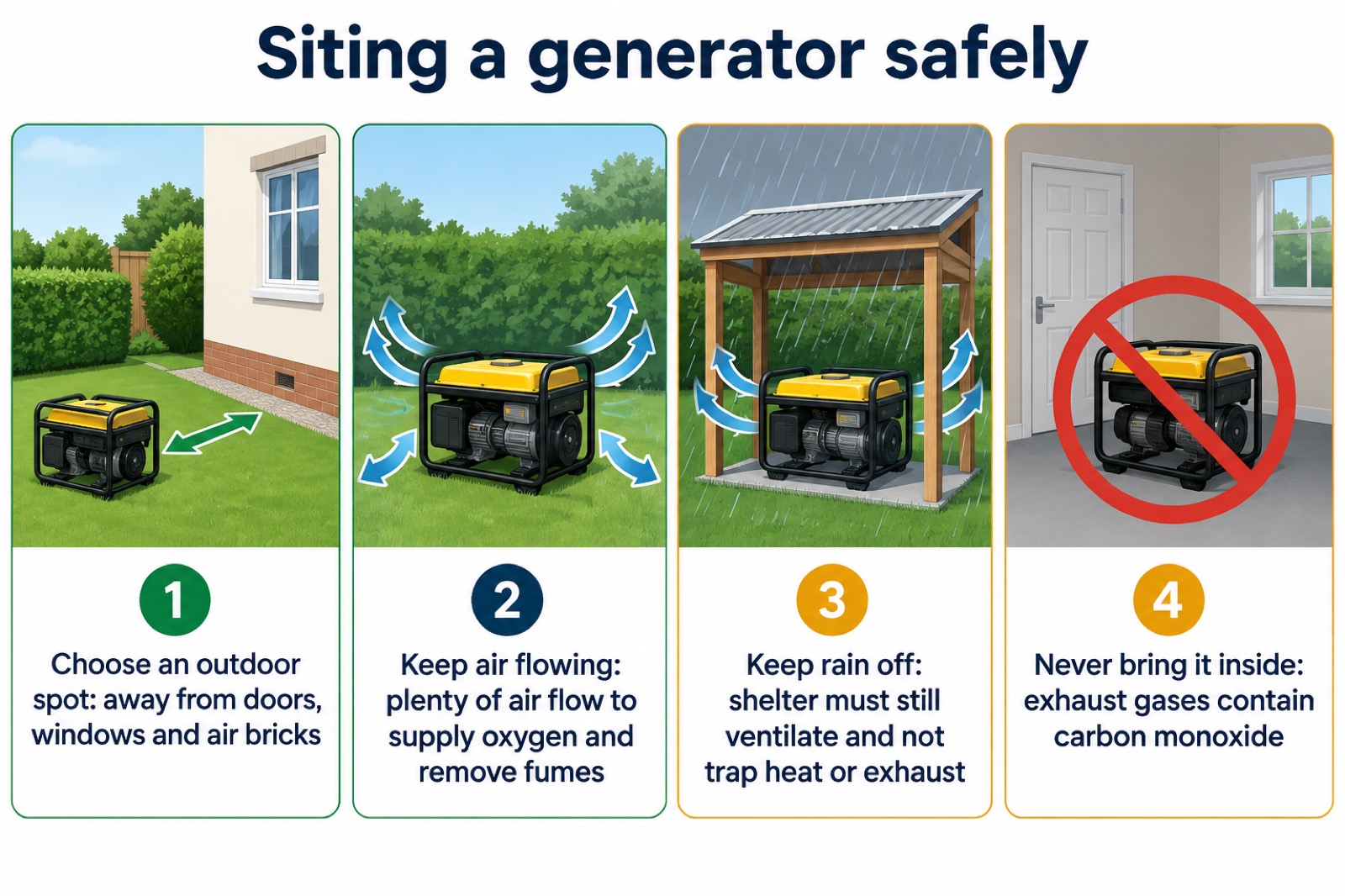
This is the part that kills people, so it comes before anything about starting. The Health and Safety Executive's guidance is to locate petrol generators and similar equipment outside in well ventilated spaces so that fumes disperse and cannot gather or drift into building openings9. The message is repeated by network operators: if you are using a generator, be careful where you site it in case of carbon monoxide poisoning, and make sure there is plenty of air flow around the generator to supply oxygen and remove the fumes10.
The Northern Ireland Executive's flood clearing guidance adds a practical instruction for anyone using a generator to dry out a property: put the generator outside to avoid carbon monoxide poisoning from the exhaust11. The London Fire Brigade's advice after a flood makes the same point in the context of pumps, humidifiers, dryers and heaters, which you may need a generator to power while the electricity supply is unchecked12.
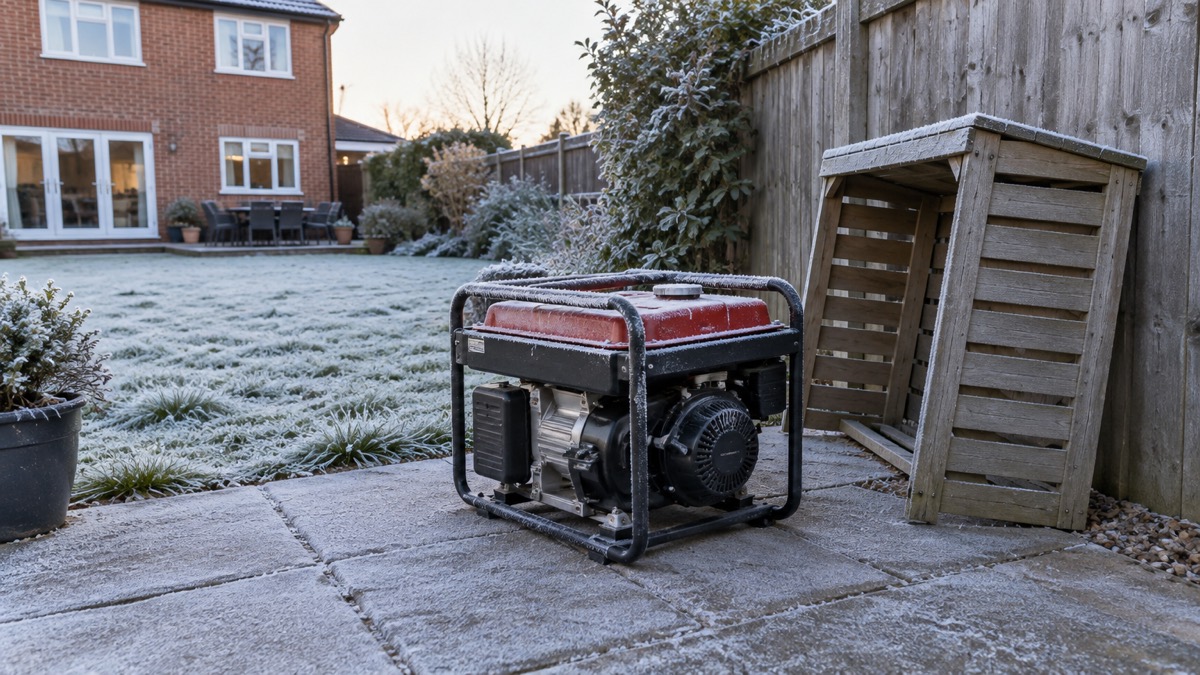
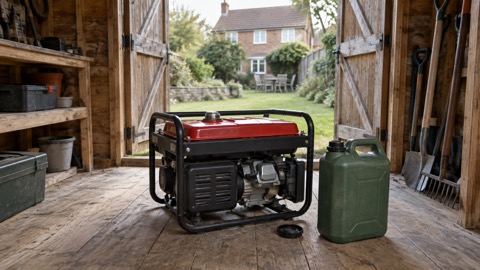
Rain brings a second problem. A generator should not be exposed directly to rain or standing water, and any suitable protection must still provide proper ventilation and prevent heat or exhaust gases from building up2. In other words, you cannot solve the rain problem by putting a box over the generator and sealing it: the shelter has to let air through while keeping water off. For more on this, see Can You Run a Generator in the Rain? and Can You Run a Generator Indoors or in a Garage?.
What to check before relying on a generator in winter
Winter is when the generator is most likely to be needed and least likely to be exercised. The Energy Networks Association says the networks are built to withstand high winds, heavy rain and snow, but severe weather can sometimes be destructive and bring down power lines and cause power cuts13. Powercut105, the national power cut service, makes the same point14. So the outage and the cold tend to arrive together.
Electricity North West warns that cold weather can affect your electricity supply, and advises keeping extra blankets and charged devices and joining its Extra Care register15. That is the household context in which a generator sits: it is one part of a winter plan, not the whole of it.
Before winter, work through this list:
- Check and test the generator. The Northern Ireland Executive's storm advice is to check and test backup generators and equipment6.
- Check it meets your needs. If you have a backup generator already, check it meets the power needs and connections you might have to support in an emergency16. The same wording appears in the Energy Networks Association's guidance for care and assisted living providers17.
- Get the heating checked. The Red Cross advises getting your heating system checked, with a plumber carrying out a service and giving advice on running it efficiently18. The Mayor of London's cold weather advice is to get your heating system and cooking appliances checked, make sure you ventilate your home, and if you do not have gas or electric heating, make sure you have fuel19.
- Know that boilers struggle in cold snaps. Electricity North West notes that gas appliances like boilers work harder in winter and are more vulnerable to a breakdown in very cold weather16.
- Plan for warmth without power. Which? advises that if your power goes out during cold weather, you should stay in south facing rooms if you can, wear plenty of layers and keep moving20.
For a fuller checklist, see Backup Power Checks Before Winter.
When your network operator may provide a generator
Households sometimes assume that a long outage will bring a generator to the door. It usually will not. Network operators provide generators only in narrow circumstances, and it helps to know what they are before you rely on one.
Scottish and Southern Electricity Networks states that it only provides generators for customers who are medically dependent on electricity, and does not provide generators for businesses or personal use4. Electricity North West says generators are only provided in exceptional circumstances, such as for medical needs like oxygen equipment, mobility aids or end-of-life care21. It adds that in exceptional circumstances such as weddings or funerals it does its best to provide a generator to minimise the impact of the power cut21.
| Situation | Will the network provide a generator? |
|---|---|
| Medically dependent on electricity | Yes, in the operators' stated circumstances4 |
| Business use | No4 |
| General household convenience | No4 |
| Wedding or funeral | The operator does its best21 |
Where a generator is used, it is a temporary measure. Electricity North West says generators will sometimes be used for temporarily restoring customers whilst permanent repairs are completed, and that it orders generators through network partners who ensure a robust refuelling strategy is in place and connect to the network safely22. When the repair is done, you may experience a short outage whilst you are connected back to the network22.
In Northern Ireland the position is starker. Northern Ireland Electricity Networks states that in an emergency power cut scenario it will not be possible to connect generators23. In Wales, the Welsh Government's resilience assessment notes that should there be a sudden loss of electricity, the network operator would be able to reconfigure their network to stabilise the grid and reconnect most customers24.
If you or someone in your household depends on electricity for medical equipment, tell your network operator in advance. For powering medical devices yourself, see Powering CPAP, Oxygen and Other Medical Devices From a Battery.
Connecting a generator to your home, and what can go wrong
Plugging a lamp into a generator's own socket is one thing. Wiring a generator into your home's circuits is another, and it is not a DIY job. Wiltshire and Swindon Prepared, an official local resilience site, says it takes research by you and the advice and expertise of a qualified electrician before a generator may help you25. Electricity North West is equally direct: if you do choose to connect your own generation, this must be done by a qualified professional26.
The operator also cautions that using a generator is not always the simplest solution: there will not be enough generators to keep everyone powered, and it may take longer to install and connect a generator to your local substation than the duration of the emergency power cut26. That is a reminder that a generator is a household tool, not a substitute for the network.
For the technical side, including changeover switches and why a generator must not back-feed into the mains, see Connecting a Generator or Battery to Your Home's Wiring. For the safety essentials, see Generator Safety: Carbon Monoxide, Fuel and Electric Shock.
Sources (26)
- Champion 2200 Watt Inverter Petrol Generator, Champion Power Equipment, 2026-10-25
- Generators, Clarke International, 2026-10-25
- Flooding and health: safely cleaning your home, Wiltshire and Swindon Prepared, 2026-10-25
- Planned power cuts, Scottish and Southern Electricity Networks, 2026-10-25
- EcoFlow Smart Generator, EcoFlow, 2026-10-25
- Strong winds and heavy rain warning: information and advice, Northern Ireland Executive, 2026-01-27
- Strong winds weather warning: information and advice, Northern Ireland Executive, 2026-10-24
- How to buy the best generator, Which?, 2026-01-20
- Carbon monoxide, Health and Safety Executive, 2026
- Power cuts advice, Northern Ireland Electricity Networks, 2026-10-25
- After flood: clearing, Northern Ireland Executive, 2026-05-06
- After a flood, London Fire Brigade, 2026-10-25
- Storms and bad weather, Energy Networks Association, 2026-10-25
- Get winter ready, Powercut105, 2026-10-25
- Power cuts, Electricity North West, 2026-10-25
- Be winter ready, Electricity North West, 2026-10-26
- Care and assisted living providers, Energy Networks Association, 2026-10-25
- Snow and winter, British Red Cross, 2026-10-25
- Keeping warm, healthy and safe in cold weather, Mayor of London, 2026-10-25
- What to do in a power cut, Which?, 2026-06-04
- Frequently asked questions, Electricity North West, 2026-10-25
- Restoration following a power cut, Electricity North West, 2026-10-25
- Can you not give me a generator?, Northern Ireland Electricity Networks, 2026-10-25
- Resilience risks in Wales, Welsh Government, 2026-09-07
- Generators, Wiltshire and Swindon Prepared, 2026-10-25
- Emergency power cuts, Electricity North West, 2026-10-25
 Power Cut Backup Power Checklist
 Backup Power Before Winter
 Safe Battery Charging at Home
 Running a Generator Indoors
 Carbon Monoxide from Generators
 Generator Sizing for a Power Cut
 Generator Run Time on a Tank
 Storing Petrol at Home
 Diesel Storage at Home
 Storing a Generator
 Generator Noise and Neighbours
 Power Station Capacity Sizing
 Power Station Run Time
 Power Station for a Gas Boiler
 Power Station UPS Mode