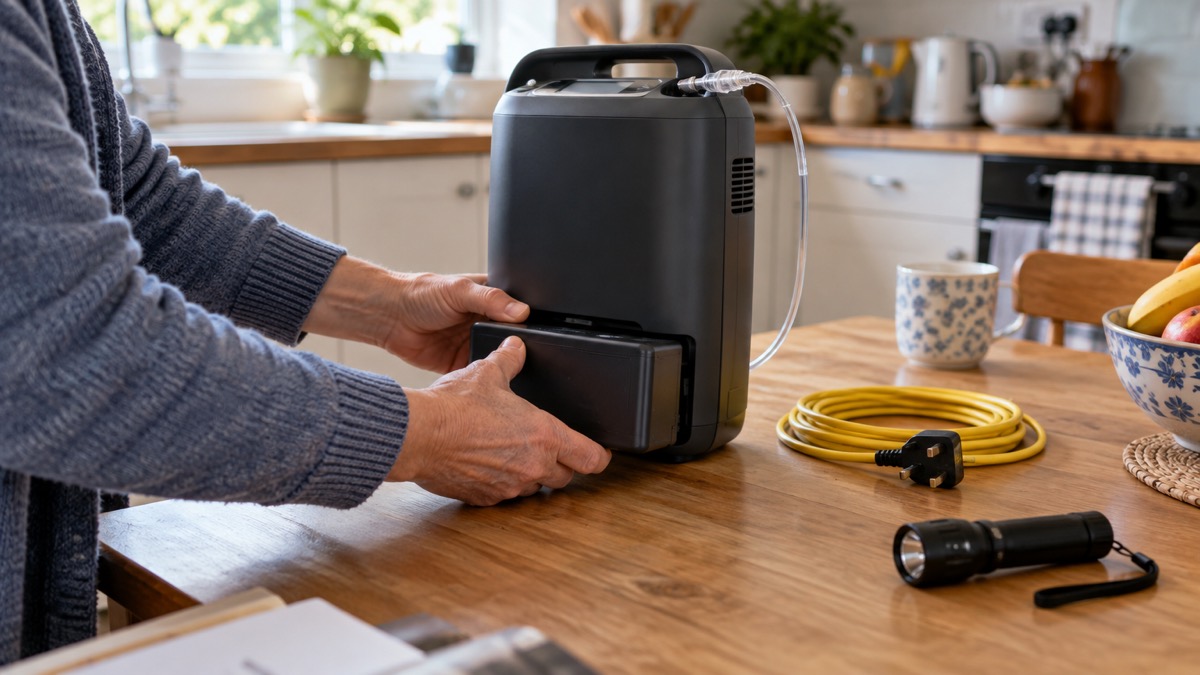
If you depend on a machine that plugs into the wall, a power cut is not a matter of sitting in the dark until the lights return. People who rely on electrical medical equipment, or on refrigerated medicines, can be significantly affected when the supply goes off, particularly in winter1. NHS guidance for families of technology dependent children rates the risk of an unplanned power cut as Major without planning, and Low to Moderate with a clinical team assessment and a contingency plan in place2. The difference between those two outcomes is preparation, and most of it can be done this week.
Two things matter most. First, make a plan with your care provider and clinical care team now, setting out what action to take and who to contact in a power outage3. Second, join the Priority Services Register with your network operator and energy supplier, so the companies that run and restore your electricity know you need extra help4. In Great Britain, ring 105 when a power cut happens; in Northern Ireland the number is 03457 6436433.
Start with your care team, not with kit
The first conversation to have is with the people who look after your health. Official guidance is direct about this: make a plan with your care provider and clinical care teams now about what will happen in a power cut, covering what action to take and who to contact3. That plan is what turns a frightening evening into a managed one. It should name the equipment you rely on, how long you can safely manage without it, who to ring first, and at what point you should seek medical help or go to hospital.
The stakes are real. Official risk guidance on the failure of the national electricity supply notes that vulnerable people may be on breathing apparatus run by electricity or on dialysis machines, and that without these machines many vulnerable people may need hospital care11. That is not a reason for alarm, because widespread national failure is rare and local cuts are usually shorter, but it is the reason to have the conversation before you need it rather than during.
If you care for a child who depends on technology, NHS guidance asks families to plan now where you would provide care during a power cut, because you will be caring in reduced light and a clear, organised area is important2. Think through the practicalities: where the equipment will go, where the torches are, and how you would keep the space around the child clear. The same guidance rates the risk of a planned power cut as Low when a clinical team assessment and contingency plan are in place, compared with Major without planning2.
Your emergency plan should also cover the equipment itself. Ready Scotland guidance for disabled people and carers says your plan should include backup power arrangements, instructions for operating the equipment, maintenance information, what you would do during a long power outage, and a copy of the emergency and service continuity policy from your care agency if you have one12. Write it down and keep a copy where you can find it in the dark.
- What equipment you rely on, and what each one does
- Backup power arrangements for each item12
- Instructions for operating the equipment12
- Maintenance information12
- What you would do during a long power outage12
- Who to contact: care team, network operator, and out-of-hours medical help3
If your supply is cut off because of a faulty energy meter rather than a network power cut, contact your energy supplier instead of ringing 105, as they are responsible for the meter9.
Join the Priority Services Register
The Priority Services Register is how the electricity industry knows you need extra help. Your utility company can give you extra support through the Priority Services Register12. If you have any medical equipment which relies on electricity, join your network operator's priority register4. If electricity is crucial for any medical equipment you have, contact your Distribution Network Operator (DNO) at any time, as they may be able to put you on their Priority Register for assistance during any power outage6.
It helps to understand who does what. Your energy supplier sells you electricity; your network operator (the DNO) owns the wires and restores power when it fails. Both hold Priority Services Registers, and you should join both. The London Fire Brigade describes the register as a special, private list of customers who need extra help due to factors like mobility issues, vision or hearing impairments, or because they are older or unwell13. The service is available to customers in England, Scotland and Wales5; Northern Ireland has its own arrangement, covered below.
Who can join
Eligibility is broader than many people assume. You do not have to be on life support to qualify. In Scotland, official guidance lists people who use medical equipment that needs power or water, people who are disabled or have a long-term health condition, households living with children under 5, and people who are over 6014. Water companies also run their own Priority Services Register for people unable to reach a distribution point due to mobility issues15. NHS guidance in the East of England adds that people who rely on refrigerated medicines can also be significantly affected by power cuts and should explore whether they are eligible for their energy supplier's register1.
Your need can be temporary as well as permanent. Ofgem notes that this could be all the time, or for a short period due to something that has happened in your life, such as recovering from an operation or a spell in hospital16.
How to register
Contact your network operator and your energy supplier and ask to join their Priority Services Register. If you have a different supplier for your gas and electricity, you will need to contact them separately16. If you switch supplier, you will need to ask to join their Priority Services Register, because your place does not transfer automatically16. Your network operator stays the same when you switch supplier, so that registration usually carries over, but it is worth confirming.
If you use a home ventilator, an NHS manual for ventilator users is explicit: ensure that you are registered as a priority user on a priority service register with your electricity provider, so you will get advance notice of any planned power cuts17.
What the register gives you during a power cut
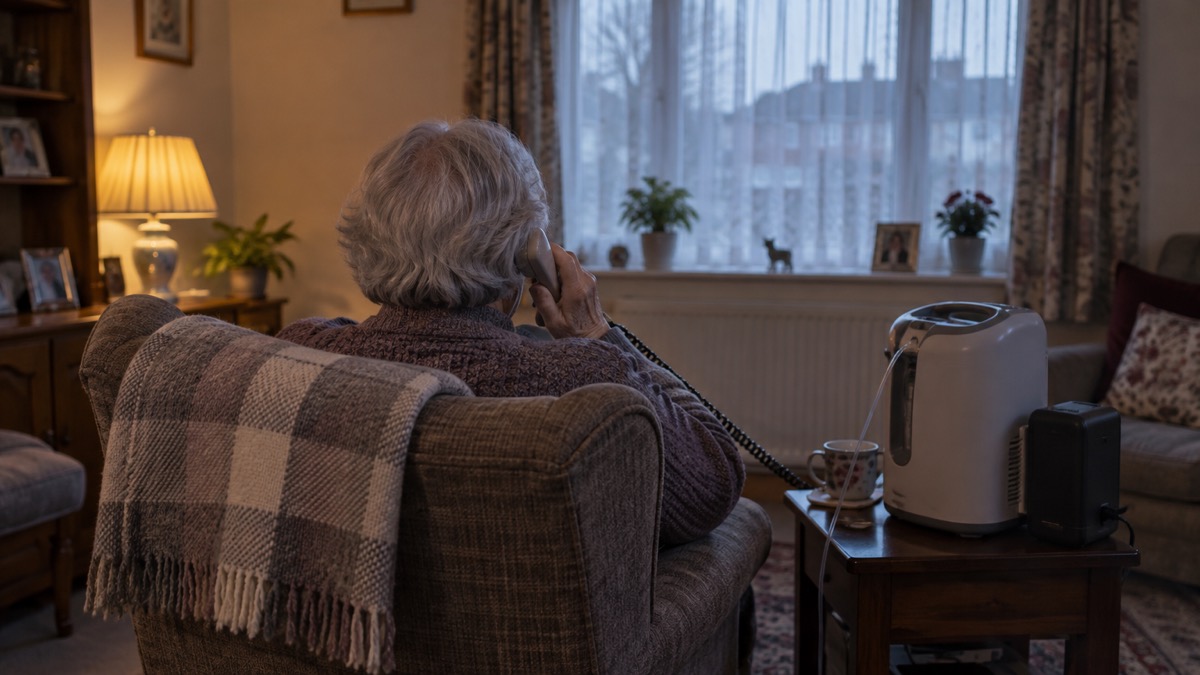
The register is not a promise that your power will be restored first, and it is important to be clear about that. What it does give you is notice, contact and practical help.
If you rely on your energy supply for medical reasons, your network operator can tell you about planned power cuts, for example when they plan engineering work3. For a ventilator user, that advance notice is the difference between a managed evening on battery power and a crisis17. One network operator, SSEN, states that it only provides generators for customers who are medically dependent on electricity, and does not provide generators for businesses or personal use7, which shows the kind of targeted help the register unlocks.
During unplanned cuts, network operators must offer customers on the Priority Services Register extra help for both planned and unplanned power cuts, for example giving them battery packs so that they can still charge phones or medical equipment. What each company offers will be different9. In past storms, Ofgem's review of Storm Arwen found that affected customers expected DNOs to consider upgrading the support available to vulnerable customers, those affected by lengthy outages of 5 days plus, or those with no water supply, including offering pre-paid hotel accommodation or portable generators18. An earlier Ofgem storms review found that DNOs proactively contacted PSR customers and worked with local authorities and the British Red Cross, arranging generators, distributing warm meals and blankets, and providing alternative hotel accommodation19.
| Type of help | What it looks like | When |
|---|---|---|
| Advance notice | Told about planned power cuts, such as engineering work3 | Before planned cuts |
| Battery packs | Loaned so you can still charge phones or medical equipment9 | During cuts |
| Generators | Provided for customers medically dependent on electricity7 | During lengthy cuts |
| Hot meals and blankets | Distributed with local authorities and the British Red Cross19 | During storms |
| Hotel accommodation | Alternative accommodation for lengthy outages18 | Lengthy outages |
What each company offers differs9, so ask your own network operator what they provide. Our page on extra help from network operators during long outages goes into this in more detail.
Check your backup power before you need it
Equipment that keeps someone well usually has a battery option, but a battery you have never tested is not a backup, it is a hope. Independent guidance on planned power cuts is blunt: power cuts will affect equipment such as stairlifts, bath hoists and adjustable beds, so make sure that any essential medical equipment has a battery backup7. A parish council tip sheet makes the same point about the same equipment: power cuts will affect stair lifts, bath hoists and adjustable beds20.
Official storm guidance adds the routine that should become habit: when a storm is forecast, charge mobile phones, power banks and any backup batteries for medical equipment in case there is a power cut8. Do not wait for the wind to arrive.
- Confirm each piece of essential equipment has a working battery backup7
- Keep backup batteries charged, especially when bad weather is forecast8
- Keep phones and power banks charged alongside them8
- Know how long each battery lasts, and write it on the plan
- Test the battery changeover, not just the battery level
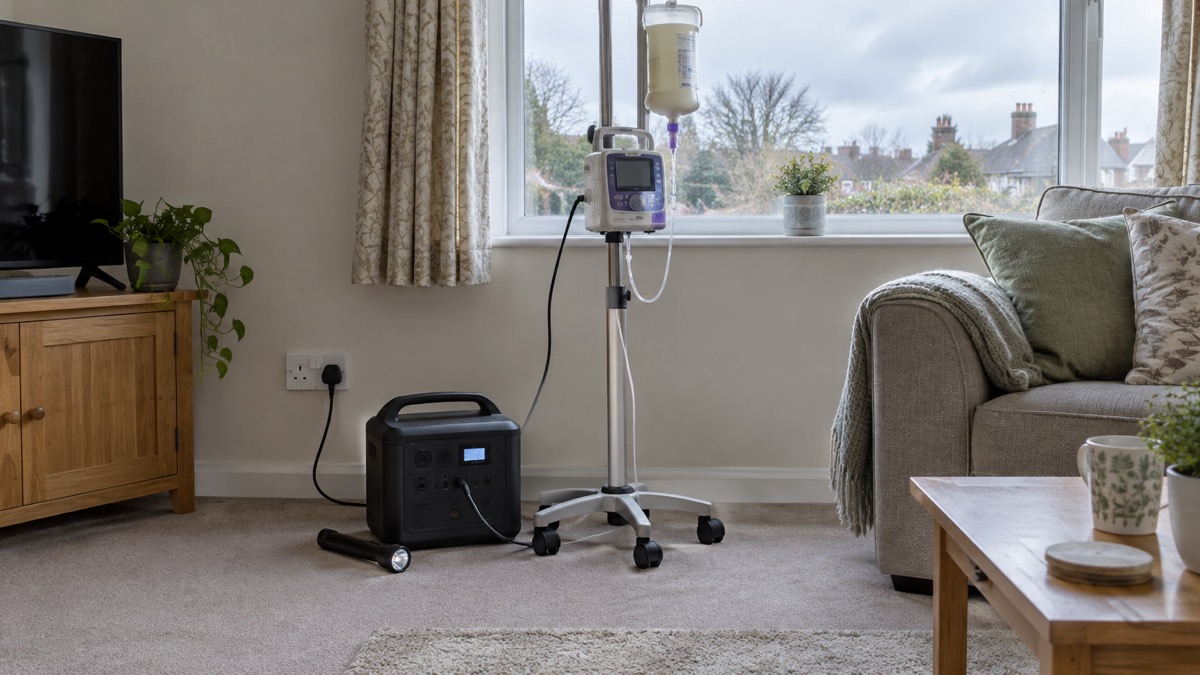
For equipment without its own battery, a portable power station or an uninterruptible power supply (UPS) can bridge a cut. A UPS switches over instantly, which matters for equipment that must not stop even briefly; a power station has more stored energy for a longer outage but takes a moment to start. Sizing either depends on how much power your equipment draws and how long you need to run it, and your care team or equipment supplier can tell you the power rating of each item. Our backup power at home guide explains the options and how to match one to your equipment.
If you use telecare devices, speak to your device provider or manufacturer to understand how personal alarms and connected health equipment such as diabetes sensors will function during a power cut3. Some will carry on with their own battery for a while; some will not work at all until the mains returns. You need to know which, before it matters.
When the power goes: call 105
When a power cut happens, the single number to know is 105. Call it free of charge to report the problem and get updates on when your power will be restored21. You will be put through to your local electricity network operator, who can give you help and advice23. The service is free and available 24/713. If you are unsure who to call, or in the event of a power cut, call 10524, or visit the Power Cut website to be directed to the operator for your area25.
For a household relying on medical equipment, the sequence is slightly longer than for everyone else:
- Check whether it is a power cut or just your trip switches, if you can do so safely
- Call 105 to report it and get a restoration estimate21
- Start your medical plan: switch to battery backup7
- Call your care team or out-of-hours medical help if the equipment has stopped or the outage is outlasting your battery life3
- Ask the network operator about the extra help available to you as a registered customer9
Do not assume the network operator knows your supply is off. Cuts are reported by customers, and ringing 105 is what puts you into the restoration queue and gets you updates21. Our page on how to report a loss of electricity covers the reporting process, and what to do when the electricity goes off walks through the first hour for the whole household.
Northern Ireland and the North West: different arrangements
Northern Ireland runs its own arrangements. The 105 service covers England, Scotland and Wales; in Northern Ireland the power cut reporting number is 03457 6436433. Northern Ireland Electricity (NIE) Networks is the network operator there, and if a power cut happens you can contact its customer helpline26. You can also get information about electricity supply, including an updated list of areas affected by power cuts, on the NIE Networks website27.
Registration is separate too. If you depend on electrical equipment that is vital to your health, contact NIE Networks to get on their medical customer care register27. The utility regulator's consumer guide for Northern Ireland explains that NIE Networks will keep those consumers on the register up to date if there is a power interruption and will give notice in advance of planned interruptions28. So the same two steps apply, through a different door: register with NIE Networks, and keep their number by the phone.
| England, Scotland and Wales | Northern Ireland | |
|---|---|---|
| Power cut number | 1053 | 03457 6436433 |
| Network operator | Your regional DNO | NIE Networks26 |
| Register | Priority Services Register5 | Medical customer care register27 |
| Planned cut notice | From your network operator3 | Advance notice from NIE Networks26 |
Our page on Northern Ireland: NIE Networks, reporting and help covers the arrangements there in full.
Care homes, assisted living and looking out for others
If you or a relative live in a care home or assisted living, ask the manager what the contingency plan is for a loss of supply, including backup power arrangements and how residents who use powered medical equipment would be supported. The questions in your own household plan apply there too.
For families caring at home for technology dependent children, NHS guidance asks you to plan where you would provide care, because you will be caring in reduced light and a clear, organised area is important2. The guidance rates the risk from an unplanned power cut as Low to Moderate with a clinical team assessment and contingency plan in place, and Major without2.
Community guidance also asks neighbours and relatives to play their part. Ready Scotland's community emergency planning guide includes checking up on relatives or neighbours who might need help during a power cut29, and Carmarthenshire Council advises that if you have elderly relatives or neighbours who might need help during a power cut, please check on them30. If you are the person who depends on powered equipment, it is worth arranging that check from the other direction: agree with a neighbour or relative that they will look in on you if the lights go out. Our checklist for households using medical equipment and our page on checking on neighbours and relatives can help structure that agreement.
Sources (30)
- Be prepared for winter emergencies, NHS Norfolk and Suffolk Integrated Care Board, 2026
- Parental letter re power shortages, NHS North West Children's ODND Hub, 2022
- Power cuts: what to do, UK government Be Ready campaign, 2026
- Weekly update: London Prepared, Greater London Authority, 2026
- Be ready for emergencies, UK government Be Ready campaign, 2026
- What to do in a power cut, Met Office, 2026
- Planned power cuts, SSEN, 2026
- Storms: be informed about hazards, UK government Prepare campaign, 2026
- Check if you can get payment for a power cut, Ofgem, 2026
- Plan for a power cut, Ofgem, 2026
- Failure of national electricity, Wiltshire and Swindon Prepared, 2026
- Disabled people and carers, Ready Scotland, 2026
- Electrical items in the home, London Fire Brigade, 2026
- Flooding, Ready Scotland, 2026
- Failure of Water Infrastructure or Loss of Drinking Water - Risk Advice & Articles - Wiltshire & Swindon Prepared, Wiltshire & Swindon Local Resilience Forum (Wiltshire & Swindon Prepared)
- Get help from your supplier: Priority Services Register, Ofgem, 2026
- Home ventilator user manual, Leeds Teaching Hospitals NHS Trust, 2024
- Customer Experiences of Storm Arwen, Ofgem, 2022
- December 2013 storms review, Ofgem, 2014
- 12 tips to prepare for a power cut, Horsted Keynes Parish Council, 2026
- Cold, snow and ice, Ready Scotland, 2026
- Storms and wind, Ready Scotland, 2026
- Extreme weather summer guide, London Fire Brigade, 2024
- Flooding advice, Runnymede Borough Council, 2026
- Power, gas and water: what if they fail, Surrey County Council, 2025
- Energy, power supply and utilities, nidirect (Northern Ireland government), 2025
- Strong winds and heavy rain warning: information and advice, nidirect (Northern Ireland government), 2026
- Consumer Guide.pdf, Utility Regulator (UREN) / Consumer Council
- Community emergency planning guide, Ready Scotland, 2026
- Get prepared for emergencies, Carmarthenshire County Council, 2026
 Power Cut Kit Checklist
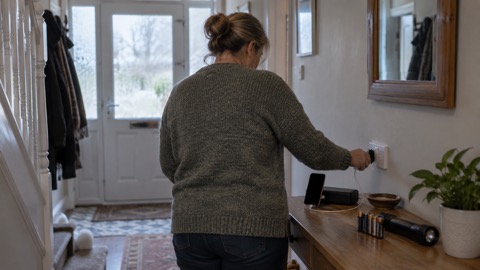 What to Keep Charged
 Household Emergency Plan
 Reporting a Power Cut
 What to Do in a Power Cut
 Getting Ready for a Power Cut
 Fridge and Freezer Food
 Keeping Warm Without Electricity
 Central Heating Without Power
 Cold Homes and Health
 Carbon Monoxide Risks
 Staying Safe in the Dark
 Smoke and Carbon Monoxide Alarms
 How Long Until Power Returns
 When the Power Comes Back