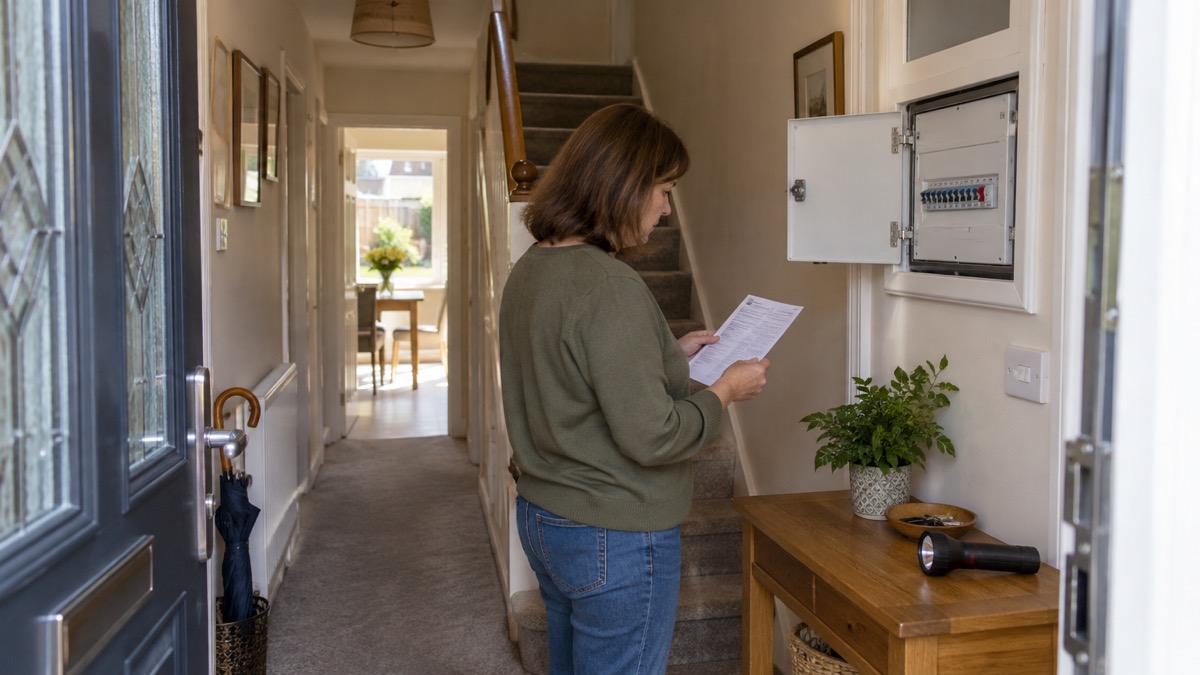
When the lights go out, the first question is whether the fault is out on the network or inside your own home. The quickest way to tell is to look outside: check whether your neighbours' lights are on, or whether the street lights are still lit1. If they are, the problem is probably yours, and the next thing to check is your trip switch2.
Trip switches are normally located near the electricity meter, often under the stairs or in a meter cabinet3. A trip switch should be UP in the "ON" position3. If it has moved down, flick it back up1. If it trips straight back off, you have a fault with your wiring, an appliance or the fuse box, and it needs an electrician rather than a call to the network operator5.
If your neighbours are off too, it is a power cut. Report it on 105, the free national power cut number for England, Scotland and Wales6. In Northern Ireland, report to NIE Networks on 03457 643 643 or through the Powercheck app7.
Check your neighbours and the street lights first
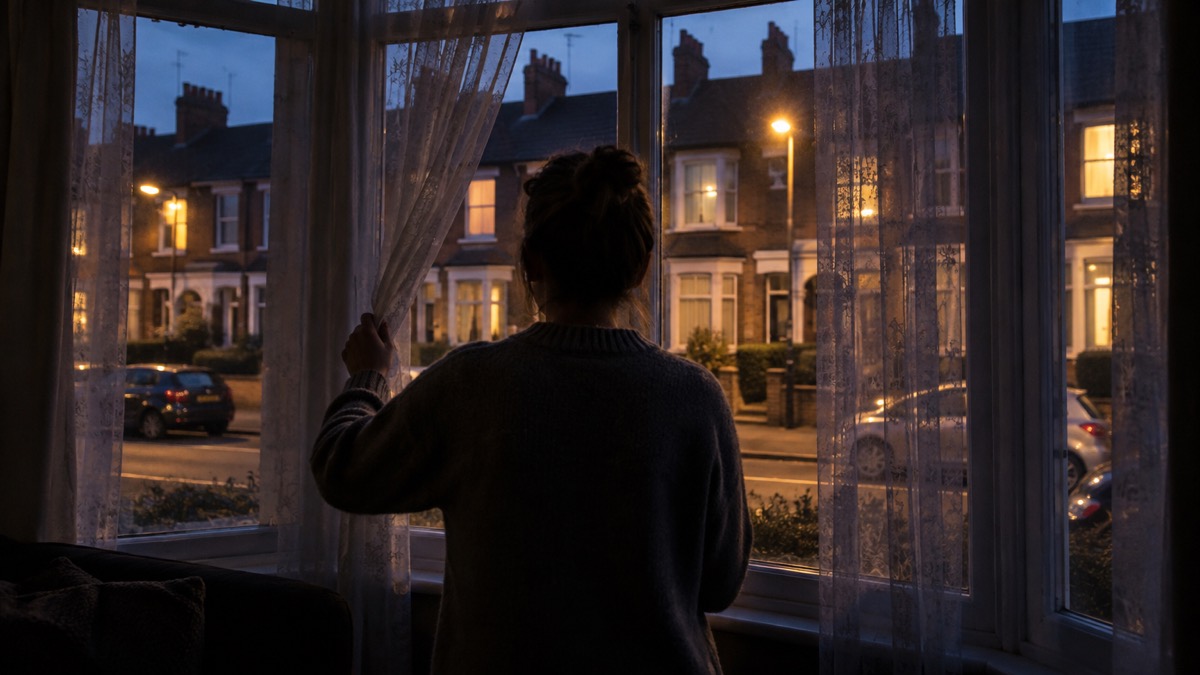
Before you touch anything in the house, look at what the rest of the street has. Electricity North West advises you to check if your neighbours and streetlights have power: if they do, it could mean there is a problem with your trip switch1. National Grid's advice is to speak to your neighbours or, during the night, check the street lights2. The Met Office advises that if your power goes off unexpectedly, you check to see if your neighbours still have electricity9.
This one check sorts the two possibilities apart, and it costs nothing:
- Neighbours and street lights are on: the fault is likely inside your home, in the fuses or trip switches9.
- Neighbours are off too: it is a network power cut, and you should report it10.
- You cannot tell: a neighbour's answer at the door, or a look at the street, settles it faster than anything else.
Do this before you ring anyone. A call to 105 about a fault that turns out to be your own trip switch sends you down the wrong path, and the network operator's own guidance puts the trip switch check first for exactly that reason5.
Trip switches should be in the UP position
A trip switch is a safety mechanism connected to your meter, and it turns off the power to a circuit when there is a fault with your wiring or one of your electrical appliances3. That is why it is the second thing to check. If it has done its job, it will have moved.
The check itself is simple. Look at the switch: it should be UP in the "ON" position3. If your trip switches were pointing downward when your electricity went off, flick them back to an upward position1. If you have a separate fuse box and trip switch, turn the fuse box off and turn the trip switch back on; the trip should then stay on8.
Not every property has a trip switch, so first check that you have one. It will be on or near the fuse box8. If you have an older fuse box rather than a modern consumer unit, you can check for a blown fuse by looking for fuse wires that look broken, blackened or melted11.
| What you see | What it means | What to do |
|---|---|---|
| Switch is UP, in the "ON" position | No trip; the fault is probably on the network | Check neighbours, then report the cut3 |
| Switch has moved DOWN | The trip has operated, usually because of a fault | Flick it back up1 |
| Switch is ON but the supply is still off | The mechanism may have tripped inside the box without moving the external switch | Turn the trip switch off and back on again8 |
| Switch stays on but the supply is still off | You may have turned off the main switch on the fusebox | Check the main switch8 |
If the switch stays on but the supply is still off, check you have not turned off the main switch on the fusebox8. It is an easy thing to do in the dark with a torch.
If the switch trips again straight away
A trip switch that will not stay up is telling you something. If the trip switch trips immediately, you have a fault with your wiring, an appliance or the fuse box8. This is not a network problem, and no amount of waiting will fix it.
Work through it in order:
- Switch off all your appliances and try to reset the trip switch10.
- If it stays on, turn all the electric devices back on one at a time to see which device turns the trip switch off8.
- Get that device checked by an electrician8.
- If the supply is not restored, push the "test" button. If the switch trips, you have a problem with your wiring or an appliance5.
- If the trip switches to the "off" position again, you have a fault with the fuse box or the trip switch itself5.
If your trip switches were pointing downward when the electricity went off, flick them back to an upward position; you may need to contact a local electrician1. That is the point at which the job passes from you to a qualified person.
Check your neighbours are safe
A power cut is a good moment to knock on a door. The Met Office and Energy Networks Association both advise you to check whether your neighbours are safe and whether they have a power cut too; if they have power, your trip switch may have activated12. The Met Office gives the same advice for a power cut during snow14. It is a check that does two jobs at once: it tells you whether the fault is yours, and it tells you whether someone nearby needs help.
Pay particular attention to anyone who is older, unwell or living alone. Northern Powergrid's advice during Storm Lilian was to check on elderly or sick neighbours and relatives15. National Grid's easy-read guidance is more specific: make sure that they are warm, their medical equipment is working, and they have enough food and drink16.
- Warmth: are they warm, and do they have a way to stay warm if the heating is off?
- Medical equipment: is anything they rely on working, and do they know who to call if it fails?
- Food and drink: do they have enough in the house?
- Contact: do they have a charged phone and the number to report a cut?
If someone depends on electrical medical equipment, point them to their network operator's Priority Services Register, which gives extra support during an outage. Our guide to relying on medical equipment that needs electricity explains what to arrange in advance, and the checklist for checking on neighbours and relatives sets the visit out step by step.
Reporting the cut: 105, and Powercheck in Northern Ireland
Once you have established that the fault is not yours, report it. Call 105 free of charge to report the problem and get updates on when your power will be restored10. It is the national power cut reporting number, and it works across England, Scotland and Wales17. You can also report a power cut online at powercut105.com17.
In Northern Ireland the arrangements are different. NIE Networks asks you to check your trip switch first, to see if it is a problem with the electrics in your property18. Then check whether there is a power cut in your area19. Powercheck provides a real-time fault information map, so you can see whether your cut is on it18. To report a power cut or damaged equipment, call NIE Networks on 03457 643 643 or use the Powercheck app7. The Northern Ireland executive's own severe weather advice points people to the NIE Networks website for information about electricity supply, including an updated list of areas affected by power cuts20.
| Nation | Who to contact | How |
|---|---|---|
| England, Scotland, Wales | National power cut service | Call 105 free, or report online at powercut105.com10 |
| Northern Ireland | NIE Networks | Call 03457 643 643 or use the Powercheck app7 |
If you have checked your trip switch, reset it and still have no power while your neighbours do, say so when you report. Our guide to reporting a loss of electricity covers what to have ready before you ring.
The street lights are on but my power is not
This is the commonest version of the question, and the answer is usually in your own hallway. If your neighbours still have power but your home does not, it is likely there is a problem with the fuses or trip switches in your home9. The street lights being on tells you the network is live in your area; it does not tell you anything about the circuit inside your house.
So work through it in this order. Check the trip switch is UP in the "ON" position3. If it has moved, flick it back up1. If it stays up and the power returns, the trip had operated and you have found the cause. If it stays up and the power does not return, check you have not turned off the main switch on the fusebox5. If it trips again, go back to the appliance-by-appliance check above8.
There is one more case worth knowing. If your supply does not come back on but your neighbour's supply has, check your trip switch, if you have one; you will find this on or near the fuse box21. This matters after a planned interruption, when the network has restored supply to the street but your own trip has operated and stayed down. Our guide to planned interruptions explains why those happen and how to prepare.
Where to get help and what to do next
If it is a network cut, the practical steps are the ones that keep the household safe and comfortable until power returns. Our guide to what to do when the electricity goes off takes you through it in order, and getting your home ready for a loss of supply covers what to have in place beforehand. The single most useful preparation is knowing where your fuses and trip switches are, so that you can check whether the problem is with your electrics only20.
Keep the reporting number somewhere you can find it in the dark. The emergency numbers checklist is a place to write 105 and the NIE Networks number down. If you are in a storm, stay clear of fallen or damaged overhead lines and report them; our guide to fallen overhead lines explains the safe distance and who to ring.
For households that need extra support during an outage, the Priority Services Register is the route to it, and extra help from network operators during long outages explains what operators can provide. In Northern Ireland, our guide to NIE Networks, reporting and help sets out the local arrangements in full.
Sources (22)
- Checks for if you are without power, Electricity North West, 2026
- What to do in a power cut, National Grid, 2026
- Power cut plan, Northern Powergrid, 2026
- What are trip switches and where can I find them, UK Power Networks, 2026
- Advice and support: FAQs, Electricity North West, 2026
- 5 tips for staying safe in a thunderstorm - Met Office, Met Office
- Poles and overhead lines, NIE Networks, 2026
- What to do in a power cut, SP Energy Networks, 2026
- What to do in a power cut, Met Office, 2026
- Power cut leaflet, National Grid, 2022
- Plug socket not working: these could be the reasons why, NICEIC, 2026
- Power cut advice, Energy Networks Association, 2026
- Amber warning for further snow in Scotland, Met Office, 2026
- Strong winds and heavy rain: information and advice, nidirect, 2026
- Northern Powergrid prepared to support customers during Storm Lilian, Northern Powergrid, 2024
- Preparing for a power cut: easy read, National Grid, 2026
- Power cuts, Scottish Fire and Rescue Service, 2026
- I have a power cut, what should I do, NIE Networks, 2026
- Preparing for winter, NIE Networks, 2026
- Strong winds: weather warning information and advice, nidirect, 2026
- Planned interruptions leaflet, SP Energy Networks, 2023
- Be prepared, Northern Powergrid, 2026
 Power Cut Kit Checklist
 What to Keep Charged
 Household Emergency Plan
 Food to Throw Away After a Cut
 Keeping One Room Warm
 Heating a Room With a Gas Hob
 Hot Water Bottles and Children
 Unplugging Appliances in a Cut
 Vehicle Touches Overhead Line
 Reporting a Damaged Substation
 Protected Sites
 Heatwaves and Power Cuts
 Smart Meters and Power Cuts
 Keeping Medicine Cold
 Registering a Relative for Help